


Dear Readers, Welcome to AviationOutlook.
Let’s analyze the topic in detail.
Executive Summary
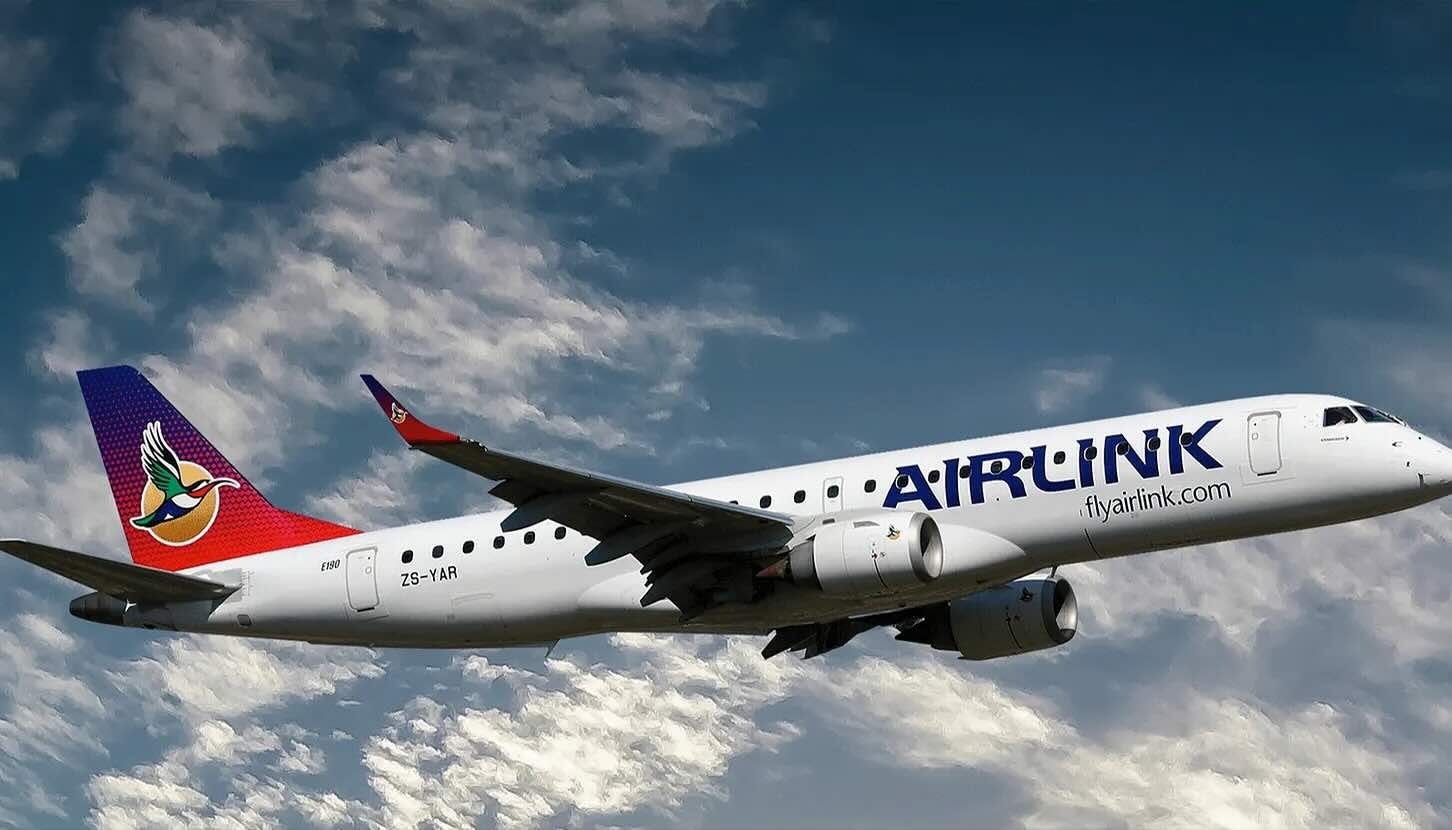
Airlink has cemented its position as Southern Africa’s largest independent regional carrier, operating a fleet of approximately 72 all-Embraer aircraft serving more than 47 destinations across 15 African countries plus St Helena Island.
The carrier’s most consequential strategic move of the decade is the 10-aircraft E195-E2 lease signed with Florida-based lessor Azorra, delivering through 2027 and dropping fuel burn per seat by roughly 27 to 29 percent versus the older first-generation E195s.
The August 2024 transaction in which Qatar Airways acquired 25 percent of Airlink reshaped the carrier’s competitive posture, anchoring it inside one of global aviation’s most respected long-haul networks while preserving Airlink’s independent management.
Under new CEO de Villiers Engelbrecht, who succeeded co-founder Rodger Foster in April 2025, Airlink is doubling down on a premium network-carrier model, refusing to chase the low-cost dogfight that has consumed peer South African operators.
Recommended - Read Full Reports


Read All Reports
Table of Contents
Executive Summary
Airlink Company Profile: Key Facts
Airlink Performance Analysis
Growth Trajectory and Operating Scale
Revenue Growth Drivers
Key Services and Products
Airlink Fleet Analysis
Fleet Size and Composition
Fleet Age Profile
Aircraft Type Strategy and Configuration
Long-Term Fleet Strategy
Fuel Burn and Economic Benefits of the E2
Airlink Route Network Strategy and Major Destinations
Network Scale
Domestic South African Network
Regional African Network
New 2026 Route Launches
European Codeshare Expansion
Major Operational Bases (Hubs)
OR Tambo International Airport, Johannesburg (Primary Hub)
Cape Town International Airport (Secondary Hub)
Tertiary Operating Bases
Airlink Competitive Position
Major Competitors
Airlink vs. FlySafair
Airlink vs. South African Airways
Airlink vs. CemAir
Airlink vs. LIFT Airlines
Competitive Moats
The Qatar Airways Strategic Alliance
Deal Mechanics
Operational Integration
Strategic Significance
Codeshare and Partnership Ecosystem
Existing Codeshare Partners
European Codeshare Expansion (2026)
Franchise Operations
Skybucks Loyalty Programme
Operational Performance and Service Quality
Fuel Strategy and Sustainability
Government and Regulatory Environment
ATNS Infrastructure Crisis
Acsa Service Failures
Ownership Rule Litigation
Technology, Data, and AI Initiatives
Key Risks for Airlink
Risk 1
Risk 2
Risk 3
Risk 4
Risk 5
Risk 6
Risk 7
Risk 8
Strategic Outlook for 2026 and Beyond
The Network Carrier Bet
The E2 Productivity Curve
Network Expansion Horizon
Partnership Evolution
Industry Context and Macro Backdrop
The Embraer Partnership: A Critical Enabler
My Final Thoughts
Official Sources and Data
Airlink Company Profile: Key Facts
Airlink is a privately held South African regional airline headquartered at OR Tambo International Airport in Kempton Park, Gauteng. The airline was founded in 1992 by Rodger Foster and Barrie Webb, who acquired the assets of liquidated Link Airways.
The carrier operates under the IATA code “4Z” and ICAO code “LNK”, branded commercially as “FlyAirlink”. It is a full member of the International Air Transport Association and is accredited under the IATA Operational Safety Audit programme.
Its ownership structure as of 2026 is unusual for the region. Qatar Airways Group holds 25 percent, a B-BBEE shareholder trust holds roughly 33 percent, and the remaining shareholding sits with founding management, an employee share scheme, and other private investors.
AIRLINK SNAPSHOT (2026)

Founded:               1992
Headquarters:          OR Tambo International Airport, Johannesburg
CEO:                   de Villiers Engelbrecht (since April 2025)
Chairperson:           James Leslie
Founder:               Rodger Foster (non-exec director and shareholder)
IATA/ICAO Code:        4Z / LNK
Fleet:                 ~72 all-Embraer aircraft
Destinations:          47+ across 15 African countries + St Helena
Daily Flights:         ~240
Annual Flights (FY24): ~83,576
Equity Partner:        Qatar Airways (25%)
Loyalty Programme:     Skybucks
Franchise:             FlyNamibia
Codeshare Partners:    30+ international carriers
2025 Skytrax Ranking:  3rd Best Regional Airline in Africa
Special Recognition:   Cleanest Airline in Africa (Skytrax 2025)
Airlink’s leadership transition closed an era. Co-founder Rodger Foster ended a 33-year stretch at the helm in March 2025 and remains as a non-executive director and shareholder.
His successor, de Villiers Engelbrecht, previously served as the carrier’s Chief Financial Officer. The handover was deliberate and orderly, with the airline emphasizing continuity in strategy and customer experience.
Airlink’s commercial leadership is anchored by Chief Commercial Officer Kathrine Whelan, who has driven the airline’s recent codeshare expansion strategy. The company also operates a franchise relationship with FlyNamibia, extending its commercial brand across the regional Namibian market.
The airline has been recognised in the Skytrax 2025 World Airline Awards as the third Best Regional Airline in Africa, behind RwandAir and Royal Air Maroc. Airlink also took home the “Cleanest Airline in Africa” award.
Airlink Performance Analysis
Airlink does not publicly file detailed audited financials in the way listed airlines do, since it remains a privately held company.
However, multiple credible disclosures from management, regulatory submissions, and industry interviews paint a clear picture of an unusually profitable regional carrier.
Growth Trajectory and Operating Scale
The most reliable proxy for Airlink’s commercial scale is its operations volume. The carrier ran 63,629 flights in its 2019 financial year, growing to 83,576 flights in FY2024.
That represents a roughly 31 percent expansion in flight volume across five years, an exceptional record given that two of those years were pandemic-affected. Most peer South African carriers contracted, paused, or collapsed during the same window.
Currently, Airlink operates approximately 240 flights per day, as confirmed by CEO de Villiers Engelbrecht in interviews from late 2025. That implies an annual run-rate near 87,600 flights for full-year 2026, continuing the upward trajectory.
OPERATIONS VOLUME PROGRESSION

FY2019 Flights:        63,629
FY2024 Flights:        83,576
FY2026 Run-Rate:       ~87,600 (240 flights/day x 365)
Five-Year Growth:      ~31% (FY19 to FY24)
Survival Record: Continuously profitable through COVID-19 shockRevenue Growth Drivers
The first major driver is fleet up-gauging. Each E195-E2 carries up to 136 passengers versus around 100 on the E190 it complements, with materially better unit economics. As the E2 fleet scales, available seat kilometres expand without proportional crew or trip cost growth.
The second driver is route expansion. The airline added high-yield routes to Zanzibar via Dar es Salaam in 2026, increased Ndola frequencies to capture Copperbelt mining demand, and is pursuing licence approval to launch codeshare flights to Paris, Frankfurt, and London Heathrow.
KEY REVENUE GROWTH DRIVERS (2026)

1. E195-E2 Fleet Up-Gauging
   - 136 seats vs ~100 on E190
   - Better seat-cost economics
   - Enables higher-density routes

2. New African Route Launches
   - Johannesburg-Zanzibar (June 2026)
   - Increased Ndola, Lusaka, Dar es Salaam frequencies
   - Cape Town to Mauritius and Zanzibar (applied)

3. European Codeshare Sell-Through
   - Paris CDG, Frankfurt, London LHR
   - Codeshare ticket revenue capture
   - Through-fare premium on connections

4. Qatar Airways Partnership Maturation
   - Aligned loyalty programmes
   - One Stop Shop ticketing
   - Interline yield improvement

5. Skybucks Programme Monetisation
   - Tiered membership growth
   - Family pooling feature uptake
   - Ancillary revenue per passenger
The third driver is partnership monetisation. The Qatar Airways tie-up unlocked direct ticketing of connecting itineraries and Privilege Club integration, which Airlink leverages on its Skybucks loyalty programme.
Codeshares with Turkish Airlines, Emirates, and many others extend the carrier’s network reach without proportional capital outlay.
Airlink CEO Engelbrecht is explicit that the airline holds approximately 62 percent capacity share against its South African peers on intra-African flying, which is a powerful platform for partner traffic.
Key Services and Products
Airlink’s product is intentionally positioned upmarket of the South African low-cost field. Every E195-E2, E195-E1, and E190 is configured in a 2-by-2 cabin layout, eliminating the middle seat that defines competitor flying experiences.
Seat pitch on the E2 reaches up to 32 inches in standard economy, with an “XL” extra-legroom seat option marketed on the Johannesburg to Cape Town trunk. Baggage allowance is generously included as standard on most fare classes, in contrast to ancillary-revenue models elsewhere in the South African market.
The Skybucks programme is the airline’s principal ancillary and retention engine. It operates with multiple tiers including a top “Black” tier, supports family pooling of up to eight members, and is integrated with Qatar Airways’ Privilege Club for cross-accrual on long-haul itineraries.
Cargo services run under the Airlink brand and use belly capacity across the network. The carrier also operates dedicated service to St Helena Island, a UK overseas territory in the South Atlantic, on a unique commercial concession with the local government.
AIRLINK PRODUCT MATRIX

Cabin Configuration:    Universal 2-by-2 (no middle seat)
E195-E2 Seats:         Up to 136 (single class) or 124 (two-class)
Base Fare Inclusions:  Cabin + checked baggage, snack, beverage
Loyalty Programme:     Skybucks (Blue/Silver/Gold/Black tiers)
Lounge Access:         Bidvest Premier Lounges + partner access
Cargo:                 Belly-hold cargo on all routes
Niche Operations:      St Helena Island scheduled service
Franchise Brand:       FlyNamibia (regional operations in Namibia)