
The electric vertical takeoff and landing (eVTOL) aircraft industry stands at a pivotal moment, with Archer Aviation positioning itself as one of the frontrunners in this transformative sector.
As we approach 2026, the California-based aerospace manufacturer has made substantial progress in aircraft development, manufacturing scale-up, strategic partnerships, and regulatory advancement.
This comprehensive analysis examines Archer Aviation’s current operational status, strategic initiatives, competitive positioning, and prospects for commercial deployment.
Table of Contents

Image: Archer Aviation
Company Overview and Strategic Vision
Archer Aviation designs and develops electric aircraft that leverage vertical takeoff and landing capabilities to revolutionize urban transportation. Founded with the mission of unlocking the skies, the company focuses on creating sustainable, low-noise air mobility solutions that can dramatically reduce travel times in congested metropolitan areas.
The company’s flagship aircraft, Midnight, represents the culmination of years of engineering development and flight testing. This piloted eVTOL aircraft is designed to carry four passengers plus one pilot, with the capability to perform rapid back-to-back trips with minimal charge time between flights. The technical specifications position Midnight as a practical solution for urban air mobility networks.
Technical Specifications of Midnight Aircraft
Specification | Details |
|---|---|
Passenger Capacity | 4 passengers + 1 pilot |
Cruise Speed | Up to 150 mph (241 km/h) |
Maximum Range | 100 miles (161 km) |
Optimized Range | 20-50 miles (32-80 km) for back-to-back trips |
Cruise Altitude | 2,000 feet (610 meters) |
Service Ceiling | Up to 10,000 feet |
Maximum Takeoff Weight | Approximately 6,500 lbs |
Turnaround Time | Approximately 10 minutes for charging |
Payload Capacity | Approximately 1,000 lbs (453 kg) |
Power System | Six independent battery packs |
These specifications reflect a design philosophy centered on practical urban air mobility operations. The 20-50 mile optimized range aligns with typical intracity travel patterns, while the 10-minute turnaround time supports high-frequency operations necessary for commercial viability.
Manufacturing Infrastructure and Production Readiness
Archer has established a comprehensive manufacturing infrastructure to support commercial-scale production. The company operates facilities in both Silicon Valley, California, and Covington, Georgia, each serving distinct roles in the production process.
Georgia Manufacturing Facility
In December 2024, Archer completed construction of its approximately 400,000 square foot high-volume manufacturing facility in Covington, Georgia, adjacent to Covington Municipal Airport. This facility, referred to as ARC (Archer’s Rapid Certification Center), represents a cornerstone of the company’s production strategy.
The Georgia facility has been designed to support production of up to 650 Midnight aircraft annually at full capacity, which would position it as one of the largest aviation manufacturing facilities by volume in the industry. Production began at a small scale in early 2025, with the company targeting the manufacture of two aircraft per month by the end of 2025.
Manufacturing Capacity Timeline:
- December 2024: Facility construction completed
- Early 2025: Production initiation at low rate
- End of 2025: Target production rate of 2 aircraft/month
- 2030 Target: Annual capacity of 650 aircraft
Current Production Status
As of mid-2025, Archer reported having six Midnight aircraft in concurrent production. Three of these aircraft were in final assembly across the Silicon Valley and Georgia facilities. This concurrent production approach allows the company to validate manufacturing processes, identify optimization opportunities, and prepare for scaled production.
The production facilities utilize advanced manufacturing techniques and benefit from the partnership with Stellantis, which has provided manufacturing expertise and capital investment. Stellantis invested $110 million in Archer during 2023 and an additional $55 million in 2024, demonstrating sustained confidence in the company’s manufacturing roadmap.
Flight Testing Progress and Technical Achievements
Archer has maintained an aggressive flight testing program throughout 2024 and 2025, achieving multiple technical milestones that demonstrate the maturity of the Midnight aircraft design.
Key Flight Test Milestones
On June 12, 2024, Archer achieved a significant milestone when Midnight completed its first full transition flight, flying at speeds exceeding 100 mph. At approximately 6,500 pounds, Midnight is believed to be one of the largest piloted eVTOL aircraft to complete this critical transition maneuver, which involves converting from vertical takeoff to horizontal forward flight.
By September 2025, the aircraft reached a cruise altitude of 7,000 feet at speeds of 120 miles per hour, demonstrating continued expansion of the operational envelope. The company has subsequently achieved flights exceeding 55 miles in distance, more than 30 minutes of flight duration, altitudes up to the 10,000-foot service ceiling, and speeds in excess of 150 miles per hour.
International Flight Demonstrations
Beyond domestic flight testing, Archer has conducted international demonstration campaigns. In November 2025, the company completed an in-country flight test campaign in the United Arab Emirates, showcasing Midnight’s full transition capabilities to prospective partners and regulators. These international demonstrations support the company’s strategy of establishing operations in multiple jurisdictions and building relationships with global aviation authorities.
Regulatory Certification Pathway
The pathway to commercial operations requires successful navigation of complex regulatory certification processes. Archer is pursuing type certification from the Federal Aviation Administration through a structured, phased approach.
FAA Certification Progress
The FAA has established a certification framework for powered-lift aircraft through Advisory Circular AC 21.17-4, which addresses type certification, production certificates, and standard airworthiness certificates for this new category of aircraft. This framework provides the regulatory foundation for Archer’s certification efforts.
As of late 2025, industry observers note that Archer is progressing through the FAA certification process, though the company has been careful to avoid providing specific timelines for certification completion. Some analysts project that type certification may not occur before 2028, reflecting the complexity and thoroughness of the regulatory review process.
Operator Certifications Achieved
While aircraft type certification remains in progress, Archer has successfully obtained several operator certifications that position the company to launch commercial operations once the aircraft receives its type certificate:
Part 135 Air Carrier Certificate (June 2024): Authorizes the company to operate as an air carrier
Part 141 Pilot Training Certificate (February 2025): Enables Archer to operate its own pilot training academy
Part 145 Repair Station Certificate (February 2024): Permits the company to perform maintenance and repair operations
These three certificates represent significant regulatory achievements and demonstrate Archer’s comprehensive approach to building the infrastructure necessary for air taxi operations.
Strategic Partnerships and Commercial Relationships
Archer has cultivated an extensive network of strategic partnerships spanning aerospace manufacturers, airlines, real estate developers, and defense contractors. These relationships provide capital, technical expertise, manufacturing support, and commercial opportunities.
United Airlines Partnership
United Airlines first invested in Archer in 2021 and has maintained its strategic relationship with the company. United has placed orders for up to 200 Midnight aircraft, with plans to deploy them on routes connecting major airports to urban centers. In early 2025, Archer and United unveiled specific route plans for air taxi networks in Chicago and Los Angeles, with the goal of cutting airport travel times from two hours to approximately 15 minutes.
The United partnership provides Archer with a credible commercial launch customer and access to United’s extensive operational expertise in aviation safety, scheduling, and customer service.

Stellantis Manufacturing Collaboration
Italian-American automotive manufacturer Stellantis serves as Archer’s primary manufacturing partner.
Beyond providing capital investments totaling over $165 million through 2024, Stellantis contributes manufacturing expertise, supply chain management capabilities, and production infrastructure.
This partnership leverages Stellantis’s decades of experience in high-volume manufacturing to support Archer’s transition from prototype development to commercial production.
Defense and Dual-Use Applications
Archer has expanded into defense applications through multiple partnerships:
Karem Aircraft Collaboration: In early December 2025, Archer announced an exclusive partnership with Karem Aircraft to integrate military-grade rotor and tiltrotor technologies into Archer’s next-generation dual-use VTOL aircraft. Karem Aircraft, known for developing rotor systems for military platforms, brings battle-tested technology that could enhance the performance and capabilities of future Archer aircraft variants.
Anduril Industries and EDGE Group: In November 2025, Archer secured an agreement to supply its proprietary dual-use electric powertrain technology to Anduril Industries and EDGE Group for their Omen autonomous air vehicle program. This marks Archer’s first third-party technology licensing agreement and opens a new revenue stream beyond aircraft sales.
U.S. Air Force: In August 2024, the U.S. Air Force took delivery of its first Midnight aircraft for evaluation and testing. This relationship supports Archer’s development of defense-oriented variants and provides valuable operational feedback from military users.
International Market Partnerships
Archer has established partnerships to support international market entry:
Korean Air: In October 2025, Korean Air placed a substantial order for 100 Midnight aircraft, marking one of the largest eVTOL aircraft orders to date. The partnership includes plans to deploy air taxi services in South Korea, potentially in conjunction with the 2026 FIFA World Cup.
UAE Market Entry: Archer has developed relationships in the United Arab Emirates, where Abu Dhabi Aviation has committed to operating Archer aircraft with deliveries expected in Q4 2025. The company has conducted flight demonstrations in the UAE and is working toward regulatory approvals in the region.
Saudi Arabia Operations: In November 2025, Archer signed a memorandum of understanding with The Helicopter Company (a Public Investment Fund entity) and Red Sea Global to develop, test, and potentially integrate Midnight aircraft into Saudi Arabia’s transportation infrastructure. This partnership positions Archer to participate in Saudi Arabia’s ambitious urban mobility initiatives.
Urban Air Mobility Network Development
Archer has progressed from aircraft development to comprehensive network planning, announcing specific vertiport locations and operational partnerships in key metropolitan areas.
Miami Metropolitan Network
On December 3, 2025, Archer unveiled detailed plans for a Miami metropolitan area air taxi network designed to transform mobility across one of the nation’s fastest-growing regions. The network would connect Miami, Fort Lauderdale, Boca Raton, and West Palm Beach via 10-20 minute electric flights, bypassing ground-based traffic congestion.
Key elements of the Miami network include:
Airport Connectivity: The network is designed to provide efficient travel options between three major international airports:
Miami International Airport (MIA)
Fort Lauderdale-Hollywood International Airport (FLL)
Palm Beach International Airport (PBI)
Infrastructure Partnerships:
Partner | Infrastructure Type | Location Details |
|---|---|---|
Related Ross | New-build vertiport | West Palm Beach downtown development |
Hard Rock Stadium | Existing helipad adaptation | Miami, home of Miami Dolphins and major events |
Apogee Golf Club | Existing helipad adaptation | Hobe Sound, prestigious golf facility |
Magic City Innovation District | New-build vertiport | Miami’s Little Haiti neighborhood |
Miami Mayor Francis Suarez expressed support for the initiative, stating that the city “has never been afraid to bet on the future” and emphasizing Miami’s position as “a global capital for innovation and mobility.”
Los Angeles Olympic Network
Archer has been selected as the Official Air Taxi Provider of the LA28 Olympic and Paralympic Games. To support this role, the company announced in November 2025 the acquisition of Hawthorne Airport for $126 million.
The acquisition provides Archer with:
Strategic location three miles from Los Angeles International Airport
Less than three miles from SoFi Stadium and other major Olympic venues
Existing airport infrastructure that can be adapted for eVTOL operations
A testbed for AI-powered aviation technologies
The Los Angeles network will transport Olympic athletes, officials, VIPs, and fans between venues, airports, and accommodation areas. Beyond the Olympics, Archer plans to establish permanent air taxi services connecting key locations throughout the Los Angeles metropolitan area.
Additional Network Locations
Archer has announced plans or partnerships for air taxi networks in several additional metropolitan areas:
New York City: Routes connecting Manhattan to area airports
San Francisco Bay Area: Intra-regional connectivity
Chicago: Airport to downtown connections in partnership with United Airlines
Abu Dhabi: Urban mobility network
Seoul, South Korea: Partnership with Korean Air
Capital Structure and Financial Position
Archer has successfully raised substantial capital to fund operations through the certification process and initial commercial deployment. The company’s financial strategy has involved multiple funding mechanisms and strategic timing of capital raises.
Recent Capital Raises
In June 2025, following President Trump’s Executive Order to implement an eVTOL Integration Pilot Program in the United States, Archer raised $850 million through a registered direct stock offering. This capital raise was specifically timed to capitalize on increased governmental support for the eVTOL industry.
In November 2025, concurrent with the announcement of the Hawthorne Airport acquisition, Archer raised an additional $650 million through a stock offering to support the $126 million acquisition and provide additional working capital.
In February 2025, the company raised $300 million from institutional investors including BlackRock and Wellington, bringing total funding to approximately $3.36 billion since inception.
Q3 2025 Financial Results
Archer reported its Q3 2025 financial results in November 2025, providing insight into the company’s current financial position:
Q3 2025 Financial Highlights:
- Net Loss: $129.9 million
- Adjusted EBITDA Loss: $116.1 million
- Operating Expenses: $174.8 million (43% increase year-over-year)
- Cash and Cash Equivalents: $595.5 million
- Total Cash and Investments: $1,641.3 million
- Revenue: $2.81 million (primarily from contracts)
The financial results reflect a pre-revenue company investing heavily in research and development, certification activities, and manufacturing infrastructure. Total liquidity exceeded $2 billion following the capital raises, positioning Archer with one of the strongest balance sheets in the eVTOL industry.
Operating Expense Allocation
The company’s operating expenses in Q3 2025 were primarily directed toward:
Category | Focus Areas |
|---|---|
Research & Development | Aircraft design refinement, flight testing, systems integration |
Certification Activities | FAA compliance testing, documentation, regulatory engagement |
Manufacturing Operations | Production facility operations, supply chain development, tooling |
General & Administrative | Corporate operations, public company requirements, legal |
The $120.7 million allocated to research and development in Q3 2025 represents the largest expense category, reflecting the technical complexity of bringing a new aircraft category to market.
Competitive Position in the eVTOL Industry
The eVTOL aircraft market includes numerous competitors at various stages of development. Archer’s primary competitors include Joby Aviation, Vertical Aerospace, Lilium, Volocopter, and BETA Technologies, among others.
Archer vs. Joby Aviation
Joby Aviation represents Archer’s most direct U.S.-based competitor. Both companies are pursuing FAA certification for piloted eVTOL aircraft designed for urban air mobility applications. Key comparative factors include:
Aircraft Configuration: Joby’s aircraft features a different propulsion configuration with tilting rotors, while Archer’s Midnight uses a combination of fixed tilt rotors and pusher propellers. Both approaches have technical merits, with the final determination likely to come down to operational economics and reliability.
Certification Timeline: Both companies are progressing through the FAA certification process, with neither expecting certification before late 2026 or 2027. The certification race remains close, with both companies achieving significant milestones.
Manufacturing Approach: Joby is building its own manufacturing facilities, while Archer leverages partnerships with Stellantis for manufacturing expertise. Each approach presents different advantages in terms of control versus speed of scale-up.
Capital Position: Following recent fundraising, Archer’s liquidity position exceeds $2 billion, comparable to Joby’s capital resources. Both companies have sufficient runway to reach certification and initial commercial operations.
Partnership Strategy: Archer has emphasized a broader partnership approach, engaging with multiple airlines, defense contractors, and international operators. Joby has focused on select strategic partnerships, including with Toyota for manufacturing and Delta Air Lines for operations.
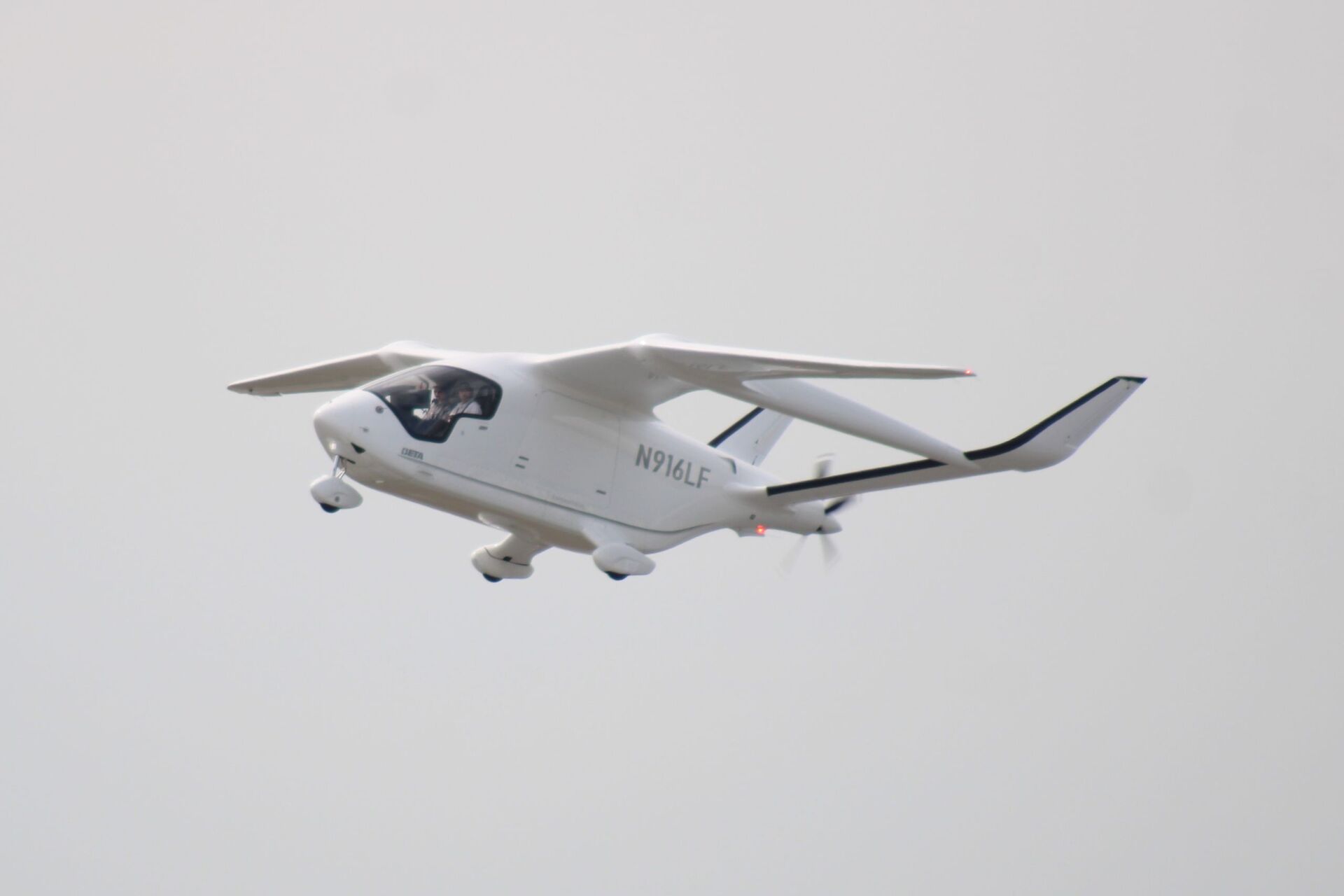
BETA Technologies Positioning
In December 2025, Goldman Sachs initiated coverage of the eVTOL sector and rated BETA Technologies as its top pick. BETA’s approach differs from Archer and Joby in several ways:
Focus on cargo and logistics applications before passenger operations
Conventional takeoff and landing variants in addition to VTOL configurations
Earlier revenue generation through cargo operations
Different regulatory pathway for cargo operations
BETA’s cargo-first strategy provides earlier revenue but may not capture the higher-value passenger air taxi market that Archer targets.
International Competitors
EHang (China): EHang has achieved type certification in China and claims to be conducting commercial operations. However, its autonomous (unmanned) aircraft faces regulatory barriers in most Western markets.
Volocopter (Germany): Volocopter is pursuing European Aviation Safety Agency certification and has conducted demonstrations in multiple international cities. The company faces similar certification timeline challenges as U.S. competitors.
Vertical Aerospace (UK): Vertical Aerospace is developing the VX4 eVTOL but has faced development challenges and restructuring in 2025.
Industry Market Outlook and Growth Projections
The eVTOL and urban air mobility market is projected to experience substantial growth over the next decade as aircraft achieve certification and commercial operations commence.
Market Size Projections
Multiple market research firms have published projections for the eVTOL and urban air mobility markets:
Source | 2024 Market Size | 2030 Projection | CAGR |
|---|---|---|---|
Urban Air Mobility News | $0.76 billion | $4.67 billion | 35.3% |
Grand View Research | $3.58 billion | $29.19 billion | 34.8% |
Fortune Business Insights | $4.21 billion | $14.64 billion (by 2032) | N/A |
The market forecasts reflect optimistic growth expectations, contingent on successful regulatory approvals, operational safety validation, and cost competitiveness with existing transportation modes.
Demand Drivers
Several factors are expected to drive adoption of eVTOL aircraft:
Urban Congestion: Metropolitan areas worldwide face increasing traffic congestion, with commuters spending significant time in ground-based transit. Air mobility offers potential time savings of 50-70% for medium-distance intracity travel.
Environmental Considerations: All-electric propulsion produces zero direct emissions, aligning with urban sustainability goals and environmental regulations. The low-noise profile of electric aircraft reduces noise pollution compared to helicopters.
Infrastructure Investment: Governments and private developers are investing in vertiport infrastructure, reducing barriers to operational deployment.
Technological Maturation: Advances in battery energy density, electric motors, and autonomous flight systems improve aircraft performance and economics.
Regulatory Frameworks: Establishment of clear regulatory pathways by aviation authorities reduces certification uncertainty.
Regulatory Environment and Policy Support
Government policy and regulatory frameworks significantly impact the eVTOL industry’s development trajectory. Recent policy initiatives in the United States have provided tailwinds for the sector.
Trump Administration eVTOL Initiative
In June 2025, President Trump signed an Executive Order implementing an eVTOL Integration Pilot Program focused on accelerating the deployment of eVTOL aircraft in the United States. The initiative aims to position the U.S. as the global leader in advanced air mobility and includes provisions for:
Streamlined regulatory processes
Federal support for infrastructure development
Coordination among federal agencies
Public-private partnerships
This policy support provided momentum for the industry, directly contributing to Archer’s successful $850 million capital raise announced shortly after the Executive Order.
International Regulatory Coordination
Five nations (United States, European Union, United Kingdom, Canada, and Australia) have established cooperation frameworks to streamline eVTOL certification processes. This international coordination reduces duplicative certification requirements and facilitates cross-border operations.
The Federal Aviation Administration has published specific guidance for powered-lift aircraft through Advisory Circular AC 21.17-4, while the European Aviation Safety Agency has established parallel certification standards. Harmonization of these standards reduces the cost and complexity of achieving multi-jurisdictional approvals.
Operational Economics and Business Model
The commercial viability of eVTOL air taxi services depends on achieving competitive operational economics compared to existing transportation alternatives.
Projected Pricing Structure
Archer executives have indicated that initial air taxi fares will be priced competitively with premium ground transportation options. CEO Adam Goldstein stated in 2023 that an air taxi ride from Manhattan to JFK Airport could cost approximately $150 per passenger, comparable to an Uber Black ride between the same points.
As production scales and operational efficiencies improve, the company targets reducing costs to approximately $6 per passenger per mile, compared to roughly $11 per passenger mile for chartered helicopters. This pricing would make air taxi services accessible to a broader customer base beyond ultra-high-net-worth individuals.
Revenue Model Components
Archer’s business model incorporates multiple revenue streams:
Aircraft Sales: Direct sale of Midnight aircraft to operators, airlines, and other customers. The order book includes commitments from United Airlines, Korean Air, and other parties.
Air Taxi Operations: Company-operated air taxi services in select markets where Archer maintains direct operational control.
Technology Licensing: Supply of proprietary electric powertrains and other technologies to third parties, as evidenced by the Anduril/EDGE partnership.
Maintenance Services: Provision of maintenance, repair, and overhaul services through the Part 145 certified repair station.
Pilot Training: Operation of pilot training programs through the Part 141 certified training academy.
This diversified revenue model reduces dependence on any single income source and provides multiple pathways to profitability.
Technical Challenges and Risk Factors
Despite significant progress, Archer faces multiple technical, operational, and market challenges that could impact its commercial deployment timeline and ultimate success.
Certification Timeline Uncertainty
The FAA certification process for a novel aircraft category involves substantial complexity and potential for delays. While Archer has made progress through the certification phases, the ultimate timeline remains uncertain. Some industry analysts project certification could extend into 2028, later than earlier estimates.
Delays in certification directly impact revenue generation, as the company cannot commence commercial passenger operations without the type certificate. Extended certification timelines increase capital consumption and could necessitate additional fundraising.
Battery Technology Limitations
Current lithium-ion battery technology constrains aircraft range, payload capacity, and charging time. While Midnight’s specifications are adequate for the intended urban air mobility mission, battery improvements would significantly enhance operational flexibility and economics.
The company’s aircraft performance depends on continued advances in battery energy density, charging speed, and cycle life. Slower-than-anticipated battery technology improvements could limit operational capabilities relative to initial projections.
Manufacturing Scale-Up Risks
Transitioning from prototype production to high-volume manufacturing presents execution risks. The target production rate of 650 aircraft annually represents a substantial scale-up from current production levels. Achieving this production rate requires:
Supply chain reliability for thousands of specialized components
Workforce hiring and training at scale
Quality control systems that maintain safety standards
Capital equipment investment and commissioning
Manufacturing challenges could delay aircraft deliveries and revenue recognition.
Infrastructure Development Dependencies
Air taxi operations require vertiport infrastructure that currently does not exist at scale. While Archer has announced partnerships for vertiport development, the actual construction and regulatory approval of these facilities introduces dependencies outside the company’s direct control.
Infrastructure development involves:
Real estate acquisition or agreements
Construction permitting and zoning approvals
Local community acceptance
Integration with existing airport operations and air traffic control
Delays in infrastructure development could postpone network launches even after aircraft certification.
Market Acceptance and Demand Validation
The air taxi market remains nascent, and actual consumer demand has not been validated at commercial scale. While surveys indicate interest in eVTOL services, actual purchasing behavior may differ from stated preferences.
Key demand uncertainties include:
Price sensitivity and willingness to pay premium fares
Safety perception and consumer confidence in new technology
Convenience factors compared to existing alternatives
Weather and operational reliability impact on utility
Lower-than-projected demand would impact revenue projections and aircraft utilization rates.
2026 Outlook and Key Milestones
As we enter 2026, Archer stands at a critical inflection point in its development trajectory. Several key milestones and developments will shape the company’s progress over the coming year.
Expected 2026 Milestones
Certification Progress: Archer is expected to advance through later phases of FAA certification testing, potentially including FAA pilot evaluation flights and conformity testing. While full type certification in 2026 appears unlikely based on current projections, substantial progress toward certification is anticipated.
Production Ramp: The Georgia manufacturing facility should achieve higher production rates, potentially reaching or exceeding the target of two aircraft per month. This production volume supports the planned UAE launch operations and continued flight testing activities.
UAE Commercial Launch: Based on partnership agreements and aircraft delivery schedules, Archer targets initiating commercial operations in the United Arab Emirates in late 2026 or early 2027. This represents the company’s first commercial deployment and provides operational validation.
Network Infrastructure Development: Vertiport construction and adaptation should advance in Miami, Los Angeles, and other target markets. Regulatory approvals for vertiport operations will be pursued from relevant authorities.
Additional Partnership Announcements: Archer’s partnership development velocity suggests additional strategic relationships, operator agreements, and international market entry announcements are likely throughout 2026.
Financial Outlook for 2026
Analysts project Archer’s financial performance for 2026:
2026 Revenue Projections:
- Consensus Estimate: $62 million
- Source: Aircraft deliveries and initial operations
- Represents significant increase from $0 in 2025
The revenue generation in 2026 marks a critical transition from a pre-revenue development company to a commercial operation generating income from aircraft sales and services. However, the company is expected to continue reporting net losses as operating expenses related to scaling manufacturing and operations exceed revenues.
Archer’s cash position exceeding $2 billion provides substantial financial runway to fund operations through 2026 and beyond, reducing near-term capital raise pressures.
Long-Term Strategic Outlook Beyond 2026
Looking beyond 2026, Archer’s long-term success depends on execution across multiple dimensions.
Path to Profitability
Achieving profitability requires:
Production Volume: Scaling to hundreds of aircraft produced annually to achieve manufacturing economies of scale and spread fixed costs across larger production volumes.
Operational Efficiency: Optimizing air taxi operations to maximize aircraft utilization, minimize turnaround times, and reduce per-flight operating costs.
Market Penetration: Building customer adoption and brand recognition across multiple metropolitan markets to drive demand.
Technology Leadership: Maintaining technical advantages in electric propulsion, battery management, and aircraft systems through continued R&D investment.
Analysts generally project Archer could achieve profitability in the 2028-2030 timeframe if certification proceeds as planned and market adoption meets expectations.
Expansion Opportunities
Multiple expansion vectors could drive long-term growth:
Geographic Expansion: Beyond initial launch markets, hundreds of metropolitan areas worldwide could support air taxi operations. International expansion in Asia, Europe, and other regions represents substantial market opportunity.
Adjacent Applications: The electric propulsion technology and aircraft design capabilities developed for urban air mobility could be adapted for:
Regional air mobility routes (50-200 miles)
Cargo and logistics operations
Emergency medical services
Defense and government applications
Technology Evolution: Next-generation aircraft incorporating advanced battery technology, autonomous flight capabilities, and improved performance could expand addressable markets and reduce operating costs.
Platform Business Model: Establishing Archer as a platform provider, supplying aircraft, technology, operational support, and infrastructure to third-party operators globally.
Competitive Dynamics
The eVTOL market will likely consolidate as companies progress toward commercialization. Industry dynamics over the next 3-5 years may include:
Certification Winners and Losers: Companies achieving certification first gain competitive advantages through operational learning, customer relationships, and market positioning. Companies facing extended certification delays risk losing market position and capital access.
Partnership Evolution: Stronger partnerships with airlines, automotive manufacturers, and technology companies will provide competitive advantages. Weaker partnerships may dissolve under market pressure.
Manufacturing Scale Competition: As production scales, companies with superior manufacturing capabilities and cost structures will gain competitive advantages. Manufacturing efficiency could become a key differentiator.
Financial Endurance: The capital-intensive nature of the industry favors well-funded competitors. Companies unable to raise adequate capital face potential shutdown or acquisition.
Archer’s strong capital position, diverse partnerships, and manufacturing infrastructure position the company favorably in this competitive environment.
Industry Analyst Perspectives
Analysts covering the eVTOL sector and Archer specifically have expressed diverse viewpoints on the company’s prospects.
Bull Case Arguments
Supporters of Archer highlight several factors:
First-Mover Advantage Potential: As one of the leaders in the FAA certification process, Archer could achieve commercial operations ahead of most competitors, establishing market position and operational learning curves.
Strong Partnership Portfolio: The breadth of partnerships spanning United Airlines, Stellantis, Korean Air, and defense contractors provides multiple pathways to success and reduces dependency on any single relationship.
Superior Capital Position: With over $2 billion in liquidity, Archer has financial resources to fund operations through certification and initial commercial deployment without near-term capital raise pressure.
Real Asset Acquisition: The Hawthorne Airport acquisition provides tangible infrastructure that supports operations and has intrinsic value independent of the eVTOL technology thesis.
Technology Licensing Revenue: The Anduril/EDGE powertrain supply agreement demonstrates the value of Archer’s technology beyond aircraft sales and provides an earlier revenue stream.
Bear Case Concerns
Skeptics raise several concerns:
Certification Timing Risk: Extended delays in achieving FAA type certification could push commercial operations into 2028 or later, delaying revenue generation and increasing cash burn.
Manufacturing Execution: Scaling from low-rate production to hundreds of aircraft annually presents execution challenges that could result in cost overruns, quality issues, or delivery delays.
Market Demand Uncertainty: Unproven consumer demand for air taxi services at proposed price points creates revenue risk even after certification is achieved.
Competitive Pressure: Multiple well-funded competitors pursuing similar markets could result in price competition, market fragmentation, and difficulty achieving profitable operations.
Regulatory Evolution: Future regulatory requirements related to noise, safety, or environmental concerns could impose additional compliance costs or operational restrictions.
Rating Agency Perspectives
In November 2025, one analyst downgraded Archer from Buy to Hold, citing expected delays in FAA type certification to 2028 or later. However, other analysts maintain more optimistic views, with consensus ratings remaining at “Strong Buy” and average price targets suggesting significant upside potential.
Goldman Sachs, in initiating sector coverage in December 2025, expressed preference for BETA Technologies over Archer and Joby, citing BETA’s earlier revenue generation through cargo operations. However, Goldman acknowledged Archer’s strong competitive position in the passenger air taxi market.
Implications for Stakeholders
Archer’s progress and outlook have different implications for various stakeholder groups.
For eVTOL Industry Professionals
Industry professionals should monitor:
Certification Precedent: Archer’s progression through FAA certification establishes precedents and processes that will inform subsequent eVTOL certifications. Technical decisions, compliance approaches, and regulatory interpretations become reference points.
Manufacturing Methods: Archer’s manufacturing approach in partnership with Stellantis demonstrates one model for achieving production scale. Successes and challenges provide learning opportunities for the industry.
Operational Validation: The UAE commercial launch will provide the first large-scale operational data on eVTOL aircraft performance, reliability, customer acceptance, and economic viability.
Technology Standards: Archer’s approach to electric propulsion, battery management, and aircraft systems may influence emerging industry standards and best practices.
For Aviation Industry Executives
Aviation industry leaders should consider:
Market Disruption Potential: If Archer and competitors successfully establish air taxi operations, they could disrupt existing short-haul aviation, ground transportation, and urban mobility markets.
Partnership Opportunities: Archer’s success in forming partnerships with airlines and airports demonstrates potential collaboration models that established aviation companies might pursue.
Infrastructure Requirements: The vertiport infrastructure being developed could complement existing airport assets and create new business opportunities.
Regulatory Framework Evolution: The certification and regulatory frameworks being established for eVTOL aircraft may inform future regulation of other emerging aviation technologies.
For Industry Analysts
Analysts evaluating Archer should focus on:
Certification Milestone Tracking: Progress through specific FAA certification phases provides the most reliable indicator of commercialization timeline.
Partnership Quality Assessment: Not all partnerships carry equal weight. Binding purchase commitments and completed transactions (like the Hawthorne Airport acquisition) carry more significance than non-binding MOUs.
Manufacturing Metrics: Production rate, aircraft quality, and manufacturing cost trends provide insight into the company’s ability to achieve commercial-scale operations.
Cash Burn Rate: Quarterly operating expenses relative to the liquidity position indicate financial runway and potential need for additional capital.
Competitive Benchmarking: Comparing Archer’s progress against Joby, BETA, and other competitors provides context for relative positioning.
My Final Thoughts: Positioning for Transformational Growth
Archer Aviation has established itself as a leading contender in the emerging eVTOL aircraft industry. The company has progressed from conceptual designs to production aircraft, completed extensive flight testing, raised substantial capital, formed strategic partnerships, and advanced significantly through the regulatory certification process.
The 2026-2030 period will be defining for Archer and the eVTOL industry broadly. Success requires execution across multiple dimensions: achieving regulatory certification, scaling manufacturing operations, validating market demand, operating safely and reliably, and managing capital efficiently.
Archer’s current position presents both substantial opportunity and considerable risk. The opportunity stems from the company’s technical progress, strong capital position, extensive partnerships, and early-mover positioning in a market projected to reach billions of dollars annually. The risk arises from certification uncertainties, unproven market demand, intense competition, and the complex operational requirements of launching a new aviation category.
The company’s progress over the coming years will provide valuable insights regardless of ultimate outcome, informing future aviation technology development and commercialization strategies.
As we move through 2026 and beyond, key indicators to monitor include:
FAA certification phase advancement
UAE commercial operations launch and performance
Manufacturing production rate achievement
Partnership execution and additional announcements
Financial performance and cash management
Competitive dynamics and relative positioning
The transformation of urban transportation through electric aviation remains an ambitious vision. Archer Aviation’s comprehensive approach, substantial resources, and demonstrated progress position the company to play a significant role in determining whether this vision becomes an operational reality.