


Executive Summary
Avianca closed 2025 as a financially transformed carrier under the Abra Group umbrella, with the parent reporting pro forma revenue of $9.7 billion and Adjusted EBITDAR of $2.7 billion across the consolidated platform that now includes GOL and a strategic interest in Wamos Air.
The airline operates a fleet of 160 aircraft as of late 2025, comprising 135 narrow-body jets, 16 wide-bodies and 9 freighters, with a fleet plan anchored by an industry-leading order book of 138 Airbus A320neo aircraft, 5 A350-900s and up to 7 A330neos.
A reshaped three-hub architecture centered on Bogotá, San Salvador and Medellín supported 9.7 million passengers in Q3 2025 alone at an 82.9% load factor, with the airline reporting 169 routes to 83 destinations across 28 countries.
Leadership is turning over in early 2026, with Abra CEO Adrian Neuhauser assuming direct responsibility for Avianca and Gabriel Oliva stepping in as President as Frederico Pedreira exits on February 28, 2026.
Recommended - Read Full Reports


Read All Reports
Table of Contents
Executive Summary
Key Facts: Company Profile
Introduction
Business Overview
Corporate Structure and Ownership
Financial Performance: Latest Twelve Months
Credit Profile and Liquidity
Revenue Growth Drivers
Key Services and Products
Leadership Transition
Avianca Fleet: In-depth Analysis
Fleet Size and Composition
Fleet Types and Seat Configurations
Airbus A320 Family (Narrow-body Backbone)
Boeing 787-8 Dreamliner (Long-haul Backbone)
Freighters (Avianca Cargo)
Fleet Strategy
The 234-Aircraft Narrow-body Order Book
Wide-body Strategy
Safety and Operational Continuity
Regional Flying and ATR Wet-lease
Fleet Age and Modernization Curve
Route Network, Major Destinations and Strategy
Network Footprint
North America
Central America and the Caribbean
South America
Europe
Cargo Network
Network Strategy Philosophy
Major Operational Bases (Hubs)
Bogotá El Dorado International Airport (BOG)
Why Bogotá Works as a Super-hub
San Salvador Monseñor Óscar Arnulfo Romero International Airport (SAL)
Medellín José María Córdova International Airport (MDE)
Secondary Gateways and Focus Cities
Competitive Position
Competitive Landscape Overview
LATAM Airlines Group
Copa Airlines
JetSMART
Wingo
U.S. Major Airlines and the Bilateral Dynamic
Avianca vs. LATAM: Snapshot Comparison
Avianca vs. Copa: Snapshot Comparison
Avianca vs. JetSMART Colombia: Snapshot Comparison
Competitive Position Takeaway
Strategic Initiatives for 2026
Premium Cabin Rollout
LifeMiles Expansion
World Cup 2026
Wamos Integration
Sustainability and Fleet Efficiency
Fuel Efficiency as a Strategic Weapon
Airport Noise and Community Impact
Digital, Distribution and Ancillary
Distribution Strategy
Ancillary Revenue
Regulatory Environment
Colombian Regulator: Aerocivil
Salvadoran and Costa Rican Regulators
United States: DOT and FAA
European Regulator: EASA
Key Risks with Probabilities and Scenarios
Risk 1: Leadership Transition Execution
Risk 2: Colombian Economic Volatility
Risk 3: Aircraft Delivery Delays
Risk 4: Fuel Price Shock
Risk 5: Competitive Pressure from LCCs
Risk 6: Geopolitical and Sanctions Risk
Risk 7: Bogotá Airport Infrastructure
Risk 8: Currency Mismatch on Debt
Risk 9: Demand Elasticity in a Slowdown
Risk 10: Cybersecurity and IT Resilience
Risk Summary
What to Watch in 2026 and 2027
My Final Thoughts
Official Sources and Data
Key Facts: Company Profile
Legal entity:         Avianca Group International Limited (AGIL)
Parent holding:       Abra Group Limited
Sister airline:       GOL Linhas Aéreas (Brazil)
Strategic interest:   Wamos Air (Spain, long-haul ACMI/charter)
Headquarters (Opcos): Bogotá (Colombia); El Salvador; London (holding)
Founded:              December 5, 1919 (as SCADTA in Colombia)
IATA / ICAO:          AV / AVA
Alliance:             Star Alliance
Loyalty program:      LifeMiles
Incoming President:   Gabriel Oliva (effective Feb 28, 2026)
Group CEO:            Adrian Neuhauser (Abra)
Primary hubs:         Bogotá-El Dorado (BOG), San Salvador (SAL), Medellín (MDE)
Fleet (Nov 2025):     160 aircraft (135 narrow-body, 16 wide-body, 9 freighters)
Destinations:         80+ across the Americas and Europe
Countries served:     25+
Employees (Group): ~15,000Introduction
Avianca turned 106 years old in late 2025 as one of the oldest continuously operating airlines on the planet, yet the business now being handed to its new leadership team in 2026 looks nothing like the distressed carrier that exited Chapter 11 in 2021.
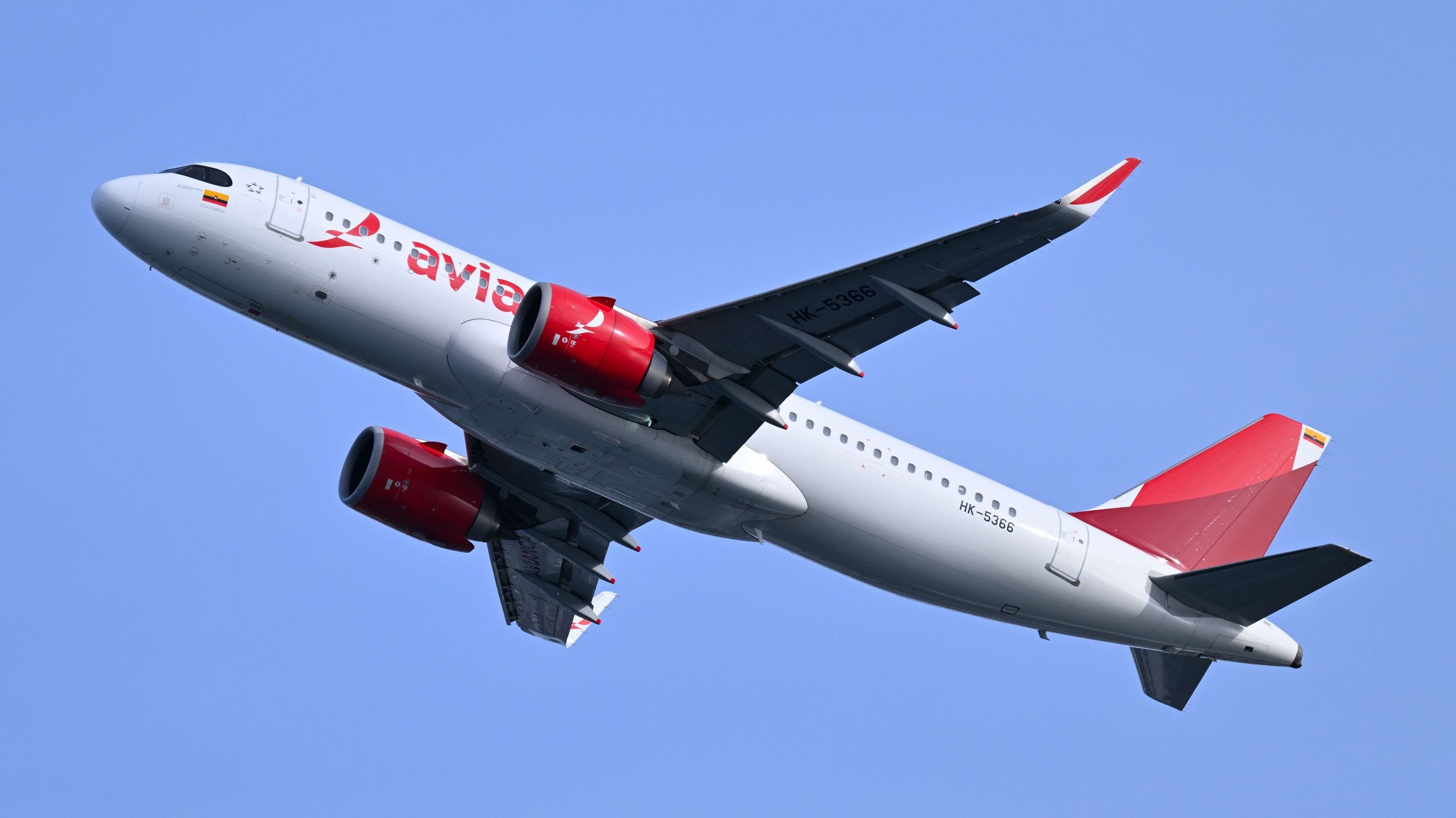
Under the Abra Group structure alongside Brazil’s GOL, the Colombian flag carrier just closed its most profitable year on a comparable basis, delivered a record $411 million EBITDAR in Q3 2025 alone, and took delivery of its first Airbus A320neo with the new Airspace cabin.
This strategic analysis report is an in-depth examination of the company as it stands in 2026: how it makes money, how its fleet is configured, and where it’s heading, how its network is shaped around three anchor hubs, who it competes with, and the specific risks that boards and stakeholders should be watching over the next 18 to 24 months.
Business Overview
Corporate Structure and Ownership
Avianca’s legal and reporting entity is Avianca Group International Limited, domiciled in England and consolidated into the broader Abra Group Limited holding company.
The Abra umbrella, which was finalized in 2022, brings together Avianca and GOL Linhas Aéreas under common ownership while preserving the two airline brands and their distinct operating certificates.
A third piece of the platform is the equity interest in Spanish wide-body operator Wamos Air, which Abra closed in late 2024 and which has been consolidated into Avianca’s financial statements since October 15, 2024 due to economic rights.
Wamos gives the group access to Airbus A330 wide-body capacity on an ACMI basis, which Avianca has been using to cover long-haul needs while it awaits its own new wide-body deliveries.
CORPORATE TREE (SIMPLIFIED, APRIL 2026)
Abra Group Limited (UK)
  ├── Avianca Group International Limited (AGIL)
  │     └── Avianca Colombia, Avianca Costa Rica, Avianca Ecuador,
  │         Avianca El Salvador, Avianca Cargo, LifeMiles
  ├── New Gol Parent S.A. (Brazil)
  │     └── GOL Linhas Aéreas
└── Strategic investment: Wamos Air (Spain)Financial Performance: Latest Twelve Months
On a pro forma basis that includes GOL for the full year, Abra Group closed calendar 2025 with $9.7 billion in total operating revenue, up 11.1% versus 2024. Adjusted EBITDAR reached $2.659 billion on a 27.4% margin, and Q4 2025 margin alone hit 30.6% on $2.684 billion of quarterly revenue.
Avianca’s standalone result stack (AGIL only) shows the same directional trend. Q3 2025 operating revenue came in at $1,509 million, a 12.8% year-over-year increase, while EBITDAR of $411 million marked the carrier’s fourth consecutive quarter of record EBITDAR on comparable periods.
Passenger revenue drove the bulk of the top line, but the “cargo and other” bucket, which is where Wamos and a faster-growing freight book land, expanded 31.3% to roughly $1.6 billion for the group in 2025. That mix shift matters because diversified revenue softens the earnings impact of any single-segment shock.
AGIL FINANCIAL SNAPSHOT — Q3 2025 (USD millions)
Total operating revenue:     1,509  (+12.8% YoY)
Adjusted EBITDAR:              411  (+15.5% YoY)
EBITDAR margin:             27.2%
Passengers carried:          9.7 million
Load factor:                82.9%
Routes / destinations:       169 / 83

Source: AGIL Q3 2025 Press ReleaseCredit Profile and Liquidity
The 2025 financial performance has flowed directly into the credit story. During 2025, both Moody’s and Fitch upgraded Avianca on the back of improved liquidity and tighter cost discipline.
At the Abra level, liquidity rose to $2.5 billion by year-end 2025 while net leverage was pulled down to 3.3x. That trajectory matters because it unlocks cheaper capital to finance the massive fleet book being delivered between now and 2032.
Revenue Growth Drivers
Four engines drove the 2025 result set.
First, a network redesign centered on the Bogotá, San Salvador and Medellín hubs grew total markets served by 23%, which is a structural capacity and connectivity gain rather than a yield trick.
Second, the rollout of a proper Business Class product across Avianca’s A320 fleet gave the carrier a premium revenue line it did not have for most of its post-restructuring years.
The airline has been gradually introducing a lie-flat Insignia Business Class cabin on its 787s and a “Premium” two-by-two recliner product on short- and medium-haul A320s, with Americas Business Class now available on domestic routes.
Third, LifeMiles continues to punch far above its weight. The loyalty unit reported a 72% year-over-year increase in Q3 2025 Third-Party Cash EBITDA, reaching $77 million for the quarter. That is essentially a fee-based ancillary business embedded within an airline.
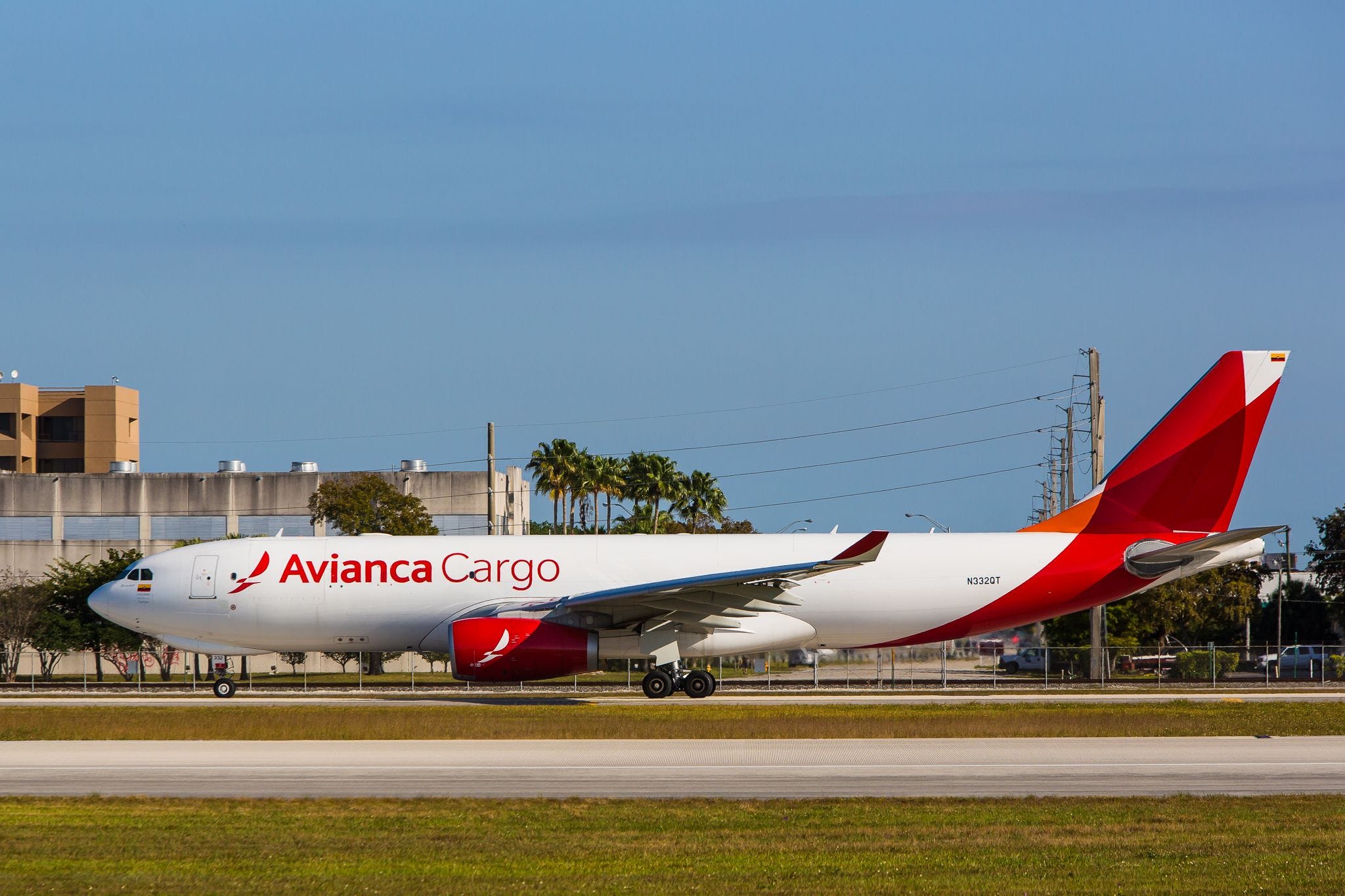
Fourth, Avianca Cargo delivered $157 million of revenue in Q3 2025, up 14.1% year over year. The freighter network has been adding capacity on key Latin America to Europe and US lanes, including wet-leased 767 capacity and new Maastricht freighter frequencies.
Key Services and Products
On the passenger side, Avianca sells a multi-cabin, multi-fare product line. Long-haul 787 services offer a 1-2-1 reverse-herringbone Insignia Business Class with 20 flat-bed seats alongside Economy.
On short- and medium-haul A320-family aircraft, the airline has moved to a three-cabin hybrid of Premium, Plus and Economy seating, with the Premium rows developed by Recaro in a two-by-two configuration. New A320neos are the first in Avianca’s fleet to feature Airbus’s Airspace cabin, with XL overhead bins and dynamic LED lighting.
Cargo, branded Avianca Cargo, is a separate operating segment anchored by a freighter fleet of 9 aircraft and the belly capacity of the passenger network. LifeMiles rounds out the portfolio as a coalition loyalty program selling miles to banks and retail partners across the Americas, plus redemption access across the Star Alliance.
Leadership Transition
In November 2025, Avianca announced that CEO Frederico Pedreira would step down effective February 28, 2026 after five years at the helm. The restructuring moves direct CEO responsibility for Avianca under Abra Group CEO Adrian Neuhauser, with Gabriel Oliva assuming the role of President of Avianca.
This is not simply an orderly succession. It signals Abra’s intent to more tightly integrate Avianca and GOL decisions at the holding level, from fleet allocation to network planning.
The structure Abra confirmed to press outlets is that the CEO position will remain under Abra Group with Neuhauser at the top.
Avianca Fleet: In-depth Analysis

Fleet Size and Composition
Avianca operates a total of 160 aircraft. The composition is 135 narrow-body passenger jets dedicated to short- and medium-haul flying, 16 wide-body passenger aircraft for long-haul, and 9 dedicated freighters.
AVIANCA FLEET AT A GLANCE
Narrow-body passenger:    135 aircraft
Wide-body passenger:       16 aircraft
Freighters:                 9 aircraft
TOTAL:                    160 aircraft
Typical average age:      ~10 years (pre-neo deliveries)
Primary narrow-body type: Airbus A320 family
Primary wide-body type:   Boeing 787-8
Star Alliance member:     Yes

Sources: Avianca Newsroom and the airline’s public fleet profile
Fleet Types and Seat Configurations
Airbus A320 Family (Narrow-body Backbone)
The A320 family is the operational heart of Avianca’s flying.
The airline operates a mix of A319, A320ceo, A320neo and A321ceo aircraft, with the A320ceo dominating the active narrow-body fleet.
New A320neos being delivered from the Airbus line in Toulouse carry a refreshed cabin architecture.
The first delivery was handed over on November 4, 2025, and it introduced XL overhead bins that add up to 60% more space for carry-on, dynamic LED mood lighting and three rows of Recaro-designed Premium seats in a two-by-two layout.
Boeing 787-8 Dreamliner (Long-haul Backbone)
Avianca’s sole long-haul passenger aircraft is the 787-8, which the airline confirmed in 2021 would be its only wide-body for long-haul flying.

Typical layouts include a 28-seat Business Class in 1-2-1 configuration plus 222 Economy seats, for a total of 250 seats, though three former Norwegian Air Shuttle 787-8s carry a denser 32J/259Y configuration.
The 787 has a range of roughly 13,600 kilometers, which makes Bogotá to Madrid, Bogotá to Barcelona and Bogotá to Rome comfortable non-stop flights and also supports the airline’s ability to reach most of North America directly from its Andean hubs.
Freighters (Avianca Cargo)
The 9-aircraft freighter fleet is centered on Airbus A330 and Boeing 767 freighters.
Avianca Cargo has been supplementing that core with wet-leased capacity in 2025, including additional 767-300F lift and specialized lanes to Maastricht and into Venezuela.
Fleet Strategy
The 234-Aircraft Narrow-body Order Book
The defining fleet decision of 2025 was Abra’s exercise of 50 additional A320neo options in October, which brought the total Avianca-destined A320neo order to 138 aircraft deliverable through 2032.
Combined with a 96-aircraft 737 MAX order destined primarily for GOL, the group holds a total narrow-body order portfolio of 234 aircraft.
ABRA GROUP NARROW-BODY ORDER BOOK (OCTOBER 2025)
Airbus A320neo family:   138 aircraft (Avianca) - deliveries to 2032
Boeing 737 MAX family:    96 aircraft (primarily GOL) - deliveries to 2030
Total narrow-body:       234 aircraft
This is the largest and most modern fleet order book in Latin America according to Abra’s own positioning, and it gives the group two decade-long fleet tracks to manage renewal and growth independently at the two operating airlines.
The A320neo family burns approximately 20% less fuel than the A320ceo aircraft it is replacing at Avianca, and also unlocks longer-range missions that the airline has been probing with routes such as Bogotá to Dallas-Fort Worth that it launched in May 2025.
Wide-body Strategy
Avianca’s long-haul fleet strategy pivoted mid-decade from a fragmented mix of aircraft types to a Boeing 787-8-only plan. That plan is now evolving again.
Abra signed agreements for up to seven Airbus A330neo aircraft that can be allocated to either Avianca or GOL based on market opportunities, supplementing a 2024 order for five Airbus A350-900s that will integrate over the coming years. Aviation Week reported that Abra is integrating Wamos Air more deeply as a transitional long-haul bridge while those new aircraft ramp.
For Avianca specifically, the near-term path is to use leased Wamos A330 capacity to cover peak-season wide-body need, then gradually bring in A330neos and A350-900s as they arrive. This is a pragmatic approach that avoids committing to massive capex before the capacity is actually needed.
Safety and Operational Continuity
In late 2025, Avianca disclosed that it had completed mandated software updates on 100% of its impacted A320 fleet within regulatory deadlines. The airline confirmed it completed the updates on December 2, 2025, following an industry-wide directive that affected a subset of A320-family computers.
That is an important data point for operational reliability. The way an airline handles fleet-wide safety bulletins is a leading indicator of its technical operations quality.
Regional Flying and ATR Wet-lease
Avianca’s own regional operation, Avianca Express, historically operated ATR 72-600 turboprops for thin intra-Colombia routes.
That ATR operation was largely wound down, and in late 2025 the carrier moved to wet-lease ATR72-600 regional capacity from a third-party operator rather than own and crew the aircraft directly.
This is a capital-efficient approach. It preserves regional connectivity into small Colombian cities without dragging the balance sheet with a sub-scale turboprop subfleet.
Fleet Age and Modernization Curve
At the narrow-body level, Avianca’s average A320-family fleet age is roughly 10.5 years.
The aggressive A320neo induction over the 2025 to 2032 delivery window will compress that average meaningfully each calendar year, reducing unit fuel burn, maintenance expense and CO2 emissions per seat.
At the wide-body level, the 787-8s range from several years old to new deliveries received in 2024, keeping the long-haul fleet relatively young. The A350-900s arriving later this decade will push the wide-body mean age down further.