


Executive Summary
British Airways closed 2025 as the single largest profit contributor inside International Airlines Group (IAG), posting an operating profit of £2,230 million and helping the parent deliver a record €5.024 billion group-wide operating result on €33.213 billion of revenue.
The airline operates a mainline fleet of around 294 to 297 aircraft across eight widebody and narrowbody types, with a firm order book stretching through 2033 that includes 32 Boeing 787-10s, new Boeing 777-9s, additional Airbus A350-1000s, and incremental A320neo and A321neo deliveries.
For winter 2026, the carrier is growing its long-haul programme by approximately 9%, launching Melbourne and Colombo as brand-new destinations, while simultaneously trimming roughly 19 to 20 underperforming short-haul city pairs to concentrate resources at London Heathrow.
A £7 billion multi-year transformation programme is funding fleet modernisation, lounge upgrades, the rollout of Club Suite across almost the entire long-haul fleet, and an aggressive digital rebuild spanning the website, the mobile application, revenue management and payments.
Recommended - Read Full Reports


Read All Reports
Table of Contents
Executive Summary
Key Facts: Company Profile
Business Overview
Corporate Structure and Ownership
Financial Analysis: Revenue, Profit and Margin
Revenue Growth Drivers
Key Services and Products
Subsidiary Airlines: CityFlyer and Euroflyer
Fleet: In-Depth Analysis
Fleet Size and Composition
Fleet Age and Renewal Cycle
Widebody Strategy
A350-1000
Boeing 787 Family
Boeing 777 Family
Airbus A380
Short-Haul Strategy: Airbus A320 Family
Regional Strategy: Embraer E-Jets at BA CityFlyer
Aircraft Configuration Strategy Summary
Route Network, Major Destinations and Strategy
Network Footprint
North American Strategy: The Atlantic Franchise
Asia-Pacific Strategy and the Melbourne Launch
European Network Strategy
Emerging Markets: South Asia, Africa and the Middle East
Network Strategy Principles
Major Operational Bases (Hubs)
Primary Hub: London Heathrow
Heathrow Third Runway Debate
Secondary Hub: London Gatwick
Specialist Hub: London City
Bases and Outstations
Competitive Position
Major Competitors
British Airways vs Virgin Atlantic
British Airways vs Air France-KLM
British Airways vs Lufthansa Group
British Airways vs Emirates and Gulf Carriers
British Airways vs United and Delta
British Airways vs Ryanair and easyJet
The £7 Billion Transformation Plan
Fleet and Product Investments
Digital Transformation
Colleague Experience
Sustainability Strategy
oneworld Alliance and the Atlantic Joint Business
Key Risks, Probabilities and Scenarios
1. Heathrow Capacity and Cost Risk
2. Fuel Price and SAF Mandate Risk
3. Geopolitical and Demand Shock Risk
4. Industrial Relations Risk
5. Competitive and Product Risk
6. Third Runway Political Risk
Adverse Scenario: Prolonged High-Fuel + Recession
Base Case Scenario
Upside Scenario
Customer Experience Positioning and Brand
Cargo Operations: IAG Cargo and Belly Capacity
Technology Platform and Operations
Workforce and Culture
Regulatory Environment and ETS / UK ETS
My Final Thoughts
Official Sources and Data
Key Facts: Company Profile
British Airways plc is the flag carrier of the United Kingdom and the principal operating subsidiary within International Airlines Group, the Anglo-Spanish holding created in 2011 through the merger of BA and Iberia.
The company traces its corporate lineage back to 1974 when it was formed from the merger of BOAC, BEA and two smaller regional carriers, giving it more than five decades of continuous brand equity in the global premium travel segment.
BRITISH AIRWAYS PROFILE
------------------------------------------------
Legal entity      : British Airways plc
Parent            : International Airlines Group (IAG)
Chairman & CEO    : Sean Doyle
Established       : 1974 (current corporate form)
HQ / Registered   : Waterside, Harmondsworth, UK
Primary Hub       : London Heathrow (Terminal 3 & Terminal 5)
Secondary Hubs    : London Gatwick, London City
Subsidiaries      : BA CityFlyer, BA Euroflyer
Alliance          : oneworld (founding member, 1999)
Fleet (mainline)  : ~294-297 aircraft (8 main types)
2025 Op. Profit   : £2,230 million
2025 Op. Margin   : ~15.2%
Loyalty Programme : The British Airways Club / Avios
Stock (via IAG) : LSE: IAG / BME: IAGThe airline’s iconic Speedmarque livery and ribbon tail design remain among the most recognised visual identifiers in commercial aviation, and management is channeling the transformation programme into reinforcing that premium positioning rather than chasing low-cost carriers on price.
Sean Doyle serves as Chairman and Chief Executive Officer, having rejoined BA in October 2020 after a spell leading Aer Lingus, and he has overseen the entire post-pandemic reconstruction of the business from loss-making carrier to record profit generator.

Business Overview
Corporate Structure and Ownership
British Airways sits inside IAG alongside Iberia, Vueling, Aer Lingus and LEVEL, plus the group’s loyalty arm IAG Loyalty and its cargo division IAG Cargo.
At 31 December 2025, the parent held an investment of €4.684 million in British Airways, making it by far the most valuable operating company in the portfolio.
The group structure matters because BA does not independently trade on public markets; instead, investors gain exposure through IAG, which is dual-listed in London and Madrid, and BA’s performance is broken out as a separate reportable segment inside IAG’s financial disclosures.
GROUP STRUCTURE
---------------
International Airlines Group (IAG)
├── British Airways plc (flag carrier, UK)
│   ├── BA CityFlyer (London City regional)
│   └── BA Euroflyer (London Gatwick short-haul)
├── Iberia (Spain flag carrier)
├── Vueling (Spain low-cost)
├── Aer Lingus (Ireland)
├── LEVEL (long-haul value brand)
├── IAG Loyalty (Avios currency)
└── IAG Cargo
Financial Analysis: Revenue, Profit and Margin
IAG delivered a record group operating profit of €5.024 billion for 2025, representing a 13.1 percent increase on 2024, with the result carried most heavily by its British and Spanish flag carriers.
Within that total, British Airways contributed £2,230 million in operating profit, an uplift of roughly $245 million year on year and equivalent to an operating margin of approximately 15.2 percent at the airline level.
Total group revenue climbed 3.5 percent to €33.213 billion, a figure that reflects both steady premium leisure demand across the North Atlantic and a disciplined approach to capacity additions rather than a return to pre-pandemic growth-at-any-cost behaviour.
Net profit at the group level rose 22.3 percent year on year to approximately €3.3 billion, while pre-tax profits increased around 20 percent to €4.5 billion even as total group-wide passenger numbers edged slightly lower, underlining a clear yield-over-volume strategy.
IAG & BA KEY FINANCIALS (FY 2025)
---------------------------------
IAG Group Revenue         : €33.213 billion  (+3.5% YoY)
IAG Operating Profit      : €5.024 billion   (+13.1% YoY)
IAG Operating Margin      : 15.1%
IAG Net Profit            : €3.3 billion     (+22.3% YoY)
BA Operating Profit       : £2,230 million   (record)
BA Operating Margin       : ~15.2%
Shareholder Return (new) : €1.5 billion buyback programmeRevenue Growth Drivers
The single largest driver of profit recovery at BA has been premium leisure demand on the North Atlantic, where Club World, Club Suite and First Class cabins have consistently sold out months ahead on routes to New York, Los Angeles, Miami, Dallas and Boston.
Pricing power in long-haul premium classes is reinforced by the fact that BA remains the only carrier offering four long-haul cabins, with a distinct First Class product on top of Club Suite, premium economy and long-haul economy.
A second driver is the transatlantic Atlantic Joint Business, a metal-neutral revenue sharing arrangement between British Airways, American Airlines, Iberia, Finnair and Aer Lingus that effectively allows BA to sell seats on dozens of US domestic connections at Boston, Dallas, Chicago, Philadelphia and Miami as if they were BA flights.
Cargo has also performed strongly through IAG Cargo, though passenger revenue remains the dominant line. Ancillary revenue streams including paid seat selection, checked-bag fees, pre-order meals, lounge upgrades and in-flight Wi-Fi through the Club loyalty programme round out the mix.
Key Services and Products
The airline operates a four-cabin long-haul product on most wide-body aircraft, comprising First, Club Suite business class, World Traveller Plus premium economy and World Traveller economy, while short-haul flights offer Club Europe and Euro Traveller in a flexible convertible-row layout.
First Class remains a genuine differentiator versus most European competitors. The cabin is typically configured with 8 to 14 fully enclosed suites and is central to the airline’s positioning at the very top of the premium market, particularly on Heathrow to New York JFK, Los Angeles, Dubai, Singapore and Washington services.
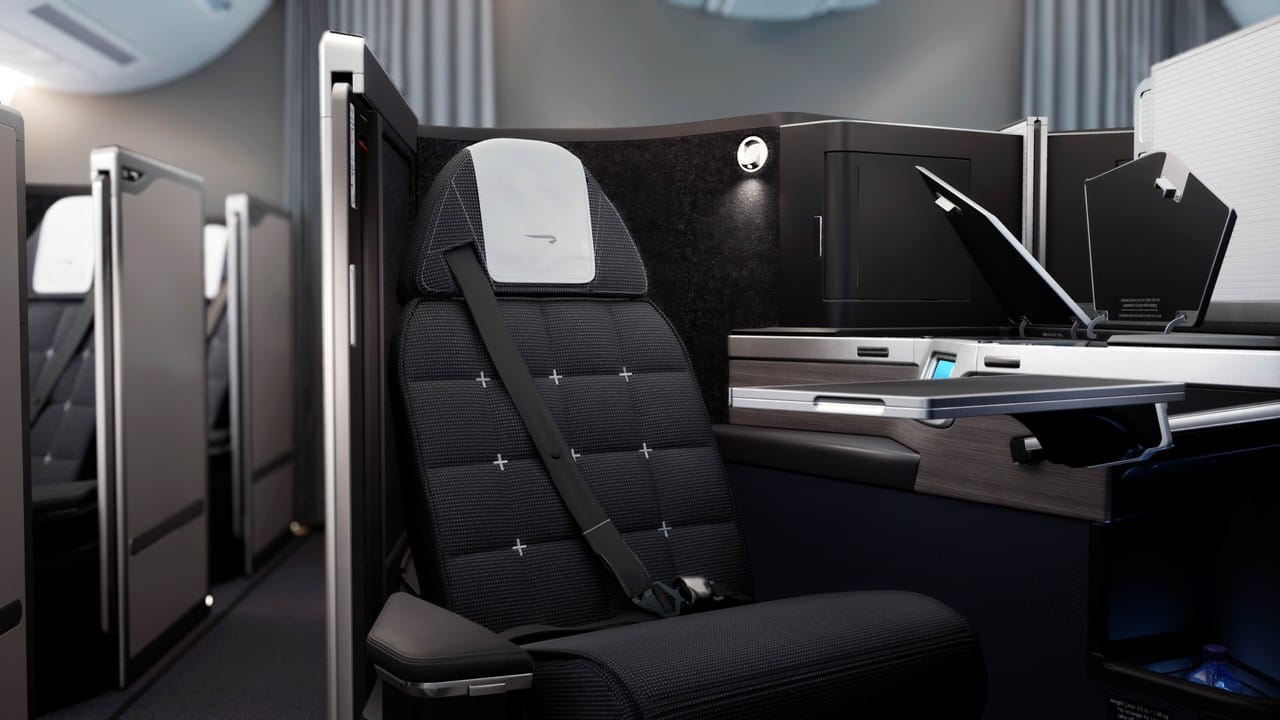
Club Suite, introduced on the A350 in 2019, offers direct aisle access, a privacy door and an 18.5 inch high-definition screen. The rollout has continued at pace, with refurbished 777-200s and 787-9s entering service progressively across 2024 and 2025.
Through The British Airways Club loyalty programme, members earn Avios and tier points across six tiers, with benefits ranging from free seat selection through to Concorde Room access and guaranteed availability at the very top of the ladder.
BRITISH AIRWAYS CABIN PRODUCTS (LONG-HAUL)
-------------------------------------------
First           : 8-14 suites, fully enclosed, dedicated crew
Club Suite      : 1-2-1 layout, aisle access, privacy door
World Trav+     : Premium economy, 38" pitch, larger IFE screen
World Traveller : Long-haul economy, 31" pitch

SHORT-HAUL
----------
Club Europe     : Convertible 3-3 row, middle seat blocked
Euro Traveller : Standard economySubsidiary Airlines: CityFlyer and Euroflyer
BA CityFlyer is the London City-based regional operating subsidiary, flying an all-Embraer E-Jet fleet to destinations that cannot be served from Heathrow due to the urban airport’s short runway and steep approach.
BA Euroflyer was launched at London Gatwick in March 2022 to rationalise the short-haul cost base following the pandemic. The unit operates Airbus A320 family aircraft from Gatwick on leisure-heavy routes across Europe and North Africa.
For summer 2026, CityFlyer is adding three new routes from London City, and the combined BA group including CityFlyer and Euroflyer is set to operate more than 270 route pairs through the peak season.
Fleet: In-Depth Analysis
Fleet Size and Composition
British Airways operates one of the largest and most diverse mainline fleets of any European airline. Industry data places the mainline fleet in the region of 294 to 297 aircraft, excluding the Embraer regional jets of CityFlyer, which add a further contingent of short-field specialists.
The composition spans eight main aircraft families on the mainline: the Airbus A319, A320ceo, A320neo, A321neo, A321ceo, A350-1000, A380-800, Boeing 777-200ER, 777-300ER and three variants of the Boeing 787 (787-8, 787-9 and on-order 787-10).
This eight-type fleet provides flexibility across mission lengths from sub-2-hour European flights to 17-hour Perth-style ultra-long-haul sectors, though it also carries higher training, maintenance and spares costs compared with more unified fleets such as Ryanair or easyJet.

MAINLINE FLEET COMPOSITION (INDICATIVE, EARLY 2026)
---------------------------------------------------
Long-haul widebody
  Airbus A380-800 ............ 12 aircraft (4-class)
  Airbus A350-1000 ........... 18 aircraft (3-class)
  Boeing 777-200ER ........... ~40 aircraft (3/4-class)
  Boeing 777-300ER ........... ~16 aircraft (4-class)
  Boeing 787-8 ............... 12 aircraft (3-class)
  Boeing 787-9 ............... 18 aircraft (4-class)

Short-haul narrowbody
  Airbus A319 ................ remaining minority
  Airbus A320ceo/neo ......... majority backbone
  Airbus A321ceo/neo ......... growing segment

On order (2026-2033)
  Boeing 787-10 .............. 32 aircraft
  Boeing 777-9 ............... firm order (IAG Group)
  Airbus A350-1000 ........... incremental top-ups
  Airbus A320neo ............. 7 remaining deliveries by end-2026
Airbus A321neo ............. 4 remaining deliveries by end-2026Fleet Age and Renewal Cycle
The mainline fleet has been steadily rejuvenated since the pandemic, with the retirement of almost all of the 32-strong Boeing 747-400 fleet during 2020 removing the oldest and least efficient widebody segment.
The average age has moved meaningfully younger as a result, though BA still flies some of Europe’s oldest 777-200ERs, several of which entered service before the turn of the millennium.
The airline’s own guidance signals that A380 refurbishment will start in mid-2026, which is expected to dramatically improve the onboard product on the flagship double-decker, and that retrofit of Boeing 777 and 787 family aircraft is already complete or well underway.
Widebody Strategy: A350-1000
The Airbus A350-1000 has become the backbone of BA’s post-Covid long-haul network, delivered in a three-class configuration without First Class, featuring 56 Club Suite business class seats, 56 World Traveller Plus and 219 World Traveller seats.
Eighteen A350-1000s are in operation, and these aircraft are deployed on premium leisure-heavy routes where the three-class configuration matches demand better than adding a small and under-utilised First cabin.
Signature A350 routes include London Heathrow to Bangalore, Toronto, Miami, Boston, Dubai, Riyadh, Singapore and Tel Aviv when operated, plus seasonal services to Cape Town, Miami and Chennai.
The in-production order book includes additional A350-1000s, with IAG confirming further deliveries stretching to 2030 as part of a long-haul fleet expansion that will lift the widebody total materially higher than today.
Widebody Strategy: Boeing 787 Family
The 787 family is pivotal for right-sized long-haul growth into secondary markets where a 300-plus-seat A350 or 777 would be too large. BA currently flies the 787-8 in a 214-seat three-class layout, and the 787-9 in a 216-seat four-class layout that includes First.

In May 2025, IAG confirmed a new firm order for 32 Boeing 787-10 aircraft for BA, with deliveries expected to start from 2027 and run through to 2030, alongside 21 Airbus A330-900neos destined primarily for Iberia.
The 787-10 is the longest stretched variant of the Dreamliner family and provides meaningful unit-cost improvements versus the 777-200ER on routes where ultimate range is not the binding constraint, making it well-suited to replacing the oldest 777-200s from late 2020s onward.
BRITISH AIRWAYS 787 SUB-FLEET (2026)
------------------------------------
787-8 : 12 aircraft, 3-class, ~214 seats
        - Typical: secondary business/leisure long-haul
787-9 : 18 aircraft, 4-class (First+Club+WTP+WT), ~216 seats
        - Typical: premium-heavy mid-capacity routes
787-10: 32 on order for delivery 2027-2030
- Will replace oldest 777-200ERsWidebody Strategy: Boeing 777 Family
The Boeing 777 remains the largest widebody family in the BA fleet by headcount, split between the older 777-200ERs, a handful of younger 777-200s and the more modern 777-300ERs.
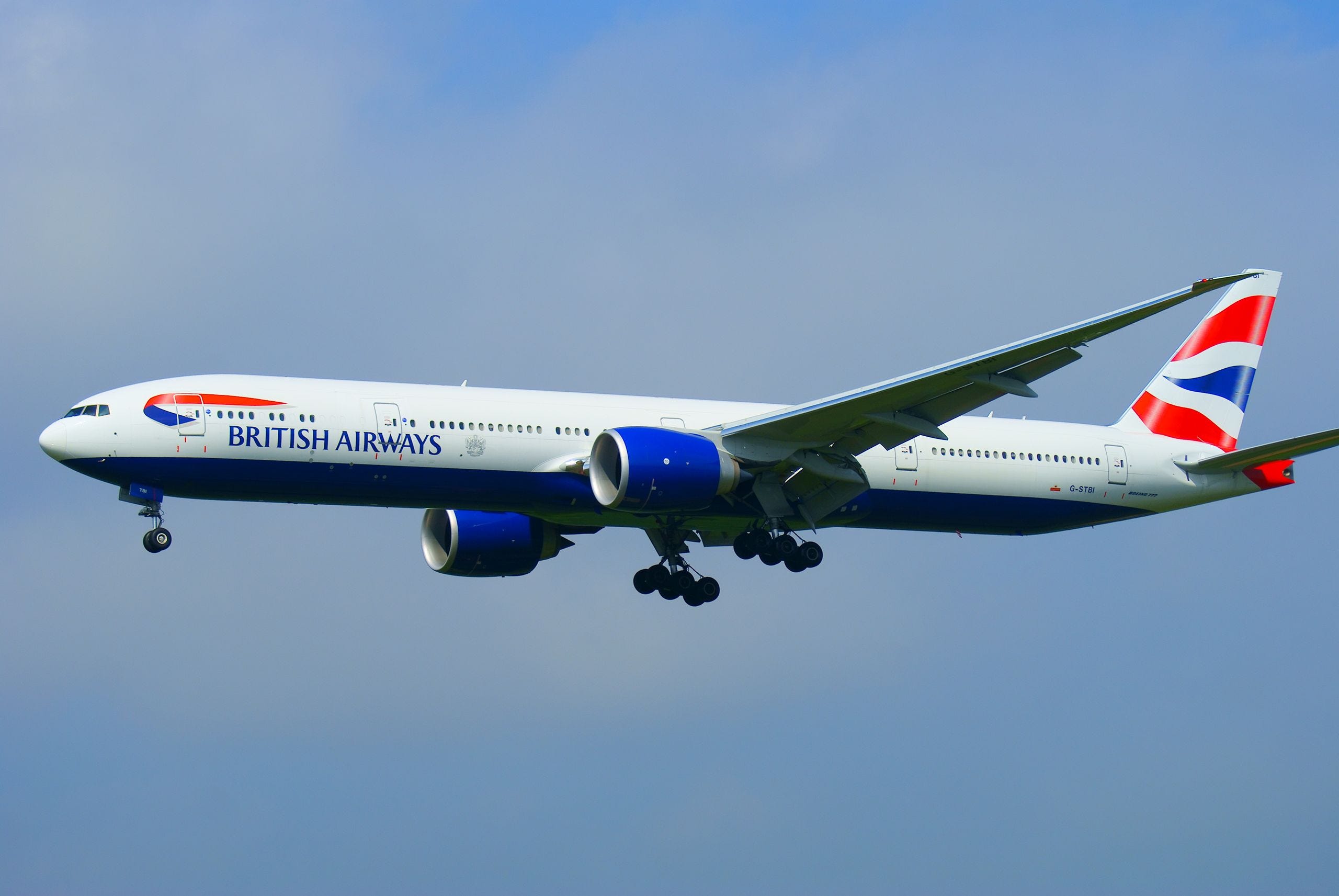
The 777-300ERs, configured with First, Club Suite, premium economy and economy at around 297 seats, are workhorses on the highest-density long-haul services, particularly London Heathrow to New York JFK, Los Angeles, Dubai and Chicago.
Looking further out, IAG’s long-haul order book includes a confirmed allocation of Boeing 777-9 aircraft as part of the 44 long-haul aircraft adding to the network by 2033, with the first 777-9 arrivals expected towards the end of the decade.
The 777-9 will be the largest and most fuel-efficient twin-engine widebody ever operated by BA, capable of lifting 426 seats in a typical IAG configuration and replacing the oldest 777-200ERs on ultra-dense premium routes.
Widebody Strategy: Airbus A380
The twelve-aircraft A380 fleet remains one of the most commercially debated parts of the business, with the double-decker deployed on Heathrow to Los Angeles, Miami, Singapore, Dubai, Johannesburg and Washington at various points in the network.
Management has publicly confirmed that refurbished A380s will enter service from mid-2026, with the full 12-aircraft programme set to complete by the end of 2027.
The retrofit will see each aircraft gain 12 new First Class suites with 79 inch lie-flat beds and 32-inch screens at the front of the main deck, followed by 110 Club Suite business class seats, 84 World Traveller Plus premium economy seats and 215 World Traveller economy seats.
This 110-seat business-class cabin will be the largest premium cabin on any BA aircraft and arguably among the largest hard-shell business cabins anywhere in commercial aviation.
Short-Haul Strategy: Airbus A320 Family
The short-haul backbone is the Airbus A320 family, with A319, A320ceo, A320neo, A321ceo and A321neo variants deployed across Heathrow, Gatwick and short-range services from London City connections.
Published industry trackers suggest BA will receive a further 7 A320neo and 4 A321neo aircraft by the end of 2026, progressively retiring the oldest A319 and early A320ceo airframes and reducing unit fuel burn on European routes.
The neos also support a new short-haul cabin product, with larger overhead bins, updated seat trim, improved trim-weight economics and the option of USB-C power at each seat on the latest deliveries.
Regional Strategy: Embraer E-Jets at BA CityFlyer
BA CityFlyer, BA’s regional subsidiary based at London City Airport, operates an all-Embraer E-Jet fleet of E170s, E190s and newer E190-E2 and E195-E2 aircraft.
The Embraers are specifically chosen for their steep-approach certification, which is mandatory at London City, and their ability to operate from runways too short for conventional narrowbodies.
The E-Jets provide a crucial feed of premium business traffic into Heathrow via short domestic and European sectors, and they also operate point-to-point services from the City airport directly to Edinburgh, Glasgow, Dublin and major European financial centres.
Aircraft Configuration Strategy Summary
The configuration strategy is built around four principles: premium-heavy cabins on routes with structural business demand, right-sized aircraft at each mission length, retrofit rather than replacement for structurally sound airframes, and fleet simplification wherever operationally viable.
The ongoing Club Suite rollout across the 777 and 787-9 sub-fleets is central because it lifts the economic value of each existing airframe rather than forcing early retirement of otherwise efficient aircraft.
FLEET STRATEGY PILLARS
----------------------
1. Premium-heavy long-haul cabins to maximise RASK
2. Right-sized widebodies: A350 for prem-leisure,
   787 for secondary routes, 777/A380 for dense prem
3. Retrofit ahead of replacement where airframes
   remain structurally and economically viable
4. Gradual narrowbody renewal via A320neo/A321neo
5. Protect Heathrow slots through disciplined upgauging