
China Southern Airlines is Asia’s largest airline by fleet size and China’s leading carrier for 35 consecutive years.
It has demonstrated remarkable resilience through challenging economic conditions while implementing strategic initiatives that will shape its future for years to come.
Let’s get started with our comprehensive analysis of China Southern Airlines.
Table of Contents
Financial Performance: A Return to Profitability
Q3 2025 Results Signal Recovery Momentum
China Southern Airlines reported strong financial performance in Q3 2025, marking a significant milestone in the carrier’s post-pandemic recovery.
The airline achieved operating revenue of 51.37 billion yuan during the third quarter, representing a 3.01% increase compared to the same period in 2024. More impressively, net profit attributable to shareholders reached 3.84 billion yuan, up 20.26% year-over-year, demonstrating improved operational efficiency and cost management.
For the nine-month period ending September 30, 2025, China Southern generated total revenue of 137.7 billion yuan, reflecting a 2.2% year-on-year increase.
This performance is particularly noteworthy as it represents the first profitable nine-month financial result for China’s “big three” airlines since the onset of the COVID-19 pandemic.
CHINA SOUTHERN AIRLINES - Q3 2025 FINANCIAL HIGHLIGHTS

Operating Revenue:    51.37 billion yuan (+3.01% YoY)
Net Profit:           3.84 billion yuan (+20.26% YoY)
9-Month Revenue:      137.7 billion yuan (+2.2% YoY)
Annual Revenue (TTM): 177.23 billion yuan
Also read:
Factors Driving Profitability
Several key factors contributed to China Southern’s improved financial performance during 2025. Stable jet fuel prices provided relief from one of aviation’s most volatile cost components, while the appreciation of the yuan against the US dollar reduced the airline’s dollar-denominated expenses.
These external factors, combined with the carrier’s internal cost-control measures, resulted in wider profit margins across operations.
However, industry experts caution that some of these advantages may prove temporary. Currency fluctuations remain unpredictable, and any sustained depreciation of the yuan could increase operational uncertainty given China Southern’s significant exposure to US dollar-denominated costs, including aircraft leases, fuel purchases, and international payments.
Operational Metrics: Strong Traffic Growth
Passenger Traffic Performance
China Southern demonstrated robust passenger traffic growth throughout 2025. In October 2025, the airline experienced an 8.83% increase in passenger traffic year-over-year, with the passenger load factor reaching 87.9%. This strong load factor indicates efficient capacity utilization and healthy demand across the network.
The airline’s August 2025 performance showed equally impressive results, with 16.9 million passengers carried and an 87% load factor. Breaking down the traffic by region:
Market Segment | Passengers (August 2025) | Growth Rate |
|---|---|---|
Domestic | 14.8 million | +4.1% |
International | 1.9 million | +12.4% |
Regional | Not specified | Growth recorded |
The stronger growth in international markets reflects China Southern’s strategic focus on rebuilding its overseas network, which remains approximately 20% below pre-pandemic levels but has shown consistent recovery momentum since 2023.
Capacity Expansion and Fleet Additions
China Southern expanded its passenger capacity by 7.53% in October 2025, with particularly notable growth in international routes. The airline added four new aircraft to its fleet during the month, supporting this capacity expansion strategy.
China Southern operates a fleet of 704 aircraft with an additional 17 on order, maintaining its position as one of the world’s largest airline fleets with an average age of 9.2 years.

Image source: airline-suppliers.com
Fleet Composition and Modernization Strategy
Current Fleet Overview
China Southern operates one of the most diverse and extensive fleets in global aviation. The carrier’s fleet comprises both narrow-body and wide-body aircraft from multiple manufacturers, providing operational flexibility across its domestic and international network.
Narrow-Body Fleet (Approximately 539 Aircraft):
Airbus A320 family (A319, A320, A321)
Boeing 737 series (737-800, 737 MAX)
COMAC C919 (recently introduced)
Wide-Body Fleet (Approximately 113 Aircraft):
Airbus A330-300 (25 aircraft)
Airbus A350-900 (20 aircraft with 30 more being equipped with HBCplus connectivity)
Boeing 777-300ER (15 aircraft)
Boeing 787-8 (20 aircraft)
Boeing 787-9 (30 aircraft)
Cargo Fleet:
Boeing 777-200F (8 freighters)
Strategic Fleet Decisions
China Southern has made several significant fleet decisions that reflect its long-term strategic priorities.
The airline retired its Airbus A380 fleet in November 2022, with the last two aircraft flown to storage at Mojave Air and Space Port in December 2022. The retirement decision, driven by market challenges following the pandemic, demonstrates the carrier’s willingness to optimize fleet efficiency even at the cost of prestige aircraft.
More recently, China Southern announced plans to divest its entire Boeing 787-8 fleet, signaling a potential consolidation toward newer, more fuel-efficient aircraft types. This decision aligns with the airline’s fleet modernization strategy and sustainability commitments.
COMAC C919 Integration
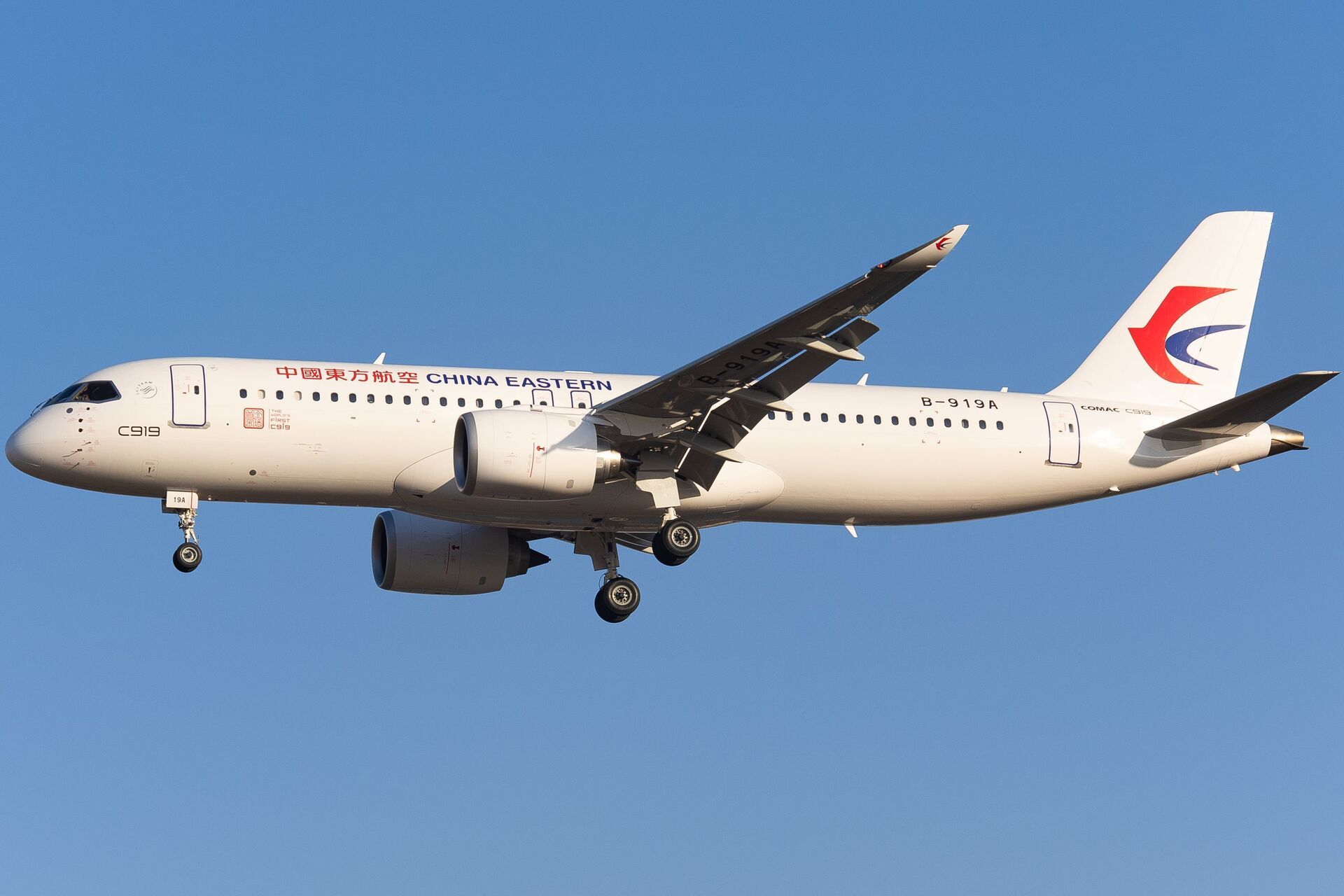
A defining element of China Southern’s fleet strategy is its role as a launch customer for the domestically-produced COMAC C919 aircraft.
The airline commenced commercial operations of the C919 on the Guangzhou-Ningbo route starting November 18, 2024. By August 2025, China Southern’s C919 fleet had transported 460,000 passengers across 14 domestic destinations including Guangzhou, Shanghai, Hangzhou, and Chengdu.
The C919 aircraft operated by China Southern features a three-class cabin configuration with 164 seats (8 business class seats and 156 economy seats) and includes modern amenities such as power outlets throughout the cabin.
The airline plans to gradually expand C919 routes to additional destinations including Beijing Daxing International Airport, supporting both the domestic aircraft program and China’s broader aviation industry development goals.
Also read:
Network Strategy: Dual Hub Approach
Guangzhou Hub Dominance
China Southern’s network strategy centers on a dual-hub model with primary operations based at Guangzhou Baiyun International Airport.
The carrier operates 485 flights daily from its Guangzhou hub, making it the dominant carrier at one of Asia’s busiest airports. The airline has developed what it calls the “Canton Route” strategy, emphasizing Guangzhou’s geographic advantages for connecting passengers between different regions.
The Canton Route strategy highlights specific operational benefits. For example, passengers traveling to Australia via Guangzhou experience the lowest deviation rate and save approximately two hours compared to transfers via Beijing or Shanghai.
This geographic efficiency, combined with China Southern’s extensive domestic network radiating from Guangzhou, creates a compelling value proposition for both point-to-point and connecting passengers.
Beijing Daxing Secondary Hub
China Southern has also established significant operations at Beijing Daxing International Airport, operating 221 daily flights from this secondary hub. The carrier established a dedicated subsidiary to manage Beijing operations, reflecting the strategic importance of maintaining a strong presence in China’s capital region.
The dual-hub strategy allows China Southern to serve different market segments effectively.
Guangzhou connects southern China to international destinations and serves as a gateway to Southeast Asia and Oceania, while Beijing operations focus on northern China, serving business travelers and connecting to international routes targeting Europe and North America.
International Expansion: Accelerating Recovery
Route Network Growth
China Southern has aggressively expanded its international network throughout 2025, recognizing the significant profit potential in overseas markets.
According to Cirium schedules data, the airline added a net 15 international routes in Q3 2025 compared to Q3 2024, with particular focus on European and South Asian market segments.
Notable International Route Additions in 2025:
REGION          NEW ROUTES              FREQUENCY
Australia       Guangzhou-Darwin        3x weekly
                Guangzhou-Sydney        4x daily (Dec-Feb)
Europe          Guangzhou-Madrid        3x weekly
                (via Iberia codeshare)
Southeast Asia  Multiple cities         Various frequencies
Middle East     Saudi Arabia routes     Expanding
China Southern announced plans to increase Guangzhou-Sydney flights to four daily round trips from December 13, 2025, to February 24, 2026, representing a major capacity increase to meet peak summer demand in the Southern Hemisphere.
The airline also launched its first service to Spain, further diversifying its European network.
Strategic Route Selection
China Southern’s international expansion focuses on several key principles. The airline prioritizes routes where Guangzhou offers geographic advantages, particularly connections between China and Southeast Asia, Oceania, and selected European destinations. The carrier also targets markets with strong trade relationships with China, supporting both passenger and cargo operations.
The Darwin route launch in December 2025 exemplifies this strategy, providing Darwin with its first nonstop link to mainland China in nearly six years. This route serves both tourism and trade purposes, connecting Australia’s Northern Territory with one of the world’s largest aviation markets.
Strategic Partnerships and Codeshare Agreements
Expanding Global Connectivity
Despite withdrawing from the SkyTeam alliance in 2019, China Southern has actively developed an extensive network of bilateral partnerships that enhance its global reach without alliance membership constraints.
Throughout 2025, the airline announced several significant codeshare agreements that expand passenger options and strengthen its international network.
Key 2025 Partnership Developments:
Partner Airline | Agreement Type | Key Routes/Benefits | Effective Date |
|---|---|---|---|
Iberia | Codeshare | Madrid-Guangzhou connectivity, Latin America access | December 2025 |
Virgin Australia | Codeshare | Enhanced Oceania coverage, multiple Australian cities | Early 2026 |
IndiGo | Codeshare MoU | Delhi-Guangzhou, access to Indian domestic network | November 2025 |
Qatar Airways | Expanded Codeshare | Beijing Daxing-Doha, 15 destinations via Doha hub | October 2025 |
Air Astana | Codeshare | Kazakhstan-China trunk routes | August 2025 |
The partnership with Iberia is particularly significant, as it provides China Southern passengers with improved access to Latin American destinations through Madrid, a market segment where the airline previously had limited presence. The agreement operates three weekly flights between Madrid and Guangzhou on Tuesdays, Thursdays, and Saturdays.
The Virgin Australia codeshare agreement, signed in December 2025, substantially enhances China Southern’s Oceania network coverage, allowing passengers to connect seamlessly to multiple Australian cities beyond the carrier’s own served destinations.


Digital Transformation and Technology Innovation
2024 Digital Transformation Action Plan
China Southern has embraced digital transformation as a core strategic pillar, implementing its 2024 Digital Transformation Action Plan to guide technology development across operations.
The airline’s approach emphasizes what it calls the “Five Modernizations” strategy, which prioritizes digital tools to improve operational efficiency, enhance customer experience, and support decision-making processes.
Operational Technology Systems
The carrier has made substantial investments in operational technology. China Southern implemented an Operational Service Management Construction Project that delivered over 200 customized solutions addressing specific operational needs. The project’s core aim is to streamline operations and integrate various systems for improved coordination across departments.
China Southern uses advanced flight planning solutions from Lufthansa Systems, enabling maximum operational efficiency and reliability in route planning. These systems optimize fuel consumption, reduce flight times, and improve on-time performance through sophisticated algorithms and real-time data analysis.
Passenger-Facing Digital Services
The airline has also focused on digital improvements that directly benefit passengers. China Southern e-Travel represents a comprehensive mobile platform integrating booking, payment, check-in, and post-flight services. The system uses artificial intelligence to provide personalized recommendations and customer service, reducing passenger friction throughout the travel journey.
Recent investments include equipping 30 Airbus A350 aircraft with HBCplus connectivity systems, providing passengers with high-speed internet access at 30,000 feet. This enhancement positions China Southern competitively against international carriers that have made in-flight connectivity a standard expectation for premium travel.
Sustainability Initiatives and Environmental Commitments
Net-Zero Emissions Target
China Southern has established ambitious sustainability goals, committing to achieve net-zero emissions by 2050. This long-term target aligns with international aviation industry commitments and demonstrates the carrier’s recognition of climate change as a material business risk and societal responsibility.
To support this objective, the airline has set an intermediate goal of achieving a 50% reduction in net carbon emissions by 2050 compared to baseline levels. This phased approach allows for progressive implementation of emission reduction technologies and operational improvements over time.
Green Aviation Ecosystem
China Southern has developed what it describes as a green aviation ecosystem characterized by “air-ground integration.” The airline’s clean energy transition initiatives and environmental programs have earned it recognition, with China Southern ranking among the world’s top five airlines in sustainability performance according to industry assessments.
The airline has launched seven major environmental action programs, including:
Flight efficiency optimization
Energy conservation and carbon reduction
Sustainable aviation fuel (SAF) adoption
Ground operations electrification
Waste reduction and recycling
Water conservation
Environmental awareness campaigns
Operational Environmental Measures
From January to July 2025, China Southern’s environmental measures resulted in a cumulative reduction of 557,000 tons in jet fuel consumption and a decrease of 1.75 million tons in carbon emissions, according to China’s State Action Plan submitted to the International Civil Aviation Organization (ICAO).
The carrier values low-carbon and energy-saving practices, adopting various measures to enhance fuel efficiency. These include optimized flight paths, reduced auxiliary power unit usage during ground operations, single-engine taxiing procedures, and weight reduction initiatives throughout the cabin and cargo operations.
China Southern also participates in environmental initiatives beyond its immediate operations. The airline supports Ethiopia’s Green Legacy Initiative through tree-planting programs, contributing to global reforestation efforts and promoting climate resilience in developing nations.
Cargo Operations: Growing Freight Business
Cargo Network Expansion
China Southern operates a substantial cargo business alongside its passenger operations, utilizing both dedicated freighters and belly cargo space on passenger aircraft. The airline’s cargo operations generated 1.834 million tons of freight traffic volume in 2024, representing a significant revenue stream that helps offset passenger business volatility.
In August 2025, China Southern launched its first fifth freedom scheduled cargo route, connecting Guangzhou with New Zealand. This route supports growing trade between China and New Zealand, which reached 10.51 billion NZD in the first quarter of 2025, reflecting an 8.9% year-on-year increase.
Cargo Fleet and Capacity
China Southern’s dedicated cargo fleet comprises eight Boeing 777-200F freighters, supplemented by substantial belly cargo capacity on passenger wide-body aircraft. The airline reported a 7.04% year-over-year increase in cargo capacity in June 2025, though load factors showed slight fluctuations indicating some capacity utilization challenges.
The carrier operates cargo services to key international markets including Amsterdam, Vienna, Frankfurt, Los Angeles, Chicago, Glasgow, and London Stansted, serving these destinations from its main hubs of Guangzhou Baiyun and Shanghai Pudong. China Southern’s China-UK cargo route celebrated its tenth anniversary in August 2025, demonstrating sustained commitment to important freight corridors.
Hub Model Strategy
Chinese carriers, including China Southern, are shifting toward a “hub model” for cargo operations, consolidating freight in Southeast Asia before connecting to markets like the United States.
This strategy improves efficiency by creating sufficient cargo volumes on trunk routes while maintaining flexibility for multiple origin points.

Image source: csair.com
Competitive Challenges and Market Dynamics
Domestic Market Competition
China Southern faces intense competition in its home market, a phenomenon commonly described in Chinese business circles as “involution.” This term refers to competition becoming so aggressive that it drives prices below sustainable levels without creating additional value for any market participant.
Throughout 2025, Chinese airlines engaged in aggressive fare competition, resulting in ticket prices that often failed to cover marginal costs. Industry experts and regulators recognized this destructive pattern, leading to regulatory intervention. In 2025, authorities summoned several Chinese airlines to closed-door meetings addressing concerns over unsustainably low ticket prices.
Regulators implemented minimum fare requirements, mandating that tickets must not drop below CNY 200 ($28) and announcing continuous price monitoring. Airlines selling below this threshold face penalties.
The China Air Transport Association (CATA) released the “Self-Discipline Convention on Air Passenger Transport” in August 2025, establishing industry standards for pricing practices and agent relationships.
High-Speed Rail Competition
Beyond airline-to-airline competition, China Southern faces structural challenges from China’s extensive high-speed rail network, which continues expanding to new cities and routes. High-speed rail offers competitive travel times for routes under 1,000 kilometers, particularly affecting business travel markets where rail provides city-center to city-center convenience that air travel cannot match.
This modal competition has influenced China Southern’s network strategy, with the airline focusing capacity on routes where aviation holds clear advantages, routes exceeding 1,500 kilometers, international destinations, and connections requiring aircraft for geographic reasons such as island or remote western region access.
International Market Recovery Challenges
While domestic capacity has exceeded pre-pandemic levels since 2023, China Southern’s international operations remain approximately 20% below 2019 levels as of late 2025.
Several factors constrain international recovery, including continued visa processing delays in some markets, bilateral air service agreement limitations, reduced business travel demand due to remote meeting technologies, and economic headwinds affecting discretionary travel spending.
China’s “big three” airlines, including China Southern, have seen weaker recovery compared to international peers partly because Chinese economic growth has slowed and intense domestic competition has pressured yields across the network.
Regulatory Environment and Government Support
Civil Aviation Development Policy
China Southern operates within a regulatory framework that includes both constraints and support mechanisms. The Chinese government views civil aviation as strategically important for economic development, regional connectivity, and international engagement, leading to policies that balance market competition with strategic national interests.
Throughout 2025, regulators demonstrated willingness to intervene in market dynamics, as evidenced by the minimum fare requirements and self-discipline convention discussed earlier. These interventions aim to maintain industry financial health while protecting consumer interests and ensuring service quality standards.
Support for Domestic Aircraft
Government support for the COMAC C919 program significantly impacts China Southern’s fleet planning. As a state-owned enterprise and launch customer for the C919, the airline plays a crucial role in demonstrating the aircraft’s commercial viability.
This relationship likely includes financial and operational support mechanisms that offset risks associated with introducing a new aircraft type.
China’s broader aviation policy increasingly emphasizes domestic aircraft production capabilities, with targets for domestic aircraft to comprise substantial portions of Chinese airline fleets over coming decades.
China Southern’s commitment to the C919 aligns with these national objectives while potentially providing the airline with favorable financing terms and operational support.
Financial Outlook and Challenges
First Half 2025 Losses
Despite strong Q3 performance, China Southern’s first half of 2025 presented financial challenges. The airline incurred a net loss of RMB 1.53 billion during the first six months of 2025, with the loss widening 12% compared to the same period in 2024. A particularly difficult first quarter saw losses of RMB 747 million, reversing a profit from Q1 2024.
These results highlight the seasonal nature of aviation profitability, with Chinese carriers typically performing weakly in the first quarter due to limited holiday travel and performing strongly in the second and third quarters when summer travel peaks. Fourth quarter performance typically falls between these extremes, though it remains weaker than Q2 and Q3 due to fewer public holidays in China compared to Western markets.
Currency and Fuel Price Exposure
China Southern faces significant exposure to external economic factors beyond management control. As a Chinese airline with substantial international operations, the carrier maintains significant US dollar-denominated obligations, including aircraft leases, fuel purchases, and international fees. Exchange rate fluctuations between the yuan and dollar directly impact financial results.
During the first three quarters of 2025, yuan appreciation against the dollar provided financial benefits, reducing the yuan-denominated value of dollar obligations. However, currency markets remain inherently unpredictable, and any sustained yuan depreciation would increase costs and pressure margins.
Similarly, while jet fuel prices remained relatively stable through much of 2025, global oil markets remain subject to geopolitical events, supply disruptions, and demand fluctuations. Significant fuel price increases would substantially impact operating costs, as fuel typically represents 25-35% of airline operating expenses.
2026 Outlook: Opportunities and Projections
Continuing Recovery Momentum
Industry analysts project continued recovery for China Southern in 2026, building on the positive momentum established in the latter half of 2025. International routes remain the critical driver of profitability potential, with load factors on high-yield segments playing a major role in earnings flexibility.
If strong load factors continue through 2026, combined with gradual yield recovery from reduced price competition and stable operating costs, China Southern could achieve meaningful profitability improvements. First-half 2026 results will be particularly telling, as these typically weaker periods have historically dragged down full-year performance.
Capacity Growth Plans
China Southern announced plans to operate over 456,000 flights throughout 2026, representing continued capacity expansion from 2025 levels. During the 2025 summer travel season, the airline operated 320,000 flights, with particularly strong frequencies from its Guangzhou and Beijing hubs.
The carrier intends to add new routes and increase frequencies on summer destinations from Beijing, targeting markets such as Changbai Mountain and other leisure destinations popular with Chinese travelers.
From Guangzhou, the airline will focus on international expansion, particularly to Australia, Southeast Asia, and Europe, where demand recovery shows strong momentum.
Fleet Modernization Trajectory
China Southern’s fleet modernization will continue through 2026 and beyond, with deliveries of new Airbus A320neo family aircraft, Boeing 737 MAX aircraft, additional A350-900s, and more COMAC C919 aircraft. These new-generation aircraft offer 15-25% fuel efficiency improvements compared to previous-generation types, directly supporting both cost reduction and sustainability objectives.
The planned divestment of Boeing 787-8 aircraft will likely conclude in 2026, streamlining the wide-body fleet around more modern types. This consolidation reduces maintenance complexity, training requirements, and spare parts inventory while improving overall fleet economics.


Partnership Development
China Southern will likely announce additional codeshare partnerships and bilateral agreements throughout 2026.
The airline’s independent status outside major alliances provides flexibility to establish partnerships with carriers across different alliance families, potentially creating unique network advantages unavailable to alliance-constrained competitors.
Particular focus areas for partnership development include: Latin American carriers to strengthen trans-Pacific connectivity, African carriers to support China-Africa trade growth, additional European airlines beyond Iberia, and Middle Eastern carriers for connecting traffic beyond current Qatar Airways partnership.
Yield Management Focus
Addressing the domestic fare competition challenge represents a critical priority. While regulatory minimum fares provide a floor, China Southern must develop sophisticated revenue management systems that optimize yields across its network.
This requires advanced analytics, dynamic pricing algorithms, and segmented product offerings that allow the airline to capture willingness-to-pay across different customer segments.
Premium cabin development offers particular opportunity. Business and first-class passengers generate substantially higher revenue per seat, and China Southern’s expansion of international long-haul routes creates inventory where premium products command significant price premiums. Enhanced cabin products, ground services, and loyalty benefits can justify higher fares while building brand differentiation.
Digital Customer Engagement
Continued investment in digital platforms will be essential for customer acquisition and retention. Younger Chinese travelers increasingly expect seamless digital experiences, from initial research through post-trip engagement.
China Southern’s digital transformation investments must deliver tangible customer-facing benefits, including personalized recommendations, streamlined booking and payment, real-time travel updates and notifications, and integrated ground transportation options.
The airline should also leverage digital channels for ancillary revenue generation. Unbundled pricing models, seat selection fees, extra baggage charges, and premium service options represent growing revenue streams that require sophisticated digital merchandising capabilities.
Sustainability Leadership
Environmental performance increasingly influences customer and investor perceptions. China Southern’s commitment to net-zero emissions by 2050 requires sustained action across multiple dimensions, including fleet renewal with fuel-efficient aircraft, operational improvements in flight planning and ground operations, sustainable aviation fuel adoption as availability increases, carbon offset programs for unavoidable emissions, and transparent reporting of environmental metrics.
Early leadership in sustainability could provide competitive advantages as environmental regulations tighten and environmentally-conscious customers increasingly factor carbon emissions into travel decisions.
International Brand Building
Despite being Asia’s largest airline, China Southern remains less recognized internationally than Gulf carriers, European legacies, or major US airlines.
Building international brand awareness requires consistent service quality, strategic marketing investments, enhanced premium products competitive with international standards, and visible partnerships with recognized global brands.
The airline’s extensive domestic network provides a foundation, but converting connecting passengers to China Southern’s international flights requires these travelers to view the carrier as preferable to alternatives. Service consistency, on-time performance, and seamless transfer experiences become critical factors in building this preference.
My Final Thoughts
China Southern Airlines stands at an inflection point characterized by both opportunity and challenge. The carrier’s strong Q3 2025 financial performance and return to nine-month profitability demonstrate successful navigation through the pandemic recovery phase.
With Asia’s largest fleet, extensive domestic network, expanding international presence, and strong government support, China Southern possesses significant competitive advantages.
However, sustained success requires addressing fundamental challenges. Intense domestic competition must evolve toward more rational pricing that generates adequate returns. International expansion must accelerate to capture high-yield traffic while managing capacity discipline. Cost management remains essential as fuel prices and currency rates fluctuate beyond management control.
The carrier’s strategic initiatives addressing digital transformation, sustainability, fleet modernization, and partnership development position it well for 2026 and beyond. Success will ultimately depend on execution quality, management’s ability to adapt to changing market conditions, and maintenance of operational excellence while pursuing growth.
The carrier’s performance and strategic choices will influence broader industry dynamics across Asia-Pacific aviation, providing insights into how state-owned carriers balance commercial objectives with national strategic priorities while competing in increasingly sophisticated markets.
China Southern’s trajectory will significantly impact the competitive dynamics of Asian aviation, the success of China’s domestic aircraft program, and the evolution of global aviation networks connecting the world’s second-largest economy with markets across six continents.