


Executive Summary
Curtiss-Wright Corporation closed 2025 with record sales of $3.5 billion, $4.1 billion in new orders, giving it visibility deeper into 2026 and 2027 than at any prior point in the company’s modern history.
Three-segment model with disproportionate exposure to high-priority programs: Naval & Power, Defense Electronics, and Aerospace & Industrial collectively serve U.S. nuclear submarine production (Columbia and Virginia classes), the F-35, V-22, F/A-18, the Ford-class carrier, and a fast-growing commercial nuclear pipeline.
Margin expansion is structural, not cyclical: Adjusted operating margin reached 18.6% in 2025 and is guided to 18.9% to 19.2% in 2026, the result of commercial and operational excellence initiatives implemented during the company’s “Pivot to Growth” strategy reset.
A&D content win rate is accelerating: A Boeing C-17 mission computer contract (estimated lifetime value above $400 million) and a Rolls-Royce SMR safety systems partnership signed in mid-2025 anchor the 2026-and-beyond growth thesis.
Capital deployment is matching the operational story: $465 million in 2025 share repurchases plus disciplined M&A (Ultra Energy completed in late 2024, AP1000 reactor coolant pump franchise positioned for additional units) reinforce the cash-return profile.
Recommended - Read Full Reports


Read All Reports
Table of Contents
Executive Summary
Key Facts: Curtiss-Wright Company Profile
Curtiss-Wright Company Overview
The Modern Operating Model
Heritage and Historical Continuity
Headquarters, Workforce, and Footprint
Leadership Team
Key Product Lines, Programs, and Services
Aerospace & Industrial Segment
Aerospace Actuation and Sensors
Industrial Division and Electrification
Defense Electronics Segment
Rugged Embedded Computing
Aerospace Instrumentation (TTC)
Tactical Communications (PacStar)
Naval & Power Segment
Naval Nuclear Propulsion Franchise
Commercial Nuclear
SMR and AP1000 Positioning
Curtiss-Wright Financial Analysis
Full-Year 2025 Performance
Segment-Level Performance (Q4 2025)
2024 Historical Comparison
2026 Guidance
Capital Allocation
Curtiss-Wright Revenue and Growth Drivers
A&D Versus Commercial Mix
End Market Breakdown
Aerospace Defense Driver Set
Ground Defense Driver Set
Naval Defense Driver Set
Commercial Aerospace Driver Set
Power & Process Driver Set
General Industrial Driver Set
Backlog and Visibility
Major Curtiss-Wright Competitors
Direct Competitors by Product Line
Curtiss-Wright vs. Mercury Systems
Curtiss-Wright vs. Moog Inc.
Curtiss-Wright vs. Woodward Inc.
Curtiss-Wright vs. HEICO Corporation
Curtiss-Wright vs. TransDigm Group
Curtiss-Wright vs. BWX Technologies
Curtiss-Wright Competitive Analysis and Moat
Source of the Moat
Qualification Pedigree
Sole-Source Programmatic Positions
Open-Standard Modularity in Defense Electronics
Switching Costs at the Customer Level
Recent Strategic Moves and Strategic Initiatives
The Pivot to Growth Strategy
Recent Acquisitions
Rolls-Royce SMR Strategic Partnership
AP1000 New Build Pipeline
C-17 Mission Computer Win
Electronic Warfare Integration
Financial and Commercial Implications
Implications for Aerospace and Defense Stakeholders
Margin and Operating Leverage Implications
Free Cash Flow and Capital Returns
Implications for Curtiss-Wright Itself
Key Risks and Scenarios
Risk Probability Framework
Naval Nuclear Program Delays
Commercial Aerospace Demand Softness
AP1000 Pipeline Timing Risk
Defense Budget and Continuing Resolution Risk
M&A Integration and Valuation Pressure
Cybersecurity and Supply Chain Incident Risk
Foreign Exchange Exposure
Labor and Skilled Workforce Constraints (Probability: Moderate-High)
Scenario Analysis
Curtiss-Wright SWOT Analysis
Strengths
Weaknesses
Opportunities
Threats
Outlook for 2026 and Beyond
Near-Term (2026)
Medium-Term (2027 to 2028)
Long-Term (2029 and Beyond)
My Final Thoughts
Official Sources & Data
Key Facts: Curtiss-Wright Company Profile
COMPANY:        Curtiss-Wright Corporation
NYSE TICKER:    CW
HEADQUARTERS:   130 Harbour Place Dr, Davidson, North Carolina, USA
CHAIR & CEO:    Lynn M. Bamford
CFO:            Christopher (Chris) E. Farkas
EMPLOYEES:      ~9,100 (as of year-end 2025)
FACILITIES:     148 worldwide (per 2024 10-K)
SEGMENTS:       (1) Aerospace & Industrial
                (2) Defense Electronics
                (3) Naval & Power
2025 SALES:     $3.50 billion
2025 ADJ. EPS:  $13.23 (diluted)
2025 BACKLOG:   $4.1 billion (up 18% Y/Y)
2025 ORDERS:    $4.1 billion (book-to-bill 1.2x)
HERITAGE:       Direct corporate descendant of the Wright Aeronautical
and Curtiss Aeroplane companies, merged in 1929The corporate identity reaches back to the Wright brothers and Glenn Curtiss, a heritage that the management team draws on consistently in framing the company’s modernization strategy.
The aerospace & defense focus is clear in the numbers.
Approximately 71% of 2025 revenue came from Aerospace & Defense end markets, with the remaining 29% generated by commercial nuclear, process, and general industrial customers.

Curtiss-Wright Company Overview
The Modern Operating Model
Curtiss-Wright today is fundamentally a highly engineered components and systems supplier to a small number of mission-critical end markets where customers value technical depth, qualification pedigree, and decades-long sole-source positions far more than they value low unit price.
The company’s modern operating model crystallized after a multi-year portfolio rationalization that closed out earlier industrial businesses and concentrated capital around three segments: Aerospace & Industrial, Defense Electronics, and Naval & Power.
This structure was introduced in 2023 and replaced the previous Defense, Commercial/Industrial, and Power & Process segmentation.
Heritage and Historical Continuity
The Curtiss-Wright corporate entity traces its roots to two pioneering U.S. aviation companies, Wright Aeronautical and Curtiss Aeroplane, which merged in 1929 to form what was then the largest aviation company in the world.
During World War II, the company was the second-largest U.S. defense contractor by sales, supplying the engines and propellers that powered a vast share of allied combat aircraft.
HERITAGE TIMELINE (selected):
  1903   Wright brothers achieve powered flight
  1929   Wright Aeronautical merges with Curtiss
         Aeroplane to form Curtiss-Wright
  1952   Begins supplying technology to U.S. Navy
         nuclear propulsion programs
  1960s  Joins legacy commercial nuclear power
         supply chain (Westinghouse PWR fleet)
  2020   Completes acquisition of PacStar
         (tactical communications)
  2024   Completes Ultra Energy acquisition
         (~$200 million; reactor protection
         and control systems)
  2025   Strategic Rolls-Royce SMR partnership
         signed; full-year sales reach $3.5B
Modern Curtiss-Wright is unrecognizable from its piston-era ancestor.
What persists is an unusually durable franchise in two of the most demanding qualification regimes ever created by any government customer: U.S. naval nuclear propulsion and commercial nuclear power.
Headquarters, Workforce, and Footprint
Corporate headquarters operates out of a leased office in Davidson, North Carolina, a deliberate move away from the company’s historical East Brunswick, New Jersey base completed several years ago to reduce overhead.
The workforce numbers approximately 9,100 employees, distributed across 148 facilities globally. The largest concentrations are in the United States, the United Kingdom, Canada, and Czech Republic, reflecting where the deepest engineering talent pools sit for the company’s nuclear, naval, and embedded-computing disciplines.
Leadership Team
Lynn M. Bamford was elevated to President and CEO at the start of 2021 and assumed the additional title of Chair in 2024. Her appointment marked a decisive break from the prior diversified-industrial mindset and ushered in the Pivot to Growth strategy framework.
Bamford joined Curtiss-Wright in 2004 and ran the Defense Electronics segment for several years before her elevation. CFO Chris Farkas has been with the company since 2007 and previously served as Vice President and Corporate Controller, providing operational continuity through the strategic transition.
Key Product Lines, Programs, and Services
Curtiss-Wright’s product portfolio is unusually concentrated around platforms that have multi-decade lifecycles, with each segment serving a distinct customer base and competitive dynamic.
Aerospace & Industrial Segment
This segment houses two divisions: the Actuation Division and the Industrial Division.
The Actuation Division designs and manufactures electro-mechanical actuation systems, sensors, and motion-control products for aerospace and defense applications, and is one of the larger non-engine content suppliers on a wide range of commercial and military aircraft.
Aerospace Actuation and Sensors
Curtiss-Wright’s actuators and sensors fly on most modern commercial transport categories, including narrowbody and widebody Boeing and Airbus aircraft.

Specific applications include flap and slat actuation, leading-edge devices, weapons-bay door actuation on military platforms, and a broad range of pressure, temperature, and position sensors.
Recent management commentary highlights strong growth in commercial aerospace and elevated electro-mechanical actuation sales in defense markets, particularly tied to military rotorcraft, fixed-wing fighter modernization, and unmanned aerial system programs.
AEROSPACE & INDUSTRIAL SEGMENT — CORE PRODUCTS:
  • Electro-mechanical actuators (flight controls,
    weapons bay doors, flap/slat systems)
  • LVDT position sensors, temperature and
    pressure sensors for engines and airframe
  • Solenoids, valves, electric motors
  • Industrial vehicle electronics, power-distribution
    electronics for off-highway and on-highway EVs
• Critical service and overhaul of legacy assetsIndustrial Division and Electrification
The Industrial Division supplies industrial vehicle electronics, joysticks, sensors, and embedded systems to off-highway and on-highway customers, including a growing portfolio of electrification content for commercial vehicles, construction equipment, and material handling fleets.
This portion of the business has been the subject of margin scrutiny over the past several years, but management’s commentary in late 2025 indicated stabilization and a return to profitable growth as electrification programs ramp into series production.
Defense Electronics Segment
The Defense Electronics segment is a single division, the Defense Solutions Division, and is anchored by three franchise lines: rugged embedded computing, tactical communications (PacStar), and aerospace instrumentation (TTC).
Rugged Embedded Computing
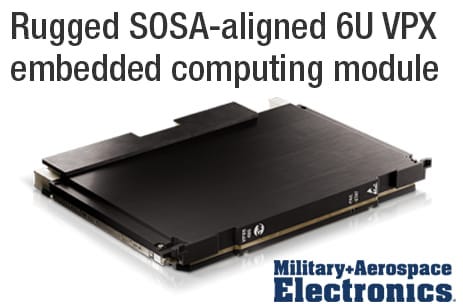
Defense Solutions builds open-architecture rugged computing modules compliant with VITA 46 OpenVPX, VITA 48.8 air-flow-through cooling, and the SOSA Technical Standard.
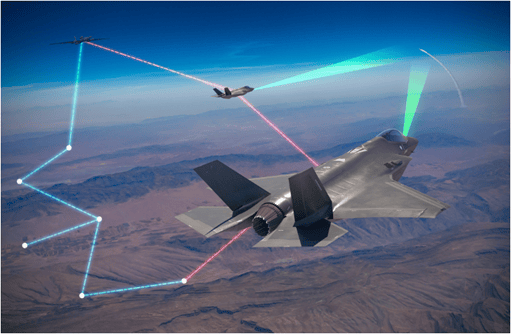
These modules sit at the heart of mission systems on platforms such as the F-35, the V-22, the AH-64 Apache, and ground vehicles including Stryker and Bradley variants.
The franchise was reinforced in February 2026 with Boeing’s selection of Curtiss-Wright to supply MOSA-aligned mission computers for the U.S. Air Force C-17 fleet modernization, with an estimated lifetime value above $400 million.
DEFENSE ELECTRONICS — REPRESENTATIVE PROGRAMS:
  • F-35 Joint Strike Fighter (TR-3 flight test
    instrumentation, embedded computing)
  • V-22 Osprey, AH-64 Apache, UH-60 Black Hawk
    (mission processing, recorders)
  • C-17 Globemaster III (MOSA mission computers)
  • Stryker, Bradley, Abrams (vehicle electronics,
    tactical communications)
  • F/A-18 Super Hornet, EA-18G Growler
    (data acquisition, recorders)
  • Naval surface combatants, submarines
    (rugged servers, tactical data links)
Aerospace Instrumentation (TTC)
The TTC business, formerly Teletronics Technology Corporation, supplies airborne flight test instrumentation that has become the industry standard for both military fighter test programs and large commercial test campaigns.
The recent F-35 Technology Refresh 3 program is one of multiple active deployments.
Tactical Communications (PacStar)
The PacStar business, acquired in 2020, provides tactical communications gear to the U.S. Army, Marine Corps, and Special Operations Command.
The unit’s PacStar 424 Tactical 5G Gateway, introduced in 2025, exemplifies the move toward edge networking integrated with cellular and Wi-Fi connectivity for tactical operators.
PacStar’s hardware and the Cisco-on-PacStar software stack remain a core building block of the U.S. Army’s modernized tactical network, including the Integrated Tactical Network and Capability Set fielding waves.
Naval & Power Segment
This segment combines the Electro-Mechanical Systems Division (EMD), DRG (formerly Curtiss-Wright Nuclear), and the recently integrated Ultra Energy and Ultra Maritime nuclear businesses.
It’s the largest segment by revenue and by far the most differentiated competitively.
Naval Nuclear Propulsion Franchise
EMD is the exclusive supplier of generators, main coolant pumps, and a large catalog of valves and steam-cycle components for U.S. Navy nuclear submarines and aircraft carriers.
The position dates back to USS Nautilus in 1952 and runs without interruption through every Virginia-class, Columbia-class, Ford-class, and predecessor program.
Block IV and Block V Virginia-class production, Columbia-class new construction, and Ford-class carrier deliveries each contribute multi-hundred-million-dollar lifecycle revenue streams to the company.
The naval nuclear position is structurally protected. Generator and reactor-coolant-pump qualification timelines run more than a decade, the Naval Nuclear Propulsion Program’s NAVSEA 08 oversight regime is unusually rigorous, and there is no second source of supply for several of the components that EMD ships every year.
Commercial Nuclear
The commercial nuclear franchise has two parts: aftermarket products and services to the operating U.S. and global pressurized-water reactor fleet, and new-build content for advanced reactor designs.
On the aftermarket side, Curtiss-Wright supplies reactor protection systems, in-core instrumentation, main coolant pumps, and a wide range of safety-grade controls.
Plant life extension activity, reactor uprates, and digital instrumentation and control modernization drive what management characterizes as low-double-digit growth in this market for the 2024 to 2026 window.
On the new-build side, the company is the exclusive supplier of reactor coolant pumps to Westinghouse’s AP1000 advanced reactor and is positioned for SMR deliveries through the Rolls-Royce SMR partnership.
NAVAL & POWER SEGMENT — CORE PRODUCT FAMILIES:
  Naval Nuclear:
    • Main generators (sole source)
    • Reactor coolant pumps and valves
    • Steam turbine generators
    • Pumping and propulsion components
    • Aircraft handling, weapons handling
    • Shipboard automation
  Commercial Nuclear:
    • AP1000 reactor coolant pumps (sole source)
    • SMR safety/control systems
    • Aftermarket I&C, reactor protection
    • PLEX (plant life extension) services
  Process / Industrial:
    • Subsea pumps and severe-service valves
• Generators, motors, drivesSMR and AP1000 Positioning
The Westinghouse AP1000 reactor coolant pump role positions Curtiss-Wright to capture roughly $110 million in revenue per AP1000 reactor over a five-year delivery window, based on independent investor research drawing on company disclosures and prior contract history.
The August 2025 Rolls-Royce SMR strategic partnership is a multi-million-pound agreement under which Curtiss-Wright’s UK-based nuclear business will provide design, qualification, testing, and supply for a global Rolls-Royce SMR fleet.
This is structurally the kind of long-tail revenue stream that drives Naval & Power’s expanding backlog.
Curtiss-Wright Financial Analysis
Full-Year 2025 Performance
Curtiss-Wright closed 2025 with reported sales of $3.5 billion, an increase of 12% over 2024, of which approximately 9% was organic.
Reported operating income reached $634 million for an 18.1% margin, while adjusted operating income climbed to $651 million for an 18.6% margin (a 110 basis point year-over-year improvement).
Reported diluted EPS came in at $12.87 and adjusted diluted EPS at $13.23, the latter representing 21% growth over the prior-year period. Free cash flow generation was robust at $554 million, equating to 111% free cash flow conversion of net earnings.
FULL-YEAR 2025 KEY FINANCIAL METRICS:
  Reported Sales              $3,500M     +12% Y/Y
  Adjusted Operating Income     $651M     +19% Y/Y
  Adjusted Operating Margin     18.6%   +110 bps
  Adjusted Diluted EPS         $13.23     +21% Y/Y
  Free Cash Flow                $554M
  FCF Conversion                 111%
  New Orders                  $4,100M     +10% Y/Y
  Book-to-Bill                   1.2x
  Year-end Backlog            $4,100M     +18% Y/Y
Share Repurchases $465MSegment-Level Performance (Q4 2025)
Q4 2025 results illustrate the segment composition particularly well.
Aerospace & Industrial recorded sales of $263 million with an operating margin of 19.7%. Defense Electronics delivered $267 million in sales (up 17%) at a 25.7% operating margin, and Naval & Power posted $417 million in sales (up 21%) at a 17.1% operating margin.
Margin patterns matter for the investment thesis.
Defense Electronics has historically run at the highest margin profile thanks to favorable mix in computing modules and software-rich tactical communications.
Naval & Power’s mid-teens operating margin reflects the long-cycle, government-cost-type contracting characteristic of nuclear propulsion programs.
2024 Historical Comparison
Full-year 2024 sales were $3.12 billion, with Aerospace & Industrial at $932.1 million, Defense Electronics at $910.7 million, and Naval & Power at $1,278.4 million. Operating income was $529 million for a 16.9% reported operating margin.
The two-year arc from 2023 to 2025 shows roughly $700 million of incremental annual sales, more than 200 basis points of margin expansion at the adjusted level, and double-digit annual EPS growth, indicating that the company has now compounded the operating leverage promised at the 2021 investor day reset.
2026 Guidance
Management’s full-year 2026 guidance calls for sales of $3,710 million to $3,765 million (6% to 8% growth), adjusted operating income of $703 million to $722 million, and adjusted diluted EPS of $14.70 to $15.15 (11% to 15% growth).
Operating margin is projected at 18.9% to 19.2%, expanding 30 to 60 basis points from the 2025 base.
Free cash flow guidance of $575 million to $595 million (4% to 7% growth) reinforces a free cash flow conversion target above 100% for the third consecutive year.
2026 GUIDANCE (ADJUSTED):
  Sales              $3,710M – $3,765M     +6 to +8%
  Operating Income     $703M – $722M       +8 to +11%
  Operating Margin       18.9% – 19.2%   +30 to +60 bps
  Diluted EPS         $14.70 – $15.15    +11 to +15%
Free Cash Flow $575M – $595M +4 to +7%Capital Allocation
The capital deployment cadence has tilted significantly toward shareholder returns over the past 24 months.
Total share repurchases reached $465 million in 2025 (after $250 million in 2024), and management committed to a minimum $60 million repurchase for 2025, which was significantly exceeded.
The dividend remains a smaller share of capital returns than buybacks but has been raised consistently over the past decade, supporting a stable capital-return profile that complements the discretionary repurchase program.
Curtiss-Wright Revenue and Growth Drivers
A&D Versus Commercial Mix
Curtiss-Wright is structurally a defense-led business. Aerospace & Defense end markets generated approximately $2.45 billion of 2025 sales (around 70% of the total), with commercial markets contributing the remainder.
The 2026 guidance calls for A&D growth of 5% to 7% and commercial growth of 7% to 9%, both well above U.S. real GDP forecasts.
End Market Breakdown
The company guides revenue growth across six end-market sub-categories, each with distinct demand drivers:
2024 – 2026 LONG-TERM REVENUE GROWTH ASSUMPTIONS:
  Aerospace Defense          Mid Single Digit (MSD)
  Ground Defense             High Single Digit (HSD)
  Naval Defense              Mid Single Digit (MSD)
  Commercial Aerospace       High Single Digit (HSD)
  Power & Process
    Nuclear                  Low Double Digit (LDD)
    Process                  Mid Single Digit (MSD)
  General Industrial         Low Single Digit (LSD)
Total Organic CAGR > 5%Aerospace Defense Driver Set
Aerospace Defense growth is driven by MOSA adoption, F-35 Technology Refresh 3 deliveries, V-22 sustainment, and content wins on aircraft modernization programs such as the C-17 mission computer upgrade.
Foreign Military Sales activity acts as an additional accelerant, particularly across Europe and the Indo-Pacific.
Ground Defense Driver Set
Ground Defense growth is anchored by tactical communications expansion, including the U.S. Army’s Capability Set fielding waves and Special Operations Command tactical edge networking.
Vehicle electronics for combat platforms such as Stryker, Bradley, AMPV, and the JLTV family continue to add modest organic growth.
Naval Defense Driver Set
Naval Defense growth depends primarily on Columbia-class production ramping through Boats 1, 2, 3, and 4, plus continued Virginia-class Block V deliveries.
SSN(X) development funding, while not yet at production scale, is increasingly a topic of forward-year visibility in Curtiss-Wright’s investor materials.
Commercial Aerospace Driver Set
Commercial Aerospace upside reflects record OEM backlogs at Boeing and Airbus, plus the Honeywell Connected Recorder-25 program developed jointly with Honeywell to meet the FAA’s 25-hour cockpit voice recorder mandate.
Aftermarket sensor and actuation pull-through, plus electrification content, complete the picture.
Power & Process Driver Set
Power & Process is the most dynamic part of the portfolio. The Nuclear sub-component grows on aftermarket, plant life extensions, SMR development orders, and (eventually) AP1000 unit sales.
Note that AP1000 revenue is excluded from the published organic CAGR target, meaning any AP1000 unit awards represent upside above the base growth plan.
General Industrial Driver Set
General Industrial growth is the slowest segment at low single digits, reflecting a deliberate decision to de-emphasize cyclical industrial end markets in favor of A&D and nuclear concentration.
Backlog and Visibility
The $4.1 billion year-end 2025 backlog provides revenue visibility roughly equivalent to 1.2 years of trailing twelve-month sales, with the longest-cycle naval programs visible out three or more years.
This visibility profile is unusual among A&D peers in the mid-cap range and is one of the structural reasons management can guide to high-single-digit organic growth with relative confidence.
Major Curtiss-Wright Competitors
Direct Competitors by Product Line
The Curtiss-Wright competitive set is fragmented because no single peer competes across all three Curtiss-Wright segments. Distinct competitor groups exist for each major product line:
Defense Electronics (rugged computing): Mercury Systems, Leonardo DRS, Elbit Systems of America, Aitech Systems, Kontron, GE Aerospace electronics group
Defense Electronics (tactical communications): L3Harris Technologies, General Dynamics Mission Systems, Viasat
Aerospace Actuation and Sensors: Moog Inc., Woodward Inc., Honeywell, Parker Aerospace, Crane Co.
Naval Nuclear Propulsion Components: BWX Technologies (steam generator components), Northrop Grumman (specific subassemblies), Fairbanks Morse Defense (auxiliary equipment)
Commercial Nuclear I&C: Framatome, Westinghouse, Mirion, Rolls-Royce nuclear, Doosan Heavy Industries
Aftermarket Aerospace Components: HEICO Corporation, TransDigm Group
Curtiss-Wright vs. Mercury Systems
Mercury Systems competes most directly with Curtiss-Wright’s Defense Solutions Division on rugged embedded computing modules and mission computers.
Both companies are aligned to OpenVPX and SOSA Technical Standard, and both serve common platforms including the F-35 and various radar and electronic warfare programs.
The differences are operational. Curtiss-Wright runs at a 25%+ operating margin in Defense Electronics versus Mercury Systems’ more modest profitability through 2024 and 2025. Curtiss-Wright also has the TTC instrumentation franchise and the PacStar tactical communications portfolio, neither of which Mercury Systems competes against directly.
Mercury Systems brings specific strengths in microelectronics packaging and processor design that Curtiss-Wright generally sources rather than designs in-house.
Curtiss-Wright vs. Moog Inc.
Moog Inc. is the closest peer to Curtiss-Wright’s Aerospace & Industrial segment, specifically the Actuation Division. Moog has broader exposure to commercial aircraft primary flight controls and a deeper defense actuation footprint on programs such as the F-35 and missile systems.
Curtiss-Wright’s actuation business is smaller than Moog’s but is highly profitable and has been growing steadily on commercial aerospace recovery and EM actuation pull-through in defense modernization programs. Moog also competes in industrial servovalves, an adjacent market where Curtiss-Wright has a smaller presence.
Curtiss-Wright vs. Woodward Inc.
Woodward is closer to Curtiss-Wright in revenue scale and shares overlap in aerospace fuel systems and motion-control products. Woodward’s portfolio is more weighted toward gas turbine fuel and combustion controls, while Curtiss-Wright is more diversified into naval, nuclear, and rugged-computing product categories.
Both companies have benefitted from the same multi-year commercial aerospace demand recovery, and both have demonstrated margin expansion cycles since 2023. Curtiss-Wright’s defense weighting (around 70% of sales) is significantly higher than Woodward’s, providing a more counter-cyclical revenue profile.
Curtiss-Wright vs. HEICO Corporation
HEICO is a different kind of competitor. The company is a parts substitution and aftermarket aerospace specialist that competes with Curtiss-Wright primarily on a small subset of legacy aircraft components.

The strategic difference is meaningful. HEICO operates in a high-volume, lower-margin aftermarket parts substitution business, while Curtiss-Wright sells mission-critical engineered systems with deep platform qualification. The two companies rarely compete head-to-head on a contract basis.
Curtiss-Wright vs. TransDigm Group
TransDigm is significantly larger than Curtiss-Wright in commercial aerospace aftermarket exposure and operates a roll-up strategy targeting niche aerospace component businesses with high aftermarket content.
TransDigm’s defense exposure is much smaller as a percentage of total revenue.

For Curtiss-Wright stakeholders evaluating the competitive set, TransDigm represents a different business model rather than a direct head-to-head threat across most product categories.
Curtiss-Wright vs. BWX Technologies
In naval nuclear propulsion, BWX Technologies (BWXT) is the primary peer, supplying nuclear reactor components and naval nuclear fuel to the U.S. Navy. BWXT is the exclusive provider of nuclear reactor cores for U.S. naval nuclear vessels.
Curtiss-Wright and BWXT are largely complementary rather than directly competitive. Each company has carved out distinct, government-protected positions within the naval nuclear propulsion supply chain.
Both benefit from the same Columbia-class and Ford-class production cycles and from continued investment in naval nuclear capacity.