Executive Summary
Delta Air Lines posted full-year 2025 operating revenue of $63.4 billion and generated a record $4.6 billion in free cash flow, while serving more than 200 million customers.
The airline’s premium-first strategy has fundamentally reshaped its revenue mix, with its exclusive American Express co-brand partnership alone generating $8.2 billion in 2025, representing roughly 13% of total revenues.
For 2026, Delta is executing the largest transatlantic schedule in its 102-year history, with 650+ weekly European flights, while simultaneously placing massive fleet orders totaling 232 narrowbody and 85 widebody aircraft on backlog.
The company projects 20% year-over-year earnings growth in 2026, though macroeconomic headwinds from U.S. tariff policy and rising fuel costs represent the most significant near-term risks to that guidance.
Recommended - Read Full Reports


Read All Reports
Table of Contents
Executive Summary
Introduction: A Centennial Carrier Pressing Its Advantage
Key Facts: Company Profile
Key Services and Products - Delta Air Lines
The Cabin Hierarchy: How Delta Segments Its Revenue
The SkyMiles Loyalty Program: A Financial Engine in Its Own Right
Delta TechOps: The Largest MRO Operation in North America
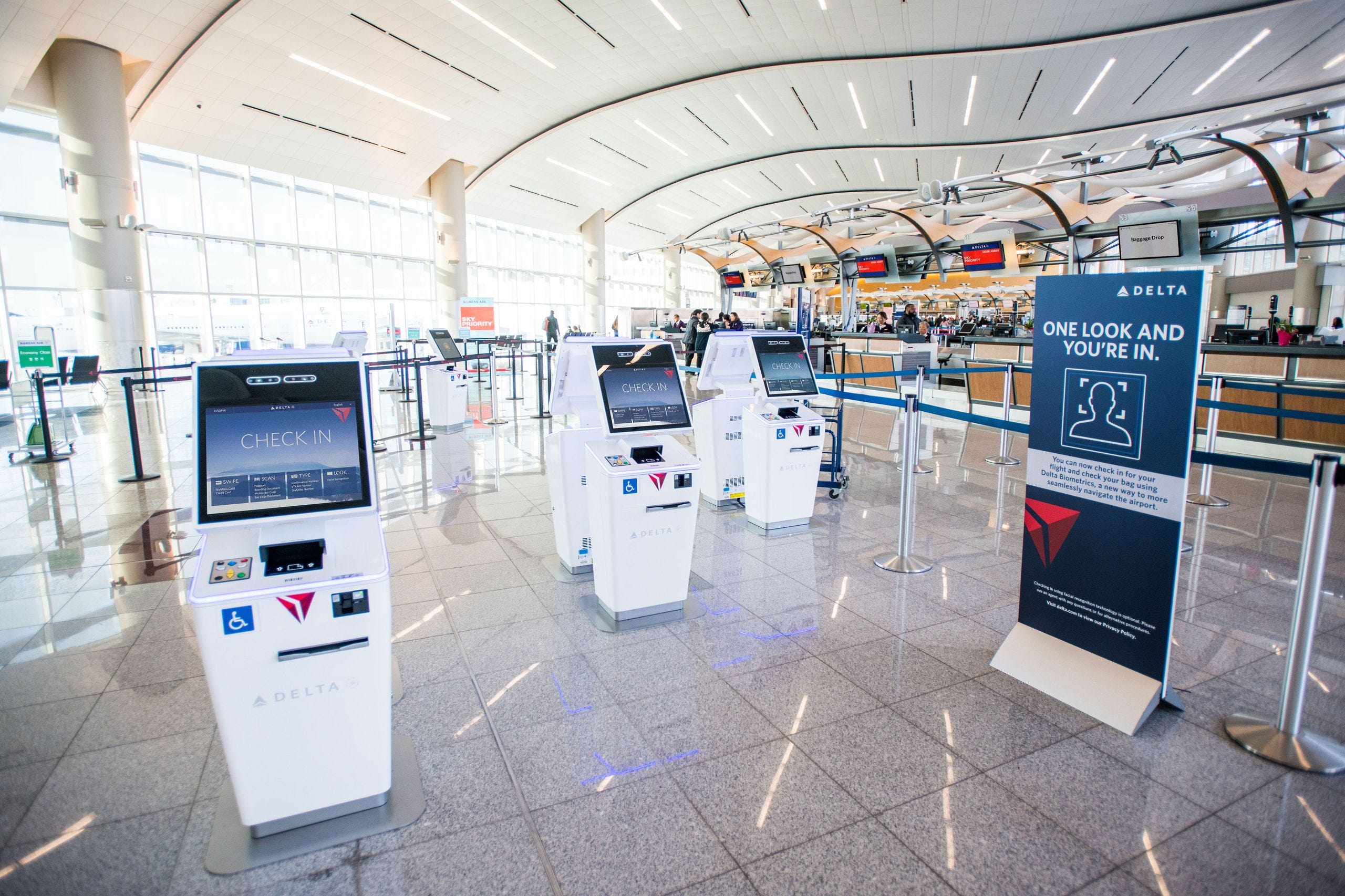
Digital Innovation: Delta Sync and AI-Powered Services
Cargo Operations
Delta Air Lines - Major Operational Bases (Hubs)
The Fortress Hub Model: Delta’s Core Competitive Architecture
Atlanta (ATL): The Crown Jewel
Detroit (DTW): The Midwest and European Gateway
Minneapolis-St. Paul (MSP): A Transatlantic Growth Hub
Salt Lake City (SLC): The Gateway to the Mountain West
New York (LGA/JFK): The Dual-Airport Premium Market
Route Network, Major Destinations, and Strategy
Domestic Network: A Scale Advantage Built Over Decades
The 2026 Transatlantic Push: Largest Schedule in History
Middle East and Africa: Opening New Corridors
Asia-Pacific Network
Delta Air Lines - Fleet Strategy
A Multi-Pronged Renewal Across Narrowbody and Widebody Segments
The A321neo: Workhorse of the Domestic and Short-Haul Network
The Widebody Strategy: Airbus-Centric with a Boeing Hedge
The A350-1000: Delta’s Historic Flagship
Fleet Environmental and Cost Efficiency Rationale
Delta Air Lines - Competitive Position
Delta’s Profit Pool Leadership
The “Big Three” Landscape: Where Delta Stands vs. United and American
Alliance and Partnership Leverage: SkyTeam’s Role
The Premium Moat: Why Competition Struggles to Match Delta
Financial Performance and 2026 Guidance
A Record Year Under Pressure: Full-Year 2025 Results
2026 Guidance: Growth Projected Despite Headwinds
Key Risks: Probabilities and Scenarios
Risk 1: Macroeconomic Deterioration and Tariff Uncertainty
Risk 2: Fuel Price Volatility
Risk 3: Aircraft Delivery Delays and Supply Chain Disruptions
Risk 4: Labor Cost Inflation
Risk 5: Competitive Pressure from United’s Network Expansion
Primary Sources and Official Data
My Final Thoughts
Also Read
Introduction: A Centennial Carrier Pressing Its Advantage
Delta Air Lines closed its 100th year of operation in 2025 with financials that few carriers anywhere in the world can replicate.
The airline generated a double-digit return on invested capital of 12% while simultaneously distributing $1.3 billion in profit sharing to its employees, a figure that speaks directly to the structural advantages it has built over two decades of disciplined network and product investment.
What separates Delta from its North American peers is not simply scale. It’s the deliberate construction of a business model that earns approximately 25% of the entire U.S. airline industry’s profit pool while holding only 17-19% of domestic market share, a gap that reflects pricing power, loyalty monetization, and fortress hub control that competitors have struggled to replicate.
Key Facts: Company Profile
Company Name:       Delta Air Lines, Inc.
Ticker:             NYSE: DAL
Founded:            1924 (as Huff Daland Dusters)
Headquarters:       Atlanta, Georgia, USA
CEO:                Ed Bastian
Alliance:           SkyTeam
Loyalty Program:    SkyMiles (Medallion tiers: Silver, Gold, Platinum, Diamond)
Full Year 2025 Revenue (GAAP):    $63.4 billion
Full Year 2025 Operating Income:  $5.8 billion (9.2% margin)
Full Year 2025 Pre-Tax Income:    $6.2 billion (9.8% margin)
Full Year 2025 EPS:               $7.66
Full Year 2025 Free Cash Flow:    $4.6 billion
Full Year 2025 ROIC:              12%
Customers Served (2025):          200+ million
Total Debt (Year-End 2025):       $14.1 billion
Profit Sharing to Employees:      $1.3 billion (February 2026 payout)
Q1 2026 Fleet Operations:         142,000+ flights
Aircraft on Order:                232 narrowbody + 85 widebody
2026 EPS Guidance:                $6.50–$7.50 (20% YoY growth at mid-point)
2026 Free Cash Flow Guidance:     $3–$4 billion
Primary Hub:                      Hartsfield-Jackson Atlanta Intl. (ATL)

Key Services and Products - Delta Air Lines
The Cabin Hierarchy: How Delta Segments Its Revenue
Delta operates one of the most granular cabin segmentation structures in the North American airline industry. Rather than the binary first class and coach model that many carriers still rely on, Delta has built a five-tier cabin system that allows it to extract value from nearly every traveler segment.
Delta One sits at the top of the hierarchy and is the airline’s full-service international business class product. On aircraft equipped with the latest configuration, Delta One Suites offer full lie-flat beds with direct aisle access, sliding privacy doors, and personal storage space. Delta One Suites are available on the Airbus A350, A330-900neo, and select Boeing 767 routes.
Delta Premium Select serves as the airline’s premium economy cabin and bridges the gap between business and main cabin. It is particularly popular on long-haul transatlantic and transpacific routes, offering wider seats, additional recline, and enhanced meal service.
Below those cabins sit First Class (domestic and short-haul international), Delta Comfort+ (extra legroom economy), and Main Cabin.
This five-level structure is what allows Delta’s revenue mix to trend away from commodity economy seats toward higher-yielding products.
Delta Cabin Product Hierarchy (As of April 2026):
┌─────────────────────────────────────────────────────────────┐
│  DELTA ONE (Suites on long-haul: A350, A330neo, B767)       │
│  Full lie-flat, sliding door, direct aisle access           │
├─────────────────────────────────────────────────────────────┤
│  DELTA PREMIUM SELECT                                       │
│  Premium economy, wider seat, enhanced recline + meals      │
├─────────────────────────────────────────────────────────────┤
│  FIRST CLASS (Domestic / Short-Haul)                        │
│  Flat-bed or recliner, upgraded meals, priority boarding    │
├─────────────────────────────────────────────────────────────┤
│  DELTA COMFORT+                                             │
│  Extra legroom, dedicated overhead, priority boarding       │
├─────────────────────────────────────────────────────────────┤
│  MAIN CABIN                                                 │
│  Standard economy with free in-flight entertainment (Delta  │
│  Sync-equipped aircraft)                                    │
└─────────────────────────────────────────────────────────────┘
The airline’s revenue structure has been deliberately migrating toward premium. As recently analyzed, Delta’s business model has shifted from a 70/30 main-cabin-to-premium split toward a 60/40 ratio, with a long-term target of premium products representing the majority of its top line.
That shift is embedded in every fleet, network, and lounge investment the airline is making.
The SkyMiles Loyalty Program: A Financial Engine in Its Own Right
SkyMiles is arguably the most commercially powerful loyalty program operated by a North American carrier.
The program is free to join and structured around four Medallion elite tiers: Silver, Gold, Platinum, and Diamond, each offering escalating benefits including complimentary upgrades, priority boarding, bonus miles, and access to Delta Sky Club airport lounges.
What distinguishes SkyMiles commercially is its relationship with American Express.
In 2025, American Express remuneration to Delta grew 11% year-over-year to $8.2 billion, representing roughly 13% of the airline’s total GAAP operating revenue. This is not ticket revenue.
It is a high-margin, economically resilient income generated by credit card spending, co-brand partnerships, and mileage sales, revenue streams that continue generating cash regardless of whether flights are full.
SkyMiles / Loyalty Revenue Highlights (Full Year 2025):
  American Express Remuneration:    $8.2 billion (+11% YoY)
  Total Loyalty Revenue Growth:     +6% YoY
  Premium Revenue Growth:           +7% YoY
  Q3 2025 AmEx Revenue Alone:       ~$2 billion (+12% YoY)
In Q3 2025 alone, Delta received approximately $2 billion from American Express, a 12% increase from the same quarter the prior year. This figure underscores just how deeply the co-brand program has become embedded in Delta’s financial architecture.
The program’s global reach also strengthens Delta’s network by extending reciprocal benefits across all 19 member airlines of the SkyTeam alliance, including key partners like Air France-KLM, Korean Air, Virgin Atlantic, and LATAM Airlines.
Delta TechOps: The Largest MRO Operation in North America
One of the least-discussed but most strategically significant business units within Delta is its maintenance, repair, and overhaul operation, officially branded as Delta TechOps. TechOps is the largest MRO provider in North America and serves not only Delta’s own fleet but approximately 150 external airline customers.
Delta’s MRO revenue grew by 25% in full-year 2025. That is a rate of expansion that most pure-play MRO companies would consider exceptional.
Delta has announced ambitions to grow TechOps revenues to over $3 billion, and has begun disclosing those figures separately in financial reporting to give investors greater visibility into the segment’s contribution.
Delta TechOps Key Facts (2025-2026):
  Role:                 Largest MRO provider in North America
  External Customers:   ~150 airlines and operators
  2025 Revenue Growth:  +25% year-over-year
  Revenue Target:       $3 billion+ (announced ambition)
  Primary Base:         Atlanta, Georgia
TechOps is an important strategic differentiator for Delta because it gives the airline direct cost control over one of the most capital-intensive aspects of airline operations.
Maintaining its own heavy maintenance capability reduces the airline’s dependency on third-party shops, shortens aircraft turnaround times, and creates an additional external revenue stream that partially offsets the airline’s own maintenance costs.
Digital Innovation: Delta Sync and AI-Powered Services
Delta has invested substantially in its onboard technology product, branded under the Delta Sync platform. By late 2025, Delta Sync Wi-Fi had reached its 1,000th aircraft, representing approximately 75% of the total mainline fleet. On Sync-equipped aircraft, passengers receive free, fast in-flight Wi-Fi and a personalized seatback entertainment experience that links to their SkyMiles profile.
On new aircraft delivered in 2026 and beyond, Delta is rolling out 4K HDR QLED seatback screens, a significant hardware upgrade that improves the entertainment experience across all cabin classes. The system integrates directly with passengers’ personal devices and SkyMiles accounts, creating a connected cabin experience from takeoff to landing.
Beyond onboard connectivity, Delta introduced Delta Concierge at CES 2025, an AI-powered tool embedded in the Fly Delta app that provides real-time, personalized trip management assistance. The Concierge integrates rebooking options, airport navigation, gate change alerts, and connection information in a single interface, reducing friction at the points in travel where passengers historically face the most stress.
Delta Digital & Technology Milestones (2025-2026):
  Delta Sync Wi-Fi Fleet Coverage:  1,000 aircraft (~75% of fleet)
  New Seatback Screens:             4K HDR QLED (new deliveries, 2026+)
  AI Tool:                          Delta Concierge (via Fly Delta app)
  Delta One Lounges Operational:    JFK, BOS, LAX, SEA
  Delta Sky Clubs Total:            56 lounges, 700,000+ sq ft worldwide
The Delta One Lounge expansion deserves separate mention. These are ultra-premium ground facilities positioned as direct alternatives to the private terminal experiences offered by luxury hotels and private aviation.
Active locations include JFK, BOS, LAX, and the recently opened SEA facility, and they are restricted exclusively to Delta One passengers. Upscale dining, spa services, and private rest areas are standard features.
Cargo Operations
Delta’s cargo business posted full-year 2025 revenue of $900 million, a 9.5% increase year-over-year. The operation is primarily belly-hold cargo carried on existing passenger aircraft, which means the cargo revenue is essentially incremental to the core passenger business with limited incremental cost.
The cargo unit benefits directly from Delta’s expanding long-haul international network.
New routes to Asia, the Middle East, and South America added in recent years provide additional belly capacity on high-demand trade lanes, positioning the cargo business for continued organic growth as the widebody fleet expands.
Delta Air Lines - Major Operational Bases (Hubs)
The Fortress Hub Model: Delta’s Core Competitive Architecture
Delta’s network strategy is built around a cluster of large, high-frequency hub airports where the carrier holds commanding capacity shares.
Unlike point-to-point networks, the hub-and-spoke model allows Delta to aggregate connecting traffic from hundreds of smaller markets through a small number of fortress hubs, creating scale advantages in scheduling, operations, and contract negotiation with airports and ground handlers.
According to Cirium, Delta operated more than 142,000 flights during Q1 2026 alone across its hub system.
Delta Air Lines: Top 5 Hub Performance (Q1 2026, one-way)
╔════════════════════════════════════════╦══════════════╦═══════════════╦═══════════╗
║ Hub Airport                            ║ Total Flights║ Total Seats   ║ Market Share
╠════════════════════════════════════════╬══════════════╬═══════════════╬═══════════╣
║ Hartsfield-Jackson Atlanta (ATL)       ║   74,482     ║ 11,587,374    ║    ~80%
║ Detroit Metropolitan Wayne County(DTW)║   27,010     ║  3,450,591    ║    ~75%    ║
║ Minneapolis-St. Paul Intl. (MSP)       ║   26,946     ║  3,552,610    ║    ~76%
║ Salt Lake City Airport (SLC)           ║   21,242     ║  2,786,891    ║    ~69%
║ New York LaGuardia (LGA)               ║   20,382     ║  2,137,347    ║    ~47%
╚════════════════════════════════════════╩══════════════╩═══════════════╩═══════════╝Atlanta (ATL): The Crown Jewel
Hartsfield-Jackson Atlanta International Airport is not just Delta’s largest hub; it is the world’s busiest airport, and Delta controls approximately 80% of its total capacity.
The airline operates more than 700 daily flights from Atlanta, and during Q1 2026 scheduled nearly 24,480 departures from the airport, offering more than 3.8 million one-way seats in that single quarter.
Atlanta functions as Delta’s international gateway for routes to Latin America, Europe, Africa, and the Middle East.
The hub’s geographic position in the southeastern United States gives it outstanding domestic feed from a region with no major competing hub, making it structurally difficult for competitors to undermine Delta’s dominance there. Since 2021, Delta has increased its Atlanta capacity by more than 20%.
The top domestic routes from Atlanta by frequency in Q1 2026 include: Orlando (up to 16 daily), LaGuardia (up to 14 daily), Fort Lauderdale (10-14 daily), Tampa (up to 13 daily), and Washington National (up to 11 daily).
Detroit (DTW): The Midwest and European Gateway
Detroit Metropolitan Wayne County Airport became a core Delta hub following the carrier’s 2008 merger with Northwest Airlines, and it has since developed into one of the most important Midwest gateways in the Delta system. Delta holds approximately 75% of total market share at Detroit and has consistently expanded capacity at the airport in recent years.
Detroit serves as a key European gateway, particularly for Central and Eastern European destinations that were part of Northwest’s legacy network. The hub provides direct connections across a dense Midwest business travel market that includes major automotive, manufacturing, and healthcare companies.
The airport is also an important base for Delta’s Canadian transborder operations and key Asian connections, including Tokyo Narita and Amsterdam via Amsterdam’s joint venture partner KLM.
Minneapolis-St. Paul (MSP): A Transatlantic Growth Hub
Minneapolis-St. Paul International Airport is another Northwest Airlines legacy hub, and Delta controls approximately 76% of the airport’s total capacity.
During H1 2026, Delta operates roughly 200-300 flights per day from the hub, and when measured by total seats rather than flight frequency, Minneapolis actually edges out Detroit in Q1 2026 capacity.
Delta has been actively expanding its transatlantic footprint from Minneapolis. In 2025, the carrier launched new transatlantic services to Rome and Copenhagen, as well as seasonal service to Sicily, giving MSP a genuine long-haul European network that positions it as more than just a domestic connecting hub.
Top Q1 2026 routes from Minneapolis include: Atlanta (up to 9 daily), Phoenix (5-6 daily), Las Vegas (5-6 daily), Orlando (up to 6 daily), and LaGuardia (4-5 daily).
Salt Lake City (SLC): The Gateway to the Mountain West
Salt Lake City Airport serves as Delta’s primary hub for the Mountain West region, connecting a rapidly growing population center to both coastal hubs and international destinations.
Delta holds approximately 69% market share at SLC, the lowest among its top five hubs, but the airport is strategically positioned as a connecting point between the U.S. West Coast and Delta’s core eastern hubs.
Key Q1 2026 routes from SLC include: Atlanta (8-9 daily), Los Angeles (6-7 daily), Seattle (up to 6 daily), Santa Ana (4-5 daily), and San Diego (4-5 daily).
New York (LGA/JFK): The Dual-Airport Premium Market
Delta’s New York presence spans two airports, each with distinct strategic roles. New York LaGuardia is ranked fifth by flight volume among Delta’s hubs in Q1 2026 with 20,382 scheduled departures, but the carrier holds only 47% market share at LaGuardia, reflecting stiffer competition from American Airlines and others.
New York JFK, by contrast, is Delta’s international flagship gateway. While not ranked in the top five by total flight volume, JFK offers more total seats than LaGuardia and serves as the launch point for multiple new 2026 European routes, including JFK-Olbia (Sardinia), JFK-Porto, and JFK-Malta.
JFK is also home to the airline’s flagship Delta One Lounge, which sets the standard for the premium ground experience Delta is building globally.
Delta also maintains significant operations at Boston Logan (BOS), Los Angeles (LAX), Seattle-Tacoma (SEA), and Cincinnati (CVG), each of which plays a supplementary hub or focus-city role in the broader network.