


Executive Summary
Ethiopian Airlines Group closed fiscal year 2024/25 with USD 7.6 billion in revenue, an 8% year-over-year increase, while carrying 19.03 million passengers across a six-continent network anchored in Addis Ababa. The carrier is on track to exceed this performance after reporting USD 4.4 billion in H1 FY2025/26 revenue and 451,000 tons of cargo in the first six months.
The Group operates an active fleet of approximately 166 aircraft with 64 on order as of late 2025, with the recent December 2025 finalization of nine Boeing 787-9 Dreamliners and eleven 737 MAX aircraft. The average fleet age sits below seven years, giving it the youngest widebody fleet on the continent.
Under Vision 2035, the carrier is pursuing a fleet target of 271 aircraft alongside the construction of the USD 12.5 billion Bishoftu International Airport that broke ground on 10 January 2026. The new four-runway mega-hub, located 45 kilometers southeast of the capital, is engineered to handle over 100 million passengers annually upon completion.
Ethiopian remains Africa’s largest and most consistently profitable aviation group. Its equity stakes in ASKY Airlines, Malawi Airlines, and Zambia Airways, combined with a multi-hub continental strategy, create a moat against Gulf carriers and regional rivals such as Kenya Airways, EgyptAir, and Royal Air Maroc.
Recommended - Read Full Reports


Read All Reports
Table of Contents
Executive Summary
Introduction
Key Facts: Ethiopian Airlines Company Profile
Business Overview
Financial Performance and Revenue Trajectory
Revenue Growth Drivers
Key Services, Products, and Business Units
Group Structure and Subsidiary Equity Stakes
Fleet: In-depth Analysis
Fleet Size and Composition
Fleet Age and Modernization Strategy
Widebody Long-Haul Fleet Strategy
Narrowbody and Regional Fleet Strategy
Cargo Fleet Strategy
Fleet Strategy under Vision 2035
Route Network, Major Destinations, and Strategy
Global Footprint
African Network Strategy
Intercontinental Routes and Sixth-Freedom Strategy
New Route Launches 2025 to 2026
Domestic Network and Expansion
Major Operational Bases (Hubs)
Addis Ababa Bole International Airport: The Primary Hub
Lome (Togo): The Second Hub for West and Central Africa
Lilongwe (Malawi): The Third Hub for Southern Africa
Lusaka (Zambia): The Sixth Hub
Bishoftu International Airport: The Future Mega-Hub
Competitive Position
Major Competitors List
Ethiopian Airlines vs. Kenya Airways
Ethiopian Airlines vs. EgyptAir
Ethiopian Airlines vs. Royal Air Maroc
Ethiopian Airlines vs. South African Airways
Ethiopian Airlines vs. Gulf Carriers (Emirates, Qatar, Etihad)
Ethiopian Airlines vs. Turkish Airlines
Strategic Initiatives
Vision 2035: The Blueprint
Ethiopian Aviation University
MRO and Component Services Expansion
Sustainability and ESG Positioning
Key Risks with Probabilities and Scenarios
Risk 1: Boeing Delivery Delays
Risk 2: Ethiopian Macroeconomic and Foreign-Exchange Volatility
Risk 3: Geopolitical and Internal Security
Risk 4: Bishoftu Airport Construction Execution
Risk 5: Gulf Carrier Competitive Intensification
Risk 6: Pandemic or Travel-Shock Event
Additional Strategic Considerations
Star Alliance Membership and Global Network Integration
Cargo and Logistics Deep Dive
Human Capital and Workforce
Technology and Digital Transformation
Financial Capital Structure
Regulatory and Bilateral Framework
Brand Positioning and Customer Experience
Industry Outlook and Forward-Looking Strategic Themes
African Aviation Demand Fundamentals
Sustainable Aviation Fuel and Decarbonization
Intra-African Open Skies and SAATM
Supply Chain and Aerospace Manufacturing
Digital and Artificial Intelligence Adoption
My Final Thoughts
Official Sources and Data
Introduction
On 10 January 2026, Ethiopian dignitaries lined up on a dusty field forty-five kilometers southeast of Addis Ababa to break ground on what will become the largest airport Africa has ever built.
The USD 12.5 billion Bishoftu International Airport project, designed for more than 100 million annual passengers, was no symbolic gesture. It was the opening act for a company already carrying more passengers than any other African carrier and generating more revenue than the combined total of several well-known peers.
Ethiopian Airlines is thus not merely a national carrier. It’s the continent’s only genuinely consistent aviation success story, posting profits through the 2020 pandemic, the Tigray conflict, and multiple Boeing delivery disruptions.
The group closed FY2024/25 with USD 7.6 billion in revenue and is pacing well above target in the current fiscal year.
Its fleet decisions could shape Boeing and Airbus production plans, its hub gravity reshapes African intra-continental connectivity, and its Vision 2035 ambitions set the benchmark for emerging-market aviation growth.
This report unpacks the fleet, routes, hubs, competitive positioning, the risks, and more.
Let’s get started.
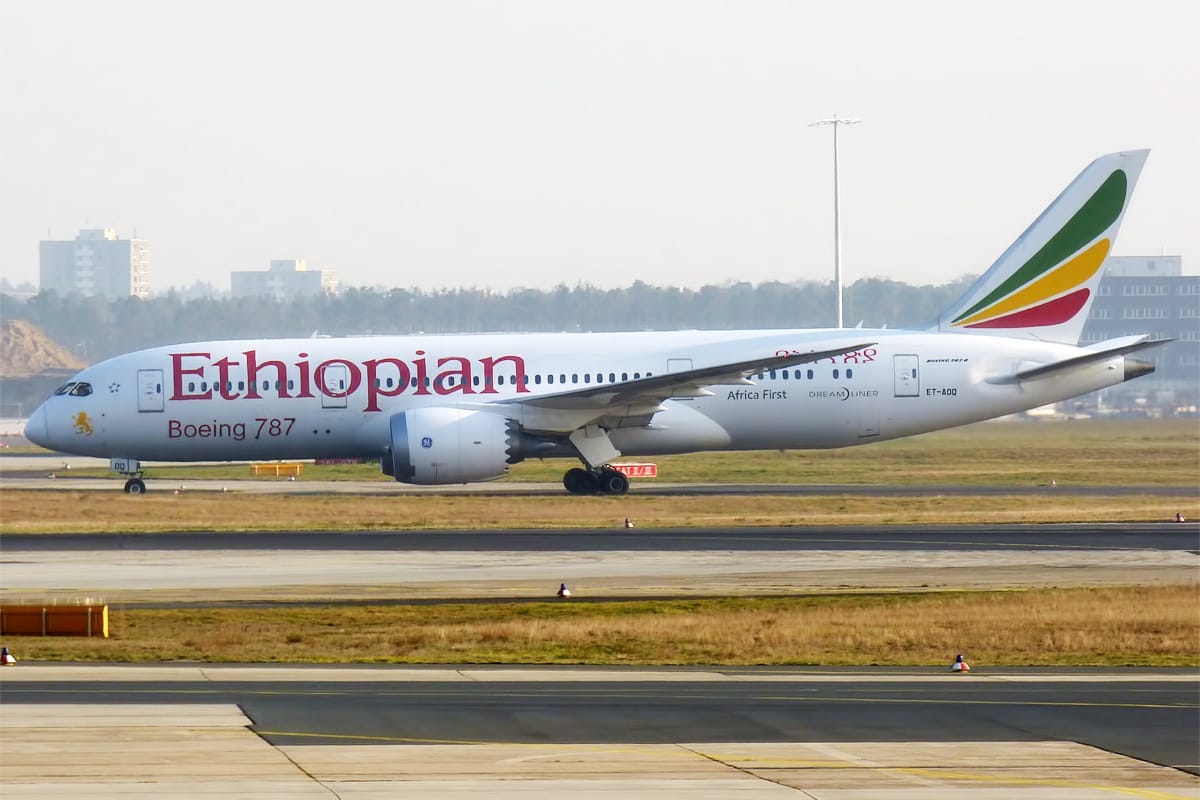
Key Facts: Ethiopian Airlines Company Profile
Official Name       : Ethiopian Airlines Group
Founded             : 30 December 1945 (80+ years of operations)
Headquarters        : Bole International Airport, Addis Ababa, Ethiopia
Ownership           : 100% State-owned (Government of Ethiopia)
Group CEO           : Mesfin Tasew Bekele (appointed March 2022)
IATA / ICAO Code    : ET / ETH
Callsign            : "ETHIOPIAN"
Alliance            : Star Alliance member (since December 2011)
Employees           : Over 17,000 (as of FY2024/25)
Main Hub            : Addis Ababa Bole International Airport (ADD)
Secondary Hubs      : Lome (Togo), Lilongwe (Malawi), Lusaka (Zambia)
Fleet Size          : ~166 active aircraft (Oct 2025), 64 on order
Average Fleet Age   : Under 7 years
Revenue (FY2024/25) : USD 7.6 billion (+8% YoY)
Passengers FY24/25  : 19.03 million
Destinations        : 150+ international, 23 domestic (expanding to 27)
Cargo Network       : 70+ dedicated freighter destinations
Business Units      : Passenger, Cargo & Logistics, Aviation Academy,
                      MRO Services, Ground Services, Catering, Hotels
Ethiopian Airlines reflects a sprawling aviation group whose size, profitability, and strategic reach now rival the best-managed emerging-market airlines globally.
The consolidated structure allows cross-subsidization between passenger operations, a rapidly expanding cargo arm, and a well-regarded maintenance and training ecosystem that generates third-party revenue from African and Middle Eastern carriers.
Group financial disclosures show the airline consistently ranks within the top three African corporates by revenue, alongside state energy and banking enterprises.
The management team has been stable since 2022, with CEO Mesfin Tasew Bekele leading the Group through the post-pandemic recovery phase into the accelerated Vision 2035 expansion era.
His tenure has seen record fleet orders, new hub launches, and a sharpened focus on sixth-freedom traffic between Asia, Europe, and Africa.
Business Overview
Financial Performance and Revenue Trajectory
Ethiopian Airlines Group reported consolidated revenue of USD 7.6 billion for fiscal year 2024/25, which runs from July through June under the Ethiopian fiscal calendar.
That figure represented 8% year-over-year growth and extended an unbroken streak of annual revenue expansion since the pandemic.
The underlying growth mix reveals a balanced business.
Passenger revenue benefited from record traffic, with the airline moving more than 19 million travelers, a historic high for the Group.
Cargo revenue, although off its pandemic-era peak, remains structurally elevated thanks to a dedicated widebody freighter fleet and a growing e-commerce tailwind.
ETHIOPIAN AIRLINES GROUP - REVENUE TRAJECTORY
============================================
FY2021/22 Revenue        : USD 5.0 billion
FY2022/23 Revenue        : USD 6.1 billion
FY2023/24 Revenue        : USD 7.04 billion
FY2024/25 Revenue        : USD 7.6 billion  (+8% YoY)
FY2025/26 H1 Revenue     : USD 4.4 billion  (+14% YoY)
Passengers FY2024/25     : 19.03 million
Cargo Tonnage H1 FY25/26 : 451,000 tons (+4% above target)
The first half of the current fiscal year, reported in February 2026, showed 14% year-over-year revenue growth to USD 4.4 billion. CEO Mesfin Tasew confirmed the Group beat its own half-year target by 4%, while cargo volumes of 451,000 tons also exceeded internal plans.
Compared with African peers, these numbers tower.
Kenya Airways reported full-year 2024 revenue of approximately USD 1.25 billion equivalent, with a narrow profit, while EgyptAir and Royal Air Maroc both operate in lower revenue brackets than Ethiopian’s group total.
Only a handful of emerging-market flag carriers globally report comparable scale and margin discipline.
Revenue growth has outpaced unit-cost inflation for three consecutive years. Management has pointed to route expansion and passenger mix as the two dominant drivers, alongside the maturation of sixth-freedom Asia-Africa-Europe connections.
Revenue Growth Drivers
The first major driver is intercontinental sixth-freedom traffic.
Addis Ababa sits at a geographically advantaged latitude that allows efficient one-stop connections between Asian gateways such as Shanghai, Guangzhou, and Bangkok and European capitals including London, Frankfurt, and Paris. The airline’s widebody fleet is sized specifically around this bank structure.
The second driver is continental African domination.
Ethiopian now serves more African cities than any other airline, and its share of intra-African long-thin routes has grown steadily. Its hub strategy, combined with equity partnerships in ASKY, Malawi Airlines, and Zambia Airways, ensures feed traffic into Addis from markets that single-hub competitors cannot access.
The third driver is cargo.
The cargo division operates 12 dedicated Boeing 777 freighters and is scheduled to receive converted 777-300ERSF “Big Twin” freighters from AerCap in Q2 2028. This makes Ethiopian Cargo the largest dedicated freighter operator in Africa by a wide margin.
The fourth driver is ancillary and non-flying businesses.
The Ethiopian Aviation Academy trains pilots and technicians for more than forty African and Middle Eastern carriers, while the MRO division earns third-party maintenance revenue from widebody operators across the continent.
Key Services, Products, and Business Units
Ethiopian Airlines Group operates under a deliberately diversified portfolio of strategic business units, each structured as a semi-autonomous profit center.
The passenger airline remains the largest contributor, but the cargo arm has grown into a multi-billion-dollar enterprise in its own right.
The Ethiopian Cargo and Logistics Services division operates from a dedicated cargo terminal at Addis Ababa with an annual capacity of one million tons. It serves more than seventy direct freighter destinations across Asia, Europe, the Americas, and intra-Africa, supported by cold-chain infrastructure for pharmaceuticals and perishables.
The MRO division holds certifications from the FAA, EASA, and multiple African regulators. It services widebody and narrowbody aircraft for third-party carriers and has expanded into component maintenance workshops, including one of the region’s most sophisticated aircraft component maintenance workshops.
ETHIOPIAN AIRLINES GROUP - STRATEGIC BUSINESS UNITS
====================================================
1. Ethiopian International Passenger Services  (Largest revenue unit)
2. Ethiopian Cargo and Logistics Services      (1M tons annual capacity)
3. Ethiopian Domestic and Regional Services    (26 domestic airports)
4. Ethiopian Aviation University (Academy)     (5,000+ students)
5. Ethiopian MRO Services                      (FAA/EASA certified)
6. Ethiopian Airport Enterprises & Ground Svc  (Handling operations)
7. Ethiopian In-flight Catering Services       (External catering too)
8. Ethiopian Skylight Hotel                    (5-star brand at hub)
9. Ethiopian ICT Services                      (Aviation software)
The Group also operates the five-star Ethiopian Skylight Hotel adjacent to Bole International Airport, adding meaningful hospitality revenue and providing a premium layover product for long-connection transit passengers.
Group Structure and Subsidiary Equity Stakes
Ethiopian Airlines sits under the Ethiopian Airlines Group holding structure, which itself is wholly owned by the Government of Ethiopia. The Group owns significant equity stakes in several African carriers, creating a federated network of affiliated airlines that feed traffic into its hub system.
The most important stake is in ASKY Airlines, based in Lome, Togo, where Ethiopian holds approximately a 40% interest. ASKY functions as the West and Central African feeder network, operating a fleet of Boeing 737 aircraft branded in Ethiopian’s livery styling.
Malawi Airlines, headquartered in Lilongwe, is another strategic affiliate in which Ethiopian holds a 49% stake. The carrier provides feeder connectivity from Southern African destinations, supporting the Group’s third regional hub strategy.
Zambia Airways, relaunched with Ethiopian as a 45% strategic partner, completes the Southern African hub trio out of Lusaka. Together, these affiliates extend Ethiopian’s effective route network well beyond what a single-airline operation could feasibly sustain.
Fleet: In-depth Analysis
Fleet Size and Composition
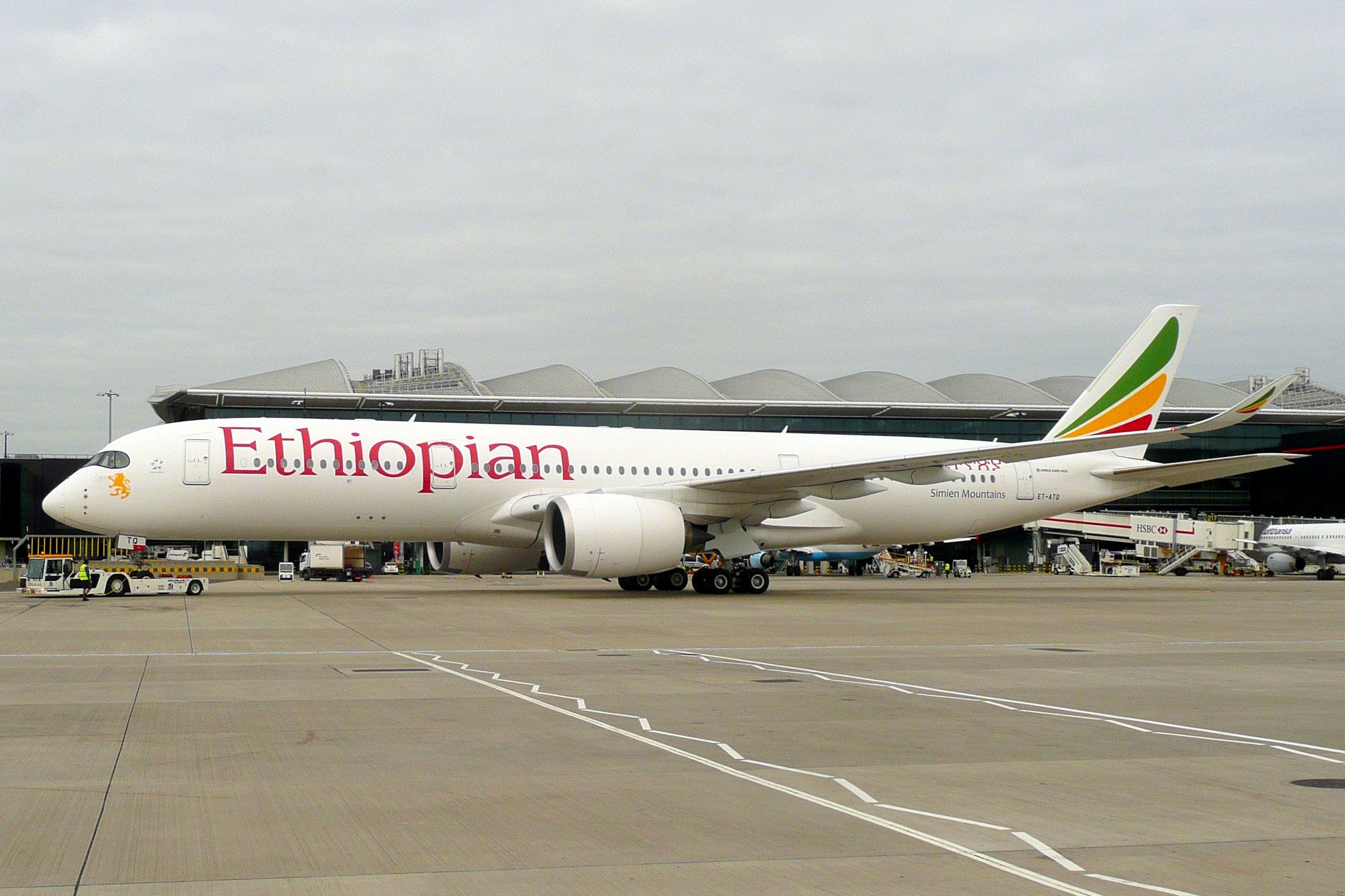
Ethiopian Airlines operates the largest active fleet of any African airline. As of October 2025, CAPA Centre for Aviation reported the Group was flying 166 aircraft with 64 on firm order, positioning it ahead of the next three African carriers combined.
The fleet is almost exclusively modern and fuel-efficient. According to the August 2025 corporate factsheet, the Group’s average fleet age is under 7 years, which is among the youngest averages globally for a carrier of its scale.
Composition spans both Boeing and Airbus widebodies, multiple 737 variants, and De Havilland Canada regional turboprops.

This heterogeneity reflects a deliberate dual-sourcing strategy that protects against supplier concentration risk while preserving operational flexibility across stage-length categories.
ETHIOPIAN AIRLINES - FLEET COMPOSITION SNAPSHOT (LATE 2025)
===========================================================
WIDEBODY PASSENGER
  Airbus A350-900             : 18 aircraft
  Airbus A350-1000            :  3 aircraft (first delivered 2024)
  Boeing 787-8 Dreamliner     : 19 aircraft
  Boeing 787-9 Dreamliner     : 10+ aircraft (growing)
  Boeing 777-200LR            :  5 aircraft
  Boeing 777-300ER            :  4 aircraft

NARROWBODY PASSENGER
  Boeing 737 MAX 8            : 29 aircraft
  Boeing 737-800              : 19 aircraft
  Boeing 737-700NG            :  4 aircraft
  Boeing 737-800BBJ           :  1 aircraft (VIP config)

REGIONAL PASSENGER
  De Havilland Dash 8-Q400    : 25+ aircraft

DEDICATED FREIGHTERS
  Boeing 777F                 : 12 aircraft
  Boeing 737-800F (converted) :  5 aircraft

ON ORDER / OPTIONS (as of Q1 2026)
  Boeing 787-9                : 20+ additional (incl. Jan 2026 order)
  Boeing 737 MAX 8            : 20+ additional
  Boeing 777-9                :  8 aircraft
  Boeing 777-8F               :  5 aircraft (cargo)
  Airbus A350-1000            : 8+ additional
Boeing remains the dominant supplier by tail count, particularly in the narrowbody segment.
However, the A350 fleet has grown rapidly since 2016 and now forms the backbone of premium long-haul services, especially on competitive European and Asian routes.
Fleet Age and Modernization Strategy
Ethiopian’s fleet age discipline is one of its most underappreciated operational advantages. The sub-seven-year average beats most legacy African peers by a decade or more and reduces fuel burn, maintenance reserve accruals, and dispatch reliability risk.
The airline aggressively retires older airframes when new deliveries arrive. Older Boeing 767s, once a workhorse, have been almost entirely phased out. The remaining 737-700 and earlier MAX production-lot aircraft are prioritized for domestic and short-haul regional rotations to preserve widebody availability on revenue-dense long-haul sectors.
The strategy produces measurable commercial benefits. Dispatch reliability on Ethiopian’s widebody fleet has remained above industry average through the Boeing delivery disruptions of 2023 to 2025, a period that crippled some competitors who had deferred maintenance on aging airframes.
Widebody Long-Haul Fleet Strategy
The widebody fleet is where Ethiopian competes most visibly with Gulf carriers and European flag airlines.
The backbone is a balanced split between the Boeing 787 Dreamliner family and the Airbus A350 family, with a smaller Boeing 777 fleet handling the longest-range or highest-density rotations.
In November 2023, at the Dubai Airshow, the airline signed what Boeing called a landmark order for up to 67 Boeing jets, splitting firm commitments between 11 Boeing 787-9s and 20 Boeing 737 MAX aircraft, with options for an additional 36 jets over three years.
Those options have since been systematically exercised. In December 2025, Ethiopian finalized a purchase of nine additional Boeing 787-9 Dreamliners, with deliveries scheduled between 2031 and 2033. Combined with earlier option exercises, the 787 fleet is on course to reach approximately 46 units by the early 2030s.
On the Airbus side, the carrier committed in 2023 to additional A350 deliveries, including firm orders for A350-1000 variants. The larger A350-1000 entered the fleet in 2024 and operates premium routings to London, New York JFK, and Washington Dulles.
WIDEBODY CONFIGURATION - PREMIUM SEATING PRODUCT
================================================
Airbus A350-900       : 30 Cloud Nine Business + 313 Economy  (343 total)
Airbus A350-1000      : 46 Cloud Nine Business + 349 Economy  (395 total)
Boeing 787-8          : 24 Cloud Nine Business + 246 Economy  (270 total)
Boeing 787-9          : 30 Cloud Nine Business + 285 Economy  (315 total)
Boeing 777-200LR      : 34 Cloud Nine Business + 287 Economy  (321 total)
Boeing 777-300ER      : 34 Cloud Nine Business + 350 Economy  (384 total)
Boeing 777-9 (future) : 52 Cloud Nine Business + 360 Economy  (~412 total)
The forthcoming Boeing 777-9 aircraft, ordered in earlier commitments, will become the flagship long-haul platform, sized for dense trunk routes to Asia and the Americas. Eight 777-9s are currently on the firm orderbook per CAPA reporting.
Narrowbody and Regional Fleet Strategy
The narrowbody fleet is structured around the Boeing 737 family, with the 737 MAX 8 progressively replacing older Next-Generation variants. The MAX fleet reached 29 active aircraft by early 2026, with another 11 confirmed in the January 2026 order commitment.
The 737 MAX 8 operates the bulk of intra-African routes, short-haul Middle East sectors, and select Indian subcontinent rotations. The configuration typically features 16 Cloud Nine business-class seats and 144 economy seats, balancing premium demand with high-density leisure traffic.
For thinner regional routes and domestic Ethiopian destinations, the De Havilland Canada Dash 8 Q400 turboprop fleet provides a flexible, fuel-efficient solution. These aircraft serve the rapidly expanding domestic network that now includes three new airports at Negele Borena, Gore Metu, and Debre Markos.
The mix between jets and turboprops allows route-level optimization impossible for single-fleet competitors. Routes to secondary Ethiopian cities and thin cross-border African markets are economical with the Q400, while corridor routes with heavier demand receive MAX 8 capacity.
Cargo Fleet Strategy
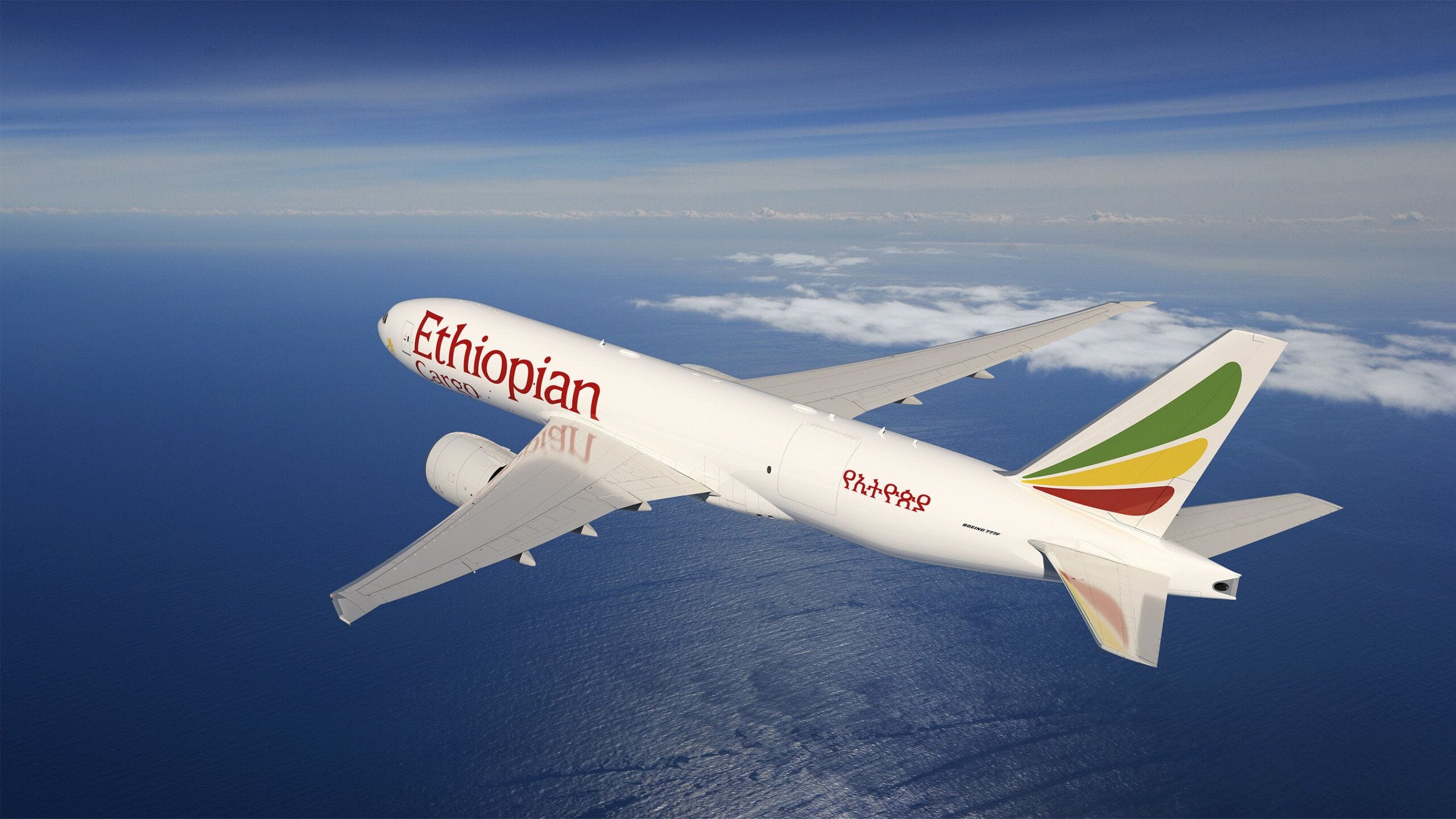
Ethiopian Cargo is the most strategically ambitious freighter operation in Africa. As of mid-2025, the division operates 12 dedicated Boeing 777 freighters alongside five converted 737-800 freighters, producing cargo-dedicated fleet parity with some of the largest Middle Eastern carriers.
In May 2025, Ethiopian took delivery of its final production-line Boeing 777F, completing the initial phase of the pure-freighter build-out. Subsequent capacity growth will come from converted aircraft and eventually the Boeing 777-8F when it enters service later this decade.
To bridge the gap, the airline has leased two Boeing 777-300ERSF “Big Twin” converted freighters from AerCap, with deliveries scheduled for Q2 2028. These will be the first 777-300ERSF aircraft to operate in Africa and carry approximately 100 tons of payload over transpacific stage lengths.
ETHIOPIAN CARGO FLEET ROADMAP (2026 TO 2030)
============================================
2025 Current        : 12 x Boeing 777F + 5 x 737-800F
2028 Addition       : 2 x Boeing 777-300ERSF (AerCap lease)
2029+ Addition      : Boeing 777-8F (5 on firm order from 2022)
Ancillary Capacity  : Belly cargo on all A350 and 787 rotations
Cargo Destinations  : 70+ direct freighter routes
Annual Capacity     : 1 million tons (Addis Ababa cargo terminal)
The division posted 451,000 tons in H1 FY2025/26, beating its own half-year target by 4%. Cargo revenue is projected to grow mid-single digits in the second half as pharma and perishable volumes accelerate.
Fleet Strategy under Vision 2035
The overarching fleet doctrine flows from Vision 2035, the multi-year strategic roadmap unveiled in 2024 and reaffirmed by CEO Mesfin Tasew through 2025 and 2026. The centerpiece is an expansion to 271 aircraft by the 2035 fiscal year.
That target requires net additions of over 100 aircraft from the current active fleet, after accounting for retirements of older 737NGs and remaining 777-200LRs. The mix will skew toward fuel-efficient widebodies (787-9, A350-900, A350-1000, 777-9) and 737 MAX narrowbodies.
The fleet plan is calibrated to serve passenger targets of approximately 65 to 70 million passengers annually by 2035, roughly tripling the current level. Cargo tonnage targets exceed 3 million tons annually under the same plan.
The plan has not been without execution headwinds. Boeing delivery delays on the 737 MAX and 777-9 programs forced the airline to accelerate leased aircraft intake during 2024 and 2025.
Management has publicly acknowledged that supplier constraints could shift the Vision 2035 timeline by 12 to 18 months under adverse scenarios.