


Executive Summary
GOL emerged from U.S. Chapter 11 protection on June 6, 2025, with parent Abra Group controlling roughly 80% of the restructured carrier, following roughly 17 months of court-supervised reorganization that eliminated substantial legacy obligations and secured $1.9 billion exit financing.
The airline operated a fleet of 143 Boeing 737 aircraft at the end of third quarter 2025, with diversification underway through five Airbus A330-900 widebodies arriving in 2026 and a longer-term commitment to 138 Airbus A320neo family aircraft across the Abra Group order book.
Third-quarter 2025 net revenue reached R$5.5 billion with 11.6% year-over-year growth, with adjusted EBITDA climbing 46% to R$1.6 billion as the Smiles loyalty franchise and GOLLOG cargo business delivered double-digit revenue expansion.
The airline plans to launch its first long-haul widebody service connecting Rio de Janeiro to New York JFK from July 8, 2026, alongside planned routes to Paris and Lisbon, marking a strategic pivot from an all-narrowbody domestic carrier to an intercontinental operator.
Recommended - Read Full Reports


Read All Reports
Table of Contents
Executive Summary
Introduction
Key Facts: Company Profile
Business Overview
A Brief Corporate History Recast Through Restructuring
Ownership Structure and the Abra Group Connection
Financial Analysis: Latest Disclosed Results
Revenue Growth Drivers
Key Services and Products
GOL Fleet: In-Depth Analysis
Fleet Size and Composition
Fleet Age and Utilization
Aircraft Type Strategy and Configuration
In-Depth Fleet Strategy
Aircraft Configuration Strategy
Cargo Fleet and GOLLOG Strategy
Route Network, Major Destinations and Strategy
Domestic Network Foundation
International Short-Haul Network
Long-Haul International Launch
Network Planning Strategy
Codeshare and Partnership Strategy
Major Operational Bases (Hubs)
São Paulo Guarulhos International Airport (GRU)
São Paulo Congonhas Airport (CGH)
Rio de Janeiro Galeão International Airport (GIG)
Brasília International Airport (BSB)
Competitive Position
Major Competitors
GOL vs LATAM: The Brazilian Market Battle
GOL vs Azul: The Brazilian Challenger Dynamic
GOL vs Copa Airlines: Connecting Hub Competition
GOL vs U.S. and European Long-Haul Carriers
Strategic Outlook and Growth Drivers
Brazilian Aviation Market Trajectory
Key Strategic Initiatives in 2026
Leadership Vision
Environmental, Social and Governance Considerations
Key Risks, Probabilities and Scenarios
1. Fuel Price and Foreign Exchange Risk
2. Competitive Capacity Response
3. A330-900 Launch Execution Risk
4. Macro and Demand Risk
5. Regulatory and Political Risk
6. Aircraft Lessor and OEM Risk
Industry Context and Sector Dynamics
Brazilian Aviation Regulatory Framework
Brazilian Demand Fundamentals
Aircraft Manufacturer Dynamics
Technology, Digital and Customer Experience
Digital Customer Platform
Revenue Management and Pricing Systems
Operational Technology and Network Planning
Workforce, Culture and Safety
Employees and Union Relations
Safety Culture and Committee Oversight
Leadership Team
Partnership Strategy and Alliance Positioning
American Airlines Codeshare Depth
Air France and KLM Relationship
Aerolíneas Argentinas and Regional Partners
Sustainability, SAF and Fleet Carbon Transition
Fleet Transition Environmental Benefits
Sustainable Aviation Fuel Pathway
Route Launch Deep Dive: Rio de Janeiro to New York JFK
Commercial Positioning
Operational Profile
Strategic Significance
GOLLOG Cargo Business Deep Dive
Cargo Network and Capability
Revenue Growth and Strategic Importance
Strategic Positioning for 2026 and Beyond
Investor and Analyst Considerations
Reporting Evolution Post-Restructuring
Operating Metrics and KPIs
Scenario Analysis: Three-Year Outlook
Base Case Scenario
Upside Scenario
Downside Scenario
My Final Thoughts
Official Sources and Data
Introduction
GOL Linhas Aéreas has just completed one of the most consequential two-year stretches in Brazilian aviation history.
The carrier filed for Chapter 11 in New York on January 25, 2024, emerged from restructuring on June 6, 2025, and by March 2026 announced its first widebody fleet additions with transatlantic and U.S. nonstop service.
What was once an all-Boeing 737 low-cost domestic carrier now stands as a diversified operator under Abra Group control, competing head-on with LATAM and a financially strained Azul.
The strategic transformation touches every layer of the business: fleet composition, network geography, ownership, cost structure, and product positioning.
This in-depth strategic analysis report examines the airline at a moment when its 2026 operating plan, its post-bankruptcy capital structure, and its new widebody program are all converging.
Key Facts: Company Profile
Company Name:         Gol Linhas Aéreas Inteligentes S.A.
Trading Symbol:       GOLLQ (formerly GOLL54 on B3)
Headquarters:         São Paulo, Brazil (corporate), Rio de Janeiro (historic base)
Founded:              2000 (commercial operations began 2001)
Current CEO:          Celso Ferrer Junior
Controlling Parent:   Abra Group (approximately 80% ownership)
IATA / ICAO Code:     G3 / GLO
Primary Hub:          Guarulhos International Airport (GRU), São Paulo
Secondary Hubs:       Congonhas (CGH), Galeão (GIG), Brasília (BSB)
Fleet Size (Q3 2025): 143 Boeing 737 aircraft
Widebody Commitment:  5 Airbus A330-900 (arriving 2026)
Workforce:            Approximately 14,000 employees
Loyalty Program:      Smiles
Cargo Division:       GOLLOG
Chapter 11 Exit:      June 6, 2025
Business Overview
A Brief Corporate History Recast Through Restructuring
GOL was founded in 2000 by the Constantino family as a low-cost carrier patterned loosely on Southwest Airlines, with its first commercial flight in January 2001. The airline built a reputation on fleet commonality around the Boeing 737 platform, aggressive pricing, and high aircraft utilization across a dense Brazilian network.
Two decades later, the company faced a perfect storm of pandemic aftereffects, a weak Brazilian real against dollar-denominated aircraft leases, Boeing 737 MAX grounding ripple effects, and the operational disruption caused by engine availability shortages. Management filed for Chapter 11 to restructure the balance sheet comprehensively rather than through piecemeal workouts.
The reorganization confirmed in May 2025 and the subsequent exit in June 2025 reset the corporate architecture. Abra Group, which also controls Avianca and Wamos Air, became the controlling shareholder with an approximately 80% stake, and the restructuring eliminated more than $850 million in obligations while securing exit financing of roughly $1.9 billion.
Ownership Structure and the Abra Group Connection
Understanding GOL in 2026 requires understanding the Abra Group umbrella.
Abra is a holding company that consolidates the financial position and strategic direction of GOL, Avianca, and Wamos Air, with minority interests in additional carriers and an active interest in Chile’s SKY Airline following a merger agreement in principle announced in November 2025.
In October 2025, the parent announced a restructuring plan that would take GOL private, with Gol Investment Brasil absorbing the listed entity and preparing the group for a prospective overseas IPO. The Brazilian delisting effectively concentrated decision rights at the group level while streamlining reporting.
The practical consequence for airline operations is that fleet orders, financing arrangements, and strategic route decisions now flow through Abra.
The shared order book for 138 Airbus A320neo family aircraft and the allocation of A330-900 widebodies between GOL and Avianca are managed at the parent level.
ABRA GROUP PORTFOLIO (2026 Snapshot)
--------------------------------------------
GOL Linhas Aéreas ....... ~80% controlling interest
Avianca Holdings ........ controlling interest
Wamos Air ............... controlling interest
SKY Airline (Chile) ..... agreement in principle, November 2025
Shared Order Book ....... 138 A320neo family aircraft by 2032
A330-900 Allocation ..... 5 GOL + 2 Avianca (initial tranche)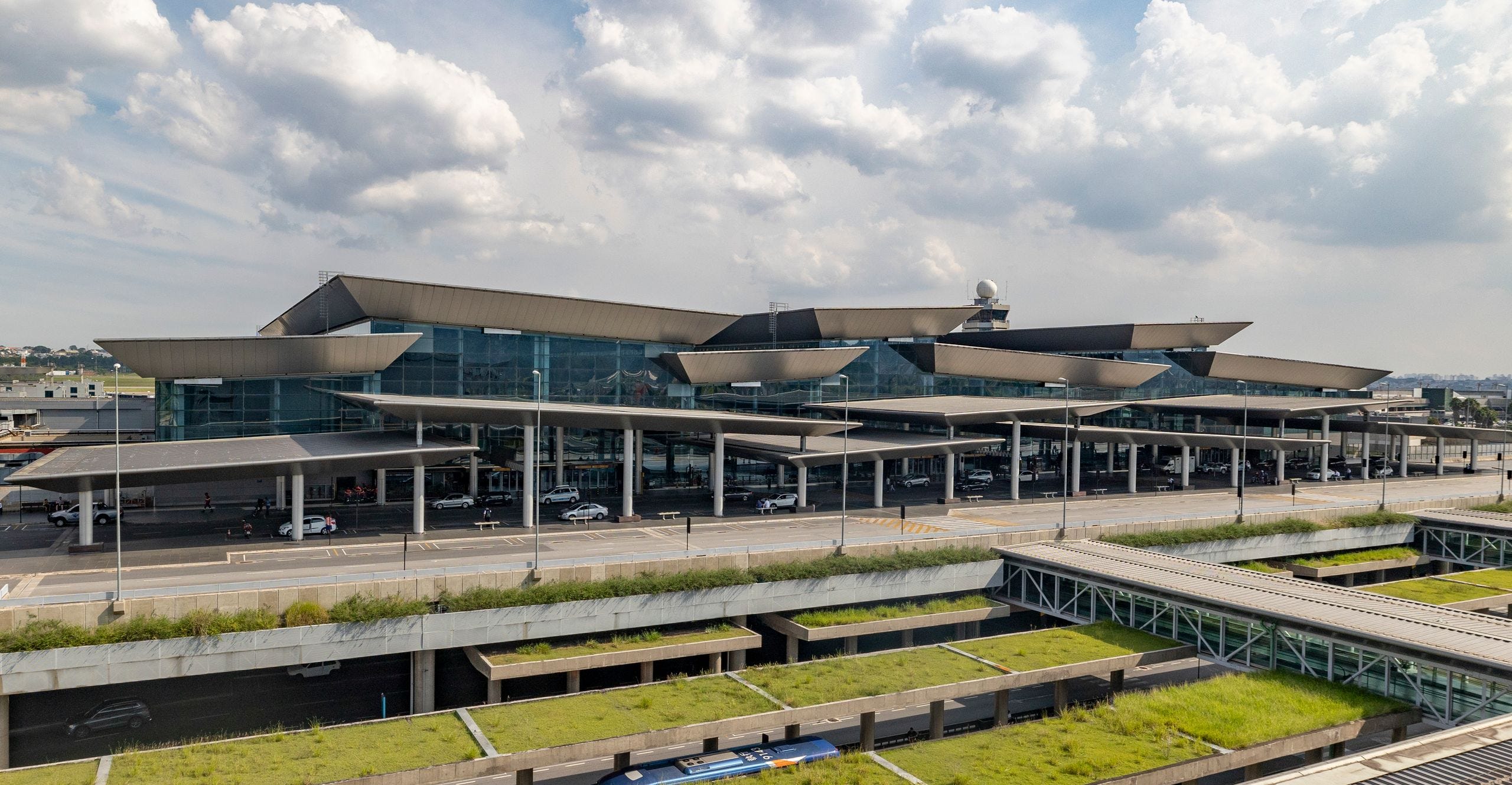
Financial Analysis: Latest Disclosed Results
The third quarter of 2025 was the first full reporting period after the Chapter 11 exit, making it the most relevant financial snapshot for the carrier’s current operating profile.
Net revenue reached R$5.5 billion, a year-over-year increase of 11.6%, while passenger revenue climbed 12.4% on higher yields and load factors.
Adjusted EBITDA for the quarter reached R$1.6 billion, up 46% year-over-year, reflecting operating leverage from higher capacity utilization and the elimination of reorganization-related drag. The results signalled that the post-exit balance sheet and fleet schedule were producing the intended margin recovery.
The Smiles loyalty franchise delivered a 10.4% increase in redemption transactions during the quarter, and GOLLOG continued its growth trajectory with 17.0% revenue expansion during the first quarter of 2025.
Both ancillary units have become structurally important contributors to consolidated revenue rather than incidental lines.
Q3 2025 Financial Highlights (disclosed)
---------------------------------------------------
Net Revenue:               R$5.5 billion (+11.6% YoY)
Passenger Revenue Growth:  +12.4% YoY
Adjusted EBITDA:           R$1.6 billion (+46% YoY)
Smiles Redemption Growth:  +10.4% YoY
Exit Financing Package:    ~$1.9 billion (June 2025)
Chapter 11 Debt Reduction: ~$850 million+ eliminatedAbra Group’s pro-forma disclosure covering full-year 2025 presented the group’s consolidated performance as if GOL had been part of the parent for all of 2024 and 2025, offering a comparable view of combined operations alongside Avianca and Wamos Air.
The pro-forma data supports the narrative of a cyclically recovering Brazilian airline inside a multi-carrier Latin American platform.
Revenue Growth Drivers
Three growth engines are visible in the operating disclosures: higher domestic yields, an expanding international operation, and ancillary units that grow faster than passenger revenue.
Domestic capacity discipline across Brazilian carriers has supported fare strength, with October 2025 recording 11.3 million passengers in the Brazilian market and capacity constrained by aircraft availability.
The international push from Brazil to North America and Europe introduces higher-yielding traffic streams, particularly once widebody service begins in July 2026. Long-haul business and premium leisure traffic carries materially better revenue per available seat kilometre than short-haul domestic flying.
The Smiles loyalty program sells miles to banking partners, retailers, and corporate buyers, and the monetization of those miles runs counter-cyclically to operational volatility. GOLLOG’s cargo network benefits from Brazil’s growing e-commerce footprint and from belly capacity added by the 737-800 Boeing Converted Freighters already inside the fleet.
Key Services and Products
The GOL product offering spans three distinct layers.
Main cabin economy represents the vast majority of seats across the narrowbody fleet, while Premium Economy provides additional legroom, priority services, and enhanced in-flight amenities on selected aircraft. The upcoming A330-900 operation introduces a full widebody cabin configuration with premium seating for long-haul markets.
The Smiles loyalty program is one of the largest airline loyalty programs in Latin America, with tiered membership, partner earn-and-burn capability, and deep integration into Brazilian banking cards. GOL Smiles Lounges operate at strategic Brazilian hubs and selected international stations.
GOLLOG handles express, general, and specialized cargo across Brazil and internationally, with dedicated 737-800 Boeing Converted Freighters adding main-deck capability alongside passenger belly cargo. The VoeBiz corporate loyalty platform targets small and medium business travel buyers with points accrual and account management tools.
GOL PRODUCT PORTFOLIO (2026)
------------------------------------------
Passenger Product:   Economy | Premium Economy | (future widebody premium)
Loyalty Programs:    Smiles (retail) | VoeBiz (corporate)
Ground Product:      GOL Smiles Lounges (GRU and select stations)
Cargo Division:      GOLLOG (passenger belly + dedicated 737-800BCF)
Ancillary:           Seat selection, baggage, Wi-Fi, stopover programs
Partnerships: American Airlines, Air France, KLM, Aerolíneas ArgentinasGOL Fleet: In-Depth Analysis
Fleet Size and Composition
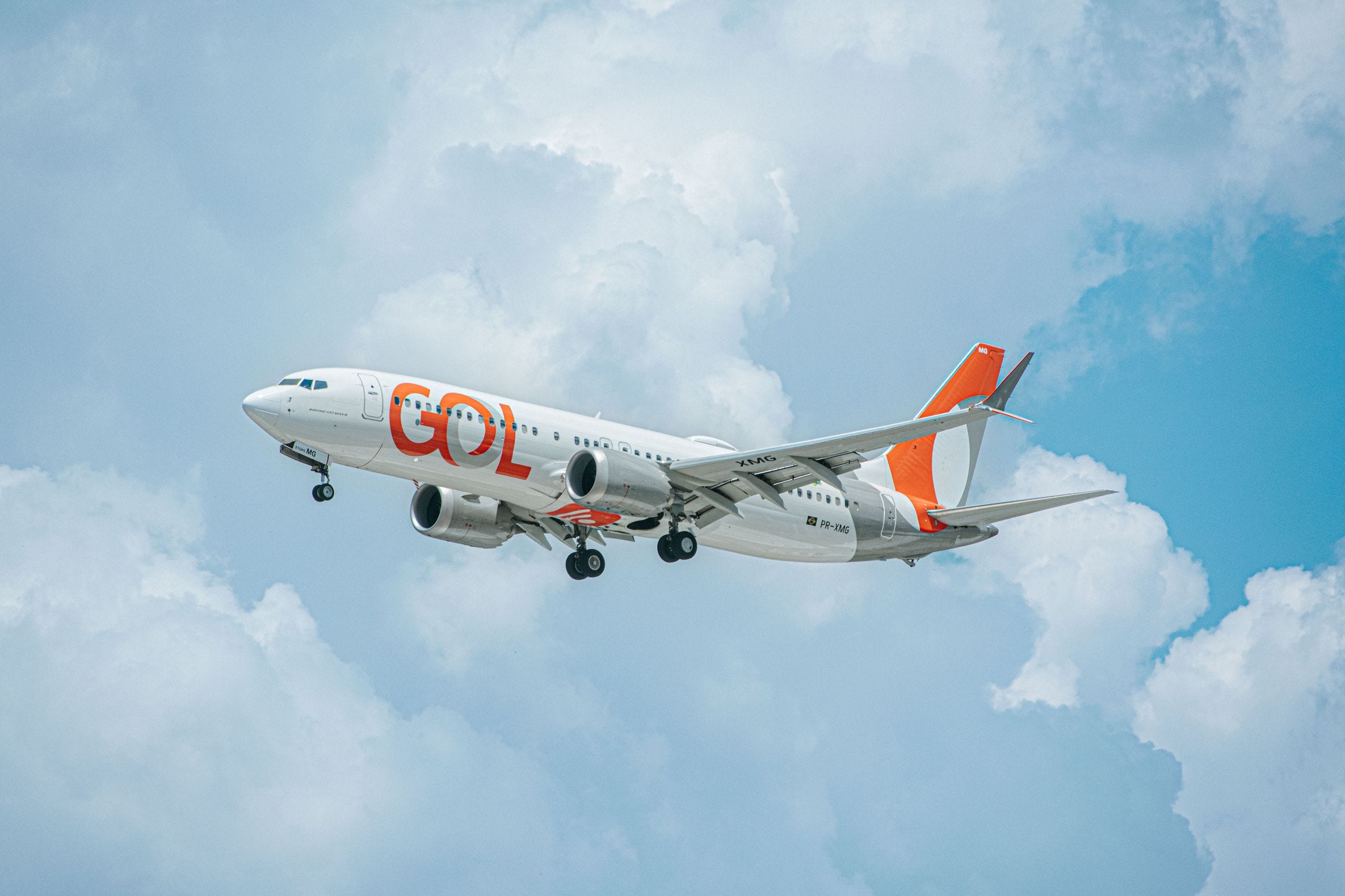
GOL’s disclosed fleet at the end of the third quarter of 2025 totalled 143 Boeing 737 aircraft, reflecting continued narrowbody expansion through the Chapter 11 period.
The official breakdown comprised 12 Boeing 737-700 Next Generation aircraft, 64 Boeing 737-800 Next Generation aircraft, plus additional 737-800 Boeing Converted Freighters and the growing Boeing 737-8 MAX fleet.
Industry databases and cross-checking with parallel reporting place the operational and on-order footprint at 146 aircraft with 14 additional aircraft on order or planned, with an average fleet age of approximately 11.7 years.
The average age is influenced by the long-serving 737-800NG backbone and is expected to decline as MAX deliveries accelerate and older NG units are retired.
The fleet expanded substantially during 2025, adding roughly five aircraft quarter-over-quarter in the second-to-third-quarter transition, demonstrating that the restructuring did not pause capacity growth.
Parallel industry reporting places the operating fleet at approximately 138 aircraft with 49 Boeing 737 MAX, 83 Boeing 737NG, and six 737-800BCF freighters at comparable mid-2025 reference points.
GOL Fleet Composition (Q3 2025, disclosed)
-----------------------------------------------
Boeing 737-700 NG .................. 12 aircraft
Boeing 737-800 NG .................. 64 aircraft
Boeing 737-8 MAX ................... (balance of 143 737 total)
Boeing 737-800 BCF (freighter) ..... 6 aircraft
Total Boeing 737 Fleet ............. 143 aircraft

2026 Additions (planned)
-----------------------------------------------
Airbus A330-900 neo ................ 5 aircraft (deliveries 2026)Fleet Age and Utilization
With average fleet age around the 11 to 12 year mark, GOL sits in a middle band between ultra-young fleets like those of U.S. ultra-low-cost carriers and older legacy fleets at heritage carriers. The 737-700s are the oldest subfleet and are candidates for progressive retirement as MAX 8 deliveries fill the schedule.
Fleet utilization metrics moved higher through 2025 as the airline reactivated aircraft that had been parked during the restructuring and as engine availability for the MAX population improved. The company’s own traffic releases for early 2026 showed continued year-over-year capacity expansion.
A notable operational footnote concerns returns of brand-new 737-8 MAX units reported in February 2026, which relate to lease terms and specific unit allocations rather than a broader fleet retrenchment. The carrier continues to add MAX capacity on a net basis.
Aircraft Type Strategy and Configuration
The Boeing 737-800 NG remains the workhorse of GOL’s passenger network, typically configured with 186 economy seats or in a 20 Premium Economy + 156 Economy layout depending on the variant.
This single-class and dual-class duality allows the airline to optimize between high-density leisure operations and business-oriented intra-Brazil corridors.

The Boeing 737-8 MAX provides roughly 14% better fuel efficiency per trip compared to the 737-800 NG, enabling thinner long routes inside South America and extending the feasible operating radius from Brazilian hubs. The MAX also underpins the viability of routes from Brazil to North American gateways prior to widebody introduction.
The Boeing 737-700 NG, with its smaller capacity, serves thin domestic and regional routes where matching gauge to demand is critical. As the cost-per-trip differential narrows with MAX economics and as regional fleet alternatives enter the Abra group, the 737-700 fleet is likely to contract.
The 737-800 Boeing Converted Freighter platform dedicates main-deck space to GOLLOG operations, effectively doubling the cargo reach of the combined passenger belly network. This hybrid structure is unusual among Latin American carriers and positions GOLLOG as a meaningful standalone logistics player.
In-Depth Fleet Strategy
GOL’s fleet strategy in 2026 represents a fundamental departure from the single-type low-cost carrier model that defined the airline for more than two decades. CEO Celso Ferrer confirmed at Routes Americas 2026 in Rio de Janeiro that the carrier was no longer constrained to a single-fleet model and was actively pursuing diversification.
The first pillar of the new strategy is widebody entry through the Airbus A330-900 neo.
The initial commitment covers five aircraft for GOL, with two additional A330-900s allocated to Avianca inside the Abra Group order book, sourced through a lease arrangement.
The second pillar is the transition of the narrowbody fleet toward the Airbus A320neo family over the late 2020s.
Abra Group placed an incremental order for 50 A320neo aircraft in October 2025, bringing the consolidated group order book to 138 A320neo family aircraft scheduled for delivery by 2032. Allocations between GOL, Avianca and other Abra carriers will be determined by network and timing considerations.
The third pillar is the continued induction of Boeing 737-8 MAX aircraft for the near-term narrowbody requirement.
The MAX schedule provides the bridge capacity needed to support 2026 and 2027 growth before meaningful Airbus deliveries begin arriving in significant numbers.
Aircraft Configuration Strategy
The A330-900 widebody program is sized for approximately 300 seats per aircraft with range capability up to roughly 12 hours, opening direct service from Brazil to major North American and European gateways. The seat count and range envelope position the aircraft precisely for Rio-JFK, Rio-Paris, and Rio-Lisbon operations.
The cabin configuration choices for the A330-900 will define GOL’s premium positioning for the first time as a true long-haul carrier. Reuters reporting indicates a three-class approach consistent with competitive standards on transatlantic and South-North America routes.
Narrowbody configuration choices remain oriented toward efficient domestic operations, with Premium Economy selectively deployed on trunk routes where business traffic supports the price premium.
The Premium Economy proposition becomes more competitive once business travellers can connect domestically into GOL’s new widebody international network rather than transferring to LATAM or connecting through Panama.
GOL FLEET STRATEGY PILLARS (2026-2032)
------------------------------------------------------
Pillar 1: Widebody Introduction
  - 5 Airbus A330-900 (GOL)
  - 2 Airbus A330-900 (Avianca, Abra allocation)
  - Entry-into-service: 2026
  - Deployment: long-haul from Rio de Janeiro

Pillar 2: Narrowbody Renewal
  - 138 Airbus A320neo family (group order, through 2032)
  - Shared across GOL, Avianca, and Abra carriers
  - Progressive replacement of aging 737-700 and 737-800 NG

Pillar 3: Near-Term 737 MAX Capacity
  - Continuous induction of 737-8 MAX
  - Backbone of 2026-2028 growth
- Bridge platform during Airbus transitionCargo Fleet and GOLLOG Strategy
The dedicated cargo fleet of six 737-800 Boeing Converted Freighters gives GOL a competitive edge in the Brazilian domestic air cargo market. These aircraft serve as the backbone of the GOLLOG operation, complementing passenger belly capacity on mainline routes.
Cargo revenue growth has outpaced passenger revenue in recent quarters, reflecting both the Brazilian e-commerce boom and the specific yield advantages of dedicated freighter operations. GOLLOG’s expansion supports the airline’s diversification away from pure passenger dependence.
The A330-900 widebodies will introduce significant additional belly cargo capacity on international routes, creating new revenue streams for northbound and eastbound freight movements. This belly cargo upside is often underappreciated in widebody business cases but can contribute materially to route profitability.