


Executive Summary
Hindustan Aeronautics Limited (HAL) closed FY26 with a record revenue of Rs 32,250 crore and an order book that ballooned to roughly Rs 2.54 lakh crore, giving the Bengaluru-headquartered defence public sector undertaking the most visible long-term revenue runway in Indian aerospace.
Yet the year was defined as much by execution friction as by financial milestones, with Tejas Mk1A delivery slippages, the multi-month Advanced Light Helicopter grounding, and the unprecedented exclusion of HAL from the AMCA prototype phase reshaping the aerospace power map.
The strategic story for 2026 and beyond is therefore a paradox of plenty: an order book stretching past 2034, a maturing rotorcraft portfolio, expanding civil MRO ambitions, and a hard pivot toward indigenous engines through the Safran joint venture and the closing F414 transfer.
Recommended - Read Full Reports


Read All Reports
Table of Contents
Executive Summary
Key Facts: Hindustan Aeronautics Limited Company Profile
Hindustan Aeronautics Limited Company Overview
History and Evolution into Asia’s Aerospace Anchor
Corporate Structure and Leadership
Strategic Positioning in 2026
Key Product Lines, Programmes, and Services
Combat Aircraft: The Tejas Family at Centre Stage
Tejas Mk1A: The Production Crucible
Tejas Mk2: The Medium Weight Fighter
Sukhoi Su-30MKI: The Heavyweight Backbone
HTT-40 Basic Trainer: Indigenous Pilot Pipeline
Helicopter Programmes: The Rotorcraft Powerhouse
Advanced Light Helicopter (ALH) Dhruv: The 440-Unit Workhorse
HAL Prachand: The Light Combat Helicopter
Light Utility Helicopter (LUH) and Indian Multi-Role Helicopter (IMRH)
Unmanned Systems and the CATS Programme
Engines, Avionics, and Aerostructures: The Tier-1 Layer
Civil Aviation and MRO Services
Financial Analysis: Hindustan Aeronautics Limited
FY26 Provisional Performance and Top-Line Growth
Quarterly Trajectory and Margin Profile
Capital Expenditure and R&D Intensity
Balance Sheet and Cash Position
HAL Revenue and Growth Drivers
Tejas Programme as the Volume Engine
Helicopter Programme Compounding
Su-30MKI Upgrade and Heavy Aircraft Modernisation
Services and MRO as the Annuity Layer
Export and Industrial Cooperation Pipeline
Major HAL Competitors
Domestic Competitors in Indian Aerospace
HAL vs. Bharat Electronics Limited
HAL vs. Bharat Dynamics Limited
HAL vs. Tata Advanced Systems Limited
HAL vs. Larsen & Toubro and Bharat Forge
Global Reference Set
Competitive Analysis and Moat: Hindustan Aeronautics Limited
The Structural Moat
Where the Moat Is Eroding
Where the Moat Is Strengthening
Aero India 2025, Strategic Partnerships, and Industrial Cooperation
The SAFHAL Joint Venture and Indigenous Engine Trajectory
F414 Engine Technology Transfer
Financial and Commercial Implications
Revenue Visibility Through 2034
Margin Outlook and Sensitivity
Capital Allocation and Shareholder Returns
Implications for Suppliers and Sub-Tier Industry
Key Risks with Probability Assessment
Programme Execution Risks
Strategic Competitive Risks
Supply Chain and Geopolitical Risks
Financial and Reputational Risks
HAL SWOT Analysis
Other Key Strategic Considerations
Indigenous Content Trajectory and Atmanirbhar Bharat Alignment
Aero India and Brand Positioning
Export Strategy and Defence Diplomacy
Workforce and Talent Strategy
Sustainability and ESG Considerations
My Final Thoughts
Official Sources and Data
Key Facts: Hindustan Aeronautics Limited Company Profile
Hindustan Aeronautics Limited (HAL) traces its origins to 1940 in Bengaluru and stands today as Asia’s oldest continuously operating military aircraft manufacturer.
The company is headquartered at Cubbon Road in Bengaluru and operates through 11 production divisions, 11 R&D centres, and a network of joint ventures. Its sole majority shareholder remains the Government of India through the Ministry of Defence.
KEY FACTS
- Name: Hindustan Aeronautics Limited (NSE: HAL)
- Founded: 23 December 1940
- Headquarters: 15/1 Cubbon Road, Bengaluru 560001
- Chairman & Managing Director: Dr. D.K. Sunil
- Employees: ~26,000+ (as per FY25 disclosures)
- Production Divisions: 11
- R&D Centres: 11
- Listed: BSE & NSE (IPO completed 2018)
- Promoter: President of India / Government of India
- FY26 Revenue: Rs 32,250 crore (provisional)
- FY26 Order Book: ~Rs 2.54 lakh crore
The company’s authority to design, build, and overhaul military aircraft is anchored in its 62nd Annual Report, which reports facilities spread across Bengaluru, Nashik, Koraput, Korwa, Kanpur, Lucknow, Hyderabad, and Tumakuru.

Hindustan Aeronautics Limited Company Overview
History and Evolution into Asia’s Aerospace Anchor
HAL was conceived in 1940 by Walchand Hirachand and the erstwhile princely state of Mysore, beginning operations as Hindustan Aircraft Company in Bengaluru.
The Government of India took over the company during the Second World War to support Allied repair operations, eventually merging Aeronautics India Limited and Hindustan Aircraft Limited in 1964 to form the present entity.
For more than six decades, HAL functioned as the singular engine of India’s military aviation manufacturing base. It licence-built the Folland Gnat, MiG-21, Jaguar, and Sukhoi Su-30MKI while simultaneously incubating indigenous platforms such as the HF-24 Marut, HJT-16 Kiran, ALH Dhruv, and the Tejas family.
The company crossed an inflection point in 2018 when the Government conducted HAL’s initial public offering, beginning a reorientation toward financial accountability, dividend discipline, and a more structured capital expenditure pipeline.
Corporate Structure and Leadership
The company is led by Dr. D.K. Sunil, who serves as Chairman and Managing Director and holds additional charge as Director (Engineering and R&D).
He has set a clear ten-year goal of raising civil aviation contributions to roughly 25 percent of HAL’s turnover, a meaningful pivot from the historically defence-dominated mix.
ORGANISATIONAL FOOTPRINT
- Aircraft Division (Bengaluru): Tejas, HTT-40, Sukhoi structural work
- Aircraft Division (Nashik): Tejas Mk1A, Su-30MKI, MRO
- Helicopter Division (Bengaluru): Dhruv, Prachand, LUH
- Engine Division (Bengaluru / Koraput): AL-31FP, Adour, Shakti
- Avionics Division (Hyderabad / Korwa): Mission computers, IRDE, EW
- Accessories Division (Lucknow / Kanpur): LRUs, instruments
The board includes functional directors covering Operations, Finance, Human Resources, and Corporate Planning, supplemented by independent directors who chair audit and CSR committees, all detailed in the company’s latest annual disclosures.
Strategic Positioning in 2026
HAL’s positioning in 2026 is best understood as the prime integrator for India’s largest fixed-wing combat aircraft programmes and rotary platforms, while becoming an increasingly important Tier-1 supplier in global civil aerospace.
The company’s dual identity, defence prime plus emerging civil aerospace partner, is explicit in its communications.
The latest publicly disclosed strategic priorities from the chairman include accelerating Tejas Mk1A throughput, reaching IMRH first flight, scaling civil MRO under Airbus and Embraer agreements, and building genuine engine IP via the Safran joint venture.
Stakeholders reading 2026 through the right lens should treat HAL not as a single-product manufacturer but as a portfolio of aerospace programmes operating at very different lifecycle stages, each with its own throughput constraint and risk profile.
Key Product Lines, Programmes, and Services
Combat Aircraft: The Tejas Family at Centre Stage
Tejas Mk1A: The Production Crucible
The Light Combat Aircraft Tejas Mk1A is the single most consequential programme in HAL’s portfolio in 2026.
The aircraft is a 4.5-generation, single-engine, multirole fighter intended to replace the retiring MiG-21 fleet and form the numerical backbone of the Indian Air Force’s lower-end fighter strength.
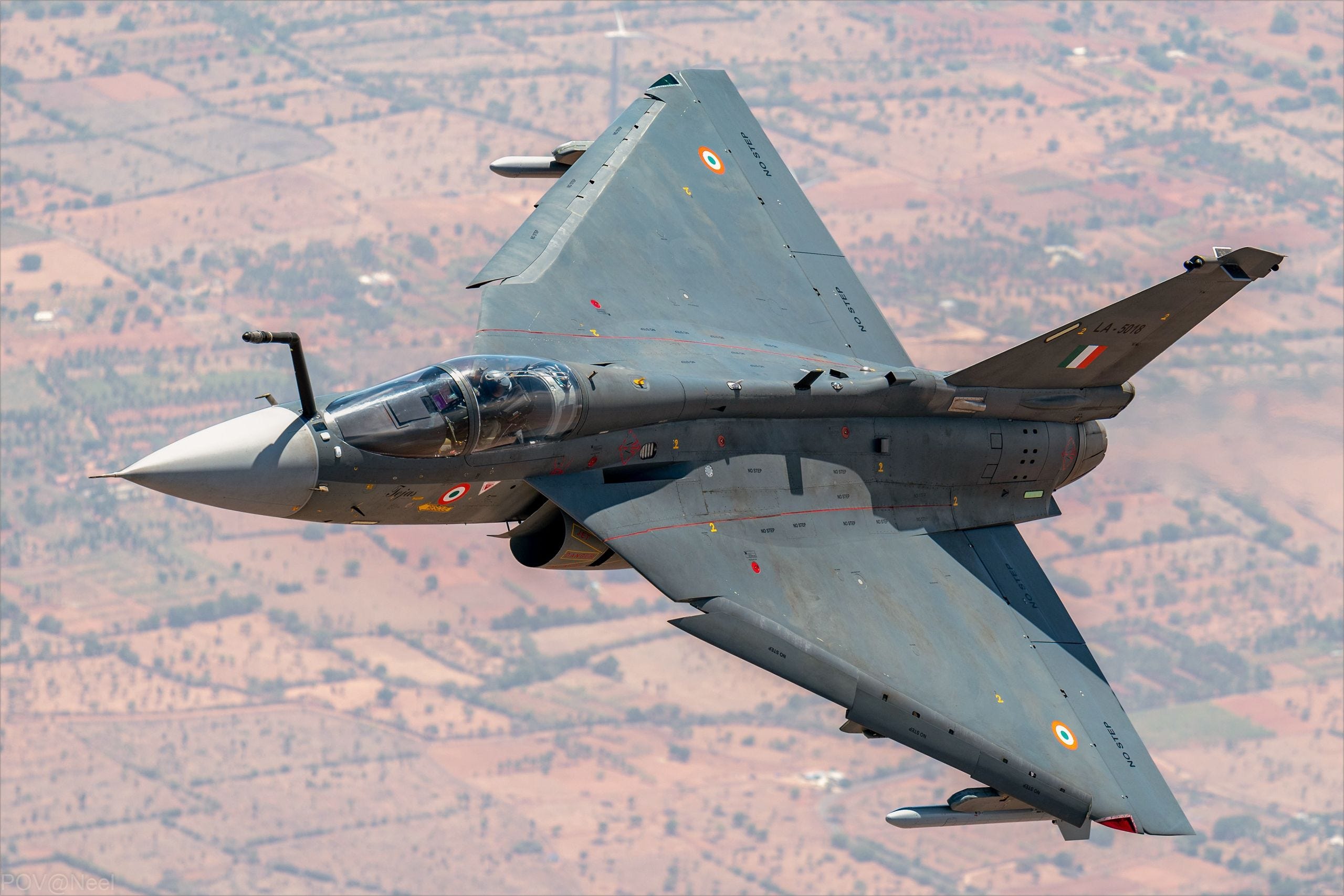
HAL is currently executing an 83-aircraft contract worth roughly Rs 48,000 crore signed in 2021, alongside a follow-on order for 97 additional Mk1A jets signed in September 2025.
Together, this stacks 180 Tejas Mk1A aircraft on HAL’s books across Bengaluru and Nashik production lines.
The execution story has, however, been turbulent.
HAL was unable to deliver the planned Tejas Mk1A units in FY26 as originally scheduled, prompting a high-level review with the Indian Air Force and a revised internal target of seven aircraft by March 2026.
TEJAS MK1A PRODUCTION SNAPSHOT
- Original 2021 order: 83 aircraft (73 fighters + 10 trainers)
- 2025 follow-on order: 97 aircraft
- Contracted price band: Rs 48,000 cr + ~Rs 65,000 cr
- Production lines: Bengaluru (2) + Nashik (1)
- Combined annual capacity target: 24 aircraft per year
- F404-IN20 engine status: 6 delivered (as of late 2025); 20 expected in H2 2026The third Tejas Mk1A production line in Nashik is meant to take HAL’s combined annual capacity to 24 aircraft per year. The line is expected to roll out its first aircraft from the Nashik facility, which has an installed capacity of eight jets per year.
The dominant constraint remains engine supply.
GE Aerospace had delivered only six F404-IN20 engines by late 2025 against a planned target of 11, and HAL signed a follow-on contract on 7 November 2025 for 113 F404-GE-IN20 engines, with deliveries running into 2032.

Tejas Mk2: The Medium Weight Fighter
The Tejas Mk2 is the heavier, more capable evolution of the LCA family, designed around the more powerful F414 engine and fitted with advanced avionics. The DRDO chairman has publicly indicated that the first flight of the LCA Mk2 is expected in June 2026, with induction targeted within the next four years.
The Mk2 will benefit from the long-awaited GE F414 engine technology transfer, which will see roughly 80 percent domestic manufacturing content. The engine will eventually power not only Mk2 but also the Twin-Engine Deck Based Fighter (TEDBF) and parts of the AMCA early production runs.
For aerospace stakeholders, Mk2 is the bridge between today’s Mk1A line and tomorrow’s stealth-era programmes. The chairman has emphasised that successful Mk2 industrialisation will validate HAL’s ability to manage simultaneous high-volume legacy production and complex mid-weight fighter development.
Sukhoi Su-30MKI: The Heavyweight Backbone
HAL has built and overhauled the Indian Air Force’s 222 Su-30MKI fleet at Nashik, Koraput, and Bengaluru over more than two decades under licence from the United Aircraft Corporation. The platform remains the heaviest, most numerous fighter in Indian service.
In late 2025, the Government cleared a fresh Rs 13,500 crore contract for 12 additional Su-30MKI airframes to be manufactured at Nashik with a 50 percent indigenous content target. HAL’s chairman has indicated that resuming dormant production will require around 24 months of tooling and supply-chain rebuild.
The much larger lever is the Super Sukhoi upgrade.
The programme covers the modernisation of 84 Su-30MKI aircraft with new AESA radar, an upgraded electronic warfare suite, modern data links, and an indigenous mission computer architecture.
The programme received Acceptance of Necessity in November 2023 and is awaiting final Cabinet Committee on Security clearance.
SU-30MKI PROGRAMME STATUS (2026)
- Existing fleet built/overhauled by HAL: 222 aircraft
- 2025 fresh production contract: 12 aircraft (~Rs 13,500 cr)
- Super Sukhoi upgrade scope: 84 aircraft
- Production restart timeline: ~24 months tooling rebuild
- Final CCS clearance: Pending as of Q1 2026
The Super Sukhoi upgrade alone could exceed Rs 60,000 crore once finalised, and would lock in HAL’s Nashik facility through the early 2030s while the heavyweight fighter fleet remains operational.
HTT-40 Basic Trainer: Indigenous Pilot Pipeline
The HAL HTT-40 is a turboprop basic trainer aircraft that returns indigenous primary flight training capability to the Indian Air Force after a long reliance on imported platforms.
The order book stands at 70 aircraft, with discussions for additional batches periodically appearing in defence procurement deliberations.
The HTT-40 has now matured into a deliverable platform, with HAL ramping up production at its Bengaluru complex. A second HTT-40 production line was established to support throughput and shorten the runway between order intake and induction.
For industry stakeholders, the HTT-40 matters less for absolute revenue and more for the closure of a basic trainer gap that has historically constrained pilot output. Industrial logic favours sustained domestic production through the late 2020s.
Helicopter Programmes: The Rotorcraft Powerhouse
Advanced Light Helicopter (ALH) Dhruv: The 440-Unit Workhorse
The HAL Dhruv is the most numerous indigenous helicopter ever fielded by Indian forces, with more than 440 units crossed in cumulative production.
The platform serves all three armed services, the Indian Coast Guard, and a number of foreign operators.
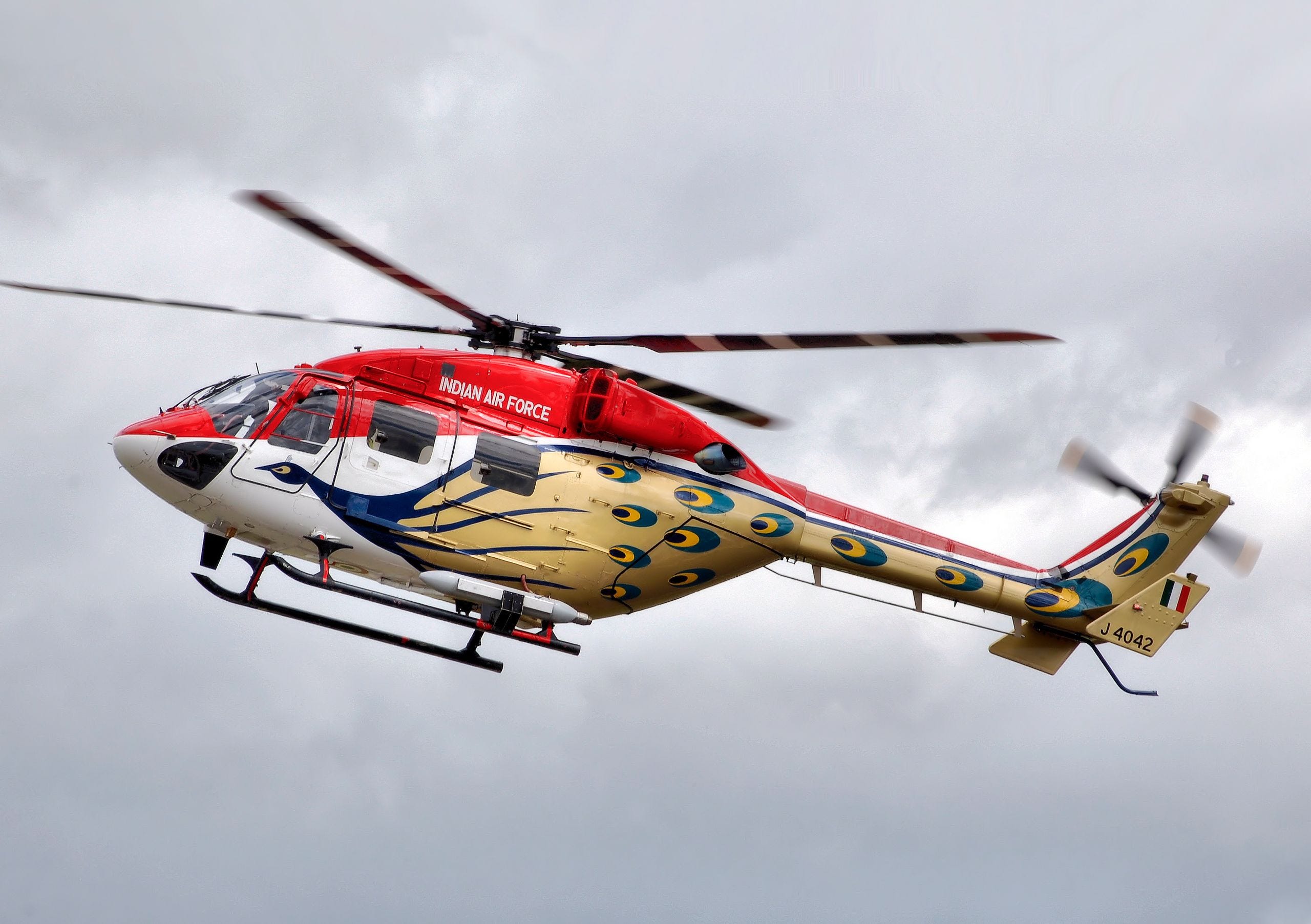
The ALH fleet entered an extended grounding in January 2025 following a fatal Coast Guard crash at Porbandar. The full fleet of more than 330 helicopters was suspended from operations during the investigation.
Cleared in stages from May 2025, the Naval and Coast Guard Dhruv variants returned to flight after HAL implemented transmission fixes. The chairman publicly stated that HAL was not responsible for three of the four most recent crashes.
The Dhruv NG variant has now opened a civil track, with Pawan Hans signing a Rs 1,800 crore contract for 10 Dhruv NG helicopters at Wings India 2026, marking the platform’s first credible civil sector traction.
ALH DHRUV PORTFOLIO (2026)
- Total cumulative production: 440+ units
- Operators: Indian Army, Navy, IAF, Coast Guard
- Foreign operators: Nepal, Mauritius, Maldives, Ecuador
- Variants: Mk-I/II/III utility, Mk-IV (Rudra) armed, NG (civil)
- Pawan Hans civil order: 10 Dhruv NG (~Rs 1,800 cr)
- 2025 Coast Guard contract: 6 Mk-III ALHHAL Prachand: The Light Combat Helicopter
The Prachand is the world’s only attack helicopter capable of operating from helipads above 5,000 metres in fully armed configuration, making it singularly relevant to the Himalayan theatre.
The platform was inducted into Indian Air Force service on 3 October 2022.
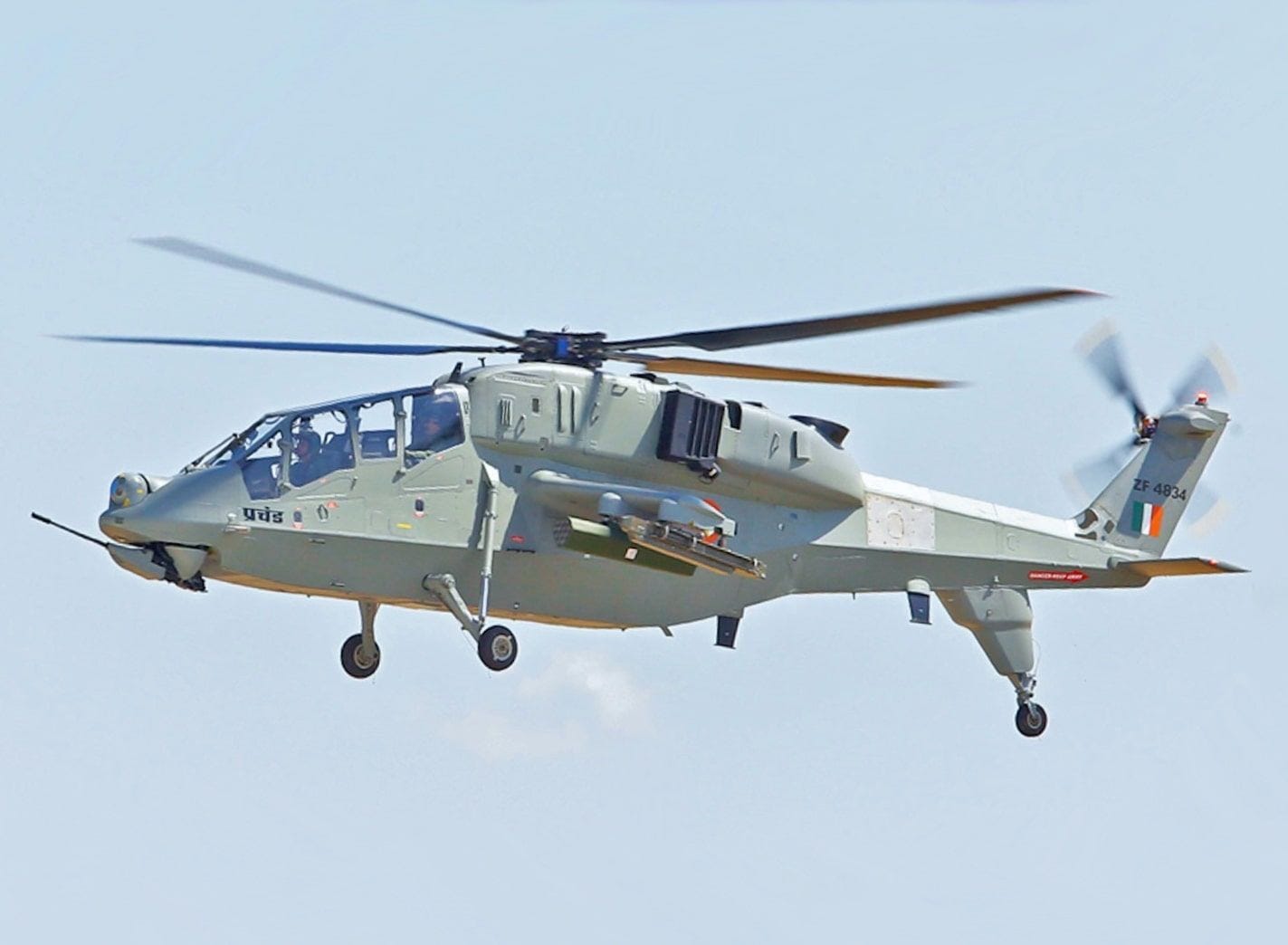
In March 2025, the Ministry of Defence signed two contracts worth Rs 62,700 crore for 156 LCH Prachand helicopters, with 66 going to the Indian Air Force and 90 to the Indian Army Aviation Corps. The order is the largest indigenous attack helicopter contract ever signed in India.
HAL is expected to execute the order over five to six years post-contract effectivity, drawing on its existing Bengaluru helicopter production line and an expanded Tumakuru facility.
PRACHAND CONTRACT BREAKDOWN
- Total order value: Rs 62,700 crore
- Total units: 156
- IAF allocation: 66 helicopters
- Army Aviation Corps: 90 helicopters
- Execution timeline: 5-6 years
- Production location: Bengaluru + Tumakuru
- Service ceiling: 6,500 metres (highest among armed helicopters)Light Utility Helicopter (LUH) and Indian Multi-Role Helicopter (IMRH)
The Light Utility Helicopter is HAL’s three-tonne class platform designed to replace ageing Cheetah and Chetak helicopters. The platform is now progressing toward serial induction, with around 100 Rudra (armed Dhruv) variants operational.
The Indian Multi-Role Helicopter is structurally the most ambitious rotorcraft programme in HAL’s pipeline. The 13-tonne medium-lift platform will replace the Mi-17 fleet across all three services, with HAL targeting CCS clearance by March 2026, prototype rollout by 2028, and certification by the early 2030s.
The IMRH propulsion is being co-developed through SAFHAL Helicopter Engines, the 50:50 joint venture between HAL and Safran announced in 2023. The JV’s first concrete deliverable is the Aravalli engine for IMRH and the deck-based DBMRH variant.
IMRH represents the moment HAL graduates from licence-built medium-lift dependency to indigenous rotorcraft prime contracting. The programme also positions HAL as a credible exporter into 13-tonne class segments.
Unmanned Systems and the CATS Programme
The Combat Air Teaming System (CATS) is HAL’s flagship unmanned-manned teaming initiative. The headline platform is the CATS Warrior, a stealth-aspirational loyal wingman drone designed to operate with manned fighters such as Tejas and Su-30MKI.
HAL is accelerating the CATS Warrior UCAV programme toward a 2026 first flight of a two-tonne prototype, with a heavier Warrior II five-tonne variant on the design board. The Indian Air Force has signalled interest in up to 100 CATS Warrior airframes in the medium term.
The wider CATS architecture also includes the CATS Hunter air-launched cruise vehicle and the unmanned Kiran demonstrator, which has already conducted flight tests as part of the collaborative combat aircraft validation effort.
CATS WARRIOR DEVELOPMENT TIMELINE
- Two-tonne prototype: First flight targeted 2026
- Warrior II (five-tonne): Concept-design phase
- IAF expressed requirement: Up to 100 platforms
- Indicative unit cost: $5 million-$10 million range
- Domestic competition: Private sector loyal wingman conceptsEngines, Avionics, and Aerostructures: The Tier-1 Layer
HAL’s Engine Division produces the AL-31FP for Su-30MKI under licence, the Adour for Hawk and Jaguar, the Shakti turboshaft for Dhruv, and assembles modules for the F404-IN20 in conjunction with GE Aerospace.
The Rs 17,000 crore R&D outlay announced in late 2025 is designed to fund a step-change in indigenous engine capability.
The avionics business produces mission computers, head-up displays, multifunction displays, inertial navigation systems, and electronic warfare suites at the Hyderabad and Korwa divisions. These business units have steadily increased their value-add per platform across the Tejas, Sukhoi, and Dhruv lines.
On aerostructures, HAL is transitioning from being purely a domestic prime to a global Tier-1 supplier. At Aero India 2025, HAL signed a long-term contract with Safran Aircraft Engines for LEAP engine turbine forged parts, opening commercial aerospace revenue streams.
Civil Aviation and MRO Services
HAL’s civil pivot took concrete shape when the Nashik MRO facility completed its first overhaul of an IndiGo Airbus A320neo in March 2025, the first time a defence PSU had performed civil airliner heavy maintenance. The facility has since added Embraer E-175 and E-145 work scopes.
The plan for the Nashik MRO is to scale to 20 A320 family overhauls per year by 2027, potentially expanding into Boeing 737 work as DGCA approvals widen. Industry partnerships with Airbus and Star Air anchor the credibility of the offering.
The civil trajectory aligns with the chairman’s stated 25 percent civil revenue target.
For an aerospace services sector, this means the Indian commercial MRO market gains an additional approved provider with deep airframe heritage and significant tooling base.
HAL CIVIL AVIATION & MRO SNAPSHOT
- First A320neo overhaul: March 2025 (IndiGo, Nashik)
- Embraer MRO scope: E-175, E-145 added
- Target capacity: 20 A320 family aircraft per year by 2027
- Anchor partners: Airbus, Star Air, IndiGo
- Civil helicopter platform: Dhruv NG (10 ordered by Pawan Hans)
- 10-year civil revenue ambition: ~25% of total turnover
Financial Analysis: Hindustan Aeronautics Limited
FY26 Provisional Performance and Top-Line Growth
HAL closed FY26 with a revenue of Rs 32,250 crore on a provisional, unaudited basis, an increase from Rs 30,400 crore in FY25 and Rs 30,381 crore in FY24. The order book swelled from Rs 1.89 lakh crore at the start of FY26 to Rs 2.54 lakh crore by 31 March 2026.
The standalone audited turnover for FY25 stood at Rs 30,105 crore, an all-time high before being eclipsed by the FY26 provisional reading. The book-to-bill ratio expanded sharply, from 2.9x in FY19 to roughly 7.1x by the end of FY25 and even higher post-LCH contract.
For aerospace industry analysts, the salient observation is the divergence between revenue growth and order intake growth.
While revenue growth has been mid-single-digit, order intake has compounded at multiples that fundamentally redefine HAL’s medium-term industrial planning horizon.
FY26 HEADLINE FINANCIALS (PROVISIONAL)
- Revenue from operations: Rs 32,250 crore
- YoY revenue growth: ~6.1%
- Order book closing: Rs 2.54 lakh crore
- Order book growth (FY26 net): +Rs 65,000 cr
- Book-to-bill ratio: ~7.9x revenue
- Q3 FY26 net profit: Rs 1,866.66 crore (+29.65% YoY)Quarterly Trajectory and Margin Profile
The Q3 FY26 results, released ahead of the Q4 announcement on 27 April 2026, showed a 10.65 percent year-on-year revenue rise to Rs 7,698.80 crore and an EBITDA margin sustained near historical levels.
Net profit for Q3 FY26 grew 29.65 percent year-on-year to Rs 1,866.66 crore, supported by deliveries, services revenue, and a favourable mix shift toward higher-margin product categories.
For FY25, the EBITDA margin landed near 38.6 percent for Q4, narrower by 140 basis points year-on-year, reflecting input cost pressures and product mix differences. Margin sensitivity to engine import timing and ALH grounding inventory cost is meaningful in any forward modelling.
Capital Expenditure and R&D Intensity
HAL incurred capital expenditure of Rs 2,026 crore in FY25, broadly consistent with the Rs 2,168 crore deployed in FY24. The investments cover production line expansion, MRO infrastructure, IMRH tooling, and new test rigs.
R&D spending has expanded materially, rising from 6 percent of sales in FY20 to 9.5 percent in FY24, with the company targeting a Rs 17,000 crore R&D budget over the medium term. The new R&D manual benchmarks HAL against global aerospace primes, which historically deploy capital R&D at 8 to 12 percent of revenue.
A recently disclosed Rs 10,000 crore infrastructure investment plan is intended to accelerate Tejas fighter and helicopter throughput across Bengaluru and Nashik over the second half of the decade.
CAPITAL DEPLOYMENT (FY25)
- CAPEX: Rs 2,026 crore
- R&D as % of sales (FY24): 9.5%
- Targeted R&D budget: Rs 17,000 crore (medium term)
- Infrastructure programme: Rs 10,000 crore
- Final FY25 dividend: Rs 15/share
- Total FY25 dividend: Rs 38/share (interim + final)
- Q3 FY26 interim dividend: Rs 35/shareBalance Sheet and Cash Position
HAL’s balance sheet is fundamentally cash-rich, with limited interest-bearing debt and a treasury that supports both dividend distribution and capital programme funding. The company declared Rs 38 per share in cumulative FY25 dividends and has continued the shareholder return policy in FY26.
For FY26, HAL declared a first interim dividend of Rs 35 per share with a record date of 18 February 2026. The treasury cushion enables HAL to absorb working capital swings caused by cyclical milestone payments.
For aerospace executives benchmarking HAL against global primes, the relevant observation is that HAL operates with a financial structure closer to a sovereign-backed strategic supplier than to a typical Western prime, which materially changes its risk profile.
HAL Revenue and Growth Drivers
Tejas Programme as the Volume Engine
The Tejas Mk1A programme is the single largest revenue driver in HAL’s medium-term plan, with cumulative contracted value of approximately Rs 113,000 crore across the 83-aircraft and 97-aircraft tranches. Engine availability and customer acceptance trials remain the throughput bottlenecks.
GE Aerospace has indicated that it will deliver 20 F404 engines in the second half of 2026, which should unlock a multi-year acceleration in Tejas Mk1A revenue recognition. HAL is targeting 16 to 24 aircraft annually once the engine bottleneck eases.
For programme finance officers, the meaningful number is how many engines hit the line per quarter, because that determines milestone billing and cash conversion across multiple Tejas variants.
Helicopter Programme Compounding
The Rs 62,700 crore Prachand contract, the residual ALH order pipeline, and the LUH induction track will collectively deliver a multi-decade rotorcraft revenue stream. The IMRH programme adds optionality, with a potential top-down requirement of around 300 units across services once formally sanctioned.
Civil rotorcraft, while still small, is accelerating with the Pawan Hans Dhruv NG order and HAL’s stated intent to certify civil-grade variants. The Dhruv platform’s eventual export footprint into Africa, South-East Asia, and the Indian Ocean Region creates a measurable secondary revenue line.
Su-30MKI Upgrade and Heavy Aircraft Modernisation
The Super Sukhoi upgrade, once cleared, becomes the second-largest single-platform programme in HAL’s pipeline. The Rs 13,500 crore production restart contract for 12 fresh airframes adds incremental revenue at Nashik through the late 2020s.
TOP REVENUE DRIVERS (NEXT 5-7 YEARS)
1. Tejas Mk1A: Rs 113,000 cr+ (180 aircraft)
2. Prachand LCH: Rs 62,700 cr (156 helicopters)
3. Super Sukhoi upgrade: Rs 60,000 cr+ (84 aircraft, pending CCS)
4. Su-30MKI new build: Rs 13,500 cr (12 aircraft)
5. ALH Dhruv (residual + civil): Rs 5,000 cr+
6. HTT-40 trainer: Rs 7,500 cr+ (70 aircraft batch)
7. IMRH (post sanction): Rs 50,000 cr+ potential
Services and MRO as the Annuity Layer
HAL’s services revenue, comprising overhaul, repair, life-cycle support, and avionics upgrades, provides the annuity backbone of its income statement. The civil MRO addition layered on top of this base extends margins beyond the historical defence-only model.
The Embraer MRO joint setup with Star Air and the Airbus partnership for A320 family deepen this annuity layer with predictable, recurring revenue from non-government customers.
Export and Industrial Cooperation Pipeline
Export discussions are most advanced with Argentina and Egypt for Tejas Mk1A, with Argentinian interest covering at least 15 aircraft and Egyptian discussions exploring up to 20 units in a broader industrial cooperation arrangement.
The HAL-EDGE Group MoU at Aero India 2025 opened a coordinated approach to regional Middle East and Africa markets. Reports suggest Armenia is closing in on a multi-billion-dollar Su-30MKI deal, which would represent a landmark heavy-fighter export.
The Mauritius Police, the Nepal Army, and the Maldives operate ALH variants, and Pawan Hans-style civil orders for Dhruv NG can extend to comparable regional civil operators. Combined, these export tracks create a structurally new revenue line that did not meaningfully exist five years ago.
Major HAL Competitors
Domestic Competitors in Indian Aerospace
The competitive landscape inside India is increasingly multi-polar. The historic public sector triumvirate of HAL, Bharat Electronics Limited, and Bharat Dynamics Limited has been complemented by aggressive private sector entrants.
Bharat Electronics Limited (BEL) – Defence electronics, radars, EW, system integration
Bharat Dynamics Limited (BDL) – Missiles, torpedoes, guided weapon systems
Tata Advanced Systems Limited (TASL) – Aerostructures, C-295, drones, AMCA consortium lead
Larsen & Toubro Defence – Land systems, naval platforms, AMCA consortium
Bharat Forge / Kalyani Strategic Systems – Artillery, structural forging, AMCA consortium
Adani Defence and Aerospace – Drones, ammunition, aerospace structures
Mahindra Defence Systems – Light armoured vehicles, naval, aerospace JVs
Solar Industries – Munitions, propellants, loitering munitions
HAL vs. Bharat Electronics Limited
BEL operates in the defence electronics and systems integration domain, supplying radars, electronic warfare suites, communication systems, and command-and-control infrastructure to the Indian armed forces.
The two companies are complementary on most platforms but compete in select avionics and mission systems segments.
BEL has historically delivered higher operating margins than HAL because of its lower working capital intensity and asset-light model. HAL retains the structural advantage of being a platform prime, which BEL is not.
For the Rs 2.38 lakh crore modernisation pipeline, both companies are positioned as primary beneficiaries, but the platform allocation skews more heavily toward HAL on aircraft, helicopters, and propulsion.
HAL vs. Bharat Dynamics Limited
BDL operates in the missile, torpedo, and guided weapon systems segment, manufacturing the Astra, Akash, and BrahMos under licence as well as anti-tank guided missiles and underwater weapons.
BDL is downstream of HAL on most fighter and helicopter platforms, supplying weapon systems integrated onto HAL airframes.
The two companies are not direct competitors at platform level, but they compete for share of the defence capital budget. The Rs 30,000 crore missile system pipeline anchors BDL’s medium-term outlook.
HAL vs. Tata Advanced Systems Limited
TASL is the most consequential emerging competitor to HAL. The company leads the C-295 medium transport aircraft programme at Vadodara, with first domestic delivery targeted for September 2026. TASL also leads one of the three shortlisted AMCA prototype consortia.
The TASL move into prime contracting on AMCA marks the first time a private Indian entity will lead a manned fighter programme. Aerospace stakeholders should treat this as the most fundamental competitive shift in HAL’s history.
HAL vs. Larsen & Toubro and Bharat Forge
L&T and Bharat Forge formed the second AMCA consortium, leveraging deep mechanical engineering and forging capability. L&T already builds submarines and Pinaka launchers, and runs precision engineering relevant to airframe assembly.
Bharat Forge brings advanced forging IP and is building artillery and high-precision forging capability that aerospace primes typically purchase from sub-Tier-1 suppliers. The combined entity offers a credible challenge in airframe primary structures.
Global Reference Set
HAL’s global reference set, while not always direct competitors, includes the platforms HAL most frequently faces in export markets:
Korea Aerospace Industries – FA-50, T-50, KF-21
Aviation Industry Corporation of China – JF-17, J-10C, FTC-2000
Airbus Helicopters – H225M, H145M
Leonardo Helicopters – AW139, AW149, AW169
Embraer Defense & Security – Super Tucano, KC-390
Boeing Defense, Space & Security
Lockheed Martin – F-16 Block 70 export programmes
In active export campaigns such as Argentina, Egypt, and the Philippines, HAL has primarily contended with KAI’s FA-50 and Aviation Industry Corporation of China’s JF-17 in the light fighter category.
The Tejas Mk1A’s edge lies in its 4.5-generation avionics fit and the broader political-strategic offer that India can package around it.