Executive Summary
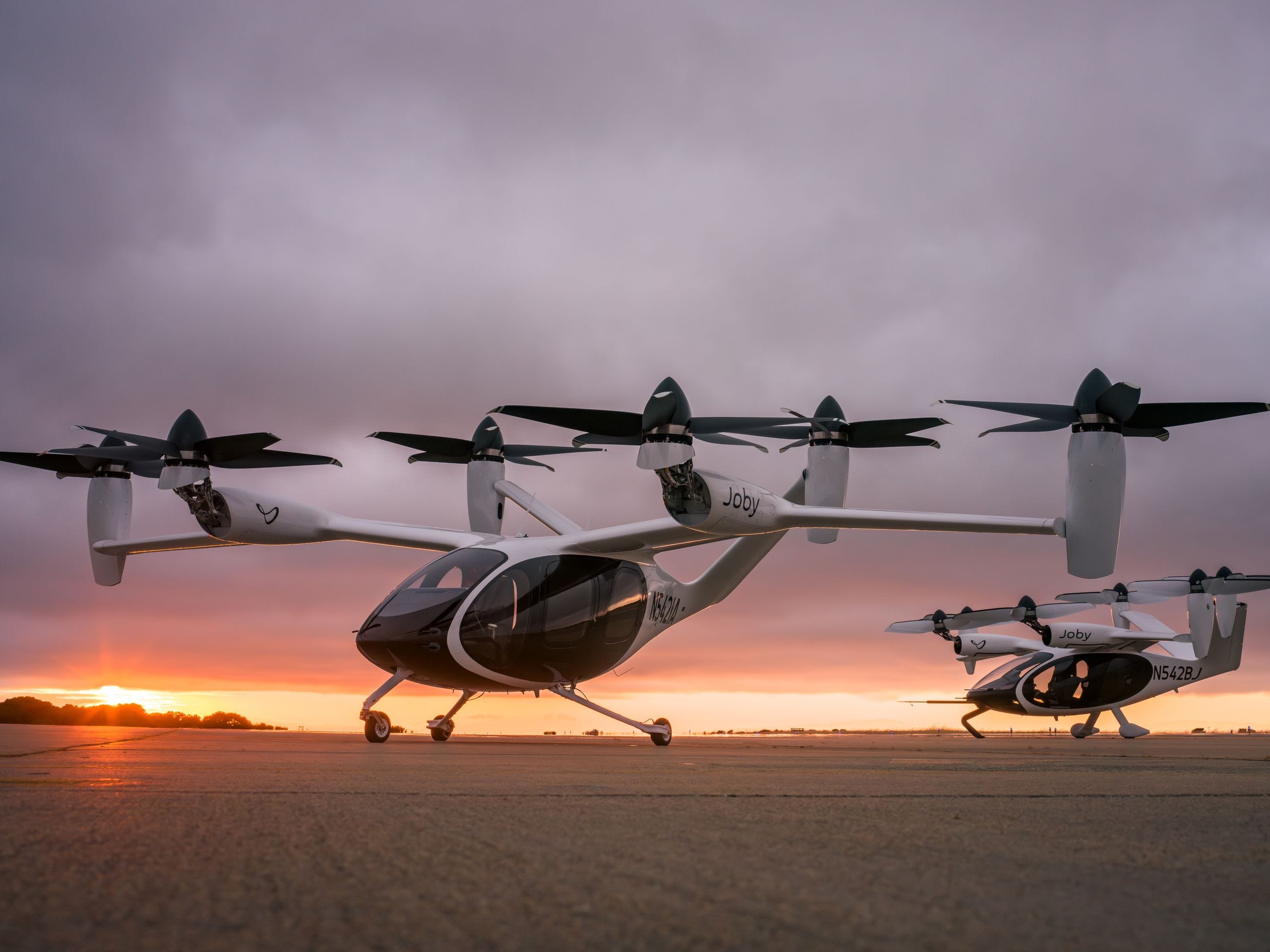
Joby Aviation has crossed a major inflection point in 2026, with its first FAA-conforming aircraft taking flight on March 11, 2026, paving the way for Type Inspection Authorization (TIA) testing by FAA pilots later this year.
The company secured a landmark selection under the White House-backed eVTOL Integration Pilot Program (eIPP) covering 10 U.S. states, alongside advancing commercial operations in Dubai under a six-year exclusive agreement with the Roads and Transport Authority (RTA).
Joby’s dual-use platform strategy, spanning commercial air taxi service and a defense-oriented hybrid turbine-electric autonomous VTOL in partnership with L3Harris Technologies, is maturing rapidly and positions the company across multiple revenue streams beyond passenger air mobility.
With approximately $2.6 billion in combined cash and short-term investments (as of February 2026), supported by strategic investors including Toyota and a broad institutional base, Joby seems to have a strong runway to reach commercial service.
Recommended - Read Full Reports


Table of Contents
Executive Summary
Introduction
Key Facts: Company Profile
Business Overview: How Joby Aviation Operates
The Dual-Track Commercial Model
The Blade Acquisition: Building an Operational Foundation
Vertically Integrated Manufacturing: A Strategic Differentiator
Key Product Lines, Programs, and Services
The S4 eVTOL: Core Commercial Aircraft
The Hybrid Turbine-Electric VTOL: Defense Platform
Superpilot: Autonomous Flight Technology
Blade Operations: Helicopter Ride-Sharing
Revenue and Growth Drivers
Current Revenue Base
Near-Term Revenue Growth Drivers
Long-Term Growth Drivers
FAA Certification: The Five-Stage Path to Commercial Flight
Where Joby Stands in the Certification Process?
What TIA Means for the Industry?
The eIPP Bypass: Flying Ahead of Certification
Recent Developments: 2025/2026
Joby Completes San Francisco Bay Demonstration and Launches the 2026 Electric Skies Tour
Dubai Air Taxi Network Advances Toward Launch
White House eIPP: Joby Selected for Early U.S. Operations Across 10 States
First FAA-Conforming Aircraft Takes Flight (March 11, 2026)
Turbine-Electric Hybrid VTOL: From Concept to Flight in 90 Days
Japan: 41 Flights at Expo 2025 Osaka, Toyota Partnership Deepens
Superpilot and REFORPAC 2025: Autonomous Flight at Scale
Major Competitors: The eVTOL Field in 2026
Archer Aviation
Wisk Aero (Boeing-Backed)
EHang (Chinese Market Leader)
Vertical Aerospace
Competitive Analysis: Joby’s Moat and Differentiation
Flight Test Maturity: 50,000+ Miles and Counting
The Exclusive Dubai Agreement: A First-Mover Locked Position
Strategic Partnership Stack: Toyota, Delta, Uber, ANA, L3Harris
Vertical Integration as a Speed and Quality Moat
Blade: NYC Infrastructure No Competitor Can Quickly Replicate
Manufacturing Scale-Up: The Production Ramp Plan
Marina, California: Current Production Hub
San Carlos, California: Powertrain Specialization
Dayton, Ohio: The Scale-Up Engine
Financial and Commercial Implications
What $929.8 Million in Net Loss Tells the Industry?
The Blade Revenue Bridge: Why This Matters Operationally?
Dubai’s Commercial Launch: Setting the Global Benchmark
Production Capacity and the OEM Revenue Model
Key Risks, Probabilities, and Scenarios
Risk 1: FAA Certification Timeline Slippage
Risk 2: Capital Intensity and Ongoing Cash Burn
Risk 3: Dubai Operational Execution
Risk 4: Competition Accelerating
Risk 5: Battery Technology and Range Constraints
SWOT Analysis
Primary Sources and Official Data
My Final Thoughts
Introduction
Joby Aviation is flying closer to commercial reality than at any prior point since its founding in 2009.
The California company completed over 850 piloted electric air taxi flights in 2025, logged more than 50,000 miles across its fleet, and entered the final stage of FAA type certification with its first conforming aircraft airborne as of March 2026.
What makes 2026 a watershed year is not just the certification trajectory, but the convergence of commercial, regulatory, and geopolitical tailwinds.
From a White House-backed program clearing early U.S. operations to the imminent launch of passenger service in Dubai, Joby is simultaneously managing its most complex operational deployment while racing through the most demanding phase of aviation certification.
Key Facts: Company Profile
Company Name:       Joby Aviation, Inc.
Ticker:             NYSE: JOBY
Headquarters:       Santa Cruz, California, USA
Founded:            2009
CEO / Founder:      JoeBen Bevirt
Business Type:      Advanced Air Mobility (AAM) / eVTOL Developer & Operator
Aircraft:           S4 eVTOL (1 pilot + 4 passengers)
Max Speed:          200 mph (322 km/h)
Range:              150+ miles per charge
Max Takeoff Weight: 4,800 lb (2,177 kg)
FY 2025 Revenue:    ~$53 million
FY 2025 Net Loss:   ~$929.8 million
Cash (Q4 2025):     $1.41 billion
Post-raise Liquidity ~$2.6 billion (as of February 2026)
Key Investors:      Toyota, Delta Air Lines, Baillie Gifford, Morgan Stanley
Key Partnerships:   Uber, Delta Air Lines, Toyota, ANA Holdings, L3Harris
Defense Contract:   US Air Force (AFWERX Agility Prime) - up to $131M
Certification:      FAA Stage 4 (record 18-pt Q4 2025); TIA aircraft flying
First Passengers:   2026 (Dubai); US eIPP operations also expected 2026
Business Overview: How Joby Aviation Operates
The Dual-Track Commercial Model
Joby Aviation was designed from the ground up with two primary business lines.
The company intends to operate its own air taxi service in cities around the world, and it plans to sell aircraft to third-party operators and partners. This dual-track approach gives Joby potential revenue streams that span both direct transport operations and an aircraft original equipment manufacturer (OEM) business.
The operator model is analogous to an airline that also sells its aircraft type to other carriers. In practice, this means Joby builds the aircraft, certifies it, operates routes, and licenses the platform to partners who want to deploy it independently.
This reduces dependency on Joby’s own operational scaling to generate revenue from the aircraft itself.
The Blade Acquisition: Building an Operational Foundation
A pivotal strategic move in 2025 was Joby’s acquisition of Blade’s passenger business for up to $125 million. Blade had built an established helicopter ride-sharing operation primarily around New York City, including exclusive terminal and lounge infrastructure, as well as routes in the south of France.
Joby gains far more than revenue from this deal. It acquires a loyal flyer base, premium terminal access in one of the highest-demand urban markets in the world, and operational data from running high-tempo passenger logistics.
During the 2025 Ryder Cup in New York, Blade transported over 2,500 people over four days from the New York metro area, providing one of the largest civilian helicopter movement events in U.S. history.
That real-world logistics experience will directly feed Joby’s air taxi operational playbook.
Vertically Integrated Manufacturing: A Strategic Differentiator
The vast majority of Joby’s aircraft components are designed, engineered, tested, and manufactured in-house.
This vertical integration reduces reliance on third-party suppliers, improves quality control, and shortens lead times from design changes to flight test. It is a model rarely seen in early-stage aviation companies, which often outsource major subsystems.
This same model enabled Joby to move its hybrid turbine-electric aircraft from concept announcement to first flight in just three months, a pace that would be impossible in a supply-chain-dependent structure.
As Joby’s president of aircraft OEM, Didier Papadopoulos, confirmed after the TIA aircraft’s first flight: “The pace at which Joby has been able to move from prototype to conforming aircraft is rooted in its vertically integrated approach, a strategy that is redefining the industry’s path to certification.”
Key Product Lines, Programs, and Services
The S4 eVTOL: Core Commercial Aircraft
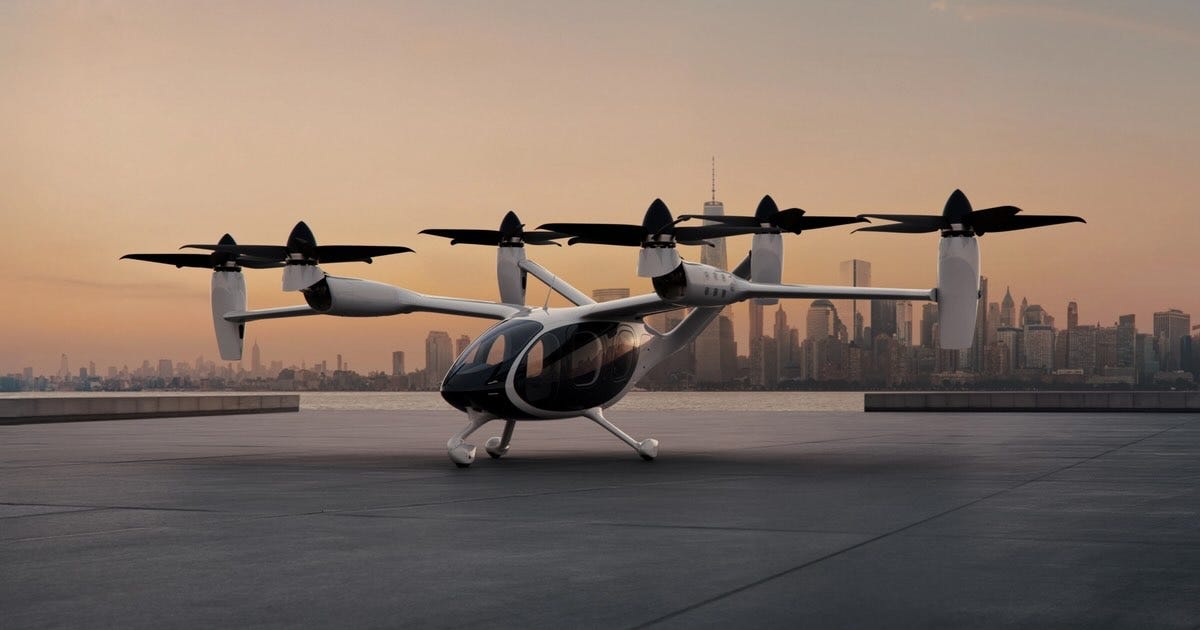
Joby’s flagship aircraft is a tilt-rotor electric vertical takeoff and landing (eVTOL) vehicle that carries one pilot and four passengers. Its core performance specifications are:
Configuration:     Tilt-rotor eVTOL (6 tilting rotors)
Passengers:        1 pilot + 4 passengers
Max Speed:         200 mph (322 km/h)
Cruise Range:      150+ miles per charge
Max Takeoff Weight 4,800 lb (2,177 kg)
Aircraft Length:   21 ft
Noise Profile:     ~65 dB on takeoff, ~45 dB during cruise (near-silent to bystanders)
Propulsion:        All-electric, battery-powered
Operations:        VTOL + wingborne cruise (full transition flight)
The aircraft’s noise profile is one of its most commercially significant attributes.
At approximately 100 times quieter than conventional helicopters, the S4 removes the primary community acceptance barrier that has historically blocked urban air mobility in densely populated cities.
San Francisco drivers, for reference, lost an average of 112 hours to traffic in 2025, ranking the city third most congested in the nation, which underscores the demand for a faster transit alternative.
The Hybrid Turbine-Electric VTOL: Defense Platform
Joby’s second aircraft platform is a hybrid turbine-electric autonomous VTOL developed in partnership with L3Harris Technologies.
This aircraft integrates Joby’s proven all-electric air taxi platform with a hybrid turbine powertrain to deliver greater range and payload capability, alongside Joby’s SuperPilot autonomous flight technology.
The first flight of this demonstrator took place on November 7, 2025, just three months after the concept was publicly announced. L3Harris brings proven expertise in platform missionization, including sensors, effectors, communications, and collaborative autonomy.
Target defense applications include contested logistics, “loyal wingman” operations, and low-altitude support for forward-operating locations.
Platform Type:     Hybrid Turbine-Electric Autonomous VTOL
Autonomy:          Joby SuperPilot™ autonomous flight stack
Key Defense Uses:  Contested logistics, loyal wingman, ISR support
Partner:           L3Harris Technologies (mission systems)
Powertrain:        Hybrid turbine-electric
First Flight:      November 7, 2025 (3 months from concept to flight)
Demo Timeline:     Government mission demonstrations planned for 2026
The U.S. government requested over $9 billion in the FY26 budget for next-generation platforms, and Joby’s hybrid platform is directly positioned to address that demand. Joby and L3Harris remain on track to begin flying government mission demonstrations using this aircraft in 2026.
Superpilot: Autonomous Flight Technology
Joby’s SuperPilot autonomous flight technology has been in development for over five years. In September 2025, the company completed a landmark defense exercise, REFORPAC 2025, logging more than 7,000 miles of autonomous operations and over 40 flight hours in and around Hawaii, managed primarily from Andersen Air Force Base in Guam, more than 3,000 miles away.
The aircraft used was a conventional Cessna 208 equipped with SuperPilot, demonstrating that the technology is platform-agnostic. This matters commercially, because SuperPilot is also included in the eIPP applications Joby filed for autonomous flight operations across multiple U.S. states.
Blade Operations: Helicopter Ride-Sharing
The Blade passenger business, now operating as a division of Joby, provides helicopter rides primarily in New York City and the south of France. This operation is the primary source of Joby’s current revenue base.
Beyond the financial contribution, Blade provides Joby with exclusive terminal access in New York City, a route-proving infrastructure for future eVTOL deployment, and a standing roster of premium passengers already comfortable with urban air mobility.
Joby also announced plans to integrate Blade’s commercial helicopter service into the Uber app, creating a seamless booking experience for air mobility alongside regular ground transport. This digital integration, which extends to Joby’s future electric air taxi service, was unveiled publicly in February 2026 as “Uber Air powered by Joby.”
Revenue and Growth Drivers
Current Revenue Base
Joby’s first meaningful revenue stream arrived in 2025, largely attributable to the Blade acquisition. The company reported full-year 2025 revenue of approximately $53 million, with Q4 2025 alone contributing $30.8 million. Research and development expenditure stood at $581 million for the year, reflecting the capital-intensive phase of reaching FAA type certification.
The net loss for 2025 reached $929.8 million, up from $608 million in 2024. This increase reflects accelerating certification activity, expanded manufacturing investment, and the integration costs associated with Blade. As of Q4 2025, Joby held $1.41 billion in cash and short-term investments.
An additional net $1.2 billion was raised in February 2026 through equity and convertible senior notes, bringing total post-raise liquidity to approximately $2.6 billion.
Near-Term Revenue Growth Drivers
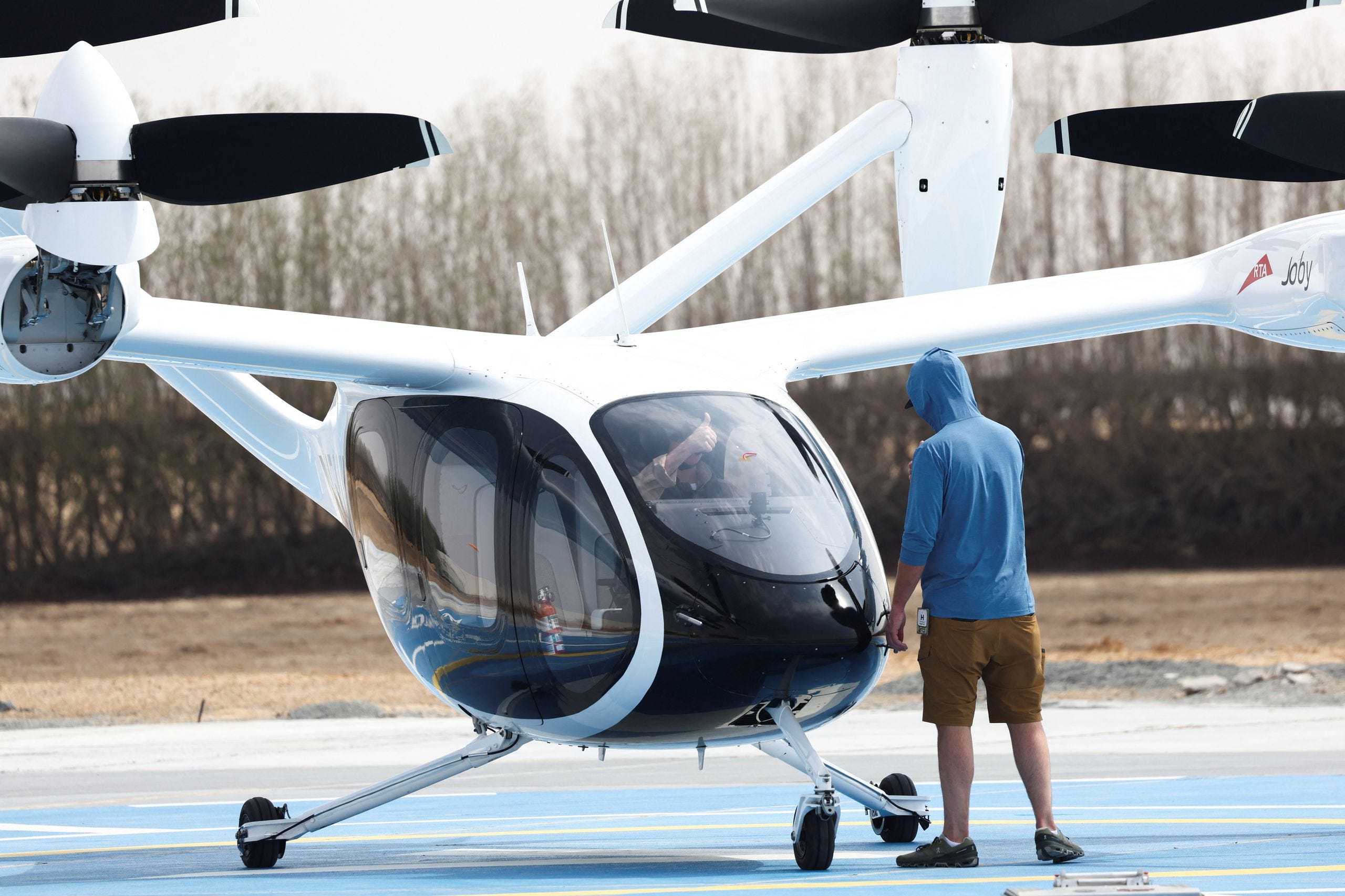
The most immediate revenue driver is the commercial launch of Joby’s electric air taxi service in Dubai. The company expects to carry its first passengers in the UAE before the end of 2026, supported by a six-year exclusive agreement with the Dubai Roads and Transport Authority.
Dubai’s RTA confirmed in early 2026 that it is targeting year-end commercial launch for the service, pending route-proving flights with non-paying passengers.
In the United States, the White House-backed eIPP program provides a pathway to early revenue-generating operations across 10 states in 2026. Flights are expected to commence within 90 days of Other Transaction Authority (OTA) contracts being finalized.
These early U.S. operations could generate revenue from passenger fares, government program fees, or service demonstration agreements.
Long-Term Growth Drivers
The aircraft OEM business is arguably the largest long-term revenue lever. Once type certification is obtained, Joby can sell the S4 aircraft to third-party operators, airlines, airports, and government agencies. This opens a recurring hardware revenue stream separate from its own operations.
The defense segment represents a fast-growing revenue opportunity. The U.S. government has already signed a contract with Joby valued at up to $131 million via AFWERX, which included delivering two aircraft to Edwards Air Force Base.
The hybrid turbine-electric VTOL platform, developed with L3Harris, is positioned for further government contracts with a broader mission-system capability set.
Manufacturing capacity expansion to four aircraft per month by 2027, with the Dayton, Ohio facility eventually capable of up to 500 aircraft per year, lays the production backbone for scaling both commercial and defense delivery.
FAA Certification: The Five-Stage Path to Commercial Flight
Where Joby Stands in the Certification Process?
The FAA’s type certification process for eVTOL aircraft consists of five stages. Joby has completed the first three stages and is now deep in Stage 4.
During Q4 2025, the company recorded a record 18-point increase in FAA progresson Stage 4, which covers the detailed evaluation of aircraft systems, structures, and performance against FAA airworthiness standards.
The first FAA-conforming aircraft for Type Inspection Authorization (TIA) took flight on March 11, 2026, at Joby’s Marina, California, facility.
This is a major milestone because TIA is the bridge into Stage 5, the final phase, where FAA pilots conduct “for-credit” flight testing alongside Joby pilots. FAA pilots are expected to visit Marina later in 2026 to begin that process.
Stage 1: Certification Basis / Special Conditions   -- COMPLETE
Stage 2: Means of Compliance                         -- COMPLETE
Stage 3: Compliance Plans (all submitted to FAA)     -- COMPLETE
Stage 4: System/Equipment Compliance Testing         -- IN PROGRESS
           (Record 18-pt increase in Q4 2025)
Stage 5: Type Inspection Authorization (TIA)         -- AIRCRAFT FLYING
           (FAA pilots expected for "for-credit" testing in 2026)
What TIA Means for the Industry?
TIA is the final flight test phase before type certificate issuance.
The aircraft used for TIA must be built to FAA Designated Engineering Representative-approved designs and signed off by FAA Designated Airworthiness Representatives, as specified in Joby’s FAA-approved test plans. The aircraft (N547JX) now flying meets all of these requirements.
Successfully clearing TIA does not by itself grant a type certificate, but it provides the compliance data the FAA needs to issue one. Every major commercial aircraft in history has cleared TIA before receiving type certification, and Joby emphasizes that every entrant in the eVTOL space has successfully passed this stage.
What matters now is the pace and quality of the “for-credit” test points.
The eIPP Bypass: Flying Ahead of Certification
The White House eIPP provides a critical commercial workaround for mature eVTOL designs.
Established by Presidential Executive Order, the program allows Joby to conduct early operations across 10 U.S. states ahead of receiving FAA type certification. The FAA and DOT are brought together with local authorities to streamline approvals for airspace integration and vertiport infrastructure.
This is significant because it allows Joby to generate real-world operational data, build public familiarity with the aircraft, and potentially create revenue before the formal type certificate is in hand. Flights are expected within 90 days of OTA contracts being finalized.
Recent Developments: 2025/2026
Joby Completes San Francisco Bay Demonstration and Launches the 2026 Electric Skies Tour
On March 13, 2026, Joby completed a series of piloted demonstration flights across the San Francisco Bay Area. Departing Oakland International Airport, the aircraft (N545JX), piloted by Andrea Pingitore, flew quietly across the Bay toward the Golden Gate Bridge, turned above the Marin Headlands, and circled Alcatraz Island.
The flight marked the official kickoff of the 2026 Electric Skies Tour, a national showcase timed to celebrate the United States’ 250th anniversary. Joby plans to fly its aircraft in cities across the country as part of this tour, building public awareness ahead of the eIPP program launches.
San Francisco was a deliberate and meaningful choice. City drivers lost an average of 112 hours to traffic in 2025, ranking it the third most congested city in the nation. The demonstration directly connects the aircraft’s value proposition to a real, measurable urban mobility problem.
Dubai Air Taxi Network Advances Toward Launch
Joby has been methodically building a complete air taxi network in Dubai since signing an exclusive rights agreement with the RTA in 2024. In November 2025, Joby completed the UAE’s first piloted point-to-point electric air taxi flight, flying from its test facility in Margham to Al Maktoum International Airport (DWC) in a 17-minute piloted flight.
At the same time, Joby and the RTA confirmed three new vertiport locations alongside Dubai International Airport: the Dubai Mall (attracting nearly 111 million visitors in 2024), Atlantis the Royal on Palm Jumeirah, and the American University of Dubai.
The Dubai International vertiport is on track for completion in early 2026. Dubai’s RTA Director General, His Excellency Mattar Al Tayer, confirmed the emirate is “steadily progressing towards the commercial launch of the aerial taxi service in 2026.”
Beyond the vertiports, Joby demonstrated the service booking flow publicly in February 2026, revealing the “Uber Air powered by Joby” interface that will allow riders to book a Joby air taxi directly in the Uber app. Dubai will be the first market where this integrated booking goes live.
White House eIPP: Joby Selected for Early U.S. Operations Across 10 States
On March 9, 2026, Joby announced its selection as a partner in multiple winning applications under the White House-backed eVTOL Integration Pilot Program. This is the most consequential U.S. regulatory development for Joby since the FAA certification process began.
The program covers operations in Arizona, Florida, Idaho, New Jersey, New York, North Carolina, Oklahoma, Oregon, Texas, and Utah. Key application details include:
Florida:         Statewide; three phases covering cargo, passenger, automation, and medical
New York/NJ:     Port Authority of NY & NJ; air taxi ops at Manhattan heliport
Texas:           TX DOT; connects Dallas, Austin, San Antonio, and eventually Houston
North Carolina:  NC DOT; piloted medical + regional ops; autonomous ops extending into VA
Utah:            UT DOT; four-state coverage across Pacific Northwest, Rocky Mountains, Oklahoma Plains
Joby’s SuperPilot autonomous technology was also selected for several eIPP applications, making this program a dual-track proving ground for both the piloted S4 and the autonomous platform.
First FAA-Conforming Aircraft Takes Flight (March 11, 2026)
Two days after the eIPP announcement, Joby took the first FAA-conforming aircraft for TIA into the air at its Marina, California, facility. The aircraft (N547JX) is assembled using components built to FAA DER-approved designs and signed off by FAA DAR representatives under Joby’s FAA-approved test plans.
Joby’s OEM president, Didier Papadopoulos, described the moment as “the validation of years of hard work” and the entry into “the final phase of bringing this aircraft to market.” Initial testing is being conducted by Joby pilots to build the data package that FAA pilots will use when they arrive at Marina for “for-credit” TIA flight testing later this year.
All other aircraft required for TIA are now in production. This matters because TIA flight testing typically requires multiple conforming aircraft to cover different test disciplines simultaneously.
Turbine-Electric Hybrid VTOL: From Concept to Flight in 90 Days
Joby’s announcement of its hybrid turbine-electric autonomous VTOL concept in August 2025, alongside the L3Harris partnership, was followed three months later by the aircraft’s first flight on November 7, 2025. This pace from announcement to airborne demonstrator is genuinely without precedent in modern aerospace development timelines.
The aircraft builds on the same proven all-electric technology platform that has accumulated more than 50,000 miles of flight testing. The turbine powertrain adds range and hold time, which are the two parameters most critical for contested logistics missions. L3Harris plans to equip the platform with ISR, communications, and collaborative autonomy for specific defense mission sets.
Government mission demonstrations using this aircraft are planned for 2026. L3Harris will manufacture mission systems while Joby produces the airframe and propulsion, reflecting a clean division of roles between civil aviation OEM and defense systems integrator.
Japan: 41 Flights at Expo 2025 Osaka, Toyota Partnership Deepens
Joby completed 41 piloted flights at Expo 2025 Osaka in partnership with ANA Holdings, making them the first eVTOL public demonstrations at a World Expo. ANA Holdings is Joby’s designated commercial partner in Japan and plans to accelerate air taxi deployment in the country.
Toyota’s role as a strategic manufacturing partner continues to deepen. The Japanese automaker has invested substantially in Joby over multiple rounds, with the most recent tranche being a $250 million investment.
Toyota engineers have been embedded at Joby’s Marina facility to support manufacturing scale-up, and the Marina facility’s current annual production capacity is approximately 24 aircraft per year. Toyota’s manufacturing expertise is directly informing how Joby approaches production ramp.
The Fuji Speedway flight campaign in December 2025, conducted with Toyota, included 14 piloted flights and marked the end of a year in which Joby flew in three countries, logged over 9,000 miles in 2025 alone, and completed more than 4,900 individual test points.
Superpilot and REFORPAC 2025: Autonomous Flight at Scale
Joby’s SuperPilot technology logged more than 7,000 miles and 40+ flight hours during the REFORPAC 2025 defense exercise over the Pacific Ocean near Hawaii. The operations were managed primarily from Andersen Air Force Base in Guam, over 3,000 miles away, demonstrating beyond-visual-line-of-sight (BVLOS) autonomous management at an operational scale.
SuperPilot operates on a Cessna 208 airframe in this context, but the same software stack is being ported to the eVTOL and hybrid aircraft platforms.
This defense demonstration directly supports SuperPilot’s maturity narrative for both FAA regulatory discussions around autonomous commercial flight and for U.S. government defense procurement.