


Welcome to AviationOutlook: The aviation newsletter built exclusively for decision-makers.
Read by the people who run this industry. Become an “annual” member now and get 20% off.
As a paid member, you get access to:
200+ Reports - All major airlines + aerospace & defense companies (updated regularly).
Deep-dive analysis & insights.
Industry outlook reports.
Recommended:
Check Out All Reports
Executive Summary
Joby Aviation has completed three of the FAA’s five certification stages, and the latest shareholder letter puts Stage 5 at 25% complete on Joby’s side and 14% on the FAA’s side as of October 30, 2026.
Type Inspection Authorization (TIA) flight testing now targets the first half of 2027, which pushes U.S. paying-passenger flights under the eIPP into mid-to-late 2027.
Third-quarter revenue reached $55.1 million, and about 97% of it came from the Blade helicopter service.
Defense is growing on two fronts: Air Force autonomy commitments rose to nearly $37 million, and the planned $500 million Resonant Sciences purchase adds more than $100 million of trailing revenue.
Output across Joby’s eight core manufacturing shops rose 37% between Q1 and Q3, nonconformances fell 38%, and 17 aircraft are in production.
The $2.2 billion liquidity position funds the plan into 2028 under every burn case modeled below in our analysis, and the slowest TIA scenario outruns the stress case by about two quarters.
AT A GLANCE

Q3 2026 revenue: $55.1M (Blade: $53.2M)
FY2026 revenue guidance: $135M to $140M
Q3 adjusted EBITDA loss: $207.9M
Liquidity (Sept 30): $2.2B
H2 2026 cash use guidance: $385M to $415M
FAA Stage 5 progress: Joby 25% | FAA 14%
TIA flight testing start: first half of 2027
Resonant Sciences deal: about $500M, closing early 2027
Air Force autonomy funding: nearly $37M (contract ceiling $50M)
Are you a part of a team?
Equip your whole team with aviation industry intelligence. Consider “Group” plan.
Here’s what you get in this analysis report:
Joby Aviation Company Overview: Key Facts
Corporate and Program Snapshot
Aircraft Fleet and Manufacturing Footprint
Partners and Program Ecosystem
Joby Aviation Revenue & Financial Analysis
Revenue Trajectory and Guidance
Where the Margin Went
Cost Structure and Cash Burn
Balance Sheet and Financing
Liquidity Scenarios Through 2028
Cash Remaining at Each TIA Completion Date
Key Programs, Segments and Deep-Dive Analyses
The S4 Air Taxi and FAA Type Certification
eIPP: A Route to Passengers Before Type Certificate
Manufacturing: Marina, Dayton and the Toyota Joint Venture
Reading the Output and Quality Figures
Blade: The Aviation Operation Generating Today’s Revenue
Dubai: The Launch Market Still on the Clock
Defense Autonomy: Superpilot, J208 and the Air Force
Hybrid VTOL and the L3Harris Partnership
Resonant Sciences: A $500 Million Defense Platform
Resonant Scenario Model
Pro Forma Revenue Mix After Resonant
What Each Defense Line Must Prove by Mid-2027
Implications for Suppliers, Airports and Program Offices
Competitive Position: Archer, Beta and Defense Entrants
Key Risks and Open Items
Joby Aviation Performance Analysis: Is Joby Aviation Gaining Ground or Losing It?
My Final Thoughts
Official Sources & Data
Joby Aviation earns almost all of its revenue from helicopters, while the electric aircraft it designed has yet to carry a paying passenger.
In the third quarter, Blade generated $53.2 million of the company’s $55.1 million.
Management answered with the largest defense move an eVTOL developer has made: a $500 million agreement to buy Resonant Sciences, a cleared Dayton company with more than $100 million in trailing revenue, equal to about 70% of Joby’s own 2026 revenue guidance.
Every timeline that matters to aerospace & defense stakeholders now runs through one gate: FAA pilots flying Joby’s conforming aircraft in the first half of 2027.
The gate: FAA pilot training + Joby company flight test, first half of 2027

What's fueling it?: About $2.0B modeled at year-end 2026, about $1.8B after Resonant and Toyota

Race against the clock: TIA flight testing historically takes 6 to 18 months
Let’s analyze everything in detail.
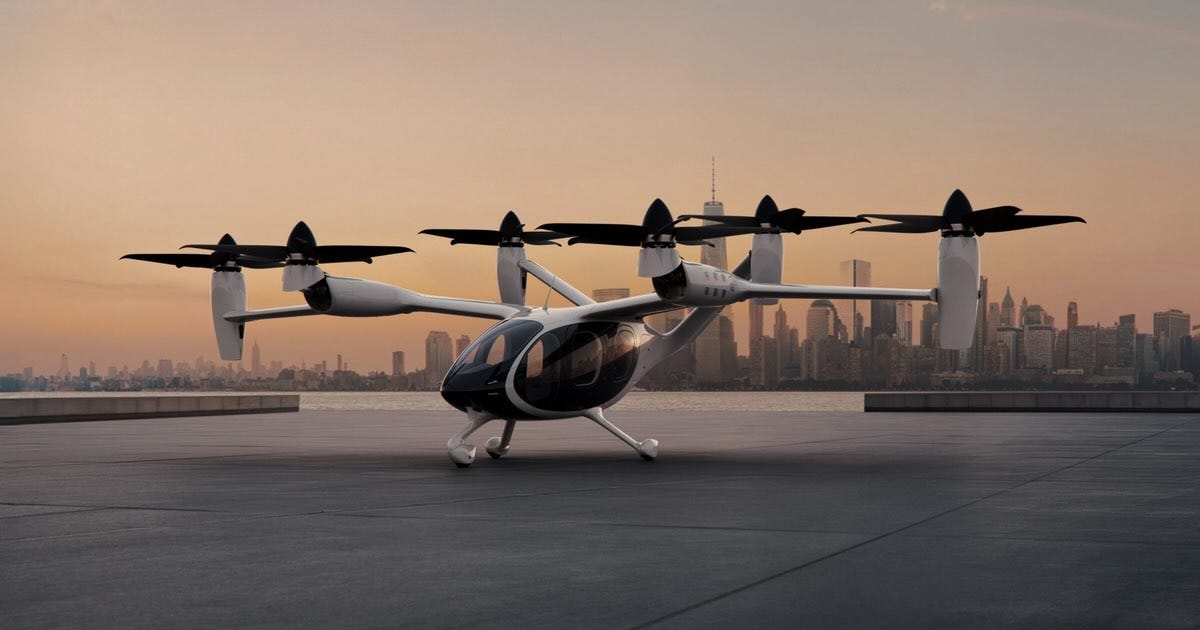
Joby Aviation Company Overview: Key Facts
Corporate and Program Snapshot
Joby describes itself as a next-generation aviation company whose aircraft, propulsion and autonomy technologies span commercial aviation and defense.
It also operates Blade, a passenger service in the United States and Europe.
The S4 carries a pilot and four passengers, and Dubai planning documents cite a 160km range with a top speed of 320 km/h.
Company: Joby Aviation, Inc. (NYSE: JOBY)
Headquarters: Santa Cruz, California
Founder and CEO: JoeBen Bevirt
Chief Financial: Rodrigo Brumana
Chief Policy: Greg Bowles
Core aircraft: S4, piloted all-electric eVTOL (pilot plus four passengers)
Defense aircraft: turbine-electric autonomous VTOL (with L3Harris)
Autonomy system: Superpilot, flown on a Cessna Caravan (J208)
Passenger ops: Blade, 44,000+ passengers in Q3 2026
Manufacturing: Marina, California line; 768,000 sq ft in Ohio
Joint venture: Toyota 51% | Joby 49% (manufacturing)
Liquidity: $2.2B (September 30, 2026)
Aircraft Fleet and Manufacturing Footprint
The second-quarter letter counted five aircraft flying and 12 more in production.
Three months later, 17 aircraft were in production and work orders had been released for the eighteenth.
Output across eight core shops rose 37% from Q1 to Q3 while the share of articles with a recorded nonconformance fell 38%, a combination that points to a line gaining speed and quality at once.
Aircraft flying (Aug 2026): 5
Aircraft in production (Aug 2026): 12
Aircraft in production (Nov 2026): 17 (work orders released for the 18th)
Output growth, Q1 to Q3 2026: +37% across eight core shops
Nonconformance rate, Q1 to Q3: -38%
Ohio facilities: 768,000 sq ft
Long-run Dayton capacity target: up to 500 aircraft per year
Toyota production engineers now work inside the Marina plant and run regular Obeya reviews, and Toyota veteran Keiji “Smokey” Kojima serves as General Manager of the Marina site.
The Dayton facility is expected, over time, to be capable of producing up to 500 aircraft per year.
Partners and Program Ecosystem
Joby’s partner list reads like a map of the certification and deployment chain.
Each relationship covers a different gap: manufacturing scale, defense mission systems, ground booking, infrastructure and airspace access.
Toyota: manufacturing JV, $894M total investment once both tranches close
L3Harris: mission systems for the turbine-electric defense aircraft
Uber: in-app booking preview, demonstrated in Dubai (Feb 2026)
Skyports: Dubai vertiport infrastructure
Atoms: multimodal hubs across U.S. launch markets
AFWERX: Air Force autonomy contracts
Toyota’s $500 million commitment brings its total investment to $894 million, and the first tranche lifted its stake to 15.3%.
The Uber booking preview came at a Dubai event in February, and Skyports builds the vertiport infrastructure there.
Joby Aviation Revenue & Financial Analysis
Revenue Trajectory and Guidance
Revenue climbed from $22.6 million in Q3 2025 to $55.1 million in Q3 2026, a 144% increase. Nine-month revenue totals $118.0 million against $22.6 million a year earlier.
Part of that growth is a base effect. Blade contributed roughly $13.7 million in the year-ago quarter (the $22.6 million total less $8.9 million of non-Blade revenue), so the comparison flatters organic growth.
Revenue by quarter (USD millions)
Q3 2025: 22.6
Q4 2025: 30.8
Q1 2026: 24.2 (derived from the nine-month total)
Q2 2026: 38.6
Q3 2026: 55.1
Nine months 2026: 118.0 (nine months 2025: 22.6)

FY2026 revenue guidance path
February 2026: $105M to $115M (midpoint $110.0M)
August 2026: $115M to $125M (midpoint $120.0M)
November 2026: $135M to $140M (midpoint $137.5M, +25% versus February)
The February range of $105 million to $115 million has now been raised twice, and the November increase to $135 million to $140 million came from Blade performance.
Guidance also implies a fourth quarter of $17.0 million to $22.0 million, below the $30.8 million booked in Q4 2025.
Seasonality explains part of that, since Blade’s second and third quarters have historically supplied 60% to 65% of annual revenue, and Q2 plus Q3 2026 already total $93.7 million, or 68% of the guidance midpoint.
Revenue outside Blade