


Executive Summary
Kawasaki Heavy Industries’ Aerospace Systems segment posted revenue of 388.8 billion yen and business profit of 30.7 billion yen for the first nine months of FY2025, with a full-year forecast of 630.0 billion yen and order backlog reaching 1,514.7 billion yen.
The company sits at the center of three concurrent industrial cycles: a record Japanese defense buildup approaching 9.04 trillion yen for fiscal 2026, the long-running Boeing 787 fuselage production program, and the trinational Global Combat Air Programme that puts a Japanese contractor inside a sixth-generation fighter for the first time.
A submarine engine data falsification disclosure produced a temporary defense bidding ban running through March 2026, creating a near-term governance overhang that aerospace and defense buyers should weigh against the company’s structural growth tailwinds.
New CH-47 Block II Chinook orders, P-1 maritime patrol expansions, C-2 transport derivative work, K-RACER unmanned helicopter development, and hydrogen aircraft engine testing collectively form a multi-decade pipeline that anchors Kawasaki’s identity as Japan’s second pillar of aerospace alongside Mitsubishi and IHI.
Recommended - Read Full Reports


Read All Reports
Table of Contents
Executive Summary
Key Facts: Kawasaki Heavy Industries Company Profile
Kawasaki Heavy Industries Company Overview
Corporate Architecture and the Aerospace Systems Company
Strategic Positioning Inside Japanese Aerospace
Group Vision 2030 and Aerospace Within It
Kawasaki Financial Analysis
Headline Group Numbers and Aerospace Contribution
Revenue Mix Inside Aerospace Systems
Q3 FY2025 Performance Detail
Foreign Exchange Sensitivity
Capital Expenditure and R&D Profile
Kawasaki Growth Drivers, Revenue LTM, and Forward Outlook
Last Twelve Months Aerospace Revenue Run Rate
Growth Driver 1: Japanese Defense Spending Acceleration
Growth Driver 2: Boeing 787 Production Recovery
Growth Driver 3: Trent Engine Spares and 777X Ramp
Growth Driver 4: GCAP Industrialization
Growth Driver 5: P-1 and C-2 Domestic Run Rate Plus Export Optionality
Growth Driver 6: CH-47 Block II Backlog
Growth Driver 7: Easing Defense Export Rules
Key Product Lines, Programs, and Services: Kawasaki
P-1 Maritime Patrol Aircraft: The ASW Backbone
C-2 Transport Aircraft and the RC-2 ELINT Derivative
CH-47J/JA Chinook License Production
BK117 and the Airbus Helicopters Partnership
OH-1 Light Observation Helicopter
Boeing 787 Forward Fuselage Program
Boeing 777X Forward Fuselage and Cargo Doors
Rolls-Royce Trent Engine Components
K-RACER Unmanned Helicopter
Hydrogen Aircraft Engine Research
Major Competitors: Kawasaki Heavy Industries
List of Major Aerospace and Defense Competitors
Kawasaki vs. Mitsubishi Heavy Industries
Kawasaki vs. IHI Corporation
Kawasaki vs. Subaru Corporation
Kawasaki vs. Boeing
Kawasaki vs. Airbus and Leonardo
Kawasaki Competitive Analysis and Moat
Vertically Integrated Domestic Industrial Base
Multi-Decade Japanese MOD Relationship
Boeing Commercial Aerostructures Embeddedness
Engine Module Partner Status with Rolls-Royce
GCAP Inclusion as a Forward Moat Builder
Hydrogen Aviation First-Mover Position
Kawasaki Strategic Initiatives and Forward-Looking Programs
Defense Equipment Transfer Reform Implications
GCAP Industrialization Roadmap
T-4 Trainer Successor and the Future of Jet Trainer Work
Unmanned Systems Roadmap
Hydrogen Mobility and Aviation Crossover
Financial and Commercial Implications
Implications for Aerospace Suppliers
Implications for Customers and Operators
Implications for Boeing and Rolls-Royce
Implications for the Japanese Defense Industrial Base
Key Risks with Probabilities and Scenarios
Risk 1: Sustained Reputational Damage from Submarine Data Falsification
Risk 2: Boeing 787 Production Disruption
Risk 3: 777X Certification Slippage
Risk 4: P-1 Export Failure
Risk 5: Foreign Exchange Headwind
Risk 6: Mitsubishi Encroachment on Trainer Niche
Risk 7: GCAP Program Cost Overrun or Delay
Risk 8: Hydrogen Aviation Commercialization Slippage
Kawasaki Heavy Industries SWOT Analysis
My Final Thoughts
Official Sources and Data
Key Facts: Kawasaki Heavy Industries Company Profile
Legal Name:            Kawasaki Heavy Industries, Ltd.
Founded:               October 15, 1896 (Kawasaki Dockyard)
Headquarters:          Kobe, Hyogo, Japan (Tokyo HQ also)
President & CEO:       Yasuhiko Hashimoto
Chairman:              Yoshinori Kanehana
Tokyo Stock Exchange:  7012 (Prime)
Reporting Standard:    IFRS
FY2024 Group Revenue:  Approx. 2.16 trillion yen
Aerospace Segment FY24: 567.8 billion yen
Aerospace FY25 FCST:   630.0 billion yen
Aerospace Order Book:  1,514.7 billion yen (Q3 FY25)
Aerospace HQ:          Gifu Works, Kakamigahara
Key Subsidiary:        NIPPI Corporation (aerostructures)
─────────────────────────────────────────────
The corporate lineage starts in 1878 when Shozo Kawasaki opened the Tsukiji shipyard in Tokyo, with formal incorporation as Kawasaki Dockyard Co., Ltd. taking place in Kobe in 1896. The aerospace business was launched in 1918, making it one of the oldest continuously operating aerospace manufacturers in Asia.
Yasuhiko Hashimoto, who joined the company in 1981 and rose through the robotics division, has served as President and CEO since 2020.
The Aerospace Systems Company is structured as one of four internal business companies, and its operational nucleus sits at the Gifu Works in Kakamigahara, where airframe assembly, helicopter production, and military aircraft final assembly all take place.
For aerospace and defense stakeholders, the most useful framing of Kawasaki is as a vertically integrated airframer with deep tier-one structural relationships to Boeing, a multi-decade prime contractor relationship with the Japanese Ministry of Defense, and a strategic supplier role to Rolls-Royce on the Trent 1000 and Trent XWB.
Kawasaki Heavy Industries Company Overview
Corporate Architecture and the Aerospace Systems Company
Kawasaki Heavy Industries operates through four internal business companies: Aerospace Systems, Energy Solution & Marine Engineering, Precision Machinery & Robot, and Rolling Stock, plus subsidiaries for motorcycles and railcars.
The Aerospace Systems Company is the unit that aviation, aerospace, and defense buyers care about, and it is the second-largest revenue contributor inside the parent.
The aerospace company’s reach extends well beyond the Gifu prime assembly plant.
Kawasaki Heavy Industries (U.S.A.) Inc. operates an aerostructures facility in Lincoln, Nebraska that manufactures cargo doors for the Boeing 777 and 777X family, with production having been initiated to deliver the first commercial cargo doors in 2018.
NIPPI Corporation, a Kawasaki subsidiary, contributes airframe components and maintenance services particularly for Japanese government customers.
The supporting subsidiary network includes Kawaju Gifu Engineering, Kawaju Gifu Service, KGM Co., Ltd. for aerospace, and Kawaju Akashi Engineering for jet engines, listed in the company’s major subsidiaries disclosure.
This vertical structure is unusual in modern aerospace and gives Kawasaki control over heat treatment, surface processing, machining, and final assembly steps that many Western primes have outsourced.
Strategic Positioning Inside Japanese Aerospace
Japanese aerospace has historically functioned as a coordinated trio.
Mitsubishi Heavy Industries handles fighter aircraft prime contracting and missile systems, IHI Corporation supplies the overwhelming majority of jet engines with roughly 60% to 70% market share, and Kawasaki occupies the patrol, transport, helicopter, and structural assembly tier.
This division of labor is not legally codified, but it has held remarkably stable for decades.
The arrangement matters for stakeholders because it determines program access.
When the Japanese Maritime Self-Defense Force needs a maritime patrol aircraft, that program almost certainly goes to Kawasaki.
When a transport aircraft is required, again Kawasaki. Helicopter license production for Boeing CH-47 platforms also flows to Kawasaki, while Sikorsky-derived helicopters historically went to Mitsubishi.
JAPANESE AEROSPACE TIER ALLOCATION
─────────────────────────────────────────────
Mitsubishi Heavy Industries:
  - Fighter aircraft (F-2, F-15J upgrades)
  - GCAP prime industrial lead (Japan side)
  - Surface-to-ship missiles
  - Submarines (alongside KHI)

Kawasaki Heavy Industries:
  - P-1 Maritime Patrol Aircraft
  - C-2 Transport (and RC-2 ELINT)
  - CH-47J/JA Chinook (license)
  - T-4 Trainer (legacy)
  - 787 Forward Fuselage
  - 777/777X Cargo Doors

IHI Corporation:
  - Jet engines (F7-10, XF9-1)
  - Trent series partnership
  - Rocket motors
─────────────────────────────────────────────Group Vision 2030 and Aerospace Within It
Kawasaki announced Group Vision 2030 in November 2020, identifying three priority fields: a Safe and Secure Remotely-Connected Society, Near-Future Mobility, and Energy and Environmental Solutions.
Aerospace sits primarily inside the first two pillars, with defense and patrol systems mapping to the security domain and unmanned aerial mobility, hydrogen-fueled aircraft, and air taxi research mapping to mobility.
The vision document set an aerospace revenue ambition of 1 trillion yen by 2030, against a 700 billion yen near-term target. Given that Aerospace Systems will likely close FY2025 at 630 billion yen, the trajectory toward 1 trillion yen will require either substantial defense growth or a meaningful uptick in commercial fuselage and engine component shipments.
For executives benchmarking strategic ambition, this trajectory matters because it implies a doubling of helicopter, transport, patrol, and engine component output through the back end of the decade, which feeds back into supplier sizing decisions and capacity planning.
Kawasaki Financial Analysis
Headline Group Numbers and Aerospace Contribution
Kawasaki Heavy Industries reported FY2024 (year ended March 31, 2025) consolidated revenue with a record-high group business profit of 143.1 billion yen.
Within that figure, the Aerospace Systems segment contributed 567.8 billion yen of revenue and 55.8 billion yen of business profit.
For FY2025, the company guided Aerospace Systems revenue to 640.0 billion yen at the start of the fiscal year and subsequently revised it to 630.0 billion yen with a business profit forecast of 60.0 billion yen, an upward revision of 4 billion yen against the prior 56 billion yen estimate.
AEROSPACE SYSTEMS SEGMENT FINANCIALS
─────────────────────────────────────────────
                  FY2024     FY2025E    FY25 Q3
                  Actual     Forecast   9M Actual
Revenue (¥B):     567.8      630.0      388.8
Bus. Profit (¥B): 55.8       60.0       30.7
Order Backlog:    -          -          1,514.7
─────────────────────────────────────────────
Source: Kawasaki Heavy Industries IR
The order backlog of 1,514.7 billion yen at the end of the third quarter is roughly 2.4 times the annual revenue forecast, which gives the segment one of the longest book-to-bill profiles inside the wider Kawasaki group.
Revenue Mix Inside Aerospace Systems
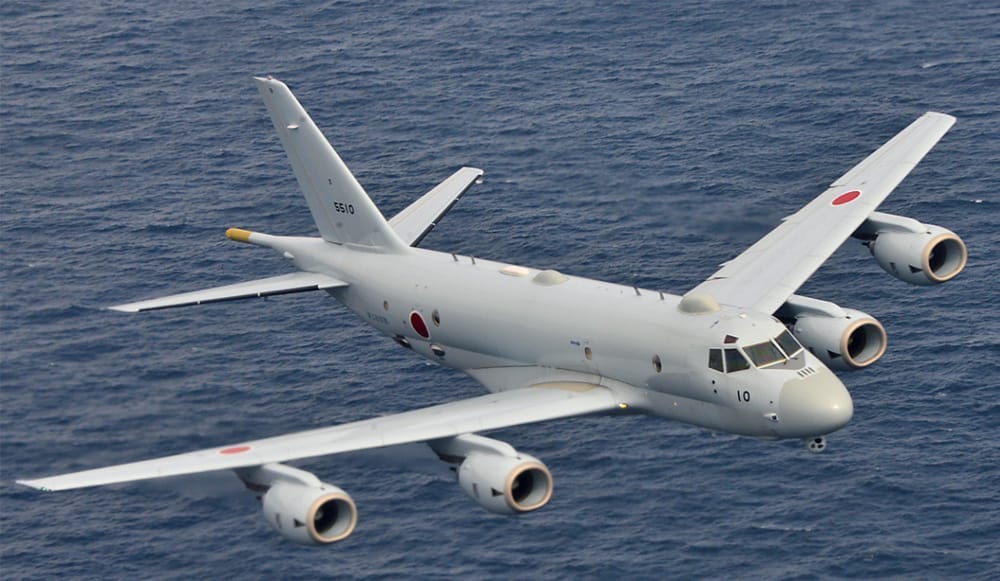
Within the Aerospace Systems segment for FY2024, the airframe sub-business (commercial and defense aircraft combined) contributed 399.9 billion yen, while the Aero Engine sub-business added 167.8 billion yen.
The defense portion of the airframe business is supported by a portfolio of long-running domestic programs, while the commercial component is heavily concentrated in Boeing 787 fuselage shipments.
The Aero Engine sub-business reflects participation in IHI-led MRJ programs, V2500, Trent 1000, Trent XWB, and PW1100G-JM modules, plus military engine work. The PW1100G-JM had been a profit drag in earlier fiscal years, with the FY2024 profit recovery partially attributed to a reaction to the loss recorded the previous year.
Q3 FY2025 Performance Detail
For the nine months ended December 31, 2025, Kawasaki posted consolidated revenue of 1,561.4 billion yen and business profit of 82.4 billion yen, with Aerospace Systems contributing the headline numbers cited above.
Profit attributable to owners of parent for the full FY2025 has been guided to 90.0 billion yen following the Q3 update.
KHI GROUP RESULTS FY25 9M (¥ billion)
─────────────────────────────────────────────
Consolidated Revenue:        1,561.4
Consolidated Business Profit:   82.4
Aerospace Systems Revenue:     388.8
Aerospace Systems Bus. Profit:  30.7
─────────────────────────────────────────────
The Q3 disclosure noted that Aerospace Systems and Energy Solution & Marine Engineering segments led group revenue change, with foreign exchange tailwinds from yen depreciation amplifying dollar-denominated commercial aerospace sales.
Foreign Exchange Sensitivity
Kawasaki disclosed that a meaningful portion of Aerospace Systems revenue is dollar-denominated, principally through Boeing structural shipments and Rolls-Royce engine module deliveries.
Yen depreciation is therefore a translation tailwind, while yen appreciation, which the company guided as a headwind for FY2025 at the outset of the fiscal year, would compress reported business profit.
For aerospace stakeholders pricing long-term supply contracts with Kawasaki, this means the apparent profit margin of the segment can move several hundred basis points based on currency alone, irrespective of underlying program execution.
Capital Expenditure and R&D Profile
Kawasaki’s aerospace capital expenditure pattern has historically been concentrated around new platform introductions.
The Lincoln, Nebraska 777X plant, the Gifu fuselage panel facility expansions, and the GCAP-related infrastructure investments form the most visible recent capex stack.
R&D spending in aerospace has skewed toward unmanned systems and hydrogen propulsion in line with the Group Vision 2030 priorities.