


A new layer of economic activity is forming above our cities, somewhere between rooftops and the cruising altitude of regional airliners.
The airspace below 1,000 meters, long ignored as commercially marginal, has become the most actively contested vertical zone in modern aviation policy.
Two data points reframe the debate for every aviation stakeholder.
China’s low-altitude sector reached roughly 1.5 trillion yuan in 2025, with civil aviation authorities targeting 3.5 trillion yuan by 2035.
In parallel, the United States Department of Transportation released its AAM National Strategy in December 2025, signaling that the regulatory architecture for routine air taxi and BVLOS operations is shifting from pilot project to scaled deployment.
This in-depth strategic analysis report dissects the technologies, regulations, infrastructure, business models, geographies, and frictions that will determine which firms, cities, and supply chains capture the value created in this airspace.
Let’s get started.
- Defined airspace: ground level up to 1,000 meters (3,280 feet)
- Core platforms: UAVs, eVTOLs, powered-lift aircraft, drones, autogyros
- Primary use cases: logistics, urban air mobility, agriculture, inspection, emergency response
- Strategic anchor markets: China, United States, United Arab Emirates, European Union, Japan, Hong Kong SARRecommended - Read Full Reports


Read All Reports
Table of Contents
What Is Low-Altitude Economy?
What the Term Actually Covers
Why It Differs From Traditional General Aviation?
Why You Should Care Now?
Market Size and Capital Flows
The Chinese Anchor Number
Capital Concentration in the Present
Where the Numbers Are Less Reliable?
Vietnam and ASEAN Add a Second Anchor
Aircraft Platforms Driving the Sector
Multi-Rotor and Fixed-Wing UAVs
Pilotless Passenger eVTOLs
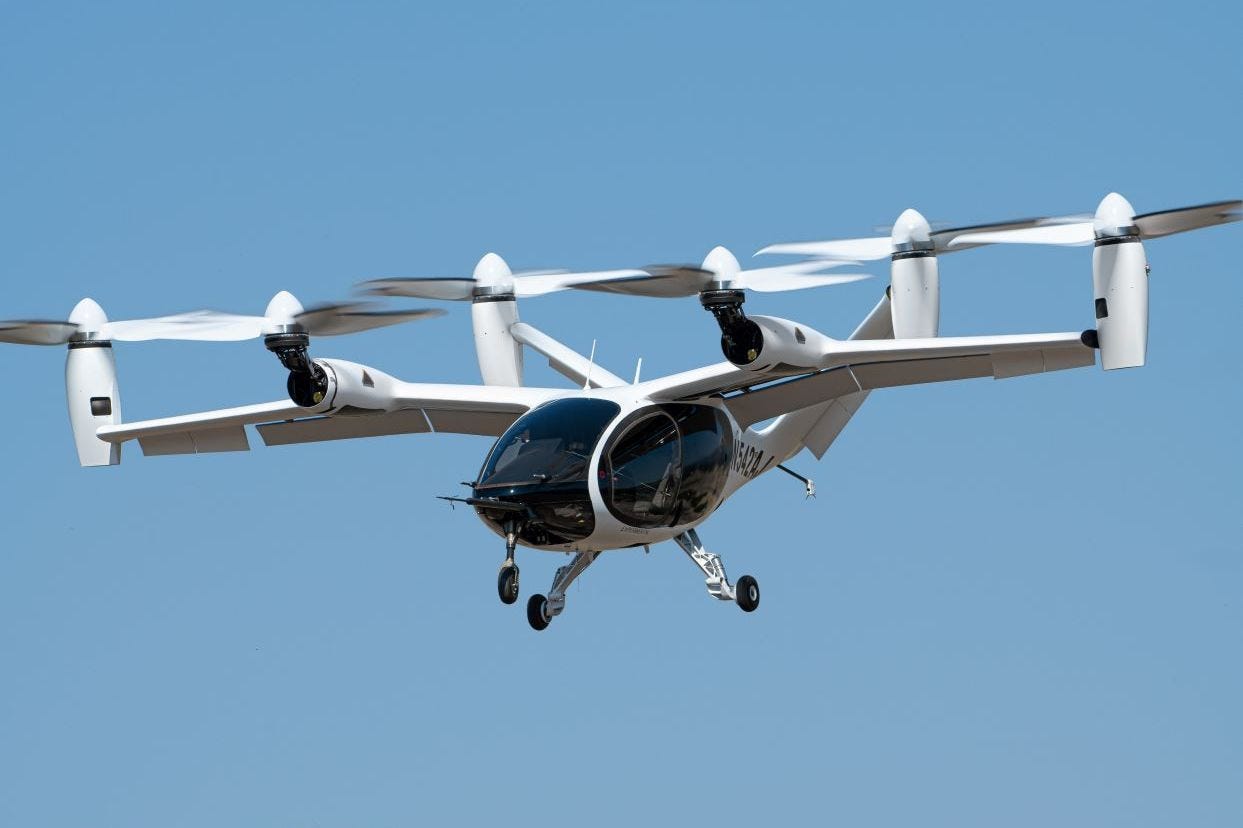
Piloted eVTOLs Pursuing Western Certification
Joby Aviation - Company Analysis and Outlook Report 2026 (Updated)
Hybrid and Hydrogen Configurations
Regulatory Environment for Low-Altitude Economy
China’s Regulatory Stack
Provincial and Municipal Layers
The United States Path
Europe’s U-Space Framework
Convergence and Divergence Of Regulations
Low-Altitude Economy Infrastructure: The Physical Foundation
Vertiports as Real Estate Assets
The Shenzhen Build-Out
Charging and Energy Infrastructure
Communications and Traffic Management
Use Cases Driving Real Revenue in Low-Altitude Economy
Logistics and Last-Mile Delivery
Agriculture and Rural Applications
Inspection and Industrial Asset Management
Emergency Medical Services and Public Safety
Urban Air Mobility for Passengers
Tourism and Aerial Sightseeing
Geographic Strategic Map
China’s Three-Cluster Strategy
The United Arab Emirates as Global Test Bed
The United States Position
Europe’s Recalibration
Hong Kong, Japan, and Singapore
Industrial Supply Chain for Low-Altitude Economy
Batteries and Power Systems
Electric Motors and Power Electronics
Composites and Aerostructures
Avionics, Software, and Sensors
Insurance and Aftermarket
Operational Models and Business Architectures
Vertically Integrated Operators
Manufacturer-Operator Separation
Logistics Platform Integration
Public Sector Anchor Tenant Models
Safety, Risk, and Public Acceptance
The Safety Standard Bar
Operational Incidents and Their Effect
Public Acceptance and Noise
Cybersecurity Exposure
Workforce, Skills, and Training Pipelines
New Categories of Aviation Workers
Training Capacity and Bottlenecks
Diversification of the Talent Pool
Strategic Tensions and Open Questions
Speed Versus Safety
Centralized Versus Distributed Airspace Management
Manufacturing Concentration
Energy Grid Constraints
Implications for Low-Altitude Economy Stakeholders
For Aircraft OEMs
For Logistics and Mobility Platforms
For Infrastructure and Real Estate
For Telecommunications and UTM Providers
For Regulators and Civil Aviation Authorities
For Investors
Low-Altitude Economy: Five-Year Outlook (2026 to 2031)
What Should Happen by 2031
What Could Slow This Down
What Could Accelerate This
Practical Playbook for Aviation Industry Executives
Position Decisions in 2026
Partnership Architecture
Data Strategy
Communication With Public and Customers
Wider Industry Implications
The Aerospace Industrial Base
The Civil Aviation Authority Function
Defense and Dual-Use Implications
Urban Planning and Real Estate
Sustainability and Decarbonization
My Final Thoughts
What Is Low-Altitude Economy?
What the Term Actually Covers
The low-altitude economy is best understood as a vertical extension of the digital, logistics, and mobility economies into the lower stratum of civil airspace.
It encompasses the design, manufacturing, operation, and servicing of aircraft and supporting systems that operate predominantly under 1,000 meters above ground level.
The term gained policy weight after Chinese authorities formally adopted it in the 2024 government work report. The State Council explicitly identified the segment as a new growth engine for industrial development, signaling a top-down commitment that distinguishes it from organic, market-led aviation diversification elsewhere.
SCOPE BREAKDOWN
- Airspace: typically 0 to 1,000 m AGL (some jurisdictions use 0 to 3,000 m)
- Aircraft families: multirotor UAVs, fixed-wing UAVs, hybrid VTOL, eVTOL, helicopters, light sport aircraft
- Services: logistics, mobility, observation, inspection, training, emergency response
- Adjacent industries: batteries, composites, motors, chips, telecommunications, mapping, insurance
Why It Differs From Traditional General Aviation?
Traditional general aviation grew around piloted, hydrocarbon-fueled platforms used by hobbyists, training schools, and corporate operators.
The low-altitude economy is structurally different because the dominant platforms are uncrewed or autonomously piloted, electric, and operated through digital traffic management rather than ground radar and voice procedures.
The shift is not merely a rebrand.
It implies a different industrial supply chain, a different regulatory toolkit, and a fundamentally different cost curve per flight hour. Battery chemistry, automated detect-and-avoid systems, and cellular-network-grade communications are now structural inputs alongside aluminum, kerosene, and certified pilots.
This is why automakers, telecommunications operators, and large logistics platforms have entered the supply chain. They contribute capabilities that traditional aerospace primes simply did not need to build.
Why You Should Care Now?
The relevance window has narrowed.
With type certificates being issued, BVLOS rulemaking proposed, and commercial routes accumulating in fast-mover cities, design choices made between 2026 and 2028 will shape capability moats for the rest of the decade.
Operators that wait for full regulatory clarity risk discovering that route slots, vertiport leases, and pilot training pipelines have already been pre-empted.
The structural lesson from terrestrial logistics platforms applies directly: early node placement compounds.
Market Sizing and Capital Flows
The Chinese Anchor Number
Civil aviation authorities have produced the cleanest official sizing of the segment. The domestic market reached approximately 1.5 trillion yuan in 2025, with a stated target of 3.5 trillion yuan by 2035.
For 2024, the segment recorded approximately 670 billion yuan. The growth trajectory implied by these official figures, rather than third-party forecasts, anchors most internal corporate plans inside Chinese aerospace and logistics groups.
These are official sector aggregations and they incorporate manufacturing, operations, services, and supporting infrastructure.
They do not isolate eVTOL transport, which is a smaller segment within the total.
Capital Concentration in the Present
Capital flows confirmed the policy signal.
Financing into the Chinese low-altitude sector increased by 71% during 2025, with private equity, corporate venture, and provincial industrial funds all participating.
Sichuan province launched a 3 billion yuan dedicated fund for the segment in February 2025, illustrating how subnational governments are now competing to anchor manufacturing and operating clusters.
CAPITAL CONCENTRATION SIGNALS
- 71% increase in low-altitude financing in China during 2025
- Provincial industrial funds entering at multi-billion yuan scale
- Strategic investments by automakers, telecom carriers, and e-commerce platforms
- Public market interest concentrated in a handful of certified eVTOL OEMsWhere the Numbers Are Less Reliable?
Aggregated global UAM forecasts diverge sharply depending on methodology and the maturity of certification assumptions.
Bank of America Institute research estimated the global UAM market could reach roughly $23 billion by 2035, with longer-horizon projections reaching higher ranges.
These numbers are best treated as ranges rather than precise predictions, because they assume regulatory milestones that have not yet been universally achieved.
You should weigh official sector-level data above aggregated commercial forecasts.
Vietnam and ASEAN Add a Second Anchor
ASEAN markets are emerging as a secondary growth basin.
Vietnamese officials have publicly stated the country’s low-altitude sector could reach USD 10 billion and create one million jobs by 2035, with Ho Chi Minh City already piloting drone delivery for emergency medical and urban logistics use cases.
This matters strategically because ASEAN airspace and demographic density make the region a natural test bed for the China model adapted to mixed regulatory environments.
Aircraft Platforms Driving the Sector
Multi-Rotor and Fixed-Wing UAVs
The volume base of the low-altitude economy is uncrewed aerial systems weighing between 250 grams and 150 kilograms. These platforms perform agricultural spraying, infrastructure inspection, surveying, last-mile parcel delivery, public safety, and entertainment.
By mid-2025, Chinese drone flight time had exceeded 20 million hours, with two delivery operators each surpassing one million logistics flights. This volume base provides the cost amortization, production discipline, and software maturity that larger platforms benefit from.
The same fleet base also creates a labor and skills pool of remote pilots, ground crew, and software operators that a fully crewed alternative would have taken decades to assemble.
Pilotless Passenger eVTOLs
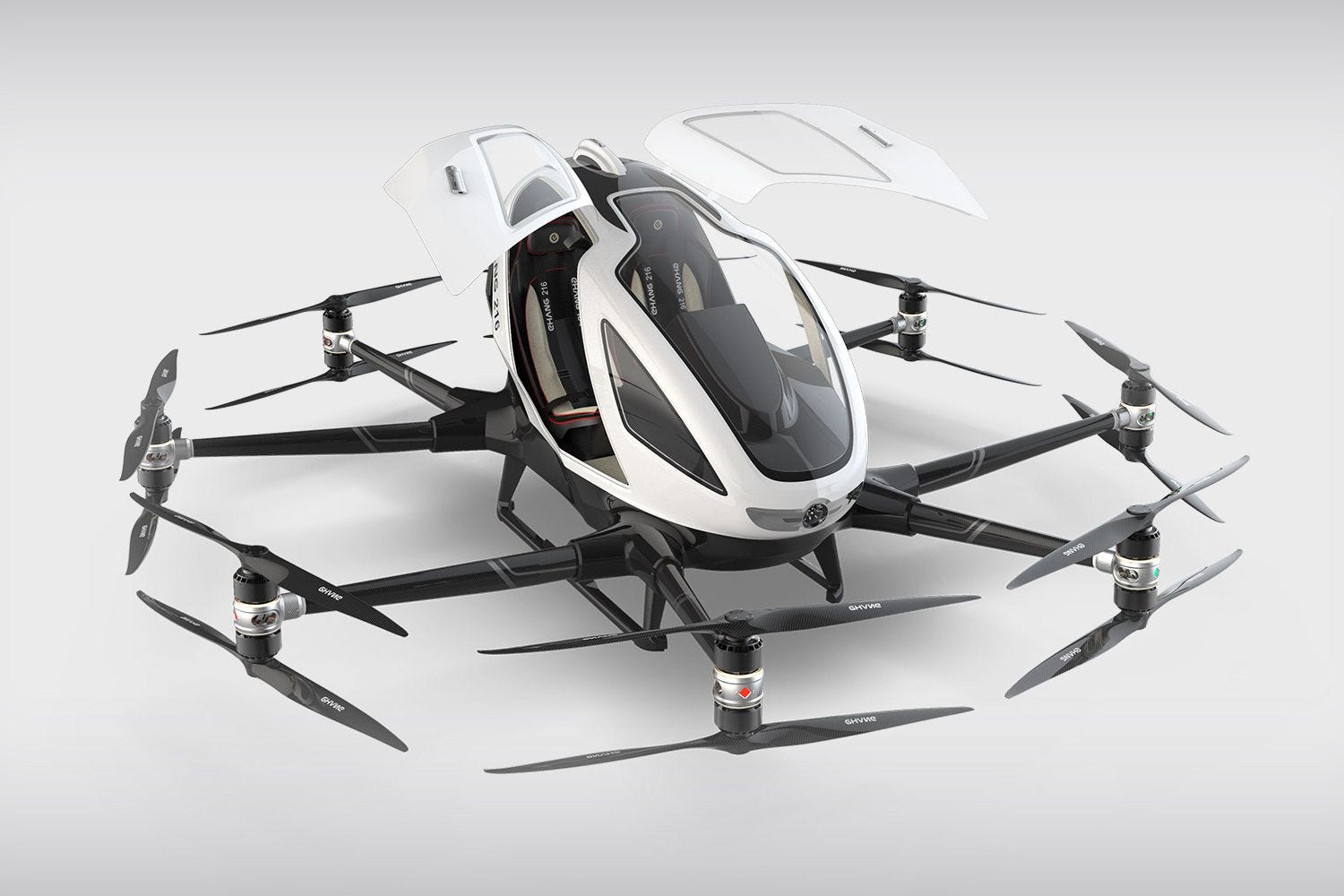
The category-defining platform on the Chinese side is the EH216-S, an autonomous two-seat eVTOL.
The type certificate was issued by Chinese civil aviation authorities in October 2023, with the production certificate, airworthiness certificate, and operator certificates following.
In March 2025, the operator subsidiaries obtained Air Operator Certificates, authorizing paid commercial passenger operations. The platform has subsequently completed debut commercial flights in Guangzhou and Hefei.
EH216-S PROFILE (PUBLIC SPECIFICATIONS)
- Configuration: autonomous, two-seat, 16 propellers
- Type Certificate: issued October 2023 (CAAC)
- Production Certificate: obtained 2024
- Standard Airworthiness Certificate: obtained 2024
- Air Operator Certificates: obtained March 2025
- Mode of operation: piloted remotely, not on-boardPiloted eVTOLs Pursuing Western Certification
The leading Western piloted programs are Joby Aviation’s S4 and Archer Aviation’s Midnight, with Beta Technologies, Vertical Aerospace, and Eve also active.

Joby began TIA testing under FAA supervision in 2025, with FAA pilots scheduled to fly the conforming aircraft in subsequent campaigns.
Archer reached an important compliance milestone by becoming the first eVTOL maker to reach 100% FAA acceptance of Means of Compliance, and is running an in-country flight test campaign in Abu Dhabi as part of its Launch Edition Commercialization Program.
The 2024 closures of Lilium and Volocopter, both German programs, underline how unforgiving the path remains. Lilium filed for insolvency a second time in February 2025 when planned investment fell through.
Hybrid and Hydrogen Configurations
A third aircraft family is emerging at the intersection of payload capacity and range.
Hydrogen-hybrid eVTOL designs and one-ton-class cargo platforms are receiving production certificates and entering field trials, expanding the addressable mission set beyond short-hop urban applications.
These platforms target regional cargo, energy infrastructure inspection in remote terrain, and disaster response, where pure battery-electric short-range platforms are impractical.
Regulatory Environment for Low-Altitude Economy
China’s Regulatory Stack
China’s regulatory approach is layered.
At the highest level, the revised Civil Aviation Law, passed in December 2025 and effective 1 July 2026, formally classifies drones as aircraft and brings their design, production, import, maintenance, and operation under the national aviation framework.
A ten-ministry standards plan published in early 2026 commits to more than 300 sector standards by 2030, covering airworthiness, traffic management, charging infrastructure, safety, and data exchange.
The 15th Five-Year Plan, covering 2026 to 2030, explicitly designates the low-altitude economy as a strategic emerging industry, locking in industrial policy alignment alongside artificial intelligence and quantum technology.
Provincial and Municipal Layers
Provincial and municipal regulations add operational specificity. Shenzhen passed dedicated promotion regulations for its Special Economic Zone that prioritize safety, categorized management, and coordinated development.
Hong Kong committed in its 2025 Policy Address to formulate a dedicated Action Plan, positioning the city as a hub for low-altitude applications through institutional reform and a regulatory sandbox.
CHINA REGULATORY HIERARCHY (2026 SNAPSHOT)
- National law: revised Civil Aviation Law (effective 1 July 2026)
- Sector standards: 300+ by 2030 plan
- National policy: 15th Five-Year Plan (2026-2030)
- Provincial: Shenzhen SEZ regulation, Sichuan industrial fund, Guangdong rules
- Municipal: Shenzhen route designations, Hefei pilot zones, Hong Kong sandboxThe United States Path
The United States approach is more legalistic and slower, but is now accelerating.
In November 2024 the FAA published the Powered-Lift final rule, which adopts permanent amendments and a Special Federal Aviation Regulation for ten years to facilitate certification of powered-lift pilots and instructors.
For drones, the FAA’s Notice of Proposed Rulemaking on Part 108 opened the path to routine BVLOS operations. The proposed rule contemplates operations primarily below 400 feet with new airworthiness acceptance pathways, with public comments closing in October 2025.
The Innovate28 implementation plan anchors the agency’s intent to enable integrated AAM operations at one or more sites by 2028.
The Department of Transportation’s December 2025 AAM National Strategy layers a policy vision on top of these technical workstreams.
Europe’s U-Space Framework
The European architecture for drone airspace is U-space.
EASA’s easy access rules provide the regulatory baseline, and the agency is now executing inspections of Member State implementation plans to accelerate adoption.
U-space is significant because it explicitly designates airspace volumes where automated traffic management services replace conventional voice procedures, mandating data exchange between manned aviation, drone operators, and service providers.
Convergence and Divergence Of Regulations
Across all three jurisdictions, the regulatory direction is the same: digital airspace, type certification of new aircraft families, automated traffic management, and operational rules permitting routine BVLOS and uncrewed passenger operations.
The pace and sequencing differ.
China is moving fastest on operational deployment of certified pilotless aircraft. The United States is moving fastest on the powered-lift framework for piloted aircraft. Europe leads on digital airspace integration architecture.
Low-Altitude Economy Infrastructure: The Physical Foundation
Vertiports as Real Estate Assets
Every credible scenario for urban air mobility requires a network of physical landing and charging facilities. As of early 2025, more than 1,500 vertiports were planned for development worldwide.
Vertiports are not minor infrastructure. They require electrical capacity for fast charging, structural reinforcement for landing loads, fire and rescue capability, weather sensing, communications equipment, and customer experience facilities.
VERTIPORT DESIGN INPUTS
- Pad geometry: tilt-rotor and multi-rotor footprints differ
- Electrical load: megawatt-class fast charging at peak
- Communications: redundant data links to UTM service providers
- Safety: rejected takeoff areas, fire suppression, emergency egress
- Weather: lightning, gust, and visibility sensors
- Accessibility: ground transport interface, ADA compliance, biometric flow
The Shenzhen Build-Out
Shenzhen is the most aggressive infrastructure case study. The city has opened 310 logistics routes and built more than 1,200 landing facilities, with 82 of those routes added in 2025 alone.
This is what an aggressive municipal commitment to low-altitude infrastructure looks like in practice. The implication is that route density and site availability are becoming determinative in operator economics.
Charging and Energy Infrastructure
eVTOL charging is one of the underestimated systems-level constraints. A modest fleet of 30 to 50 piloted eVTOLs operating from a single hub can require utility-scale electrical interconnection.
Battery thermal management, swapping versus fast charging, and the lifecycle economics of high-cycle batteries remain open commercial questions. Operators that integrate energy infrastructure with route planning gain a structural advantage.
Communications and Traffic Management
Unmanned traffic management systems, often built on cellular networks augmented with dedicated aviation data links, are the digital twin of physical infrastructure. Without them, no scaled BVLOS or autonomous passenger operation is feasible.
The Chinese approach favors integrated state-supervised systems operated through national and provincial platforms. The European U-space model favors competition between certified service providers within designated airspace volumes. The American approach is still emerging.
Use Cases Driving Real Revenue in Low-Altitude Economy
Logistics and Last-Mile Delivery
Logistics is currently the cleanest revenue case. By mid-2025, Chinese operators each accumulated more than one million logistics flights, and total drone flight time exceeded 20 million hours.
Shenzhen alone operates 310 logistics routes, illustrating that high-density urban delivery has shifted from pilot to standard service in fast-mover cities. In 2024, China launched more than 140 new low-altitude logistics routes, with around 90% operating within city limits.
Unit economics are improving but are not yet uniformly profitable. Operators report that hot beverage, prepared food, and pharmacy categories show the strongest economics, while bulk grocery delivery remains marginal.
Agriculture and Rural Applications
Agriculture is the oldest application of low-altitude technologies, particularly precision spraying, real-time crop analysis, and field surveying.
Drone-based rural inspections are projected to reach more than 30% of Chinese villages, expanding access to monitoring and emergency services.
For aerospace stakeholders, agriculture provides the steady volume base that funds platform R&D. Margins are thin per flight, but cumulative deployment compounds operating data and supplier maturity.
Inspection and Industrial Asset Management
Power transmission lines, oil and gas pipelines, wind turbines, railway corridors, and bridge structures collectively account for hundreds of thousands of kilometers of high-value assets that benefit from aerial inspection.
The substitution economics here are favorable. A drone flight replaces a helicopter mission or a manual climb at a fraction of cost and risk, with higher data quality.
Emergency Medical Services and Public Safety
Medical applications include organ transport, blood and reagent delivery, defibrillator dispatch, and search and rescue. Chinese deployments have shown drones equipped with temperature-controlled medical boxes that allow remote monitoring of payload conditions.
Tianjin Binhai’s dedicated low-altitude medical express corridor reduced cross-district transport time for blood products.
For aerospace stakeholders, public safety applications also serve as a regulatory entry point because they typically face lower political resistance than passenger transport.
Urban Air Mobility for Passengers
Passenger UAM remains the most visible but lowest-volume use case. The EH216-S completed debut flights in central Shanghai and the operator subsidiaries are now licensed for paid operations.
In Dubai, Joby completed the UAE’s first piloted point-to-point air taxi flight ahead of a 2026 commercial launch, expanding its vertiport partnerships with Skyports Infrastructure and the Dubai Roads and Transport Authority.
Archer’s Launch Edition Program with Abu Dhabi Aviation pursues a parallel deployment strategy in the UAE.
Tourism and Aerial Sightseeing
Aerial sightseeing is the most underestimated near-term revenue category. Pilotless eVTOLs operating fixed scenic routes solve the ride-hail style point-to-point matching problem by eliminating it entirely.
Fixed scenic loops simplify regulatory approval, allow predictable maintenance scheduling, and create premium price points that absorb high unit economics during early-stage deployment.
Geographic Strategic Map
China’s Three-Cluster Strategy
China’s low-altitude economy is organizing around three regional clusters.
Shenzhen leads in commercial deployment density and logistics platform integration.
Chengdu represents military industry transformation, with manufacturing depth and aerospace heritage.
Hefei is the scientific innovation hub, hosting research integration and pilot programs.
This three-cluster pattern echoes the geographic specialization that earlier shaped Chinese electric vehicles, photovoltaics, and consumer electronics.
CHINESE CLUSTER PROFILES (2026)
- Shenzhen: commercial deployment, logistics density, vertiport build-out
- Chengdu: aerospace manufacturing, defense conversion, supply chain
- Hefei: scientific research, certification testing, university integration
- Shanghai: corporate headquarters, financial services, demonstration corridors
- Guangzhou: passenger eVTOL operations, regulatory pilot zones
The United Arab Emirates as Global Test Bed
The UAE has positioned itself as the global launch platform for Western-certified piloted eVTOLs. Both Joby and Archer have active operating partnerships with Emirati authorities, and the regulatory environment supports rapid deployment.
For aerospace stakeholders, the UAE serves a function analogous to the Gulf’s earlier role in long-haul aviation. The regulator is willing to certify, the customer base is willing to pay premium fares, and the climate testing is rigorous.
The United States Position
The United States retains the deepest manufacturing pipeline for piloted eVTOLs and has the largest domestic UAM addressable market once certification completes. Joby and Archer are publicly traded, well-capitalized, and actively flying.
The constraint is regulatory pace. The Powered-Lift final rule and the proposed Part 108 BVLOS framework address the right problems, but execution requires the FAA to maintain throughput under workforce and budget pressures.
Europe’s Recalibration
Europe’s eVTOL industry suffered a serious setback with the Lilium and Volocopter exits. The remaining significant programs are Vertical Aerospace in the United Kingdom and selected smaller players.
Europe still leads on digital airspace architecture through U-space, and the regulatory framework remains globally influential. The industrial deployment side has weakened materially.
Hong Kong, Japan, and Singapore
Hong Kong is moving deliberately. The Special Administrative Region’s 2025 Policy Address committed to a low-altitude economy ecosystem, with a Sandbox X program testing emergency rescue, drone delivery, inspection, and other use cases.
Japan, Singapore, and Australia are all running pilot programs, and Vietnam has set explicit national targets, indicating that the pattern of city-led pilots followed by national policy is propagating across the Asia-Pacific.