


Executive Summary
Lufthansa Group reported its strongest financial performance in its 100-year history in 2025, with full-year revenue of €39.6 billion and an adjusted EBIT of approximately €2 billion, up 20 percent year-on-year.
At the end of 2025, the group’s fleet comprised 737 aircraft, with 219 more on order, as the carrier accelerates what it calls the largest fleet modernization in company history - targeting delivery of approximately one new aircraft per week throughout 2026.
For summer 2026, Lufthansa Group offers over 14,000 weekly connections to 330 destinations in around 100 countries, reflecting a deliberate pivot away from loss-making short-haul European feeders and toward long-haul capacity growth.
The group now operates six passenger airline hubs across Europe following the integration of ITA Airways, while navigating a difficult geopolitical environment following the Gulf conflict that has suspended services to multiple Middle East destinations and pushed fuel prices sharply higher.
Recommended - Read Full Reports


Read All Reports
Table of Contents
Executive Summary
Introduction
Key Facts: Company Profile
Business Overview
Financial Performance: 2025 Full Year
Key Revenue Growth Drivers
Revenue Composition and Key Business Segments
2026 Guidance and Multi-Year Financial Targets
Lufthansa - Fleet Strategy and Composition
Fleet Size and Overall Composition (Year-End 2025)
Current Long-Haul Fleet Types
Short and Medium-Haul Fleet
In-Depth Fleet Strategy: The Long-Term Simplification Agenda
Lufthansa City Airlines: Building a Cost-Efficient Short-Haul Backbone
The Allegris Cabin Program: Premium Strategy in Detail
Lufthansa - Route Network, Major Destinations, and Strategy
Network Scale in Summer 2026
Long-Haul Network Strategy: The Deliberate Rebalancing
Transatlantic Network: The Core Profit Engine
Transatlantic Joint Venture Advantage
Asia-Pacific Network
Africa Network: The Brussels Airlines Competitive Moat
Short-Haul: Disciplined Retreat from Unprofitable Routes
Major Operational Bases (Hubs)
Frankfurt (FRA): The Primary Intercontinental Hub
Munich (MUC): The Premium Flagship Hub
Zurich (ZRH): The SWISS Hub
Vienna (VIE): The Central and Eastern Europe Gateway
Brussels (BRU): The Africa Specialist Hub
Rome (FCO) and Milan (LIN): The ITA Airways Hubs
Competitive Position - Lufthansa
The Big Three European Legacy Groups
Lufthansa vs. IAG: The Profitability Gap
Lufthansa vs. Air France-KLM
Lufthansa vs. Low-Cost Carriers
Consolidation and M&A Context
Sustainability and Environmental Strategy
Key Risks and Scenarios
Risk 1: Geopolitical Escalation in the Middle East
Risk 2: Aircraft Delivery Delays
Risk 3: Labor Cost Escalation
Risk 4: Fuel Price Shock
Risk 5: Short-Haul LCC Pressure
Risk 6: Allegris Rollout Further Delays
Official Sources and Key References
My Final Thoughts
Introduction
Lufthansa Group celebrated its centennial year in 2026 by posting a historic financial milestone - yet the milestone arrives amid sharp headwinds.
A widening Gulf conflict has grounded long-haul operations to key Middle East destinations, kerosene prices are spiking, and labor negotiations with pilot and cabin crew unions remain a live pressure point.
Against this backdrop, the group is executing the most ambitious transformation in its history: retiring four-engine jets at pace, rolling out its premium Allegris cabin product across a growing long-haul fleet, absorbing ITA Airways into its six-hub network, and preparing to receive nearly one new aircraft per week throughout 2026.
Key Facts: Company Profile
Company Name:        Deutsche Lufthansa AG (Lufthansa Group)
Founded:             January 6, 1926 (100th anniversary year: 2026)
Headquarters:        Cologne, Germany
CEO:                 Carsten Spohr
CFO:                 Dr. Till Streichert
2025 Revenue:        €39.6 billion (+5% YoY)
2025 Adj. EBIT:      ~€1.96 billion (+19% YoY)
Adj. EBIT Margin:    4.9% (up from 4.4% in 2024)
2025 Passengers:     135 million (+3% YoY)
Seat Load Factor:    83.2% (record high)
Fleet Size (YE '25): 737 aircraft
Order Book (YE '25): 219 aircraft (+ 182 options)
Avg. Fleet Age:      14.4 years
Airlines:            Lufthansa Airlines, SWISS, Austrian Airlines,
                     Brussels Airlines, ITA Airways, Discover Airlines,
                     Eurowings, Edelweiss, Air Dolomiti,
                     Lufthansa CityLine, Lufthansa City Airlines
Cargo Arm:           Lufthansa Cargo (18 B777F + 4 A321F)
MRO Arm:             Lufthansa Technik
Frequent Flyer:      Miles & More (36 million members)
Alliance:            Star Alliance (founding member)
Business Overview
Financial Performance: 2025 Full Year
In 2025, Lufthansa Group generated €39.6 billion in revenue, a 5 percent increase over the €37.6 billion achieved in 2024. The adjusted EBIT improved to approximately €1.96 billion, up 19 percent from €1.645 billion the prior year. Both figures exceeded analyst expectations and marked the highest results in the group’s century of operations.
The group’s airlines carried 135 million passengers, a 3 percent increase. The seat load factor reached a record 83.2 percent. Lower fuel prices, a weaker US dollar, and a €362 million reduction in flight disruption costs compared with 2024 all contributed to the stronger bottom line.
The group’s operating margin improved to 4.9 percent, up 0.5 percentage points from the prior year.
2025 Financial Snapshot
━━━━━━━━━━━━━━━━━━━━━━━━━━━━━━━━━━━━━━━━━━━━━━━━
Revenue:              €39.6 billion    (+5% vs 2024)
Adjusted EBIT:        ~€1.96 billion   (+19% vs 2024)
Adj. EBIT Margin:     4.9%             (+0.5pp vs 2024)
Passengers:           135 million      (+3% vs 2024)
Seat Load Factor:     83.2%            (record high)
Proposed Dividend:    €0.33 per share
━━━━━━━━━━━━━━━━━━━━━━━━━━━━━━━━━━━━━━━━━━━━━━━━
Key Revenue Growth Drivers
Several structural and cyclical forces drove the 2025 revenue outperformance, and understanding them matters for assessing how durable the trajectory is heading into 2026.
Premium cabin demand strength. The premium segment continued to recover well above pre-pandemic baselines throughout 2025. Business travel on transatlantic routes and Asian corridors held firm, supporting meaningful yield improvements across network airlines. Management noted that passenger willingness to pay for ancillary services reached new highs during the year.
The absence of strikes. The 2024 financial year was severely disrupted by industrial action from pilots and ground staff. With those disputes resolved, 2025 saw the operational improvement that had been masked the year before. This single factor accounts for a significant portion of the year-on-year EBIT improvement.
Cargo outperformance. Lufthansa Cargo reported a strong year, with operating profit jumping 30 percent to €324 million on stable demand and strong Asian business. This standout performance reflects Lufthansa Cargo’s network advantage in Europe-to-Asia freight flows.
MRO stability. Lufthansa Technik held steady at €603 million in operating profit despite headwinds from dollar weakness and US tariffs. As one of the world’s largest independent MRO providers, Technik benefits from third-party contracts with airlines globally that partially insulate it from Lufthansa Group’s own operating cycles.
Turnaround program contribution. Lufthansa Airlines increased its annual result by around €250 million compared with the previous year and returned to a positive adjusted EBIT margin of 0.9 percent. The turnaround program contributed more than €500 million in earnings improvements in 2025, the first major financial result from over 700 identified improvement measures.
Disruption cost elimination. The absence of strikes, combined with improved operational reliability, freed up hundreds of millions in savings that flowed directly to the bottom line. €362 million in reduced flight disruption costs is a significant year-on-year swing.
Revenue Composition and Key Business Segments
Lufthansa Group operates across four core business segments.
Passenger Airlines form the dominant segment. This includes the network carriers Lufthansa Airlines, SWISS, Austrian Airlines, Brussels Airlines, and ITA Airways, as well as Eurowings, Discover Airlines, Edelweiss, Air Dolomiti, Lufthansa CityLine, and Lufthansa City Airlines.
Logistics is represented by Lufthansa Cargo. Lufthansa Cargo transports an average of 2,500 tons of freight per day via five cargo hubs in Frankfurt, Munich, Vienna, Brussels, and Rome. Its long-haul freighter fleet comprises 18 Boeing 777Fs. Four Airbus A321Fs serve the European short and medium-haul cargo network, which covers 22 destinations.
MRO is handled by Lufthansa Technik, one of the world’s leading independent providers of aircraft technical services, serving both group carriers and external airline customers worldwide.
Additional Businesses and Group Functions include IT services, catering operations, and other support activities.
Segment Operating Profit Contributions (FY 2025)
━━━━━━━━━━━━━━━━━━━━━━━━━━━━━━━━━━━━━━━━━━━━━━━
Lufthansa Cargo:      €324 million   (+30% YoY)
Lufthansa Technik:    €603 million   (~flat YoY)
Lufthansa Airlines:   Positive EBIT  (0.9% margin)
Group Adj. EBIT:      ~€1.96 billion (+19% YoY)
━━━━━━━━━━━━━━━━━━━━━━━━━━━━━━━━━━━━━━━━━━━━━━━2026 Guidance and Multi-Year Financial Targets
Management forecasts a further significant increase in adjusted EBIT in 2026, with passenger capacity set to grow by around 4 percent, focused almost entirely on long-haul.
The Lufthansa Airlines turnaround program targets a cumulative gross earnings contribution of approximately €1.5 billion in 2026, rising to approximately €2.5 billion by 2028. The measures span fleet modernization, automated technical and service processes, and structural cost reductions across more than 700 identified initiatives.
The group’s long-term margin ambition is an adjusted EBIT margin of 8 to 10 percent by 2028–2030, alongside a planned reduction of long-haul aircraft types from 13 to 6 by 2030.
On capital allocation, the group planned approximately €3 billion in capex for 2026, reflecting the peak aircraft delivery cycle. Non-fuel unit cost growth was guided at 0 to 2 percent at constant exchange and fuel rates.
The Executive Board and Supervisory Board will propose a dividend of €0.33 per share for the 2025 financial year at the Annual General Meeting on May 12, 2026.
Long-term benchmark: By the end of 2026, next-generation aircraft are projected to account for 30 percent of the total fleet, rising to 65 percent by 2030. This is the operational bedrock of the margin recovery story.
Lufthansa - Fleet Strategy and Composition
Fleet Size and Overall Composition (Year-End 2025)
At the end of 2025, the Lufthansa Group fleet comprised 737 aircraft, up from 735 the prior year. The average fleet age stood at 14.4 years. A total of 23 new aircraft were added to the fleet against 21 retirements.
Aircraft from Airbus and Boeing make up the majority of the fleet. Bombardier and Embraer aircraft are deployed on short-haul routes by regional carriers within the group.
Lufthansa Group Fleet Overview (Year-End 2025)
━━━━━━━━━━━━━━━━━━━━━━━━━━━━━━━━━━━━━━━━━━━━━━━━
Total Fleet:           737 aircraft
Widebody (active):     ~189 aircraft
Narrowbody (active):   ~444 aircraft
Average Fleet Age:     14.4 years
New Deliveries (2025): 23 aircraft
Retirements (2025):    21 aircraft
Order Book (YE '25):   219 aircraft + 182 options
━━━━━━━━━━━━━━━━━━━━━━━━━━━━━━━━━━━━━━━━━━━━━━━━
As of early March 2026, Lufthansa Group operated 189 widebody aircraft in active service, compared to Air France-KLM’s 195 and IAG’s 190.
However, the group’s position as Europe’s largest overall operator is underpinned by its significantly larger narrowbody fleet of 444 aircraft, considerably more than either of its European rivals.

Current Long-Haul Fleet Types
The long-haul fleet is the most complex element of the group’s operations and the focal point of the transformation program.
Boeing 747-8i. Lufthansa operates 19 Boeing 747-8s, one of the last major passenger carriers globally still doing so. These aircraft average approximately 12 years in age and serve key long-haul routes, primarily from Frankfurt. Allegris cabin retrofits on the 747-8 fleet are being phased in starting in late 2025/early 2026 through a two-phase installation process.
Boeing 747-400. Eight 747-400s remain in service, with an average age of 25.6 years. These aircraft are firmly in retirement mode, scheduled to exit the fleet fully by 2027.
Airbus A380. Lufthansa operates A380s predominantly from Munich on high-demand routes. The A380 carries 509 passengers across four cabins — 8 First Class, 78 Business Class, 52 Premium Economy, and 371 Economy — on routes including Los Angeles, San Francisco, Bangkok, and Delhi. Due to supply chain constraints, the A380 will receive the Thompson Vantage XL business class product rather than the full Allegris interior. The main deck and upper deck will otherwise remain unchanged.
Airbus A350-900. The backbone of the modern long-haul fleet. Lufthansa Airlines operates 31 A350-900s, with nine currently outfitted with the Allegris cabin. The airline received its first A350-900 on December 21, 2016. Future deliveries arrive with Allegris as the standard interior configuration. Fourteen additional A350-900s remain on order.
Boeing 787-9 Dreamliner. Seven Boeing 787-9s fitted with the new Lufthansa Allegris cabin were added to the fleet in 2025. The airline now has approximately 10 Dreamliners in active service from Frankfurt, with 19 more expected by end of 2027. These aircraft are progressively replacing the A340 and A330 fleets in the long-haul network.
Airbus A330-300 / A330-200. Still operating across the group but in the process of being transferred to Discover Airlines as 787-9 deliveries continue, or retired outright.
Airbus A340-600. Known for its extremely long fuselage and four engines, the A340-600 is expected to be completely phased out after the 2026 summer flight schedule. A340 operations fell 42 percent in Q1 2026 compared to Q1 2025, illustrating the pace of retirement.
Airbus A340-300. Also scheduled for gradual retirement by the end of 2027, alongside the remaining 747-400s.
Long-Haul Fleet: Retirement and Renewal Timeline
━━━━━━━━━━━━━━━━━━━━━━━━━━━━━━━━━━━━━━━━━━━━━━━━━━━━━━━
Retiring:   A340-600        (after summer 2026 schedule)
            A340-300        (by end of 2027)
            B747-400        (by end of 2027)
            A330-200        (transferred or retired, phased)
            B767-300ER      (at Austrian Airlines, from 2026)
            B777-200ER      (phased out longer-term)

Arriving:   A350-900        (ongoing deliveries)
            A350-1000       (first deliveries from 2026)
            B787-9          (ongoing, ~one per week in 2026)
            B777-9          (expected from 2027)
            A220-300        (from 2026, short/medium haul)
            B737-8 MAX      (from 2026, short/medium haul)
━━━━━━━━━━━━━━━━━━━━━━━━━━━━━━━━━━━━━━━━━━━━━━━━━━━━━━━Short and Medium-Haul Fleet
The group’s short-haul backbone consists predominantly of Airbus A320ceo and A320neo family aircraft. In 2025, ten A320neos and four A321neos were added to the fleet across the group’s carriers.
Airbus A220-300 and Boeing 737 MAX 8. In late 2023, Lufthansa Group placed a landmark order for 40 Airbus A220-300s and 40 Boeing 737-8 MAXs, with deliveries running from 2026 through 2032. Purchase options were agreed for an additional 20 A220-300s, 60 B737-8 MAXs, and 40 A320neo family aircraft.
The 737 MAX order is notable as a first for a group that had been exclusively Airbus-focused on its short-haul fleet. It signals a deliberate move toward dual-sourcing that provides negotiating leverage with both OEMs going forward, and reflects the group’s view that competition between Airbus and Boeing serves Lufthansa’s procurement interests.
Regional jets. Bombardier CRJ900s and Embraer E-jets are operated primarily by Lufthansa CityLine and Air Dolomiti on thinner regional routes feeding the main hubs.
In-Depth Fleet Strategy: The Long-Term Simplification Agenda
The single most consequential strategic decision Lufthansa Group is executing is the simplification of its long-haul fleet types from 13 to 6 by 2030.
This consolidation promises dramatic savings across multiple cost lines. Fewer aircraft types mean lower training and certification costs for pilots and engineers, simplified spare parts inventories, reduced maintenance complexity, and greater scheduling flexibility during disruptions.
The arithmetic is compelling: new aircraft are up to 30 percent more fuel-efficient than their predecessor models. For a group spending billions on fuel annually, a 30 percent efficiency gain on a growing share of the fleet translates directly into hundreds of millions in annual savings.
The Boeing 777-9 looms large in this picture. The airline has ordered 21 Boeing 777-9s from the 777X series, intended to directly replace the 747-400 capacity at greater efficiency. Deliveries have been delayed by Boeing until at least 2027, and some industry observers view 2027 as optimistic given ongoing certification challenges. Any further delay extends the period during which the group must continue operating aging, fuel-intensive quadjets.
The Airbus A350-1000 is equally important. In December 2024, Lufthansa ordered five additional A350-1000s, bringing fixed orders from ten to 15. These aircraft begin deliveries in 2026 and replace the A340-600 fleet. Their superior economics — twin-engine versus four-engine, significantly lower fuel burn per seat — will be immediately accretive to margins on delivery.
The Lufthansa Group also aims to increase the proportion of next-generation long-haul aircraft to 65 percent of the fleet by 2030, with the proportion reaching 30 percent by end of 2026.
Lufthansa City Airlines: Building a Cost-Efficient Short-Haul Backbone
Lufthansa City Airlines officially opened a new operating base at Frankfurt Airport on February 9, 2026, launching its first flight to Manchester with an Airbus A320neo. The airline already operates 13 aircraft from Munich following its launch there in summer 2024.
In 2025, the airline operated nearly 16,000 flights and carried around 2 million passengers to 27 destinations. By September 2026, the Frankfurt fleet will grow to seven A320neo aircraft.
Since September 2025, Lufthansa City Airlines has been a permanent member of Star Alliance, offering passengers wider network access and loyalty benefits.
Lufthansa City Airlines serves a critical structural role: it allows the group to operate short-haul European routes at a lower cost base than mainline Lufthansa Airlines, preserving hub feed to Frankfurt and Munich without the full overhead of the legacy carrier’s labor agreements and operational structure.
Lufthansa City Airlines: Key Metrics (2026)
━━━━━━━━━━━━━━━━━━━━━━━━━━━━━━━━━━━━━━━━━━━
Launch Year:          2024 (Munich base)
Frankfurt Base Open:  February 9, 2026
Aircraft Type:        Airbus A320neo
Munich Fleet:         13 aircraft
Frankfurt Fleet:      5 (growing to 7 by Sep 2026)
2025 Flights:         ~16,000
2025 Passengers:      ~2 million
Destinations:         27
Alliance:             Star Alliance (since Sep 2025)
━━━━━━━━━━━━━━━━━━━━━━━━━━━━━━━━━━━━━━━━━━━The Allegris Cabin Program: Premium Strategy in Detail
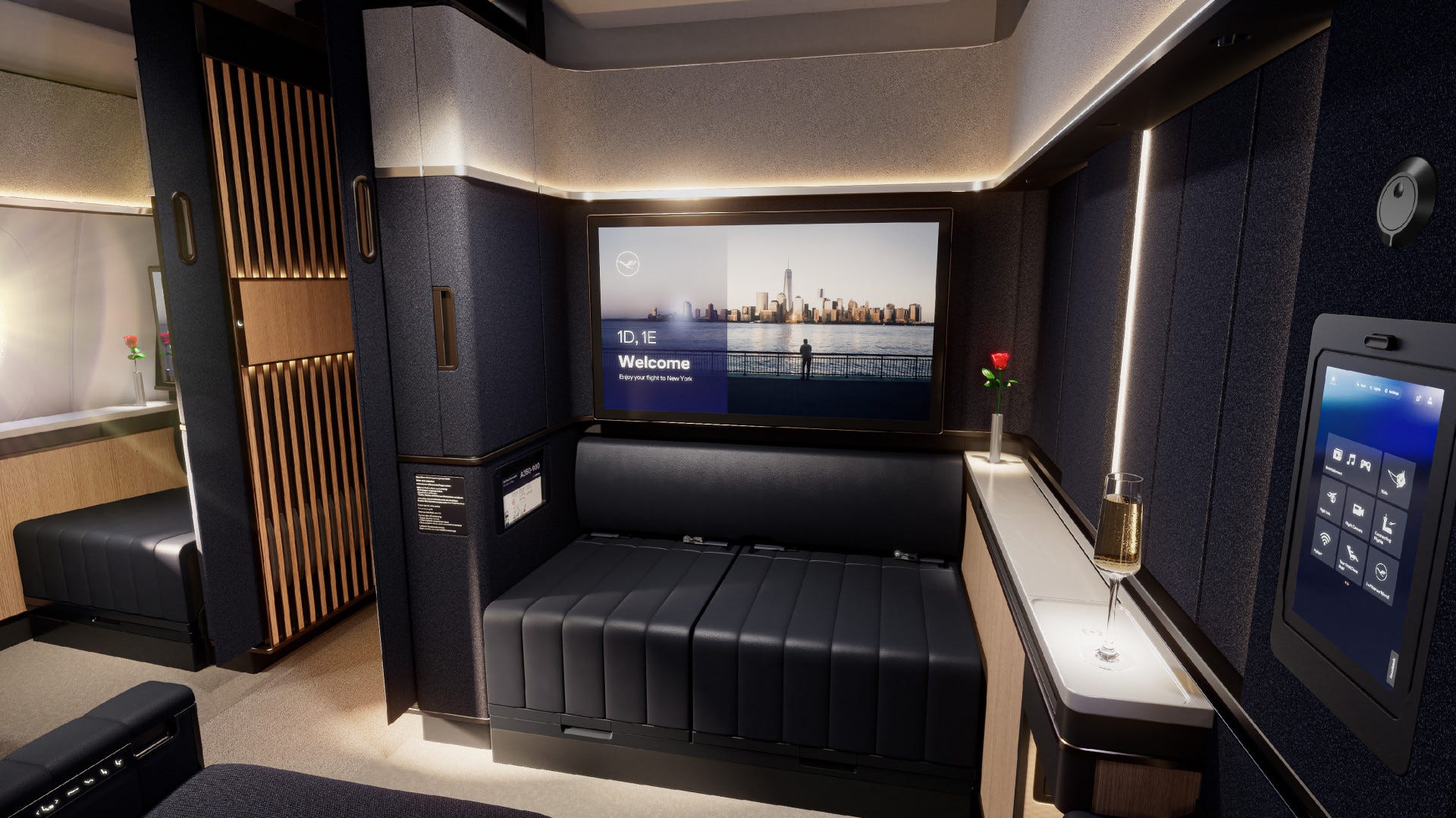
The Allegris product is central to Lufthansa’s premium positioning and its ability to close the margin gap with IAG and Gulf carriers on high-yield transatlantic and Asian routes.
With the Allegris service, more than 80 brand-new aircraft — including the Boeing 787-9, Airbus A350-900, A350-1000, and Boeing 777-9 — will eventually fly to destinations worldwide with the new interior. Aircraft already in service such as the Boeing 747-8 will also be retrofitted. Total group investment: €2.5 billion by 2025 across fleet and product.
The Allegris business class features a 1-2-1 layout with direct aisle access from every seat, a significant improvement over the older 2-2-2 configuration still flying on the 747-8 and A380 fleets. The product also includes new first class suites, redesigned premium economy seats, and updated economy throughout.
On the Airbus A350-900: Nine A350-900s at Lufthansa Airlines now carry the full Allegris interior. Over half a million passengers have experienced the product, with reported satisfaction rates near 100 percent.
On the Boeing 787-9: The 787 program faced deeper regulatory obstacles. Lufthansa began flying its 787s in October 2025 on intercontinental routes, but only four of the 28 business class seats could initially be occupied. The FAA requires each seat type to be individually certified on each aircraft type, and Lufthansa’s Allegris business class cabin features three seat variants from separate manufacturers — a complexity that prolonged the approval timeline.
As of March 15, 2026, 25 of the 28 Allegris business class seats received certification and became immediately available for booking. Full availability from Frankfurt opens on April 15, 2026.
Allegris Rollout: Key Milestones
━━━━━━━━━━━━━━━━━━━━━━━━━━━━━━━━━━━━━━━━━━━━━━━━━━━━━
2024:         First Allegris A350-900 enters service, Munich
Oct 2025:     787-9 enters service (only 4 certified biz seats)
Mar 15, 2026: 25 of 28 biz seats certified on 787
Apr 15, 2026: Full 787 Allegris available from Frankfurt (FRA)
Late 2025/26: 747-8 retrofit begins (two-phase process)
2028 target:  Consistent Allegris across A350, 787, 747-8
Future:       777-9 and A350-1000 deliver with Allegris
━━━━━━━━━━━━━━━━━━━━━━━━━━━━━━━━━━━━━━━━━━━━━━━━━━━━━
The certification delays carried real financial costs. Industry experts estimated the loss of 24 business class seats per aircraft on daily long-haul rotations could result in six-figure monthly losses per aircraft. CEO Carsten Spohr emphasized that safety and regulatory compliance are top priorities even when they cause commercial delays, and that a rapid return on investment is expected following full launch.