Welcome to AviationOutlook: The aviation newsletter built exclusively for decision-makers.
Become an “Annual” member now & get this special discount offer.
As a paid member, you get access to:
200+ Reports - All major airlines + aerospace & defense companies (updated regularly).
Daily / Weekly - Deep-dive analysis & insights.
Monthly - Industry outlook reports.
In case you missed it, here are the latest analysis reports:
Check Out All Reports
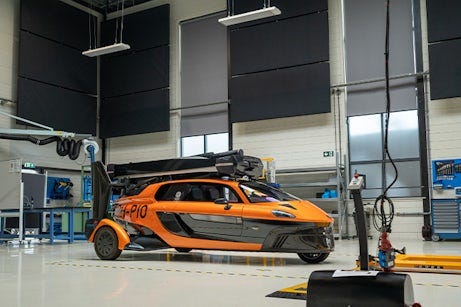
Dutch company PAL-V has obtained its European Production Organisation Approval (POA), authorizing it to manufacture aviation products under EASA regulations.
Combined with the automotive manufacturing approval it secured from the Netherlands Vehicle Authority earlier this year, PAL-V now holds both approvals required to build its FlyDrive vehicles at industrial scale.
This development signifies a structural shift in who gets to call themselves a manufacturer versus a prototype developer.
Let’s analyze everything in detail.
Are you a part of a team?
Equip your whole team with aviation industry intelligence. Consider “Group” or “Enterprise” plan.
What a Production Organization Approval Actually Means
A POA is not a design award or a prototype permit. It’s the regulator’s formal confirmation that a company’s entire production system, from quality controls to supply chain traceability, meets the standards for airworthy manufacturing.
What the POA authorizes PAL-V to do:
- Manufacture aviation products under EASA regulations
- Produce type-certified, road-legal vehicles under European automotive standards
- Operate an industrial-scale production system for FlyDrive vehicles
- Issue airworthiness documentation within its approved scope
Without a POA, a company can design, test, and even fly prototypes. It cannot legally build and deliver production aircraft. That distinction separates PAL-V from virtually every competitor in the AAM sector right now.
The approval also validates nearly two decades of regulatory groundwork.
PAL-V began developing the Liberty in 2008, achieved road certification in 2020, and finalized its certification basis with EASA in 2021, becoming the first flying car company to complete that step.
The Dual-Approval Advantage Nobody Else Holds
In March 2026, the RDW (Netherlands Vehicle Authority) granted PAL-V its Initial Assessment, officially recognizing it as a certified automotive manufacturer.
That approval confirmed compliance with European Conformity of Production (CoP) requirements, a foundational requirement for any road-legal vehicle producer.
The POA completes the second half of the equation.
PAL-V's dual-approval stack:
Automotive side: RDW Initial Assessment (March 2026)
  -> European CoP requirements met
  -> Road-legal vehicle production authorized

Aviation side: EASA Production Organisation Approval (September 2026)
  -> Airworthy manufacturing authorized
  -> Industrial-scale aviation production permitted

Result: The only FlyDrive company globally with both approvals
No American or Chinese AAM initiative has achieved this combination.
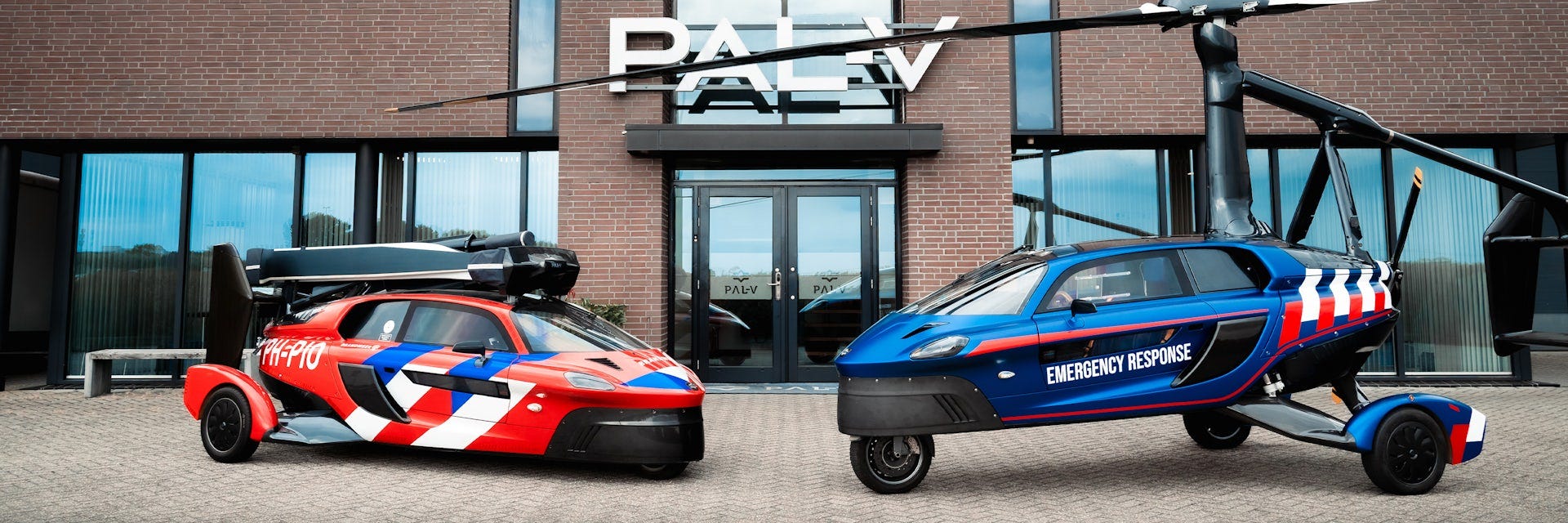
That matters because the Liberty is not a drone or an eVTOL air taxi. It’s a gyroplane that converts into a road-legal three-wheeled car, which means it must satisfy two entirely separate regulatory regimes simultaneously.