Welcome to AviationOutlook: The aviation newsletter built exclusively for decision-makers.
Become an “Annual” member now & get this special discount offer.
As a paid member, you get access to:
200+ Reports - All major airlines + aerospace & defense companies (updated regularly).
Daily / Weekly - Deep-dive analysis & insights.
Monthly - Industry outlook reports.
In case you missed it, here are the latest analysis reports:
Embraer - Company Analysis and Outlook Report 2026 (Updated)
American Airlines’ Six-Route Europe Play: Yield Discipline or Widebody Overreach?
Check Out All Reports
Executive Summary
Qantas Group posted record full-year revenue of A$23.8 billion for FY25 with Underlying Profit Before Tax of A$2.39 billion, followed by a strong 1H26 result where Underlying PBT rose 5% to A$1.46 billion.
The mainline fleet stands at roughly 143 aircraft with a further 123 operated by QantasLink, and almost 200 firm orders are in train for the largest fleet renewal in Australian aviation history.
The first Airbus A350-1000ULR for Project Sunrise is due for delivery in late 2026, with revenue services between Sydney, London Heathrow and New York JFK scheduled to launch in 2027.
Domestic Australia remains a near-duopoly with Qantas Group controlling 63.9% of passengers; the strategic pivot is now outward, using the A321XLR and A350 families to unlock new thin long-haul and short-haul international markets.
Recommended - Read Full Reports


Read All Reports
Table of Contents
Executive Summary
Introduction
Key Facts: Company Profile
Business Overview: The Company Behind the Flying Kangaroo
Financial Performance: A Record Year and a Strong Start to FY26
Revenue Growth Drivers
Services and Product Lines
Shareholder Returns and Capital Framework
Fleet: The Largest Renewal in Australian Aviation History
Current Mainline Fleet Composition
Airbus A321XLR: The New Domestic Workhorse
Airbus A220-300 for QantasLink
Airbus A330: The Transition Workhorse
Boeing 787-9 Dreamliner: The International Backbone
Airbus A380-800: The Indian Summer
Project Sunrise: The A350-1000ULR
Aircraft Configuration and Delivery Timeline
Strategic Logic
Fleet Renewal Economics and Delivery Cadence
Route Network, Major Destinations and Strategy
Domestic Network
Trunk Routes and the “Golden Triangle”
Regional and Intra-State Flying
International Network
The Americas
Europe and the UK
Asia
Oceania and Africa
Network Strategy in 2026 and Beyond
Thin Long-Haul Unlocked by the A321XLR
Western Sydney Airport
Ultra-Long-Haul Premium Flying
Major Operational Bases (Hubs)
Sydney: The Global Gateway
Role and Capacity
Melbourne
Brisbane
Perth: The Western Gateway
Perth as a Kangaroo Route Anchor
Adelaide and Secondary Operations
Competitive Position
Major Competitors
Virgin Australia
Singapore Airlines
Emirates
Qatar Airways
United, Delta and American
Cathay Pacific and Japanese Carriers
Low-Cost Competition: Bonza, Scoot, AirAsia
Competitive Strategy
Qantas Loyalty: The Profit Centre Hidden in Plain Sight
How the Program Generates Revenue
Classic Plus and the Loyalty Expansion
The Wider Group Value
Sustainability and Net Zero Strategy
Sustainable Aviation Fuel (SAF)
Fleet Efficiency and Operations
The Dual Brand: Jetstar’s Contribution
Jetstar’s Strategic Role
Fleet Renewal at Jetstar
The Closure of Jetstar Asia
Key Risks
1. Fleet Delivery and Execution Risk
2. Cybersecurity
3. Regulatory and Slot Risk
4. Fuel Price Volatility
5. Industrial Relations
6. Macroeconomic and Travel Demand
7. Geopolitical Disruption
8. Environmental Policy
Digital, AI and Operational Innovation
Customer-Facing AI
Network and Revenue Management
Engineering and Predictive Maintenance
Corporate Governance and Leadership
The Board and Governance Evolution
Strategic Tone
Outlook and Growth Trajectory
FY26 and FY27 Setup
FY28-FY30 Transformation
Official Sources and Data
My Final Thoughts
Introduction
Qantas is no longer the airline it was three years ago.
A $15 billion capital deployment cycle, a freshly seated CEO who has reset the company’s operating culture, the retirement of a 36-year-old Boeing 737 workhorse, and the imminent arrival of the world’s first Airbus A350-1000ULR for “Project Sunrise” have combined to produce the most ambitious reinvention in the carrier’s 106-year history.
This transformation is a measurable reshaping of costs, capacity, network geography and customer proposition that will set the competitive tempo across the Asia-Pacific for the next decade.
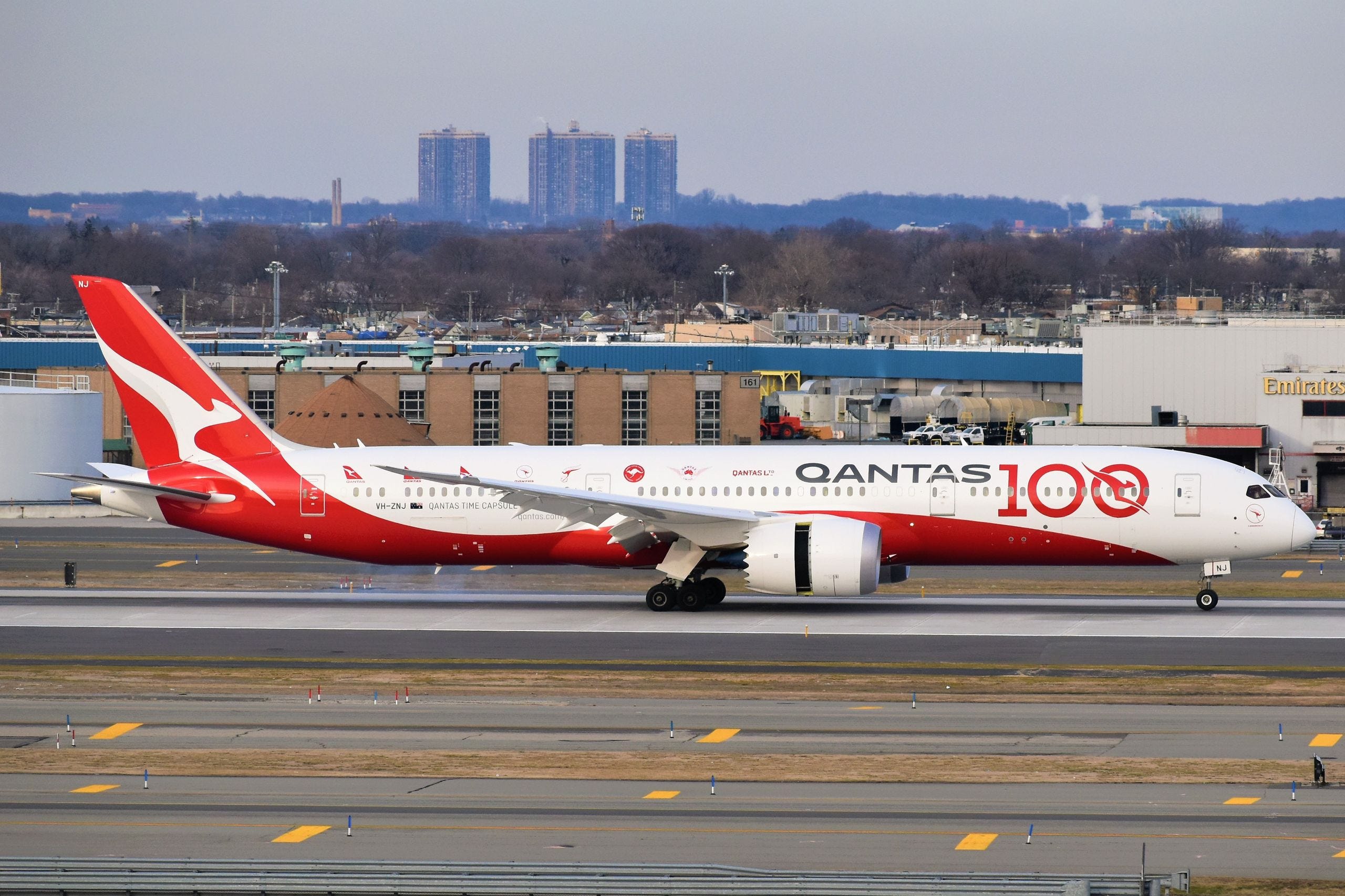
Key Facts: Company Profile
Company:                Qantas Airways Limited
Founded:                16 November 1920 (Winton, Queensland)
ASX Ticker:             QAN
Headquarters:           Mascot, New South Wales, Australia
Group CEO:              Vanessa Hudson (since September 2023)
Brands:                 Qantas, QantasLink, Jetstar, Qantas Freight, Qantas Loyalty
Mainline Fleet (Feb 2026): 143 aircraft
QantasLink Fleet:       123 aircraft
Firm Orders:            ~200 aircraft (A321XLR, A220, A350-1000, A350-1000ULR, 787)
Workforce:              ~29,720 employees (FY25)
FY25 Revenue:           A$23.82 billion
FY25 Underlying PBT:    A$2.39 billion
Passengers Carried FY25: 55.9 million
Alliance:               oneworld (founding member)
Destinations:           61 domestic, 35 international in 23 countries
Qantas group structure is deliberately dual-branded.
Qantas operates in the premium and corporate segments; Jetstar competes in leisure and value; QantasLink connects regional Australia to the mainline hubs; and Qantas Loyalty has matured into a high-margin data and commerce business that is increasingly de-linked from flying activity itself.
Business Overview: The Company Behind the Flying Kangaroo
Qantas Airways Limited is the world’s third-oldest continuously operating airline and the largest carrier in Australia by both fleet size and passenger volume.
The business today is organised around four reportable operating segments:
Qantas Domestic,
Qantas International (which includes Freight),
Jetstar Group and
Qantas Loyalty.
The simplicity of that structure masks considerable operational complexity.
The group carries more than 55 million passengers a year, manages roughly 400,000 Frequent Flyer account transactions a day, and runs one of the Southern Hemisphere’s largest engineering and maintenance businesses through Qantas Engineering and Qantas Ground Services.
Financial Performance: A Record Year and a Strong Start to FY26
The FY25 result, published in August 2025, was the strongest organic performance the group has recorded outside of unusual post-pandemic conditions. Group revenue reached A$23.823 billion, up from A$21.94 billion in FY24, and Underlying Profit Before Tax climbed to A$2.39 billion.
Statutory Profit After Tax of A$925 million reflected a step-up in depreciation and financing costs tied to the fleet renewal, as well as the wind-down costs associated with the closure of Jetstar Asia in Singapore.
FY25 Group Financial Snapshot
-----------------------------
Revenue .................... A$23.82 billion
Underlying PBT ............. A$2.39 billion
Statutory NPAT ............. A$0.93 billion
Passengers carried ......... 55.9 million
Underlying EBIT (Domestic) . A$1,056 million
Underlying EBIT (Int'l+Frt)  A$596 million
Underlying EBIT (Jetstar) .. A$769 million
Underlying EBIT (Loyalty) .. A$556 million
The half-year result for 1H26, released on 26 February 2026, showed the improvements carrying through despite the closure of the Singapore low-cost operation. Underlying Profit Before Tax printed at A$1.46 billion, up 5%, Underlying EPS rose 7% to 68 cents and the group margin widened to 12.3%.
Cash generation remained a feature of the story, with operating cash flow of A$1.8 billion in the half. The balance sheet is being deliberately stretched to absorb the aircraft book: net debt rose to A$5.6 billion which sits at the bottom of the group’s target range.
Revenue Growth Drivers
The revenue uplift has not been driven by price alone. The 1H26 disclosures show Qantas Domestic revenue rising 5% on a 4% lift in capacity, with particularly strong 6% passenger revenue growth in business-purpose travel and 9% growth in premium leisure.
International revenue and capacity each grew 5% as the final A380 returned to commercial service and premium cabins across the Dreamliner fleet ran hot. Jetstar’s international unit grew earnings 9% on the back of new Asian leisure frequencies, absorbing the 13 A320s redeployed from the shuttered Singapore operation.
1H26 Segment EBIT Momentum
--------------------------
Group Domestic .............. $1.05B (up 14%)
Group International ......... $463M (down 6%)
Jetstar Domestic ............ +38% YoY
Jetstar International ....... +9% YoY
Qantas Loyalty .............. $286M (up 12%)
Loyalty sits structurally outside the flying cycle. The program ended the half with more than 18.3 million members, earned 99 billion points across the first half, and saw redemption volumes rise 17% as the Classic Plus reward product took root.
Services and Product Lines
Passenger flying remains the dominant revenue line, but the group’s non-airline businesses are more material than most observers recognise. Qantas Freight operates a dedicated 767 and A321P2F fleet, moves a large share of Australia Post’s air mail, and is opening a 24-hour cargo precinct at the new Western Sydney Airport in mid-2026.
Qantas Loyalty is the most profitable non-flying line and is built around selling points to more than 30 airline partners, banks, fuel retailers, supermarkets and health insurers. It is effectively a data-and-payments business that uses flying as a redemption currency.
Engineering, ground handling, catering and digital products fill out the portfolio. The group’s recently announced strategic push into artificial intelligence deployment is intended to drive productivity gains across this full operating footprint, not only the flight deck.
Shareholder Returns and Capital Framework
The Board declared a fully franked 19.8 cents per share interim dividend for 1H26 (roughly A$300 million) alongside an on-market buyback of up to A$150 million. This is the first interim dividend in several years and signals that the capital program is now being funded within cash flows rather than crowding out shareholder returns.
Net debt of A$5.6 billion sits at the bottom of the Group Financial Framework target range, leaving roughly A$12.6 billion of total liquidity to absorb remaining aircraft payments and any cyclical disruption.

Fleet: The Largest Renewal in Australian Aviation History
Qantas is currently executing what management describes as the most ambitious fleet investment in Australian aviation history.
The combined Group order book, spanning Airbus and Boeing, narrow-body and wide-body, contains roughly 200 firm aircraft before options, the product of strategic decisions taken in 2022 under former CEO Alan Joyce and accelerated by Vanessa Hudson.
Current Mainline Fleet Composition
As of February 2026 the mainline Qantas fleet stands at approximately 143 aircraft, made up of a mix of Airbus narrow-body, Airbus wide-body and Boeing wide-body types.
This excludes QantasLink’s regional fleet and the separate Jetstar fleet.
Qantas Mainline Fleet (Feb 2026)
--------------------------------
Airbus A321XLR .............. 4
Airbus A321 (ex-JQ mid-life)  6
Airbus A330-200 ............. 18
Airbus A330-300 ............. 12
Airbus A380-800 ............. 10
Boeing 737-800 .............. 79
Boeing 787-9 ................ 14
Total Mainline .............. 143
The shape of the fleet has changed most visibly at the narrow-body end, where the A321XLR has begun replacing older 737-800s and a group of mid-life A319 and A320 aircraft have entered QantasLink and Jetstar service.
The average mainline fleet age sits above 16 years according to aircraft registry data, reflecting the age profile of a 737-800 backbone that first entered service in 2002. The replacement plan will halve that average by 2030.
Airbus A321XLR: The New Domestic Workhorse
The A321XLR sits at the centre of “Project Winton”, the domestic narrow-body renewal plan.
The first aircraft arrived in Sydney in mid-2025 and entered scheduled service in September 2025 on trunk routes such as Sydney-Melbourne and Sydney-Brisbane.
In August 2025 Qantas exercised 20 purchase right options to lift the total firm order to 48 A321XLRs, making it the largest A321XLR operator in the Asia-Pacific.
Of those, 16 will be configured with lie-flat Business seats for the first time on a Qantas narrow-body, a configuration tailored to unlock short-haul international flying from cities such as Brisbane, Cairns and Perth.
A321XLR Strategic Rationale
---------------------------
Seats: 197 (all economy variant) or 200 (20J/180Y)
Range: ~8,700 km (vs 737-800 at ~5,700 km)
Fuel burn per seat: 17% lower vs 737-800
Noise footprint: up to 50% lower
Delivery cadence: One every 3-4 weeks through 2028
The extra range matters more than the extra seats. An A321XLR based in Perth can reach Manila, Denpasar and Ho Chi Minh City on a short-haul fuel burn, while the same airframe based in Brisbane can operate to Tokyo-limited secondary destinations.
This is what management means when it says the aircraft will “open up” the network. The 737-800 was largely chained to the Australian continent; the A321XLR treats Southeast Asia and the Pacific Rim as an extension of the domestic network.
Airbus A220-300 for QantasLink
The A220-300 is the complementary narrowbody in the Project Winton order, positioned to replace the ageing Boeing 717 fleet that QantasLink has operated on regional and intra-state routes for more than two decades. The first A220 entered service in late 2024 and the type now anchors intra-Western Australian flying.
QantasLink’s 10% capacity growth across intra-WA routes during 1H26 was directly enabled by the A220 and a handful of mid-life A319s that were cascaded down from Australian carrier Rex after its retrenchment.
The A220 carries 137 passengers in a 10-business, 127-economy layout and offers 28% lower fuel burn per seat compared with the retiring 717s. Range of more than 6,000 kilometres means a single A220 based in Perth can reach every capital city on the Australian mainland with substantial payload.
Airbus A330: The Transition Workhorse
The 30 Airbus A330s in service represent the current muscle of the wide-body fleet. They carry the bulk of the short-haul international schedule to Asia, the trans-Tasman premium services and flying between Perth and the east-coast cities.
Qantas has committed to refurbishing 10 A330 aircraft with new Economy seats and upgraded Business seats, a decision that extends the economic life of the sub-fleet by roughly a decade and bridges the gap to the A350-1000 deliveries.
A330 Configurations
-------------------
A330-200: 27J/224Y or 28J/243Y
A330-300: 28J/269Y or 21J/230Y
Core routes: ASE-Asia, Pacific, Perth-EastCoast
Refurb program: 10 aircraft over 24-30 months
The refurbishment is worth noting for its symbolism as much as its numbers. An airline in the middle of a massive renewal still finds it economic to run and improve existing wide-bodies.
That tells us that the Group sees resilient long-term demand on the markets those aircraft serve.
Boeing 787-9 Dreamliner: The International Backbone
The 14-strong Dreamliner fleet is the workhorse of Qantas International, covering the bulk of the ultra-long-haul Boeing-operated network from Perth-London to Melbourne-Dallas and Sydney-Santiago.
Each aircraft seats 236 passengers across a 42J/28W/166Y configuration.

Four additional 787-9s and eight 787-10s are on firm order from the 2022 announcement, supplementing the long-haul fleet and creating capacity to absorb A380 retirements later in the decade.
The first refurbished 787 entered service in March 2026, featuring redesigned Business and Premium Economy seats that will also appear on the upcoming A350-1000 fleet.
This standardisation is a quiet but important cost-management move, giving cabin crews and engineers a consistent product across multiple sub-fleets.
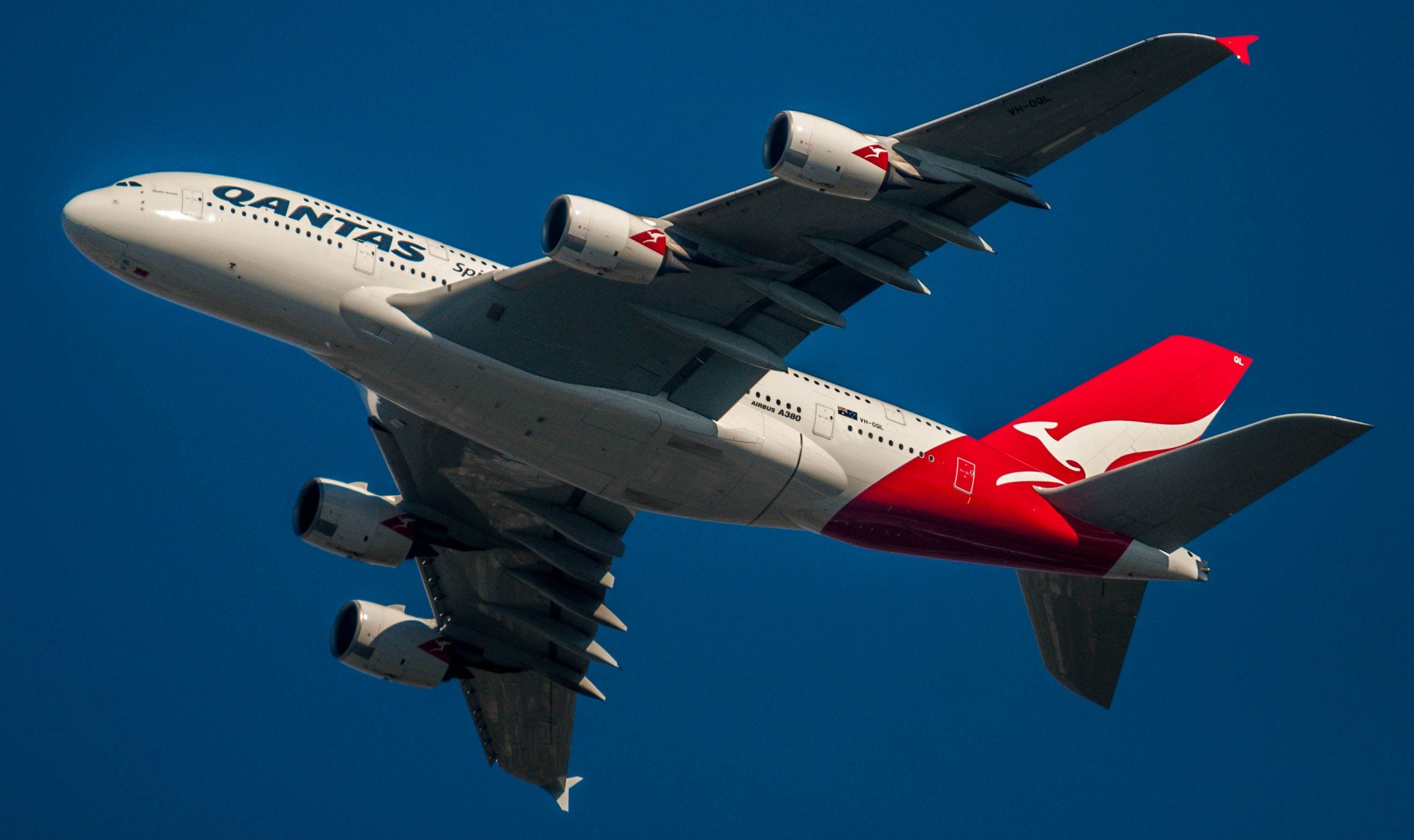
Airbus A380-800: The Indian Summer
The 10 A380s were meant to be in their final decade of service, but persistent strength on the Sydney-Los Angeles, Sydney-Dallas and Sydney-Singapore-London markets has given them an Indian summer. The final A380 returned from storage in January 2026 and was deployed on Sydney-Dallas Fort Worth daily from January 2026.
A refurbished cabin with 14 First, 70 Business, 60 Premium Economy and 341 Economy seats gives the aircraft a competitive premium configuration, and the 485-seat size lets the airline monetise slot-constrained routes where adding frequencies is not practical.
The superjumbo will retire gradually from 2030 as the A350-1000 fleet scales up. The current schedule is not aggressive: Qantas is treating the A380 as a high-margin asset that earns its keep on thick premium markets.
Project Sunrise: The A350-1000ULR
The most-watched aircraft order at Qantas is for 12 Airbus A350-1000s plus 12 A350-1000ULR variants.
The ULR is the world’s first aircraft certified for 20+ hour commercial flights, designed to operate non-stop between Sydney, London Heathrow and New York JFK.
Aircraft Configuration and Delivery Timeline
The A350-1000ULR will fly with just 238 seats across four classes: 6 First, 52 Business, 40 Premium Economy and 140 Economy.
More than 40% of the cabin is premium, compared with around 25% on competitor long-haul aircraft.
A350-1000ULR Project Sunrise Specs
----------------------------------
Configuration: 6F / 52J / 40W / 140Y = 238
Range: ~20,000 km (20+ hour missions)
Engines: Rolls-Royce Trent XWB-97
First delivery: Late calendar 2026
First revenue flight: 2027 (Sydney-London)
Fleet size: 12 ULR + 12 standard A350-1000
The first ULR rolled out of Airbus’s Toulouse final assembly line in late 2025 and entered flight testing in early 2026. First delivery is set for late 2026, with revenue services beginning on the Sydney-London route in 2027, followed by Sydney-New York JFK.
Each of the 12 ULRs will be named after a star, a nod to the Qantas Catalina flying-boat “Double Sunrise” operations between Perth and Sri Lanka during World War II, when crews saw two sunrises on a single flight.
Strategic Logic
Project Sunrise is a margin play. Qantas research indicates passengers are willing to pay a fare premium of up to 20%to avoid a stopover on the Kangaroo Route. With 40% premium cabins, the ULR variant will generate a disproportionately large share of its revenue from First, Business and Premium Economy seats.
The second advantage is brand exclusivity. No other carrier will be able to fly the same mission in 2027. Singapore Airlines’ A350-900ULR reaches New York from Singapore, but Sydney-London non-stop is a unique product that Qantas can price against the entire Kangaroo Route complex.
Emissions performance also matters. The Trent XWB-97 engines are approximately 25% more fuel efficient than the previous generation of long-haul powerplants, and the group has committed to carbon-neutral operations for Project Sunrise services from day one through SAF and offsets.
Fleet Renewal Economics and Delivery Cadence
Across Qantas, QantasLink and Jetstar the Group is taking delivery of roughly one new aircraft every three to four weeks. Six new aircraft arrived in 1H26 and 30 more are expected over the subsequent 18 months.
Capital expenditure peaks around FY26 at approximately A$1.2 billion annually on Project Sunrise alone, with the narrow-body programme layered on top. The full project book will keep annual capex elevated into FY29 before a normalised level returns.
The economics are designed to deliver a mid-teens internal rate of return on the aircraft. A 15-17% reduction in fuel burn per seat across the narrow-body fleet and a 25% reduction on the new wide-bodies translate into annual savings of hundreds of millions of dollars once fully cascaded.
Indicative Fleet Renewal Savings
--------------------------------
A321XLR vs 737-800: 17% lower fuel per seat
A220-300 vs 717:    28% lower fuel per seat
A350-1000 vs 747:   25% lower fuel per seat
Noise footprint:    up to 50% lower
CO2 per ASK:        ~15% lower on fossil fuels
The numbers above come from the original Project Winton and Project Sunrise engineering case and are being validated with in-service data on the A220s and A321XLRs delivered to date.