


Dear Readers, Welcome to AviationOutlook.
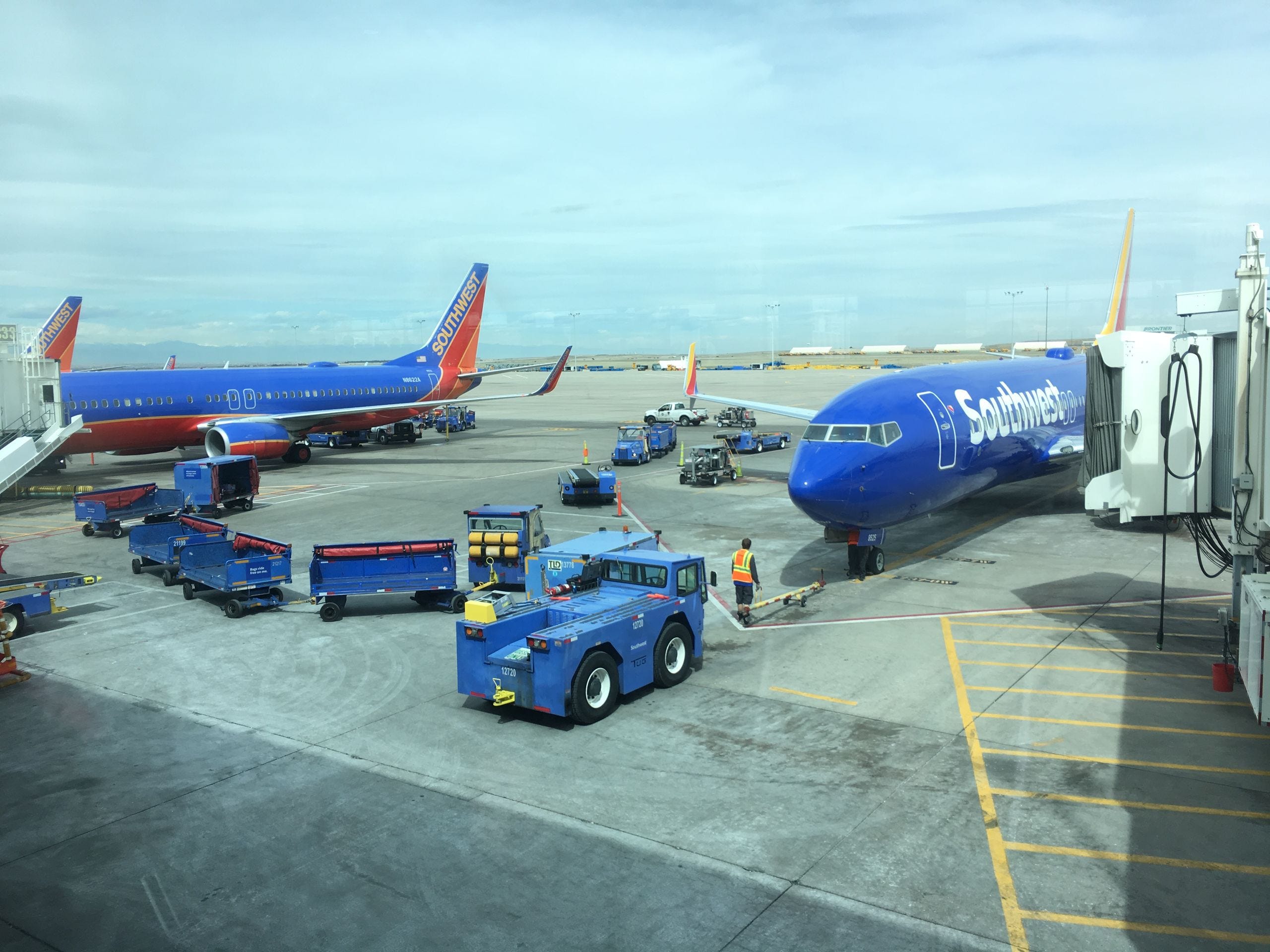
Southwest Airlines has laid out its most aggressive Spring schedule in years, unveiling 19 new nonstop pairings that lean heavily on four focus cities and a widening leisure-heavy Caribbean footprint.

The Spring 2027 network plan was disclosed on July 16, 2026, with tickets already loaded for sale.
This schedule reads less like a routine seasonal refresh and more like a repositioning of Southwest’s route portfolio around post-Spirit demand pockets, higher-yield business corridors, and expanded warm-weather leisure flow.
Let’s analyze everything in detail.
Recommended Reports


Read All Reports
A Focus-City Strategy That’s Now Visible in the Timetable
For years, most people questioned whether Southwest’s point-to-point DNA could coexist with a formal focus-city structure. The Spring 2027 schedule answers that question directly, with Austin, Orlando, Nashville, and Las Vegas each absorbing multiple new pairings.
Austin (AUS) alone will hit up to 141 daily flights multiple days of the week, cementing Southwest’s role as the dominant carrier at the Texas capital.
New Austin nonstops include Detroit (four times weekly) and a Saturday-only run to San Jose, Costa Rica, with frequency lifts to Steamboat Springs and Montrose.
Austin (AUS) new nonstop routes — March 2027
• AUS – DTW (Detroit)              4x weekly
• AUS – SJO (San Jose, Costa Rica) Saturdays only
• AUS – HDN (Steamboat Springs)    increased frequency
• AUS – MTJ (Montrose, CO)         increased frequency
Orlando (MCO) becomes the second pillar, with the carrier planning 214 daily departures on Saturdays, a thrice-daily nonstop to New York LaGuardia, and a new intra-Florida run to Pensacola.
The move meaningfully deepens Southwest’s grip on the domestic leisure gateway most fought over by U.S. low-cost peers.
Nashville Emerges as the Real Strategic Winner
While Austin drew the headline daily count, Nashville (BNA) is arguably the more interesting story for network stakeholders. The carrier is adding four brand-new Caribbean and Latin American nonstops alongside two new domestic connections.
The new Saturday-only international slate covers Aruba, Liberia in Costa Rica, Montego Bay, and St. Thomas. Domestic additions include Des Moines and Wichita, both operating daily.
Nashville (BNA) Spring 2027 additions
International (Saturdays):
  BNA – AUA  (Aruba)
  BNA – LIR  (Liberia, Costa Rica)
  BNA – MBJ  (Montego Bay, Jamaica)
  BNA – STT  (St. Thomas)
Domestic:
  BNA – DSM  (Des Moines, IA)   daily
  BNA – ICT  (Wichita, KS)      daily
Nashville sits in a rare demographic sweet spot for a low-cost carrier: strong inbound tourism, an expanding corporate base, and no legacy hub gravity from another mainline.
For an airline building assigned-seating premium products in 2026, BNA offers the volume without the slot friction of the Northeast.
The Spirit Airlines Vacuum Is Being Filled in Real Time
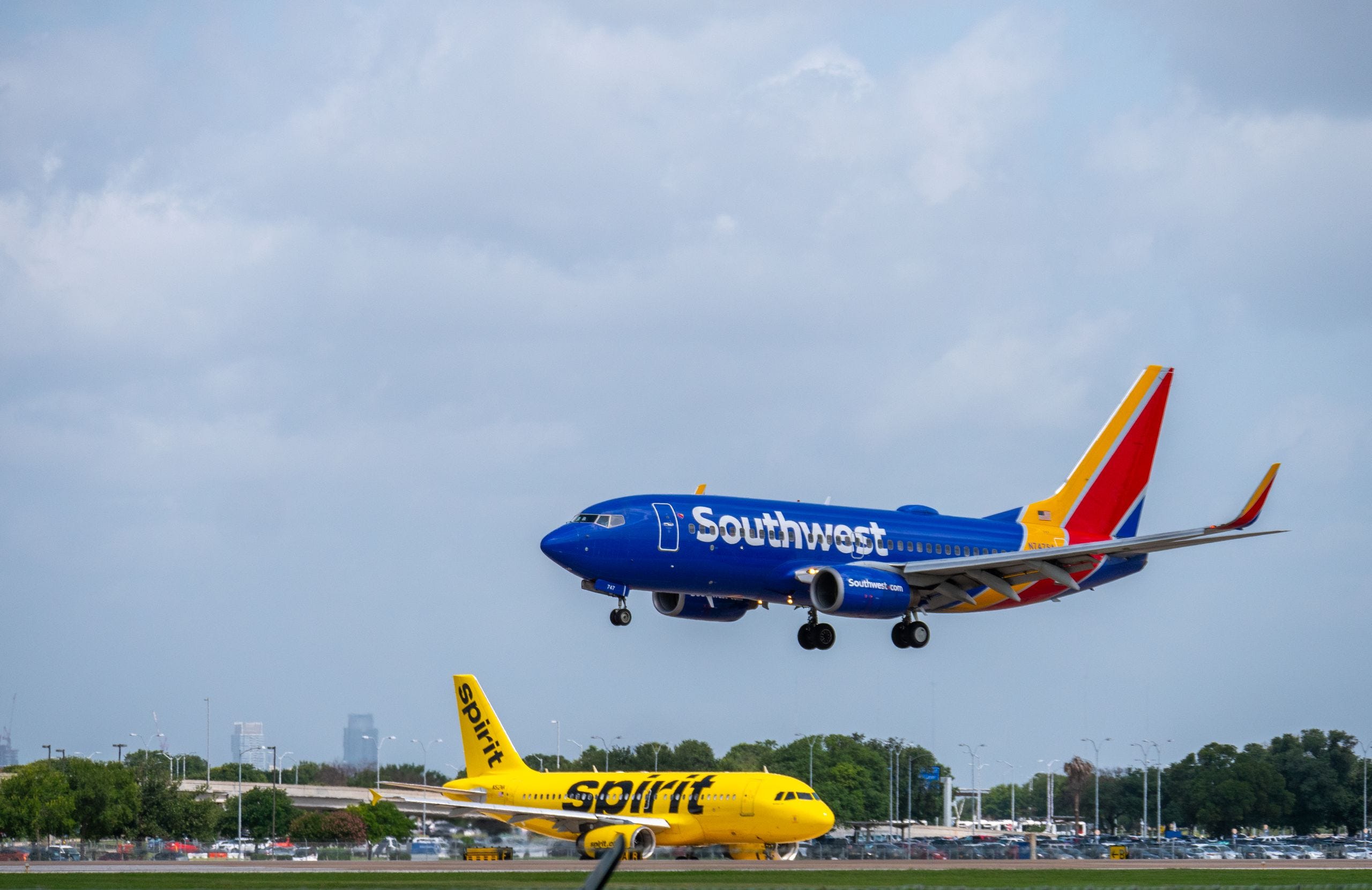
The timing of the Spring 2027 announcement cannot be separated from the Spirit Airlines shutdown on May 2, 2026, which stranded travelers across Detroit, Las Vegas, and secondary leisure markets that had leaned on ultra-low-cost supply.
Several new Southwest pairings align neatly with the vacated Spirit map.
Detroit picks up two new Southwest connections (from Austin and Dallas Love Field), while Las Vegas gains service to Boston, Miami, Philadelphia, and Knoxville, all long-standing Spirit strengths from LAS.
There’s also potential opening at New York LaGuardia, where Southwest may pursue additional slots freed by Spirit’s exit. The third daily Orlando–LGA rotation would fit that theory precisely.
Post-Spirit route absorption signals (Spring 2027)
LAS – BOS   |  LAS – MIA   |  LAS – PHL   |  LAS – TYS
AUS – DTW   |  DAL – DTW
MCO – LGA   (frequency bump to 3x daily)
The Caribbean and Hawaii Play a Bigger Revenue Role
Beyond the four focus cities, the Spring schedule leans into two long-haul leisure themes: expanded Caribbean lift and thicker Hawaii service from California.
Columbus, Ohio, picks up a Saturday-only run to Punta Cana, an unusual addition for an inland market and a clear signal that Southwest is willing to test single-frequency international service where demand modeling justifies it.
Nashville’s four new Caribbean nonstops fit the same thesis.
On the Pacific side, San Diego is getting weekend service to Kona and Lihue, while Honolulu adds five-times-weekly frequency to both Burbank and Ontario.
A reverse red-eye from Las Vegas to Honolulu departing at 2:45 a.m. rounds out the Hawaii plan.
Hawaii & West Coast lift (Spring 2027)
SAN – KOA   weekends only
SAN – LIH   weekends only
HNL – BUR   5x weekly
HNL – ONT   5x weekly
LAS – HNL   new reverse red-eye, 02:45 dep.
BWI–PHL, A Curious Short-Haul Move
The twice-daily Baltimore–Philadelphia nonstop is the most surprising line item in the schedule. On paper, the 88-mile drive between the two cities looks uncompetitive with rail or highway options.
The likely rationale is connectivity: BWI functions as one of Southwest’s largest bases, and a Philadelphia link injects feed from the Delaware Valley into its beach and Caribbean network.
It’s a low-cost hedge that costs the airline very little to test.
Operational Context and the Assigned-Seating Backdrop
The Spring 2027 rollout arrives in the middle of Southwest’s most disruptive product transition in five decades. Assigned seating launched for flights on and after January 27, 2026, and the airline is now blending that product change with an aggressive schedule buildup.
Company financial guidance for 2026 has projected adjusted EPS of at least $4.00, a step-change from 2025 performance. The Spring 2027 additions are the network-side expression of the same transformation program.
Operational context, mid-2026
• Fleet: 800+ Boeing 737 aircraft
• Average daily flights: ~4,000 (baseline)
     Mon/Thu/Fri: ~4,400 daily
     Sun:         ~4,300 daily
     Tue/Wed/Sat: ~4,000 daily
• Product: assigned seating in force since Jan 27, 2026