


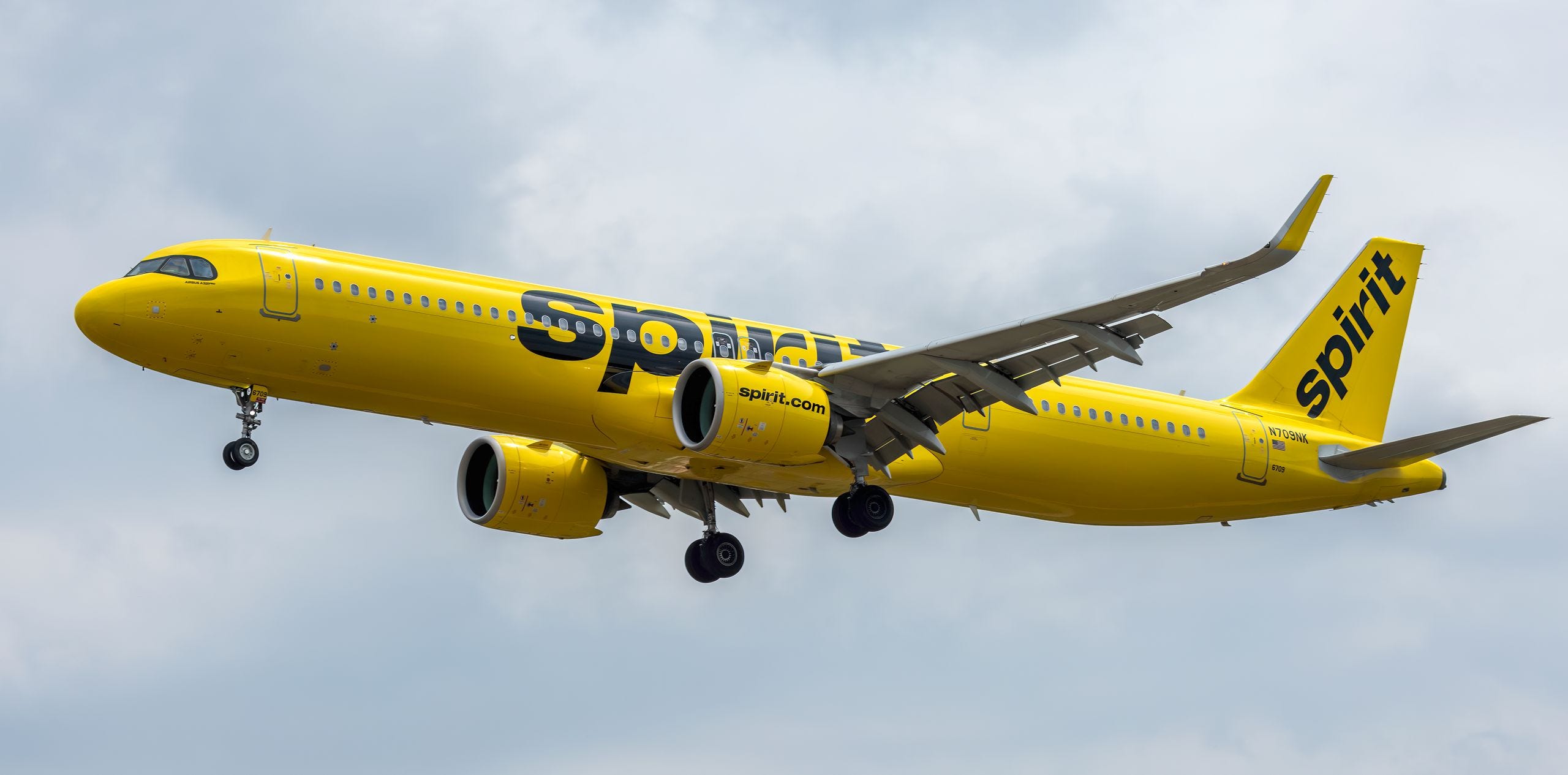
When Spirit Airlines entered its first Chapter 11 bankruptcy in November 2024, it was operating a fleet of 214 aircraft. As of March 15, 2026, the airline’s own restructuring plan targets just 76 to 80 planes by the third quarter of this year.
That is a reduction of roughly two-thirds of its pre-bankruptcy fleet size, compressed into less than two years. No other major U.S. carrier has undergone a fleet contraction of this scale during an active restructuring.
Spirit Airlines Fleet Timeline:
-------------------------------
Peak (pre-bankruptcy Nov. 2024): 214 aircraft
After 1st restructuring (March 2025): ~100+ aircraft
Planned target (Q3 2026): 76–80 aircraft
Expected fleet type: Airbus A320/321ceo
Two Bankruptcies in Less Than a Year
Most airline restructurings happen once. Spirit filed for Chapter 11 for the second time in August 2025, just five months after exiting its first bankruptcy in March 2025.
The core problem was never purely about debt. The airline’s operating costs continued to outpace its revenue even after the first round of restructuring. As Reuters reported at the time, Spirit “failed to fix cost structure” as operating expenses exceeded revenue.
The second filing came after the airline issued a going-concern notice in August 2025, warning that it was uncertain about its ability to continue as a functioning business within 12 months.
The New Restructuring Plan Filed on March 13, 2026
On March 13, 2026, Spirit Aviation Holdings filed a Restructuring Support Agreement (RSA) and Plan of Reorganization with the U.S. Bankruptcy Court for the Southern District of New York. The RSA has the backing of the company’s DIP lenders and secured noteholders.
Spirit’s CEO Dave Davis stated:
“We are pleased to achieve another milestone that reflects the confidence our lenders and noteholders have in our future, with our plan better positioning Spirit to continue delivering value to American consumers.”
The plan targets emergence from Chapter 11 by early summer 2026, subject to court approval.
What the Restructuring Plan Actually Includes?
The four pillars of Spirit’s reorganization plan are clearly outlined in its official press release:
Key Elements of Spirit's Reorganization Plan (March 2026):
------------------------------------------------------------
1. Fleet Reduction:
   - Cut fleet to 76–80 Airbus A320/321ceo aircraft by Q3 2026
   - Aircraft auction process underway (April 2026, ~20 jets, $533M baseline bid)
   - Growth planned between 2027 and 2030

2. Debt Reduction:
   - Pre-filing obligations: $7.4 billion
   - Post-emergence target: ~$2 billion
   - Net reduction: ~$5.4 billion

3. Network Optimization:
   - Core hubs: Fort Lauderdale (FLL), Orlando (MCO),
     Detroit (DTW), New York area (EWR/LGA)
   - Higher aircraft utilization on peak days
   - Reduced off-peak flying

4. Product Enhancement:
   - Adding a third row of Big Front Seat
   - Expanding Premium Economy rollout
   - Maintaining value positioning
The Debt Situation in Detail
The scale of Spirit’s financial challenge becomes clear when you examine the debt figures. Going into the second Chapter 11 filing, Spirit carried a staggering $7.4 billion in combined debt and lease obligations.
The restructuring plan, if fully approved, would bring that figure down to approximately $2 billion. That is a reduction of more than $5 billion through a combination of lease rejections, debt conversions, and aircraft sales.
A U.S. bankruptcy judge approved a baseline bid of $533 million for an auction of roughly 20 additional aircraft, with the auction process scheduled for April 2026. The proceeds from aircraft disposals will contribute directly to reducing the company’s lease burden.
Why the ULCC Model Is Breaking Down in the U.S.
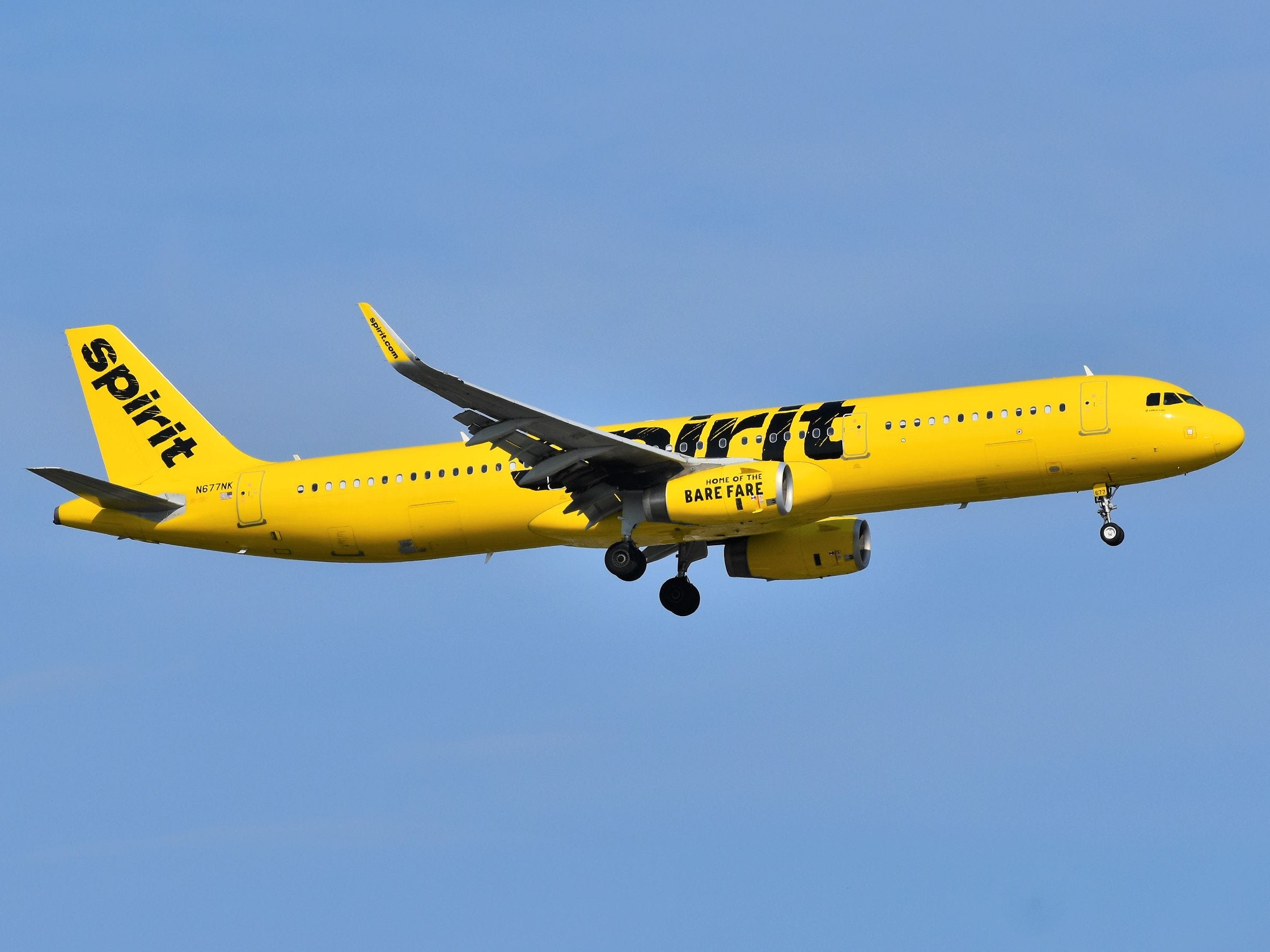
Spirit’s troubles are not entirely self-inflicted. The broader ultra-low-cost carrier (ULCC) segment in the United States has faced structural headwinds that no amount of management changes can immediately resolve.
As Skift reported in February 2026, U.S. low-cost carriers posted negative operating margins in three of the four quarters through Q2 2025. Their international counterparts in Europe, Asia, the Middle East, and Latin America delivered consistently positive, often double-digit margins over the same period.
Two structural forces are driving the underperformance. First, the U.S. domestic market has become oversupplied, particularly for leisure routes that ULCCs depend on. Second, post-pandemic cost inflation has eroded the price advantage that was the defining value proposition of carriers like Spirit.
U.S. ULCC Sector Pressure Points (2025–2026):
-----------------------------------------------
- Domestic leisure market: Oversupplied
- Post-pandemic cost inflation: Persistent
- Operating margins: Negative for most of 2025
- Legacy carrier competition: Intensified
- Fuel price volatility: Elevated (Iran conflict impact)
Carriers like Allegiant and Breeze have found a path forward by concentrating on exclusive routes with limited competition, rather than chasing scale. Spirit’s new network strategy, which focuses on fewer, stronger markets, appears to be drawing from the same approach, though Spirit operates at a far larger scale with far more exposure.
The Critical Question Remaining: Can It Actually Work?
Even if Spirit exits bankruptcy by early summer 2026, the operational challenges will not disappear overnight. The airline’s yields have remained deeply negative, and the transition to a smaller fleet means losing revenue scale while fixed costs do not shrink proportionately.
There is also the question of the aircraft themselves. The remaining fleet of 76 to 80 planes will primarily consist of older Airbus A320/321ceo aircraft. These come with lower leasing costs, but their fuel burn rates are meaningfully higher than current-generation narrowbodies. With fuel prices under pressure given ongoing geopolitical instability, this is a real operational risk.
The pivot toward premium seating products like the Big Front Seat expansion is a notable strategic shift for a carrier that built its entire identity on bare-bones, no-frills flying. Whether Spirit’s existing customer base responds positively, or whether premium-seeking travelers choose the carrier over established options, remains to be seen.
Spirit also faces a brand perception problem that restructuring documents cannot fix. The airline has a well-documented reputation for customer service issues. Any meaningful recovery will likely require sustained investment in the passenger experience, beyond adding a third row of large seats.
The Timeline to Watch
For aviation industry stakeholders tracking this closely, the next several months are decisive.
Spirit Airlines Key Milestones Ahead:
---------------------------------------
- March 13, 2026: RSA and Plan of Reorganization filed
- April 2026:     Aircraft auction for ~20 additional jets
- Early Summer 2026: Targeted Chapter 11 emergence date
- 2027–2030:      Aircraft additions planned (if profitable growth resumes)
The court must still approve the reorganization plan. The April aircraft auction process will also be closely watched, as the proceeds contribute directly to the company’s debt reduction targets.
If Spirit does emerge by early summer, it will do so as a fundamentally smaller airline, one that no longer competes on breadth of network, but on depth of focus in select high-demand markets.
A Long Road to Proving the Model
Spirit’s restructuring plan is, at its core, a bet that a leaner, more focused ULCC can generate the margins that the former 200-plus plane operation could not. The official plan of reorganization represents real backing from creditors and lenders who are making that same bet.
However, the path from bankruptcy court to profitable operations is long, and Spirit has been down a similar road before.
For aviation industry executives and analysts, the question worth monitoring is whether Spirit’s planned network concentration and product evolution can generate positive operating margins before its restructured balance sheet comes under pressure again.
The next 12 months will provide the clearest answer yet.