


Executive Summary
Thales Group closed 2025 with consolidated sales of €22.136 billion, up 8.8% on an organic basis, driven by simultaneous expansion in defense and avionics activities, with a record Defense order intake of €15.128 billion and a year-end order book of €53.3 billion that covers roughly 2.4 years of Group sales.
Adjusted EBIT reached €2.740 billion at a 12.4% margin, while free operating cash flow climbed 27% year-on-year to €2.577 billion and net debt narrowed to €1.618 billion, giving the Group exceptional balance sheet flexibility for further M&A and capacity expansion.
The Q1 2026 print confirmed momentum, with order intake of €4.65 billion (+27% organic) and Defense bookings up 75% organically, supporting the Group’s reaffirmed 2026 guidance of 6% to 7% organic sales growth and a 12.6% to 12.8% adjusted EBIT margin.
Strategic positioning has firmed up across three axes: a deeper relationship with Dassault Aviation on the Rafale and Rafale F5, a planned tri-party European space combination with Airbus and Leonardo signed in October 2025, and the cortAIx AI accelerator now being scaled across France, Germany, and partner ecosystems.
Recommended - Read Full Reports


Read All Reports
Table of Contents
Executive Summary
Key Facts: Thales Group
Why Thales Matters Now
Thales Group Company Overview
A Brief History and Corporate Identity
Three Operating Segments
Geographic Footprint and Workforce
Corporate Strategy and Capital Allocation Philosophy
Key Product Lines, Programs, and Services
Civil Avionics and Connected Cockpits
Cobham AeroComms Integration
Combat Aircraft Avionics: The Rafale Spine
Air Defense Radars and Surface Sensors
SAMP/T NG and the European Air Defence Stack
Naval Sensors and Submarine Sonar
Space: Satellites, Constellations, and Earth Observation
Training, Simulation, and Services
Financial Analysis: Thales Group
Full-Year 2025 Results in Detail
Segment Profitability and Mix
Order Intake, Order Book, and Backlog Quality
Cash Flow, Balance Sheet, and Capital Returns
Q1 2026 Trading Update
Revenue and Growth Drivers
Driver 1: European Rearmament and ReArm Europe
Driver 2: Civil Avionics Recovery and Connected Cockpits
Driver 3: AI and Combat Cloud Across Defense
Driver 4: Space Consolidation Tailwind
Driver 5: Targeted M&A Beyond Cobham
Major Competitors
Thales vs. Leonardo
Thales vs. BAE Systems
Thales vs. Northrop Grumman
Thales vs. Honeywell Aerospace and Collins Aerospace
Thales vs. Saab and Hensoldt
Thales vs. Airbus Defence & Space
Thales Competitive Analysis and Moat
Sensor Stack Vertical Integration
Multi-Domain Cross-Pollination
National Champion Status with European Reach
High Switching Costs and Sticky Backlogs
Other Key Themes for 2026 and Beyond
The Rafale F5 Standard and Combat-AI Architecture
Future Combat Air System (FCAS/SCAF) Status
European Space Combination with Airbus and Leonardo
Trusted AI: cortAIx and Sovereign Runtimes
India and Make-in-India Localisation
Avionics Connectivity and the Cobham Synergy Story
Naval Combat Systems Across Europe
Cybersecurity, Identity, and Data Protection
Financial and Commercial Implications
Revenue and Margin Trajectory Through 2026 and 2027
Cash Flow and Capital Returns
Working Capital and Programme Execution
M&A Optionality and Portfolio Reshaping
Implications for Customers and Partners
Key Risks With Probabilities and Scenarios
Risk 1: FCAS/SCAF Programme Delay or Restructuring
Risk 2: Space Combination Regulatory Pushback
Risk 3: Cyber & Digital Segment Recovery Disappointment
Risk 4: Supply Chain and Critical Materials
Risk 5: Geopolitical Reorientation and Export Restrictions
Risk 6: Civil Aerospace Cycle Turn
Risk 7: Programme Execution and Margin Slippage
SWOT Analysis: Thales Group
My Final Thoughts
Official Sources and Data
Key Facts: Thales Group
COMPANY PROFILE: THALES S.A.
Headquarters       : Courbevoie, La Défense, France
Listing            : Euronext Paris, ticker HO
Chairman & CEO     : Patrice Caine (since December 2014)
Employees          : Approximately 83,000 worldwide
Operating presence : Over 50 countries
2025 Group sales   : €22,136 million (+8.8% organic)
2025 Adj. EBIT     : €2,740 million (12.4% margin)
2025 Free OCF      : €2,577 million (record level)
2025 Net debt      : €1,618 million
2025 Order intake  : €25,264 million
2025 Order book    : €53,323 million
2025 Mix           : 56% military / 44% civil
Three operating
segments           : Defence & Security, Aerospace,
                     Cyber & Digital
2026 Guidance      : Sales €23.3–23.6 bn,
                     Adj. EBIT margin 12.6–12.8%
Why Thales Matters Now
European rearmament has moved from speeches to signed contracts, and Thales is the prime industrial beneficiary on the sensor, radar, electronic warfare, and connected cockpit side of the equation.
With Defense bookings up 75% organically in the first quarter of 2026 alone, the company is no longer a slow-moving European systems house but a high-cadence supplier whose backlog represents nearly 2.4 years of revenue.
For aerospace & defense stakeholders, the second story is equally significant.
Thales has stitched together the Cobham AeroComms acquisition and a deepening Dassault relationship into a connected-cockpit and combat-AI platform that reaches from regional jets to the Rafale F5, while a tri-party European space combination with Airbus and Leonardo will rewire how satellites are built on the continent.
Cash flow, leverage, and order book quality all moved in the right direction during 2025, and the Group reaffirmed its 2026 targets in April.
That combination of operational momentum and confirmed financial discipline is what makes the next 18-24 months unusually consequential for Thales stakeholders.
Thales Group Company Overview
A Brief History and Corporate Identity
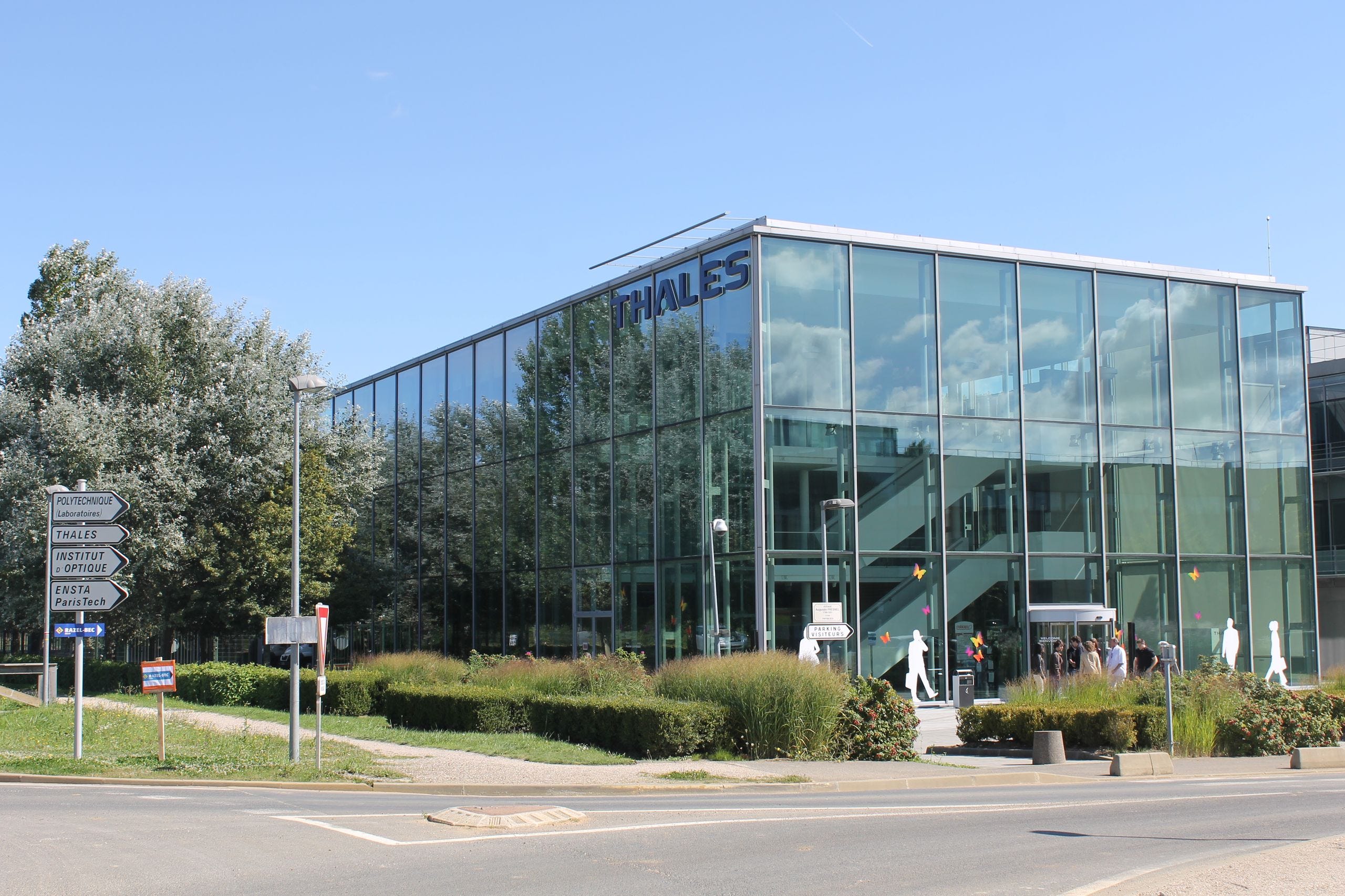
Thales S.A. is a French multinational company whose modern form emerged in 2000, when the former Thomson-CSF rebranded after a string of consolidation moves across French and European electronics.
The Group operates as a state-influenced industrial champion, with the French government and Dassault Aviation jointly anchoring its long-term shareholder structure.
The company is led by Chairman and CEO Patrice Caine, a graduate of the École Polytechnique and the École des Mines de Paris, who has run the Group since December 23, 2014.
His Executive Committee includes Yannick Assouad in the Avionics seat and Pascal Bouchiat as Senior Executive Vice-President for Finance, with the broader governance team listed publicly on the corporate site.
Thales describes itself as a global high-technology player in defense, aerospace, cyber, and digital identity.
The civil-military split has hovered around the 56% military and 44% civil ratio reported in the 2025 disclosure, which gives the Group a more diversified risk profile than pure-play defense primes.
Three Operating Segments
The Group reports three operating segments: Defence & Security, Aerospace, and Cyber & Digital.
Defence & Security is the largest segment by revenue and the fastest-growing, while Aerospace covers civil avionics, in-flight entertainment, training & simulation, and the share of Thales Alenia Space activity that is consolidated.
Cyber & Digital, the smallest segment, includes data protection, identity, and biometrics. It posted negative organic growth of 4.3% in 2025 on weak demand in cyber appliances, dragging on the otherwise strong group narrative.
2025 SEGMENT MIX (€ MILLION SALES, FY 2025)
Defence & Security : 12,234   (+11.5% organic)
Aerospace          :  5,910   (+8.0%  organic)
Cyber & Digital    :  3,852   (-4.3%  organic)
Group sales : 22,136 (+8.8% organic)Geographic Footprint and Workforce
Thales operates in more than 50 countries with roughly 83,000 employees, of whom a meaningful share are engineers and software specialists.
The company’s industrial base spans France, the United Kingdom, the Netherlands, Germany, Italy, Australia, the United States, India, and several other geographies, including a high-profile site in Hengelo dedicated to naval radar and combat systems.
The Group has accelerated Indian industrial localization through Make-in-India arrangements such as the SFO Technologies wired structures contract for RBE2 AESA radars, alongside long-standing joint ventures with Reliance Aerostructure for fuselage components and with the Indian Navy’s training ecosystem.
The U.S. footprint runs through Thales Defense & Security Inc., the Gemalto Cyber & Digital business, and the AMDC2 joint venture with RTX (formerly Raytheon Technologies) in Fullerton, California.
The latter is being consolidated under Thales after the Group agreed to buy out the RTX stake in late 2025.
Corporate Strategy and Capital Allocation Philosophy
The Group’s stated strategy rests on three pillars.
The first is doubling down on defense electronics, where the macro tailwind from European rearmament is structural.
The second is enriching the Aerospace franchise through targeted bolt-ons such as Cobham AeroComms and Imperva, which complement organic R&D in connected cockpits and trusted AI.
The third pillar is the planned consolidation of European space activities into a single tri-party entity, which the Group sees as the only credible response to the American satellite primes and SpaceX on the GEO and LEO commercial side.
Capital allocation has shifted from deleveraging in 2023-2024 to selective M&A and shareholder returns from 2025 onward.
The Group ended 2025 with €1.618 billion of net debt versus €3.044 billion a year earlier, freeing up balance sheet room for the Cobham integration and any further consolidation moves.
Key Product Lines, Programs, and Services
Civil Avionics and Connected Cockpits
Thales is one of the only avionics suppliers in the world that competes credibly across narrow-body, wide-body, regional, business, and rotary segments.
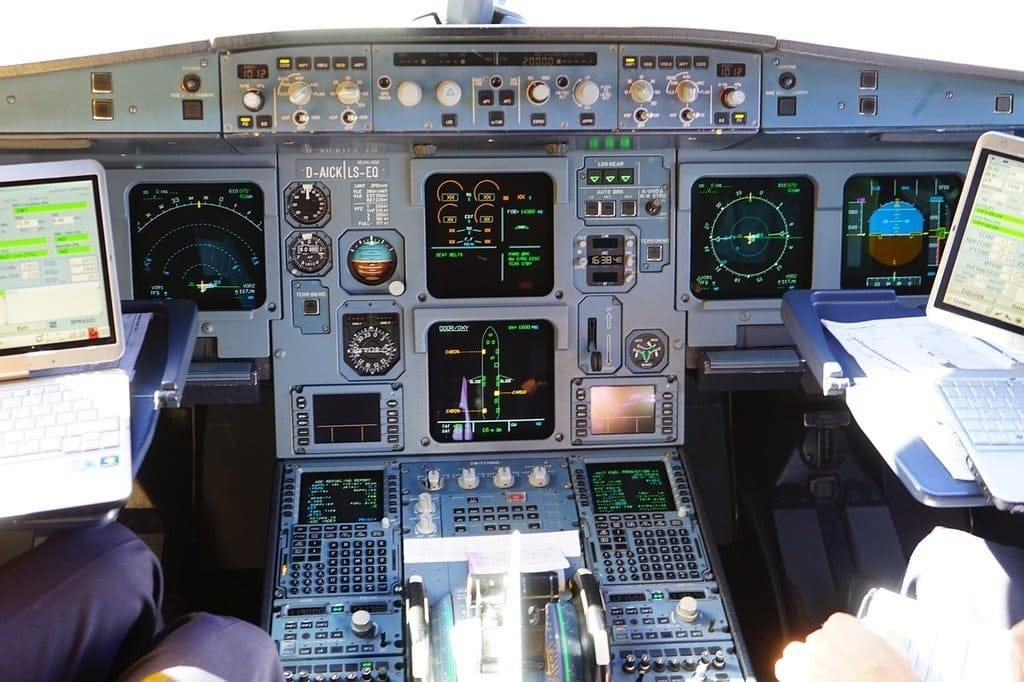
The flagship next-generation product is the FlytX avionics suite, built around tactile large-format displays and integrated modular avionics that achieve 30% to 40% reductions in size, weight, and power compared with legacy cockpits.
FlytX is now flying on the H160 family rotorcraft and was showcased for the first time in India at Aero India 2025. The suite is a key building block for connected and autonomy-ready cockpits across both civil rotorcraft and future military platforms, with line-fit and retrofit configurations on offer.
Other major civil avionics franchises include the TopFlight satellite communications terminals on widebody aircraft, the PureFlyt flight management system used on Airbus A320 family aircraft, and the AVANT IFE suite.
Thales also provides the air data systems and inertial reference units that sit at the safety core of every aircraft platform it equips.
Cobham AeroComms Integration
Thales completed the USD 1.1 billion acquisition of Cobham Aerospace Communications on April 2, 2024, adding around 700 employees and a leading position in safety cockpit communications and connectivity.
The integration was running on plan through 2025 and is now contributing meaningfully to Aerospace segment revenue and margin.
The strategic logic is to become the de facto cockpit-to-cloud connectivity vendor for civil aircraft, combining FlytX cockpits, Cobham radios and SATCOM, and Thales’s own cybersecurity stack.
With airline IT and air-traffic management both moving to higher bandwidth and more secure data links, the combined offer is designed to capture a higher share of avionics value per aircraft.
KEY AEROSPACE PRODUCTS (CIVIL)
Flight management : PureFlyt FMS for A320, A350,
                    next-gen narrowbody platforms
Cockpit avionics  : FlytX tactile large-display flight
                    deck for fixed-wing & rotorcraft
Connectivity      : Cobham AeroComms HF/VHF/SATCOM,
                    next-gen IP datalinks
Cabin             : AVANT in-flight entertainment,
                    InFlyt experience services
Air data / IRS    : Inertial reference units, air data
                    modules across narrow & widebody
Training & sim    : Reality H, Reality 7,
                    pilot ATO programmes
Combat Aircraft Avionics: The Rafale Spine
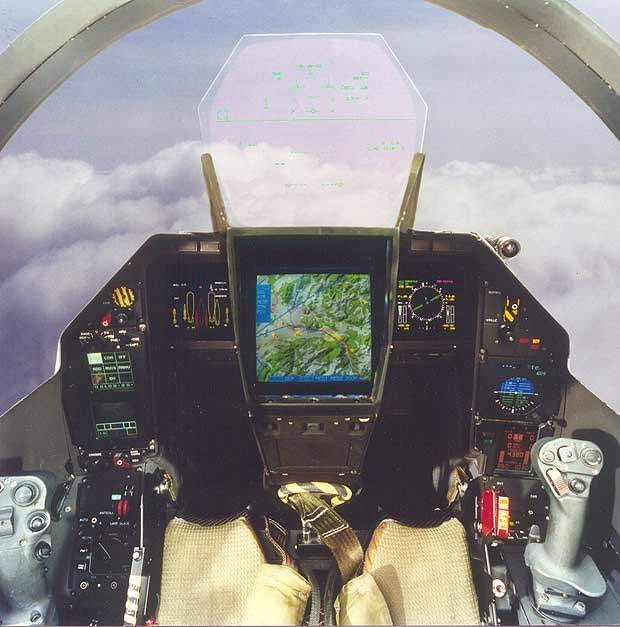
Thales is the single largest mission-systems supplier on the Dassault Rafale, contributing the RBE2 AESA radar, the SPECTRA electronic warfare suite, the Front Sector Optronic system, and the Damocles/Talios laser designation pods.
Group export turnover with Dassault Aviation reached €1.014 billion in 2025, an indicator of how tightly the two companies are now coupled.
The Rafale program closed 2025 with a backlog of 220 aircraft, including 45 for France and 175 for export customers spanning India, the United Arab Emirates, Indonesia, Egypt, Greece, Croatia, and Serbia.
Each delivered jet pulls through a high-margin Thales mission-systems package, plus through-life support contracts across radars, avionics, and EW systems.
The Rafale F5 standard, due from 2030, will deepen Thales’s content with new electronic warfare capabilities, advanced sensor fusion, and an architecture designed to control the upcoming combat drone collaboratively.
Dassault and Thales formalised that direction with a strategic AI partnership signed in November 2025 between Patrice Caine and Eric Trappier.
Air Defense Radars and Surface Sensors
Thales builds an end-to-end family of ground-based air surveillance and air defense radars, anchored by the Ground Master 200 (GM200) medium-range and the Ground Master 400α (GM400α) long-range systems.
The GM400α offers a detection range of up to 515 kilometres, around five times the data-processing power of the legacy GM400, and improved performance against low-flying drones and stealth targets.
In 2025 alone, Thales picked up an Albanian contract for the GM400α with deliveries scheduled to begin within a 14-month window, an additional Malaysian buy of two GM400α units to reinforce that country’s air sovereignty perimeter, and a multiplication of GM200 MM/Compact orders in support of European air defense modernisation. The Group has also been ramping production output to compress lead times on Ground Master variants.
The radar franchise extends beyond ground systems to naval radars (Sea Master, NS series, Sea Watcher), shipborne fire-control radars, and airborne primary surveillance radars.
Combined, they make Thales one of only a handful of suppliers worldwide capable of fielding a full-spectrum sensor portfolio outside the U.S. defense base.
SAMP/T NG and the European Air Defence Stack
Thales is the radar and command-and-control prime within the Eurosam consortium that develops the SAMP/T NG ground-based air defense system, working alongside MBDA on the Aster missile family.
A successful first firing in Italy on December 3, 2025 was followed by an additional firing in France that demonstrated the next-generation system’s improvements in target discrimination and range.
SAMP/T NG is positioned as the European answer to long-range air defense in a context where Patriot deliveries from the United States face capacity bottlenecks. Several European countries, including France and Italy, have already committed to bringing SAMP/T NG into service, while wider European air defense initiatives have created demand pull for additional units.
The system pairs naturally with Thales’s GM400α radar architecture to deliver an integrated air-defense bubble. That integration is one of the reasons why Thales captured five separate orders above €100 million each in just the first quarter of 2026, almost all of them in air defense and radar technology.
Naval Sensors and Submarine Sonar
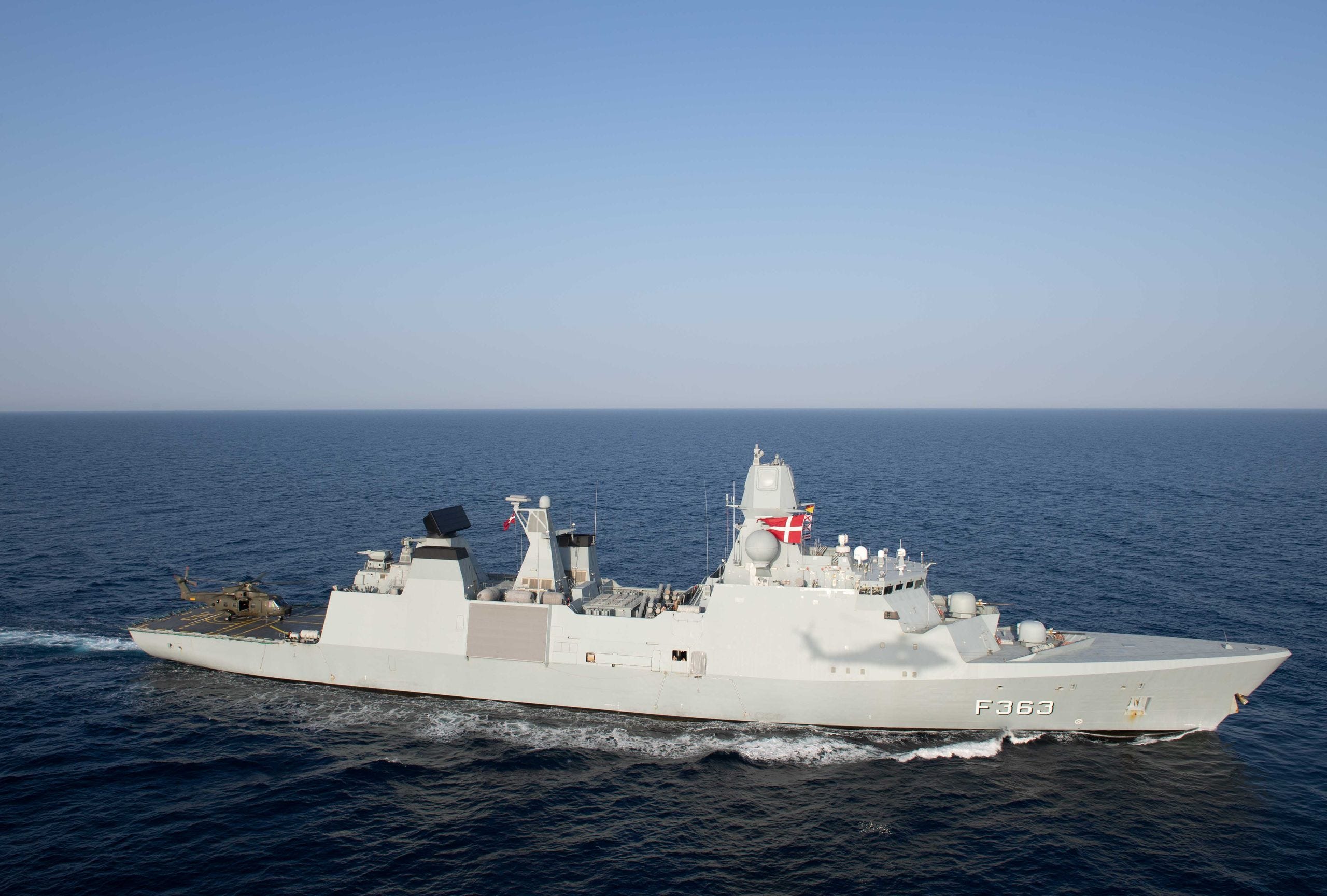
Thales remains the world reference in submarine sonar, with the Sonar 2076 and Sonar 2087 families fitted to Royal Navy submarines and frigates. A 14-year supplier contract awarded to Marshall in April 2025 will see modules manufactured through 2039, signalling how long the through-life cash streams can be.
In March 2025, Thales signed an agreement with Naval Group to deliver four sonar suites for the Dutch Orka-class submarine programme, with a contract value placed at between €100 million and well above.
At DSEI 2025 in London, Thales and BAE Systems then unveiled a new phase of their submarine sonar collaboration, deepening the multi-decade UK partnership.
The naval portfolio also includes the SMART-S Mk2 and Sea Master 400 multi-function radars, the Captas-4 towed array sonar fitted to multiple European frigate classes, and the Polish, Greek, and Saudi naval programmes that continue to drive backlog growth across the Aerospace and Defence segments.
Space: Satellites, Constellations, and Earth Observation

Thales Alenia Space, the joint venture co-owned by Thales and Leonardo, is one of Europe’s two large satellite primes alongside Airbus Defence & Space. The business grew 7.6% in 2025 as orders ramped on Iris2 and follow-on geostationary satellite contracts.
In Q3 2025, Thales Alenia Space signed the Initial Phase Contract with the SpaceRISE consortium for the European Iris2 secure constellation, alongside additional GEO orders that pushed Space segment book-to-bill above 1.0 in the second half of 2025. The unit is on track to deliver more than 7% pretax margin in 2027.
The most consequential strategic step is the planned three-way combination with Airbus and Leonardo, on which more in the dedicated section below.
For now, Thales Alenia Space remains a meaningful contributor to Aerospace segment revenue, is integrated with Thales sensor and ground-segment offerings, and provides the export platform for the Group’s Earth observation and telecom satellite franchise.
Training, Simulation, and Services
The Aerospace segment also includes a sizeable training and simulation business that markets full flight simulators (Reality H, Reality 7), pilot training services through approved training organisations, and sustainment and through-life services for both civil and military fleets.
Helicopter simulators have been a particular bright spot, supported by FlytX cross-fertilisation.
Defence services have expanded with each new platform delivery, especially across Rafale operators and Ground Master radar customers. Through-life support contracts often deliver higher margin and steadier cash than original equipment sales, which matters for the medium-term EBIT margin trajectory.
Financial Analysis: Thales Group
Full-Year 2025 Results in Detail
Group sales for 2025 reached €22,136 million, up 7.6% on a reported basis and 8.8% on an organic basis from the €20,577 million reported in 2024. Adjusted EBIT climbed to €2,740 million, lifting the adjusted EBIT margin from 11.8% to 12.4% and exceeding the upper end of the original guidance range.
Adjusted net income, Group share, came in at €2,005 million. The conversion of operating earnings into cash was particularly strong, with free operating cash flow of €2.577 billion, up 27% year-on-year and a record level for the Group, reflecting both the rising defense order book and tight working capital management.
THALES GROUP P&L SNAPSHOT (€ MILLION)
                          2025      2024     YoY%
Sales                    22,136    20,577    +7.6%
Organic growth                       —       +8.8%
Adjusted EBIT             2,740     2,425   +13.0%
Adjusted EBIT margin      12.4%     11.8%   +60bps
Adj. net income, gp shr   2,005     1,793   +11.8%
Free operating cash flow  2,577     2,030   +27.0%
Net debt (end of period)  1,618     3,044   reduced
Order intake             25,264   ~25,300    flat
Order book 53,323 ~50,000 higherSegment Profitability and Mix
Defense & Security delivered €12,234 million in sales, up 11.5% organically, and remains the highest-margin operating segment with margins benefiting from scale on radar, missile-electronics, and air-defense programmes.
Aerospace contributed €5,910 million in sales, up 8.0% organically, with avionics and Cobham AeroComms doing the heavy lifting and Space accelerating into the back half of the year.
Cyber & Digital was the soft spot at €3,852 million, down 4.3% organically because of weaker demand for hardware data-protection appliances. The Group has guided to a return to growth in 2026 as Imperva and software-as-a-service offerings ramp.
Aerospace and Defence together accounted for around 81% of Group sales in 2025, a share that should grow further in 2026 given Defence’s order intake momentum and Cyber & Digital’s slower trajectory. That mix shift gives Aviation, aerospace, and defense industry stakeholders a cleaner read on the Group’s strategic centre of gravity.
Order Intake, Order Book, and Backlog Quality
Group order intake of €25,264 million in 2025 essentially matched the 2024 record. Defence order intake of €15,128 million was a new segment record with a book-to-bill ratio of 1.24, leaving the segment’s order book at €41.6 billion, equivalent to roughly 3.4 years of sales.
Group order book of €53.323 billion at year-end provides exceptional revenue visibility through 2027 and into 2028. Around two-thirds of that backlog sits inside Defence, with naval, air defence, and avionics programmes typically running over five to fifteen-year windows.
The first quarter of 2026 added a further €4.652 billion of orders, with five separate Defence wins above €100 million each, almost all in air defense and radar. That pace, if sustained, could push Defence book-to-bill comfortably above 1.0 again in 2026 and continue lengthening the order book.
Cash Flow, Balance Sheet, and Capital Returns
Free operating cash flow reached a record €2,577 million in 2025, 27% higher year-on-year. The Group used part of that cash to bring down net debt from €3,044 million to €1,618 million, leaving leverage at well below 1.0x adjusted EBITDA.
The dividend policy reflects that strength, and the Board has been progressively raising the per-share payout in line with adjusted net income growth. Selective M&A has resumed alongside dividends, with the Cobham integration tracking on plan and the planned RTX stake buyout positioning Thales to consolidate the AMDC2 venture.
CASH AND BALANCE SHEET (€ MILLION)
                          2025      2024
Free operating cash flow  2,577     2,030
Net debt                  1,618     3,044
Acquisitions, net         small     1,011 (Cobham)
Dividends paid            rising    rising
Net debt / adj. EBITDA   <1.0x      ~1.2x
Q1 2026 Trading Update
The first quarter of 2026 confirmed the trajectory.
Order intake of €4.652 billion was up 27% organically, and sales of €5.3 billion grew 9.7% organically. Defence order intake jumped 75% on an organic basis to €2.24 billion, while Aerospace sustained mid-single-digit organic growth on avionics demand.
Cyber & Digital declined low single digits in Q1 2026, consistent with the soft 2025 exit. The Group reiterated its full-year 2026 guidance of 6% to 7% organic sales growth and a 12.6% to 12.8% adjusted EBIT margin.
The April 2026 update also confirmed continued growth of the order backlog, suggesting that the Group’s revenue visibility for 2027 will improve further as the year progresses.
Revenue and Growth Drivers
Driver 1: European Rearmament and ReArm Europe
The single largest growth driver is the structural rise in European defense spending, formalised in the European Commission’s white paper on the future of European defence and the ReArm Europe initiative. Patrice Caine has framed this not just as an order surge but as a long-term commitment to European industrial sovereignty in sensors, missiles, and command systems.
The directional impact runs through several Thales lines: ground-based air defence radars, electronic warfare, naval combat systems, and avionics for refresh programmes. The Group’s 2025 Defence book-to-bill ratio of 1.24 and the 75% Q1 2026 jump in defence orders are direct signatures of that pull.
The geography of demand is broad: Germany, France, Italy, Spain, Poland, the Netherlands, the United Kingdom, the Nordics, and Eastern European NATO members are all in active modernisation cycles.
Thales is well-positioned in many of those national supply chains because of its multi-country industrial footprint.
Driver 2: Civil Avionics Recovery and Connected Cockpits
Civil aviation order books at Airbus and Boeing reached record highs through 2025, with the A350 family alone seeing fresh orders from China Airlines and other carriers in the back half of the year. Each new aircraft delivery typically pulls through Thales avionics, air-data, in-flight entertainment, and connectivity content.
Beyond original equipment, the airline cabin connectivity market has accelerated. Cobham AeroComms gives Thales a leading SATCOM and HF/VHF position, and the FlytX retrofit programme on rotorcraft and regional fleets opens incremental upgrade revenue.
The connected cockpit theme is set to remain a multi-year tailwind for the Aerospace segment.
Driver 3: AI and Combat Cloud Across Defense
The cortAIx accelerator has become the operational vehicle for embedding AI in radar processing, electronic warfare, mission planning, and sensor fusion.
Naval Group has invested in cortAIx France, Dassault has signed a strategic AI partnership with cortAIx, and the Group has launched cortAIx in Germany to extend the model into new national ecosystems.
For Aviation, aerospace, and defense industry stakeholders, this is a content-per-platform story. The same Rafale that previously carried analog or semi-digital sensors will, in the F5 standard, host AI-augmented sensor fusion, controlled by software architectures that Thales is positioning to own across Europe.
Driver 4: Space Consolidation Tailwind
The space combination with Airbus and Leonardo, signed as a Memorandum of Understanding on October 23, 2025, is designed to put Thales Alenia Space’s existing portfolio into a larger pan-European entity that can compete more effectively with U.S. primes and SpaceX.
Subject to regulatory approvals, the new entity could be operational as early as 2027, with Airbus expected to be the majority owner.
For Thales, the strategic value sits in retaining a meaningful equity share of a more competitive European satellite champion while crystallising part of the value of Thales Alenia Space’s contribution.
Existing TAS programmes continue independently until closing, and the GEO and constellation backlog itself carries a multi-year revenue tail.
Driver 5: Targeted M&A Beyond Cobham
The Group has signalled appetite for further bolt-ons that strengthen avionics connectivity, cyber-physical security, and defense electronics.
The decision to take full ownership of the Thales Raytheon Systems AMDC2 joint venture is one such move, designed to align the NATO Air Command and Control System pipeline with Thales’s own air-defense radar roadmap.
Future targets are likely to be cash-funded given the strong balance sheet, and disciplined on multiples given Patrice Caine’s track record. Investors should expect continued capital deployment into segments that deepen the existing Aerospace and Defence franchise.
Major Competitors
SHORTLIST OF MAJOR THALES COMPETITORS
By segment / sub-segment :

Defense electronics & radars
  - BAE Systems (UK)
  - Northrop Grumman (US)
  - Lockheed Martin (US)
  - Leonardo (Italy)
  - Hensoldt (Germany)
  - Saab (Sweden)
  - Elbit Systems (Israel)
  - L3Harris Technologies (US)
  - RTX (Raytheon, Collins)

Civil avionics
  - Honeywell Aerospace (US)
  - Collins Aerospace / RTX (US)
  - Garmin Aviation (US)
  - GE Aerospace avionics (US)

Space (satellites)
  - Airbus Defence and Space
  - Lockheed Martin Space
  - Northrop Grumman Space
  - SpaceX (commercial constellations)
  - Maxar Intelligence

Submarine sonar / naval
  - L3Harris (US)
  - Atlas Elektronik (Germany)
  - Ultra Electronics / Cohort (UK)
  - Lockheed Martin (US)
Thales vs. Leonardo
Leonardo is the most overlapping competitor for Thales because of the shared Thales Alenia Space joint venture and direct competition in helicopters, electronics, and missiles (through MBDA). The two are structurally cooperative in space but compete head-on in airborne radars, electronic warfare, and combat systems.
Leonardo’s 2024 defense revenue, in the SIPRI Top 100 ranking, was around the same order of magnitude as Thales’s, but Thales’s broader civil avionics and cyber business gives it a more diversified mix. The pending three-way space tie-up will reduce direct space competition but tighten cooperation in low-Earth-orbit and GEO platforms.
For the aerospace industry stakeholders, Thales’s deeper cockpit franchise is a structural advantage on civil aircraft. Leonardo, conversely, has stronger helicopter platform integration through AgustaWestland.
Thales vs. BAE Systems
BAE Systems remains the dominant European defense prime by revenue and is much larger in airframes and platform integration through its U.S. subsidiary, particularly in armoured vehicles and combat systems.
BAE’s submarine combat-system role on the UK Astute and Dreadnought programmes overlaps with Thales’s sonar franchise, though the two have largely coexisted via the submarine sonar partnership.
In radar and EW, both compete for export contracts in Europe, the Middle East, and Asia, often with quite different national-flag positioning. BAE has stronger U.S. defense exposure through BAE Systems Inc., while Thales is more dependent on French, European, and emerging-market sales.
The BAE comparison illustrates that Thales is in some senses a sensor and electronics specialist rather than a vertically integrated platform prime.
That focus makes the Group more dependent on platform-prime relationships, but also more capital-light per unit of revenue.
Thales vs. Northrop Grumman
Northrop Grumman is one of the few sensors and electronics companies in the world larger than Thales by defence revenue, with a 2024 ranking in the SIPRI Top 100 putting it firmly in the top five global arms producers.

The U.S. group dominates the U.S. radar market with the AN/APG-83 and SABR family, while Thales leads in European AESA radars and naval sonar.
Northrop’s space prime business, including the X-37B and a range of national security satellites, competes with Thales Alenia Space in the U.S. government segment. Outside the U.S., Northrop has limited footprint, leaving Thales with a relatively clean run for European and many Asian export campaigns.
In civil avionics, Northrop is essentially absent, which makes the comparison most useful for defense electronics analysts rather than for those tracking civil aerospace dynamics.
Thales vs. Honeywell Aerospace and Collins Aerospace
In civil avionics, Thales’s most direct competitors are Honeywell Aerospace and Collins Aerospace (a unit of RTX).

Both U.S. groups bring strong installed bases on Boeing platforms and significant content on Airbus narrowbody and widebody jets, with Honeywell strong in mechanical systems, APUs, and connectivity, and Collins strong in flight controls and avionics computers.
Thales differentiates itself with its FlytX cockpit, the PureFlyt FMS, and Cobham AeroComms cockpit communications. The Airbus alliance, particularly on A320, A330, and A350 family aircraft, gives Thales a defensible cockpit and cabin position even where Collins or Honeywell win adjacent systems.
For aerospace stakeholders interested in the next-generation narrowbody decision, Thales is positioned to compete aggressively for cockpit and FMS roles, particularly given the connected-cockpit road map and AI integration capability.
Thales vs. Saab and Hensoldt
Saab and Hensoldt are the two European specialists that most directly target Thales’s European core.
Saab’s Erieye AEW and GlobalEye platforms compete with Thales-supported AEW solutions, while Hensoldt’s TRML-4D radar competes against the GM200 family in tactical air defense.
Both Saab and Hensoldt have benefited from the European rearmament cycle, and both have grown faster than Thales in percentage terms in some quarters.
However, their absolute scale and product depth are significantly smaller than Thales’s, and they often partner with Thales rather than face it head-to-head outside their flag markets.
Thales vs. Airbus Defence & Space
In satellites, Airbus Defence & Space is Thales’s most direct European competitor through Airbus Space Systems. The two have historically split European institutional satellite contracts, with Airbus stronger in Earth observation and Thales stronger in telecoms.
The October 2025 Memorandum of Understanding is designed to convert that competition into a combination, removing duplicative bids on European programmes and creating a platform that can compete with American primes and SpaceX.
For Thales, this is the cleanest example of converting competitive overlap into a cooperative scale.