
The Mexican aviation sector stands at a transformative moment as Volaris, the country’s ultra-low-cost carrier pioneer, positions itself for a strategic merger.
On December 19, 2025, Volaris and Viva Aerobus announced a landmark agreement to create a new Mexican airline holding company, signaling ambitious plans for expansion despite current headwinds affecting the carrier’s operations.
Also Read:
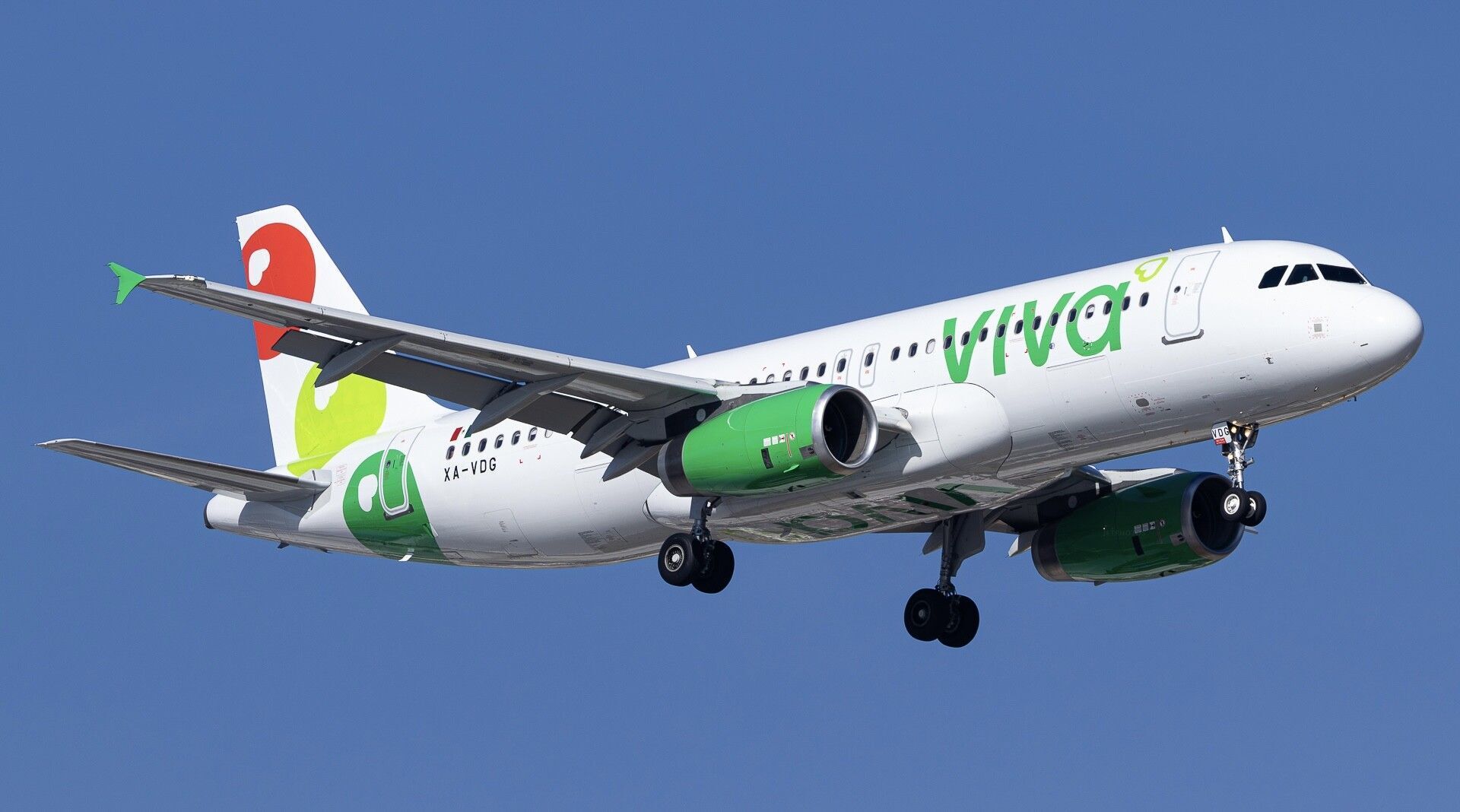
Table of Contents

Image source: en.wikipedia.org
The Merger of Equals: Creating a New Mexican Aviation Powerhouse
The proposed transaction represents a “merger of equals” structure under which Volaris and Viva shareholders will each control 50% of the new holding company on a fully diluted basis. Both carriers will maintain their independent operating certificates, distinct brands, and existing route networks while realizing significant economies of scale at the holding company level.
According to Enrique Beltranena, Volaris President and CEO, the formation of this new airline group will enable the carrier to expand ultra-low-cost fares to more passengers through improved access to capital and reduced fleet ownership costs. The transaction, subject to regulatory approvals and shareholder consent, is expected to close in 2026.
KEY MERGER BENEFITS

Economies of Scale
- Reduced fleet ownership costs through enhanced purchasing power
- Improved access to lower-cost capital markets
- Optimized aircraft utilization across combined operations

Network Expansion
- 44 domestic destinations (Volaris) plus Viva's network
- 29 international destinations in US, Central and South America
- Over 500 daily flight segments post-merger

Operational Synergies
- Shared airport infrastructure and technical capabilities
- Compatible fleet types (both operate Airbus A320 family)
- Integrated reservation systems and distribution channels
Current Operational Performance and Financial Metrics
Volaris reported third-quarter 2025 results that reflect the dual challenges of Pratt & Whitney GTF engine groundings and macroeconomic pressures affecting consumer demand.
The carrier transported 7.9 million passengers during Q3 2025, representing a 3.2% year-over-year increase, while operating revenues declined 3.6% to $784 million.
Financial Metric | Q3 2025 | Q3 2024 | Change |
|---|---|---|---|
Operating Revenue | $784M | $813M | -3.6% |
Net Income | $6M | $37M | -83.8% |
EBITDAR | $264M | $315M | -16.2% |
EBITDAR Margin | 33.6% | 38.7% | -5.1 pp |
Load Factor | 84.4% | 87.4% | -3.0 pp |
Fleet Size | 152 | 137 | +15 aircraft |
Source: Volaris Investor Relations
Despite the revenue decline, Volaris maintained cost discipline with a flat cost per available seat mile (CASM) of 7.90 cents, demonstrating operational efficiency amid capacity constraints.
The airline’s adjusted CASM excluding fuel stood at 5.24 cents, a 6.0% increase attributed primarily to fixed cost absorption across reduced effective capacity.
The Engine Crisis: Quantifying Operational Disruption
The most significant operational challenge facing Volaris relates to ongoing Pratt & Whitney GTF engine inspections affecting the carrier’s Airbus A320neo and A321neo fleet. Volaris has averaged 30.5 aircraft grounded per month over the past 27 months (September 2023 through November 2025).

The grounding crisis peaked in May 2025 when 40 aircraft sat idle simultaneously, representing 27.4% of Volaris’s total fleet. To contextualize the impact, this meant nearly one in four aircraft was unavailable for revenue service during a critical period. Volaris expects these engine issues to resolve by year-end 2027 as Pratt & Whitney accelerates its repair and replacement program.
To mitigate capacity constraints during peak December 2025 demand, Volaris secured regulatory approval for wet-lease aircraft operations. Mexico’s Federal Civil Aviation Agency (AFAC) authorized this temporary measure to prevent disruption to 20 domestic routes serving nearly 200,000 passengers during the holiday season.
Capacity Strategy and Fleet Development
Despite engine-related groundings, Volaris has continued fleet expansion to support long-term growth objectives. The carrier added three new aircraft during Q3 2025, bringing its total fleet to 152 aircraft. For 2026, Volaris plans to receive between 12 and 13 new Airbus aircraft deliveries while returning 17 older units to lessors.
The airline dramatically revised its 2025 capacity guidance from an initially planned 15% growth rate to approximately 7% annual ASM (Available Seat Mile) growth, reflecting the realities of the GTF grounding situation. This more conservative approach allows Volaris to maintain operational reliability while managing fixed costs across its effective capacity.
Route Network and Market Position
Volaris operates an extensive point-to-point network connecting 44 cities in Mexico with 29 international destinations across the United States, Central America, and South America. The carrier offers approximately 500 daily flight segments from major operational bases in Tijuana, Guadalajara, Monterrey, Cancun, and the Mexico City metropolitan area including Felipe Ángeles International Airport.
Recent traffic data shows divergent performance between domestic and international segments. In November 2025, Volaris reported that domestic RPMs (Revenue Passenger Miles) increased just 0.6%, while international RPMs grew at a stronger pace, reflecting the carrier’s strategic emphasis on cross-border leisure and VFR (Visiting Friends and Relatives) traffic.
Traffic Metric | November 2025 | YoY Change |
|---|---|---|
Passengers Carried | 2.7 million | +3.9% |
ASM Capacity | 3,067 million | +5.8% |
RPMs | 2,616 million | +3.9% |
Load Factor | 85.3% | -1.5 pp |

Image source: x.com
Competitive Dynamics in the Mexican Market
Volaris competes in a concentrated Mexican aviation market alongside Aeromexico (the legacy full-service carrier), Viva Aerobus (its prospective merger partner), and a handful of smaller operators.
Recent analysis indicates that while Volaris maintains the largest passenger volumes, Aeromexico commands a 47% domestic market share in own-metal passenger traffic, compared to Volaris at 36% and Viva at 17%.
The proposed merger would create a low-cost carrier group with a combined scale approaching Aeromexico’s size, fundamentally reshaping competitive dynamics.
However, both carriers will continue operating independently under separate brands and certificates, preserving consumer choice while leveraging backend synergies.
Revenue Management and Pricing Pressures
Volaris has faced significant revenue headwinds throughout 2025 as yield pressures intensified across its network.
Total operating revenue per passenger declined 6.5% year-over-year to $100 in Q3 2025, while average base fares dropped 17.8% to $44 per passenger. These metrics reflect aggressive competitive pricing, particularly in domestic markets where excess capacity has pressured yields.
The carrier’s ancillary revenue strategy, a cornerstone of the ultra-low-cost model, has partially offset base fare erosion. Volaris derives substantial revenue from unbundled services, including seat selection, baggage fees, and onboard purchases, though specific ancillary revenue figures were not disclosed in recent quarterly reports.
Safety and Operational Excellence
Amid operational and financial challenges, Volaris maintained its commitment to safety standards. The carrier secured 10th place in AirlineRatings.com’s 2025 ranking of the safest low-cost carriers globally. This recognition evaluates airlines across multiple dimensions including safety records, fleet age, operational protocols, and emergency response capabilities.
Volaris operates one of the youngest fleets in the Americas with an average aircraft age substantially below industry norms. The carrier’s all-Airbus fleet strategy provides operational simplicity, crew interchangeability, and maintenance efficiency benefits critical for low-cost operations.
Outlook for 2026 and Strategic Priorities
The pending merger with Viva Aerobus, expected to close sometime in 2026 pending regulatory approval, represents the most transformative development in the company’s 20-year history.
Combined scale should enable more favorable aircraft acquisition terms, improved capital market access, and enhanced competitive positioning against Aeromexico.
2026 STRATEGIC PRIORITIES

Fleet Optimization
- Integrate 12-13 new aircraft deliveries
- Return 17 older aircraft to lessors
- Manage ongoing GTF engine shop visits

Network Development
- Expand Felipe Ángeles International Airport operations
- Add routes leveraging combined Volaris-Viva scale
- Optimize point-to-point connectivity

Cost Management
- Maintain industry-leading CASM performance
- Realize merger-related synergies
- Navigate fuel price volatility

Revenue Enhancement
- Broaden target passenger demographics
- Strengthen ancillary revenue initiatives
- Leverage loyalty programs (Doters/Altitude)
However, the carrier must continue managing through the GTF engine crisis, which is expected to persist through 2027. Macroeconomic conditions in Mexico, including currency volatility and consumer spending patterns, will influence demand trends. Additionally, the merger integration process itself carries execution risk despite both carriers’ stated intention to maintain separate operating structures.
The combined airline group, operating under a holding company structure with continued public listings on both the Mexican Stock Exchange (BMV) and New York Stock Exchange (NYSE), will serve as a test case for consolidation in Latin American aviation.
Success will depend on realizing promised cost synergies while maintaining the service quality and network reach that have driven both carriers’ growth over the past two decades.
The carrier’s ability to navigate current turbulence while executing its merger strategy will shape Mexican aviation for years to come.