


Welcome to AviationOutlook: The aviation newsletter built exclusively for decision-makers.
Become an “Annual” member now & get this special discount offer.
As a paid member, you get access to:
200+ Reports - All major airlines + aerospace & defense companies (updated regularly).
Daily / Weekly - Deep-dive analysis & insights.
Monthly - Industry outlook reports.
In case you missed it, here are the latest analysis reports:
Embraer - Company Analysis and Outlook Report 2026 (Updated)
American Airlines’ Six-Route Europe Play: Yield Discipline or Widebody Overreach?
Check Out All Reports
Executive Summary
Scale and performance: Vueling closed 2025 with 142 aircraft, 227,112 flights, and a 90% load factor, delivering €3.23 billion in revenue against passenger volume broadly flat versus 2024.
Profitability under pressure: Operating profit of €286 million in the standalone accounts translated to roughly a 12% operating margin at IAG-segment level, with the carrier holding profitability steady despite unit-cost pressure and French labour disruption.
Fleet transition begins: The first three of 50 ordered Boeing 737 MAX aircraft are scheduled for delivery in Q4 2026, ending a 22-year all-Airbus tradition and reshaping long-term unit economics.
Strategic runway: The Rumbo 2035 roadmap targets 60 million annual passengers, anchored on Barcelona expansion, the ex-Air France Orly slot portfolio, and 10% sustainable aviation fuel use by 2030.
Recommended - Read Full Reports


Read All Reports
Table of Contents
Executive Summary
Introduction
Key Facts: Company Profile
Business Overview
Ownership, Governance and Segment Structure
Financial Analysis: Last Twelve Months
Revenue Growth Drivers
Cost Structure and Unit Economics
Products and Services
Fleet: In-depth Analysis
Current Fleet Size and Composition
Fleet Age
Boeing 737 MAX: The Strategic Fleet Transition
Aircraft Type Strategy and Configuration
Fleet Strategy in the Rumbo 2035 Context
Fleet Financing
Route Network, Major Destinations and Strategy
Scale of the Network
Network Design Philosophy
Spanish Domestic Network
European Core Network
North Africa and Middle East
Route Strategy Under Carolina Martinoli
Seasonality and Summer Peaks
Major Operational Bases (Hubs)
Barcelona-El Prat: The Primary Hub
Paris-Orly: The Growth Engine
Rome-Fiumicino and Florence
Secondary Spanish Bases
London and Other International Bases
Competitive Position
Major Competitors
Vueling vs Ryanair
Vueling vs easyJet
Vueling vs Iberia Express
Vueling vs Volotea
Vueling vs Air Europa
Vueling vs Wizz Air
Punctuality and Operational Reputation
Sustainability and ESG Strategy
Net Zero Commitment
Sustainable Aviation Fuel Progress
Fleet-driven Emissions Reduction
Regulatory Environment
Digital, Commercial and Customer Initiatives
Digital Platform
Connectivity and Onboard Product
Loyalty
Recent Operational Developments in 2025 and 2026
Route Network Shake-ups
Labor Environment
Management Stability
Loyalty and Distribution Moves
Key Risks with Probabilities and Scenarios
1. Fleet Transition Execution Risk
2. Ryanair Market Share Escalation
3. Labor Disruption in France
4. Airport Infrastructure Constraints
5. Sustainability Cost Layering
6. Fuel Price Volatility
7. Currency Exposure
8. Macroeconomic Travel Demand
Strategic Outlook: What Rumbo 2035 Really Means
The Long-haul Feed Thesis
Fleet Economics in the MAX Era
Barcelona Leadership Dependency
Boeing Relationship Implications
Human Resources, Safety and Governance
Workforce Profile
Safety Record
Board and Governance
Scenario Modelling Through 2030
Base Case
Upside Case
Downside Case
What Industry Stakeholders Should Watch in 2026
Boeing MAX Delivery Pace
Barcelona Slot Policy
French Labour Resolution
Ryanair Spain Capacity Adds
IAG Portfolio Decisions
My Final Thoughts
Official Sources and Data
Introduction
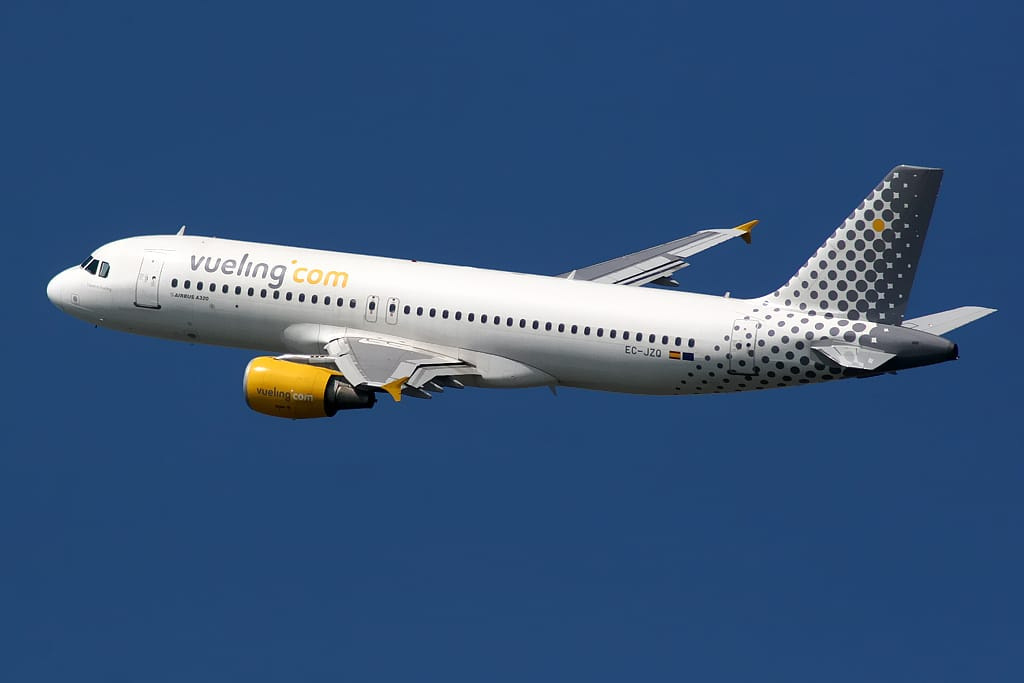
For two decades, Vueling has been the quiet workhorse of Iberian short-haul aviation. Based at Barcelona-El Prat and owned by the holding company that also runs British Airways and Iberia, it flies more passengers out of Catalonia than any other carrier and carried around 38 million passengers in 2025.
Yet 2026 is shaping up to be the most consequential year in the airline’s history.
After twenty-two years operating an exclusively Airbus narrowbody fleet, Vueling is about to accept its first Boeing 737 MAX, anchoring a €5 billion investment plan branded internally as Rumbo 2035.
This report is an in-depth operational, commercial, and strategic analysis based on company filings, auditor reports, and primary operating data. The goal is to give industry stakeholders a rigorous baseline for decisions over the next 24 to 36 months.
Let’s get started.
VUELING 2025 AT A GLANCE
-----------------------------------------------
Passengers carried            38 million
Flights operated              227,112
Load factor                   90%
Revenue                       €3,230 million
Operating profit              €286 million
Fleet (year-end)              142 aircraft
Bases                         15 (Spain/IT/FR/UK)
-----------------------------------------------Key Facts: Company Profile
Vueling Airlines, S.A. is a Spanish low-cost carrier domiciled in Viladecans, Catalonia, and wholly owned by the International Airlines Group. It is legally part of the IAG Loyalty & Point-to-Point segment together with Iberia Express and LEVEL.
The brand was founded in 2004 and merged with fellow Barcelona low-cost carrier Clickair in 2009 under the Vueling name. IAG absorbed it fully in 2013 after a tender offer.
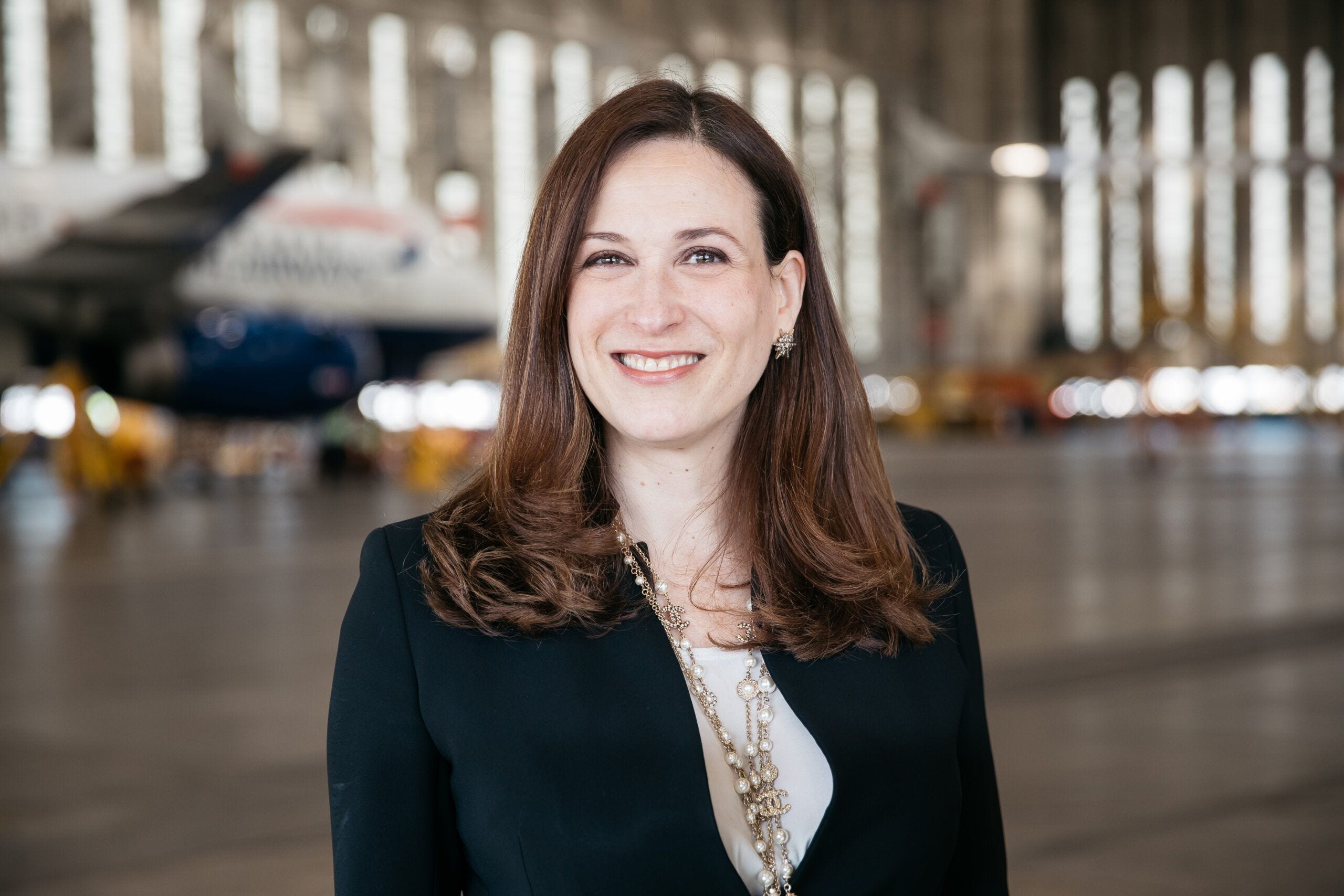
The current president and chief executive officer is Carolina Martinoli, who took the role in 2024 after senior positions at Iberia and British Airways. She is the first woman to lead a Spanish flag or near-flag carrier.
COMPANY FACTSHEET
-----------------------------------------------
Legal name               Vueling Airlines, S.A.
Founded                  2004 (operations 2004)
Headquarters             Viladecans, Catalonia, Spain
IATA / ICAO              VY / VLG
Callsign                 VUELING
Parent                   International Airlines Group
Ticker (parent)          IAG (LSE, BME)
CEO / Chair              Carolina Martinoli
Primary hub              Josep Tarradellas Barcelona-El Prat
AOC jurisdiction         Spain (AESA)
Frequent flyer           Avios (IAG ecosystem)
Alliance status          None; IAG codeshare network
-----------------------------------------------
The carrier operates under a single AOC from the Spanish aviation safety agency, and its French operations are run from a domestic establishment at Paris-Orly. Italian and British bases function as tactical crew stations rather than separately certified entities.
Vueling does not have a standalone frequent flyer program. Customers accrue Avios within the wider IAG loyalty framework through the Vueling Club integration.
Business Overview
Ownership, Governance and Segment Structure
Vueling sits inside IAG alongside British Airways, Iberia, Aer Lingus, LEVEL and Iberia Express. The parent group published €33.2 billion in revenue for 2025 at a 15.1% operating margin.
Within IAG, Vueling is the largest short-haul low-cost brand by traffic, though in operating profit terms it lags British Airways and Iberia materially. Its role in the portfolio is feeding the long-haul premium brands from Barcelona and defending Iberian short-haul share against Ryanair.
The board reports into Luis Gallego, IAG’s chief executive officer, through Carolina Martinoli. Strategic capital allocation, aircraft ordering, and major route decisions are centralised at IAG level, while pricing, network scheduling, and commercial policy remain local.
Financial Analysis: Last Twelve Months
The 2025 financial year produced a rare pattern for a European low-cost carrier: flat traffic on slightly higher capacity with compressed unit revenue and defended margin. Vueling carried the same volume of passengers it did in 2024 but flew about 2% more flights, meaning the load factor slipped from 92% to 90%.
Revenue essentially held at around €3.23 billion, up about 0.2% year-on-year. Passenger revenue was €3.23 billion on the narrow definition, with ancillary streams contributing the remainder.
Operating profit in the standalone statutory accounts was €286 million. At IAG-segment reporting, Vueling delivered €393 million in operating profit with a 12% margin.
The gap reflects the treatment of intra-group revenue, engine maintenance provisions, and fleet leasing adjustments.
VUELING STATUTORY P&L SUMMARY, FY2025
-----------------------------------------------
Revenue from operations      €3,230 million
Operating profit             €286 million
Operating margin             ~8.9% (statutory)
IAG-segment operating margin ~12%
Passengers                   38.0 million
Flights                      227,112
Load factor                  90%
Available seat km growth     ~2.4% (IAG group)
-----------------------------------------------Revenue Growth Drivers
The three most important revenue levers during 2025 were capacity addition at Paris-Orly, the seasonal reinforcement of Barcelona, and a modest improvement in ancillary yield from the bag and seat product.
Orly exposure rose sharply after Vueling inherited slots formerly held by Air France at the airport. The carrier has built toward more than 50 routes from Orly for the winter 2025 and summer 2026 schedules.
Summer 2025 saw 16 million seats scheduled from Barcelona, with the network stretched to more than 90 destinations from Catalonia including new African additions such as Essaouira in Morocco. That density of scheduled supply is the structural growth driver that feeds the long-haul brands at El Prat.
Ancillary revenue is less granularly disclosed than at Ryanair or Wizz Air, but the move toward stricter hand luggage enforcement in 2024 and 2025 contributed to higher attachment rates on cabin bag upgrades. Vueling also accelerated its dynamic seat-selection monetisation during summer peak.
Cost Structure and Unit Economics
Jet fuel is by a distance the single largest cost line. Vueling hedges through the IAG group fuel program, and the softer global crude environment in 2025 partially offset airport charge inflation at its key Spanish hubs.
Personnel costs rose faster than revenue as the carrier absorbed a new French cabin-crew strike wave through early 2026. Lease expenses remained the largest non-fuel operating line, reflecting that 125 of the 142 aircraft at year-end 2025 were leased.
Airport and handling charges continued to rise at Barcelona, Palma, and Rome Fiumicino, partly neutralising the route-mix improvement. Unit cost excluding fuel increased in the low single digits in 2025.
VUELING UNIT ECONOMICS (INDICATIVE, 2025)
-----------------------------------------------
Fuel share of costs           ~28%
Employee share of costs       ~19%
Leases & ownership share      ~13%
Airport & handling share      ~14%
ASK growth year-on-year       ~2%
RASK change year-on-year      roughly flat
CASK ex-fuel change           up low single digits
-----------------------------------------------Products and Services
Vueling positions itself as a hybrid low-cost carrier rather than an ultra-low-cost model. Fare families are split into Basic, Optima, TimeFlex and Family, with successive tiers adding free bags, seat selection, flexibility, and priority boarding.
The airline offers a Business fare on most flights, giving dedicated seating in the first rows with a middle-seat block, lounge access at Barcelona and Madrid, and fully flexible changes. This is a meaningful differentiator against Ryanair and matters for Iberian business corridors.
The Vueling Global platform allows booking of onward flights with partner airlines such as Norse Atlantic Airways and IAG’s LEVEL, turning Barcelona into a tactical self-connect hub for transatlantic itineraries.
Fleet: In-depth Analysis
Current Fleet Size and Composition
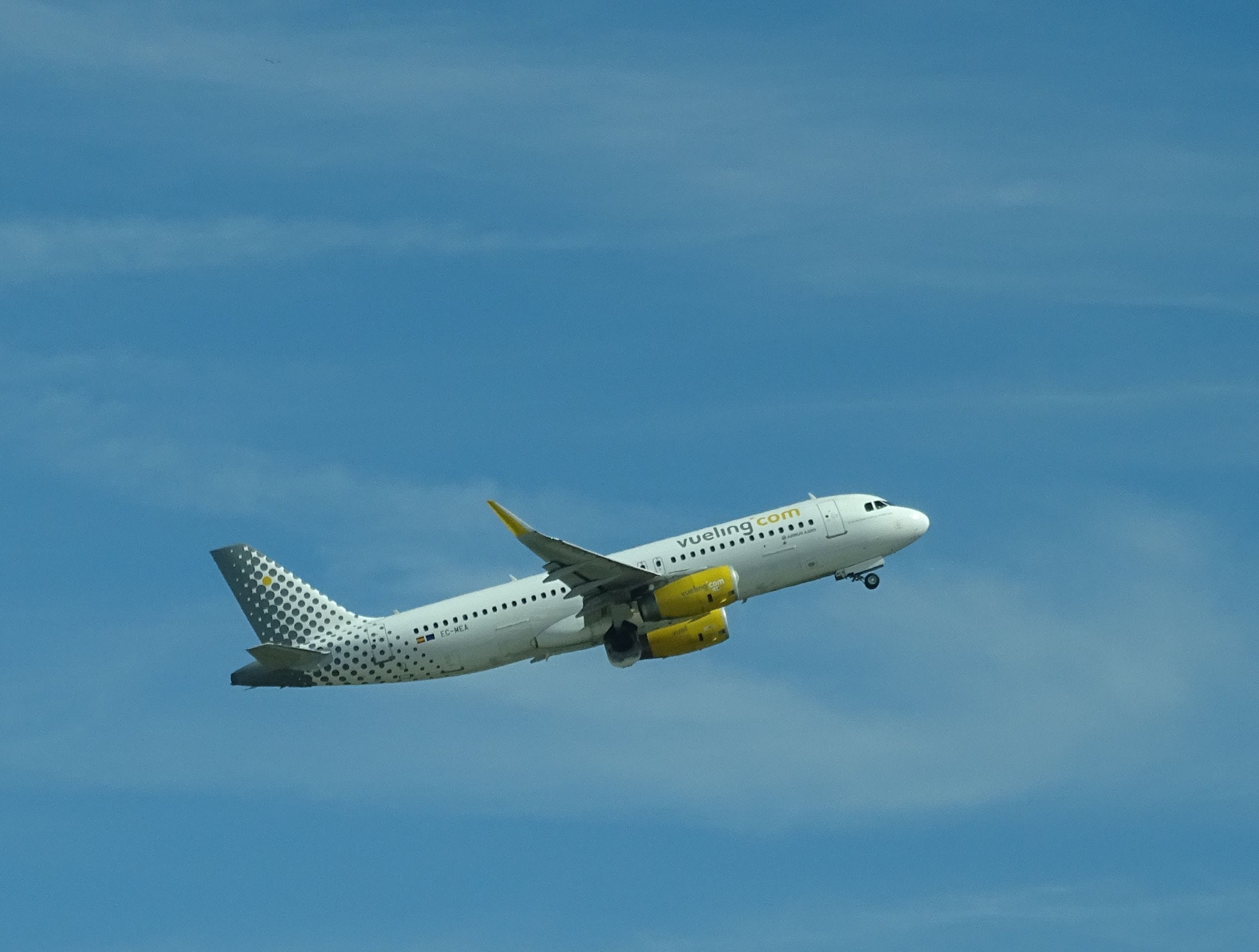
Vueling closed 2025 with 142 aircraft on the certificate, up from 139 a year earlier. The entire fleet at that reporting date remained Airbus A320 family, making Vueling one of the larger single-family operators in Europe.
Public aircraft registries for mid-2025 break down the fleet into roughly 91 Airbus A320-200 ceo, 22 Airbus A320neo, 18 Airbus A321-200, six Airbus A319, and four Airbus A321neo.
Small variations arise between month-end snapshots because of rolling lease returns and late-life aircraft retirements.
The A320ceo remains the backbone of the operation. These aircraft are configured in a single-class, 180-seat cabin, offering the Barcelona-based network sufficient flexibility for short intra-European rotations and the longer reaches into North Africa and the Middle East.
VUELING FLEET COMPOSITION (YEAR-END 2025 SNAPSHOT)
-----------------------------------------------
Airbus A320-200 (ceo)     ~91 units
Airbus A320neo            ~22 units
Airbus A321-200           ~18 units
Airbus A319-100            ~6 units
Airbus A321neo             ~4 units
Boeing 737 MAX              0 (first unit due Oct 2026)
-----------------------------------------------
Total fleet (reported)      142 aircraft
Aircraft under lease        125 (88%)
Aircraft owned               17 (12%)
-----------------------------------------------
The A321ceo aircraft, seating 220 passengers in a single-class layout, are deployed on high-demand leisure trunks such as Barcelona to the Canary Islands and peak Mediterranean city pairs.
The A321neo units are used for longer sectors where their additional range and fuel burn advantage is most valuable.
Fleet Age
The average age of the operating fleet sits around 10 to 12 years, depending on the reference date. Vueling’s own auditor-reviewed disclosures put end-2025 fleet age broadly in line with 2024, reflecting more replacement than greenfield expansion.
The oldest aircraft in the fleet are the A319s, some of which were inherited in the Clickair combination or early-acquisition A320s. These are the most natural candidates for retirement as Boeing deliveries begin.
A fleet age a little above the European low-cost median has two consequences. It means higher maintenance C-check and engine-shop exposure in the second half of the decade, and it creates a hard economic case for replacement timing that is now being pulled forward through the MAX transition.
Boeing 737 MAX: The Strategic Fleet Transition
In July 2025, IAG allocated a 50-aircraft Boeing 737 MAX order originally placed in 2022 entirely to Vueling, ending the 22-year all-Airbus era. The order splits evenly between the 737 MAX 8-200 high-density variant and the stretched 737 MAX 10.

The MAX 8-200, originally designed around the Ryanair high-density configuration, can seat up to 210 passengers. Vueling is expected to configure it closer to 200 seats to preserve pitch that matches its hybrid positioning against pure ultra-low-cost rivals.
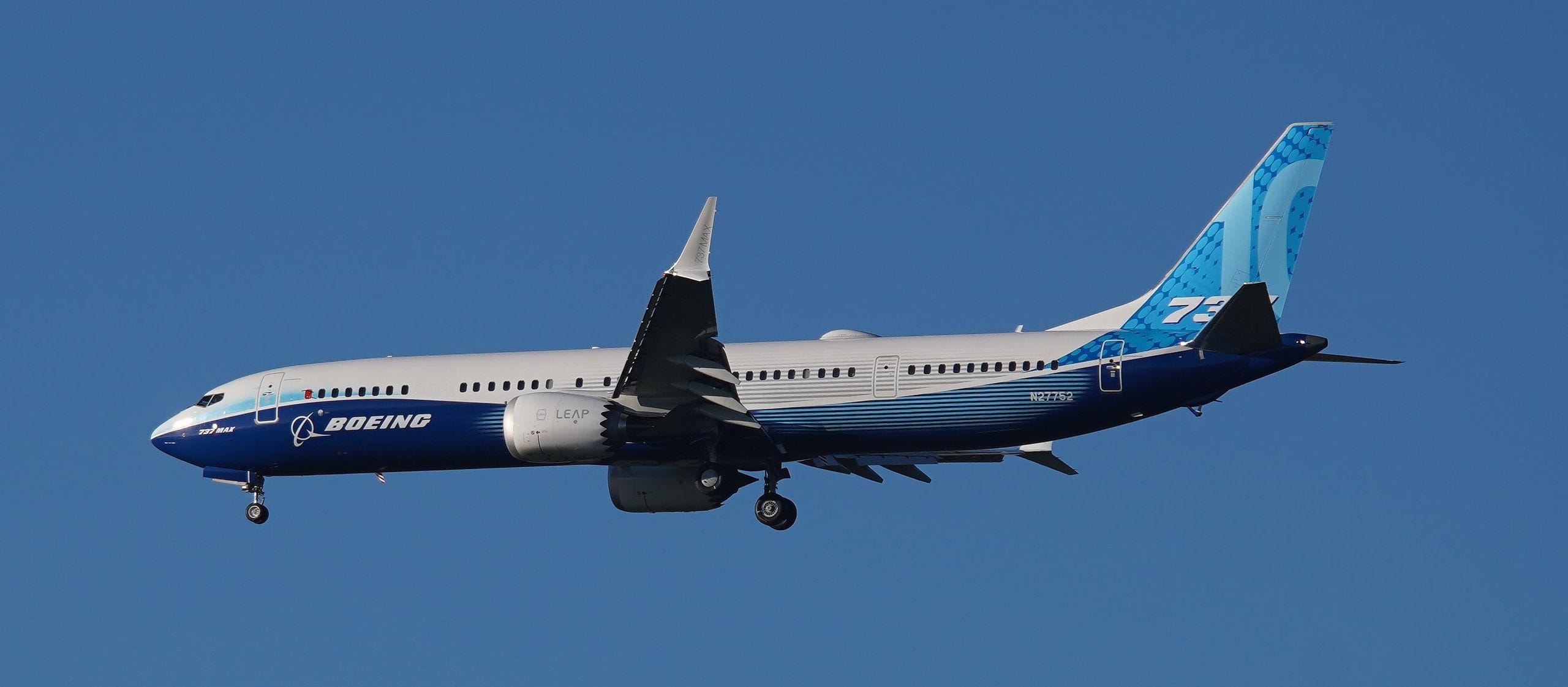
The 737 MAX 10 is a more strategic machine. Its 230-seat maximum capacity and range of 3,300 nautical miles give Vueling the ability to operate larger loads to North Africa, the Middle East, and Scandinavia without adding widebodies.
First MAX delivery is scheduled for October 2026, with the second and third units arriving before year-end. The remainder of the 50 aircraft will be phased in through the early 2030s, aligned with leases on older A320ceos running off.
737 MAX INTRODUCTION TIMELINE (ANNOUNCED)
-----------------------------------------------
Aug 2025    IAG confirms MAX allocation to Vueling
Oct 2025    Rumbo 2035 roadmap presented
Oct 2026    First 737 MAX delivery to Vueling
Q4 2026     Aircraft 2 and 3 arrive
2027-2030   Bulk of deliveries (mix MAX 8-200 / MAX 10)
2030-2032   Order fulfilment plus possible options
-----------------------------------------------
Whether IAG exercises its option for up to 100 additional MAX aircraft is the single most important outstanding fleet decision. If the full option is taken and allocated to Vueling, the A320 family would become a minority of the carrier’s fleet by the mid-2030s.
Aircraft Type Strategy and Configuration
Vueling has historically leaned on a simple one-family, single-configuration strategy to keep costs low, crew rostering straightforward, and spare parts logistics lean. The shift to a dual-type fleet is therefore a meaningful break.
The company plans to operate the MAX alongside the A320 family for several years. Mixed-fleet pilot programmes, separate simulator capacity, and dual-type maintenance infrastructure are already being scoped at Barcelona.
On configuration, expect Vueling to position the MAX 8-200 as the A320ceo replacement and the MAX 10 as the A321ceo replacement. This would give Vueling two differentiated modules: a high-frequency short-haul platform and a longer-range leisure workhorse.
The cabin product is being refreshed in parallel, with slim-line Recaro-type seats, larger overhead bins, and Wi-Fi equipment. IAG’s partnership with Starlink will roll out across more than 500 IAG short-haul aircraft, with Vueling expected to be an early recipient.

Fleet Strategy in the Rumbo 2035 Context
Under the Rumbo 2035 plan, Vueling wants to grow from around 38 million to 60 million annual passengers by 2035. Half of that growth is earmarked for Barcelona, where El Prat is lobbying for terminal and runway expansion.
The implied fleet requirement is significantly above the current 142 units, even before accounting for the replacement of all current A320ceos. Vueling’s internal modelling assumes roughly 50% capacity growth across the next decade.
RUMBO 2035 TRAFFIC TARGETS
-----------------------------------------------
Current annual passengers   ~38 million
Target 2035 passengers      ~60 million
Incremental capacity        ~50% ASK growth
Barcelona share of growth   ~50%
Committed investment        €5 billion to 2030
-----------------------------------------------
The €5 billion investment is a mix of aircraft pre-delivery payments, sustainability investments, terminal infrastructure at Barcelona, and technology. It does not constitute the full fleet value, since most aircraft will continue to be financed by operating lease.
Sustainability considerations now shape fleet planning as much as economics. Vueling’s commitment to have 10% of flights operated on sustainable aviation fuel by 2030 depends on the MAX fleet, because newer engines tolerate higher SAF blends and deliver lower absolute carbon per seat.
Fleet Financing
Vueling is a heavy operating lessee, with approximately 88% of the fleet on lease at year-end 2025. The remainder is owned directly, typically older A320ceo airframes that no longer fetch attractive residual values on sale and leaseback.
IAG consolidates fleet financing for its carriers, negotiating both order-book terms with manufacturers and financing structures with lessors. This centralised model has historically allowed Vueling to access better lease rates than standalone Spanish peers.
The MAX deliveries will extend the leased share further. Expect a mix of long-dated operating leases and sale-and-leaseback transactions, with residual value guarantees during the early years while the type builds market liquidity under Vueling colours.