


Southwest Airlines dropped a significant announcement on March 13, 2026. The Dallas-based carrier confirmed it will permanently cease all operations at Chicago O’Hare International Airport (ORD) and Washington Dulles International Airport (IAD) effective June 4, 2026.
It’s a deliberate, strategic withdrawal rooted in years of financial underperformance, intensifying airport competition, and a sweeping corporate overhaul now reshaping Southwest’s entire business model.
Also Read: Southwest Airlines - Strategic Analysis and Outlook Report 2026 (Updated)
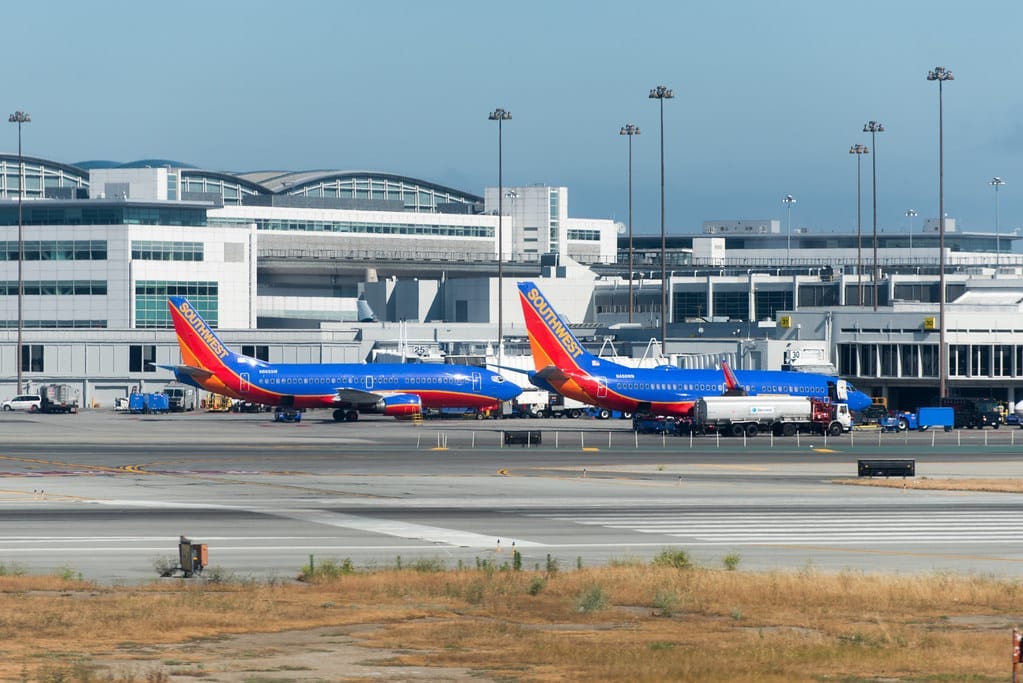
The O’Hare Story: A Five-Year Experiment That Did Not Deliver
Southwest’s presence at O’Hare was always an outlier in the airline’s broader operating philosophy. The carrier has anchored its Chicago operations at Midway International Airport (MDW) since 1985, building it into one of its largest focus cities in the entire country.
Then came the COVID-19 pandemic. As airport gate space opened up across the U.S., Southwest seized what looked like a rare opportunity and launched O’Hare service in 2021 as part of an 18-city expansion. Early routes included nonstop flights to Baltimore/Washington, Dallas Love Field, Denver, Nashville, and Phoenix.
The move placed Southwest in direct competition with United Airlines and American Airlines, both of which dominate O’Hare with massive hub operations. Southwest’s footprint at ORD remained small, limited to just three gates throughout its tenure.
Southwest at Chicago O'Hare (2021-2026):
 - Launch year: 2021 (COVID-era 18-city expansion)
 - Peak destinations: Baltimore/Washington, Dallas Love Field, Denver, Nashville, Phoenix
 - Gates operated: 3
 - Last day of service: June 3, 2026
 - Flights shifting to: Chicago Midway (MDW)
Southwest CEO Bob Jordan acknowledged as far back as April 2024 that the O’Hare cuts were financially driven. “As we look at our network, it really relates to the areas that just don’t have a path to the level of financial performance that we need,” he said.
By 2026, O’Hare had grown even more congested. American and United were adding flights at a rapid pace under the airport’s use-it-or-lose-it gate allocation policy. The situation grew severe enough that the FAA stepped in to cap daily flight operations at O’Hare this summer to prevent widespread disruptions.
For Southwest, the math was clear: exit O’Hare and put all Chicago resources behind Midway, where the airline already operates more than 244 daily departures and commands over 90% of all departures from that airport, according to aviation analytics firm Cirium.
The Dulles Story: Two Decades of Diminishing Returns
Southwest’s departure from Dulles tells a different, quieter story. The airline first arrived at IAD roughly two decades ago, initially using it to complement its larger Washington-area base at Baltimore/Washington International Thurgood Marshall Airport (BWI).
The dynamics shifted after Southwest merged with AirTran Airways in 2012 and inherited access to Ronald Reagan Washington National Airport (DCA). With two strong Washington-area airports to serve, Dulles became redundant. Over the following 12-plus years, IAD service contracted steadily until only a single consistent route remained: nonstop service to Denver International Airport.
Southwest at Washington Dulles (approx. 2006-2026):
 - Initial role: Supplement to BWI hub operations
 - Post-AirTran 2012: Service stagnation began
 - Final consistent route: Dulles to Denver (DEN)
 - Last day of service: June 3, 2026
 - Replacement airports: BWI, DCA, PHL, RIC
The Metropolitan Washington Airports Authority (MWAA), which operates Dulles, told The Points Guy it was “disappointed” by the decision and expressed hope that Southwest would return in the future.
Southwest, for its part, was unequivocal. The airline said it remains “committed to providing signature hospitality” in the Washington-Baltimore region, adding that it will offer up to 271 combined daily departures to 79 nonstop destinations from Reagan National and BWI. Southwest is currently the largest carrier in the D.C. market by total passengers served.
Southwest’s Bigger Overhaul: Why These Exits Are Part of a Wider Strategy?
The O’Hare and Dulles withdrawals are not isolated decisions. They fit squarely inside what CEO Bob Jordan has called “the most ambitious transformation” in Southwest’s history.
For decades, Southwest operated as a no-frills, open-seating, free-bags carrier that thrived on simplicity and volume. That model is being fundamentally restructured.
Key elements of Southwest's 2026 transformation:
 - Assigned seating: Rolled out in 2026 (80% of passengers reportedly prefer it)
 - Bag fees: Newly introduced as a revenue driver
 - First-class seats: Under development
 - Exclusive airport lounges: In planning stages
 - Long-haul international flights: Exploratory discussions underway
 - 2026 EPS target: At least $4.00 (vs. $0.93 in 2025, a 300%+ increase)
The broader network strategy is about concentrating capacity where Southwest can win, not spreading thinly across airports where it cannot compete with entrenched incumbents. Exiting O’Hare and Dulles is textbook execution of that principle.
Southwest executives said in January 2026 that the airline plans to grow capacity, as measured by available seat miles, by only 1% to 2% year over year in the first quarter, reflecting a deliberate preference for profitability over raw expansion.
What This Means for Passengers With Existing Bookings?
Southwest has made clear that affected travelers will not be left stranded. Anyone with a confirmed reservation to or from O’Hare or Dulles on or after June 4, 2026 has two options.
Passenger options for affected O'Hare (ORD) bookings:
 - Free rebooking to: Chicago Midway (MDW), Indianapolis (IND),
   or Milwaukee Mitchell (MKE)
 - Alternative: Full refund to original form of payment

Passenger options for affected Dulles (IAD) bookings:
 - Free rebooking to: BWI, Reagan National (DCA),
   Philadelphia (PHL), or Richmond (RIC)
 - Alternative: Full refund to original form of payment
Full details are available directly on Southwest’s travel advisory page.
What This Means for Competitors at Chicago O’Hare?
Southwest’s exit frees up three gates at O’Hare, and the timing could not be more significant. Both United and American are locked in an aggressive capacity battle at ORD, adding flights at a breakneck pace to protect gate allocations under the airport’s use-it-or-lose-it rules.
Southwest’s three vacated gates represent a genuine operational prize. Whether they flow to United, American, or another carrier will be closely watched by the industry.
The FAA’s involvement in capping O’Hare operations also adds a regulatory dimension to what has been, until now, a purely commercial competition between the two legacy giants. Southwest’s departure removes one variable from a very complicated equation at one of the world’s busiest airports.
A Streamlined Network Built Around Strength
Southwest’s withdrawal from O’Hare and Dulles reflects something fundamental about how the airline now views its own network. Rather than maintaining a presence everywhere for the sake of market breadth, the carrier is consolidating around the airports where it holds dominant or strong market positions.
At Midway, Southwest is the undisputed anchor. At BWI and Reagan National, it holds the largest passenger share in the entire D.C. metro area. These are the foundations the airline is choosing to build on as it pursues a profound business restructuring.
The June 4 exit from ORD and IAD is not a retreat. It is a recalibration grounded in five years of operational data, competitive analysis, and a clear-eyed assessment of where Southwest can generate the returns its transformation demands.