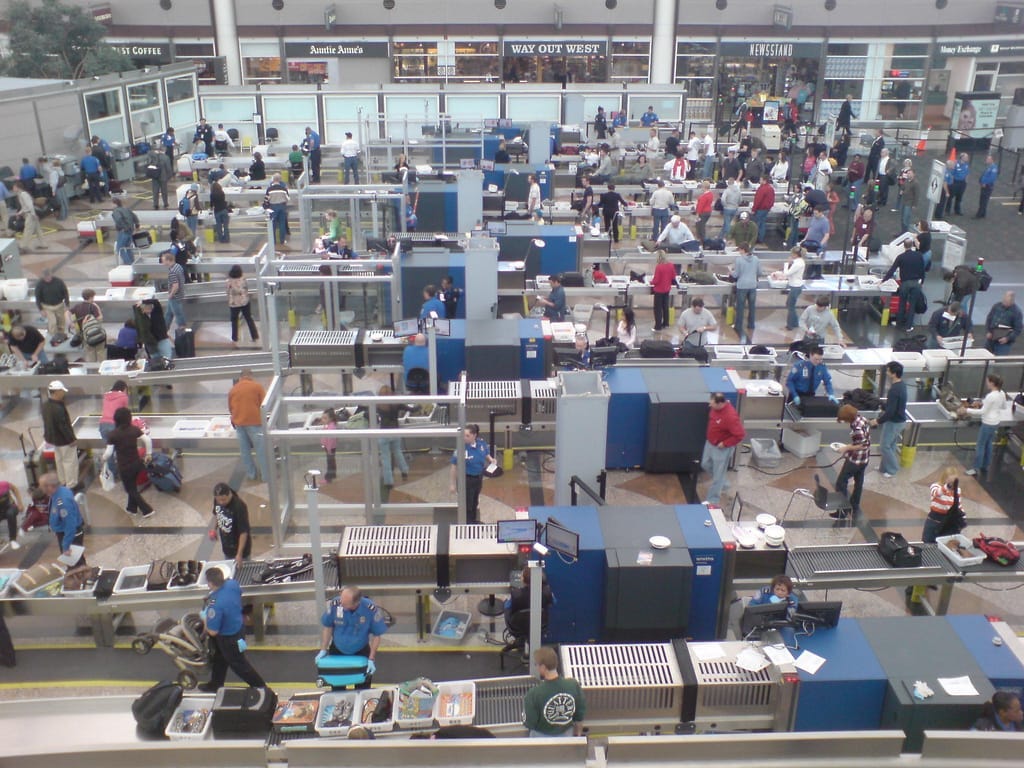
President Trump’s threat to move ICE agents into airports instead of TSA screeners has pushed a long-running aviation vulnerability back into full view.
The issue is larger than one weekend headline.
Each time Washington locks into a homeland security funding fight, airport screening becomes one of the first operating systems to wobble, and the damage moves fast from checkpoint staffing to airline schedules, missed connections, airport congestion, and cargo timing.
In short

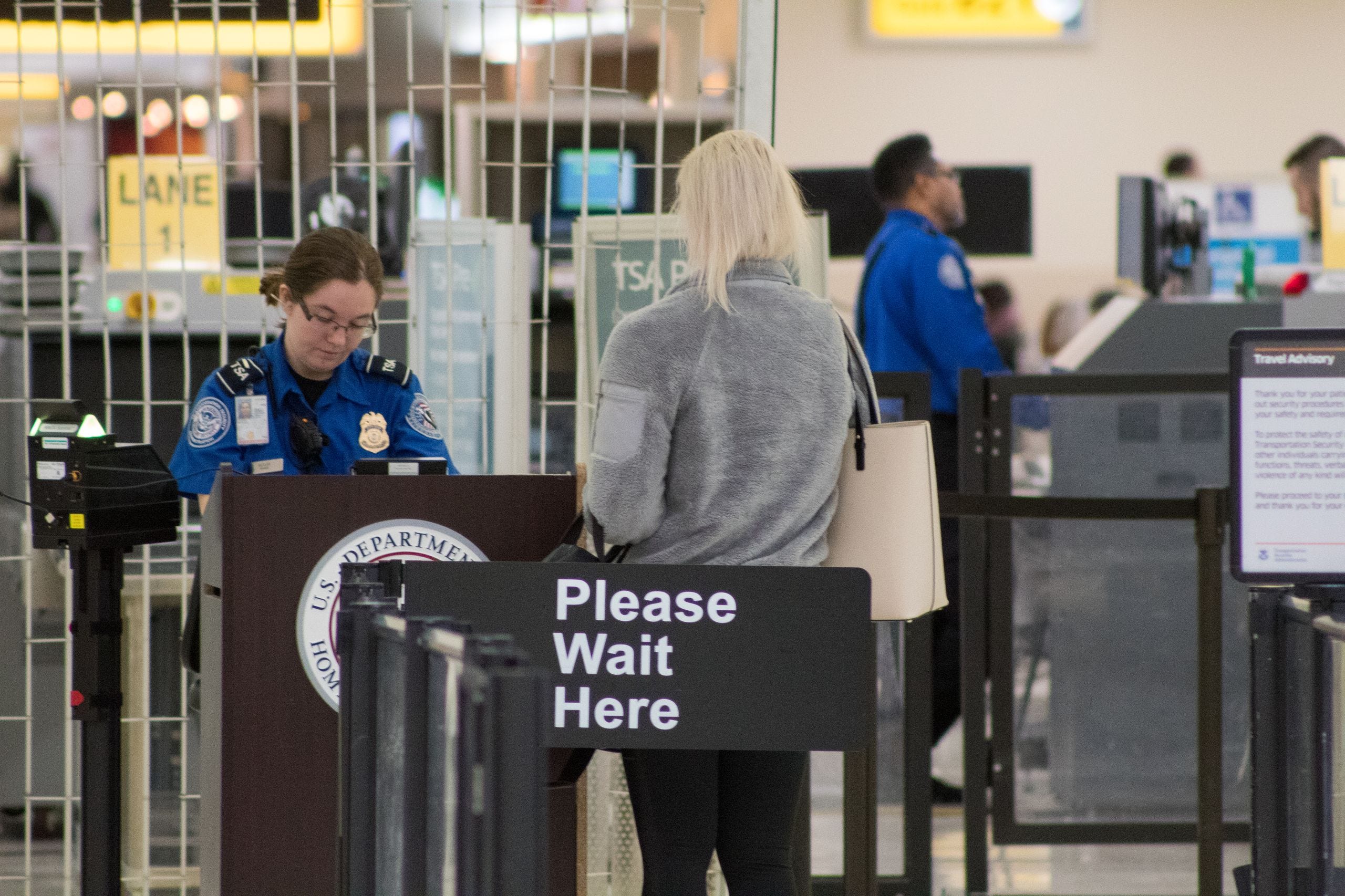
Air travel keeps taking the hit because checkpoint screening is labor heavy,
visible to the public, and tightly linked to daily airline operations.

When pay stops, absenteeism rises.
When absenteeism rises, throughput drops.
When throughput drops, the whole airport system starts to back up.
Why TSA keeps becoming the pressure point?
The TSA’s own February 2026 testimony to Congress laid out the problem before the latest airport chaos arrived.
The agency said around 95 percent of its workforce is considered essential during a shutdown, meaning tens of thousands of employees must continue working without pay, even as many live paycheck to paycheck and face rising financial stress, late fees, childcare disruptions, and transport costs just to report for duty.
That same testimony matters for aviation leaders because it tied funding instability directly to operational results. TSA warned Congress that higher callouts lead to longer checkpoint waits, missed or delayed flights, weaker recruitment and retention, and delayed deployment of new screening technology at exactly the time passenger volumes and security requirements are rising.
Reuters then showed those risks turning real in March 2026. It reported that more than 10 percent of airport security officers failed to show up on some recent days, while hundreds of TSA employees had already left during the funding lapse, creating long lines and raising warnings that some small airports could eventually shut if the standoff continued.
Why the threat of replacing TSA with ICE agents miss the real issue?
Trump’s threat to replace TSA with ICE grabbed attention because it sounded like an immediate workaround, but it does not solve the operating weakness that keeps returning.
It’s because ICE officers are not specifically trained for checkpoint screening, which sits inside TSA’s mission, procedures, certification standards, and local supervisory structure.
That distinction matters for airport executives and airline planners. Airport screening is not interchangeable labor. It relies on trained officers, repeatable procedures, technology familiarity, chain of command, and coordination with local airport operations, which is why swapping in another federal badge does not fix the deeper exposure created by unpaid frontline staff.
Why this keeps repeating during every political standoff?
The structural flaw is that aviation security is partly fee-supported, but still not insulated from appropriations brinkmanship.
The TSA’s official fee guidance states that passengers pay a September 11 Security Fee of $5.60 per one-way trip, capped at $11.20 per round trip, while the FY 2026 TSA budget justification shows the agency requesting $11.6 billion, with operations partly offset by aviation passenger security fees and the first $250 million of fee collections directed to the Aviation Security Capital Fund.
So the U.S. already has a user-fee framework for aviation security, yet the workforce still remains vulnerable when Congress stalls. That is the governance gap. Dedicated fee collection exists, but dependable continuity for screening pay and staffing does not.
History shows the pattern is not new.
During the 2019 shutdown, absences by controllers and TSA officers rose as missed paychecks mounted, checkpoint waits extended, and operational pressure on the aviation system helped force a political resolution.
2019 reporting also showed unscheduled TSA absences rising to 10 percent on a Sunday, more than triple the comparable rate a year earlier.
What the permanent solution should actually be
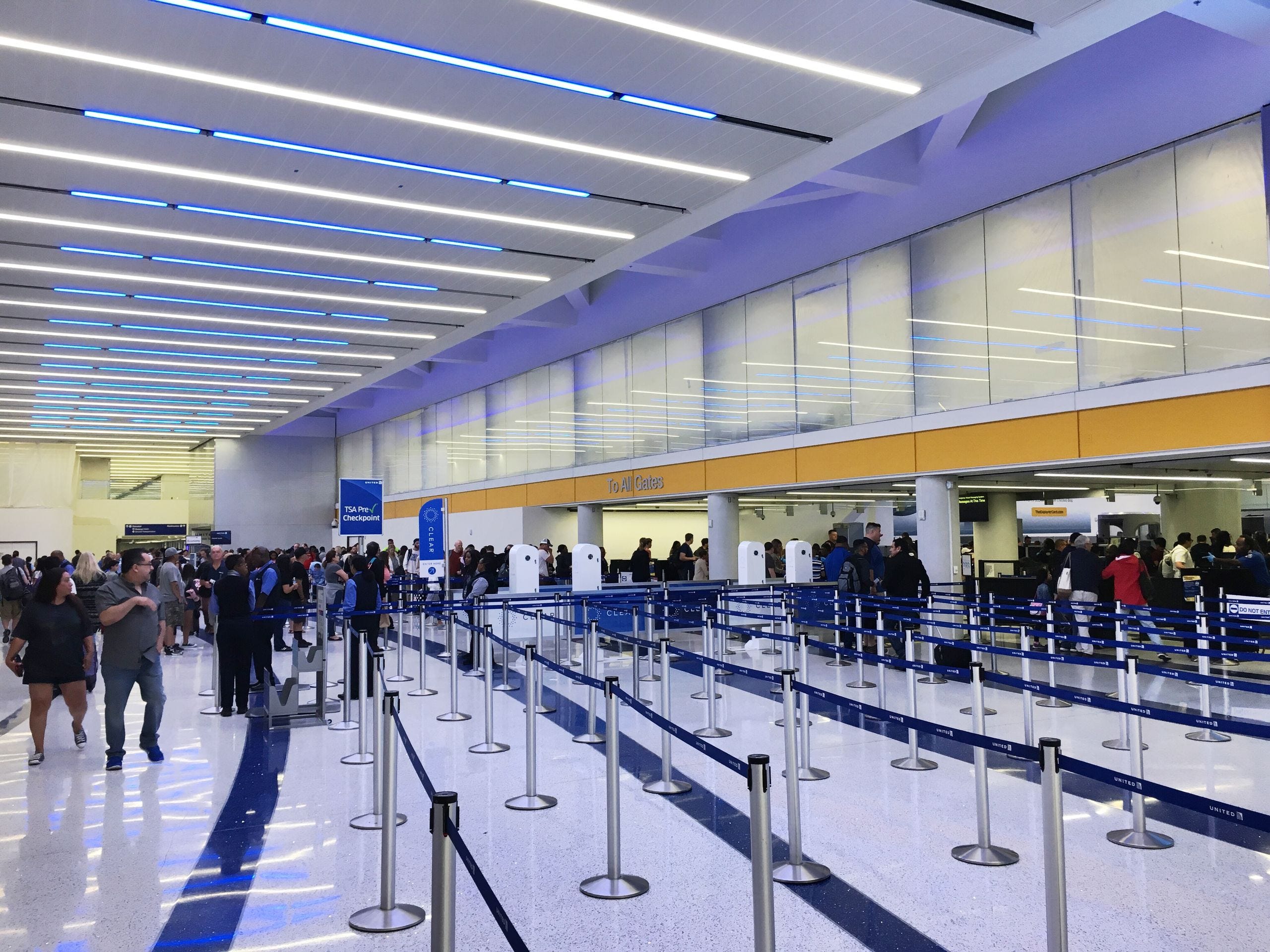
The strongest long-term fix is not agency substitution. It is automatic pay continuity for frontline aviation security and safety personnel whenever appropriations lapse.
Travel and airline groups have now moved from general complaints to specific legislative support, backing measures such as the Keep America Flying Act of 2026, which would provide continuing appropriations for certain TSA screening employees and related support during a shutdown.
That policy direction is reinforced by the March 2026 Pay Federal Aviation Workers campaign, launched by U.S. Travel, Airlines for America, AAAE, and AHLA. The coalition argued that aviation workers should not be used as leverage in funding disputes and pushed Congress to create lasting pay protections for frontline aviation personnel rather than waiting for each shutdown to trigger another scramble.
A serious reform package should go further than paycheck continuity alone. It should also create a protected operating reserve linked to aviation security fee collections, so Congress cannot easily disrupt checkpoint staffing while those fees continue to be collected from passengers.
That would align the funding structure more closely with the public safety mission travelers are already paying for.
Where privatization helps and where it does not
Some analysts point to the Screening Partnership Program as proof that airport security can be buffered from shutdown disruption. Under that program, airports may use private contractors while TSA still retains authority, procedures, training standards, and oversight, and PBS reported that airports such as San Francisco have experienced a degree of insulation because contractor pay continues through existing federal contracts.
But privatization is not a full national answer.
PBS and AP both noted labor concerns, accountability questions, and the risk of uneven standards if the system expands without tight oversight, while GAO’s review of the program shows that even private screening requires disciplined federal cost comparison, ongoing monitoring, and careful reporting to policymakers.
The better reading is that private screening can be a selective resilience tool for some airports, not the single cure for a federal funding design failure.
The aviation system still needs a nationwide rule that keeps core screening operations funded no matter what happens in a Capitol Hill stalemate.
Why modernization still belongs in the fix
Funding stability should be paired with checkpoint modernization, because resilience is not only about payroll.
TSA says computed tomography screening gives officers 3D views of carry-on bags and improves detection of explosives and other threats, while the FY 2026 budget request includes major funding for CT deployment, biometrics research, equipment sustainment, cybersecurity, and staffing across 59,232 positions.
That combination matters because better technology can reduce rechecks, improve throughput, and lower some operational strain, but it cannot compensate for an unpaid workforce over repeated shutdown cycles.
Stable pay, protected operating funds, and continued modernization have to work together.
The practical aviation playbook

1. Automatic pay continuity for TSA screening staff during lapses
2. A protected operating reserve tied to passenger security fees
3. Tight public reporting on absenteeism, attrition, and checkpoint closures
4. Continued CT, identity, and equipment upgrades at checkpoints
5. Selective use of private screening where airports can show a clear case
What aviation stakeholders should press for now?
For airline executives, airport operators, and industry associations, the message to Washington should be straightforward.
Stop treating airport security as a political pressure valve.
The present cycle is now predictable enough to be called a policy design failure rather than a one-off disruption.
If Congress wants to avoid reliving this episode at every standoff, the lasting answer is to protect aviation security operations automatically, not improvise after lines hit terminal lobbies.
That’s the smarter path for system reliability, labor stability, traveler confidence, and national security.