Welcome to AviationOutlook: The aviation newsletter built exclusively for decision-makers.
Become an “Annual” member now & get this special discount offer.
As a paid member, you get access to:
200+ Reports - All major airlines + aerospace & defense companies (updated regularly).
Daily / Weekly - Deep-dive analysis & insights.
Monthly - Industry outlook reports.
In case you missed it, here are the latest analysis reports:
Embraer - Company Analysis and Outlook Report 2026 (Updated)
American Airlines’ Six-Route Europe Play: Yield Discipline or Widebody Overreach?
Check Out All Reports
Buried deep within a 425-page tentative labor agreement between United Airlines and its flight attendants is one clause that could fundamentally alter the structure of U.S. regional aviation.
For the first time in United’s history, the Chicago-based carrier now has contractual permission to create or acquire a wholly-owned regional airline.
It closes a long-standing structural gap between United and its two biggest rivals, American Airlines and Delta Air Lines, both of which have operated their own wholly-owned regional subsidiaries for years.
Also Read:

Recommended - Read Full Reports


Read All Reports
Table of Contents
The Clause That Changes Everything
How United’s Regional Network Currently Operates
What Delta and American Already Have
The Republic Airways Question: Stakes, Mergers, and Complications
The Two-Tier Pay Debate: A Real Labor Flashpoint
The Business Case for a Wholly-Owned Subsidiary
What Actually Happens Next?
The Strategic Read for Industry Stakeholders
The Clause That Changes Everything
The tentative agreement, reached between United and the Association of Flight Attendants-CWA (AFA-CWA) on March 26, 2026, is primarily a five-year pay deal covering more than 30,000 cabin crew members.
But the provision drawing the most attention from aviation strategists is the revised “scope” language.
The contract text reads:

"The Company may create or acquire a controlling interest in and control of a regional carrier conducting United Express flying...

flights of such United Express carrier may be staffed by flight attendants of such carrier unless the flights are operated by United pilots covered by the United pilot agreement, in which case they will be staffed by United flight attendants covered by this agreement."
What this means in plain terms: United can now build or buy its own regional airline, staff it with lower-paid regional flight attendants, and operate it under the United Express brand.
The sole restriction is that if United’s own mainline pilots are flying the aircraft, mainline flight attendants must be used.
This is a significant shift.
Previously, the AFA-CWA contract explicitly blocked United from establishing what the union called an “alter-ego airline” with a separate, lower-cost labor structure.
That protection is now gone, at least for regional flying.

How United’s Regional Network Currently Operates
To appreciate why this clause matters, it helps to understand how United Express currently works.
Unlike its Big Three peers, United has historically relied entirely on capacity purchase agreements (CPAs) with independent carriers to operate its regional network.
United Express operates through partnerships with:

  - Republic Airways (merged with Mesa Air in 2025)
  - SkyWest Airlines
  - GoJet Airlines

United Express accounts for approximately 6% of United's total system capacity (2024 data).
Under this model, United pays these carriers a fixed rate per block hour to operate flights on its behalf.
The regional partner owns the aircraft, manages the crew, and absorbs operational risk, while United controls the schedule and branding.
It’s basically an outsourced model, and one that has served United adequately, but it comes with real limitations around control, flexibility, and long-term reliability.
What Delta and American Already Have
The contrast with United’s competitors is stark. Both American and Delta operate their own wholly-owned regional subsidiaries alongside third-party partners.
American Airlines Group wholly-owned regional carriers:
  - Envoy Air (formerly American Eagle)
  - Piedmont Airlines
  - PSA Airlines

Delta Air Lines wholly-owned regional carrier:
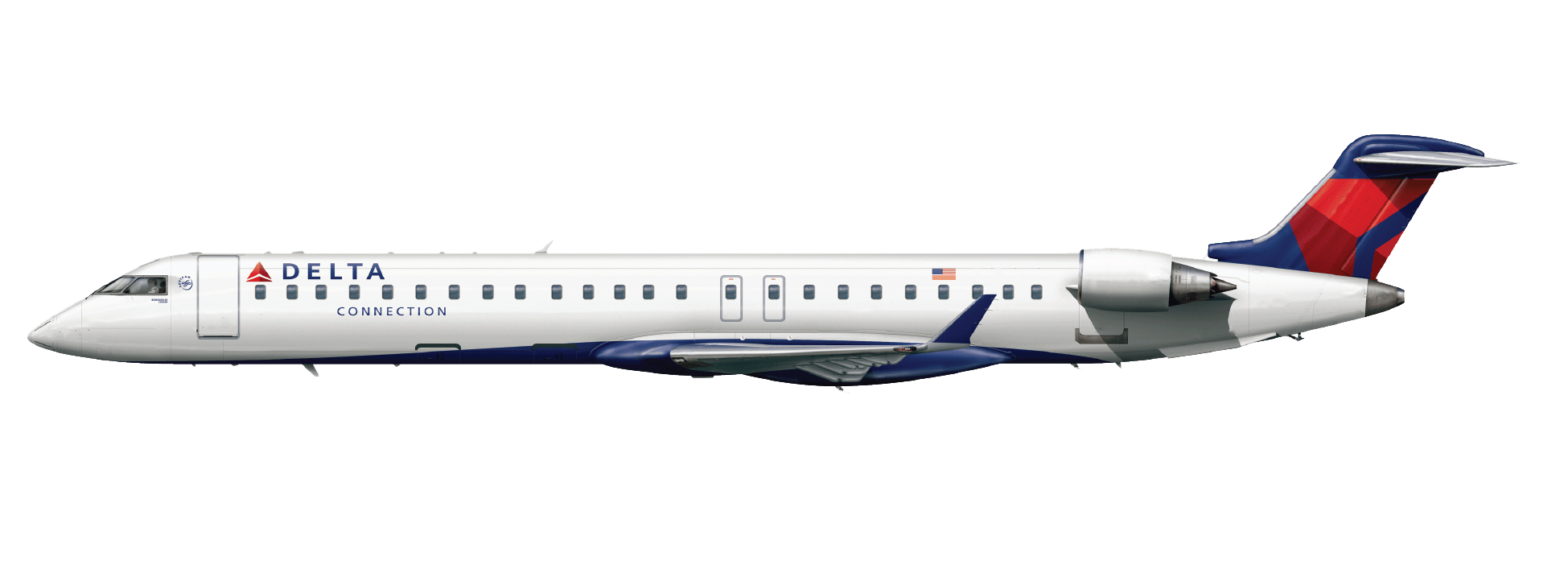
  - Endeavor Air
    → 145 regional jets
    → 750 daily flights
    → 122 destinations across the U.S., Canada, and The Bahamas
Endeavor Air operates exclusively as Delta Connection, giving Delta complete end-to-end oversight of those routes.
American’s three wholly-owned subsidiaries, Envoy Air, Piedmont Airlines, and PSA Airlines, collectively feed significant volume into the American Airlines network.
United has been the outlier. Until now, no contractual pathway existed for it to replicate this structure.