


Executive Summary
Wizz Air Malta operates as the largest subsidiary of the Wizz Air Holdings group by fleet size, flying approximately 125 Airbus A320-family aircraft registered in Malta (9H- prefix) with an average fleet age of around 3.3 years, making it among the youngest and most fuel-efficient fleets in European aviation.
The Maltese subsidiary serves as the primary operational vehicle for Wizz Air’s network across Central and Eastern Europe, Italy, and new long-haul sectors into Saudi Arabia, with 136-plus destinations across roughly 40 countries.
Parent group Wizz Air Holdings carried 68.6 million passengers in calendar 2025 with a 91% load factor, and reported F25 total revenue of €5.27 billion and profit after tax of €213.9 million, though F26 Q3 produced an operating loss of €123.9 million due to GTF engine groundings and Middle East disruption.
The carrier is mid-pivot back to its European core, following a full exit from Abu Dhabi in September 2025, the gradual phase-out of its 41 A321ceo aircraft through March 2029, and the transfer of A321XLRs originally destined for the UAE onto the Maltese certificate.
Recommended - Read Full Reports


Read All Reports
Table of Contents
Executive Summary
Key Facts: Company Profile
Business Overview
Corporate Structure and Role Within Wizz Air Holdings
Financial Performance of the Parent Group
Latest Guidance and the Middle East Disruption
Revenue Drivers and the Ultra-Low-Cost Model
Products and Services
Fleet: In-depth Analysis
Fleet Size and Composition
Fleet Age and Modernity
Aircraft Type Strategy and Configuration
The A321ceo Phase-Out
The A321XLR Strategy
Engine Choice and the GTF Disruption
Fleet Plan to 2030
Route Network, Major Destinations and Strategy
Network Scale and Footprint
Central and Eastern European Core
Italian Network Expansion
Western Europe and the UK
Middle East and the Saudi Arabia Pivot
Cyprus, the Caucasus and Tangential Geographies
Network Strategy Shifts Since 2024
Route Economics and Stage Length
Major Operational Bases (Hubs)
Wizz Air’s Definition and Role of a “Base”
Polish Bases
Italian Bases
London Gatwick and the Long-Haul Anchor
Romanian Bases
Hungarian and Wider CEE Bases
New and Emerging Bases
Competitive Position
Major Competitors
Wizz Air Malta vs Ryanair
Wizz Air Malta vs easyJet
Wizz Air Malta vs Vueling
Wizz Air Malta vs Pegasus Airlines
Wizz Air Malta vs Norwegian, Volotea and Others
Sources of Competitive Advantage
Fleet Renewal, Sustainability and ESG
Emissions and the “Three F’s” Framework
Sustainable Aviation Fuel and Offtake Agreements
CORSIA, EU ETS and Regulatory Exposure
Operational Performance and Reliability
Passenger Traffic and Load Factors
On-Time Performance and Cancellations
Utilisation and Block Hours
Leadership and Governance
Group Leadership Team
Ownership Structure
Key Risks with Probabilities and Scenarios
1. GTF Engine Groundings
2. Middle East Geopolitical Instability
3. Fuel Price Volatility
4. Airport Cost Inflation
5. Competitive Intensity
6. Currency Risk
7. Regulatory and ESG Risk
8. Malta-Specific Jurisdictional Risk
Outlook for 2026 and Beyond
Return to Growth in Summer 2026
Path to 500 Aircraft
Possible Transatlantic Reach
Financial Risk Profile and Balance Sheet
Net Debt and Lease Obligations
Liquidity Position
Hedging and Fuel Cost Management
Other Strategic Considerations
Brand Positioning and Marketing
Distribution and Digital
Crew and Labour
Codeshare and Alliance Strategy
My Final Thoughts
Official Sources and Data
Key Facts: Company Profile
COMPANY: Wizz Air Malta Limited
IATA: W4 | ICAO: WMT | Callsign: WIZZAIR MALTA
PARENT: Wizz Air Holdings Plc (LSE: WIZZ)
HQ: Skyparks Business Centre, Luqa, Malta
EASA AOC: EASA.AOC.003 (issued 22 September 2022)
FOUNDED: 2022 | LAUNCHED OPERATIONS: Late 2022
FLEET (APRIL 2026): ~125 aircraft (Airbus A320-family)
AVERAGE FLEET AGE: ~3.3 years
DESTINATIONS: ~136, across ~40 countries
EMPLOYEES: Part of Wizz Air group (~8,000 staff across group)
GROUP CEO: József Váradi | GROUP CFO: Ian Malin
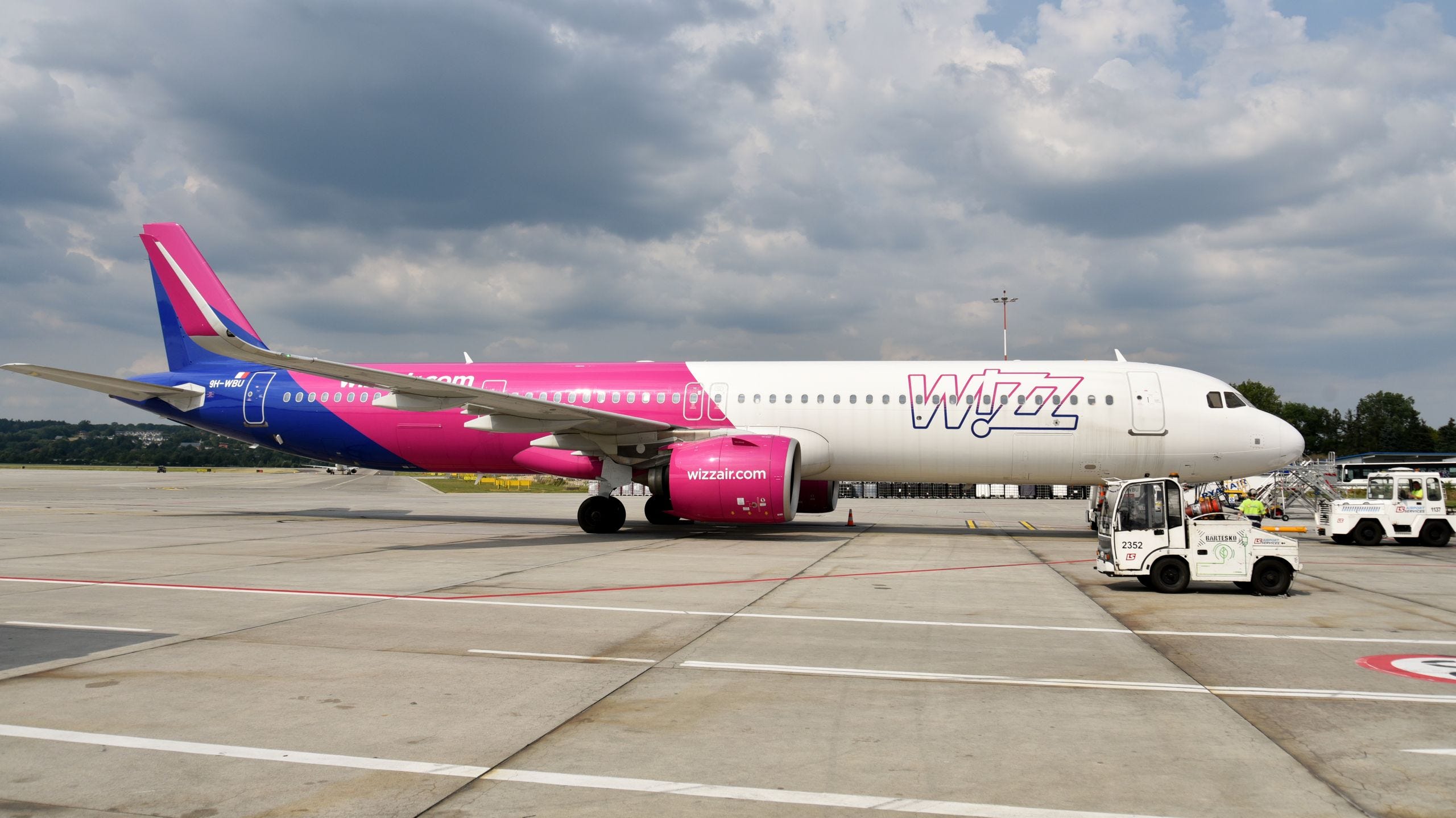
Wizz Air Malta is a Maltese-registered low-cost airline and the principal operating subsidiary within the Wizz Air Holdings group.
It sits alongside the group’s two other air operator certificate (AOC) holders, namely Wizz Air Hungary and Wizz Air UK, after the parallel closure of Wizz Air Abu Dhabi in late 2025.
The Maltese entity was created to ring-fence EU market access and to shift the bulk of the group’s fleet from the Hungarian AOC to a jurisdiction with a more flexible regulatory and commercial framework. Its operator certificate was granted by the European Union Aviation Safety Agency on 22 September 2022.
The airline operates a single-type philosophy built around the Airbus A320 and A321 families, with a very strong lean toward the A321neo high-density variant.
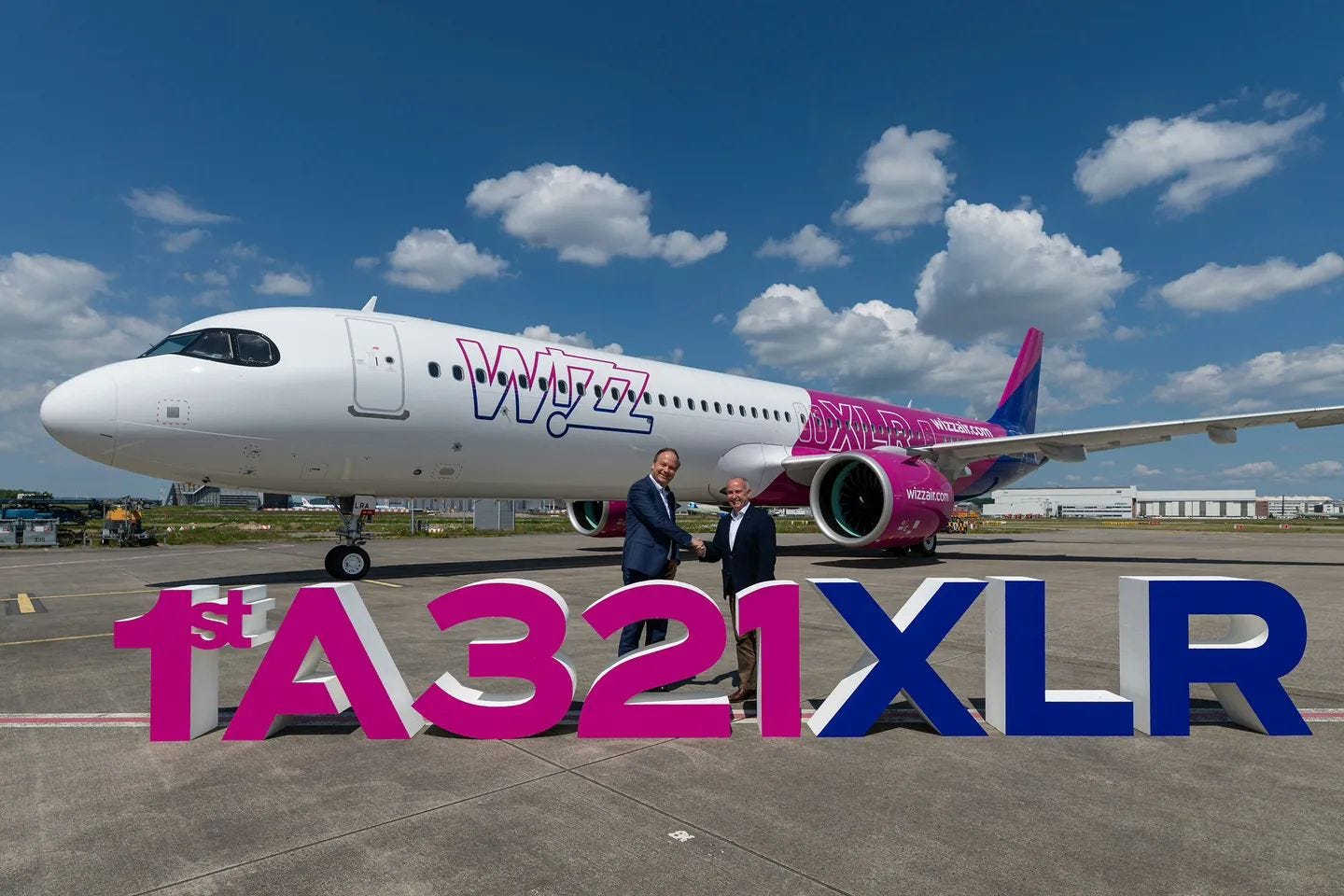
It’s now also the first Maltese operator of the long-range A321XLR.
Business Overview
Corporate Structure and Role Within Wizz Air Holdings
Wizz Air Holdings Plc is listed on the London Stock Exchange under the ticker WIZZ and reports its financial statements on a fiscal year basis ending 31 March.
Wizz Air Malta Limited is one of three active AOC-holding subsidiaries within the group, sitting beside Wizz Air Hungary and Wizz Air UK.
The Maltese carrier was launched to allow the group to consolidate European Union operations on a single, strategically chosen EU certificate. In practical terms, most growth aircraft and most former Hungarian-registered jets have migrated onto Malta, which has become the backbone of daily flying across the network.
The group’s stated purpose, in its own reporting, is to provide ultra-low-cost air travel focused on Central and Eastern Europe while opportunistically expanding into adjacent markets. The Malta AOC is the operational platform that executes most of this mission today.
GROUP SUBSIDIARY OVERVIEW (APRIL 2026)
────────────────────────────────────────
Wizz Air Hungary ....... HA- registration, core legacy AOC
Wizz Air Malta ......... 9H- registration, largest by fleet (~125 aircraft)
Wizz Air UK ............ G- registration, London Luton base
Wizz Air Abu Dhabi ..... Wound down; ceased operations 1 Sept 2025Financial Performance of the Parent Group
Wizz Air Holdings does not publish a standalone income statement for the Malta subsidiary, so the most reliable financial window into the business flows through the consolidated group accounts.
For the financial year ended 31 March 2025 (F25), the group reported total revenue of €5.27 billion, up 3.8% year-on-year, and a profit after tax of €213.9 million. Net debt stood at €4.96 billion at the 31 March 2025 balance sheet date.
In the first half of fiscal year 2026 (the six months ended 30 September 2025), passenger ticket revenue rose 9.0% to €1,926.6 million, ancillary revenue rose 9.0%, and available seat kilometres (ASKs) grew 8.9%. Yield improved by roughly 0.9% year-on-year, with unit revenue (RASK) broadly flat at €0.0498.
Fiscal Q3 F26 (October to December 2025) was far tougher, with an operating loss of €123.9 million, a 63% year-on-year deterioration, driven by higher depreciation from heavier maintenance on older A321ceo jets and persistent GTF engine groundings.
Revenue still grew 10.2% to roughly €1.3 billion on a 12.5% passenger increase, but unit costs moved adversely.
Latest Guidance and the Middle East Disruption
In early March 2026, Wizz Air disclosed that the latest round of Middle East instability would create an estimated €58 million hit to F26 profits, pushing the full-year result below prior guidance. The group had previously guided to a F26 range spanning a loss of €25 million to a profit of €25 million.
CEO József Váradi has indicated that the group expects the bulk of the Iran-linked disruption to be contained within F26, with normalization expected from April 2026 onwards. That framing is relevant because the majority of affected flying, particularly on the A321XLR to Jeddah and Medina, sits under the Malta AOC.
The profit warning underscores how exposed the Maltese subsidiary is to non-European geopolitical variables when it operates the group’s longest and highest-yielding sectors.
Revenue Drivers and the Ultra-Low-Cost Model
The revenue engine under the Wizz model rests on three pillars that apply to the Maltese entity just as much as to the wider group.
These are high-density single-class seating on A320-family aircraft, aggressive ancillary pricing on baggage, seat selection and priority boarding, and very low cost per available seat kilometre (CASK ex-fuel).
Ancillary revenue per passenger has been moving higher across the industry and remains a structural profit lever. The group has consistently reported ancillary revenue growing in line with or faster than ticket revenue, a pattern that continued in H1 F26.
The third driver is stage length. The A321XLR allows Wizz Air Malta to extend into six-to-seven-hour sectors that short-haul European peers cannot serve with narrow-body economics.
KEY REVENUE LEVERS (WIZZ AIR MALTA)
───────────────────────────────────
1. 239-seat A321neo / A321XLR density
2. Sub-€0.030 CASK ex-fuel target
3. Ancillary uplift (bags, seats, priority)
4. Stage-length expansion via A321XLR
5. Aircraft utilization ~12 block hours/dayProducts and Services
Wizz Air Malta sells a single economy cabin with no business class, no hot meal in the ticket price, and no lounge access. Customers pay for seat selection, checked baggage, onboard food and beverage, and priority boarding.
The airline promotes its WIZZ Multipass subscription product, a monthly membership that bundles a fixed number of one-way flights with fees for carry-on, and its WIZZ Discount Club, which grants reduced fares to members. These products are sold through the group’s central distribution platform and apply across all three AOCs.
The fleet is configured for a 239-seat A321neo layout, which sits at the high end of A321 densities in Europe. This configuration is a structural cost advantage.
Fleet: In-depth Analysis
Fleet Size and Composition
As of April 2026, Wizz Air Malta operates approximately 125 aircraft with one further on order or awaiting delivery. The airline registered its 50th aircraft milestone during 2024 and has continued to scale rapidly since.
The fleet is dominated by Airbus A321neo aircraft, complemented by a declining tail of older A321ceo frames, a small Airbus A320neo contingent, and a growing A321XLR subfleet.
Wizz Air Holdings at group level operates a broader mix that includes A320ceos still on the Hungarian AOC.
At parent-group level, the most recent disclosures list approximately 167 A321neos in service with 265 on order, along with 6 A321XLRs currently in service and 5 remaining on firm order after the recent XLR order cut.
Fleet Age and Modernity
The average fleet age of Wizz Air Malta sits around 3.3 years, which compares very favourably to major European legacy carriers and even to peer low-cost airlines. Several large legacy groups run A320-family averages well above eight years.
Modernity matters for three reasons. It reduces fuel burn per seat, it reduces non-routine maintenance costs, and it allows the airline to market itself as one of the lowest-emitting major airlines per passenger kilometre.
The group has been recognised internally as topping major airline lowest-emissions rankings for 2024 to 2025 results on a grams-CO2-per-passenger-kilometre basis.
WIZZ AIR MALTA FLEET SNAPSHOT (APRIL 2026)
──────────────────────────────────────────
Airbus A321neo ...... Backbone type (~95+ active)
Airbus A321ceo ...... Being phased out by March 2029
Airbus A320neo ...... Small subfleet
Airbus A320ceo ...... Minimal presence on Malta AOC
Airbus A321XLR ...... Growing subfleet, Saudi services
Registration prefix . 9H-
Seating (A321neo) ... 239 single-class economyAircraft Type Strategy and Configuration
The carrier’s aircraft-type strategy is built around a single-airframe family to minimise training cost, maintenance spares inventory and crew complexity.
This aligns with the broader ultra-low-cost carrier playbook but is executed with unusual purity by the Wizz group.
The A321neo is configured for 239 seats in a single-class layout. This is essentially the maximum certified density for a conventional A321neo in Europe, achieved through slimline seats, reduced galley space and a rear lavatory arrangement that preserves seat count.
The A321XLR, by contrast, is the airline’s first aircraft capable of serving long stage lengths.
The first A321XLR registered in Malta, 9H-XLA, was certified by Transport Malta’s Civil Aviation Directorate, marking Malta’s first commercial XLR registration. Additional frames including 9H-XLD followed in March 2026.
The A321ceo Phase-Out
Wizz Air has initiated a structured phase-out of all 41 Airbus A321ceo aircraft from the broader group, to be completed by March 2029. Most of these aircraft are operated by Wizz Air Malta and by the Hungarian AOC.
The first A321ceo to leave was originally delivered in December 2016. The phase-out will shift the fleet decisively toward an all-neo, all-XLR profile by the end of the decade.
The stated rationale is threefold. The ceo generation is less fuel-efficient, has higher maintenance check costs as airframes age, and is no longer aligned with the group’s emissions roadmap.
The A321XLR Strategy
The A321XLR is the most strategically significant fleet addition of the current decade for Wizz Air Malta. It is a narrow-body aircraft with an extended range capability of roughly 4,700 nautical miles, certified to carry a standard Wizz single-class payload over routes that previously required wide-body equipment.
The airline originally committed to 47 A321XLRs, but has since converted most of that commitment back to standard A321neos. Current firm exposure is approximately 11 aircraft, of which six are in service as of March 2026.
The XLRs that remain in the fleet are being deployed primarily from London Gatwick to Saudi Arabia, with Jeddah and Medina already active. The Gatwick to Jeddah sector, at up to six hours and 55 minutes, is the longest scheduled flight in the Wizz group.
Engine Choice and the GTF Disruption
Wizz Air Malta is an all-Pratt & Whitney GTF customer, with the PW1100G-JM powerplant on every A320neo-family aircraft in the fleet. That single-engine choice has cost the airline dearly over the past 24 months due to accelerated powder metal-related inspection requirements.
As of 31 December 2025, the group had 33 aircraft grounded due to GTF engine-related inspections, down from 40 a year earlier. Management expects average groundings of 30 to 35 aircraft through the end of F26, reducing to 20 to 25 aircraft by the end of F27.
Full normalisation is targeted for end of 2027, assuming a 250-day engine shop visit turnaround. The groundings have cost the group significant capacity and have been a primary driver of fleet-growth deferrals agreed with Airbus in November 2025.
Fleet Plan to 2030
Wizz Air Holdings publicly targets a fleet of 500 aircraft by 2030, of which the Malta AOC is expected to hold the largest share. The group celebrated its 250th aircraft delivery in November 2025, a symbolic halfway mark.
The growth trajectory has been reshaped post-groundings. The amended Airbus agreement announced on 7 November 2025 reset annual fleet growth to roughly 10% to 12% from fiscal 2027 onwards, slower than the pre-pandemic growth trajectory.
The longer-term vision includes a complete transition to A321neo and A321XLR aircraft by 2033, with the A320 family eventually disappearing entirely from the roster.
FLEET TRAJECTORY (WIZZ GROUP)
─────────────────────────────
End F25 (Mar 2025) ........ 231 aircraft (group)
Mid-2025 milestone ........ 250th aircraft delivered
End F28 (Mar 2028) ........ ~305 aircraft (group target)
End F30 (Mar 2030) ........ ~420-500 aircraft (target)
By 2033 ................... ~380+ all-neo/XLR fleet