


Executive Summary
Copa Holdings closed full-year 2025 with total operating revenue of US$3.62 billion, net profit of US$671.6 million, and a net margin of 18.6%, supported by a load factor of 87.0% and capacity growth of 7.8% year over year.
The carrier operates a single-aircraft-family fleet of 126 Boeing 737 jets (as of January 2026), with a $13.5 billion order signed in April 2026 for up to 60 additional 737 MAX aircraft, paving the way for roughly 200 aircraft by 2034.
Operations are anchored in the Hub of the Americas at Tocumen International Airport, currently linking 88 destinations across 32 countries in North, Central, South America, and the Caribbean.
Strategic levers for 2026 include the rollout of free Starlink Wi-Fi starting October 2026, a US$1.71 quarterly dividend, an extended 15-day transit policy at Tocumen, and ongoing capacity buildup at the low-cost subsidiary Wingo.
Recommended - Read Full Reports


Read All Reports
Table of Contents
Executive Summary
Introduction
Copa Airlines Company Profile: Key Facts
Copa Airlines Revenue and Financial Analysis
Top-Line Revenue Performance in 2025
2025 Profitability Metrics
Operating Expense Structure
What the Cost Curve Tells Us
Quarterly Performance and 2026 Trajectory
Capital Returns to Shareholders
Revenue Growth Drivers
Copa Airlines Fleet Analysis
Fleet Size and Composition (2026)
The All-Boeing-737 Single-Type Strategy
The April 2026 Boeing Mega-Order
Why the 737 MAX 10 Matters
Fleet Age and Modernization Profile
Cabin Configuration and Product Strategy
Why Lie-Flat on a Narrowbody Matters
Cargo Fleet and Belly Capacity
Copa Airlines Route Network, Major Destinations, and Strategy
Network Footprint at a Glance
The Hub-and-Spoke Architecture
Bank Structure and Connection Geometry
New Routes and Network Additions in 2025-26
2026 Growth Targets
Geographic Coverage by Region
The 15-Day Transit Policy
Codeshare and Interline Footprint
Major Operational Bases (Hubs)
Tocumen International Airport (PTY)
Hub Expansion and Capacity Headroom
Bogota as a Secondary Operating Base
Other Operating Footprints
Copa Airlines Competitive Position
Copa’s Position in Latin American Aviation
Major Competitors
Copa vs. LATAM Airlines Group
Copa vs. Avianca
Copa vs. Aerolineas Argentinas, Gol, and Azul
Copa vs. U.S. Legacy Carriers
Wingo and the Low-Cost Subsidiary Layer
Loyalty, Operational Excellence, and Customer Experience
ConnectMiles and the Star Alliance Layer
Operational Excellence and Punctuality
Drivers of On-Time Performance
Inflight Connectivity Rollout
Why Starlink Matters for Operations
Industry Context: Latin American Aviation in 2026
Demand Backdrop
Macroeconomic and Regional Dynamics
Fuel Cost Environment
Key Risks for Copa Airlines
Risk 1
Risk 2
Risk 3
Risk 4
Risk 5
Risk 6
Risk 7
Risk 8
Risk 9
Risk 10
Strategic Outlook for the Rest of the Decade
From 126 to ~200 Aircraft
Network Implications
Premium and Loyalty Implications
My Final Thoughts
Official Sources and Data
Introduction
Few carriers in the Western Hemisphere quietly punch above their weight the way Panama’s flag carrier does.
With 125 aircraft at the close of 2025, an operating margin of 22.6%, and an 11th regional punctuality crown from Cirium in 2025, Copa Holdings is the rare Latin American operator that has translated a small home market into one of the most profitable airline franchises anywhere.
Three numbers frame the 2026 story for industry stakeholders: a $13.5 billion order for up to 60 additional Boeing 737 MAX jets, a path toward roughly 200 aircraft by 2034, and a target of 27 million passengers by decade-end.
This report dissects the fleet plan, route strategy, hub economics, competitive dynamics, execution risks that sit behind those headline figures, and more.
Let’s analyze everything in detail.
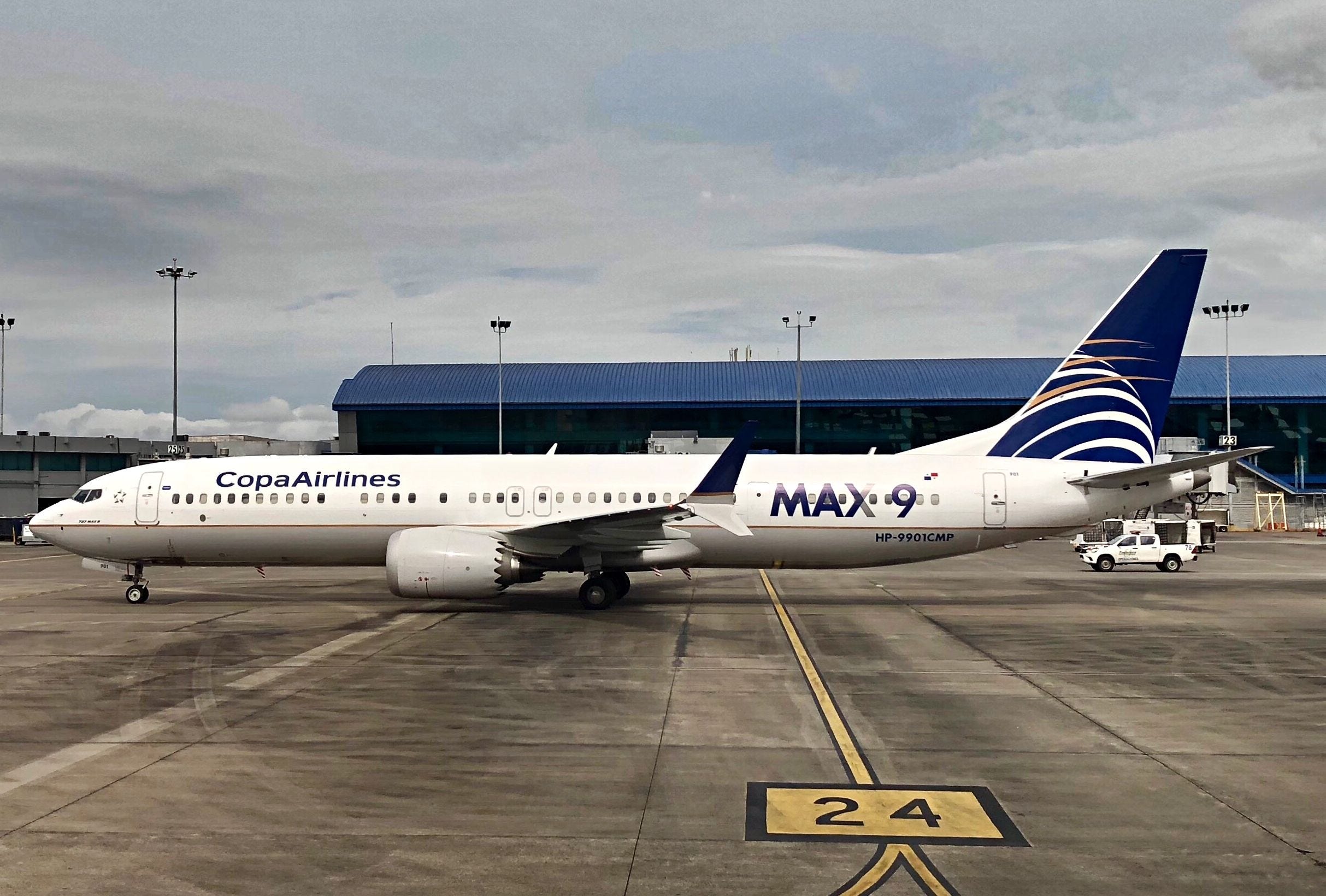
Copa Airlines Company Profile: Key Facts
COMPANY:               Copa Holdings, S.A. (operating Copa Airlines)
TICKER:                NYSE: CPA
HEADQUARTERS:          Panama City, Republic of Panama
PRIMARY HUB:           Tocumen International Airport (PTY)
FOUNDED:               1947 (National Airline of Panama)
CEO:                   Pedro Heilbron
ALLIANCE:              Star Alliance (member since 2012)
LOYALTY PROGRAM:       ConnectMiles
SUBSIDIARIES:          Copa Airlines Colombia, Wingo (low-cost)
FLEET (Jan 2026):      126 Boeing 737 family aircraft
NETWORK:               88 destinations across 32 countries
2025 REVENUE:          US$3.62 billion
2025 NET PROFIT:       US$671.6 million
2025 OPERATING MARGIN: 22.6%
2025 LOAD FACTOR:      87.0%
PASSENGERS (2026E): ~20.9 million projectedThe Panamanian flag carrier traces its origins to a partnership between Panamanian investors and Pan American World Airways, beginning domestic operations on Douglas DC-3 aircraft. After exiting domestic flying in 1980, Copa pivoted exclusively to international service, a decision that ultimately made the airline what it is today.
The holding company, Copa Holdings, S.A., trades on the New York Stock Exchange and consolidates Copa Airlines (Panama), Copa Airlines Colombia, and the ultra-low-cost carrier Wingo. As of December 31, 2025, 41,138,553 common shares were outstanding.
CEO Pedro Heilbron has led the airline since 1988, an unusually long tenure that has provided continuity through Latin America’s repeated currency crises, fuel shocks, and pandemic-era disruptions. That stability is itself a competitive feature, as discussed later.
Copa Airlines Revenue and Financial Analysis
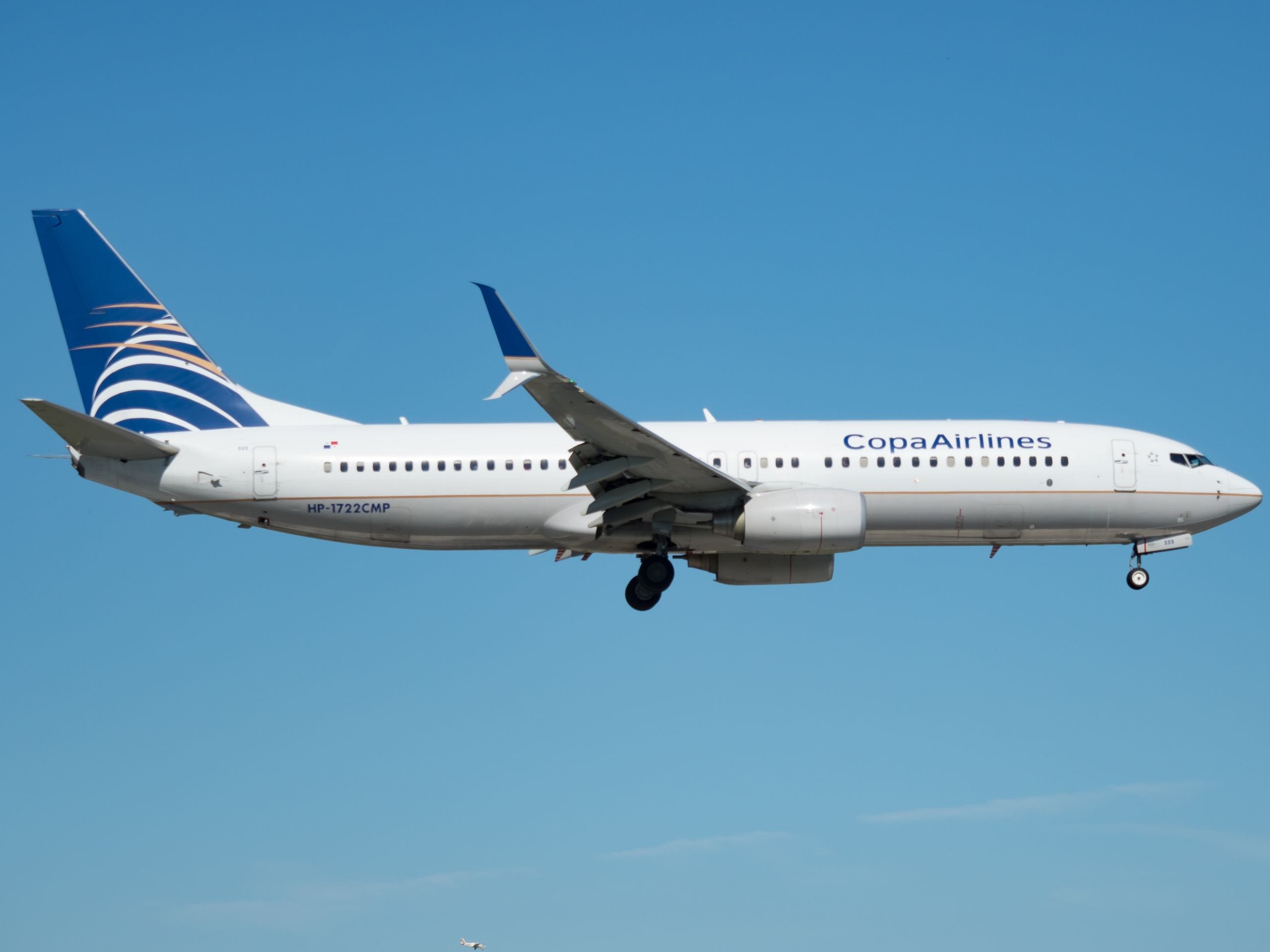
Top-Line Revenue Performance in 2025
Copa Holdings posted total operating revenue of US$3,617.8 million for full-year 2025, an outcome that placed the airline among the most consistently profitable carriers in the Americas.
That figure rose on the back of 7.8% ASM (available seat mile) capacity growth and a 0.7 percentage-point improvement in load factor to 87.0%. The combination of more seats flown and a higher fill rate offset a moderate softening in unit revenue.
Revenue per available seat mile (RASM) came in at 11.2 cents for 2025, a 2.6% decline from 2024. Management has framed this dilution as the natural consequence of faster capacity growth in shorter-haul segments and competitive yield pressure on certain South American routes.
2025 Profitability Metrics
The 2025 operating margin reached 22.6%, with net margin at 18.6% — both improvements over 2024 by 0.8 and 1.0 percentage points respectively. Net profit of US$671.6 million translated into earnings per share of US$16.28, an 11.9% year-over-year increase.
COPA HOLDINGS — FULL YEAR 2025 KEY METRICS
Total Operating Revenue:       US$3,617.8 million
Total Operating Expenses:      US$2,798.9 million
Operating Profit (implied):    US$818.9 million
Operating Margin:              22.6%
Net Profit:                    US$671.6 million
Net Margin:                    18.6%
EPS:                           US$16.28
Capacity Growth (ASMs):        +7.8%
Load Factor:                   87.0%
RASM:                          11.2 cents
CASM:                          8.6 cents
CASM ex-fuel: 5.8 centsThe fact that operating margin expanded despite a slight RASM decline tells the most important story in the financial profile: cost discipline. CASM (operating cost per ASM) fell by 3.6% to 8.6 cents, while ex-fuel CASM declined 0.7% to 5.8 cents.
Operating Expense Structure
Operating expenses for 2025 totaled US$2,798.9 million, broken down across nine major categories. Fuel remained the largest line item at US$932.3 million, accounting for roughly 33% of total expenses.
Wages, salaries, benefits, and other employee-related costs represented US$502.0 million. Depreciation and amortization came in at US$365.1 million, reflecting a fleet that, while young by industry standards, is now substantially owned rather than leased.
Other significant categories included airport facilities and handling charges (US$270.0 million), sales and distribution (US$208.3 million), maintenance (US$156.7 million), and flight operations (US$141.3 million).
What the Cost Curve Tells Us
The 2025 ex-fuel CASM of 5.76 cents reflects how aggressively Copa has pushed unit costs down through fleet renewal, a single-type Boeing 737 strategy, and disciplined sourcing.
For context, ex-fuel CASM in the high-5 cents range puts Copa in the same neighborhood as some of the most efficient North American operators, which is remarkable for a carrier whose home market generates only a fraction of the demand seen at U.S. or Brazilian gateways.
The lever that delivered cost compression in 2025 was the fleet itself. As 737 MAX aircraft displaced older Next-Generation 737-800s, the weighted seat-mile cost dropped through both fuel-burn improvements and higher seat counts on MAX 9 aircraft.
Quarterly Performance and 2026 Trajectory
Fourth-quarter 2025 results showed RASM of 11.3 cents, a 0.3% year-over-year decline, while CASM ticked up 1.6% to 8.8 cents. ASM growth in Q4 reached 9.9%, reflecting accelerated fleet deliveries.
January 2026 traffic statistics showed capacity growth of 11.9% with passenger traffic (RPMs) up 13.3%. By March 2026, ASM growth had reached 14.8%, with RPMs up 15.3% and a load factor of 86.7%.
The Q1 2026 earnings release, scheduled for May 13, 2026, will be the first full quarter to reflect the accelerated growth tempo announced alongside the new Boeing order.
Capital Returns to Shareholders
Copa Holdings declared a 2026 quarterly dividend of US$1.71 per share, payable in March, June, September, and December. The first installment was paid March 13, 2026, to shareholders of record as of February 27, 2026.
That annualized US$6.84 per share level represents a meaningful escalation in capital returns and signals management’s confidence in cash generation against a backdrop of rapid fleet expansion. The board has historically blended dividends with opportunistic share repurchases.
The capital-returns posture matters for industry stakeholders because it tells fleet planners how much of internally generated cash is committed to shareholders versus aircraft. Copa appears to believe both can coexist.
Revenue Growth Drivers
Three structural revenue drivers carried the 2025 result. The first is the single-hub connecting model, which lets Copa monetize one transit ticket as multiple high-yield segments.
The second is the network-density effect: more daily frequencies on existing routes, which raises business-traveler willingness to pay and improves connection optionality. The third is premium-cabin growth on 737 MAX 9 aircraft equipped with lie-flat Dreams Business Class.
Cargo, ConnectMiles, and ancillary revenues round out the picture, although the airline does not break out ancillary revenue at the same level of detail as some North American peers.
Copa Airlines Fleet Analysis
Fleet Size and Composition (2026)
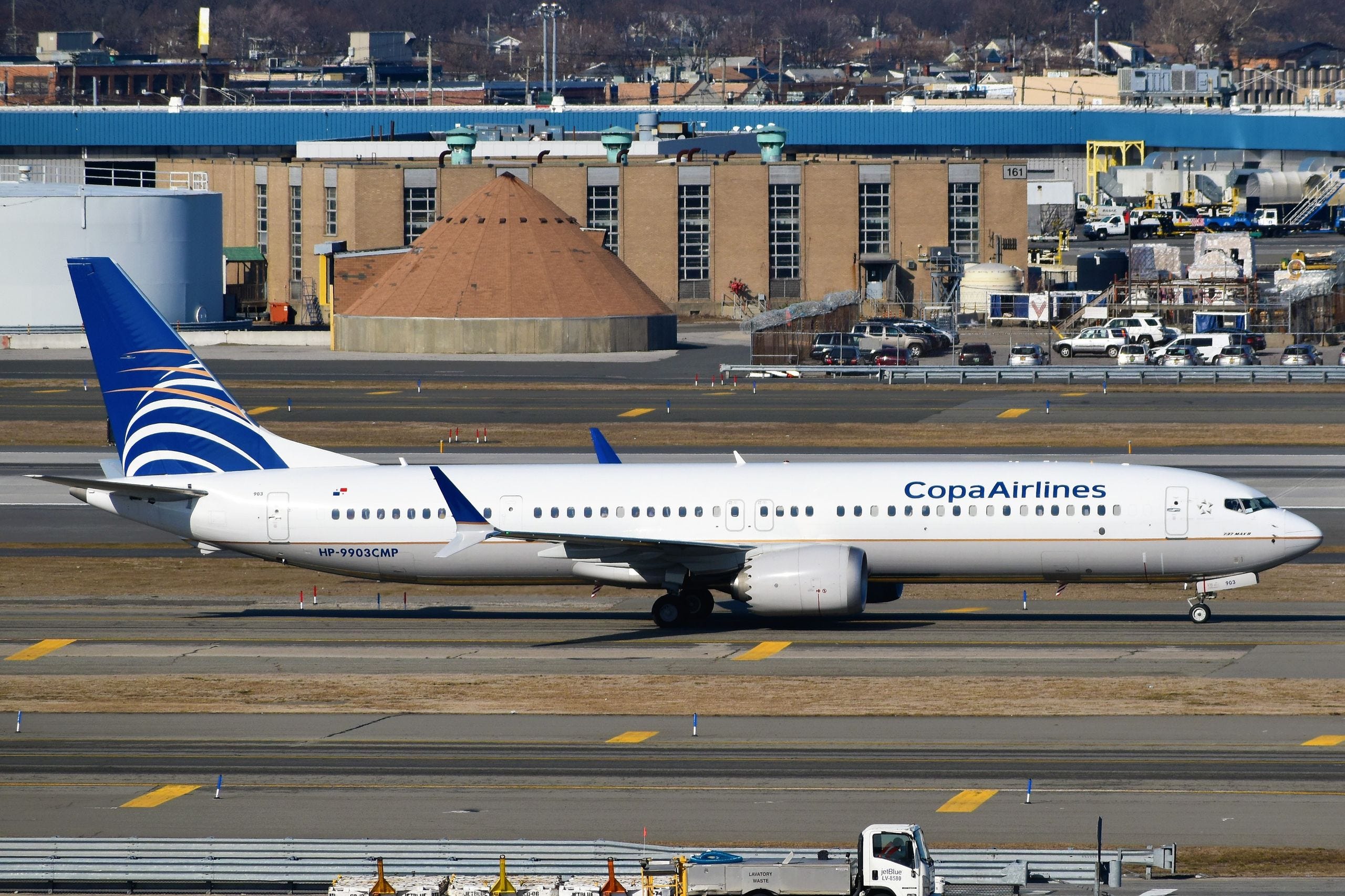
Copa Airlines closed 2025 with 125 aircraft and added one more Boeing 737 MAX 8 in January 2026, bringing the active fleet to 126 jets. The current fleet age averages 9.5 years, among the youngest profiles for any large Latin American carrier.
The fleet is composed entirely of variants in the Boeing 737 family. According to Copa’s published fleet page, the active types include the 737-700, 737-800 (Next-Generation), 737 MAX 8, and 737 MAX 9 in two configuration sub-variants. The MAX 10 will join later this decade.
COPA AIRLINES FLEET COMPOSITION (Early 2026)
Boeing 737-700:          Mainline narrowbody
Boeing 737-800:          Mainline narrowbody (largest legacy block)
Boeing 737 MAX 8:        Newest deliveries 2025-26
Boeing 737 MAX 9 "A":    13 aircraft, 16 Dreams Business + 150 main
Boeing 737 MAX 9 "B":    16 aircraft, 12 Dreams Business + 154 main
737-800 Freighter (BCF): Cargo conversions
TOTAL ACTIVE:            126 aircraft (January 2026)
The mix of two MAX 9 cabin sub-variants reflects deliberate engineering choices about premium-cabin density. Routes with stronger business demand fly the 16-seat configuration while leisure-leaning markets receive the 12-seat layout.
The All-Boeing-737 Single-Type Strategy
The single-type fleet strategy is the operational backbone of Copa’s economics. Copa operates only Boeing 737 family aircraft, which simplifies maintenance, training, scheduling, and spares.

The benefits compound. Pilots can be cross-utilized across all aircraft, mechanics need certifications for one airframe family, parts inventory can be concentrated, and the airline can negotiate pricing leverage with Boeing as a long-term anchor customer.
CEO Pedro Heilbron emphasized this in the April 2026 announcement, saying the airline benefits from operational commonality across its fleet of more than 110 737 jets, including the Next-Generation 737, 737 MAX, and 737 Boeing Converted Freighters.
The April 2026 Boeing Mega-Order
On April 28, 2026, Copa announced the purchase of 40 firm Boeing 737 MAX airplanes with options for up to 20 additional aircraft, valued at approximately US$13.5 billion at list prices.
The signing ceremony in Panama brought together Boeing Commercial Airplanes CEO Stephanie Pope, Panama President José Raúl Mulino, GE Aerospace CEO Larry Culp, and Copa CEO Pedro Heilbron. Deliveries are scheduled for 2030 through 2034.
When combined with the existing order book, Copa’s total 737 MAX intake over the period exceeds 100 airplanes. Reuters reported the carrier expects to more than 27 million passengers by the end of the decade, growing from 20.9 million projected for 2026.
COPA — TOTAL FUTURE 737 MAX PIPELINE (As of April 2026)
Existing in operation:        38 MAX 8/9 aircraft
On the way (existing book):   16 aircraft
737 MAX 10 commitment:        15 aircraft
April 2026 firm order:        40 aircraft (deliveries 2030-2034)
April 2026 options:           Up to 20 additional
Trajectory: ~200-aircraft fleet by 2034Why the 737 MAX 10 Matters
The 737 MAX 10 is the largest variant in the family, with up to 230 seats in a high-density layout. Copa has 15 MAX 10s on order, an aircraft type designed for the airline’s highest-density and busiest leisure-heavy routes.
The MAX 10 will enable Copa to grow capacity on existing slots without adding frequencies, particularly important at slot-constrained airports such as parts of Tocumen during peak banks. It also brings the lowest seat-mile cost in the family.
For network planners, the MAX 10 is an unlock on hub-bank productivity. Copa can carry more passengers in a single connecting wave without adding metal, freeing slot capacity for new destinations.
Fleet Age and Modernization Profile
The fleet’s average age of 9.5 years masks an important dynamic. The 737 NG sub-fleet skews older while the MAX additions are pulling the weighted average down each quarter.
Industry trackers show the Boeing 737 NG/MAX combined fleet at roughly 113-117 aircraft with approximately 9.6 years average age. With 40 to 60 new MAX deliveries arriving from 2030 onward and older 737-800s rotating out, average age should compress further.
Younger fleets matter for stakeholders because they correlate with lower fuel burn, lower maintenance, fewer dispatch reliability issues, and better passenger experience. Each percentage point of fuel efficiency translates into millions of dollars at Copa’s scale.
Cabin Configuration and Product Strategy

The Dreams Business Class product on the 737 MAX 9 features lie-flat seats in a 2-2 layout, an unusually generous configuration for narrowbody aircraft serving medium-haul routes within the Americas.
Two layouts coexist in the active fleet: a 16-seat business cabin in four rows for business-leaning markets and a 12-seat business cabin in three rows for leisure-leaning markets. Both deliver full-flat sleep, USB ports, and adjustable headrests.
Main cabin configurations include 150 or 154 economy seats depending on the sub-variant, putting MAX 9 total capacity at 166 to 170 passengers. This is meaningfully higher than the 737-800’s typical 160-seat configuration, supporting the unit-cost reduction story.
Why Lie-Flat on a Narrowbody Matters
Most narrowbody aircraft in the Western Hemisphere offer a recliner-style premium product on flights of three to seven hours. Copa’s lie-flat investment is unusual and differentiating.
The product allows the airline to compete for premium traffic on routes such as Panama City to Buenos Aires (more than seven hours) and Panama City to Los Angeles (just under seven hours), where comfort expectations approach widebody norms.
For the route planner, this means Copa can operate longer 737 MAX missions without the cabin product becoming a competitive disadvantage against widebody competitors.
Cargo Fleet and Belly Capacity
Copa’s Boeing 737-800 BCF (Boeing Converted Freighter) operations supplement passenger belly capacity. Copa Cargo handles general consolidated cargo, perishables, valuables, dangerous goods, and time-definite shipments through its hub.
Belly cargo on passenger aircraft remains the larger contributor to cargo revenue, but the 737-800BCF gives Copa flexibility to operate dedicated freight rotations on routes where demand justifies it. Cargo offices span major Latin American gateways including Asuncion, Buenos Aires, Bogota, Lima, Sao Paulo, and Miami.
For the freight forwarder community, Copa’s hub geography gives it a structural advantage on intra-Americas shipments, particularly perishables flowing from South America to North America.