


Welcome to AviationOutlook: The aviation newsletter built exclusively for decision-makers.
Read by the people who run this industry. Become a paying member and gain full access now.
As a paid member, you get access to:
200+ Reports - All major airlines + aerospace & defense companies (updated regularly).
Deep-dive analysis & insights.
Industry outlook reports.
Recommended:
Check Out All Reports
Delta Air Lines confirmed on October 12 that it will delay the planned launch of its nonstop Atlanta to Riyadh service until March 2027. The first flight had been scheduled for October 23, eleven days after the announcement.
The headline might read like a routine schedule change. However, the detail underneath shows how regulator advisories and partner readiness decide whether this long-haul route between the United States and Saudi Arabia can operate at all.
Let’s analyze everything in detail.
Are you a part of a team?
Equip your whole team with aviation industry intelligence. Consider “Group” plan.
What Delta Changed
Delta cited “evolving developments in the region” and said the safety and security of customers and employees guide its operational decisions. It also said Saudi Arabia remains an important market and that it looks forward to connecting the kingdom to its network in March 2027.
Customers holding tickets can rebook through the Fly Delta app or delta.com, and refunds are available for the unflown portion of affected trips. Delta has not published an exact restart date.
Delta position:   safety and security guide operating decisions
Partners named:   Saudia, Riyadh Air
Customer remedy:  rebooking and refunds for unflown trips
Restart date:     March 2027, day not specified
The Route as Designed
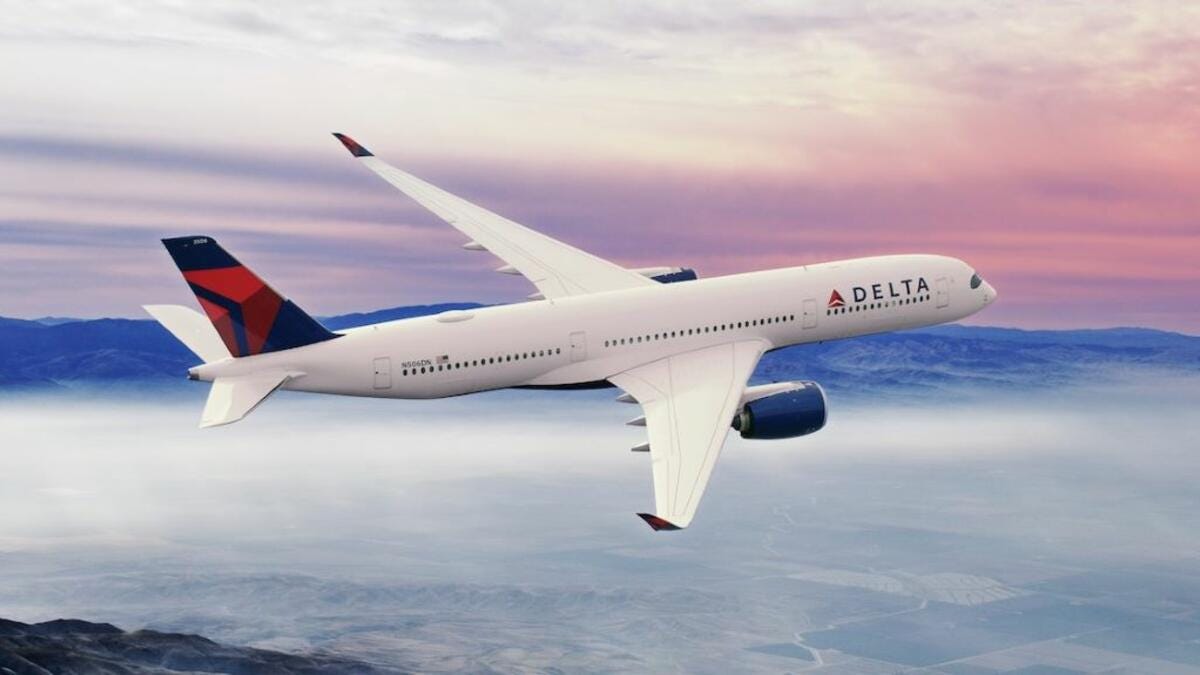
The service was built around a 7,000-mile sector, one of the longest in Delta’s network, flown by the 275-seat Airbus A350-900. The cabin split is 40 Delta One, 40 Premium Select and 175 in Comfort and Main.
Premium seats make up about 29% of the aircraft (80 of 275). Published block times run 12 hours 55 minutes from Atlanta and 15 hours 7 minutes on the return, which adds up to roughly 28 hours of aircraft time per round trip.
Delta’s plan called for three flights a week after a daily launch window from October 23 to 30.
Aircraft:         Airbus A350-900, 275 seats
Cabins:           40 Delta One / 40 Premium Select / 175 Comfort + Main
Block time:       12h55 outbound, 15h07 return (about 28h per round trip)
Planned pattern:  daily Oct 23-30, then 3x weekly
Why Safety Drove the Timing
Two forces set the timing: what’s physically happening at Riyadh’s airport, and what regulators advise operators to do. Both moved sharply this month.
1: repeated strikes on Saudi airports (early October onward)
2: new or revised FAA and European advisories (Oct 9 and Oct 11)
An Airport Under Repeated Attack
King Khalid International Airport has been hit several times this month. A strike on Saturday killed 13 people and injured more than 300, and a second attack on Sunday hit Terminal 4, bringing the toll to 14 dead by the count of Saudi authorities.
On Sunday only one of 354 scheduled Riyadh departures operated. Across the kingdom, 623 of 1,096 departures failed to fly.
The airport stays closed until October 17 at the earliest, and that date can move. Delta’s chief executive had already said days earlier that safety would decide whether the launch proceeded.
Riyadh, Oct 11:       353 of 354 departures cancelled or not flown (99.7%)
Saudi Arabia, Oct 11: 623 of 1,096 departures (56.8%)
Saudi Arabia, Oct 8-13: 2,018 of 6,608 departures (30.5%, last two days preliminary)
Riyadh Air, Oct 11:   all 17 scheduled departures cancelled
The Houthi movement has also told airlines to avoid Saudi airports unless Saudi military operations in Yemen stop.
That ties the restart of Gulf flying to a political outcome that no airline controls.
Regulators Set the Calendar
The US aviation regulator told American operators on Sunday to exercise caution flying to or over Saudi Arabia, citing military activity and possible interference with navigation systems. That FAA advisory runs through December 10.
European authorities revised their conflict zone bulletin on October 9. It tells operators to avoid defined portions of the Jeddah flight information region and to use caution across the remainder, with validity to November 16 unless reviewed earlier.
A March restart sits beyond both expiry dates. Delta is effectively betting that both advisories lapse or soften before it loads and sells a new schedule.
Oct 17, 2026   Riyadh airport closure notice currently runs to this date
Nov 16, 2026   European conflict zone bulletin validity ends unless reviewed
Dec 10, 2026   FAA advisory validity ends
March 2027     Delta's new target month
Demand Was Already Soft
Delta’s president said in July that ticket sales were softer than anticipated because of the Iran conflict, and he expected the weakness to be temporary. He also described Riyadh as the region’s safe haven at that point, a view the October strikes have overturned.
The airline had already planned to cut to three weekly flights after launch week and had discounted SkyMiles award rates on the route. The daily launch window was timed just ahead of the Future Investment Initiative conference, which runs October 26 to 29 in Riyadh.
Cost pressure adds to the picture.
Delta’s total unit cost rose 25% in the September quarter while its non-fuel unit cost rose 7.3%, and its December quarter outlook assumes an all-in fuel price near $4.25 per gallon.
An ultra-long-haul sector carries the biggest fuel bill per departure. At that fuel price a thin route needs a higher share of seats filled to break even.
Demand signals before the strikes:
  - Sales "softer than anticipated" (Delta president, July)
  - Frequency cut to 3x weekly planned after launch week
  - Discounted SkyMiles award pricing on the route
Cost signals: unit cost +25%, non-fuel unit cost +7.3% (Sept quarter)
Fuel assumption: about $4.25 per gallon, December quarter