


On February 28, 2026, the United States and Israel launched coordinated strikes on Iran under what U.S. military officials designated as Operation Epic Fury. The fallout was immediate, severe, and global for the aviation industry.
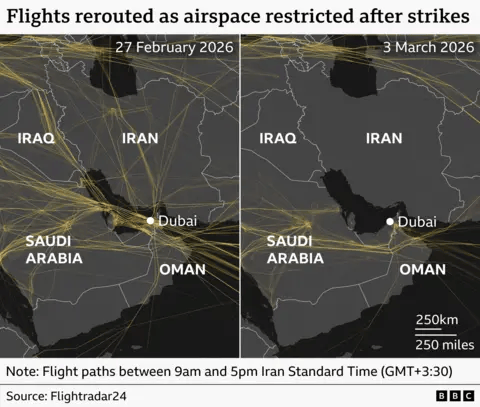
Within days, airspace over Iran, Iraq, the UAE, Qatar, Bahrain, and surrounding Gulf states was shut or severely restricted. Dubai International Airport, the world’s busiest for international passenger traffic, along with Abu Dhabi’s Zayed International Airport, bore direct strikes.
The three major Gulf hub carriers, Emirates, Etihad Airways, and Qatar Airways, all suspended or drastically reduced commercial operations. Tens of thousands of passengers were stranded overnight, with the ripple effects spreading to flight networks on every continent.
A Staggering Number of Grounded Flights
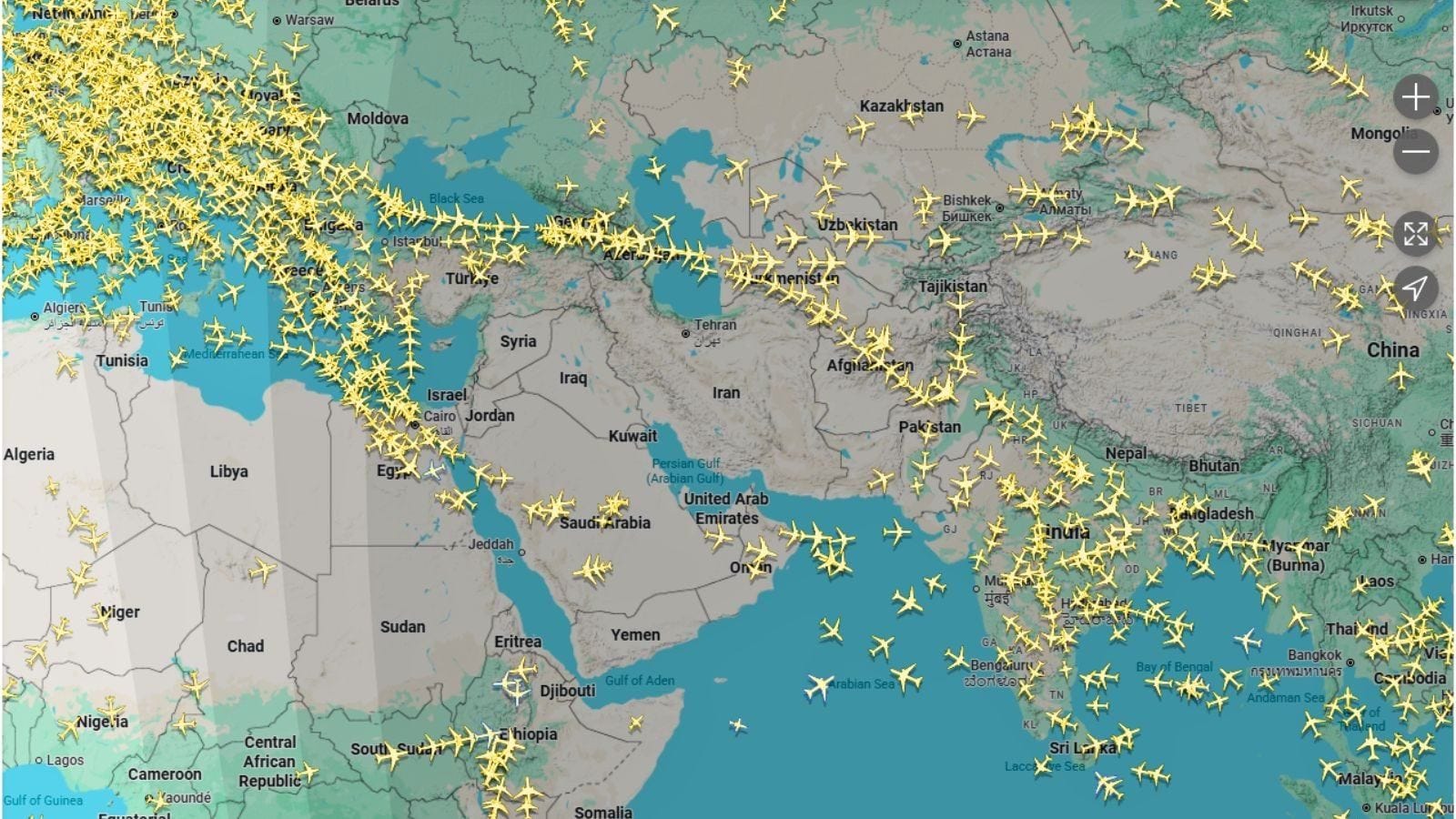
The scale of operational disruption has been extraordinary. According to aviation analytics firm Cirium, of the 51,600 commercial flights scheduled to or from the Middle East since February 28, more than half were cancelled. The total number of cancelled flights globally surpassed 27,000 by March 3 alone, according to Bloomberg.
The list of affected carriers reads like a who’s who of global aviation:
AIRLINES WITH CONFIRMED CANCELLATIONS OR SUSPENSIONS (as of March 15, 2026):

- Lufthansa Group (Lufthansa, Austrian, Swiss, Brussels Airlines)
  Suspended: Tel Aviv (through April 2), Dubai (through March 28), Tehran (through April 30)

- British Airways: Cancelled Abu Dhabi, Bahrain, Doha, Dubai, Tel Aviv (through late March)

- Air France / KLM: Dubai suspended to March 28, Tel Aviv through winter season

- Delta Air Lines: New York to Tel Aviv paused; Atlanta service delayed to August

- Cathay Pacific: All Dubai and Riyadh flights suspended through March 31

- Wizz Air: Dubai, Abu Dhabi, Amman and Jeddah from European destinations through September

- Turkish Airlines: Iraq, Lebanon, Jordan, Doha, Dubai, Abu Dhabi, Kuwait cancelled through March 19-20

- Pegasus Airlines: Iran, Iraq, Beirut, Kuwait, Bahrain, Doha, Dubai, Abu Dhabi cancelled through March 31

- Air New Zealand: Cancelling approximately 1,100 flights through early May (44,000+ passengers affected)
Reuters compiled a rolling tracker showing these cancellations were not short-term disruptions. Many carriers extended dates repeatedly as the conflict showed no signs of quick resolution.
The Strait of Hormuz and the Fuel Cost Spiral
The Strait of Hormuz, a narrow channel between Iran and the Arabian Peninsula, normally carries approximately one-fifth of the world’s oil supply. Since the strikes began, commercial maritime traffic through the strait has virtually ceased.
According to Lloyd’s List Intelligence, seaborne traffic through Hormuz dropped by 80% within days. Iran struck at least four tankers and targeted oil infrastructure in Gulf Arab nations, with maritime insurers cancelling war risk cover almost immediately.
The consequences for aviation fuel were swift and severe:
JET FUEL PRICE SNAPSHOT (U.S. Data)

  Feb 27, 2026 (pre-war):       $2.50 per gallon
  March 5, 2026 (peak):         $3.95 per gallon
  March 10, 2026:               $3.40 per gallon
  March 14, 2026 (Argus Index): $3.99 per gallon average

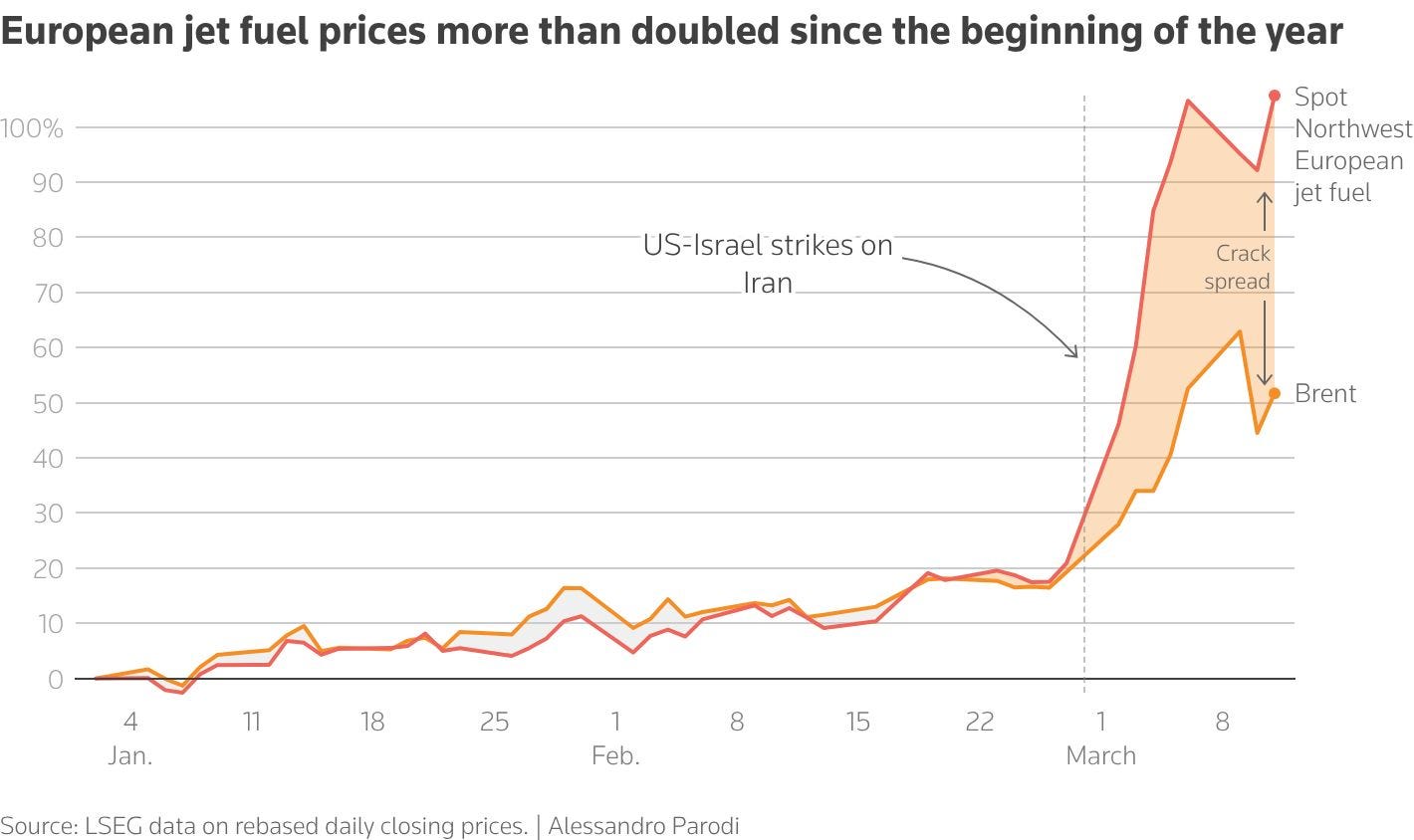
  Total increase from pre-war:  +60% to +100%+ (varies by region)

  Brent Crude Oil:
  Start of 2026:  ~$62/barrel (IATA forecast assumption)
  By early March: Above $100/barrel (60%+ increase since year-start)
IATA Director General Willie Walsh, speaking at a press briefing in Lima, confirmed the pain was amplified beyond crude prices alone. The gap between crude oil and refined jet fuel, known as the crack spread, has more than doubled, making the cost hit for airlines “significantly greater” than the rise in crude alone.
Airspace closures also forced airlines to reroute long-haul flights entirely around the Middle East, adding hours to journeys, burning extra fuel, and compounding cost pressures further.
Airlines Respond: Fare Hikes and Fuel Surcharges
Carriers across Asia-Pacific were among the first to act publicly. Cathay Pacific CEO Ronald Lam confirmed at a media session that the cost of fuel in March has “already doubled” compared to the previous two months’ average. The airline is implementing doubled fuel surcharges across all routes from March 18.
Air France-KLM has announced that round-trip economy fares on long-haul flights could rise by approximately 50 euros. Air India introduced fuel surcharges on certain routes, rising to as much as $50 per ticket on routes to Europe, North America, and Australia from March 18 onward.
CONFIRMED FARE INCREASES AND SURCHARGES (as of March 15, 2026):

- Cathay Pacific:    Fuel surcharges roughly doubled (effective March 18)
- Air France-KLM:   Long-haul round-trip economy up ~$57 (50 euros)
- Air India:        Surcharge up to $50 on Europe, N. America, Australia routes
- Thai Airways:     Fares expected to rise 10%-15%
- Air New Zealand:  NZ$10 (domestic), NZ$20 (short-haul), NZ$90 (long-haul) increases
- Finnair:          Average fares on Asia routes up 15%
- SAS:              "Temporary price adjustment" announced
- Qantas:           Fare increases on multiple routes
- AirAsia:          Temporary surcharge in effect
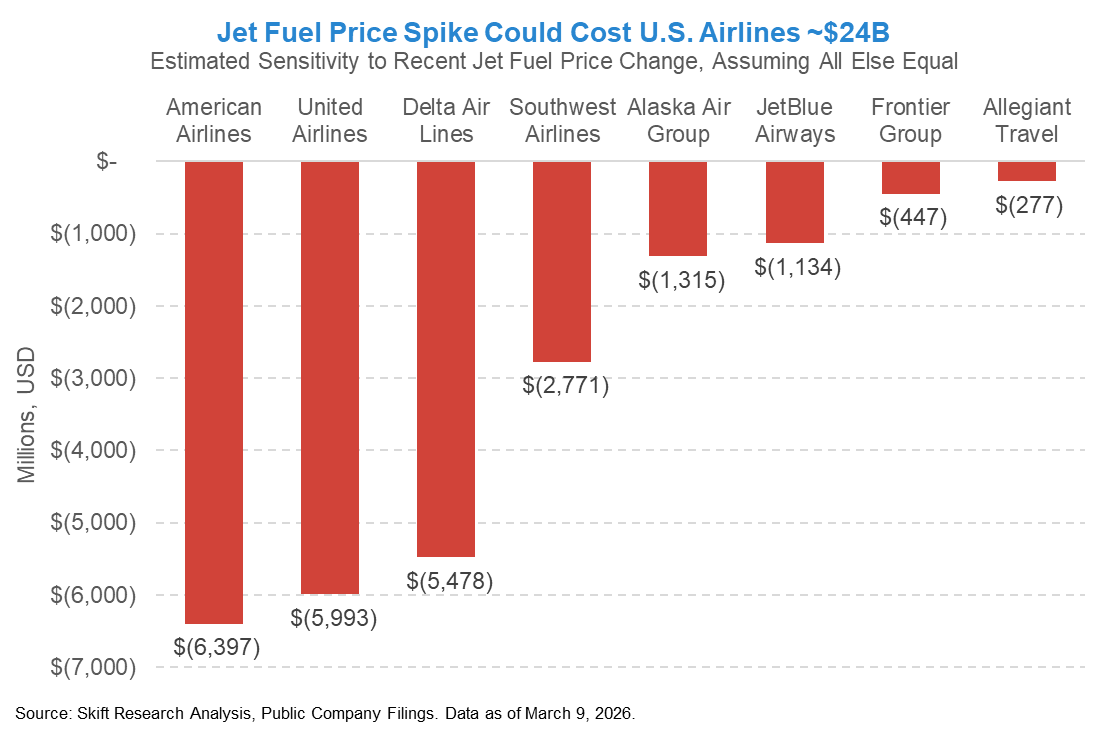
Airlines without fuel hedging strategies are the most exposed. Major U.S. carriers, specifically American Airlines, United Airlines, and Delta Air Lines, do not hedge their fuel costs, which means every market shift hits them directly.
United Airlines CEO Scott Kirby warned at a Harvard University event that higher fares will “probably start quick” and could extend through the second quarter if the war continues.
According to Skift Research, the oil price shock could mean $24 billion in additional jet fuel expenses for U.S. airlines alone, requiring a minimum 11% fare increase to offset. Globally, the figure could exceed $100 billion.
Fuel accounts for 20% to 25% of airline operating costs, making it the second-largest expense after labor. A sustained spike of this magnitude doesn’t just sting quarterly results; it forces structural decisions about routes, capacity, and pricing that ripple across the whole industry for months.
The Broader Industry Fallout: IATA’s $41 Billion Forecast Under Pressure
Before the war began, IATA had issued its December 2025 forecast projecting global airline net profits of $41 billion for 2026, a record high, partly on the assumption that fuel costs would decline with Brent crude expected to drop to $62 per barrel. That assumption has been rendered irrelevant.
Brent crude crossed $100 per barrel in early March, a more than 60% increase since the start of the year. The IATA forecast, once seen as a sign of the industry’s strongest post-pandemic financial footing, now looks deeply uncertain.
The three major Gulf hub airlines, which collectively serve as the connective tissue for intercontinental long-haul traffic, face the most acute operational challenges.
Direct strikes on Dubai International and Abu Dhabi Zayed airports forced grounding decisions not seen since the early COVID shutdowns. Airport networks that took years to rebuild are once again under severe stress.
S&P Global Ratings has flagged that global airline credit ratings could be at risk if fuel prices remain elevated for an extended period. The firm’s analysis underlines the financial fragility of carriers who entered 2026 with growth ambitions but limited hedging protection.
The Summer Outlook and What Executives Need to Watch
Despite the disruption, IATA’s early 2026 data shows global passenger traffic was still growing before the conflict began, with many routes at or near pre-pandemic levels. Demand has not collapsed, and that matters.
Airlines are repricing summer routes in real time. Experts warn that the typical booking window for summer travel, normally 15 to 45 days out for domestic and 49 or more days for international, may not apply this year. Carriers are adjusting prices weeks ahead of when they would typically move, and those adjustments are moving upward.
Experts at Euronews predict that ticket prices could remain elevated for months even if the war de-escalates, given that:
KEY FACTORS KEEPING PRICES ELEVATED POST-CONFLICT:

1. Crack spread between crude oil and jet fuel has more than doubled and takes
   time to compress even as crude prices normalise

2. Airlines rebuilding disrupted networks incur significant re-coordination costs
   (slots, crews, ground services)

3. Routes that avoid Middle East airspace use more fuel per flight due to
   longer distances

4. Airlines have little incentive to lower fares when summer demand remains
   strong, per historical pricing behavior

5. Unhedged carriers must recover recent losses through sustained fare levels
President Trump stated on March 2 that the military had “projected four to five weeks” for the operation but retained the capability to continue far longer. The duration of the conflict remains the single largest variable for industry planning in 2026.
Historical Resilience and the Road Ahead
Aviation has survived wars, pandemics, fuel crises, and financial collapses before.
As Matt Borie, co-founder and Chief Intelligence Officer at Osprey Flight Solutions, noted in the ATW Window Seat podcast: carriers largely did have emergency response plans activated, and networks have begun partial restoration within weeks. That institutional preparedness is a meaningful factor in how quickly the industry recovers.
The Iran war is causing the most severe short-term disruption to global aviation since the COVID-19 pandemic. But the one consistent historical truth that airline executives and analysts hold onto is that demand for air travel has always returned. The $11.7 trillion global travel industry is absorbing an unprecedented shock, but it is not a static one.
For industry stakeholders, the immediate priorities are clear: track the conflict’s duration, monitor the Strait of Hormuz for any reopening of commercial maritime traffic, and watch for any signal from major Gulf hubs, particularly Dubai International, on when full commercial operations resume.
Those signals will determine whether the IATA $41 billion profit forecast for 2026 can be salvaged or whether the industry must reset expectations for the year entirely.