
The aviation sector stands on the brink of a revolutionary transformation. Joby Aviation is one such company spearheading the development of electric vertical takeoff and landing (eVTOL) aircraft.
With over 15 years of focused engineering and development behind it, the Santa Cruz-based company has positioned itself as a frontrunner in the nascent urban air mobility sector.
As 2026 approaches, Joby has achieved critical milestones that set the stage for a transformative 2026 and a promising trajectory beyond.
Also Read:
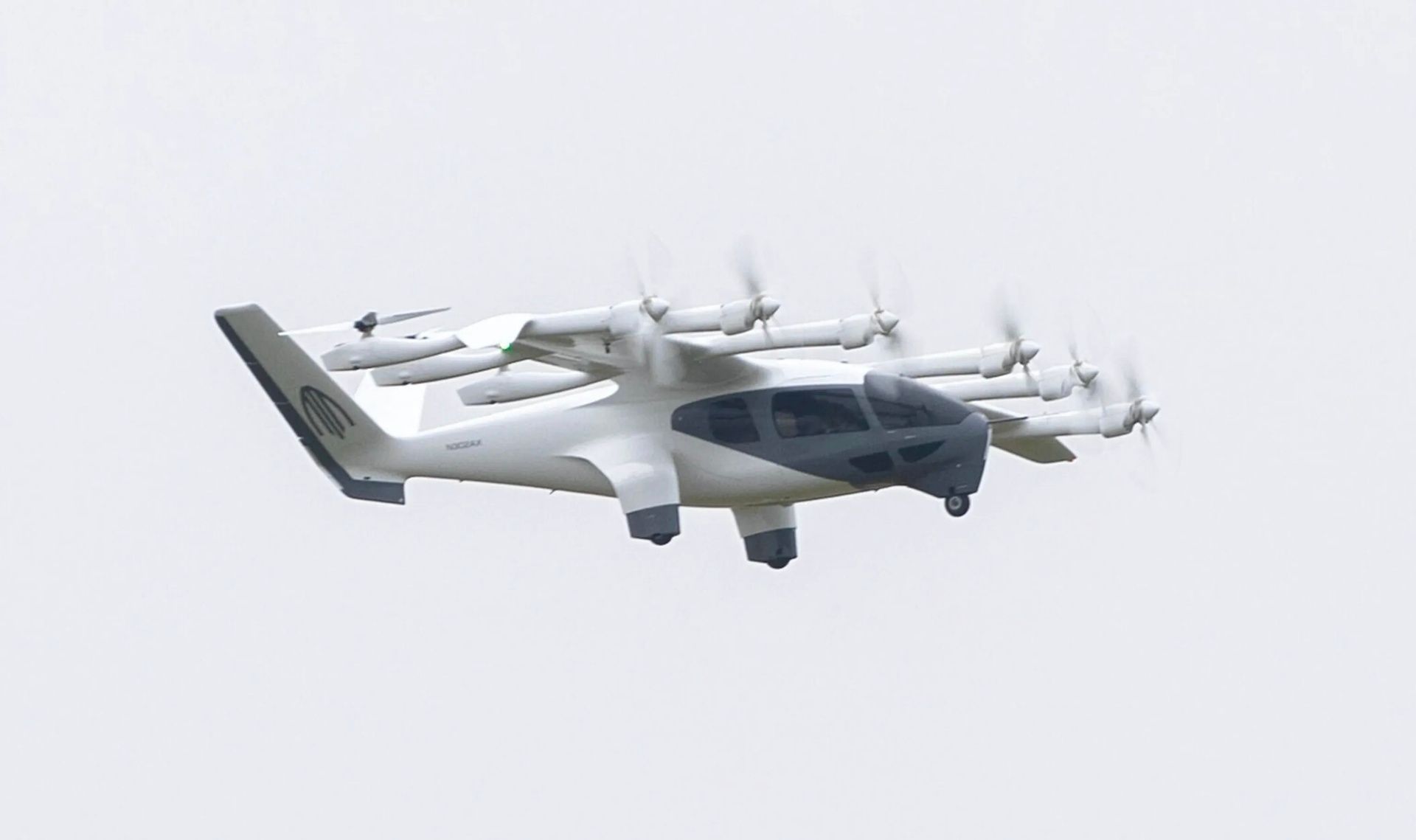
Table of Contents
Certification Progress: The Path to Commercial Operations
Joby’s pursuit of FAA certification represents the most critical component of its commercialization strategy.
In November 2025, the company reached a historic milestone by beginning power-on testing of its first FAA-conforming aircraft for Type Inspection Authorization (TIA). This development marks entry into the final stage of the type certification process, validating that Joby can design a safe aircraft and produce it reliably using established quality management systems.
The TIA testing phase encompasses comprehensive validation across multiple domains. FAA pilots, expected to begin for-credit flight testing in 2026, will evaluate performance envelope parameters including range, speed, and energy management under real-world conditions. Control and handling qualities will be tested across all flight regimes, from vertical takeoff through wingborne cruise and back to hover.
The testing also validates operational procedures governing commercial service, including maintenance manuals, pilot training curriculum, and the functionality of onboard systems such as avionics, propulsion, and redundancies.
According to Didier Papadopoulos, President of Aircraft OEM at Joby, “Beginning this aircraft subsystem testing is the culmination of more than a decade of focused engineering and certification refinements. This first testing step is one of the most important milestones in Joby’s history to date and puts us closer than ever to achieving FAA certification.”
Certification Stage | Status | Timeline |
|---|---|---|
TIA Power-On Testing | Completed | November 2025 |
Joby Pilot Flight Testing | In Progress | Late 2025 |
FAA Pilot For-Credit Testing | Planned | 2026 |
Type Certification | Anticipated | 2026-2027 |
Technical Specifications: Engineering Excellence
Joby’s S4 aircraft demonstrates superior performance metrics that position it at the forefront of the eVTOL sector.
The five-seat aircraft can transport a pilot and four passengers at speeds reaching 200 mph, with a maximum range of 150 miles on a single charge. This performance capability enables practical point-to-point urban and suburban transportation, addressing the fundamental market need for rapid transit above congested ground infrastructure.
The aircraft’s propulsion system comprises six high-performance, dual-wound electric motors generating 236 kW of peak power.
This configuration provides the redundancy and reliability essential for passenger safety while maintaining energy efficiency comparable to best-in-class electric ground vehicles on a watt-hour per passenger seat mile basis.
The aircraft weighs approximately 4,300 pounds empty, optimized for both performance and regulatory compliance.
JOBY S4 KEY SPECIFICATIONS

Passenger Capacity: 4 passengers + 1 pilot
Maximum Cruise Speed: 200 mph (322 km/h)
Operational Range: 150 miles (241 km) with reserves
Empty Weight: ~4,300 lb (1,950 kg)
Propulsion: 6 dual-wound electric motors
Peak Power Output: 236 kW
Noise Profile: Quiet operation for urban environments
Energy Efficiency: Comparable to best-in-class EVs per passenger mile
Dubai Launch: First Commercial Operations
Joby’s partnership with Dubai’s Road and Transport Authority represents a strategic entry point for commercial operations. In November 2025, the company completed the United Arab Emirates’ first-ever piloted, point-to-point electric air taxi flight, a 17-minute journey that demonstrated real-world operational capabilities.
This achievement validated the aircraft’s performance in actual urban transportation scenarios and showcased the viability of the vertiport infrastructure network.
The company has targeted a 2026 commercial launch in Dubai as part of its six-year exclusive agreement.
Construction of the first vertiport at Dubai International Airport is approximately 60 percent complete and on track for completion by the end of the first quarter of 2026. Additional vertiport locations have been announced throughout Dubai, creating an initial network capable of supporting meaningful passenger volumes.
The Dubai operation offers several strategic advantages.
The UAE General Civil Aviation Authority provides a regulatory pathway that may enable commercial service before FAA certification is complete. This allows Joby to generate revenue, refine operational procedures, and build market validation while continuing the U.S. certification process.
The partnership also extends beyond Dubai, with agreements to launch air taxi service in Ras Al Khaimah by 2027 and recent announcements of expansion into Saudi Arabia.
Manufacturing Scale-Up: Production Capacity Expansion
Joby’s manufacturing strategy addresses what the company views as a crucial bottleneck in meeting anticipated demand.
In July 2025, the company doubled its aircraft production capacity at its Marina, California facility, expanding the site to approximately 435,500 square feet. At full capacity, this location will produce up to 24 aircraft annually, serving as a hub for pilot training, flight testing, and certification activities.
For high-volume production, Joby is ramping up operations at its Dayton, Ohio facility. In November 2025, the company began production of propeller blades at this location, described as the most technically demanding component of the aircraft.
With support from Toyota engineers, the Dayton facility is designed to progressively scale to produce up to 500 aircraft per year. This partnership with Toyota brings decades of manufacturing expertise in lean production, quality control, and supply chain management to the eVTOL sector.
Manufacturing Facility | Location | Annual Capacity | Primary Function |
|---|---|---|---|
Marina Facility | California | 24 aircraft | Low-rate production, testing, pilot training |
Dayton Facility | Ohio | 500 aircraft | High-volume production, propeller manufacturing |
Financial Position: Capitalizing Growth
Joby maintains a robust financial foundation to support its path to commercialization.
As of the third quarter of 2025, the company held $978.1 million in cash, cash equivalents, and investments in marketable securities.
In October 2025, Joby completed an underwritten equity offering that raised an additional $576 million in net proceeds, strengthening its balance sheet significantly.
The company estimates cash use during 2025 will range between $500 million and $540 million, reflecting ongoing investments in certification testing, manufacturing expansion, and operational infrastructure.
While Joby recorded a third-quarter loss of $401 million and has accumulated a deficit of nearly $2.7 billion since inception, these figures align with expectations for a pre-revenue company in the capital-intensive aviation sector.
The current cash position provides sufficient runway to reach key commercialization milestones.
Competitive Positioning: Industry Leadership
Within the eVTOL sector, Joby maintains a certification lead over primary competitors. Compared to Archer Aviation, industry analysis indicates Joby is approximately one year ahead in the FAA certification process. This advantage stems from earlier program initiation, comprehensive flight testing programs exceeding 600 flights in 2025 alone, and systematic progression through regulatory milestones.
The company’s competitive differentiation extends beyond certification timing.
Joby’s aircraft specifications offer superior range and speed compared to many competitors, enabling a broader range of use cases from urban air taxis to regional connectivity.
The partnerships with established entities like the Dubai RTA, Toyota for manufacturing, and Delta Air Lines for future U.S. operations provide strategic advantages in market access, production expertise, and customer acquisition.

Outlook for 2026 and Beyond
The year 2026 represents a potential inflection point for Joby Aviation. The anticipated commencement of passenger service in Dubai would mark the industry’s first significant commercial eVTOL operation, generating revenue and validating the business model. Concurrent FAA pilot testing throughout 2026 positions the company to potentially receive U.S. type certification by 2027, opening access to the substantial domestic market.
Beyond the immediate horizon, several factors will determine Joby’s trajectory. Manufacturing scale-up must progress according to plan to meet demand in launch markets and support network expansion.
The company’s ability to manage operational costs, optimize fleet utilization, and achieve positive unit economics will prove essential as it transitions from development to commercial operations.
Regulatory developments, both in the U.S. and internationally, will influence the speed at which new markets become accessible.
The broader urban air mobility sector faces questions about consumer acceptance, pricing strategies, and infrastructure development. Joby’s first-mover advantages in certification and operations position it to shape industry standards and customer expectations.
Success in initial markets could accelerate adoption, attract additional capital, and create network effects that strengthen competitive positioning.
My Final Thoughts: Strategic Considerations for Industry Stakeholders
eVTOL industry professionals should monitor several key metrics as indicators of Joby’s progress.
Certification milestone achievement, particularly the timing and results of FAA pilot testing, will signal readiness for U.S. market entry.
Dubai operational performance, including passenger volumes, safety records, and operational reliability, will provide crucial data on real-world eVTOL viability.
Manufacturing ramp rates at both the Marina and Dayton facilities will indicate capacity to meet demand.
Financial metrics, particularly cash burn rates and the timing of subsequent capital raises, will reflect the company’s path to profitability.
Partnership announcements with additional cities, airlines, or infrastructure providers will signal market expansion opportunities.
For companies considering eVTOL integration, Joby’s progress offers insights into regulatory requirements, operational considerations, and market readiness. Airlines exploring urban air mobility partnerships, airports planning vertiport infrastructure, and regulatory bodies developing certification frameworks can draw lessons from Joby’s experiences.
Joby Aviation’s advances through 2025 have positioned the company at the forefront of a potential aviation revolution. While challenges remain in certification completion, manufacturing scale-up, and market development, the company has demonstrated technical capability, regulatory progress, and strategic positioning.
The coming years will reveal whether eVTOL aircraft fulfill their promise of transforming urban transportation, with Joby as one of the leading companies leading the effort to make that vision a reality.