SpaceX - Company Analysis and Outlook Report (2026)

Executive Summary

  • SpaceX has solidified its dominance in commercial spaceflight with an 82% market share of global commercial launches in 2025 and projected revenues between $22-24 billion in 2026.

  • The company’s integrated business model spans launch services (Falcon 9/Heavy, Starship), satellite internet (Starlink with 9 million subscribers), and government partnerships ($22 billion in federal contracts).

  • Potential IPO in 2026 at valuations between $800 billion to $1.5 trillion positions SpaceX as one of the most valuable private companies globally.

  • Key risks include regulatory challenges, Starship development delays, increasing competition from Blue Origin and others, and environmental compliance concerns.

Also Read:

Table of Contents

Business Overview and Key Facts

Space Exploration Technologies Corp., commonly known as SpaceX, operates as the world’s most prolific aerospace manufacturer and space transportation services company.

Founded in 2002 and headquartered in Hawthorne, California, the company has fundamentally reshaped the economics of spaceflight through vertical integration and reusable rocket technology.

The company’s business model centers on three interconnected revenue streams.

  • Launch services generate revenue through commercial satellite deployments, government payloads, and crewed missions to the International Space Station.

  • Starlink, the satellite internet constellation, has rapidly transformed from a capital-intensive project into the company’s primary revenue driver.

  • Government contracts, particularly with NASA and the Department of Defense, provide stable, long-term revenue commitments.

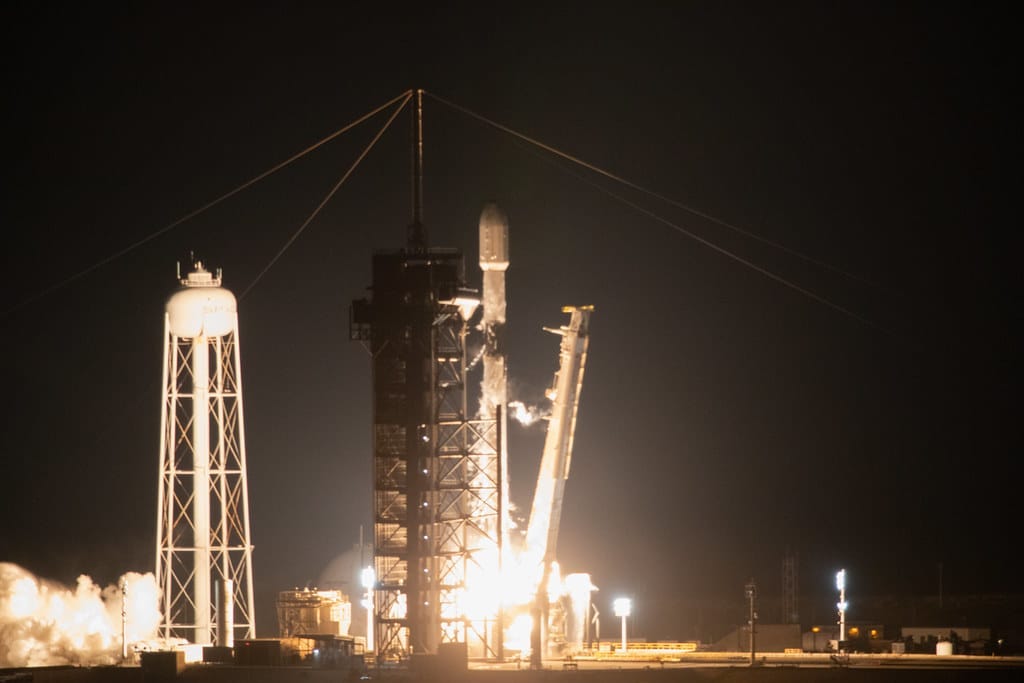
Image source: flickr.com

Financial Performance and Revenue Drivers

SpaceX achieved approximately $15.5 billion in revenue for 2025, representing 63% growth from $8.7 billion in 2023. This growth trajectory significantly outpaces traditional aerospace contractors and reflects the company’s transition from a launch-focused business to a diversified space services provider.

For 2026, revenue projections range between $22 billion to $24 billion, with Starlink expected to contribute approximately 70% of total revenues. This revenue composition marks a fundamental shift in the company’s business profile.

The company’s last twelve months (LTM) revenue breakdown reveals the dominance of its satellite internet business. Starlink generated between $11.8 billion and $15.5 billion in 2025, with projections suggesting this figure could reach $15.9 billion to $22 billion in 2026.

Launch services revenue, while growing in absolute terms, represents a smaller proportion of the overall business. However, this segment remains strategically critical for maintaining technological leadership and supporting Starlink deployment.

Product Lines and Services

Falcon 9 and Falcon Heavy Launch Vehicles

The Falcon 9 represents the backbone of SpaceX’s launch operations. With a 99.5% success rate across 595 launches over 16 years, this workhorse rocket has set new industry standards for reliability and cost-effectiveness.

SpaceX completed 167 launches in 2025, representing over 50% of global orbital launches. The company’s reusability achievements have been extraordinary, with first-stage boosters landing successfully more than 300 times and reflying more than 200 times.

The Falcon Heavy, capable of delivering 63 metric tons to low Earth orbit, serves customers requiring heavy-lift capacity. This vehicle fills a crucial gap in the market between medium-lift rockets and future super-heavy-lift vehicles.

Dragon Spacecraft

The Dragon capsule serves dual purposes for cargo and crew transportation. NASA’s Commercial Crew Program has relied exclusively on Dragon for astronaut transportation to the ISS since 2020, following the retirement of the Space Shuttle program.

SpaceX Crew-12 is scheduled for no earlier than February 15, 2026, demonstrating the continuing partnership with NASA for crewed spaceflight operations. The Dragon spacecraft has also expanded into commercial crew missions for private space stations.

Image source: commons.wikimedia.org

Starship Development Program

Starship represents SpaceX’s most ambitious project and the key to achieving Elon Musk’s Mars colonization vision. This fully reusable super-heavy-lift launch system completed five full-stack test flights in 2025, with mixed results that highlighted both the vehicle’s potential and technical challenges ahead.

SpaceX is building Giga Bays at both Starbase in Texas and Roberts Road in Florida to support Block 4 production, which features an 80-meter booster. The company has also received environmental approval to begin construction of two launch towers at SLC-37 in Florida, bringing the total planned operational pads to five.

The next prototype, Version 3, is expected to debut in 2026 and could be the model to reach orbit and demonstrate in-flight refueling capabilities.

Starlink Satellite Internet

Starlink has evolved from an expensive infrastructure project to SpaceX’s primary cash generator. The constellation reached 9 million subscribers by December 2025, adding more than 20,000 users daily.

The service has expanded to over 150 markets, including 42 new countries and territories added in 2025. Specialized segments show exceptional growth potential, with aviation revenues expected to increase nearly tenfold by 2026 and maritime installations projected to reach 130,000 vessels.

The Direct to Cell constellation, completed with over 650 satellites, connected more than 12 million people at least once, paving the way for partnerships with mobile carriers globally.

Competitive Analysis and Market Position

Porter’s Five Forces Analysis

Threat of New Entrants: Low to Moderate

The aerospace launch industry presents formidable barriers to entry. Capital requirements for developing orbital-class rockets exceed several billion dollars, with development timelines spanning 5-10 years.

Regulatory compliance adds another layer of complexity, requiring extensive testing, safety certifications, and environmental reviews.

SpaceX’s vertically integrated manufacturing capabilities create additional competitive advantages that new entrants cannot easily replicate. The company designs and produces engines, avionics, structures, and ground systems in-house, reducing costs and enabling rapid iteration.

However, substantial government funding and billionaire-backed ventures like Blue Origin demonstrate that well-capitalized entrants can emerge. The threat remains moderate rather than low due to the strategic importance governments place on space access.

Bargaining Power of Suppliers: Low

SpaceX’s vertical integration strategy deliberately minimizes supplier dependence. The company manufactures approximately 85% of its hardware internally, including the critical Raptor and Merlin engines, which represent the technological heart of its launch vehicles.

For components requiring external suppliers, SpaceX’s scale provides significant negotiating leverage. The company’s high launch cadence translates to volume purchasing power that few competitors can match.

Bargaining Power of Buyers: Moderate

Government customers, particularly NASA and the Department of Defense, wield considerable power through their large contract values and ability to fund development programs. SpaceX holds $22 billion in government contracts, making these customers strategically important.

However, SpaceX’s market position has created a reverse dependency. The U.S. government relies on SpaceX for critical capabilities, including crew transportation to the ISS and national security launches. This mutual dependence balances the power dynamic.

Commercial customers have more negotiating power due to competition from international launch providers, though SpaceX’s cost advantage and reliability record provide strong differentiation.

Threat of Substitutes: Low

No viable substitutes exist for orbital launch services for customers requiring space access. Alternatives like high-altitude balloons or suborbital systems cannot fulfill the same mission requirements.

For Starlink’s satellite internet service, substitutes include terrestrial broadband, legacy satellite providers, and emerging Low Earth Orbit competitors.

However, Starlink’s performance advantages in latency and throughput, combined with its ability to serve remote areas, limit substitution threats in its target markets.

Industry Rivalry: Moderate to High

The competitive intensity varies significantly by market segment.

Launch Services Competition

SpaceX maintains commanding market dominance, capturing 82% of commercial launch market share in 2025. The company completed 161 commercial launches compared to 196 total commercial launches globally.

Primary competitors include:

United Launch Alliance (ULA): The Boeing-Lockheed Martin joint venture focuses primarily on government launches. ULA’s new Vulcan Centaur rocket aims to compete with Falcon 9, though at higher price points. The Space Force projects ULA to outpace SpaceX in 2025 national security missions, though this reflects deliberate government diversification strategy rather than commercial competitiveness.

Blue Origin: Jeff Bezos’s company achieved a significant milestone with the successful debut of its New Glenn rocket in late 2025. Blue Origin is positioned to chip away at SpaceX’s dominance, particularly for satellite deployment and commercial payloads. The company has secured substantial contracts, including Amazon’s Project Kuiper satellite constellation.

Rocket Lab: This New Zealand-based company serves the small satellite market with its Electron rocket. While not directly competing with Falcon 9’s payload capacity, Rocket Lab has carved out a niche in dedicated small satellite launches.

International Competitors: China’s state-owned enterprises, Russia’s Roscosmos (constrained by geopolitical factors), Europe’s Arianespace, India’s ISRO, and Japan’s JAXA provide varying degrees of competition, primarily in their domestic and regional markets.

Market Share Analysis

SpaceX’s market dominance extends across multiple dimensions:

Metric

SpaceX Performance

Market Context

Commercial Launch Market Share

82%

161 of 196 global commercial launches

U.S. Launch Market Share

95%

Overwhelming domestic dominance

Payload Mass Percentage

84%

By mass delivered to orbit

Launch Count Percentage

55%

Of global launch attempts

This concentration raises important questions about market resilience and government policy regarding launch provider diversity.

Switching Costs and Customer Lock-In

SpaceX benefits from substantial switching costs across its business lines:

Launch Services: Customers who have designed satellites for Falcon 9’s payload fairing and interface specifications face significant engineering costs to modify designs for alternative launch vehicles. Integration procedures, testing protocols, and mission assurance processes create additional friction for switching providers.

Starlink: Consumer subscribers face minimal switching costs, though the upfront hardware investment ($599 for standard terminals) creates some stickiness. Enterprise and government customers with custom ground station equipment and network integration face higher barriers.

Crew Transportation: NASA’s investment in Dragon spacecraft certification and operational procedures represents years of work and hundreds of millions of dollars. Switching to alternative crew vehicles would require similar investment and time.

Competitive Moat Assessment

SpaceX’s competitive advantages create a formidable moat:

Cost Leadership: Reusability enables launch costs approximately $30 million per mission, roughly 10x cheaper than traditional expendable rockets. This cost advantage compounds across SpaceX’s high-flight-rate operations.

Vertical Integration: Controlling the entire value chain from engine design through mission operations provides cost advantages and enables rapid innovation cycles that competitors struggle to match.

Flight Rate and Operational Experience: SpaceX’s 167 launches in 2025 provided operational experience that competitors require years to accumulate. This flight rate also supports rapid learning and improvement cycles.

Starlink Infrastructure: The deployed Starlink constellation represents billions in capital investment and a first-mover advantage that competitors must overcome. The network effects of satellite coverage create increasing returns to scale.

Government Relationships: Deep integration with NASA and DoD operations creates institutional knowledge and relationships that new entrants cannot quickly replicate.

Recent Developments and Timeline

2025 Milestones

Q1 2025

January: Starship Flight 7 lifted off with Ship 33 and Booster 14, achieving the second booster catch but losing the ship during ascent due to harmonic resonance issues.

March: Flight 8 repeated the pattern with successful booster catch but ship loss during ascent, attributed to incorrect engine mount bolt preloading.

Q2 2025

May: Flight 9 marked the first booster reflight (Booster 14-2) with successful splashdown, though Ship 35 tumbled during reentry due to methane pressurization diffuser leak.

June: Ship 36 exploded during static fire testing, causing significant damage to the Massey test stand and forcing SpaceX to develop alternative testing procedures.

Q3 2025

August: Flight 10 achieved all mission objectives with Ship 37, completing Starlink simulator deployment and in-space Raptor relight, followed by successful controlled reentry and splashdown.

September: Starlink surpassed 8.5 million subscribers, solidifying its position as the world’s largest satellite internet provider.

Q4 2025

October: SpaceX secured five of seven NSSL Phase 3 contracts for FY2026, valued at over $1 billion, reinforcing its dominance in government launch services.

October: Flight 11 successfully concluded Block 2 testing with Ship 38 and Booster 15-2, completing all objectives.

November: Booster 18 experienced COPV failure during ground testing, rupturing the LOX tank and forcing accelerated construction of Booster 19.

December: Starlink reached 9 million subscribers, adding approximately 4.6 million customers throughout 2025. SpaceX completed 167 launches for the year, setting a new company record.

December: SpaceX received environmental approval for SLC-37 construction, enabling two additional Starship launch towers in Florida.

2026 Outlook and Expected Milestones

Q1 2026

January: Flight 12 expected to launch Block 3 vehicles (Booster 19 and Ship 39), introducing near-clean-sheet booster design.

February: NASA’s SpaceX Crew-12 mission planned for no earlier than February 15, transporting four crew members to the ISS.

Q2-Q4 2026

Mid-2026: LC-39A in Florida anticipated to become operational for Starship launches, marking SpaceX’s first orbital-class launch capability outside Texas.

Second Half 2026: First commercial space stations, including Vast Space’s Haven-1, expected to begin operations with SpaceX providing crew transportation services.

Late 2026: Potential SpaceX IPO targeting valuations between $800 billion to $1.5 trillion, which would represent one of the largest public offerings in history.

2026: Starship Version 3 expected to demonstrate orbital capability and in-flight refueling, crucial milestones for NASA’s Artemis lunar landing missions.

Financial and Commercial Implications

Profitability and Cash Flow Generation

SpaceX achieved a critical inflection point in 2025 by reaching cash-flow positivity. This transition from capital-intensive growth to cash generation fundamentally alters the company’s financial profile and strategic options.

Free cash flow estimates for 2025 range from several hundred million to approximately $2 billion. Projections for 2026 suggest nearly $5 billion in free cash flow, supported by Starlink’s recurring revenue model and declining capital expenditure intensity.

EBITDA margins continue improving as Starlink scales. The business model increasingly resembles software-as-a-service companies like Netflix, where high upfront infrastructure costs give way to low marginal costs per additional subscriber. Gross margins are projected to approach 25% by 2026.

Capital Allocation Strategy

SpaceX’s capital allocation priorities reflect its dual focus on near-term profitability and long-term Mars objectives:

Starlink Expansion: Continued satellite manufacturing and launch operations to maintain global coverage and service quality. SpaceX plans to lower orbital parameters of approximately 4,000 satellites in 2026 to reduce orbital debris risk.

Starship Development: Heavy investment in production infrastructure (Giga Bays), test facilities, and launch site construction. The company is essentially building parallel production and launch capabilities across Texas and Florida.

Launch Infrastructure: Simultaneous development of five Starship launch pads represents unprecedented infrastructure investment in space transportation.

Technology Development: Continued investment in reusability technology, engine development, and spacecraft systems.

Revenue Diversification and Growth Vectors

SpaceX’s revenue composition has shifted dramatically from a launch-centric business to a diversified space services provider:

2024 Revenue Composition (Estimated):
  Launch Services: ~40%
  Starlink: ~50%
  Government Contracts: ~10%

2026 Projected Revenue Composition:
  Launch Services: ~20-25%
  Starlink: ~70%
  Government Contracts: ~5-10%

This shift reduces cyclicality and provides more predictable revenue streams, particularly valuable for a potential public company.

Government Contract Portfolio

SpaceX’s government relationships provide stable, long-term revenue foundations:

Program

Customer

Value

Scope

Commercial Crew Program

NASA

Multi-billion over program life

ISS crew transportation

Commercial Resupply Services

NASA

$7+ billion through CRS-3

Cargo delivery to ISS

NSSL Phase 3

U.S. Space Force

$13.7 billion (54 missions, FY2025-2029)

National security launches

Artemis HLS

NASA

$2.9 billion

Lunar lander development

National Security Contracts

DoD/NRO

Classified

Satellite deployment

The NSSL Phase 3 program awards demonstrate SpaceX’s continued dominance in government launch services, securing five of seven available contracts for FY2026.

Implications for Aerospace Industry

SpaceX’s financial performance creates ripple effects throughout the aerospace sector:

Supplier Dynamics: Traditional aerospace suppliers face pressure as SpaceX’s vertical integration reduces demand for external components. However, SpaceX’s high production volumes create opportunities for specialized suppliers who can meet cost and schedule requirements.

Competitive Pressure: Established contractors face margin pressure and must accelerate reusability programs or find alternative competitive strategies. ULA’s Vulcan development and Blue Origin’s New Glenn represent direct responses to SpaceX’s cost advantages.

Launch Pricing: SpaceX’s cost structure has reset market expectations for launch pricing, forcing competitors to dramatically reduce prices or exit certain market segments.

Investment Patterns: Venture capital and private equity investment in space companies has surged, partly due to SpaceX demonstrating the commercial viability of private space ventures.

Key Risks and Challenges

Technical and Operational Risks

Starship Development Delays (High Probability, High Impact)

Starship remains a developmental system with significant technical challenges. The program experienced a 40% success rate for ship recovery in 2025 (2 of 5 missions). Key technical hurdles include:

Heat shield reliability and performance during hypersonic reentry
In-space refueling demonstration, critical for lunar and Mars missions
Long-duration cryogenic propellant storage in orbit
Operational cadence sufficient to support NASA’s Artemis timeline

Delays in Starship development directly impact NASA’s lunar landing schedule and SpaceX’s Mars ambitions. The NASA Artemis program relies on Starship as the lunar lander, creating significant programmatic risk.

Launch Vehicle Reliability (Low Probability, Extreme Impact)

While Falcon 9 maintains an exceptional 99.5% success rate, any catastrophic failure, particularly involving crew, could have severe consequences. The rapid launch cadence increases statistical exposure to rare failure modes.

The company has achieved 230 consecutive successful Falcon 9 launches, but this success breeds complacency risks as operational tempo increases.

Starlink Operational Challenges (Moderate Probability, Moderate Impact)

Space debris and collision avoidance represent growing challenges. SpaceX reported increased collision warnings, with the company planning to lower approximately 4,000 satellites in 2026 to reduce risk.

Satellite reliability and replacement costs could impact profitability if on-orbit lifespans prove shorter than projected. Radio frequency interference concerns from the astronomical community and spectrum conflicts with competing systems present ongoing technical challenges.

FAA Launch Licensing (High Probability, Moderate Impact)

SpaceX has publicly criticized FAA regulatory processes as overly burdensome and slow. Environmental review requirements, particularly for Starship operations at Boca Chica, have generated friction between the company and regulators.

The March 2026 compliance deadline for new Part 450 launch regulations could require additional compliance investments and operational adjustments.

Environmental Compliance (Moderate Probability, Moderate Impact)

Environmental groups have sued the FAA over SpaceX’s Boca Chica operations, arguing inadequate environmental review. Potential outcomes include operational restrictions, launch cadence limitations, or requirements for additional mitigation measures.

Water and air quality concerns at launch sites could trigger additional regulatory scrutiny. Wildlife protection requirements, particularly for endangered species near Boca Chica, create ongoing compliance obligations.

International Regulatory Challenges (Moderate Probability, Low Impact)

China has warned the UN about Starlink’s orbital safety and security implications, potentially leading to international restrictions. Various countries have imposed restrictions or requirements on Starlink operations, creating patchwork regulatory compliance burdens.

Spectrum allocation disputes and coordination requirements across multiple jurisdictions add complexity to global operations.

Competitive and Market Risks

Blue Origin New Glenn Success (High Probability, Moderate Impact)

Blue Origin’s successful New Glenn debut positions the company as a legitimate competitor for commercial payloads and government contracts. The company has secured substantial Amazon Kuiper satellite deployment contracts, nearly 100 launches through 2029.

New Glenn’s larger payload capacity compared to Falcon 9 could attract customers requiring heavy-lift capability without paying Falcon Heavy premiums.

Amazon Kuiper Constellation (Moderate Probability, High Impact)

Amazon’s deep pockets and vertical integration into e-commerce and cloud services create a formidable competitor to Starlink. Kuiper benefits from Amazon’s existing customer relationships and AWS integration opportunities.

However, Kuiper faces the same technical and regulatory challenges Starlink navigated, with Starlink’s first-mover advantage providing 5+ years of operational experience.

Government Policy on Launch Provider Diversity (High Probability, Moderate Impact)

The U.S. government explicitly seeks multiple launch providers for resilience and competition. NSSL Phase 3 awarded 2 of 7 missions to ULA despite SpaceX’s cost advantages, demonstrating willingness to pay premiums for diversity.

This policy limits SpaceX’s potential government market share regardless of cost or performance advantages.

International Competition (Low Probability, Moderate Impact)

China’s rapid space development and aggressive pricing from state-subsidized providers create competitive pressure in international markets. However, U.S. government restrictions on technology transfer and national security considerations limit direct competition for sensitive payloads.

Financial and Market Risks

IPO Valuation Sustainability (Moderate Probability, High Impact)

Proposed valuations between $800 billion to $1.5 trillion assume aggressive growth rates and successful execution across multiple ambitious programs. These valuations imply Starlink subscriber growth to 40-60 million users and successful Starship commercialization.

Market volatility and investor appetite for growth-stage companies could significantly impact IPO timing and pricing.

Mars Mission Resource Allocation (Low Probability, Extreme Impact)

Elon Musk’s stated Mars colonization goals could divert resources from profit-maximizing opportunities. Public company shareholders may pressure management to prioritize financial returns over exploratory missions.

The tension between commercial objectives and Mars ambitions represents a fundamental strategic question for the company’s future direction.

Geopolitical Risks

Musk’s Government Role Conflicts (High Probability, Moderate Impact)

Elon Musk’s involvement with the incoming Trump administration creates potential conflicts of interest and regulatory complications. His dual role as SpaceX CEO and government advisor raises questions about procurement fairness and regulatory oversight.

These conflicts could trigger increased scrutiny, contract challenges, or requirements for operational separation.

Dependence on U.S. Government (Moderate Probability, High Impact)

SpaceX’s substantial reliance on government contracts creates vulnerability to policy changes, budget cuts, or administration priorities. A hypothetical cancellation of major NASA contracts would significantly impact revenue and strategic programs.

However, the government’s operational dependence on SpaceX for ISS access and national security launches provides mutual deterrence against contract termination.

Strategic Analysis

SWOT Analysis

Strengths

Technological Leadership

SpaceX has achieved technical milestones competitors have pursued for decades. Reusable rockets, operational crew spacecraft, and the world’s largest satellite constellation demonstrate execution capability that few organizations can match.

The company’s ability to rapidly iterate and learn from failures creates a substantial innovation advantage. Flight rates that would take competitors years to accumulate enable SpaceX to test, fail, learn, and improve faster than traditional aerospace development cycles allow.

Cost Structure Advantage

Vertical integration and reusability create a cost structure competitors cannot easily replicate. Launch costs approximately $30 million per Falcon 9 mission represent roughly 10x cost advantage versus traditional expendable rockets.

This cost advantage compounds across SpaceX’s entire business model, enabling competitive Starlink service pricing while maintaining healthy margins.

Starlink First-Mover Advantage

Nine million subscribers and operational experience across 150+ markets create network effects and customer acquisition advantages. The deployed constellation represents billions in sunk capital costs that competitors must match before achieving comparable service quality.

Enterprise and government customers increasingly standardize on Starlink for remote connectivity, creating switching costs and repeat purchases.

Execution Track Record

SpaceX has consistently delivered on ambitious technical objectives, from ISS commercial crew certification to Starship test flight progression. This execution track record builds customer confidence and attracts talent.

The company’s culture of rapid iteration and ambitious goal-setting differentiates it from traditional aerospace contractors.

Government Relationships

Deep integration with NASA and DoD operations creates institutional knowledge and relationships that benefit both parties. SpaceX has become effectively indispensable for certain government capabilities, particularly ISS crew access.

Twenty-two billion dollars in government contracts provide revenue stability and fund continued innovation.

Weaknesses

Single-Point Failure Dependencies

Elon Musk’s central role in strategy, culture, and execution creates succession risk. His public persona and controversial statements occasionally generate negative attention that could impact government relationships or brand perception.

The company’s rapid growth has occasionally outpaced organizational infrastructure development, creating operational stress.

Starship Development Challenges

The ambitious Starship program has experienced significant technical setbacks, with only 2 of 5 ships successfully recovered in 2025. These challenges threaten timelines for NASA’s Artemis program and Mars objectives.

Heat shield reliability, in-space refueling, and operational reusability at projected flight rates remain unproven at orbital scale.

Regulatory Friction

SpaceX’s aggressive development pace and ambitious launch cadence goals create ongoing tension with regulatory agencies. Environmental compliance disputes and FAA licensing processes represent potential constraints on growth.

The company’s willingness to publicly criticize regulators, while potentially effective at driving policy changes, also risks regulatory backlash.

Limited Geographic Diversity

Heavy concentration of operations in the United States creates regulatory, political, and operational risk concentration. Unlike competitors with global manufacturing footprints, SpaceX faces single-country risk for its core operations.

International Starlink operations face varying regulatory regimes and potential restrictions, particularly in countries with concerns about U.S.-based satellite communication systems.

Opportunities

Commercial Space Station Market

The ISS retirement (planned for 2030) creates demand for commercial space stations. SpaceX’s Dragon spacecraft and transportation capabilities position the company to support multiple commercial station operators.

Private astronaut missions and space tourism represent high-margin opportunities adjacent to SpaceX’s core capabilities.

Starlink Enterprise and Government Expansion

Aviation connectivity represents a substantial growth opportunity, with revenues expected to increase nearly tenfold by 2026. Commercial airlines value reliable high-speed connectivity for passenger services and operational communications.

Maritime connectivity for both commercial shipping and military vessels creates another high-value market segment. Government and military adoption for tactical communications adds revenue diversity and strategic importance.

Point-to-Point Earth Transportation

Starship’s potential for rapid intercontinental travel represents a revolutionary application if technical and regulatory challenges can be overcome. This capability could create entirely new markets worth tens of billions annually.

Mars Economy Ecosystem

While speculative, successful Mars missions could create demand for transportation, habitat construction, life support systems, and resource utilization technologies. SpaceX’s early-mover advantage in Mars-class capabilities positions the company to capture substantial portions of any emerging cislunar and interplanetary economy.

Vertical Integration Expansion

SpaceX could expand into adjacent markets like spacecraft manufacturing for third-party customers, propulsion system sales, or space infrastructure construction. The company’s technology and manufacturing capabilities have applications beyond its current product portfolio.

Threats

Competitive Catch-Up

Blue Origin, ULA, and international competitors are investing heavily in reusable launch technology. While SpaceX maintains substantial leads, competitors are closing technology gaps.

Blue Origin’s New Glenn success demonstrates that well-capitalized competitors can develop competitive capabilities given sufficient investment and time.

Regulatory Constraints

Increasing scrutiny on launch environmental impacts, spectrum allocation disputes, and orbital debris concerns could limit growth. International regulatory coordination for large constellations may impose operational restrictions.

FAA capacity constraints and processing delays could cap SpaceX’s achievable launch rate regardless of technical capabilities.

Technology Disruption

Alternative launch technologies (air-launch, single-stage-to-orbit, nuclear propulsion) could potentially obsolete current rocket architectures. Alternative satellite internet technologies (high-altitude platforms, next-generation geostationary systems) could challenge Starlink’s market position.

Geopolitical Developments

International tensions, particularly U.S.-China competition, could fragment the global space market and limit SpaceX’s addressable opportunities. Export control restrictions and technology transfer limitations could prevent SpaceX from serving certain markets.

Space warfare and anti-satellite weapon development threaten all orbital assets, with large constellations like Starlink potentially becoming strategic targets.

Market Saturation

Starlink may reach market saturation in developed countries faster than projected if addressable market sizes prove smaller than estimates. Competition from terrestrial 5G and fiber expansion could limit Starlink’s growth in semi-urban areas.

PESTEL Analysis

Political Factors

U.S. government dependence on SpaceX creates both opportunity and risk. The company has become essential infrastructure for national space capabilities, providing leverage in regulatory negotiations but also creating political scrutiny.

Elon Musk’s high political profile and involvement with the incoming Trump administration creates unique dynamics. This relationship could accelerate regulatory approvals and secure favorable policies, but also increases exposure to political backlash and conflict-of-interest allegations.

International relations affect market access for both launch services and Starlink. Countries view space capabilities through national security lenses, creating complex regulatory environments for U.S.-based providers.

Space policy debates around orbital debris, spectrum allocation, and megaconstellation regulation directly impact SpaceX’s operations. The company actively participates in policy development through direct advocacy and industry associations.

Economic Factors

Global economic conditions affect satellite launch demand and Starlink subscription affordability. Economic downturns reduce discretionary spending on satellite internet services and decrease satellite deployment by commercial operators.

Interest rate environments impact SpaceX’s capital costs and IPO market conditions. The proposed IPO timing depends partly on favorable public market conditions for growth-stage technology companies.

Currency exchange rates affect international Starlink revenue and purchasing power in different markets. The company has adapted pricing strategies to local economic conditions.

Space industry growth creates tailwinds for all SpaceX business lines. Increasing satellite deployment, growing interest in space exploration, and expanding commercial space economy benefit the company’s core markets.

Social Factors

Public interest in space exploration provides brand value and talent attraction benefits. SpaceX successfully cultivates enthusiast communities that amplify marketing efforts and create social proof.

Environmental consciousness creates both challenges and opportunities. Launch emissions and satellite visibility generate criticism, but space-based Earth observation and connectivity for remote communities provide positive narratives.

Workforce availability and competition for aerospace talent affects operational capacity. SpaceX’s reputation for innovation and ambitious goals attracts top talent despite demanding work culture.

Stakeholder expectations around corporate governance, transparency, and social responsibility will intensify with a potential IPO. Public companies face different scrutiny levels than private entities.

Technological Factors

Rapid advancement in space technology creates both opportunity and disruption risk. SpaceX must continue innovating to maintain technological leadership as competitors invest heavily in catching up.

Artificial intelligence and autonomous systems enable improved mission planning, satellite operations, and predictive maintenance. SpaceX has opportunities to leverage AI across its operations.

Materials science advances affect rocket performance, satellite design, and thermal protection systems. Breakthroughs in these areas could enable new capabilities or obsolete current designs.

Manufacturing technology, particularly additive manufacturing and automation, creates cost reduction opportunities. SpaceX has aggressively adopted advanced manufacturing techniques.

Environmental Factors

Launch environmental impacts face increasing scrutiny from regulators and advocacy groups. Water pollution, air emissions, noise, and ecological disruption near launch sites generate opposition.

Starlink orbital debris concerns require active mitigation through satellite deorbiting, collision avoidance, and design for demise. The company’s large constellation size magnifies these concerns.

Climate change implications of launch activities and satellite manufacturing affect public perception and potential future carbon regulations. Space industry’s overall environmental footprint remains small compared to other sectors but faces disproportionate scrutiny.

Light pollution from satellite constellations has generated pushback from astronomical communities. SpaceX has implemented brightness reduction measures but tensions persist.

Launch liability and insurance requirements create financial obligations and risk management challenges. SpaceX must maintain substantial insurance coverage for launch operations and third-party claims.

Export control and technology transfer regulations (ITAR, EAR) restrict international business activities and partnerships. These regulations limit markets SpaceX can serve and create compliance complexities.

Intellectual property protection provides competitive advantages but also creates litigation exposure. SpaceX has faced patent disputes and must actively protect its own innovations.

Employment law compliance across multiple jurisdictions affects operations and expansion plans. The company has faced labor complaints and must navigate complex employment regulations.

Contract law governs relationships with government and commercial customers. Government contracting regulations impose specific requirements on pricing, cost accounting, and conflict-of-interest rules.

Implications by Stakeholder

For Aerospace Industry Executives

SpaceX’s cost structure and operational tempo force strategic reevaluations across the aerospace industry. Traditional contractors must either:

  • Accelerate reusability programs and adopt SpaceX-style vertical integration

  • Focus on specialized capabilities where SpaceX does not compete

  • Pursue consolidation to achieve scale economies

  • Accept lower margins and reduced market share in head-to-head competition

The company’s success validates commercial space business models and creates opportunities for ecosystem players. Suppliers who can meet SpaceX’s cost and schedule demands gain access to high-volume opportunities unavailable in traditional aerospace.

Launch service providers face existential questions about sustainable competitive positioning. Price competition with SpaceX’s cost structure proves unsustainable for most competitors, forcing differentiation through reliability, mission assurance, or specialized capabilities.

For Government Program Managers

SpaceX’s capabilities create both opportunity and dependency. The company enables mission objectives that would be unaffordable or impossible with traditional contractors, but concentration of critical capabilities in a single provider creates programmatic risk.

NASA and DoD program managers must balance cost advantages against industrial base concerns and resilience requirements. Supporting multiple providers preserves competition but accepts higher costs and potentially compromises schedule.

The rapid pace of SpaceX capabilities development allows government programs to achieve objectives faster than traditional procurement timelines. However, this pace also creates challenges for government oversight and requirements processes designed for slower development cycles.

Actionable Implications:

  • Develop contingency plans for potential SpaceX service interruptions

  • Structure contracts to incentivize reliability and performance, not just low cost

  • Invest in supporting competitive alternatives while leveraging SpaceX capabilities

  • Adapt government processes to accommodate rapid commercial innovation cycles

  • Establish clear requirements and acceptance criteria early in development partnerships

For Satellite Operators

SpaceX’s dominant launch market position creates both opportunity and risk. Low launch costs enable business cases for satellite constellations that were previously uneconomic, expanding the overall market.

However, SpaceX’s dual role as launch provider and satellite operator (through Starlink) creates competitive conflicts. Satellite operators competing with Starlink must trust SpaceX with launch services while competing for the same customers.

The company’s high launch cadence provides flexibility for satellite deployment schedules and replacement missions. This reliability and capacity enable operators to adapt to changing market conditions.

Actionable Implications:

  • Negotiate long-term launch agreements to secure capacity and pricing

  • Maintain relationships with alternative launch providers for strategic optionality

  • Design satellites compatible with multiple launch vehicles to preserve flexibility

  • Monitor SpaceX’s Starlink expansion in your target markets and adjust strategy accordingly

  • Consider partnership opportunities with SpaceX for complementary services rather than direct competition

For Telecommunications Companies

Starlink represents both competitive threat and potential partnership opportunity. Traditional telecommunications providers face service erosion in rural markets where terrestrial infrastructure cannot compete with Starlink’s economics.

Mobile carriers can leverage Starlink’s Direct to Cell capabilities to extend coverage to areas where terrestrial infrastructure is uneconomical. Partnership models allow carriers to offer seamless service while avoiding infrastructure investment in low-density areas.

The company’s enterprise connectivity offerings compete directly with business internet services, particularly for multi-site organizations with remote locations.

Actionable Implications:

  • Evaluate Starlink partnership opportunities for rural coverage extension

  • Differentiate urban and suburban services through fiber speeds and latency

  • Develop integrated offerings combining terrestrial and satellite connectivity

  • Monitor Starlink pricing and service quality to inform competitive positioning

  • Consider joint ventures for specialized markets like aviation or maritime connectivity

For Space Industry Investors

SpaceX’s potential IPO represents a landmark opportunity for public market access to the commercial space economy. However, valuations between $800 billion and $1.5 trillion embed aggressive growth assumptions that require scrutiny.

The company’s diversified revenue base and cash-flow positive operations represent a fundamentally different risk profile than most space companies. Starlink’s recurring revenue model provides visibility that launch-only businesses cannot match.

Key investment considerations include execution risk on Starship development, competitive dynamics in satellite internet, and strategic allocation between profit-maximizing opportunities and Mars exploration objectives.

Actionable Implications:

  • Assess valuation sensitivity to Starlink subscriber growth assumptions

  • Evaluate Starship development progress against NASA Artemis timeline dependencies

  • Monitor competitive developments from Blue Origin, Amazon Kuiper, and international providers

  • Analyze free cash flow generation and capital allocation priorities

  • Consider exposure through both direct investment and aerospace supplier portfolio companies

For Emerging Space Companies

SpaceX’s market dominance creates challenges for companies competing directly with its core businesses. However, the company’s scale and focus create opportunities in specialized niches and complementary services.

The proven viability of commercial space business models, demonstrated by SpaceX’s success, improves funding availability for other space ventures. Investors now view space opportunities more favorably than during the pre-SpaceX era.

SpaceX’s capabilities enable other companies’ business models by providing reliable, affordable access to space. Satellite operators, space station developers, and in-space manufacturing companies all benefit from reduced launch costs.

Actionable Implications:

  • Focus on specialized capabilities or markets where SpaceX does not compete

  • Leverage SpaceX launch services to enable your business model rather than competing in launch

  • Build relationships with SpaceX for potential partnership opportunities

  • Position your company as complementary to SpaceX’s capabilities, not directly competitive

  • Monitor SpaceX’s technology roadmap to identify emerging opportunities and threats early

My Final Thoughts

SpaceX has fundamentally transformed commercial spaceflight through vertical integration, reusable technology, and relentless execution.

The company’s transition from launch services provider to diversified space infrastructure company creates a business model with substantially more resilience and growth potential than traditional aerospace contractors.

The Starlink constellation represents one of the most remarkable business transformations in aerospace history.

What began as a capital-intensive infrastructure project has become the company’s primary cash generator and the foundation for potential valuations exceeding $1 trillion. This achievement validates the commercial space business model and creates precedents for how large-scale space infrastructure can generate sustainable returns.

However, the company faces substantial challenges that could impact its trajectory.

  • Starship development must accelerate to meet NASA’s Artemis schedule and SpaceX’s own Mars ambitions.

  • Regulatory friction with the FAA and environmental advocates could constrain launch cadence and expansion plans.

  • Competition from well-capitalized rivals like Blue Origin and Amazon creates execution pressure that SpaceX has not previously faced.

The potential 2026 IPO creates a watershed moment for both SpaceX and the broader space industry. Public company status brings capital access and liquidity but also introduces quarterly earnings pressures and shareholder scrutiny that could conflict with long-term exploration objectives.

For aerospace professionals, the SpaceX model demonstrates that rapid innovation, vertical integration, and ambitious goals can overcome seemingly insurmountable barriers.

The company has achieved in two decades what many thought would require government-scale resources and timelines. This success challenges conventional wisdom about aerospace development and operations.

The next five years will determine whether SpaceX can transition from disruptive challenger to sustainable industry leader while maintaining the innovation culture that drove its initial success.

The stakes extend beyond corporate performance to include NASA’s lunar ambitions, national security space capabilities, and humanity’s prospects for becoming a multiplanetary species.

Primary Sources and References

Official SpaceX Sources

Financial Analysis

Technical and Industry Coverage

Government and Regulatory

Market Reporting

Reply

or to participate.