
Vueling S.A. is a Spanish low-cost carrier. As part of the International Airlines Group (IAG) family since 2013, the Barcelona-based airline has consistently positioned itself as Spain’s largest carrier by fleet size and domestic destinations.
The airline’s strategic decisions and operational adjustments reveal a company preparing for substantial transformation as it enters 2026.
Table of Contents

Current Financial Performance and Market Position
Throughout 2025, Vueling has experienced mixed financial results within the broader IAG Group structure. According to IAG’s Q3 2025 financial results, Vueling’s revenue declined by 0.5% year-on-year in the third quarter, reaching EUR 1,077 million.
This slight decrease contrasts with the carrier’s passenger revenue, which fell 0.6% to EUR 1,070 million during the same period.
Q3 2025 FINANCIAL HIGHLIGHTS

Total Revenue:           EUR 1,077 million (-0.5% YoY)
Passenger Revenue:       EUR 1,070 million (-0.6% YoY)
Operating Environment:   Mixed demand patterns
Seasonal Impact:         Easter timing effects
The airline’s performance must be contextualized within seasonal dynamics. The timing of Easter in 2025, which fell on April 20 rather than March 31 as in 2024, created adverse impacts particularly affecting leisure-focused carriers like Vueling. IAG’s first quarter 2025 results indicated that Vueling reported an increased operating loss of EUR 55 million in Q1, compared to a EUR 25 million loss in the same period of 2024, representing a EUR 30 million deterioration primarily attributed to Easter’s calendar shift.
However, full-year 2024 data shows resilience. Vueling generated EUR 3,259 million in revenue, representing a 1.9% increase over 2023, with passenger revenue of EUR 3,240 million also growing 1.9% year-on-year.
Metric | 2024 Full Year | Growth Rate |
|---|---|---|
Total Revenue | EUR 3,259 million | +1.9% |
Passenger Revenue | EUR 3,240 million | +1.9% |
Fleet Size | 141 aircraft | Stable |
Destinations Served | ~99 | Expanding |
Network Expansion and Route Development
Vueling’s 2025 strategy centered on strategic network growth while reinforcing its position in core Spanish domestic markets. The airline added capacity to over 27 million seats annually across nearly 100 destinations in 30 countries, according to BAA Training.
For the 2025 operating year, Vueling introduced several new routes from its Barcelona hub, including connections to Agadir, Ljubljana, and Strasbourg. The carrier also launched the Barcelona-Córdoba domestic route in September, enhancing connectivity across Spain. Seasonal services to destinations like Tromsø in Norway were resumed, catering to specific leisure travel demand.
2025 CAPACITY GROWTH BY MARKET SEGMENT

Canary Islands:          +30.9% seat capacity
Barcelona-Balearics:     +7.1% capacity increase
Spain-UK Routes:         +16% additional seats
Spain-Italy Routes:      +13% seat expansion
The carrier’s domestic capacity increased by 4.7% in Q1 2025, reflecting Vueling’s focus on consolidating its leading position within Spain. This growth comes as the airline seeks to capitalize on Spain’s robust domestic travel demand, particularly on connections between mainland Spain and island destinations.
The Historic Fleet Transition: Embracing Boeing 737 MAX
Perhaps the most significant development for Vueling’s future is the unprecedented fleet transition scheduled to commence in late 2026. After operating an exclusively Airbus A320 family fleet since its 2004 founding, Vueling will introduce 50 Boeing 737 MAX aircraft, fundamentally altering its operational structure.

IAG’s allocation decision assigns Vueling 25 Boeing 737 MAX 8-200 aircraft and 25 Boeing 737 MAX 10 aircraft, with deliveries scheduled from late 2026 through 2033. This represents a strategic shift for both Vueling and IAG, as Vueling becomes the group’s first operator of the Boeing narrowbody type.
Aircraft Type | Quantity | Seating Configuration | Delivery Timeframe |
|---|---|---|---|
Boeing 737 MAX 8-200 | 25 | High-density (~200 seats) | 2026-2033 |
Boeing 737 MAX 10 | 25 | Higher capacity (~230 seats) | 2026-2033 |
Purpose | 35 replacements + 15 growth | Mixed strategy | Phased approach |
The operational rationale centers on capacity optimization and cost efficiency. The MAX 8-200 variant offers approximately 200 seats in a high-density configuration, while the MAX 10 provides even greater capacity with around 230 seats. These aircraft deliver fuel efficiency improvements of approximately 15-20% compared to previous-generation narrowbody aircraft, directly supporting cost management objectives.
Luis Gallego, IAG’s Chief Executive Officer, indicated that this allocation reflects confidence in Vueling’s operational capabilities and growth trajectory. The carrier’s proven track record in short-haul operations and dense network management positioned it as the logical choice within the IAG portfolio for MAX aircraft deployment.
Operational Efficiency and Cost Management Initiatives
Vueling’s operational efficiency remains a central focus as the airline navigates cost pressures common across European aviation. IAG’s group-wide transformation program emphasizes productivity improvements, with employee costs increasing 2.9% on a unit basis in Q3 2025, reflecting negotiated wage agreements partially offset by efficiency gains.
The airline benefits from IAG’s scale advantages in several areas:
Maintenance and Technical Operations: Shared maintenance resources with Iberia, including access to Iberia’s Maintenance, Repair, and Overhaul (MRO) facilities, provide cost efficiencies unavailable to independent low-cost carriers.
Technology Investments: IAG’s centralized AI Labs in London and Barcelona have developed predictive maintenance systems using machine learning to optimize engine maintenance scheduling, reducing unplanned downtime and associated costs.
Purchasing Power: Consolidated fuel purchasing and supplier negotiations across IAG’s airline portfolio enable better pricing than Vueling could achieve independently.
COST MANAGEMENT PERFORMANCE INDICATORS

Non-fuel unit costs (Q1 2025):  +8.8% YoY
Employee costs per ASK:          +8.5% YoY
Fuel costs per ASK:              -7.1% YoY
Total cost per ASK:              +4.3% YoY
The non-fuel unit cost increase of 8.8% in Q1 2025 reflected multiple factors: foreign exchange headwinds (2.2 percentage points), increased non-airline business costs (2.5 percentage points), and the impact of London Heathrow’s March 21 closure (1 percentage point). The underlying airline cost increase of approximately 3% represented wage agreements, customer service investments, and operational resilience improvements.
Customer Experience and Service Quality Challenges
Vueling’s customer satisfaction metrics present a mixed picture that warrants management attention. The airline holds Skytrax’s 4-Star Low-Cost Airline certification, recognizing quality in airport and onboard product delivery. However, customer feedback channels reveal persistent challenges.
Consumer complaints data from Catalonia’s Consumer Agency (ACC) shows that Vueling and Ryanair together account for 65% of the 1,550 airline complaints filed between 2024 and 2025. Flight cancellations and delays represent nearly 40% of total complaints against Vueling.
Service Quality Metric | Status | Industry Context |
|---|---|---|
Skytrax Rating | 4-Star Low-Cost | Certified quality standard |
Punctuality | Among most punctual globally | IAG group performance |
Complaint Volume | High relative to market share | Primarily delays/cancellations |
Resolution Process | Digital-first approach | Ongoing improvements needed |
The punctuality data presents a more favorable assessment. IAG’s Q1 2025 results noted that “Iberia and Vueling continue to be amongst the most punctual airlines in the world,” indicating operational execution strength despite customer service concerns in other areas.
For 2026, addressing the customer experience gap represents both a challenge and opportunity. Improving complaint resolution processes, enhancing communication during disruptions, and investing in customer-facing technology could significantly improve satisfaction metrics without requiring massive capital expenditure.
Strategic Position Within IAG Group
Vueling’s role within IAG’s portfolio provides strategic advantages while also defining operational boundaries. The group structure enables resource sharing across British Airways, Iberia, Aer Lingus, and LEVEL, creating synergies in procurement, maintenance, and commercial operations.

IAG’s consolidated performance in Q1 2025 showed operating profit of EUR 198 million on revenues of EUR 7,044 million, with passenger unit revenue rising 3.2% driven by strong North Atlantic performance. The group’s net debt to EBITDA ratio improved to 0.9x from 1.1x at year-end 2024, reflecting strong free cash flow generation and disciplined capital allocation.
Within this context, Vueling serves several strategic functions:
Domestic Spanish Market Dominance: Vueling’s extensive Spanish network complements Iberia’s long-haul operations, feeding connecting traffic while serving point-to-point demand profitably.
Intra-European Leisure Connectivity: The carrier’s Barcelona hub and secondary bases in Rome, Paris, and Amsterdam provide IAG with competitive positioning in high-volume leisure markets.
Low-Cost Operational Model: Vueling’s cost structure and operational approach differ from full-service siblings, allowing IAG to compete effectively across market segments.
Growth Platform: As evidenced by the MAX aircraft allocation, Vueling represents IAG’s primary short-haul growth vehicle, particularly in Southern European markets.
The group’s financial strength supports Vueling’s development. IAG maintained investment-grade credit ratings from all major agencies, with S&P and Fitch upgrading British Airways to BBB in March and April 2025 respectively. This financial stability enables Vueling to access favorable aircraft financing terms and weather short-term revenue volatility.
Sustainability and Environmental Commitments
Vueling’s sustainability strategy aligns with IAG’s commitment to achieve net-zero carbon emissions by 2050. The incoming Boeing 737 MAX fleet plays a central role in this trajectory, offering 15-20% fuel efficiency improvements over the A320ceo aircraft being replaced.
Beyond fleet renewal, Vueling has implemented operational efficiency measures including:
Advanced aerodynamic technologies like dentCHECK for improved aircraft surface maintenance
Optimized flight planning systems to reduce fuel consumption per flight
Participation in IAG’s Sustainable Aviation Fuel (SAF) procurement initiatives
Operational procedures focused on single-engine taxiing and continuous descent approaches
The carrier’s average fleet age will decrease substantially as MAX deliveries accelerate post-2026, with newer-generation aircraft comprising 25% of the fleet by end-2025 and targeting 100% new-generation equipment by 2030.
Outlook for 2026 and Beyond
As Vueling approaches 2026, several factors will shape its trajectory:
Fleet Transformation Impact: The initial Boeing 737 MAX deliveries in late 2026 will create operational complexities as pilots, engineers, and ground staff adapt to the new aircraft type. However, by 2028-2030, the efficiency benefits should manifest in improved unit costs and enhanced competitive positioning.
Market Growth Opportunities: Spanish domestic and intra-European leisure travel demand remains structurally robust. Vueling’s network density positions it well to capture growth, particularly on routes connecting Spain with the UK, Italy, and France.
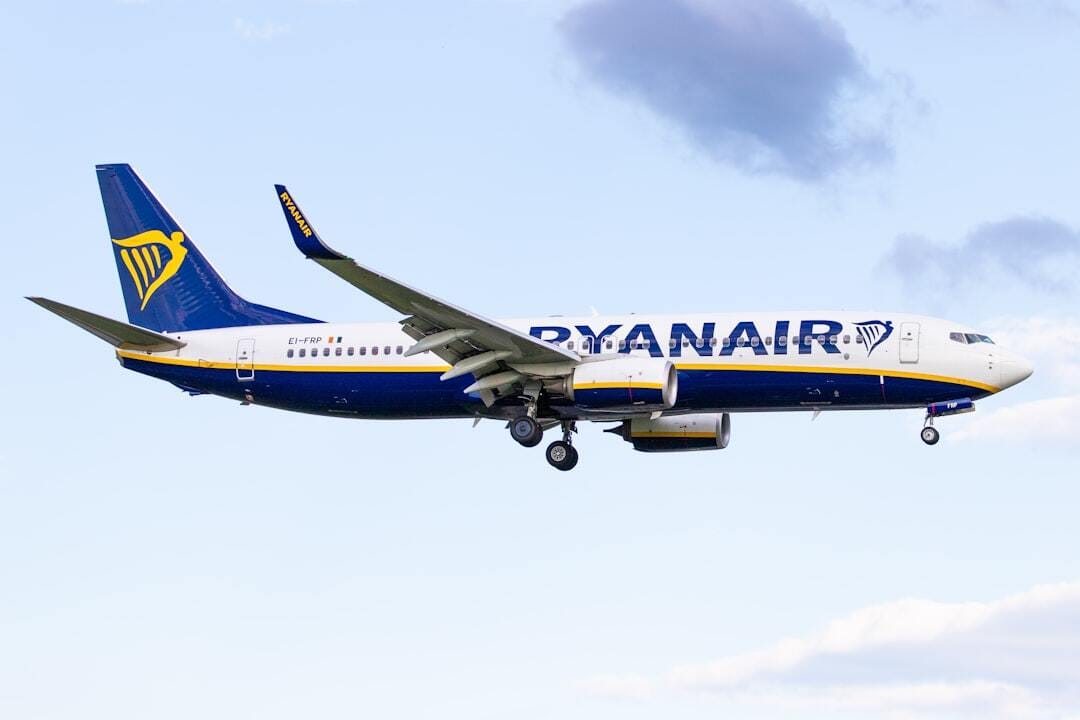
Competitive Dynamics: The European short-haul market remains intensely competitive, with Ryanair, easyJet, and Wizz Air all pursuing growth. Vueling’s IAG backing provides financial resilience and operational resources that smaller independent carriers lack, but maintaining cost competitiveness requires continuous focus.

Revenue Management Evolution: Ancillary revenue optimization, dynamic pricing sophistication, and customer segmentation strategies will increasingly drive profitability as base fares face competitive pressure.
Operational Excellence Imperative: Improving customer satisfaction metrics while maintaining industry-leading punctuality will differentiate Vueling in increasingly commoditized markets. This requires investment in digital customer service capabilities and proactive disruption management.
PROJECTED MILESTONES: 2026-2030

Late 2026:     First Boeing 737 MAX deliveries commence
2027:          Mixed fleet operations stabilize
2028-2029:     Fleet efficiency benefits accelerate
2030:          Target 100% new-generation fleet composition
Ongoing:       Network expansion in core European markets
My Final Thoughts
Vueling S.A. enters 2026 characterized by strategic fleet transformation, network consolidation, and operational refinement. The decision to introduce Boeing 737 MAX aircraft represents the most significant change in the carrier’s 21-year history, creating both opportunities and execution challenges.
The airline’s financial performance in 2025 showed resilience despite seasonal headwinds and competitive pressures. Revenue growth of 1.9% in 2024 and stable market positioning demonstrate fundamental business health, even as quarterly volatility reflects sensitivity to leisure travel patterns and calendar effects.
Success in 2026 and beyond will depend on execution across multiple dimensions: smooth MAX fleet integration, continued cost discipline, customer experience improvements, and strategic network development. With IAG’s financial backing, proven operational capabilities, and scale advantages in Europe’s largest aviation market, Vueling possesses the resources to navigate this transformation successfully.
The outcomes of its current strategic initiatives will offer valuable insights into fleet diversification strategies, operational efficiency in mixed-fleet environments, and the competitive dynamics shaping European short-haul aviation for the remainder of the decade.