
Europe’s ultra-low-cost carrier Wizz Air finds itself at a defining moment as it recalibrates its ambitious expansion strategy while grappling with persistent operational challenges.
The Hungarian airline’s recent financial performance reveals a company actively transforming its business model to achieve more sustainable long-term growth, even as it confronts continued disruptions from Pratt & Whitney engine groundings and strategic repositioning across its European network.
Table of Contents

Image source: airbus.com
Financial Performance: Mixed Signals in H1 2025
Wizz Air’s first-half results for fiscal year 2026 (covering April through September 2025) presented a complex picture of recovery and constraint.
The carrier reported operating profit of €439.2 million, representing a 25.8% year-over-year increase that significantly exceeded analyst expectations of €367 million. This performance drove shares up 16% following the announcement on November 13, 2025.
KEY FINANCIAL METRICS (H1 FY2026)

Total Revenue:           €3.34 billion (+9% YoY)
Operating Profit:        €439.2 million (+25.8% YoY)
Net Profit:              €323.5 million (+2.6% YoY)
EBITDA:                  €981.3 million (vs. €826 million previous year)
Available Seat Kilometers: +8.9% YoY
Cash Position:           €1.98 billion (+14.3% since March 2025)
However, the positive financial headline masked underlying challenges. Revenue per Available Seat Kilometer (RASK) remained flat despite the capacity increase, and management forecast a low-single-digit decline in full-year revenue.
CEO József Váradi attributed the profit improvement to lower fuel costs, reduced flight disruption charges, and the elimination of one-off wet-lease expenses that burdened the previous year.
The Pratt & Whitney Engine Crisis: Extended Timeline
The most significant operational constraint facing Wizz Air remains the ongoing Geared Turbofan (GTF) engine reliability issues affecting its Airbus A320neo-family fleet.
As of September 30, 2025, the airline had 35 aircraft grounded for engine-related inspections, down from 41 during the summer peak. This represents approximately 14% of the operational fleet being unavailable at any given time.
Period | Grounded Aircraft Range | Impact on Operations |
|---|---|---|
Summer 2025 | 41 aircraft | Peak disruption during high season |
September 2025 | 35 aircraft | Improved but still constraining |
FY2026 (forecast) | 30-35 aircraft | Continued capacity limitations |
FY2027 (forecast) | 25-30 aircraft | Slight improvement expected |
End of 2027 | Full fleet return targeted | Resolution dependent on P&W |
The timeline for complete resolution has been extended from mid-2027 to the end of 2027, with Váradi emphasizing that this revised target reflects “something achievable and deliverable” agreed upon with Pratt & Whitney. The engine manufacturer’s turnaround times remain at approximately 300 days, significantly hampering fleet utilization.
To mitigate these constraints, Wizz Air plans to build a spare engine pool of roughly 100 units by summer 2026. This investment represents a substantial capital allocation toward operational resilience, though it also highlights the severity of the reliability challenges.

Strategic Recalibration: Slower, More Sustainable Growth
Perhaps the most consequential development for Wizz Air’s future trajectory is the comprehensive restructuring of its Airbus orderbook announced in November 2025.
The airline has deferred delivery of 88 A321neo aircraft originally scheduled to arrive by March 2030, pushing these deliveries into the early 2033 timeframe. Additionally, Wizz converted 36 A321XLR commitments to standard A321neo variants.
This restructuring fundamentally resets growth expectations:
REVISED FLEET EXPANSION PLAN

FY2026:     256 aircraft
FY2032:     384 aircraft
FY2033:     379 aircraft (slight reduction from 2032)

Annual Growth Rate: 10-12% (down from previous 20% target)
Previous Ambition:  500 aircraft by 2030 (now abandoned)
Váradi characterized the amended agreement as programming “growth against the risk profile of execution” to create stability through the next decade. The slower expansion addresses both the engine reliability constraints and broader operational challenges that have hampered the carrier’s performance.
In a tactical maneuver to manage near-term capacity, Wizz Air took delivery of three brand-new A321neo aircraft in November 2025 and immediately sold them to a lessor for onward lease to another airline.
While Váradi described this as a “short-term phenomenon, not a structural matter,” it signals the company’s willingness to moderate expansion even as aircraft arrive.
Network Rationalization: Exiting High-Cost Locations
Wizz Air has undertaken significant network restructuring during 2025, closing bases in locations that proved operationally or economically unviable. The most notable closures include:
Abu Dhabi Base (Closed September 1, 2025)
The shutdown of Wizz Air Abu Dhabi marked a complete withdrawal from Middle East operations. Váradi cited engine reliability constraints “particularly in hot and harsh environments” as a primary factor, along with geopolitical volatility. The decision reflected a strategic pivot toward “benign network opportunities” within Europe.
Vienna Base (Closure by March 15, 2026)
Wizz Air announced the closure of its Vienna base following a strategic review. Two of five based aircraft were withdrawn on October 26, 2025, cancelling routes to Bilbao and London-Gatwick. The remaining three aircraft and all other Vienna routes will cease operations by mid-March 2026. Rising airport costs at Vienna contributed to the decision.
New Base Openings
Counterbalancing these closures, Wizz Air has opened or expanded bases at lower-cost airports including Bratislava, Tuzla, Podgorica, Yerevan, and Warsaw Modlin. These locations offer more favorable economics and align with the carrier’s ultra-low-cost model.
Fleet Composition and Modernization
As of September 30, 2025, Wizz Air operated 243 aircraft with the following composition:
Aircraft Type | Number in Fleet | Status |
|---|---|---|
A320ceo | 30 | Legacy aircraft being phased out |
A321ceo | 41 | Legacy aircraft being phased out |
A320neo | 6 | Modern, fuel-efficient |
A321neo | 163 | Backbone of the fleet |
A321XLR | 3 | Recently delivered, long-range capability |
The airline expects to become an all-Neo operator by 2029 as its remaining prior-generation A320 and A321 aircraft exit the fleet. During the first six months of fiscal year 2026, Wizz took delivery of 16 new A321neo aircraft, three A321XLR aircraft, and redelivered seven A320ceo aircraft.
The conversion of A321XLR orders to standard A321neo variants suggests a strategic de-emphasis on ultra-long-range operations in favor of the airline’s traditional short- and medium-haul European network focus.
Recent Route Expansion Activity
Despite capacity constraints, Wizz Air continues selectively expanding its route network in core markets. Recent announcements include:
Rome Fiumicino (December 18, 2025)
Wizz Air announced the addition of its 15th aircraft to its Rome base along with eight new routes. The airline carried more than 5 million passengers to and from Italy in 2025, operating over 250 active routes to more than 30 countries from Italian airports.
Warsaw Chopin (December 17, 2025)
The carrier announced a 15th aircraft for its Warsaw base in summer 2026, adding an Airbus A321neo to strengthen its position in the Polish market.
Suceava Relaunch (December 15, 2025)
Wizz Air relaunched its Suceava base in Romania with two A321neo aircraft and seven new routes to Birmingham, Bologna, London-Luton, Milan-Bergamo, Paris-Beauvais, Rome-Fiumicino, and Venice-Treviso.
Safety Recognition and Product Rating
Amid operational challenges, Wizz Air received notable safety recognition. The airline was named among the world’s top ten safest carriers by AirlineRatings.com for 2025. The independent safety and product rating agency ranked Wizz Air seventh among the safest low-cost airlines globally, evaluating 385 carriers worldwide based on fleet age, incident records, audits, and operational history.
This recognition provides important reassurance for an airline that has faced scrutiny over operational reliability and passenger complaints related to irregular operations caused by aircraft groundings.
Financial Outlook and Liquidity Position
Wizz Air ended the first half of fiscal year 2026 with €1.98 billion in cash, representing a 14.3% increase since March 2025. The company plans to repay a €500 million bond maturing in January 2026 using internal liquidity, demonstrating solid financial positioning despite operational headwinds.
The balance sheet strength provides flexibility as the airline navigates the extended engine crisis and network transformation. However, management’s forecast of a low-single-digit decline in full-year revenue signals continued pressure on unit economics, particularly during the winter season when capacity exceeds demand in many European markets.
Analyst and Market Perspectives
Market reaction to Wizz Air’s strategic pivot has been cautiously positive. Bernstein analyst Alex Irving characterized the capacity reduction as a “sensible move to stabilise operations,” while investors and analysts praised what they perceived as stronger execution discipline compared to prior quarters.
Nevertheless, Wizz Air’s shares remain down approximately 30% over the six months preceding the November results announcement, making it a laggard among European carriers despite the 16% post-earnings bounce.
This underperformance reflects investor concerns about the prolonged nature of the engine challenges and uncertainty about when unit revenue metrics will show sustained improvement.
Outlook for 2026 and Beyond
As Wizz Air progresses through 2026, several key factors will determine its trajectory:
Engine Resolution Timeline
The ability to meet the end-of-2027 target for returning all grounded aircraft to service depends entirely on Pratt & Whitney’s execution of its recovery plan. Any further delays would extend the capacity constraints and competitive disadvantage versus airlines operating older-generation engines or CFM-powered aircraft.
Unit Revenue Recovery
Management’s expectation of declining RASK suggests competitive intensity remains high in European short-haul markets. The network rationalization toward lower-cost bases should improve profitability even if yields remain under pressure, but execution risk remains significant.
Fleet Growth Discipline
The revised 10-12% annual growth target represents a more sustainable pace than the previous 20% ambition. Successfully managing this moderated expansion while maintaining cost efficiency will be essential to rebuilding investor confidence.
Competitive Positioning
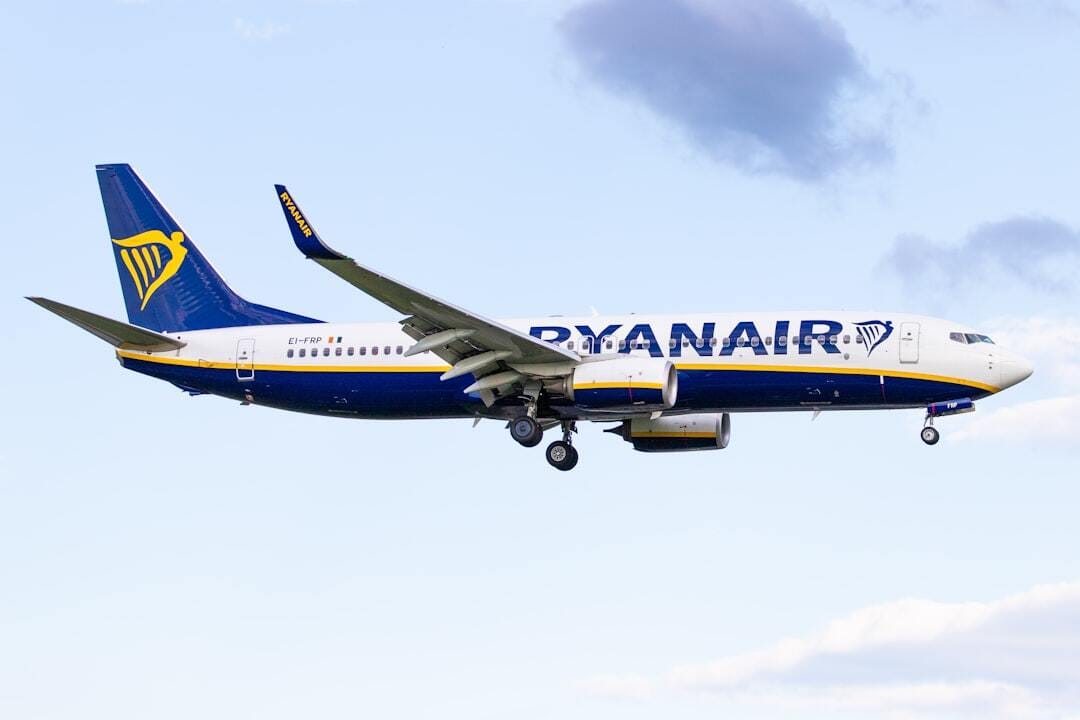
Wizz Air operates in a sector where competitors like Ryanair have largely avoided the GTF engine issues due to different fleet compositions. Regaining competitive parity on fleet reliability and operational performance will be critical to defending market share in core Central and Eastern European markets.
The airline’s transformation from an aggressive expansion phase to a more measured, sustainability-focused approach reflects management’s recognition that previous growth targets were incompatible with operational realities. Whether this recalibration positions Wizz Air for long-term success or merely represents damage control from self-inflicted expansion wounds will become clearer as 2026 unfolds.
For now, the ultra-low-cost carrier remains caught between its ambitions and the practical constraints of engine reliability, market economics, and operational complexity. The next 18 months will prove decisive in determining whether Wizz Air emerges as a more resilient competitor or continues struggling to regain its previous momentum.