


Executive Summary
Air New Zealand reported FY2025 operating revenue of NZ$6.8 billion, earnings before taxation of NZ$189 million, and statutory net profit after tax of NZ$126 million, with results pressured by Pratt & Whitney and Rolls-Royce engine maintenance constraints that grounded up to 11 aircraft from a 60-jet operating fleet.
The carrier operates 115 aircraft with 10 Boeing 787 and 2 Airbus A321neo aircraft on firm order, and is rolling out a high-premium 219-seat Boeing 787-9 ‘V3’ configuration for ultra-long-haul routes, including the new Auckland to New York JFK service.
The H1 FY2026 result deteriorated to a NZ$59 million pre-tax loss and a NZ$40 million net loss after tax, prompting a strategic review that the new CEO Nikhil Ravishankar is leading after succeeding Greg Foran in October 2025.
Auckland remains the carrier’s anchor hub with a domestic market share above 80 percent, while engine availability constraints and softer corporate demand define the operating reality through to mid-2026.
Recommended - Read Full Reports


Read All Reports
Table of Contents
Executive Summary
Air New Zealand Company Profile: Key Facts
Air New Zealand Revenue & Financial Analysis
FY2025 Headline Financial Results
Revenue Composition by Stream
Revenue Growth Drivers and Pressures
Pratt & Whitney - Company Overview, Analysis and Outlook Report 2026 (Updated)
H1 FY2026 Interim Result
FY2026 Financial Outlook
Liquidity, Balance Sheet and Capital Returns
Air New Zealand Fleet Analysis
Fleet Size, Composition and Average Age
Airbus - Company Analysis and Outlook Report 2026 (Updated)
Boeing - Company Analysis and Outlook Report 2026 (Updated)
Aircraft Types Strategy and Configuration
Boeing 777-300ER
Boeing 787-9 Dreamliner
Boeing 787-10 Dreamliner
GE Aerospace - Company Analysis and Outlook Report 2026 (Updated)
Rolls-Royce Holdings - Company Analysis and Outlook Report 2026 (Updated)
Airbus A320neo and A321neo
Airbus A320ceo
ATR 72-600 and Q300 Turboprops
Fleet Strategy Through to 2030
Engine Maintenance Constraints
Sustainability and Sustainable Aviation Fuel
Air New Zealand: Route Network, Major Destinations and Strategy
Network Structure Overview
Domestic New Zealand Network
Trans-Tasman and Pacific Network
Asia Network Strategy
North America Network
London and the Middle East
Network Strategy Pillars
Major Operational Bases (Hubs)
Auckland Airport (AKL): The Anchor Hub
Christchurch Airport (CHC): The South Island Gateway
Wellington Airport (WLG): The Capital Hub
Queenstown Airport (ZQN): The Tourism Gateway
Air New Zealand Competitive Position
Major Competitors
Air New Zealand vs Qantas
Qantas - Fleet Strategy, Route Network & Company Analysis Report 2026 (Updated)
Air New Zealand vs Jetstar (New Zealand)
Air New Zealand vs Virgin Australia
Air New Zealand vs Singapore Airlines
Air New Zealand vs Cathay Pacific
Air New Zealand vs Fiji Airways
Air New Zealand vs United Airlines and the Star Alliance Cohort
Customer Experience and Product Strategy
Business Premier Luxe and Cabin Refresh
Economy Skynest
Airpoints and Koru Loyalty
Cargo Business
Other Strategic Initiatives
Digital and Technology Transformation
Sustainable Aviation Fuel and Decarbonisation
Regional Decarbonisation Pathway
Strategic Review Outcomes
Key Risks: Probability and Scenario Analysis
Risk 1
Risk 2
Risk 3
Risk 4
Risk 5
Risk 6
Risk 7
Risk 8
Risk 9
Risk 10
Air New Zealand Competitive Moats and Vulnerabilities
Industry Context
My Final Thoughts
Official Sources & Data
Air New Zealand Company Profile: Key Facts
Legal name:            Air New Zealand Limited
Founded:               1940 (as Tasman Empire Airways Limited)
Headquarters:          Auckland, New Zealand
ASX/NZX ticker:        AIZ / AIR
Major shareholder:     New Zealand Government (~52%)
CEO:                   Nikhil Ravishankar (from 17 October 2025)
Chair:                 Therese Walsh
Total operating fleet: ~115 aircraft (incl. turboprops)
Jet fleet:             ~60 aircraft
Hubs:                  Auckland (AKL), Christchurch (CHC), Wellington (WLG)
Alliance:              Star Alliance member since 1999
FY2025 revenue:        NZ$6.8 billion
FY2025 NPAT:           NZ$126 million
Passengers carried:    15.9 million (FY25)
Employees:             ~10,800
The airline traces its lineage to Tasman Empire Airways Limited, which began trans-Tasman flying boat services in 1940. Today it functions as the national flag carrier of New Zealand, with the Crown holding majority ownership while shares trade publicly on both the New Zealand Exchange and the Australian Securities Exchange.
The carrier’s corporate identity blends a contemporary commercial profile with strong Māori cultural elements, a positioning the airline has woven into branding, in-flight service, and crew uniforms. Auckland Airport functions as the dominant gateway, accounting for the vast majority of international long-haul departures.
The 2025 leadership transition was a defining year for the company.
The Board appointed Nikhil Ravishankar, the airline’s former Chief Digital Officer, to succeed Greg Foran after a global recruitment process that emphasised technology, transformation, and operational stewardship.

Air New Zealand Revenue & Financial Analysis
FY2025 Headline Financial Results
For the financial year ended 30 June 2025, Air New Zealand delivered total operating revenue of NZ$6.8 billion, broadly flat against the prior year despite a four percent reduction in network capacity caused by engine maintenance.
Earnings before taxation came in at NZ$189 million, down from NZ$222 million in FY2024. Statutory net profit after taxation was NZ$126 million, and the Board declared total ordinary dividends of 2.5 cents per share for the year.
FY2025 vs FY2024 — Key Metrics
-----------------------------------------
Operating revenue:       $6.755B   vs   $6.752B
Passenger revenue:       $5.9B     vs   $6.0B  (-2%)
Cargo revenue:           $487M     vs   $458M  (+6%)
Contract & other:        $417M     vs   ~$390M
EBT:                     $189M     vs   $222M
NPAT (statutory):        $126M     vs   $146M
Passengers carried:      15.907M
ASKs (millions):         40,501
Passenger load factor:   83.4%
Source: Air New Zealand FY2025 Annual Result announcement.
Revenue Composition by Stream
Passenger revenue dominated the income statement at NZ$5.9 billion, reflecting the airline’s continued reliance on the leisure and business travel market between New Zealand, Australia, the Pacific, North America, Asia and the United Kingdom.
Cargo revenue grew six percent to NZ$487 million, supported by stable trans-Pacific belly capacity demand and a recovery in horticultural exports. Air New Zealand’s cargo division operates as a sizeable freight business that monetises capacity in the bellies of widebody passenger aircraft.
Contract services and other revenue generated NZ$417 million, encompassing ground handling, line maintenance, training services, and freight services for third parties. This stream provides a useful counterweight to the cyclicality of passenger demand.
Revenue Growth Drivers and Pressures
The principal headwind across FY2025 was capacity constraint, which translated directly into foregone revenue.
The airline disclosed that up to 11 aircraft from a 60-jet fleet were grounded at various points due to global engine maintenance demands on Pratt & Whitney PW1100G geared turbofans powering the A320neo family and Rolls-Royce Trent 1000 engines on the Boeing 787-9.

Domestic demand softened during the second half, particularly on regional routes, as government and corporate spending was reduced. Yields on trans-Tasman and Pacific Island flying remained reasonably resilient, partly because the new A321neo international aircraft expanded capacity and improved unit economics.
International long-haul faced the inverse story. Premium cabin demand to North America and Asia held up, but supply was constrained by the unavailability of full Boeing 787-9 capacity. The retrofit of the existing 787-9 fleet to a common 272-seat layout temporarily reduced fleet flexibility through 2026.
H1 FY2026 Interim Result
The first half of the 2026 financial year saw the airline swing to a pre-tax loss. For the six months ended 31 December 2025, Air New Zealand reported a loss before taxation of NZ$59 million and a net loss after taxation of NZ$40 million.
H1 FY2026 vs H1 FY2025
-----------------------------------------
Loss before taxation:    -$59M   vs   $155M EBT (H1 FY25)
NPAT:                    -$40M   vs   ~$110M (H1 FY25)
Management explicitly attributed the deterioration to engine maintenance-related capacity loss, weaker domestic demand, and US dollar denominated maintenance cost pressure. The Board paired the result with a strategic review led by the new CEO covering network, fleet, cost and digital priorities.
FY2026 Financial Outlook
Initial guidance issued at the FY2025 result in August 2025 indicated that first half FY2026 earnings before taxation would be similar to or less than the second half of FY2025, which was NZ$34 million. The actual H1 outcome materially undershot that benchmark.
System-wide aviation costs were flagged to rise approximately US$85 million in FY2026, driven by maintenance, leasing of replacement A321neo capacity, and inflation in supplier contracts. The airline has leased two A321neo aircraft for up to 12 years to mitigate engine-related grounding impacts.
Liquidity, Balance Sheet and Capital Returns
Air New Zealand maintains a solid liquidity position underpinned by a NZ$1.5 billion equity base and committed debt facilities. The carrier disclosed that it received compensation from Pratt & Whitney during 2025 for engine availability, although exact amounts were not disclosed.
Capital expenditure remained elevated as Boeing 787 deliveries approach. The fleet renewal program is the largest capital deployment in the carrier’s history, with Boeing 787-10 aircraft expected to enter service progressively as 777-300ERs are retired toward the end of the decade.
The dividend was reduced to 2.5 cents per share for FY2025 to preserve cash for fleet investment and to manage the engine compensation timing. Management has signalled a continued progressive dividend approach that scales with normalised earnings.
Air New Zealand Fleet Analysis
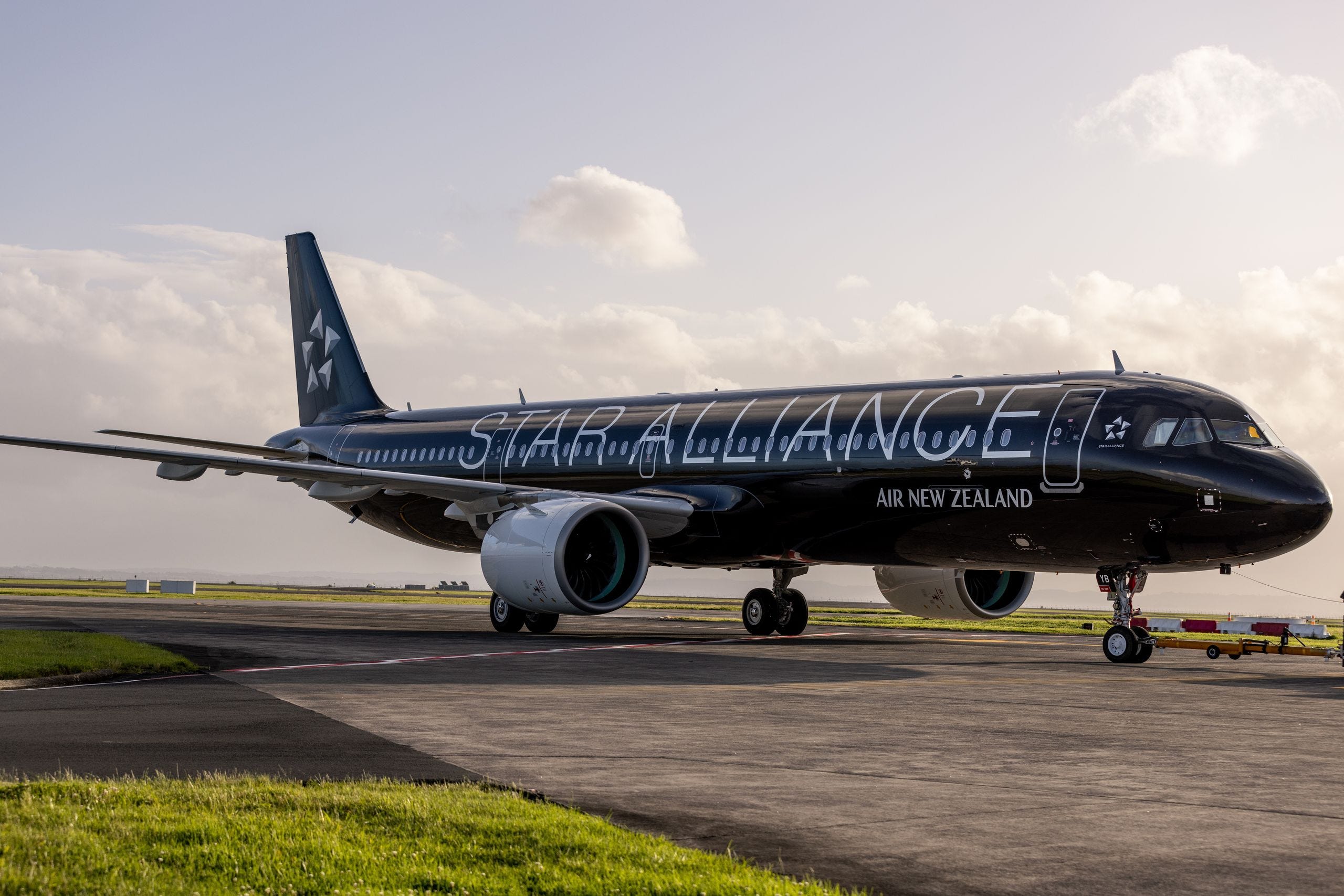
Fleet Size, Composition and Average Age
The current Air New Zealand operating fleet comprises 115 aircraft when turboprops and jets are combined, with two firm A321neo orders and ten firm Boeing 787 orders pending. The average fleet age sits around 11.4 years.


The official airline fleet page lists the operating mainline jets as of 31 December 2025 as follows: 10 Boeing 777-300ER, 14 Boeing 787-9 (with 10 on order across 787-9 and 787-10), 17 Airbus A320ceo for domestic flying, and 20 A320neo and A321neo across domestic and international short-haul, with two more A321neos to come.
Operating Fleet Snapshot (31 Dec 2025)
-----------------------------------------
Boeing 777-300ER:        10  (avg age ~13.8 yrs)
Boeing 787-9:            14  (avg age ~9.3 yrs; +10 on order)
Airbus A320ceo (DOM):    17  (avg age ~11.9 yrs)
A320neo / A321neo:       20  (avg age ~4.8 yrs; +2 on order)
ATR 72-600:              ~29
de Havilland Q300:       ~23
Total mainline jet:      ~60
Total fleet:             ~115
Source: Air New Zealand operating fleet page.
Aircraft Types Strategy and Configuration
The fleet is segmented into four operational layers: long-haul widebody, international narrowbody, domestic narrowbody, and regional turboprop. Each tier has been chosen to match a discrete demand profile rather than to maximise commonality.
Boeing 777-300ER
The 777-300ER fleet is the carrier’s largest passenger asset, deployed on long-thin trunk routes to Los Angeles, San Francisco, Tokyo and back to selected Asian and trans-Pacific markets. The configuration carries 342 seats, including a Business Premier cabin, premium economy, and economy zones.
These aircraft were originally part of an eight-strong fleet, though one frame has been retired and stored. The remaining ten will continue to fly until the Boeing 787-10s replace them progressively from late 2026 onwards.
Boeing 787-9 Dreamliner
The 787-9 fleet is the strategic backbone of the international long-haul network. Air New Zealand has been a launch and loyal Trent 1000 customer, although Rolls-Royce engine availability has materially constrained utilisation.
The carrier is undertaking a comprehensive cabin retrofit program to standardise the existing 787-9 sub-fleet on a 272-seat configuration that introduces Business Premier Luxe suites, the Skynest economy sleeping pods, and a refreshed Premium Economy cabin.
787-9 V3 Configuration (incoming aircraft):
- Business Premier Luxe:     4 seats
- Business Premier:           38 seats
- Premium Economy:            42 seats
- Economy & Economy Stretch: 135 seats
- Total seats:                219
The new V3 layout has been revealed for ultra-long-haul deployment, including the headline Auckland to New York JFK service.
Boeing 787-10 Dreamliner
The 787-10 represents a new variant for the airline. The original eight-aircraft order was placed in 2019 with GE Aerospace’s GEnx-1B engines, ending a 20-year exclusive Rolls-Royce widebody relationship. Five 787-10s remain among the ten 787s on order.


The decision to choose GE was rooted in availability, in-service performance, and total cost of ownership. The Trent 1000 issues that subsequently played out across global operators validated the strategic logic of dual-sourcing widebody propulsion.
Airbus A320neo and A321neo
The A320neo family operates a dual-purpose role across domestic and international short-haul. The A321neo aircraft used internationally are configured with 214 seats, while domestic A321neos seat up to 214 in a high-density layoutoptimised for trunk routes between Auckland, Wellington, Christchurch and Queenstown.
These aircraft are powered by Pratt & Whitney PW1100G geared turbofans, which have been the primary cause of grounding events since 2024. Two additional A321neos were ordered for delivery from June 2025, expanding the international short-haul capacity.
Airbus A320ceo
The 17 A320ceo airframes operate a domestic-only role with 168 economy seats. They are gradually being retired as A320neo family aircraft progress through delivery, although the older type remains valuable as engine availability cover.
ATR 72-600 and Q300 Turboprops
The regional turboprop fleet is operated through the Mount Cook Airline subsidiary structure that the company has been merging into the mainline carrier. The fleet of approximately 29 ATR 72-600 aircraft serves regional cities such as Napier, New Plymouth, Nelson, Gisborne, Hamilton and Palmerston North.
The smaller de Havilland Q300 fleet of around 23 aircraft handles thinner regional sectors with 50 economy seats per aircraft. The Q300 is being progressively considered for replacement, with ATR proposing a hybrid-electric successorfor the 2030s.
Fleet Strategy Through to 2030
The core fleet strategy can be expressed as three concurrent priorities. First, replace the 777-300ERs with 787-10s while retaining a small widebody specification overlap during transition.
Second, complete the 787-9 cabin retrofit program to introduce a single, premium-heavy cabin standard across the 787-9 fleet. Third, grow the A321neo presence on Tasman and Pacific routes to absorb the growth that the 787-9 retrofit period suppresses.
The widebody propulsion split between Trent 1000 (existing 787-9s) and GEnx-1B (new 787-10s and incoming 787-9s) introduces complexity but also resilience. The lessons of the Rolls-Royce supply constraint episode argue strongly for dual-source procurement.
Engine Maintenance Constraints
Pratt & Whitney PW1100G durability problems on the GTF engines and the legacy Trent 1000 issue have together created the most significant operational constraint facing Air New Zealand in two decades. Engine availability rather than aircraft availability is the binding capacity constraint.
The carrier has secured compensation arrangements with Pratt & Whitney that partially offset the financial impact, but the operational disruption is harder to neutralise. CAPA reports that engine shortages ground close to 20 percent of the fleet at certain peaks, with full recovery not expected until mid-2026.
Sustainability and Sustainable Aviation Fuel
Air New Zealand has committed to net zero carbon emissions by 2050, with more than 90 percent of total emissions today derived from burning fossil jet fuel. The airline is investing in sustainable aviation fuel, with a 30 million litre purchase from Neste announced for use at Los Angeles and San Francisco through to February 2026.
The carrier suspended its 2030 absolute emissions target in 2024 due to fleet renewal and SAF availability uncertainty, choosing instead to focus on near-term operational efficiency and SAF procurement actions. This pragmatic recalibration matches the realities of fleet supply chain constraints.
Sustainability Highlights:
- Net zero target:           2050
- SAF purchase (Neste):      30 million litres (LAX, SFO)
- Lifecycle CO2 reduction:   up to ~80% vs fossil jet fuel
- Q300 successor study:      ATR hybrid-electric (2030+)
- First Wellington SAF:      500,000 litres delivered 2025