
Western China’s largest carrier, Sichuan Airlines, is charting an ambitious course through fleet modernization and network expansion as it positions itself for sustained growth in the post-pandemic aviation sector.
Also Read:


Table of Contents

Image source: wikipedia.org
Corporate Structure and Ownership
Sichuan Airlines operates as a strategically positioned carrier with a diversified ownership structure that reflects China’s collaborative approach to aviation development.
Established in 1986 and restructured in 2002, the airline maintains a balanced shareholder composition that includes China Southern Airlines (39%), Sichuan Airlines Group (40%), China Eastern Airlines (10%), and Air China (10%). This ownership arrangement provides the carrier with both regional autonomy and national support infrastructure.
The airline received substantial financial backing in late 2023 when shareholders committed CNY 12 billion ($1.69 billion) in capital injection, with China Southern Airlines contributing CNY 4.68 billion.
This capital infusion, completed by early 2024, has strengthened the carrier’s financial foundation for fleet expansion and route development initiatives planned through 2026.
SHAREHOLDER STRUCTURE

Sichuan Airlines Group: 40%
China Southern Airlines: 39%
China Eastern Airlines: 10%
Air China: 10%
Chengdu Gingko Restaurant Co.: 1%
Fleet Composition and Modernization Strategy
As of December 2025, Sichuan Airlines operates 214 aircraft with an average fleet age of 9.8 years, making it one of the largest all-Airbus operators in China. The carrier has positioned itself at the forefront of fleet modernization, particularly through its strategic deployment of next-generation widebody aircraft.
Aircraft Type | Passenger Fleet | Cargo Fleet | Total |
|---|---|---|---|
A319-100 | 18 | - | 18 |
A320-200 | 55 | - | 55 |
A320neo | 38 | - | 38 |
A321-200 | 46 | 4 (P2F) | 50 |
A321neo/LR | 27 | - | 27 |
A330-200 | 4 | 3 (Freighter) | 7 |
A330-300 | 7 | 2 (P2F) | 9 |
A350-900 | 9 | - | 9 |
Total | 204 | 9 | 213 |
A350 Fleet Expansion
The carrier took delivery of one Airbus A350-900, placing it among airlines expanding their extra-widebody capabilities.
With nine A350-900s currently in service and three additional units on order, Sichuan Airlines has configured these aircraft with 331-337 seats to serve its expanding long-haul network.
The A350 fleet features the airline’s distinctive “Panda Route” livery, emphasizing the carrier’s regional identity while targeting international markets.


Image source: cargofacts.com
Fleet Optimization Initiatives
Recent reports indicate the carrier is seeking to divest six Airbus A320ceo aircraft along with three spare engines, signaling a strategic shift toward newer, more fuel-efficient variants.
This fleet rationalization aligns with industry-wide efforts to reduce operational costs and enhance environmental performance.
Network Development and Route Expansion
Operating from multiple hubs, including Chengdu Tianfu International Airport, Chengdu Shuangliu International Airport, Chongqing Jiangbei International Airport, and Kunming Changshui International Airport, Sichuan Airlines serves 151 destinations across five continents.
European Network Strengthening
The carrier has aggressively expanded its European footprint throughout 2025. The airline launched service to Madrid in April 2025, operating four weekly flights with A350-900 aircraft.
Additionally, the carrier inaugurated Chengdu-Athens service via Istanbul in June 2025, maintaining four weekly frequencies. These routes complement existing European destinations, including Istanbul, Rome, and previously operated services to Prague and Zurich.
EUROPEAN DESTINATIONS (2025)

Madrid (MAD) - 4x weekly
Athens (ATH) - 4x weekly (via Istanbul)
Istanbul (IST) - Multiple frequencies
Rome Fiumicino (FCO) - 4x weekly
Regional Network Expansion
The most recent addition to the network came in December 2025 with the launch of Chongqing-Kuala Lumpur service, operating three times weekly with A320/A321 aircraft.
This route represents the carrier’s second Malaysian connection, supplementing the existing Chengdu-Kuala Lumpur service. The airline has also maintained strong connectivity to key Asia-Pacific destinations, including Tokyo, Sydney, Melbourne, Auckland, Singapore, and Bangkok.
North American Operations
Long-haul North American services include Vancouver and Los Angeles routes from Chengdu, utilizing the carrier’s widebody fleet for transcontinental operations. These routes serve substantial ethnic Chinese communities while facilitating business and tourism traffic between Western China and North America.
Cargo Operations Growth
Sichuan Airlines has developed a substantial cargo division with nine dedicated freighters, including four A321-200P2F conversions, three A330-200F aircraft, and two A330-300P2F conversions.
The cargo operation has identified specialized market opportunities, including a reported plan to import 10,000 tons of salmon in the second half of 2025, demonstrating the carrier’s ability to identify niche freight markets that complement its passenger operations.
Operational Performance Excellence
According to recent performance metrics, Sichuan Airlines demonstrated strong operational reliability in October 2025, achieving a 96.62% on-time performance rate.
This performance metric places the carrier among the most punctual operators in the Chinese aviation sector, a critical competitive advantage as business travelers increasingly prioritize schedule reliability.
Performance Metric | October 2025 |
|---|---|
On-Time Performance | 96.62% |
Fleet Utilization | High |
Safety Rating | 3-Star (Skytrax) |
Strategic Partnerships and Alliances
While not a member of a global airline alliance, Sichuan Airlines has established comprehensive codeshare agreements with 13 carriers, including all major Chinese airlines (Air China, China Eastern, China Southern) and international partners such as Turkish Airlines.
These partnerships extend the carrier’s virtual network beyond its own operated routes, providing passengers with seamless connectivity options.


Image source: wikimedia.org
The carrier serves as the official aviation partner for The World Games 2025 Chengdu, providing discounted flights and air transportation services for event participants, further cementing its role as Western China’s primary aviation gateway.
Outlook for 2026 and Beyond
Fleet Renewal and Growth
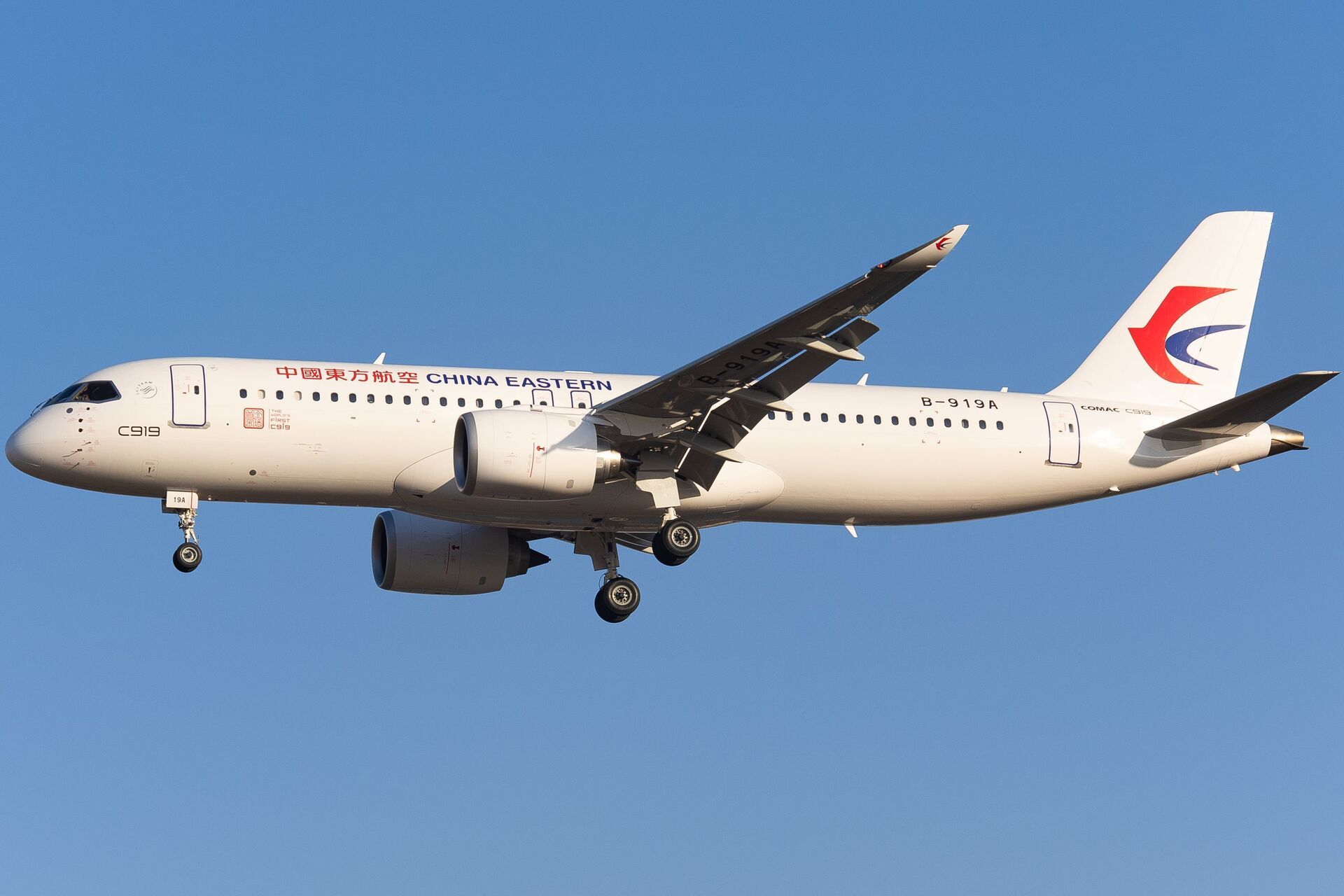
The carrier has 29 aircraft on order or planned, including 20 Comac C919 narrowbody jets, representing a strategic commitment to supporting China’s domestic aircraft manufacturing sector.
The introduction of C919 aircraft, expected to commence deliveries in the coming years, will diversify the carrier’s all-Airbus fleet while potentially reducing acquisition costs.
The remaining A350-900 and A320neo/A321neo orders will continue the fleet modernization trajectory initiated in 2024.
Route Development Priorities
Based on current trajectory, expect Sichuan Airlines to pursue several strategic initiatives through 2026:
PROJECTED DEVELOPMENTS (2026)

- Enhanced European frequency on Madrid and Athens routes
- Additional Southeast Asian destinations from Chongqing hub
- Potential new North American gateway cities
- Expanded cargo network leveraging freighter fleet
- Increased A350 utilization on premium long-haul routes
Competitive Positioning
Operating from Chengdu, a city with growing economic significance and the site of Chengdu Tianfu International Airport (opened in 2021), Sichuan Airlines benefits from strong local government support and a rapidly expanding catchment area.
The carrier faces competition from the “big three” Chinese airlines (Air China, China Eastern, China Southern) but maintains advantages through its regional focus and hub dominance in Western China.
The airline’s financial stability, reinforced by the 2024 capital injection, positions it well to weather potential market volatility while pursuing measured expansion. Industry analysts expect Chinese aviation demand to continue recovering through 2026, with domestic travel approaching pre-pandemic levels and international travel showing steady improvement.
Technology and Service Enhancement
The carrier’s selection of Thales CORE in-flight entertainment systems for its A350 fleet demonstrates commitment to passenger experience improvements.
As competition intensifies, particularly on long-haul international routes, service quality and technological amenities will become increasingly important differentiators.
My Final Thoughts
Sichuan Airlines enters 2026 with a strengthened balance sheet, modernized fleet, and expanded network that positions the carrier for sustained growth.
The successful integration of A350 widebodies, strategic route launches to European and Southeast Asian markets, and robust operational performance metrics indicate management’s ability to execute on strategic priorities.
While challenges remain, including intense competition from larger state carriers and economic uncertainties affecting travel demand, Sichuan Airlines’ regional strength, financial backing from major shareholders, and operational excellence provide a solid foundation for navigating the aviation sector’s evolution through 2026 and beyond.