


Welcome to AviationOutlook: The aviation newsletter built exclusively for decision-makers.
Become an “Annual” member now & get this special discount offer.
As a paid member, you get access to:
200+ Reports - All major airlines + aerospace & defense companies (updated regularly).
Daily / Weekly - Deep-dive analysis & insights.
Monthly - Industry outlook reports.
In case you missed it, here are the latest analysis reports:
Embraer - Company Analysis and Outlook Report 2026 (Updated)
American Airlines’ Six-Route Europe Play: Yield Discipline or Widebody Overreach?
Check Out All Reports
Executive Summary
AVIC posted approximately $82.65 billion in 2024 revenue and ranked among the top global aerospace and defense conglomerates, with the parent group reporting $1.64 billion in profits and roughly $187.5 billion in assets.
Combat aircraft output has reached unprecedented scale, with credible independent estimates placing J-20 production at 100 to 120 units per year and the J-35 line at AVIC Shenyang preparing to double output over the next five years.
AVIC Chengdu Aircraft Corporation reported record 2025 results, with revenue rising 15.8% to 75.4 billion yuan (about $11 billion) and net profit climbing 6.5% to 3.4 billion yuan, riding combat experience visibility for the J-10C and demand for next-generation airframes.
The AG600 amphibious aircraft secured its type certificate from CAAC in April 2025, opening the path for production deliveries and adding a new commercial firefighting and maritime program to AVIC’s revenue mix.
Recommended - Read Full Reports


Read All Reports
Table of Contents
Executive Summary
Introduction
Key Facts: AVIC Company Profile
AVIC Company Overview
Origins and Corporate Formation
Organizational Architecture
Listed Vehicles and Capital Structure
Leadership and Governance Reset
Key Product Lines, Programs, and Services
Combat Aircraft
Chengdu J-20 “Mighty Dragon”
Shenyang J-35 / J-35A
J-10C and the J-11/J-16 Family
J-15T and J-15D for the Fujian Era
Sixth-Generation Programs: J-36 and J-50
Strategic Airlift and Special Mission Aircraft
Y-20 Kunpeng Family
AG600 Kunlong Amphibious Aircraft
Special Mission and ISR
Helicopters
Z-20 Medium Utility Family
Z-10 Attack Helicopter
Z-15 (AC352) and Civil Programs
Trainers
Hongdu L-15 Falcon
Unmanned Systems
Wing Loong Family
Avionics, Mission Systems, and Aerostructures
AVIC Financial Analysis
Group-Level Financial Position
Listed Subsidiary Performance
AVIC Chengdu Aircraft (302132.SZ)
AVIC Shenyang Aircraft (600760.SS)
AviChina Industry & Technology (2357.HK)
R&D Intensity
Revenue and Growth Drivers, LTM Trajectory
Combat Aviation Volume
Export Demand Acceleration
New Civil and Special Mission Programs
Drone and Loitering Munition Demand
Major AVIC Competitors
AVIC vs Lockheed Martin
AVIC vs Boeing
AVIC vs Airbus
AVIC vs Northrop Grumman
AVIC vs Dassault Aviation, Saab, KAI, HAL
AVIC Competitive Analysis and Moat
Industrial Scale and Footprint
Vertical Integration and Cost Structure
Domestic Demand Floor
Export Channel via CATIC
Sixth-Generation Optionality
Constraints on the Moat
Industry Position and Strategic Outlook
Where AVIC Sits in 2026
Outlook to 2030
Financial and Commercial Implications
For Western Defense Primes
For Commercial Aerospace Suppliers
For Engine Original Equipment Manufacturers
For Allied Capacity Planning
Key Risks With Probabilities and Scenarios
1. U.S. and Allied Export Controls
2. Engine Maturity and Reliability
3. Anti-Corruption Disruption
4. Geopolitical Escalation
5. Export Customer Concentration
6. Civil Aviation Certification Reciprocity
AVIC SWOT Analysis
Other Strategic Considerations
AVIC and the Civil-Military Fusion Doctrine
The COMAC Question
AVIC and Sanctions Geometry
The Aerospace Industrial Base Gap
My Final Thoughts
Official Sources and Data
Introduction
The Aviation Industry Corporation of China (AVIC) has moved from being a regional player to becoming the central engine of one of the world’s three most consequential combat aviation ecosystems.
With production lines now turning out fifth-generation stealth fighters at rates that rival or exceed Western counterparts, two visible sixth-generation prototype programs in flight test, and a widening customer base across the Middle East, South Asia, and Africa, the company stands at the heart of a profound rebalancing in global aerospace.
For industry stakeholders, AVIC’s trajectory through 2026 and the back half of this decade is no longer a curiosity confined to defense intelligence circles. It’s now a competitive variable that shapes pricing, partnerships, certification timelines, and platform roadmaps from Toulouse to Fort Worth.
Key Facts: AVIC Company Profile
COMPANY:           Aviation Industry Corporation of China (AVIC)
CHINESE NAME:      中国航空工业集团有限公司
HEADQUARTERS:      Beijing, People's Republic of China
FOUNDED:           November 6, 2008 (current form, from AVIC I and AVIC II merger)
OWNERSHIP:         Central state-owned enterprise (SASAC)
CHAIRMAN/PARTY:    Senior leadership renewed after the 2024-2025
                   anti-corruption proceedings against former chairman
EMPLOYEES:         Approximately 400,000 to 500,000 globally
SUBSIDIARIES:      100+ member units, 26 to 27 listed companies
REVENUES (2024):   USD 82.65 billion (Fortune Global 500 data)
NET PROFIT (2024): USD 1.64 billion (Fortune data)
TOTAL ASSETS:      USD 187.5 billion (Fortune data)
PRIMARY SEGMENTS:  Combat aircraft, transport, helicopters, trainers,
                   UAVs, avionics, airborne systems, general aviation,
                   aviation services, aerostructures
KEY LISTED ARMS:   AVIC Chengdu (302132.SZ), AVIC Shenyang (600760.SS),
                   AviChina Industry & Technology (2357.HK),
                   Avicopter (600038.SS), AVIC Avionics (600372.SS),
                   Hongdu Aviation (600316.SS), JONHON Optronic
AVIC is not a single company in any Western sense.
It’s a federation of design bureaus, manufacturing complexes, research institutes, and trading houses bound together under a state holding company that answers to the State-owned Assets Supervision and Administration Commission (SASAC).
That distinction matters because it shapes how programs are funded, how risk is absorbed across the system, and how Western competitors should benchmark productivity and unit economics.
AVIC Company Overview
Origins and Corporate Formation
AVIC in its current form was constituted on November 6, 2008, through the merger of AVIC I and AVIC II, two earlier holding groups that had themselves been carved out of the Aviation Industry Corporation of China created in the late 1990s.
The consolidation was engineered to remove duplicative design bureaus, concentrate scarce engineering talent, and align the entire Chinese aircraft industry under a single planning architecture.
Today the group functions as the principal aviation industrial base of the People’s Republic of China, with the Aviation Industry Corporation of China describing its mission as building a powerful aviation nation and serving as a guardian of the country’s air domain.
The federation includes design institutes such as the 601 Institute (Shenyang), 611 Institute (Chengdu), 603 Institute (Xi’an), 602 Institute (China Helicopter Research and Development Institute), and several others that translate program requirements into airframes, mission systems, and weapons integration packages.
Organizational Architecture
A useful way for industry stakeholders to think about AVIC is in three concentric rings.
The inner ring is the design and manufacturing core, comprising Shenyang Aircraft Corporation, Chengdu Aircraft Corporation, Xi’an Aircraft Industrial Corporation, Hongdu Aviation, Harbin Aircraft Industry Group, Changhe Aircraft Industries, and AVIC Shaanxi.
The middle ring is the systems and components layer, including AVIC Avionics, AVIC Electromechanical Systems, AVIC Aero-Engine Holding (now partly spun off into Aero Engine Corporation of China, AECC), JONHON Optronic, and FACC AG, an Austrian aerostructures supplier acquired by AVIC.
The outer ring is the trading, services, and finance layer, anchored by AVIC International Holding Corporation (which owns the well-known China National Aero-Technology Import & Export Corporation, CATIC), AVIC Capital, and AVIC Trust.
This outer ring is the channel through which exports, technology transfer, and offshore investment flow.
Listed Vehicles and Capital Structure
AVIC’s footprint on the public markets is unusually large for a defense prime.
According to the parent group’s listing data, the conglomerate controls 26 to 27 publicly listed companies across the Shanghai, Shenzhen, Hong Kong, and Vienna exchanges.
The most strategically important listed entities are AVIC Chengdu Aircraft Company Limited, which builds the J-10 family and J-20 stealth fighter; AVIC Shenyang Aircraft Company Limited, which builds the J-15, J-16, and J-35; and AviChina Industry & Technology Company Limited, the Hong Kong-listed flagship that consolidates many helicopter, avionics, and trainer activities.
LISTED ENTITY MAP (SELECTED)

AVIC Chengdu Aircraft Co. Ltd.     - 302132.SZ - J-10C, J-20, J-36 work
AVIC Shenyang Aircraft Co. Ltd.    - 600760.SS - J-11, J-15, J-16, J-35
AviChina Industry & Technology     - 2357.HK   - Helicopters, trainers,
                                                  avionics consolidation
AVIC Avionics Systems              - 600372.SS - Avionics suite
Avicopter PLC                      - 600038.SS - Civil and dual-use rotorcraft
Hongdu Aviation Industry           - 600316.SS - L-15 trainer, missiles
JONHON Optronic Technology         - 002179.SZ - Optronics, connectors
FACC AG                            - FACC.VI   - Aerostructures (Austria)
AVIC Aviation High-Tech Co. - 600862.SS - Helicopter blades, trainersThis listed structure has two consequences worth flagging.
It gives AVIC access to retail and institutional capital that pure defense primes in some other jurisdictions lack.
It also means significant program data, including revenue, gross margin, R&D, and inventory build, becomes visible through Hong Kong and mainland exchange filings.
Leadership and Governance Reset
AVIC has gone through a sharp leadership reset over the past 18 months.
Former chairman Tan Ruisong, who led the group from 2018 until his retirement in 2023, was placed under investigation in August 2024, expelled from the Communist Party in February 2025, and in March 2026 received a sentence for embezzlement, bribery, insider trading, and leaking classified information. Authorities reported he had accepted more than 600 million yuan in bribes.
For industry partners, the operational implication is twofold.
Internal compliance scrutiny across program offices has intensified, especially around bidding, supplier selection, and offshore vehicles.
At the same time, succession has produced a more technocratic and engineering-led senior cohort that is visibly focused on production throughput and export wins.
Key Product Lines, Programs, and Services
AVIC’s portfolio is extraordinarily broad.
The most useful way to frame it is by mission segment, because that is how operators evaluate the products and how Western competitors line up against them.
Combat Aircraft
Chengdu J-20 “Mighty Dragon”
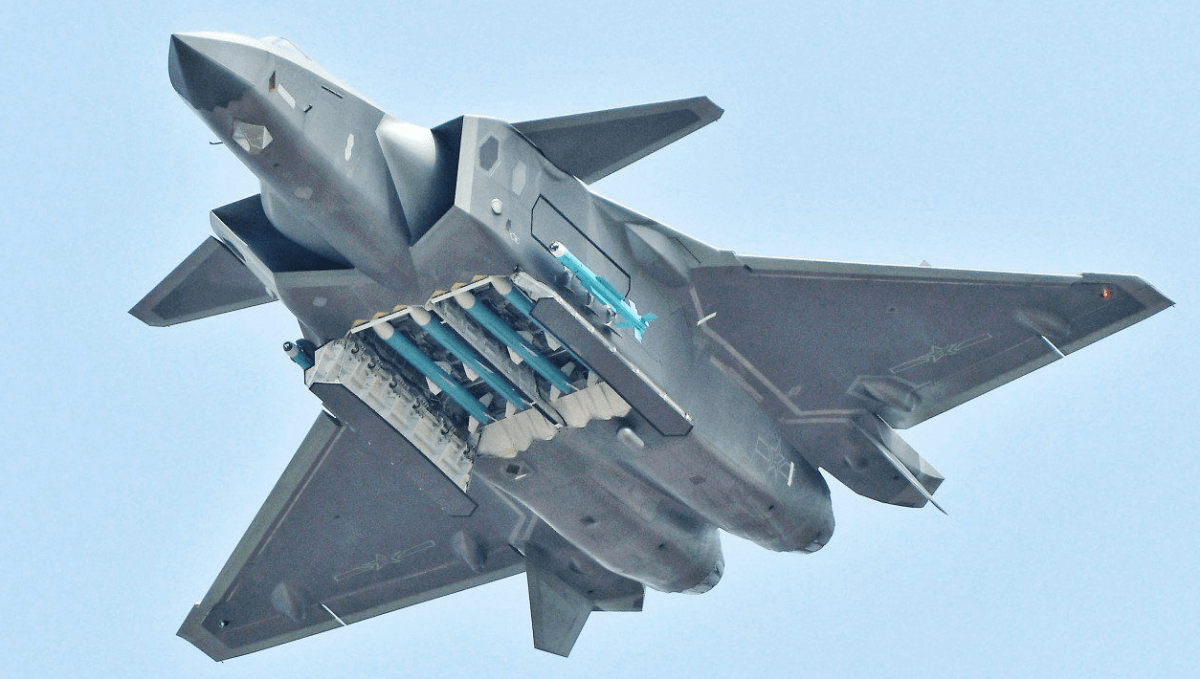
The J-20, built by AVIC Chengdu, is the Chinese Air Force’s primary long-range, twin-engine, fifth-generation combat aircraft.
The platform entered service in 2017 and has since gone through multiple block upgrades, including the J-20A with WS-15 domestic engines and the two-seat J-20S optimized for command and control of unmanned wingmen.
Assessments now place the cumulative produced fleet at between 450 and 500 airframes by early 2026, with annual production rates moving past 100 units.
According to a Royal United Services Institute analysis cited in industry coverage, the program is on a trajectory toward roughly 1,000 J-20 stealth fighters by 2030.
For aerospace & defense stakeholders the more revealing data point is industrial.
New facility expansions at Chengdu reportedly cover floor area exceeding the entire Lockheed Martin F-35 final assembly footprint at Fort Worth, suggesting the program is being scaled to a sustained production tempo well into the 2030s.
J-20 PROGRAM (ESTIMATES, 2026)

Role:               Fifth-generation air superiority and strike
Manufacturer:       AVIC Chengdu Aircraft Corporation
First Flight:       2011 (prototype)
Service Entry:      2017
Cumulative Built:   450 to 500 airframes
Annual Production:  100 to 120 airframes per year
Engine:             Domestic WS-10C (current), WS-15 (J-20A)
Variants Visible:   Baseline J-20, J-20A (WS-15), J-20S (twin-seat)
Shenyang J-35 / J-35A
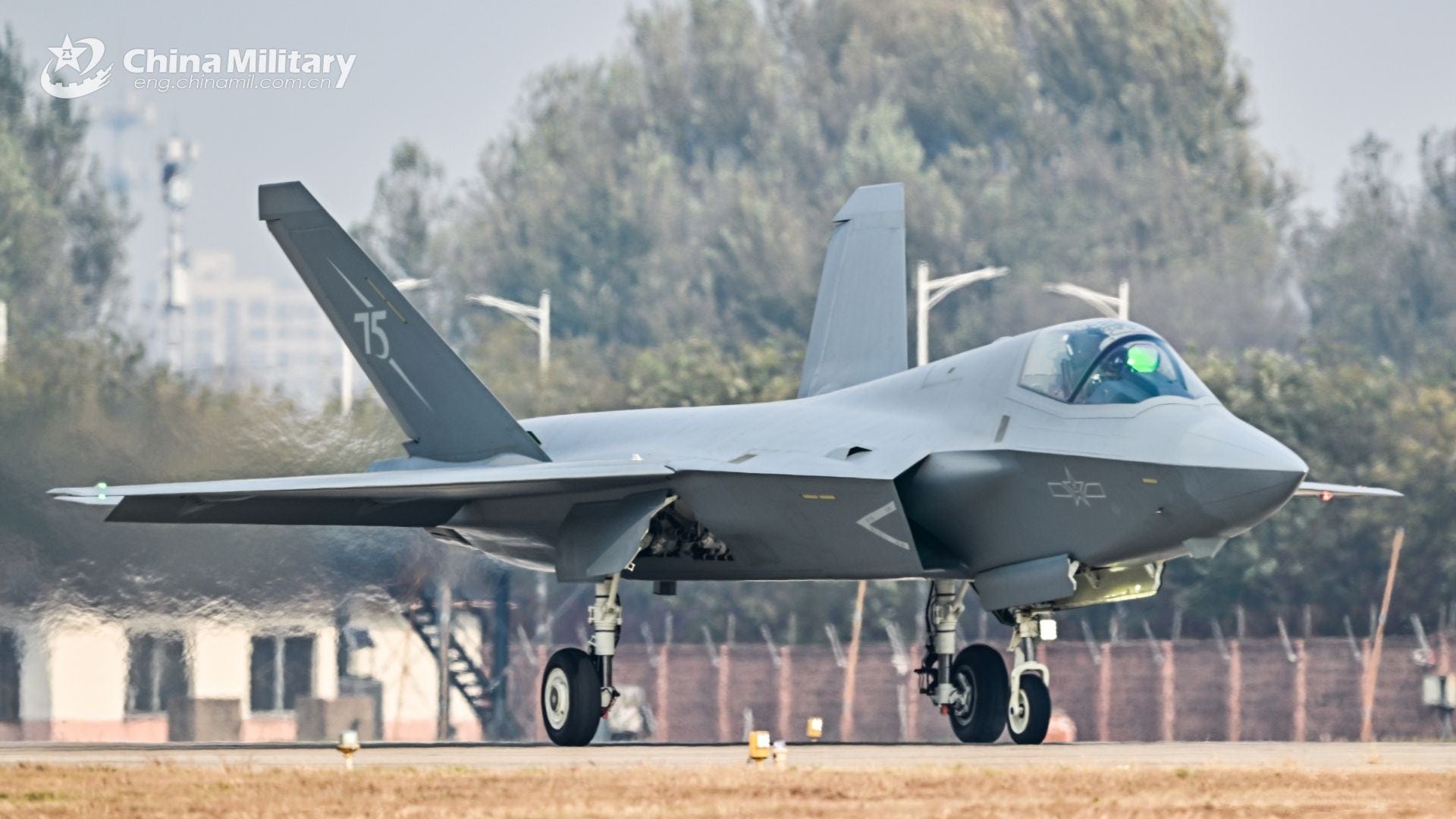
The J-35 is AVIC’s medium-class stealth fighter, designed by AVIC Shenyang and unveiled in its land-based J-35A configuration at Zhuhai Airshow 2024. The carrier-based variant has been observed in flight test for the Type 003 carrier Fujian.
In January 2026, AVIC publicly disclosed the first J-35 flight of the new year at the Shenyang Aircraft complex and stated an intent to double output over five years, framing the program as a high-volume complement to the J-20 rather than a competitor.
The export significance of the J-35 cannot be overstated. The U.S.-China Economic and Security Review Commission noted in its 2025 report that China had reportedly offered 40 J-35As to Pakistan, with parallel marketing activity in Egypt and other Middle Eastern markets.
J-10C and the J-11/J-16 Family
The J-10C is a single-engine 4.5-generation multirole fighter built at AVIC Chengdu.
It returned to global headlines in May 2025 when, after a Pakistan-India aerial confrontation, Pakistani forces flying J-10Cs reportedly engaged Indian Rafales and other types.
Whatever the eventual battle damage assessment, the public narrative drove a profit surge at AVIC Chengdu and reset perceptions of Chinese export combat aircraft.
The J-11 and J-16 are heavier twin-engine Flanker derivatives built at AVIC Shenyang. The J-16 in particular has continued to be produced at a steady cadence and now equips a significant portion of the Chinese Air Force’s strike and standoff missile units.
COMBAT AIRCRAFT PORTFOLIO SUMMARY (2026)

J-7/JF-17 family    Legacy lightweight; phased domestically, exported
J-10A/B/C           Single-engine 4.5-gen multirole - Chengdu
J-11B/BS/D          Twin-engine air superiority - Shenyang
J-15 / J-15T / J-15D Carrier-based multirole and electronic attack
J-16 / J-16D        Twin-engine multirole / electronic warfare
J-20 / J-20A / J-20S Fifth-generation air superiority and strike
J-35 / J-35A Fifth-generation medium fighter, land and carrierJ-15T and J-15D for the Fujian Era
The Chinese Navy’s Fujian carrier introduces electromagnetic catapults, and AVIC Shenyang has developed the J-15T (catapult-launched fighter) and J-15D (electronic attack) variants accordingly.
Both made appearances at Zhuhai 2024 and have been observed in operational training. These platforms extend the J-15 line and bridge the carrier air wing toward J-35 introduction.
Sixth-Generation Programs: J-36 and J-50
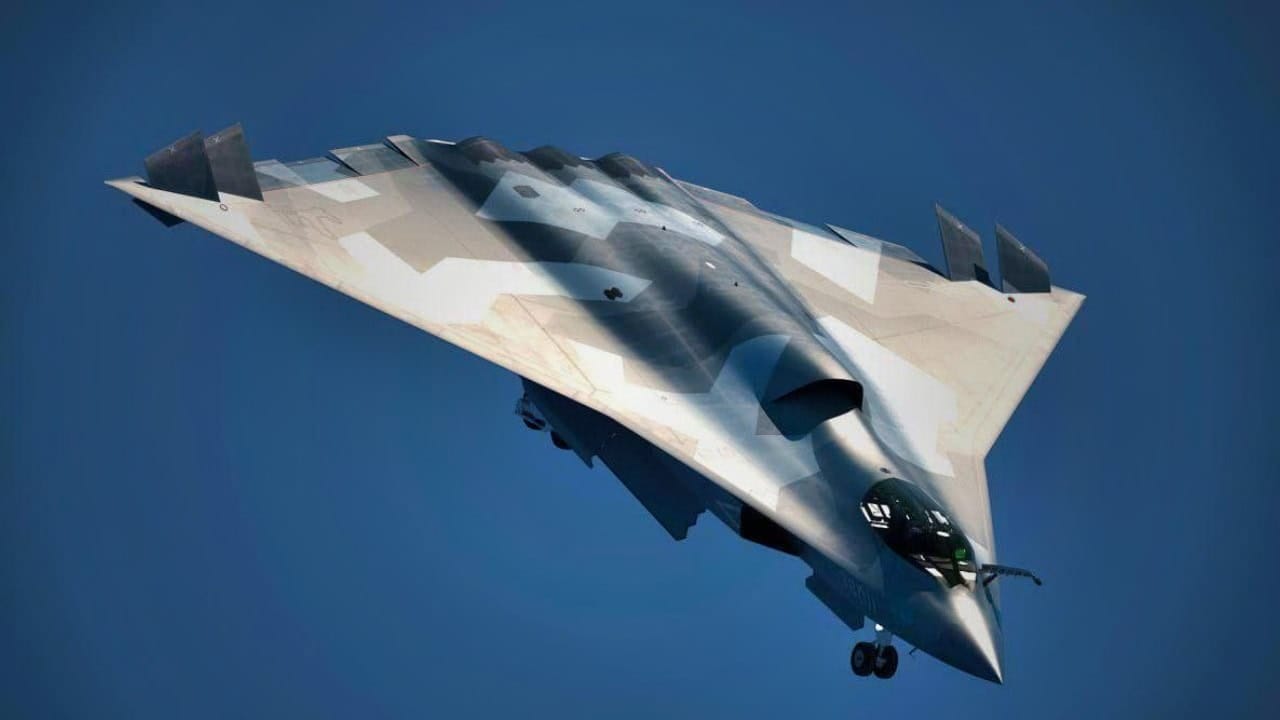
The most consequential development for the Western combat aviation establishment is the public visibility of two parallel sixth-generation fighter jet programs.
The Chengdu J-36 first appeared in flight test imagery in late 2024 and has since shown a tailless, three-engine, very heavy stealth tactical configuration with an emphasis on long range and large internal weapons volumes.
A second J-36 prototype was observed in 2026, showing significant aerodynamic refinement, with what appears to be a third airframe also in early flight test. This rapid prototype iteration is the program signature that should most concern Western program managers.
In parallel, AVIC Shenyang’s J-50, sometimes referred to as the J-XDS, has been observed since December 2024 and was highlighted alongside other sixth-generation aircraft in the September 2025 Beijing parade.
It features a tailless layout, twin diverterless supersonic intakes, twin-wheeled nose gear, and a low-profile single-pilot canopy.
SIXTH-GEN PROGRAMS AT A GLANCE

J-36 (Chengdu)      Tailless, three-engine, very heavy strike-fighter
                    Multiple prototypes observed in 2024-2026
                    Emphasis on range, payload, sensor fusion

J-50 (Shenyang)     Tailless, twin-engine, medium configuration
                    Featured in September 2025 parade flyover
Likely complementary to J-36 in mission setThe relevant takeaway here is not whether these aircraft will achieve initial operational capability on the same calendar date as the U.S. F-47 or European GCAP/FCAS programs.
The point is that AVIC has demonstrated a willingness to fly multiple radical configurations publicly, in parallel, and at relatively low secrecy levels.
That signals confidence in supply chain depth and design tooling.
Strategic Airlift and Special Mission Aircraft
Y-20 Kunpeng Family
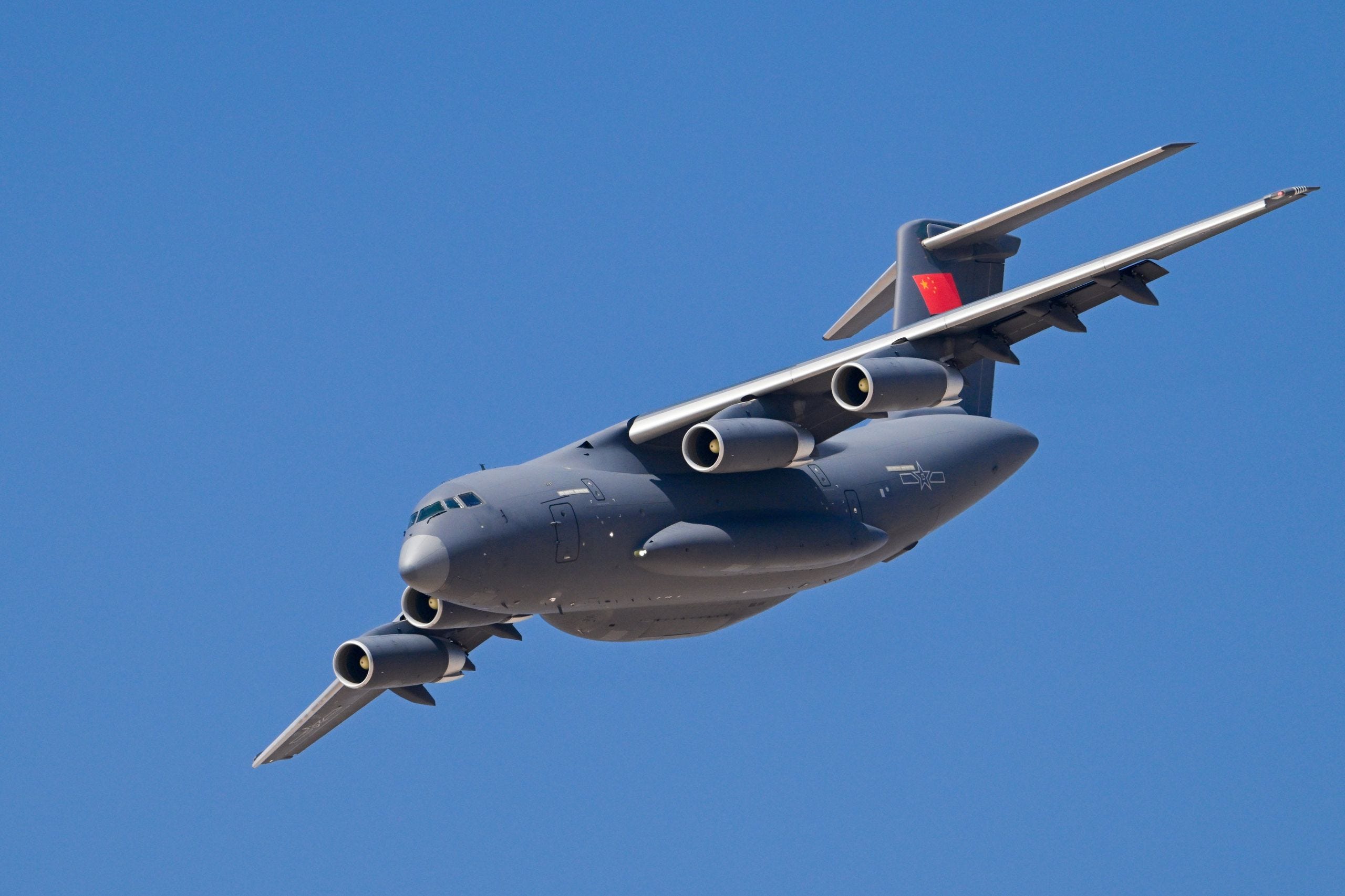
The Y-20 is built by AVIC Xi’an Aircraft Industrial Corporation and is the workhorse of Chinese strategic airlift, with a maximum take-off weight in the 200-tonne class and cargo capacity over 60 tonnes. The fleet is now estimated at over 80 airframes in service.
Variants now include the Y-20A baseline transport, the YY-20A aerial refueling tanker that has been performing publicly at airshow training events through 2025, and a developing Y-20-based airborne early warning aircraft observed in late 2024 imagery.
According to industry coverage of the program, the Y-20 family is set to transform Chinese airlift and tanker capacity over the next decade.
AG600 Kunlong Amphibious Aircraft
The AG600, built by AVIC General Aircraft, is the world’s largest amphibious aircraft in active development, with a 53.5-tonne maximum takeoff weight and a primary mission set focused on aerial firefighting and maritime search and rescue.
The aircraft completed all its precertification flight testing in February 2025 and obtained its type certificate from the Civil Aviation Administration of China in April 2025.
AVIC has signaled that initial production deliveries are expected once the production certificate follows.
AG600 KEY METRICS

MTOW:               53.5 tonnes
Mission Set:        Aerial firefighting, SAR, maritime patrol
Water Scoop:        12 tonnes
Type Certificate:   April 2025 (CAAC)
First Delivery:     Targeted later in 2025-2026 production cycle
Strategic Value:    Anchors maritime emergency response system
Special Mission and ISR
AVIC also produces or modifies the KJ-500 and KJ-600 airborne early warning platforms, the latter being the carrier-based AEW aircraft for the Fujian carrier.
These platforms, developed primarily through AVIC Shaanxi, complete the picture of an integrated combat aviation system rather than simply a fighter portfolio.
Helicopters
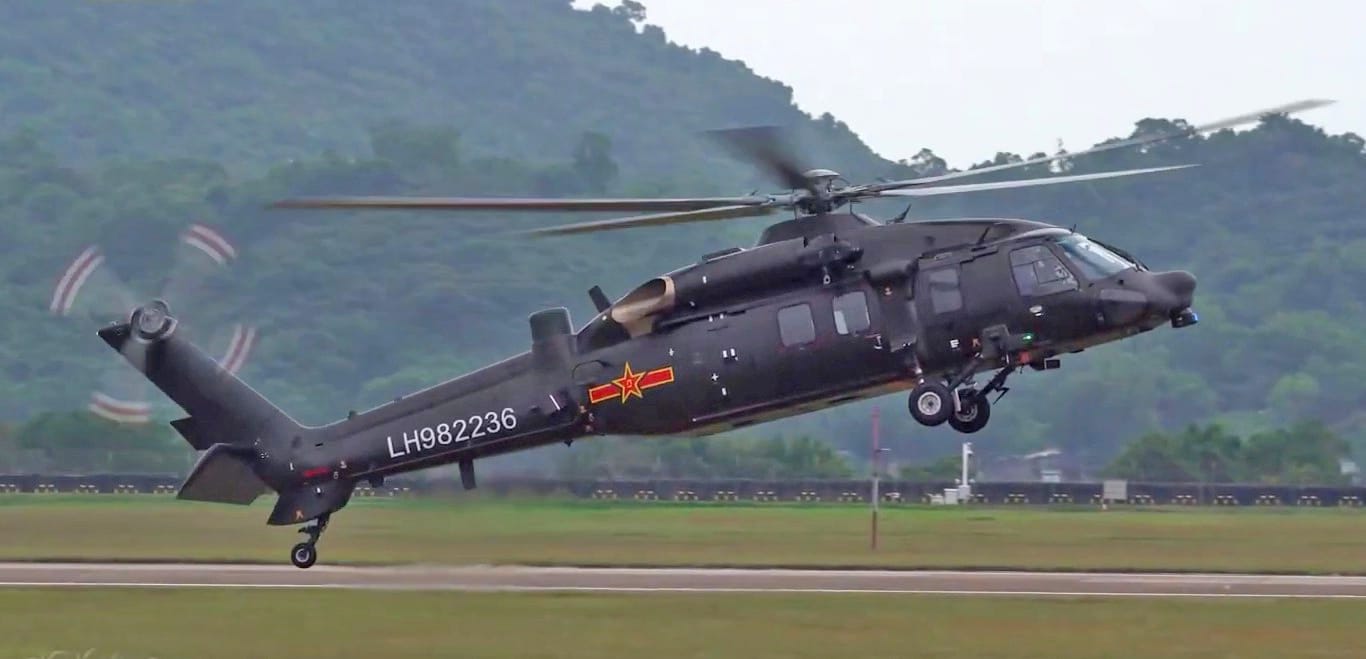
Z-20 Medium Utility Family
The Harbin Z-20 is a 10-tonne class medium utility helicopter that is broadly the Chinese counterpart to the Sikorsky UH-60.
It now serves in army utility, naval (Z-20F), and a newly unveiled Z-20T attack-utility configuration that debuted at the China Helicopter Expo in 2025.
Z-10 Attack Helicopter
The Changhe Z-10 is the Chinese Army’s principal medium attack helicopter.
Production has matured, and the platform has made foreign appearances in air display rotations, although export uptake has been modest.
Z-15 (AC352) and Civil Programs
The Z-15 / AC352 is a 7-tonne medium helicopter co-developed with Airbus Helicopters as an industrial cooperation legacy program.
It received qualification certification in 2022 and is now offered in dual-use civil and parapublic configurations.
The Z-19 light reconnaissance and attack helicopter, the Z-8 / Z-18 heavy lift family, and the Z-9 light utility variants round out a portfolio that, while still trailing Western rotorcraft on hot-and-high performance and engine maturity, is increasingly internally consistent.
Trainers
Hongdu L-15 Falcon
The Hongdu L-15 Falcon, built at AVIC Hongdu Aviation Industry Group in Nanchang, is a twin-engine supersonic advanced trainer and light attack aircraft. The platform serves the Chinese Air Force as the JL-10 and has been exported to the United Arab Emirates and other operators.
The L-15 has become a recurring fixture at the Dubai Airshow and has been used as a Chinese aerospace soft-power asset, with aerobatic displays accompanying export pitches in 2024 and 2025.
Unmanned Systems
Wing Loong Family
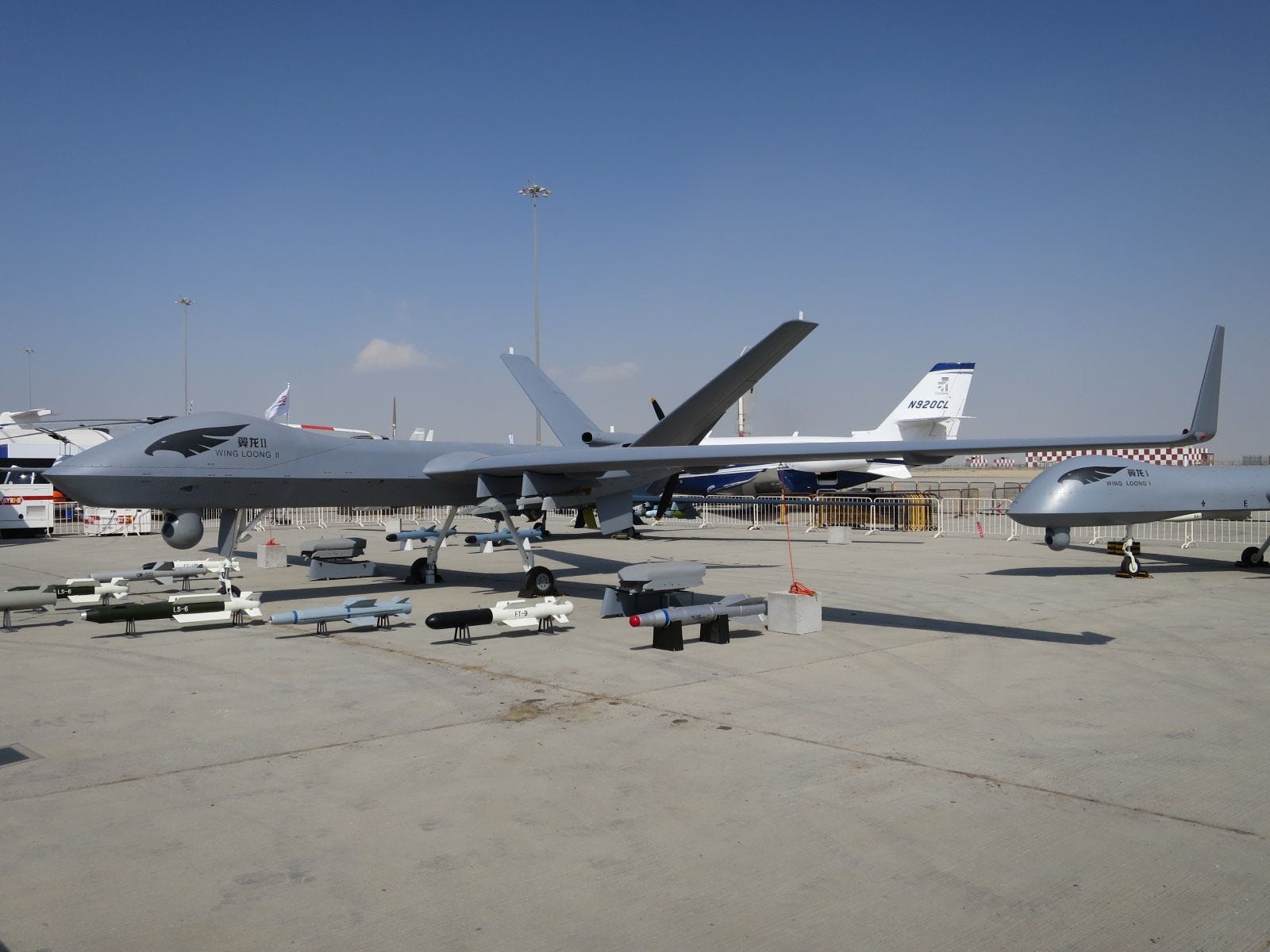
The Wing Loong family of medium-altitude long-endurance unmanned aerial vehicles is built by AVIC Chengdu Aircraft Industry Group. The Wing Loong I and II have already been exported to a long list of Middle East, North Africa, and Central Asian operators.
At the Dubai Airshow 2025, AVIC unveiled the Wing Loong X, the first Chinese UAV claimed to have submarine hunting capability, positioning AVIC against U.S. and Israeli unmanned ISR primes in the maritime mission segment.
The LOONG M9 long-range one-way attack drone, which entered testing in December 2025, extends the family into the loitering munition class and rounds out a portfolio that now spans surveillance, strike, anti-submarine warfare, and kamikaze missions.
WING LOONG / LOONG FAMILY (2026)

Wing Loong I        Baseline MALE ISR/strike, widely exported
Wing Loong II       Improved MALE class, payload growth
Wing Loong-10       Higher-altitude jet-powered ISR
Wing Loong X        Maritime ISR with claimed ASW capability
LOONG M9 Long-range one-way attack/loitering munitionAvionics, Mission Systems, and Aerostructures
Beyond airframes, AVIC’s avionics arm builds radars, electronic warfare suites, and integrated mission systems for the entire Chinese fleet, while AVIC Electromechanical Systems supplies environmental control, hydraulics, and actuation packages.
JONHON Optronic, included under the AviChina umbrella, posted profit before tax of RMB 3,765 million in its most recent disclosed period, indicating the scale of subsystem revenue underneath the platform brand names.
Through FACC AG in Austria, AVIC also serves as a tier-one aerostructures supplier on Western commercial programs, including widebody work for European and U.S. primes.
This dual-track presence, defense at home and commercial aerostructures abroad, is a sometimes-overlooked feature of the group’s industrial reach.
AVIC Financial Analysis
Group-Level Financial Position
At the consolidated parent level, AVIC reported revenues of approximately $82.65 billion in the most recent Fortune Global 500 disclosure, a 1.2% increase year over year, with profits of $1.64 billion (up 7.6%) and total assets of $187.5 billion. Total stockholders’ equity sat at $35.7 billion.
These numbers place AVIC firmly in the league of global top-tier aerospace and defense conglomerates.
AVIC PARENT-LEVEL HEADLINE FINANCIALS

Revenue (latest):          USD 82.65 billion
Revenue growth (y/y):      +1.2%
Net Profit:                USD 1.64 billion
Profit growth (y/y):       +7.6%
Total Assets:              USD 187.5 billion
Total Stockholder Equity:  USD 35.7 billion
Group Net Margin:          ~2.0% (vs. 9-12% Western primes)
The structural insight for industry stakeholders is the margin gap. AVIC’s net margin at the consolidated level is roughly 2%, well below the high single-digit to low double-digit margins typical of Western primes.
That reflects subsidized inputs, state pricing on military programs, and a much wider commercial and trading services tail.
Listed Subsidiary Performance
AVIC Chengdu Aircraft (302132.SZ)
AVIC Chengdu Aircraft posted record 2025 results, with revenue rising 15.8% to 75.4 billion yuan (about $11 billion) and net profit climbing 6.5% to 3.4 billion yuan. First-quarter 2026 sales nearly doubled, suggesting that order backlog has translated rapidly into revenue recognition.
The Chengdu line carries the J-10C, the J-20, and at least early-stage industrial work tied to the J-36, so the financial trajectory is a useful proxy for AVIC’s combat aircraft demand.
AVIC Shenyang Aircraft (600760.SS)
AVIC Shenyang Aircraft delivered 2025 revenue of RMB 44.66 billion, up 4.25%, with net profit of approximately RMB 3.5 billion.
Q1 2026 results showed sharp volatility, with Q1 net profit down 61.7% year-on-year on a 55.2% revenue decline to RMB 2.61 billion, reflecting program transition lumpiness as J-35 production ramps replace older deliveries.
AviChina Industry & Technology (2357.HK)
The Hong Kong listed AviChina Industry & Technology, which consolidates helicopter, trainer, and avionics activities, reported total operating income of RMB 89.44 billion, up 2.84% year over year, with net profit attributable to owners of RMB 1.77 billion, down 19.3%. The profit pressure reflects program mix and R&D intensity.
LISTED SUBSIDIARY HEADLINES (2025 FY UNLESS NOTED)

AVIC Chengdu (302132.SZ)    Revenue 75.4B RMB (+15.8%); Net 3.4B (+6.5%)
AVIC Shenyang (600760.SS)   Revenue 44.66B RMB (+4.25%); Net ~3.5B
AviChina (2357.HK) Revenue 89.44B RMB (+2.84%); Net 1.77B (-19.3%)R&D Intensity
AviChina’s interim disclosures showed R&D expenses of RMB 2,031 million in the first half of 2024, a year-on-year decrease, but rebuilding through 2025 as J-35 carrier integration, sixth-gen subsystems, and Z-20T variants moved into intensive trial phases.
Group-level R&D is layered with state-funded programs that do not always show on the listed entity P&L, which is why direct R&D-to-revenue comparisons with Western primes need careful adjustment.
Revenue and Growth Drivers, LTM Trajectory
Combat Aviation Volume
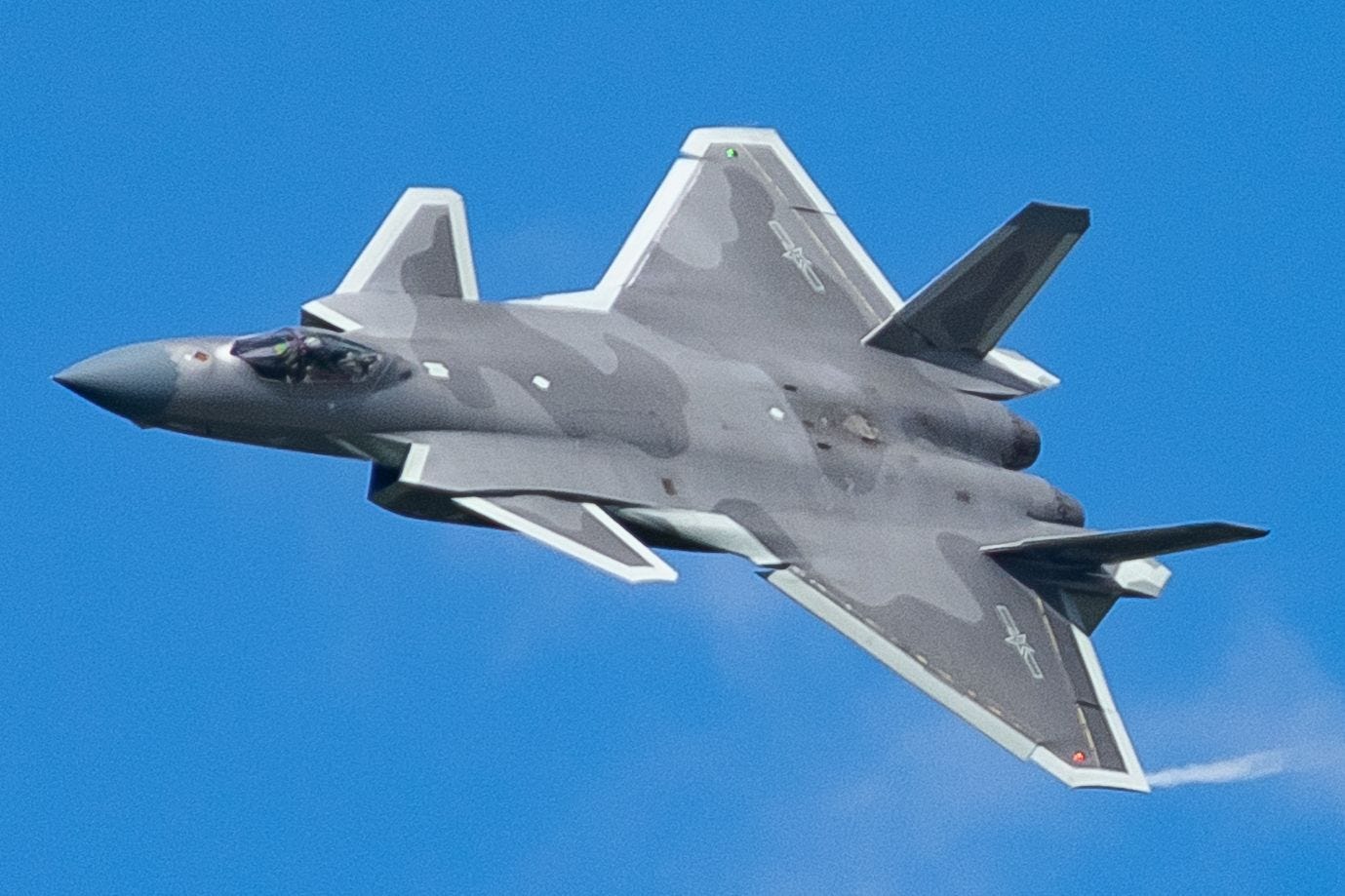
The single largest driver of AVIC growth through 2026 is combat aircraft volume.
With J-20 production at 100 to 120 units per year, J-35 ramp at Shenyang, and continued J-16 and J-10C production, the group is delivering a combined fighter cadence that some analyses now place above 300 to 400 fighters per year across all Chinese types.
For the trailing twelve months ending Q1 2026, AVIC Chengdu alone added more than 10 billion yuan in revenue compared to the prior period. That is a meaningful growth signal in any aerospace context.
Export Demand Acceleration
Export momentum is the second growth lever. The J-10C narrative coming out of the May 2025 Pakistan-India confrontation is widely credited inside the Chinese aerospace community with reshaping export inquiry flows.
The Pentagon’s December 2025 China Military Power Report, in its annual report to Congress flagged that AVIC fighters are likely to win significant new export orders in the second half of the decade.
In February 2026, AVIC Technology signed a $5 billion agreement tied to the World Defense Exhibition in Saudi Arabia, indicating that Middle Eastern customers are increasingly willing to purchase Chinese systems alongside, and in some segments instead of, U.S. and European platforms.
New Civil and Special Mission Programs
The AG600 type certification opens a new civil firefighting and emergency response revenue stream that was not in the 2024 baseline.
While initial annual deliveries will be modest, the platform creates a long-tail aftermarket and operator services business that AVIC has previously lacked at scale outside helicopters.
Simultaneously, the YY-20A tanker, the Y-20-based AEW, and the ongoing maritime patrol developments add high-margin specialty platforms to the Xi’an line.
Drone and Loitering Munition Demand
The Wing Loong X, LOONG M9, and the broader Chinese unmanned portfolio have stepped into a market segment where global demand is structurally rising.
With the Wing Loong family already sold to dozens of states, the unit economics are favorable, and incremental sales accrue at relatively high marginal margin.
REVENUE DRIVER STACK FOR 2026 AND BEYOND

1. J-20, J-35, J-16, J-10C combat aircraft volume
2. Export contracts: Pakistan, Saudi Arabia, Egypt, others
3. Y-20 family expansion (transport, tanker, AEW)
4. AG600 production ramp post type certification
5. Wing Loong X, LOONG M9, and unmanned segment growth
6. Helicopter modernization (Z-20, Z-20T, Z-10)
7. Avionics and JONHON optronic subsystems organic growth
8. FACC commercial aerostructures (Western OEM cycle)Major AVIC Competitors
AVIC’s competitive landscape spans both defense and commercial aerospace. The relevant peer set varies by mission.
Lockheed Martin Corporation (Bethesda, USA) - F-22, F-35, missile systems
The Boeing Company (Arlington, USA) - F-15EX, F/A-18, KC-46, commercial widebodies
Northrop Grumman Corporation (Falls Church, USA) - B-21, B-2 sustainment, RQ-4
RTX Corporation (Arlington, USA) - engines via Pratt & Whitney, missiles via Raytheon
Airbus SE (Leiden, Netherlands and Toulouse, France) - Eurofighter, A330 MRTT, helicopters
Dassault Aviation (Saint-Cloud, France) - Rafale, business jets
Leonardo S.p.A. (Rome, Italy) - Eurofighter share, helicopters
Saab AB (Stockholm, Sweden) - Gripen, GlobalEye AEW
Hindustan Aeronautics Limited (Bengaluru, India) - LCA Tejas, AMCA, helicopters
Korea Aerospace Industries (Sacheon, South Korea) - KF-21, FA-50
AVIC vs Lockheed Martin
Lockheed Martin Corporation remains the global benchmark for fifth-generation combat aircraft production with the F-35 program. The relevant comparison is Lockheed’s full F-35 line versus the combined J-20 plus J-35 output at AVIC.
Lockheed delivered approximately 110 F-35s in its most recent full year and is targeting a sustained tempo of 156 per year. AVIC’s combined J-20 and J-35 production has now plausibly exceeded that sustained tempo. This is the single most important competitive shift in modern combat aviation.
On the other hand, F-35 export reach (to NATO members, Israel, Japan, South Korea, Australia, and others) remains structurally larger than J-20/J-35 export traction, which is concentrated in Pakistan and Middle Eastern customers.
AVIC vs Boeing
Boeing competes with AVIC across three planes: defense (F-15EX, F/A-18, KC-46), commercial widebody (where FACC AG is actually a Boeing supplier), and rotorcraft (CH-47, AH-64).

For aerospace stakeholders, the salient point is that Boeing’s defense backlog and tanker program continue to anchor U.S. airlift renewal, while AVIC’s Y-20 and YY-20A are giving the People’s Liberation Army Air Force a domestic alternative that does not exist on Boeing’s balance sheet at comparable scale outside the United States.
AVIC vs Airbus
Airbus SE is the closer European peer because of its joint defense and commercial portfolio. The AVIC-Airbus relationship is unusually layered. The Z-15 / AC352 helicopter program is a co-development. AVIC supplies major aerostructures for several Airbus commercial platforms via FACC.
At the same time, Airbus competes head-on with AVIC’s helicopter, transport, and AEW offerings in third markets.
In Europe, the FCAS Franco-German-Spanish program is the most direct peer to the J-36 / J-50 sixth-generation track. FCAS is currently scheduled to deliver an operational system around 2040, while open-source AVIC analyses suggest the J-36 may pursue a faster path to initial operational capability.
AVIC vs Northrop Grumman
Northrop Grumman Corporation leads U.S. stealth bomber development with the B-21 Raider.

AVIC has its own H-20 stealth bomber program in development at Xi’an Aircraft, although less is publicly visible. In unmanned ISR, the RQ-4 Global Hawk competes against AVIC’s high-altitude long-endurance UAV families, including the WZ-8 and WZ-7.
AVIC vs Dassault Aviation, Saab, KAI, HAL
Dassault Aviation builds the Rafale, Saab AB builds the Gripen E/F, Korea Aerospace Industries builds the KF-21, and Hindustan Aeronautics Limited builds the LCA Tejas.
The J-10C is the most direct competitor across these single-engine and twin-engine 4.5-generation lightweight to medium platforms.


The recent Pakistan-India events sharpened the global comparison set, with several customers now actively running J-10C against Rafale and Gripen in parallel evaluations.
COMPETITIVE POSITIONING MATRIX (SIMPLIFIED)

5th-Gen Air Sup:    AVIC J-20  vs Lockheed F-22, F-35
5th-Gen Medium:     AVIC J-35  vs Lockheed F-35, KAI KF-21
4.5-Gen Multirole:  AVIC J-10C vs Dassault Rafale, Saab Gripen E,
                                    Boeing F-15EX, KAI KF-21
6th-Gen:            AVIC J-36/J-50 vs USAF F-47, FCAS, GCAP
Strategic Airlift:  AVIC Y-20  vs Boeing C-17 (legacy), Airbus A400M
Tanker:             AVIC YY-20A vs Boeing KC-46, Airbus A330 MRTT
Rotorcraft:         AVIC Z-20  vs Sikorsky UH-60, Airbus H225M
Trainer:            AVIC L-15  vs Leonardo M-346, KAI T-50,
                                    Boeing T-7A
ISR/Combat UAV:     Wing Loong vs General Atomics MQ-9, Bayraktar TB2