


Dear Readers, Welcome to AviationOutlook.
Executive Summary
Breeze Airways has finally cracked the profitability code after five brutal years of operating losses, posting its quarterly net profit in Q2 2025 and following it with an operating profit that suggests the underserved-city thesis is beginning to work at scale.
The carrier is executing an aggressive network land-grab, adding 19 new nonstop routes in July 2026 alone and scooping up five Western U.S. cities vacated by rival Avelo Airlines, while also launching its first international services to Cancun, Punta Cana, Montego Bay, and Nassau.
The competitive backdrop has shifted, with Spirit Airlines ceasing operations, Allegiant absorbing Sun Country, JetBlue overhauling its network around Fort Lauderdale, and Southwest ending open seating on January 27, 2026, leaving Breeze operating in a reshuffled ultra-low-cost and hybrid-value sector.
The largest single risk to the growth story is labor, with the Air Line Pilots Association filing a January 2026 federal lawsuit alleging bad-faith bargaining after five years without a first collective bargaining agreement for the airline’s roughly 680 pilots.
Recommended Reports


Read All Reports
Table of Contents
Executive Summary
Introduction
Company Overview
The Profitability Turn: Where Breeze Actually Sits Financially
Key Competitive Differentiators
Competitor Identification and Segmentation
Competitor Deep-Dive Profiles
Route Network and Growth Strategy
Comparative Benchmarking
Strategic Position
Industry Backdrop and Macro Context
Loyalty and Ancillary Strategy
The Labor Question
Strategic Implications and Recommendations
My Final Thoughts
Official Sources and Data
Introduction
Five years ago, a Utah-based startup with a used fleet of Embraer regional jets promised to solve a problem the U.S. airline industry had quietly stopped trying to solve. Mid-sized American cities were connected to each other through hubs, layovers, and inconvenience, and Breeze Airways proposed to fly them nonstop.
The proposition looked attractive on paper and terrible on the balance sheet for years. That balance sheet finally turned in the second half of 2025, and the twelve months since have been the most consequential of the airline’s existence.
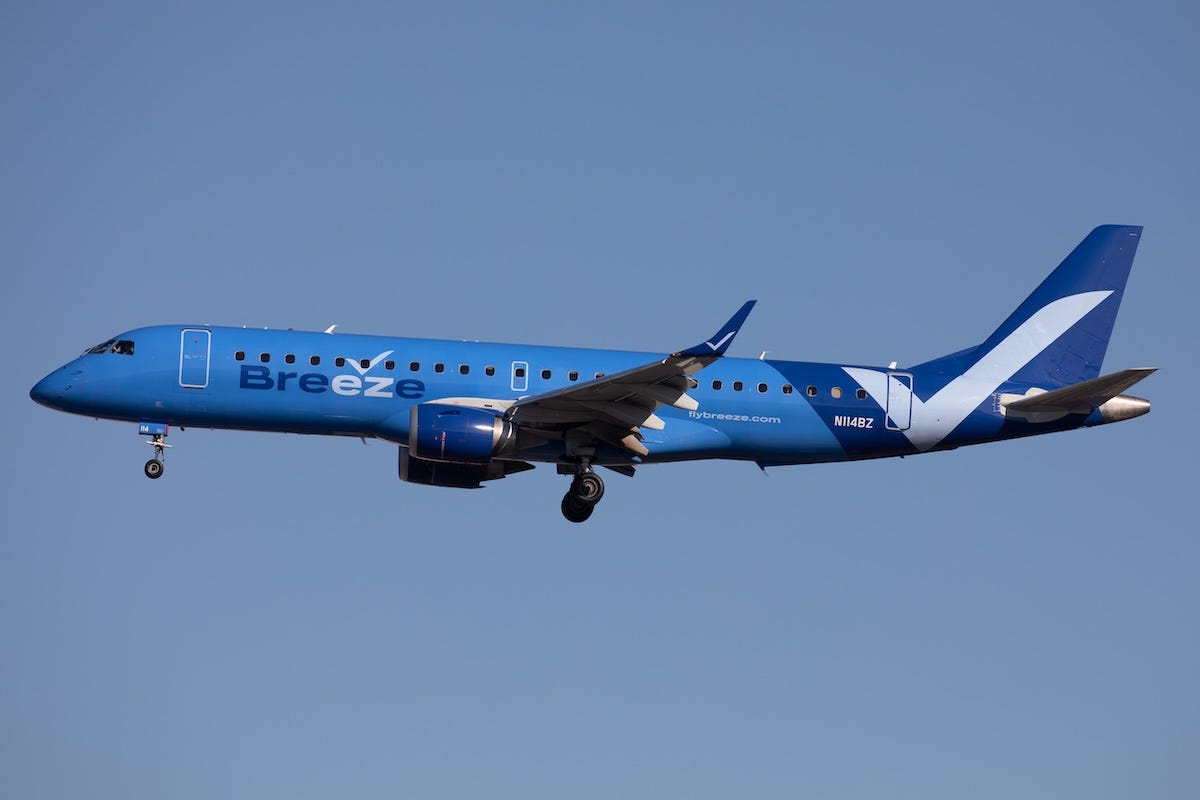
By the summer of 2026, Breeze operates a fleet that has crossed 50 Airbus A220-300s with plans stretching to 90 firm orders, has begun international service, and now faces a competitive board where Spirit Airlines has folded, Sun Country has merged into Allegiant, and JetBlue is retreating into Fort Lauderdale.
The question now is whether Breeze can grow into the next durable mid-tier U.S. airline while the ground under its competitors is still moving.
This analysis walks through the company, its differentiators, its rivals, and where the strategic pressure points sit heading into 2027.
Let’s analyze everything in detail.
Company Overview
Breeze Airways is a U.S. Part 121 scheduled passenger carrier headquartered in Cottonwood Heights, Utah.
It was founded by David Neeleman, the same entrepreneur who previously founded Morris Air, WestJet, JetBlue, and Azul, and it began commercial service on May 27, 2021.
The airline’s operating theory is that midsize U.S. cities are chronically underserved on a nonstop basis, and that a single-fleet, high-utilization operation can make thin routes profitable at fares that legacy carriers cannot match.
By July 2026, the company reports serving more than 90 cities across the United States, Mexico, Central America, and the Caribbean, operating more than 300 year-round and seasonal routes with an all-Airbus A220-300 mainline fleet.

BREEZE AIRWAYS - COMPANY SNAPSHOT (2026)
Founded:            2018 (commercial launch May 27, 2021)
Headquarters:       Cottonwood Heights, Utah
Founder / CEO:      David Neeleman
Fleet:              61 Airbus A220-300 aircraft (as of Jul 21, 2026)
Firm orders:        90 A220-300 (plus 30 options)
Cabin config:       137 seats (36 Ascent + 101 Nicer/Nice)
Cities served:      90+
Routes:             300+ year-round and seasonal
Employees:          ~4,500 (est.)
Union representation (pilots):  ALPA
The company completed its transition away from Embraer 195s in 2024, retiring the last of the used regional jets that carried the airline through its startup years.
That transition converted Breeze into what is functionally a single-fleet operation, materially reducing crew training, spares, and maintenance complexity.
The Profitability Turn: Where Breeze Actually Sits Financially
Breeze reported its first-ever full quarter of operating profit in Q4 2024, generating more than $200 million in quarterly revenue and closing the year with revenue north of $680 million, up more than 78% year over year.
Q1 2025 slipped back to an operating loss around negative 10%, an unsurprising seasonal pattern for a leisure-heavy network. The company then posted a positive 4% operating margin in Q2 2025 and, more importantly, its first-ever net profit that same quarter.
That first net profit was slim and the number carried roughly $3.4 million in one-time expenses. The thin margin matters less than the direction of travel, which is meaningful for a five-year-old carrier that had never made money.
Q2 2026 delivered a load factor of approximately 78.7% on continued unit-revenue improvement.
BREEZE FINANCIAL PROGRESSION (as reported publicly)
FY 2024 revenue:            $680M+ (78%+ YoY growth)
Q4 2024:                    First operating profit; ~$200M revenue; ~4% op margin
Q1 2025:                    Op margin ~ -10% (seasonal)
Q2 2025:                    First net profit ever; ~+4% op margin
Q1 2026:                    Best-in-class unit revenue improvement
Q2 2026:                    ~78.7% load factor; continued margin improvement
Treat the numbers as directional, but the pattern across DOT and airline’s self-reported data is consistent: revenue is growing much faster than capacity, unit costs are declining as the fleet standardizes on the A220, and the business is finally covering its variable and fixed costs.
Key Competitive Differentiators
1. The Underserved-Cities Thesis, Backed by Aircraft Range
The single defining feature of Breeze’s network strategy is that it flies routes no one else flies. The company estimates approximately 1,500 additional city pairs it could serve without competing with a major U.S. airline, and its route additions consistently prefer city pairs where either no competitor exists or where competitors previously withdrew.
This works because