
As the electric vertical takeoff and landing (eVTOL) industry continues its evolution, one company stands out with its methodical approach backed by decades of aerospace heritage.
Eve Air Mobility, an Embraer-backed enterprise, is advancing through critical development phases while the broader advanced air mobility sector faces consolidation pressures.
The company’s recent progress, substantial financial backing, and strategic partnerships position it as a significant contender in the urban air mobility transformation.
Table of Contents

Also Read:

Development Trajectory and Certification Pathway
Eve’s technical progress represents a measured but substantial advancement toward commercialization.
The company targets prototype flight testing by late 2025 or early 2026, a timeline that CEO Johann Bordais has maintained despite industry-wide delays affecting competitors.
The certification strategy focuses on obtaining type approval from Brazil’s National Civil Aviation Agency (ANAC), which published the final airworthiness criteria for Eve’s aircraft. Regulators view late 2027 as a realistic certification timeline, establishing a concrete pathway for entry into service.
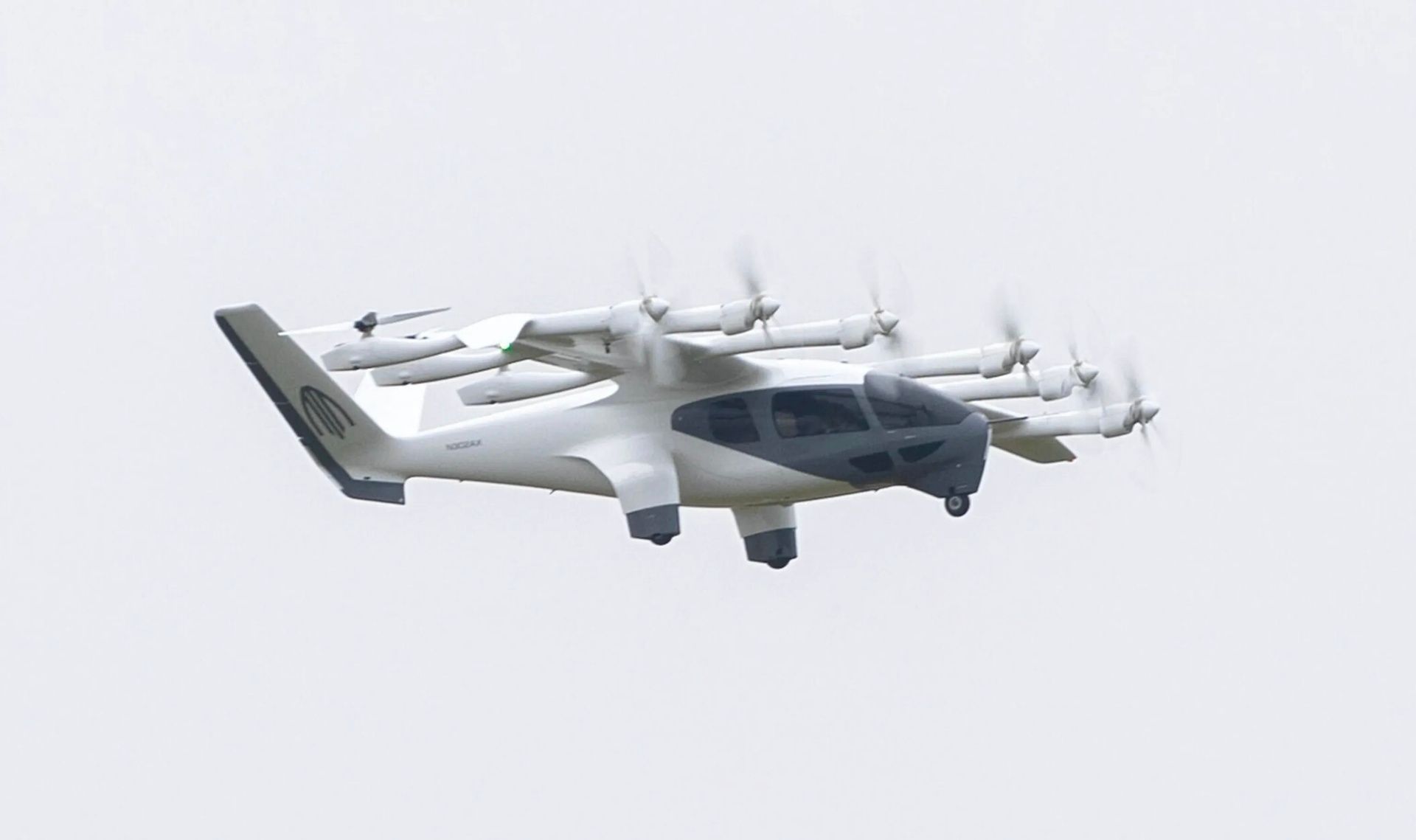
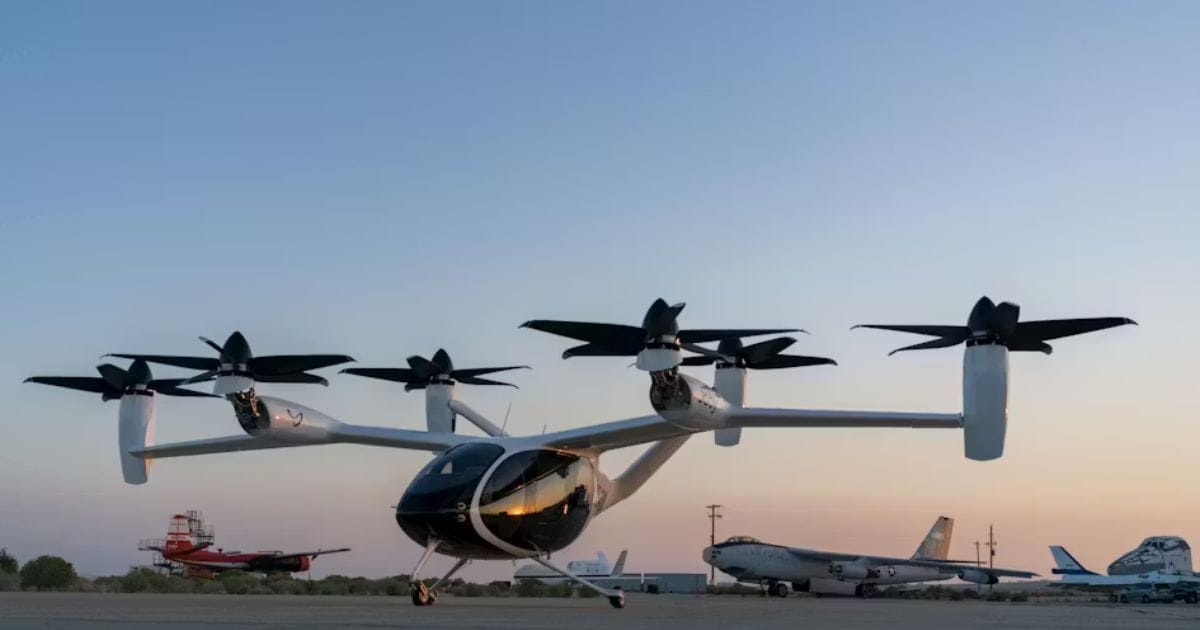
The company’s aircraft utilizes a lift-plus-cruise configuration featuring eight dedicated vertical flight propellers, fixed wings for cruise efficiency, and dual electric pusher motors for redundancy.
This design philosophy prioritizes operational simplicity by eliminating moving parts during flight transitions, potentially reducing maintenance complexity compared to tilt-rotor configurations.
Strategic Supply Chain Development
Eve has assembled a supply chain combining established aerospace suppliers with emerging electric propulsion specialists.
In December 2025, the company selected Beta Technologies to provide electric pusher motors for both conforming prototypes and production aircraft, representing a potential 10-year, $1 billion opportunity for Beta.
This agreement followed extensive evaluation of Beta’s motor performance in Eve’s engineering prototype.
KEY SUPPLY CHAIN PARTNERS

Propulsion Systems:
- Beta Technologies: Pusher motors
- Nidec Aerospace: Lifter motors

Avionics & Systems:
- BAE Systems: Battery systems
- Garmin: Avionics suite
- Honeywell Aerospace: External lighting
- Intergalactic: Thermal management
The supplier roster reflects Eve’s strategy of combining proven aerospace contractors with specialized electric aviation technology providers. This approach aims to mitigate technical risk while maintaining innovation in electric propulsion architecture.

Image source: eveairmobility.com
Financial Foundation and Production Infrastructure
Brazil’s National Bank for Economic and Social Development (BNDES) continues to serve as a critical financial partner.
In December 2025, Eve secured approximately $40 million in new financing to support electric motor integration and certification aircraft testing. This brings total BNDES commitments since 2022 to over $240 million, providing a substantial financial cushion during the capital-intensive certification phase.
FINANCING MILESTONES | AMOUNT | PURPOSE |
|---|---|---|
Total BNDES Support (2022-2025) | $240+ million | Development and manufacturing |
December 2025 Package | $40 million | Motor integration and testing |
2024 Manufacturing Facility | $88 million | Production site development |
The company’s manufacturing strategy centers on a facility in Taubaté, São Paulo, with an eventual capacity of 480 aircraft per year. Eve plans modular expansion in 120-unit increments, allowing production scaling to align with demand realization.
This measured approach contrasts with competitors who have announced larger facilities without corresponding order books.
Order Portfolio and Commercial Partnerships
Eve maintains a backlog of approximately 2,800 aircraft through letters of intent from diverse customer segments. While these remain non-binding commitments, the portfolio demonstrates market interest across multiple geographic regions and operational use cases.
A significant milestone occurred in December 2025 when Revo, a subsidiary of OHI Helicopters, placed a firm order for 50 aircraft valued at up to $250 million. The deal includes not only aircraft but also Eve’s Vector air traffic management platform and TechCare maintenance services.
Revo targets operational launch in São Paulo during 2027-2028, viewing the city’s extensive helipad infrastructure and established air taxi market as an optimal environment for eVTOL introduction.
NOTABLE PARTNERSHIP AGREEMENTS

Operator Partnerships:
- Revo (OHI subsidiary): 50 aircraft firm order
- Halo: 200 aircraft commitment
- Azorra: 200 aircraft order
- Future Flight Global: Up to 54 aircraft
- Helisul (Brazil): Up to 50 aircraft

Technology Collaborations:
- SkyGrid: Air traffic management integration
- Bluenest/Globalvia: Vertiport operations
- Ferrovial Vertiports: Infrastructure development
Integrated Service Ecosystem Approach
Unlike manufacturers focused exclusively on aircraft production, Eve pursues an ecosystem strategy encompassing three interconnected elements: the eVTOL aircraft, the Vector air traffic management system, and TechCare comprehensive service and support.
This holistic model aims to address operator concerns about infrastructure readiness and operational economics, potentially accelerating commercial adoption.
The Vector platform provides real-time airspace management capabilities designed specifically for high-density urban operations. Partnerships with vertiport developers, including Bluenest and Ferrovial, position Eve to support infrastructure deployment concurrent with aircraft certification.
Competitive Positioning and Execution Challenges
Eve’s primary differentiator remains its connection to Embraer’s 56-year aerospace legacy. As OHI CEO Jeremy Akel noted when explaining his company’s Eve selection, “What differentiates Eve is Embraer. They know how to certify an aircraft.” This certification competence carries significant weight as numerous eVTOL developers face regulatory delays.
However, substantial obstacles remain.
The company must execute its first flights, complete thousands of certification test hours between 2026 and 2027, establish production operations, and convert letters of intent into firm orders.
Battery energy density limitations will constrain initial route networks, requiring operators to maintain mixed fleets combining eVTOLs with conventional helicopters for longer missions.
Capital requirements for certification and production scaling will necessitate continued fundraising in challenging market conditions. While Embraer’s backing and BNDES financing provide stability, achieving commercial viability requires successful execution across engineering, regulatory, manufacturing, and commercial domains simultaneously.
Market Outlook and Regulatory Environment
Eve’s 20-year market projection forecasts $280 billion in passenger revenue and demand for 30,000 aircraft by 2045, driven by urban population growth and congestion pressures.
Near-term opportunities concentrate in markets with existing helicopter infrastructure and populations accustomed to premium air transportation, including São Paulo, certain U.S. metropolitan areas, and select Middle Eastern cities.
Brazil’s regulatory posture toward eVTOLs appears constructive, with ANAC actively developing appropriate certification frameworks and timelines. This regulatory support provides Eve with a clearer pathway compared to manufacturers dependent on jurisdictions where standards remain undefined.
My Final Thoughts
The period from 2026 through 2028 will determine whether Eve successfully navigates from development company to operational aircraft manufacturer.
Prototype testing outcomes, certification progress, production establishment, and commercial deployment will provide tangible indicators of the company’s ability to execute its comprehensive strategy.
For eVTOL industry participants, Eve represents both the promise of urban air mobility transformation and the substantial execution challenges that characterize aerospace industry paradigm shifts.