


Executive Summary
Honeywell Aerospace Technologies closed 2025 with full-year sales of $17.51 billion and a segment profit of $4.28 billion, translating into a 24.5% segment margin that ranks among the richest operating profiles in the aerospace supply base.
Q1 2026 Aerospace segment sales reached $4.32 billion, up 3% organically, with segment margin expanding 20 basis points to 26.5% and orders growing 6% at a book-to-bill of 1.1x.
The long-planned separation will crystallize on June 29, 2026, creating an independent publicly listed aerospace pure-play led by Jim Currier, with the entity having already priced senior notes as part of a broader financing package tied to the split.
A freshly signed $500 million framework with the U.S. Department of War to surge production of navigation systems, Assure actuators, and electronic warfare solutions anchors the defense trajectory heading into the spin-off.
Recommended - Read Full Reports


Read All Reports
Table of Contents
Executive Summary
Introduction
Key Facts: Honeywell Aerospace Company
Honeywell Aerospace: Company Overview
The Business Within Honeywell International
Leadership and Governance
Global Footprint and End Markets
Research and Development Intensity
Key Product Lines, Programs, and Services
Propulsion: Turbofan, Turboprop, and Turboshaft Engines
HTF7000 Block Upgrades
Auxiliary Power Units
Avionics and Integrated Flight Decks
Primus and IntuVue
Satellite Communications: JetWave and JetWave X
Navigation, Inertial Systems, and Sensors
Power, Thermal, and Actuation Systems
Connected Services and Digital Offerings
Honeywell Financial Analysis: Numbers Behind the Strategy
Full-Year 2025 Financial Performance
Q1 2026 Results Within the Group Context
Full-Year 2026 Guidance and Segment Expectations
Capital Structure Impact of the Spin-Off
Revenue and Growth Drivers
Commercial Aftermarket: The Compounding Annuity
Defense and Space: A Multi-Year Replenishment Cycle
Commercial OE: Narrow-Body and Business Jet Demand
Business Aviation: A High-Margin Core
Major Competitors
Honeywell vs. GE Aerospace
Honeywell vs. RTX (Collins Aerospace and Pratt & Whitney)
Honeywell vs. Safran
Honeywell vs. Thales
Honeywell vs. L3Harris and BAE Systems
Honeywell vs. Garmin and TransDigm
Competitive Analysis and Moat
Installed-Base Annuity Economics
Switching Costs and Certification Barriers
Vertical Integration and Systems Engineering
Aftermarket Density and Global Service Network
Digital Services Layer
Recent Developments
U.S. Department of War Framework Agreement (March 2026)
Aerospace Spin-Off Progress
Solstice Advanced Materials Separation (October 2025)
Gulfstream JetWave X Partnership (October 2025)
Vertical Aerospace VX4 Partnership Expansion (May 2025)
Bell FLRAA Selection (June 2025)
LOT Polish Airlines 737 MAX Win (August 2025)
Q1 2026 Earnings and Margin Beat
Advanced Air Mobility: From Paper to Certification
The Shift From Exemptions to Rules-Based Execution
Honeywell AAM Customer Roster
The Deer Valley AAM Lab
AAM as a Multi-Decade Option
Sustainable Aviation Fuel and the Energy Transition
Honeywell UOP and the Ecofining Process
Connection to the Aerospace Business
Quantum Navigation and Next-Generation Defense Technology
Quantum Inertial Sensors
Electronic Warfare and Signals Intelligence
Financial and Commercial Implications (Non-Investor Angle)
Implications for Airframers and Operators
Implications for Suppliers
Implications for the U.S. Defense Industrial Base
Implications for International Partners
Key Risks With Probabilities and Scenarios
Risk 1: Aftermarket Cyclicality
Risk 2: Commercial OE Delivery Delays
Risk 3: Defense Budget Reprioritization
Risk 4: F-35 PTMS Competition
Risk 5: Spin-Off Execution Risk
Risk 6: AAM Adoption Slower Than Expected
Risk 7: Supply Chain and Tariff Volatility
Risk 8: Cybersecurity and Intellectual Property
Honeywell SWOT Analysis
Strengths
Weaknesses
Opportunities
Threats
Additional Strategic Angles
The Bombardier Landmark Next-Generation Agreement
Air Traffic Modernization
Certification to the Global Highest Standard
Supersonic Aviation: Boom Overture
Honeywell Forge and Connected Aviation
Regulatory and Geopolitical Environment
U.S. and Allied Policy Alignment
Export Controls and Technology Transfer
International Manufacturing Presence
The Post-Spin Operating Model
Organizational Structure and Operating Cadence
Capital Allocation Framework
People and Culture Transition
Outlook for 2026 and Beyond
Base Case for 2026
Bull Case
Bear Case
2027 to 2030 Trajectory
My Final Thoughts
Official Sources and Data
Introduction
Few aerospace businesses entered 2026 with the dual narrative that Honeywell Aerospace Technologies carries: a record backlog, double-digit defense and commercial aftermarket growth, and a firm date on the calendar to become a standalone company.
The June 29 spin-off will sit alongside the already completed Solstice Advanced Materials separation from October 2025, leaving legacy Honeywell as a leaner industrial automation and building technologies group.
For operators, airframers, and defense primes that depend on Honeywell products for everything from the 737 MAX to the F-35 Lightning II, the stakes are real.
A focused, publicly traded aerospace pure-play with roughly $18 billion in revenue, 26%+ segment margins, and a global installed base measured in tens of thousands of aircraft has not existed in this form before, and the design choices being made right now will shape procurement, aftermarket economics, and technology roadmaps well into the next decade.
This report walks through the financial numbers, the product portfolio, the competitive positioning against GE Aerospace, RTX, and Safran, the recent developments reshaping the business, and the commercial implications for the stakeholders who will be living with the outcome.

Key Facts: Honeywell Aerospace Company
The business operates from a historic Phoenix, Arizona base, with major engineering and manufacturing sites across the United States, the Czech Republic, India, and China, and it sits as the second-largest defense contractor headquartered in Arizona with more than 2,540 federal contracts in fiscal 2025.
HONEYWELL AEROSPACE TECHNOLOGIES — KEY FACTS (Q1 2026)

Parent company           : Honeywell International Inc. (NASDAQ: HON)
Segment                  : Aerospace Technologies (AT)
President & CEO          : James ("Jim") Currier (also future spin-off CEO)
Primary headquarters     : Phoenix, Arizona (U.S.)
2025 full-year sales     : $17.51 billion
2025 segment profit      : $4.28 billion (24.5% margin)
Q1 2026 sales            : $4.32 billion (+3% organic)
Q1 2026 segment margin   : 26.5% (+20 bps YoY)
Q1 2026 orders growth    : +6% YoY (book-to-bill 1.1x)
Parent backlog           : ~$38.3 billion
Planned spin-off date    : June 29, 2026 (Q3 2026)
Spin-off ticker          : To be announced pre-distribution
The five-year trajectory behind those numbers is one of steady expansion across commercial original equipment, commercial aftermarket, and defense and space, with the 2024 and 2025 fiscal years marked by particularly strong aftermarket recovery as global flight hours returned to and then exceeded pre-pandemic levels on narrow-body and business jet platforms.
Honeywell Aerospace: Company Overview
The Business Within Honeywell International
Honeywell Aerospace Technologies is one of four reporting segments inside Honeywell International, the others being Building Automation, Industrial Automation, and Energy and Sustainability Solutions.
Aerospace is the largest of the four by revenue and is responsible for a disproportionate share of parent-company operating profit.
The segment designs, manufactures, and supports a portfolio that spans propulsion (turbofan engines, turboprop engines, and turboshaft engines), auxiliary power units, avionics, flight controls, satellite communications hardware, inertial navigation, and thermal and power management.
Its hardware sits on virtually every large commercial airliner, most Western military aircraft, and a growing share of advanced air mobility platforms.
SEGMENT POSITION INSIDE HONEYWELL (FY 2025)

Aerospace Technologies       : $17,510M revenue, 24.5% margin
Building Automation          : Reported separately, planned spin-off 2026
Industrial Automation        : Reported separately
Energy & Sustainability Sol. : Reported separately
Solstice Advanced Materials  : Spun off October 30, 2025 (NASDAQ: SOLS)
Leadership and Governance
Jim Currier, a veteran Honeywell aerospace executive who has held positions across business strategy development, global commercial aviation, and integrated supply chain since joining the business in 2006, has been president and CEO of Aerospace Technologies since 2023.
In November 2025 the board confirmed he will serve as the CEO of the spin-off once the separation closes on June 29, 2026, providing operational continuity through the transition.
The company has also filed its Form 10 registration statement with the SEC, a procedural milestone that defines the future capital structure, contingent liabilities, and intercompany agreements governing the split.
Global Footprint and End Markets
Aerospace Technologies serves three broad end markets: commercial original equipment (OE) to airframers such as Boeing, Airbus, Embraer, Bombardier, Gulfstream, Textron Aviation, and Dassault; commercial aftermarket to airlines, MROs, lessors, and operators; and defense and space to the U.S. government, allied governments, and prime contractors including Lockheed Martin, RTX, Northrop Grumman, Bell, and Sikorsky.
APPROXIMATE REVENUE MIX — AEROSPACE TECHNOLOGIES (FY 2025)

Commercial Aviation OE        : ~15%
Commercial Aviation Aftermarket: ~40%
Defense & Space               : ~45%
Research and Development Intensity
The segment’s R&D intensity runs materially above industrial-conglomerate averages, supporting the product roadmap behind Anthem avionics, HTF7000 block upgrades, the F-35 enhanced power and thermal management system (EPTMS), and quantum inertial navigation demonstrators.
That sustained R&D spend is one reason the installed base keeps compounding: every long-life product earns aftermarket revenue for twenty to thirty years after delivery, and new content placements today define the aftermarket annuities of the 2040s.
Key Product Lines, Programs, and Services
Propulsion: Turbofan, Turboprop, and Turboshaft Engines
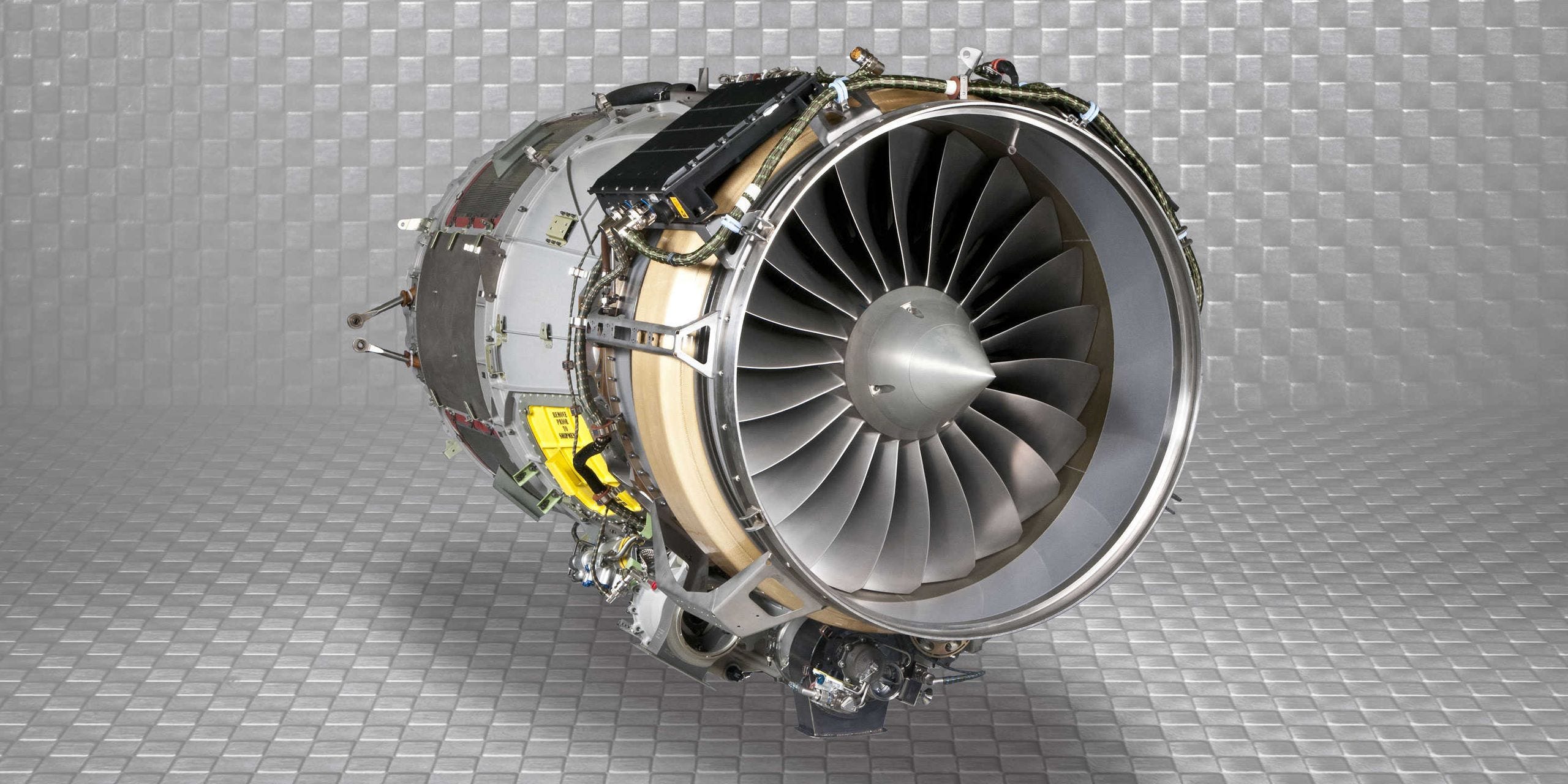
Honeywell’s propulsion business is built around three engine families.
The HTF7000 turbofan delivers 6,540 to 7,624 lbf of thrust and powers the largest super-midsize business jet platforms in service, with more than 12 million flight hours accumulated across the fleet.
The TPE331 turboprop is one of the most proven turboprops in the world, powering utility aircraft, military trainers, and regional turboprops with exceptional horsepower response.
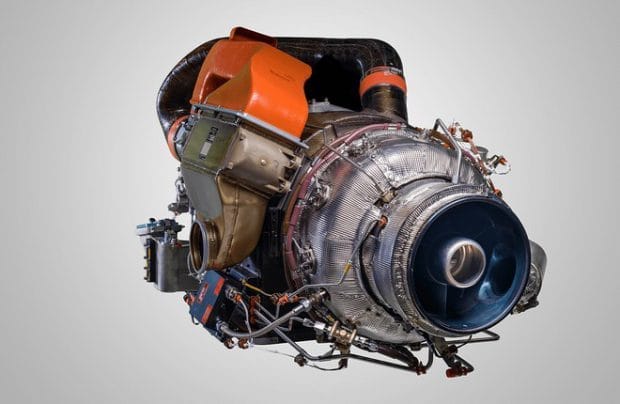
Honeywell also supplies turboshaft engines used on military helicopters and unmanned systems.
HONEYWELL ENGINE FAMILIES (2026)

HTF7000 series turbofan
  • Thrust class       : 6,540 – 7,624 lbf
  • Applications       : Super-midsize business jets
  • Flight hours       : >12 million cumulative
  • Status             : Block upgrade program active

TPE331 turboprop
  • Applications       : Utility, trainer, regional
  • Status             : Mature, aftermarket-rich

Turboshaft (T55 and derivatives)
  • Applications       : Military rotorcraft, UAVs
  • Status             : Active production, upgrades
HTF7000 Block Upgrades
Block upgrades planned for the HTF7000 series will extend time-on-wing, improve fuel burn, and integrate with the company’s fleet analytics platforms.
That investment protects the largest single installed-base annuity in the business aviation segment.
Auxiliary Power Units
Honeywell is the largest producer of aircraft APUs in the world. The 131 Series, first introduced on narrow-body airliners, remains the dominant APU on both the Boeing 737 family and the Airbus A320 family, and the 36 Series covers business jet and regional applications.
The auxiliary power unit business is an aftermarket machine: every hour an aircraft sits at a gate or on a ramp is an hour the APU is generating potential parts and service revenue. Operators running 737 and A320 fleets are effectively in long-term partnerships with Honeywell because APU swaps are capital-intensive and time-consuming.
Avionics and Integrated Flight Decks
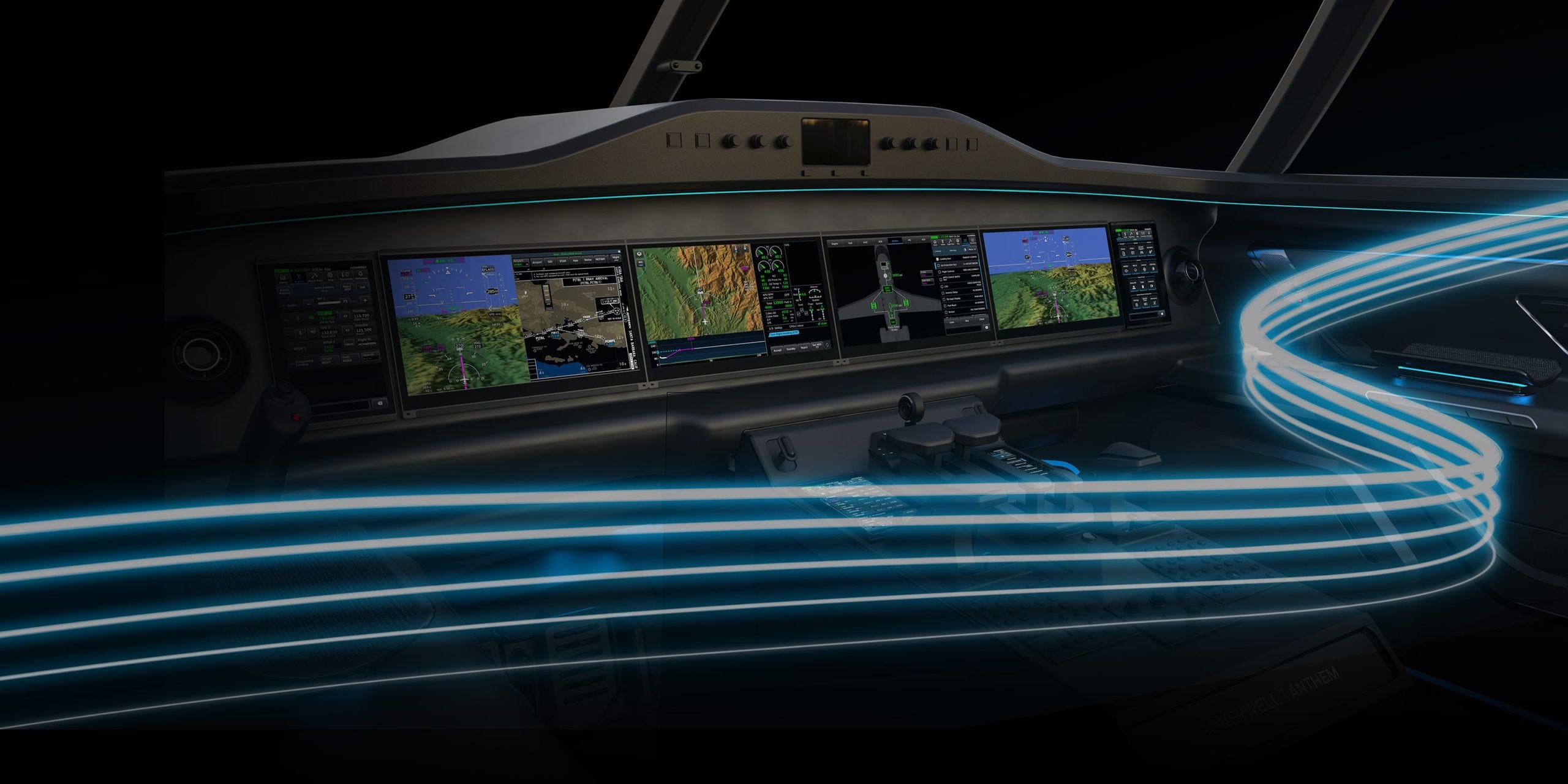
Honeywell Anthem is the cornerstone of the next-generation avionics portfolio. The cloud-connected, always-on, highly customizable flight deck is the first clean-sheet cockpit system from Honeywell in more than two decades and is being developed for use across a wide envelope of aircraft classes.
Initial Anthem customers span the advanced air mobility space (Vertical Aerospace VX4 and Lilium Jet) and supersonic aviation (Boom Supersonic Overture). The integrated flight deck is designed to be scalable from small eVTOLs up to large commercial transports.
Primus and IntuVue
For legacy fleets, the Primus Epic integrated flight deck continues to be upgraded with new capabilities including SmartView synthetic vision and IntuVue RDR-4000 3D weather radar.
These radar and flight management products are standalone revenue drivers on top of complete avionics suites.
AVIONICS PORTFOLIO BUILDING BLOCKS

Honeywell Anthem            : Cloud-native next-gen cockpit
Primus Epic                 : Current-gen integrated flight deck
IntuVue RDR-4000            : 3D volumetric weather radar
SmartView synthetic vision  : Enhanced situational awareness
TPA100B                     : Traffic alert & collision avoidance
Connected Recorder-25 : Flight data recordingSatellite Communications: JetWave and JetWave X
Honeywell’s JetWave hardware has been the backbone of Inmarsat Ka-band inflight connectivity for both air transport and business aviation for more than a decade. The successor product, JetWave X, is a multi-network terminal that supports faster speeds and integrates with multiple geostationary and low-earth-orbit constellations.
The Gulfstream, Bombardier, and Slate Aviation selections announced during 2025 locked in a pipeline of installation activity that will generate both hardware and recurring service revenue over the next several years.
Navigation, Inertial Systems, and Sensors
The navigation and inertial portfolio is one of the most defensive pieces of the overall business. Honeywell is a global leader in ring-laser gyros and fiber-optic gyros used in inertial measurement units and full inertial navigation systems.
The HGuide n580 and HGuide o360 products target the commercial and light-military segment. The Honeywell Compact Inertial Navigation System (HCINS) targets unmanned systems.
These products sit at the heart of the March 2026 defense framework agreement because inertial navigation is one of the few enablers that functions reliably in GPS-denied environments.
NAVIGATION AND SENSING PORTFOLIO

HGuide n580 INS/GNSS     : Self-contained, low SWaP-C
HGuide o360              : All-attitude inertial/GNSS card
HCINS                    : UAV-class compact INS
Embedded GPS/INS (EGI)   : Military aircraft standard
Quantum sensor R&D : DARPA-linked programsPower, Thermal, and Actuation Systems
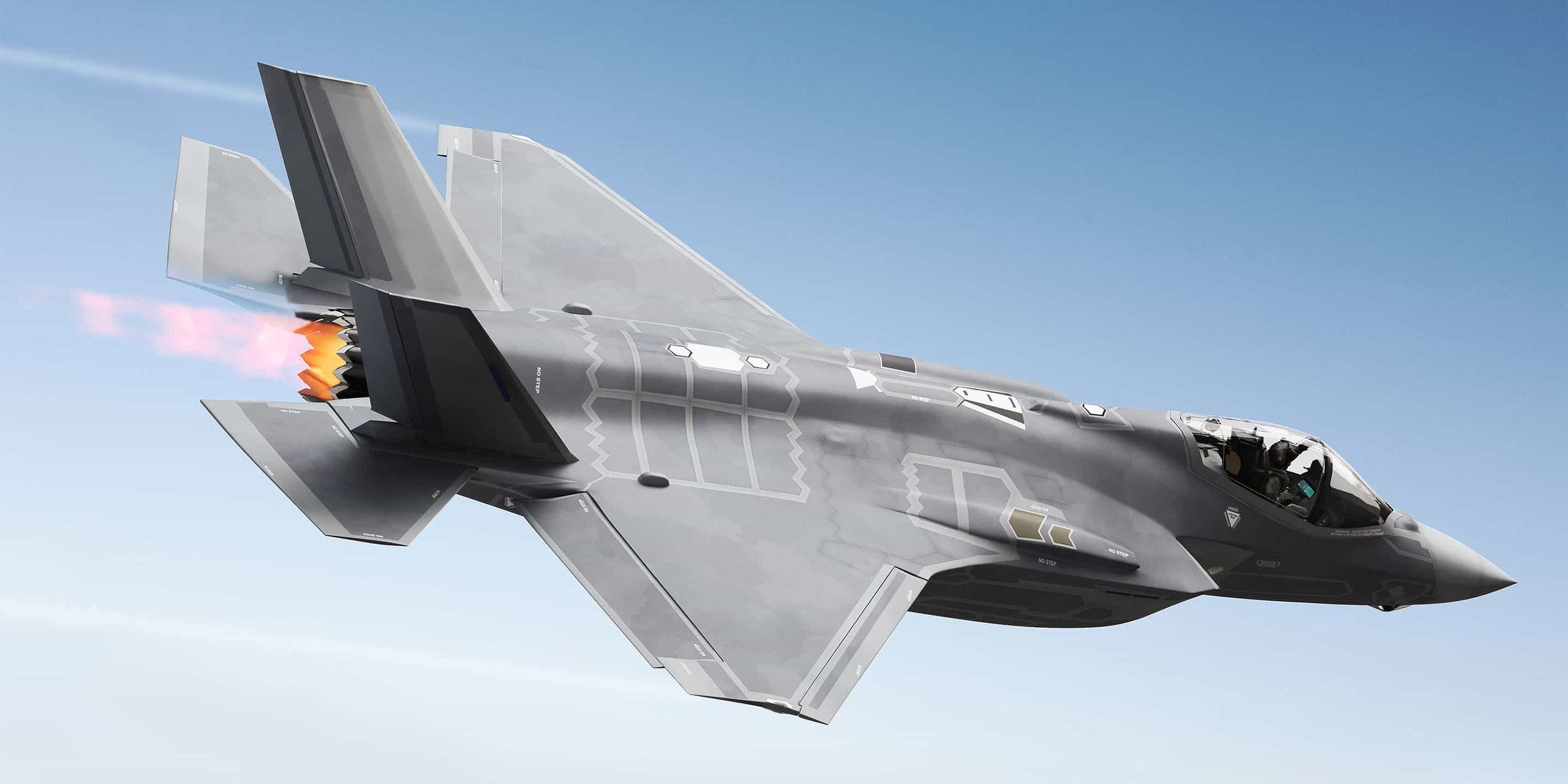
The Power and Thermal Management System on the F-35 Lightning II integrates the auxiliary power unit, emergency power, environmental control, and thermal management into a single integrated package.
Honeywell has demonstrated derivative and clean-sheet designs for F-35 PTMS upgrades to handle increased cooling demand from next-generation avionics and the Block 4 upgrade path.
Assure actuators are used on interceptor, tactical, and strategic missile systems, and they form one of the three product categories accelerated under the March 2026 framework agreement with the U.S. Department of War.
Connected Services and Digital Offerings
The Honeywell Forge connected software platform is a common thread running through the propulsion, avionics, and connectivity portfolios. Forge aggregates data from APUs, engines, and flight management systems, turning raw flight data into predictive maintenance insights for operators.
Digital services revenue is growing faster than the hardware revenue beneath it, which helps protect aftermarket margin as hardware pricing becomes more competitive over the lifecycle of each platform.
Honeywell Financial Analysis: Numbers Behind the Strategy
Full-Year 2025 Financial Performance
Aerospace Technologies closed 2025 with revenue of $17,510 million and segment profit of $4,284 million, translating to a segment margin of 24.5%. That margin structure puts the business comfortably ahead of most tier-one aerospace suppliers and within striking distance of engine OEM aftermarket-heavy peers.
Q4 2025 alone generated $4,520 million in sales and $909 million in segment profit, with commercial aftermarket rising 13% organically on double-digit growth in both business jet and air transport end markets, and defense and space growing 10% on elevated global demand for replenishment, new platform content, and munitions-related systems.
AEROSPACE TECHNOLOGIES — FY 2025 AND Q4 2025 SUMMARY

                    FY 2025       Q4 2025
Sales               $17,510M      $4,520M
Segment profit       $4,284M        $909M
Segment margin         24.5%         (reported FY basis)
Commercial AM          +13% org.   (Q4)
Defense & space +10% org. (Q4)Q1 2026 Results Within the Group Context
Q1 2026 sales at the Aerospace segment came in at $4,322 million, up 3% organically year over year, while segment margin expanded 20 basis points to 26.5%. Orders rose 6%, and the book-to-bill of 1.1x continued the pattern of demand outpacing shipments that has characterized the business for more than two years.
At the parent level, total Honeywell sales of $9.143 billion were up 2% reported and organic, operating margin came in at 16.1%, and adjusted EPS of $2.45 was up 11%. The $38.3 billion backlog is a reference point: a sizeable portion is attributable to Aerospace, giving the soon-to-be-independent company meaningful revenue visibility going into its first reporting period as a standalone entity.
Full-Year 2026 Guidance and Segment Expectations
Parent-level 2026 guidance calls for sales of $38.8 to $39.8 billion, organic growth of 3% to 6%, segment margin of 22.7% to 23.1%, and adjusted EPS of $10.35 to $10.65. Free cash flow is targeted at $5.3 to $5.6 billion.
Management reaffirmed on the Q1 2026 call that the Aerospace full-year guide remains “high single-digit growth,” supported by improvement in the OE supply chain and continued strength in both aftermarket and defense.
2026 PARENT GUIDANCE (REAFFIRMED WITH Q1 RESULTS)

Revenue                   : $38.8B – $39.8B
Organic growth            : 3% – 6%
Segment margin            : 22.7% – 23.1%
Adjusted EPS              : $10.35 – $10.65
Operating cash flow       : $4.7B – $5.0B
Free cash flow            : $5.3B – $5.6B
Aerospace growth guide : High single digitsCapital Structure Impact of the Spin-Off
The aerospace entity launched an offering of senior notes in March 2026 and closed a comprehensive $20 billion financing package structured by its banks, establishing the standalone balance sheet, credit facilities, and intercompany distribution mechanics. The package fixes the post-spin leverage profile and funds the cash-rich distribution to Honeywell shareholders.
For aerospace customers and suppliers, the relevant fact is that the new company will enter public life with an investment-grade capital structure, a proven free cash flow engine, and a defined five-year revolving facility already in place.
Revenue and Growth Drivers
Commercial Aftermarket: The Compounding Annuity
Commercial aftermarket is the single largest revenue contributor inside Aerospace Technologies, and its trajectory is the most important variable for near-term earnings power.
The segment’s aftermarket model is built on long-life products, auxiliary power units, engines, and avionics, where the installed base generates parts, repairs, and overhaul revenue for the entire service life of the aircraft.
Q4 2025 commercial aftermarket grew 13% organically with double-digit growth on both air transport and business jet sides.
Utilization hours on narrow-body fleets, particularly 737 and A320 family aircraft that carry Honeywell APUs as standard equipment on the A320, remain above 2019 levels on most major airlines.
Defense and Space: A Multi-Year Replenishment Cycle
Defense and space revenue rose 10% organically in Q4 2025, continuing a multi-quarter run anchored by three forces: NATO replenishment of Ukraine-related depletion, U.S. munitions buildup, and accelerating foreign military sales into the Indo-Pacific.
DEFENSE TAILWINDS HEADING INTO 2026

• U.S. munitions rebuild       : Electronic warfare, actuators
• F-35 program ramp            : EPTMS, auxiliary systems
• Long-Range Assault Aircraft  : Bell FLRAA APU + ECS selection
• Allied replenishment         : Navigation systems, sensors
• $500M DoW framework          : Surge production capacity
The Bell FLRAA selection for Honeywell’s modified GTCP 36-150 auxiliary power units and environmental control system locks in content on one of the U.S. Army’s most important future rotorcraft programs, and FLRAA production scaling will feed the aerospace segment into the 2030s.
Commercial OE: Narrow-Body and Business Jet Demand
Commercial original equipment revenue recovered more slowly than aftermarket during 2023 and 2024 because airframer deliveries were constrained by supply-chain bottlenecks at Boeing, Airbus, and the engine OEMs. That constraint is easing gradually, and Honeywell is picking up content on each major MAX customer win.
LOT Polish Airlines selected Honeywell avionics for its 737 MAX fleet in August 2025, and United Airlines had previously selected a wide array of Honeywell cockpit systems including IntuVue RDR-4000 3D weather radar, TCAS, and connected recorders for its MAX aircraft.
Business Aviation: A High-Margin Core
Business aviation is the quietest but most profitable sub-segment of the Honeywell Aerospace portfolio.
The HTF7000 engine family, which powers Bombardier Challenger 300/350/3500, Gulfstream G280, Embraer Legacy 500, and Textron Aviation Longitude aircraft, has surpassed 10 million flight hours and continues to receive block upgrade investment.
KEY BUSINESS JET PLATFORMS WITH HONEYWELL CONTENT

• Bombardier Challenger 300/350/3500 : HTF7000 engines
• Gulfstream G280                    : HTF7000 engines, avionics
• Embraer Legacy 500 / Praetor       : HTF7000, cockpit systems
• Textron Cessna Longitude           : HTF7000 engines
• Gulfstream G700 / G800             : Auxiliary power, connectivity
• Cessna Citation fleet              : Primus avionics
• Dassault Falcon                    : Honeywell avionics
The October 2025 agreement with Gulfstream to certify JetWave X on G-series aircraft added one of the strongest brands in business aviation to the next-generation cabin connectivity line-up.
Major Competitors: Honeywell
Honeywell Aerospace Technologies competes across multiple product categories, and the competitor set shifts depending on which product is in question. The most important direct competitors are listed below.
GE Aerospace (spun off from GE in 2024)
RTX Corporation (Collins Aerospace and Pratt & Whitney divisions)
Safran
L3Harris Technologies
Thales Group
BAE Systems
Garmin (general aviation avionics)
TransDigm Group (aftermarket-focused components)
Hanwha Aerospace
Northrop Grumman (specific defense electronics areas)
Honeywell vs. GE Aerospace
GE Aerospace, now an independent public company, dominates the large commercial turbofan market through the CFM International joint venture with Safran (CFM56 and LEAP engines) and its own GE9X, GEnx, GE90, and CF6 programs.

GE does not compete directly with Honeywell in large commercial propulsion because Honeywell does not build engines for 737, A320, A350, or 777 aircraft.
Where the two companies do overlap is in avionics (GE bought a stake in various avionics technology firms), aftermarket digital services, and defense propulsion.
GE Aerospace’s FY 2024 revenue was materially higher than Honeywell Aerospace’s, but operating margin profiles are broadly comparable, and both companies are positioned as aftermarket-rich franchises with decades of installed-base annuities.
Honeywell vs. RTX (Collins Aerospace and Pratt & Whitney)
RTX is arguably Honeywell Aerospace’s most direct competitor because its Collins Aerospace subsidiary overlaps in avionics, cabin connectivity, flight controls, actuation, and interior systems, while its Pratt & Whitney subsidiary competes in auxiliary power units (Pratt & Whitney Canada APS series) and small gas turbines.
Collins competes head-to-head with Honeywell on flight decks (Pro Line Fusion versus Primus Epic and Anthem), satellite communications (Inmarsat SwiftBroadband terminals versus JetWave), and high-speed cabin connectivity.
The competition in APUs between Honeywell and Pratt & Whitney Canada is particularly fierce on regional jets and helicopters.
HONEYWELL vs. RTX — COMPETITIVE OVERLAP

Avionics / flight decks    : Anthem / Primus  vs. Pro Line Fusion
Cabin connectivity         : JetWave X        vs. Aspire / Iridium terminals
APU                        : 131/36 Series    vs. Pratt APS series
Flight controls / actuation: Honeywell        vs. Collins
Inertial navigation        : HGuide / EGI     vs. Collins Commercial EGI
Thermal management         : PTMS             vs. Collins TMS
Honeywell vs. Safran
Safran is a formidable competitor in propulsion (CFM International joint venture with GE), landing gear, nacelles, interiors, and avionics.
In Honeywell’s core areas the overlap is less direct, but Safran’s electrical systems, flight controls, and sensor businesses do compete for content on major airframer programs.
Safran has also been aggressive in advanced air mobility, positioning its electric motors, power electronics, and avionics to win eVTOL platforms. Both companies are pursuing the same advanced air mobility customers with partially overlapping portfolios.
Honeywell vs. Thales
Thales is a European competitor in avionics, radar, flight management, and secure military communications.
On defense avionics, particularly in European platforms, Thales often wins where Honeywell would be the U.S. incumbent. Thales’s strength in in-flight connectivity (FlytLIVE) competes with JetWave X in commercial cabin connectivity.
Honeywell vs. L3Harris and BAE Systems
L3Harris and BAE Systems compete with Honeywell in defense avionics, electronic warfare, and navigation.
BAE’s electronic warfare pods and L3Harris’s communication systems overlap with specific Honeywell defense product lines, particularly those covered under the March 2026 Department of War framework agreement.
Honeywell vs. Garmin and TransDigm
Garmin is the dominant avionics supplier in general aviation, and Honeywell’s exposure to small single-engine piston aircraft is limited.
TransDigm, through aggressive acquisition of niche aerospace component companies, competes for aftermarket dollars on many of the same legacy platforms where Honeywell has original content, but the two companies rarely compete head-to-head on new platform wins.