


Executive Summary
Safran closed its 2025 fiscal year with revenue of €31,329 million, up 14.7% year on year, and recurring operating income of €5,197 million at a 16.6% margin, while free cash flow jumped 23% to €3,921 million, which enabled management to raise its 2028 financial ambitions to around 10% average annual revenue growth and €7 to €7.5 billion of recurring EBIT.
The Propulsion division is the engine behind these numbers, supported by a 28% jump in LEAP deliveries, a 17.6% rise in civil engine spare parts revenue in US dollars, and a vigorous CFM56 aftermarket that continues to generate cash well beyond expectations of just a few years ago.
Portfolio expansion is accelerating with the July 2025 closing of the Collins Aerospace flight control and actuation acquisition, new landing gear capacity in Morocco, a composite blade plant in Belgium, and a scaled-up defense presence covering the M88 engine, the AASM Hammer munition, and optronics for allied forces.
Q1 2026 already reinforced the runway into 2026 and 2028 with 18.8% revenue growth, Propulsion up 33.1%, Equipment and Defense up 13.5%, and management confirming the top end of full year guidance.
Recommended - Read Full Reports


Read All Reports
Table of Contents
Executive Summary
Key Facts: Company Profile
Safran Company Overview
The Group in a Nutshell
Corporate Structure and Leadership
Global Footprint and Workforce
Business Model in Short
Key Product Lines, Programs, and Services
CFM LEAP and CFM56
The RISE Open Fan Program
The M88 Engine and Rafale Ecosystem
Helicopter Engines: Arrano, Arriel, Makila, Ardiden
Equipment: Landing Gear, Nacelles, Electrical Systems, Interiors
The Collins Flight Controls Acquisition
Space Activities Through ArianeGroup
Defense Electronics, Optronics, and UAVs
Financial Analysis: Safran
FY2025: The Record Year
Segment Level Performance in 2025
Q1 2026 Update
Revenue LTM and Run Rate
Capital Allocation and Returns
Revenue and Growth Drivers
The Two Legs of Civil Engines
Fleet Dynamics Behind the Cash
Aftermarket Mechanics
Helicopter Engines: A Stabilizing Pillar
Defense and Space
Major Competitors: Safran
The Competitive Field
Safran vs GE Aerospace
Safran vs Rolls-Royce
Safran vs Pratt & Whitney
Safran vs Honeywell and Liebherr
Safran vs Collins Aerospace
Competitive Analysis and Moat
The CFM Joint Venture as a Moat
Aftermarket Tail
Engineering Depth and Industrial Footprint
Regulatory and Certification Barriers
Customer Concentration Mitigation
Financial and Commercial Implications
Margin Trajectory Through 2028
Free Cash Flow and Capital Allocation Choices
Sensitivity to LEAP Delivery Ramp
Currency Exposure
Key Risks, with Probabilities and Scenarios
Supply Chain and Casting Shortages
Boeing and Airbus Production Rates
GTF Recovery
Open Fan Technology Risk
Geopolitical and Defense Export
Currency and Cost Inflation
Program Specific Setbacks
Cybersecurity and IT Incidents
Regional Dynamics and International Strategy
India as a Strategic Market
Morocco as a Low Cost Manufacturing Hub
Mexico and North American Supply Chain
Belgium, France, and European Core
United States Exposure
Sustainability and Next Generation Technology
Sustainable Aviation Fuels and Hydrogen
Hybrid Electric Propulsion
Additive Manufacturing and Advanced Materials
Digitalization and Prognostic Maintenance
Mergers, Acquisitions, and Portfolio Reshaping
The Collins Flight Controls Acquisition in Context
Prior Deals and Future Priorities
Divestitures and Focus
Customer Perspective and Program Wins
Airline Engagement and Ryanair Case Study
Defense Customer Wins
Space Contracts and Project Kuiper
Safran Within the Broader Aerospace Value Chain
Positioning Versus Airframers
Relationship With Tier 2 Suppliers
Collaborative Programs
SWOT Analysis
Strengths
Weaknesses
Opportunities
Threats
My Final Thoughts
Official Sources and Data
Key Facts: Company Profile
SAFRAN SA – COMPANY PROFILE
---------------------------------------------------
Headquarters            : Paris, France
Listing                 : Euronext Paris (Ticker: SAF) | ISIN FR0000073272
Chief Executive Officer : Olivier Andriès
FY2025 revenue          : €31,329 million (+14.7% YoY)
Adjusted revenue        : €31,189 million
Recurring op. income    : €5,197 million (16.6% margin)
Free cash flow          : €3,921 million
Employees               : 110,000+
Share capital           : €83,668,925.20
Shares outstanding      : 418,344,626
Segments                : Propulsion | Equipment & Defense | Aircraft Interiors
Flagship programs       : CFM LEAP | CFM56 | M88 | Arrano | Silvercrest | RISE
The Group holds global leadership positions across commercial engines, helicopter turbines, landing gear, nacelles, inertial navigation, and carbon brakes.
Safran Company Overview
The Group in a Nutshell
Safran is a French high technology group that designs, manufactures, and services propulsion systems, equipment, and interiors for civil and military aviation, as well as products for the defense and space markets.
The Group sits at the intersection of heavy engineering, long program cycles, and a deep installed base that generates recurring aftermarket revenue for decades after initial delivery.
Safran became its modern self through the 2005 merger of Snecma and Sagem, and was later reshaped through the 2018 acquisition of Zodiac Aerospace and the 2024 acquisition of the Collins Aerospace flight control and actuation business that closed in July 2025.
The modern Group therefore operates through more than a dozen fully owned companies and one pivotal joint venture, CFM International, co-owned with GE Aerospace, which is the world leader in narrowbody commercial engines through the CFM56 and LEAP families.
Corporate Structure and Leadership
Safran SA is headquartered in Paris and listed on Euronext Paris.
The CEO, Olivier Andriès, has continued to push a strategy of disciplined capital allocation, vertical integration in propulsion, and targeted bolt on moves in equipment and defense.
CORPORATE HIERARCHY – SIMPLIFIED
--------------------------------
Safran SA (Euronext Paris, SAF)
  ├─ Safran Aircraft Engines (Snecma heritage)
  │     └─ CFM International (50/50 JV with GE Aerospace)
  ├─ Safran Helicopter Engines (Arriel, Arrano, Makila, Ardiden)
  ├─ Safran Landing Systems (landing gear, wheels, carbon brakes)
  ├─ Safran Nacelles (engine nacelles for widebody and business jets)
  ├─ Safran Electrical & Power (aircraft electrical systems and wiring)
  ├─ Safran Electronics & Defense (optronics, navigation, UAVs)
  ├─ Safran Cabin (cargo systems, galleys, crew rest)
  ├─ Safran Seats (economy, business, and first class seats)
  ├─ Safran Aerosystems (oxygen, fluid management)
  ├─ Safran Flight Controls & Actuation (ex Collins business)
  └─ ArianeGroup (50/50 JV with Airbus)
Board governance follows a two tier structure, with a Board of Directors chaired by Ross McInnes, which keeps strategic oversight formally separate from operational execution.
This structure is common among French listed groups and allows long term programs, which routinely span fifteen to forty years, to be managed without short term pressure on engineering decisions.
Global Footprint and Workforce
Safran employs more than 110,000 people across roughly 30 countries, with significant industrial hubs in France, the United States, Mexico, Morocco, Belgium, India, Canada, Malaysia, and Singapore.
Recent industrial milestones underline this expansion. In June 2025, the Group inaugurated Safran Blades in Belgium, a dedicated compressor blade plant that supports both the LEAP program and the future open fan demonstrator.
A few months later, in late 2025, the Group confirmed a new €280 million landing gear facility near Casablanca, Morocco, sized for the Airbus A320 production ramp and for future programs.
India has become another core node.
On November 26, 2025, the Group announced a new M88 MRO shop in Hyderabad, and separately disclosed preparations for a potential engine assembly line tied to expanded Rafale procurement talks with the Indian government.
Business Model in Short
The Group earns revenue in three broad ways.
First, it sells original equipment to airframers, which often carries thin or negative margins for commercial engines.
Second, it generates aftermarket revenue through spare parts, shop visits, and long term service agreements, where margins are structurally higher.
Third, for defense programs, it collects a mix of development funding, production contracts, and through life support.
This mix tilts the earnings power toward the services tail, and that is exactly where the LEAP and CFM56 platforms are heading through 2030 and 2040.
Key Product Lines, Programs, and Services
CFM LEAP and CFM56
The LEAP is the backbone of the civil narrowbody fleet for the next two decades. It is offered in three variants: LEAP-1A on the A320neo family, LEAP-1B on the 737 MAX, and LEAP-1C on the COMAC C919. Each variant shares roughly 80% of parts, which simplifies supply chain and maintenance.
CFM announced durability improvements for the LEAP-1A in November 2025 that target higher time on wing, particularly in hot and harsh environments such as the Middle East and India, while similar upgrades for the LEAP-1B (reverse bleed system and high pressure turbine blade upgrade) are tracking toward certification in the first half of 2026.
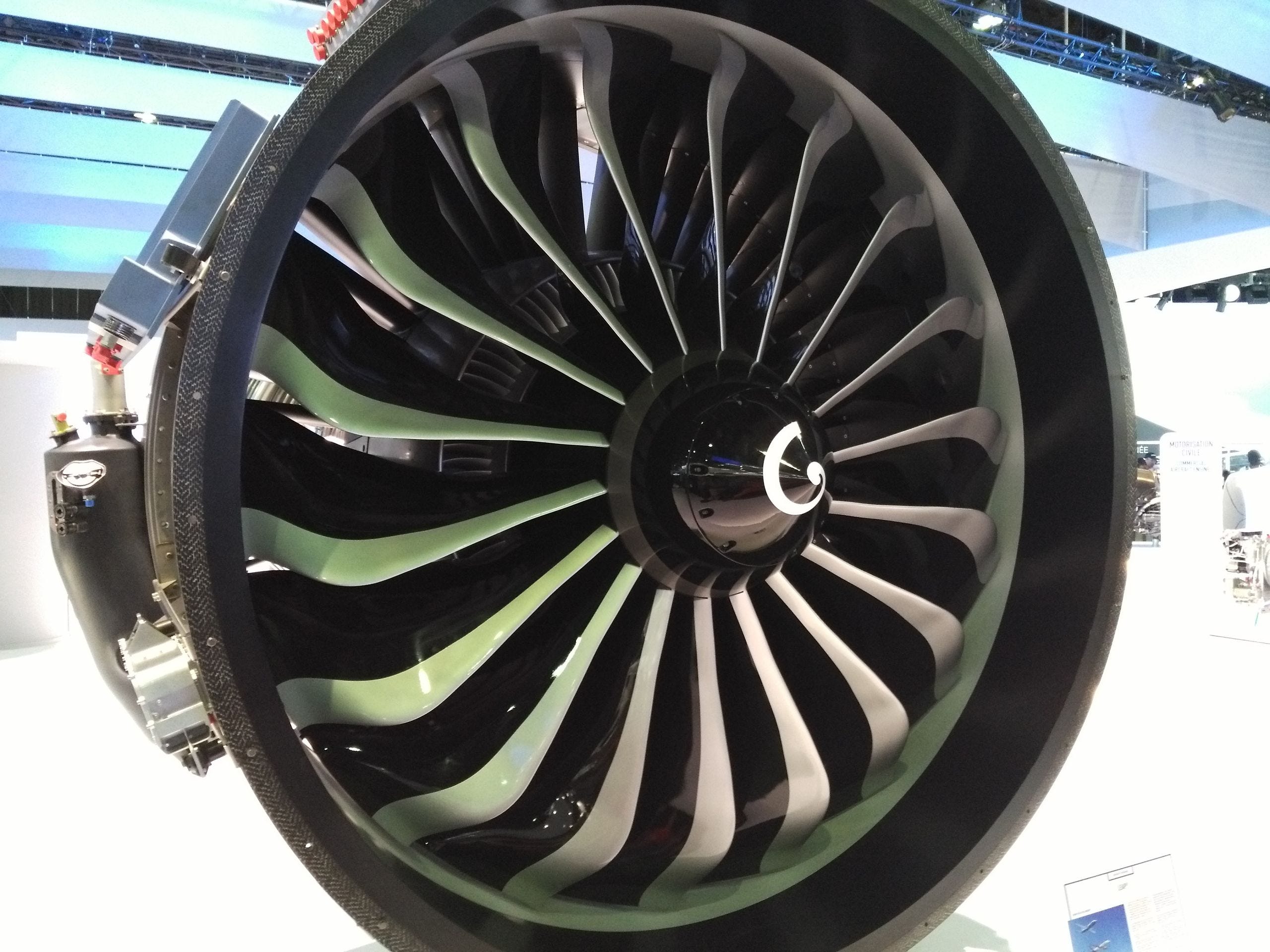
The CFM56 is no longer in production for standard airline orders but remains in serial production for aftermarket support and for specific military and VIP applications.
Its aftermarket has been strong enough that CFM has increased spare parts output across multiple sites.
The RISE Open Fan Program
The RISE program, launched in 2021 inside CFM, is the longer range bet. Its goal is a 20% fuel burn reduction versus current LEAP baselines through open fan architecture, a hybrid electric core, and 100% compatibility with sustainable aviation fuels and hydrogen (RISE program overview).
Recent milestones include the qualification of composite fan blades manufactured in Belgium, joint partnership with Airbus for an A380 based flight demonstrator, and ground testing of low pressure compressor modules by Safran Aero Boosters (composite blade milestone).
If the program delivers on its roadmap, the first commercial engines could enter service around 2035, coinciding with the expected launch of the next single aisle airframe from Airbus and Boeing.
The M88 Engine and Rafale Ecosystem
The M88 powers every Dassault Rafale in service across France, Egypt, Qatar, India, the United Arab Emirates, Greece, Croatia, Indonesia, and Serbia.
With 2025 production of 26 fighters and fresh contracts for another 26 aircraft, Safran has invested an incremental €70 million to expand M88 component output.
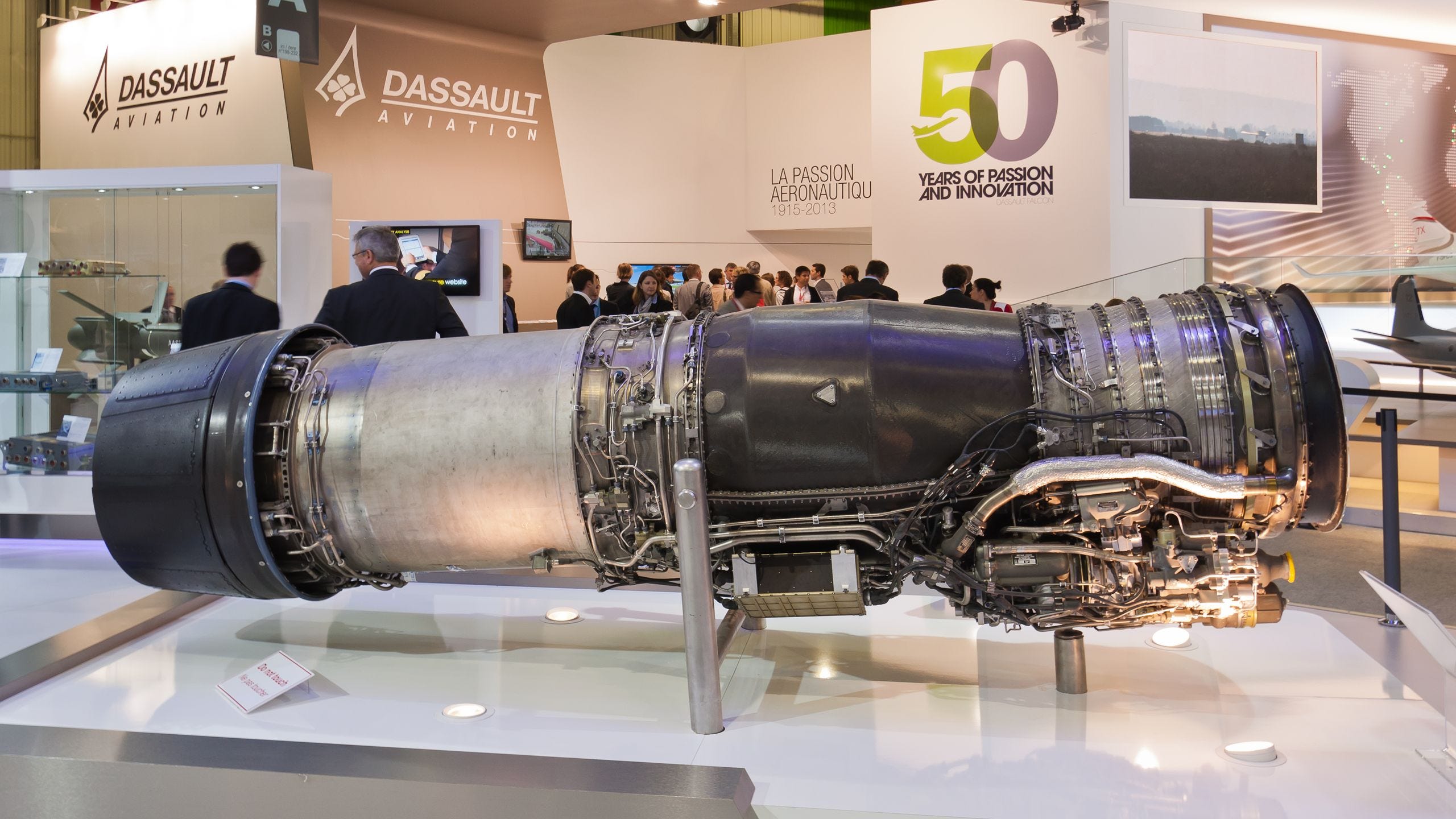
Safran is also developing an uprated M88 T-REX variant that will deliver higher thrust to support additional internal and external stores carriage on future Rafale F5 standards.
Further out, the company is collaborating with the Indian GTRE on a scalable 120 to 140 kN class engine for the AMCA fifth-generation program and on the SCAF/FCAS engine with MTU Aero Engines and ITP Aero for the next European combat aircraft.
Helicopter Engines: Arrano, Arriel, Makila, Ardiden
The Arrano 1A covers the 1,100 to 1,300 shaft horsepower range and entered service on the Airbus H160.
It integrates variable inlet guide vanes, a centrifugal compressor with blades designed via additive manufacturing, and a gearbox oriented toward low maintenance. Certification for the French Army’s H160M Guépard derivative is progressing toward a 2028 entry into service.
The broader Makila, Arriel, and Ardiden families continue to generate steady production, and Safran holds dominant market share in several segments where Rolls-Royce, GE Aerospace, and Pratt & Whitney Canada compete.
Equipment: Landing Gear, Nacelles, Electrical Systems, Interiors
Safran Landing Systems equips around 30,000 aircraft globally with landing gear, wheels, and carbon brakes. The Group also dominates civil aircraft nacelles on many widebody programs through Safran Nacelles, including the A330neo and the Falcon business jet line.
Safran Electrical & Power provides electrical wiring interconnection systems, power distribution, and electric motors. Safran Cabin and Safran Seats supply galleys, crew rest compartments, premium seats, and cargo systems. Safran Aerosystems covers oxygen, fluid management, and emergency systems, and also participates in the eVTOL segment.
The Collins Flight Controls Acquisition
The July 21, 2025 closing of the Collins Aerospace flight control and actuation acquisition added more than 6,000 employees across the United States, France, Italy, and Asia, and brings Safran into the rarefied tier of global flight control suppliers.
The acquired business adds mission critical actuators on platforms including the Boeing 787 and 777, Airbus A350 and A220, several military fighters, and next generation rotorcraft.
This combination turns Safran into one of only two suppliers worldwide capable of offering integrated primary and secondary flight control systems at scale.
Space Activities Through ArianeGroup
ArianeGroup is a 50/50 joint venture with Airbus that leads the European launcher ecosystem.
The Ariane 6 program, after its first flight in 2024, successfully completed its first commercial launch on March 7, 2025, and has since moved into regular operations.
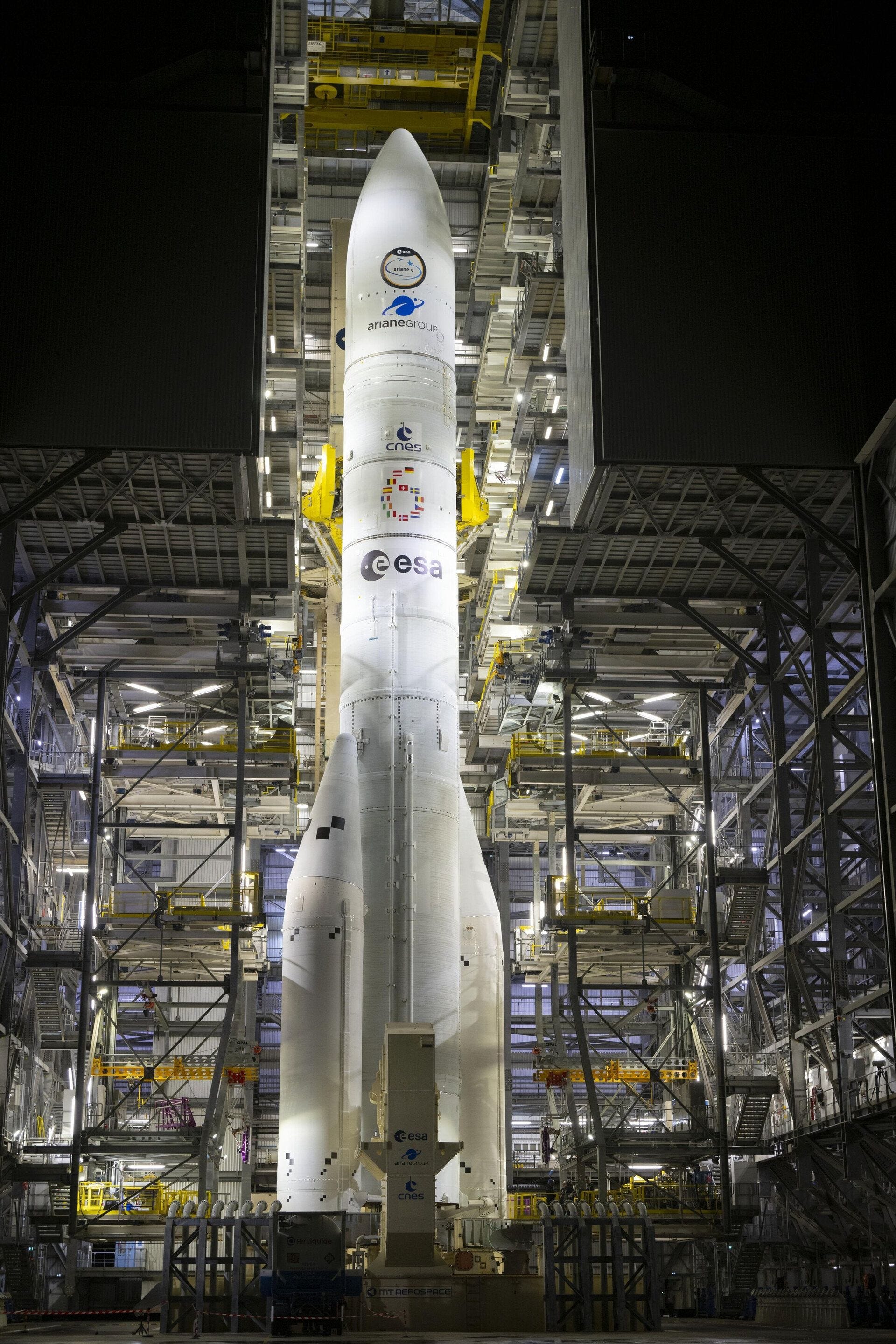
Safran also supplies the Vulcain 2.1 main stage engine and the Vinci upper stage engine for Ariane 6, and produces solid propellant motors and ignition systems.
In February 2026, Ariane 6 carried 32 Amazon Kuiper satellites for Project Kuiper, marking a commercial inflection point for the European launcher.
Defense Electronics, Optronics, and UAVs
Safran Electronics & Defense is a leading European supplier of optronic sights, inertial navigation systems, and targeting pods.
The Euroflir 410 optronic ball equips attack helicopters, UAVs, and naval platforms, while the AASM Hammer guidance kit converts standard 125, 250, 500, and 1,000 kilogram bombs into precision strike munitions with ranges extending to around 70 kilometers.
The AASM Hammer has been used extensively in Ukraine, and Safran raised production capacity to 1,200 units per year with the ability to double again if orders require it.
On the UAV side, the Patroller medium altitude long endurance drone was dropped by the French Army in September 2025, which is a clear setback, though export prospects remain under evaluation and the underlying electro optical payload portfolio continues to sell on other platforms.
Financial Analysis: Safran
FY2025: The Record Year
Fiscal 2025 will likely be referenced for years as the breakout year of the post-pandemic cycle. Reported revenue reached €31,329 million, up 14.7% year on year, and adjusted revenue stood at €31,189 million, up 12.5% versus 2024 (FY2025 investor deck).
Recurring operating income climbed 26.2% to €5,197 million, with the margin expanding by 150 basis points to 16.6% of revenue, driven by aftermarket mix and operating leverage on higher deliveries.
Free cash flow of €3,921 million, up from €3,189 million in 2024, translates into a conversion ratio of roughly 75% of recurring operating income.
That level is difficult for most aerospace peers to match, and it reflects prepayments from CFM aftermarket customers, the cash positive profile of the helicopter engine business, and working capital discipline during the LEAP ramp.
KEY P&L AND CASH FLOW LINES (€ million)
---------------------------------------
                         2024       2025      Change
Revenue                 ~27,317   31,329     +14.7%
Adjusted revenue        ~27,723   31,189     +12.5%
Recurring op. income     4,119    5,197      +26.2%
Recurring op. margin     15.1%    16.6%      +150 bps
Free cash flow 3,189 3,921 +23.0%Segment Level Performance in 2025
The Propulsion division, which houses Safran Aircraft Engines and CFM, led growth with revenue up 17.6% on an adjusted basis. Aftermarket revenue rose 21.0% and original equipment sales rose 12.1%, so both legs of the cycle fired at once.
Equipment and Defense posted 14.2% organic growth, with a recurring operating income jump from €27 million to €108 million in the sub segment containing divisions generating revenue below €200 million, which signals that previously dilutive activities are turning profitable.
Aircraft Interiors, the legacy Zodiac franchise, grew around 10%. After a difficult integration period, the division is now profitable, with passenger seat and galley demand pulled higher by A350 and A320 ramp ups and by cabin retrofits on wide body fleets.
Q1 2026 Update
First quarter 2026 revenue reached €8.62 billion, up 18.8% year on year, and beat analyst expectations. Propulsion surged 33.1% organically, with aftermarket up 32.1% and OE sales up 35.0%, while Equipment and Defense grew 13.5% and Aircraft Interiors added 23%.
Management confirmed the 2026 outlook and indicated that the Group is heading toward the top end of its guidance range, with LEAP deliveries up about 15%, military engine revenue lifted by higher M88 volumes, and missile propulsion revenue expected to rise around 20% for the year.
Revenue LTM and Run Rate
On a last twelve-month basis, pairing the second through fourth quarters of 2025 with the first quarter of 2026, the Group crossed €32 billion in adjusted revenue for the first time.
The run rate implied by Q1 2026 annualizes above €34 billion, which is consistent with the raised 2028 ambition.
LTM REVENUE BRIDGE
------------------
FY2025 adjusted revenue           : €31,189 M
Less Q1 2025 adjusted revenue     : ~€7,253 M
Plus Q1 2026 adjusted revenue     : ~€8,622 M
-----------------------------------
LTM adjusted revenue (Q2'25–Q1'26): ~€32,558 M
Capital Allocation and Returns
Two share buyback announcements frame current capital allocation.
In May 2025, the Group launched a €500 million share repurchase for cancellation, supplemented by €50 million of treasury shares already on the balance sheet.
In March 2026, a further €125 million repurchase was launched to cover employee share plans and executive grants.
Following cancellations, share capital at December 31, 2025 stood at €83,668,925.20, spread across 418,344,626 shares of €0.20 par value. The combination of buybacks, a rising dividend, and continued M&A provides a balanced approach to deploying the €3.9 billion free cash flow base.
Revenue and Growth Drivers
The Two Legs of Civil Engines
Safran builds commercial engines inside CFM International, a 50/50 joint venture with GE Aerospace. CFM is a legal structure, but operationally it sells two families.
The CFM56 covers the Airbus A320ceo and the Boeing 737NG, with more than 39,000 engines delivered since 1982.
The LEAP covers the A320neo family, the Boeing 737 MAX, and the COMAC C919.
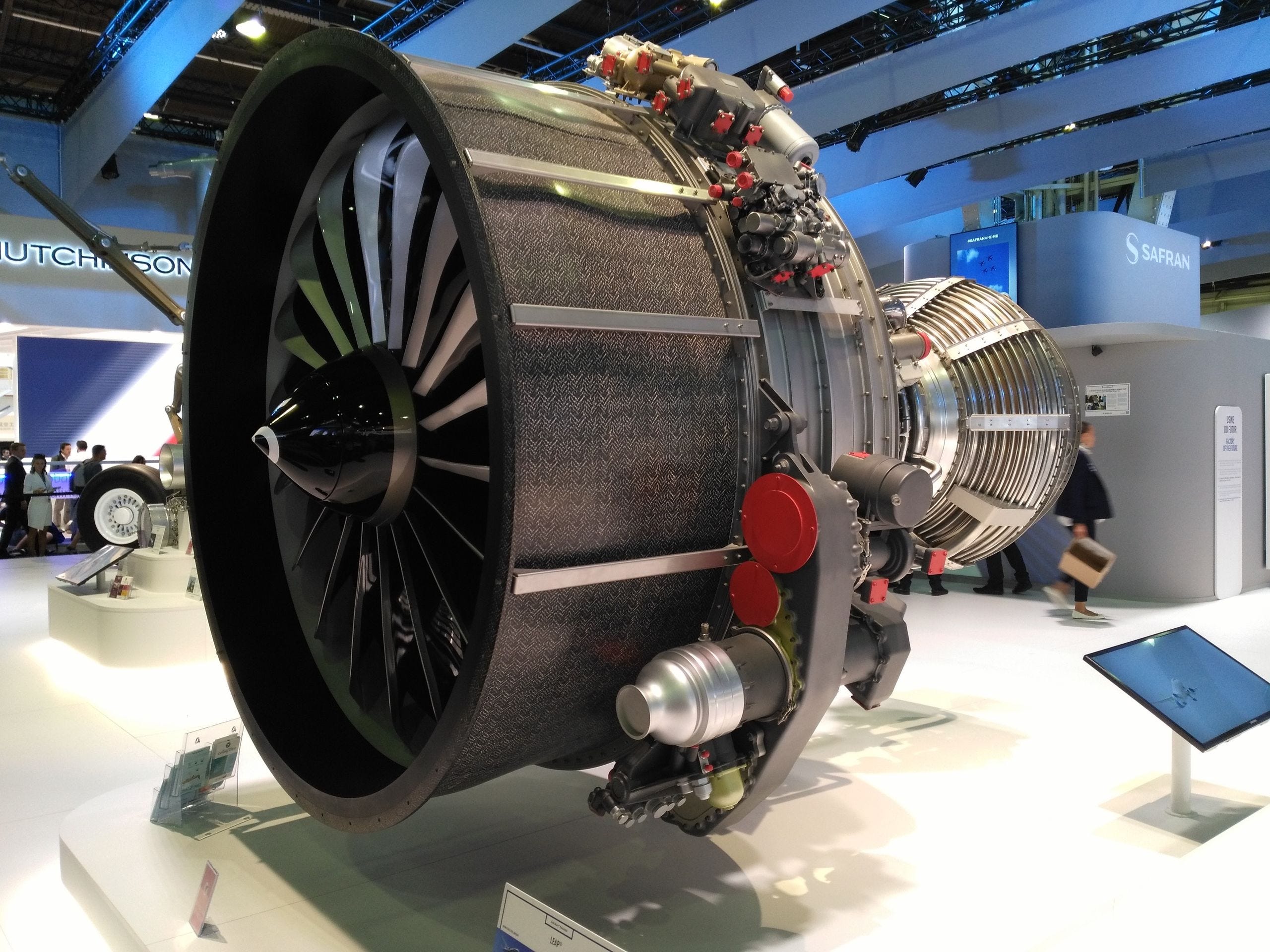
LEAP deliveries jumped 28% in 2025 and should rise another 15% in 2026 based on the Group’s own guidance, which converts into a steady widening of the installed fleet and, with a three to five year lag, a compounding aftermarket tail.
The CFM56 aftermarket is the quiet powerhouse of 2025 and 2026. Spare parts for civil engines grew 17.6% in US dollar terms, led by high CFM56 utilization and shop visit volumes, as airlines extend the lives of their A320ceo and 737NG fleets while they wait for new delivery slots.
Fleet Dynamics Behind the Cash
The math of the narrowbody market is straightforward. Global airlines operate more than 20,000 narrowbody jets.
A significant share still runs on CFM56 engines, and a rising share relies on LEAP. That gives CFM a structural tailwind because older fleets require more maintenance while younger fleets begin entering first shop visit between 2026 and 2030.
NARROWBODY FLEET POSITIONING – SIMPLIFIED
-----------------------------------------
CFM56 installed base : >24,000 engines (aging, peak shop visits now)
LEAP installed base  : >4,500 engines (entering first shop visits)
GTF (Pratt) base     : ~3,500 engines (partial reliability issues)
---------------------------------------------------
Safran aftermarket duration implied: ~2035–2045
Ryanair’s June 2025 agreement with CFM for 30 LEAP-1B spare engines is a case study in how airlines are hedging future maintenance needs by building proprietary engine stockpiles rather than relying fully on lessor supplied spares.

Aftermarket Mechanics
Engine aftermarket revenue follows a predictable sequence.
An engine enters service, runs for several years, and returns for a shop visit that costs a low single digit million euros in parts and labor.
Original equipment manufacturers earn the majority of that revenue because the intellectual property is locked into designs.
CFM captures this tail for both CFM56 and LEAP, with Safran booking its half through the Propulsion division.
Helicopter Engines: A Stabilizing Pillar
Safran Helicopter Engines holds a world-leading position in light and medium helicopter turbines. Its Arrano powers the Airbus H160, its Arriel powers the H135 and H145 families, and the Makila covers the Super Puma family.
Together they generated steady growth in 2025, with strong deliveries into civil utility, emergency medical, and military customers.
Fleet growth in offshore oil and gas, helicopter emergency medical services, and defense applications is expected to continue into 2028, and the division is also positioning its next generation product roadmap around hybrid electric propulsion for short range civil helicopters.
Defense and Space
Defense revenue represents roughly 18% of Group revenue and includes the M88 engine for the Dassault Rafale, guidance kits for the AASM Hammer munition, inertial navigation, optronics, and participation in the Ariane 6 launcher via ArianeGroup (defense weight in revenue).
Military engine revenue rose in 2025 and again in Q1 2026, driven by an improved Rafale export mix and higher M88 deliveries, while missile propulsion is set to grow about 20% this year.
Major Competitors: Safran
The Competitive Field
Safran faces a small, technology-heavy set of rivals that cluster by product segment. Commercial engines are the most consolidated and high-stakes segment, followed by equipment and defense subsystems. A simple bullet list captures the main names:
GE Aerospace (partner in CFM, also a standalone widebody and military engine competitor)
Rolls-Royce Holdings (widebody and military engines, naval propulsion)
Pratt & Whitney, part of RTX (GTF narrowbody engine, F135 for the F-35)
Honeywell Aerospace (avionics, APUs, some propulsion applications)
Collins Aerospace, part of RTX (avionics, actuation, nacelles, interiors)
Liebherr Aerospace (landing gear, actuation, environmental control)
Thales (avionics, electronics)
MTU Aero Engines (military engines, participates in SCAF and GTF modules)
Elbit Systems and Hensoldt (optronics and electronics, mostly regional)
Safran vs GE Aerospace
The relationship with GE Aerospace is unique in aerospace because it is simultaneously a core partnership and a full-spectrum competition.
Inside CFM International, the two groups split commercial narrowbody engine work and aftermarket revenue 50/50. Outside CFM, they compete directly in widebodies, where GE dominates with the GEnx and GE9X, in military engines, in helicopter engines, and in MRO services.
GE Aerospace reported a trailing operating margin of around 21.4% in 2024, which is above Safran’s 16.6% recurring margin in 2025, although GE benefits from higher aftermarket concentration and from its GE9X quasi monopoly on the Boeing 777X.
The structural interdependence keeps both partners disciplined. Neither company has economic incentive to launch a sole sourced competitor to LEAP because the split CFM cash flow is too large, and the RISE open fan program is also split 50/50, which locks the partnership into the post 2035 single aisle successor program.
Safran vs Rolls-Royce
Rolls-Royce is the dominant widebody engine supplier through the Trent XWB, which powers the Airbus A350, and the Trent 1000 and Trent 7000, which power the Boeing 787 and the A330neo. Safran’s widebody exposure is indirect, through the CFM56 variants installed on older 737 and A320ceo fleets and through nacelle and aerostructure work.
The competitive battle is therefore not over current engines but over future mid size widebodies and over defense propulsion.
Rolls-Royce’s UltraFan demonstrator targets a 2030s entry into service, while the RISE open fan project targets a similar window. If both make it to commercial programs, the aerospace industry will likely see the most significant propulsion architecture choice since the 1970s.
Defense wise, Rolls-Royce supplies the EJ200 for the Eurofighter Typhoon, positions itself on the SCAF/FCAS program through a competing offer, and dominates the naval propulsion field. Safran competes mainly through the M88 and future FCAS engine partnership with MTU and ITP.
Safran vs Pratt & Whitney
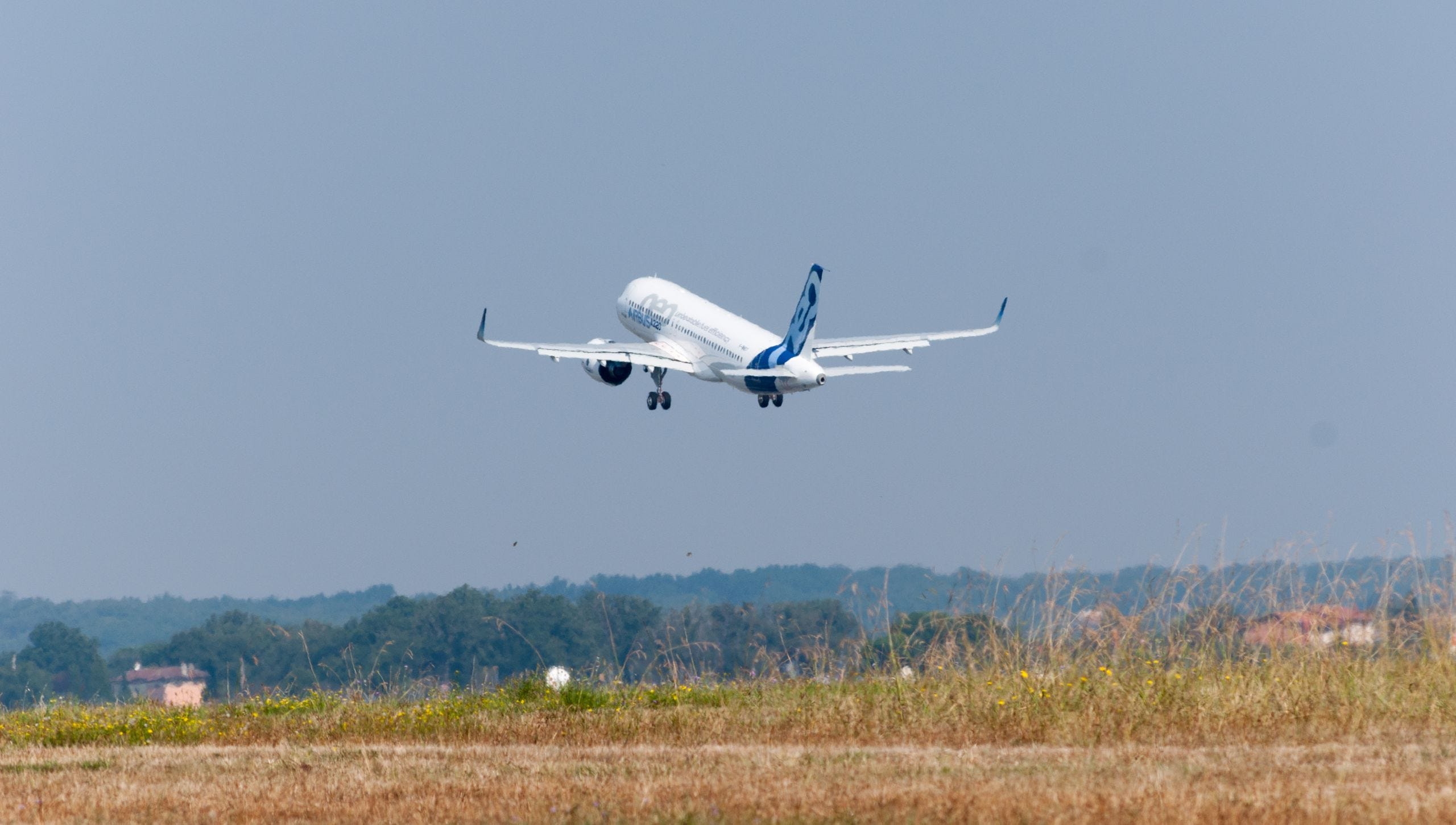
Pratt & Whitney, within RTX, is CFM’s direct rival on narrowbody engines through the Geared Turbofan. The GTF powers a minority of A320neo family aircraft and the Airbus A220 exclusively, while the LEAP powers the 737 MAX exclusively, the A320neo majority share, and the COMAC C919.
Pratt & Whitney has struggled with GTF reliability issues, including a powder metal contamination problem that has grounded hundreds of A320neo aircraft across 2024 and 2025. That situation has benefited CFM in two ways.
First, airlines have shifted incremental LEAP orders. Second, aftermarket demand for CFM56 spare parts has surged because operators are keeping older A320ceo and 737NG aircraft in service.
Pratt & Whitney’s F135 engine, which powers the F-35 Lightning II, remains a long term advantage in the military engine segment because the F-35 has crossed 1,000 aircraft delivered and its engine upgrade program is now funded.
Safran counters with Rafale international momentum, but the volumes differ by an order of magnitude.
Safran vs Honeywell and Liebherr
Honeywell operates in avionics, auxiliary power units, and smaller propulsion applications. The overlap with Safran is narrower but includes navigation systems, environmental controls, and some cabin electronics.
Liebherr Aerospace is a close rival in landing gear, actuation, and environmental control systems. Its privately held status allows it to invest counter cyclically, which kept it competitive on the A320neo and A350 platforms.
Safran vs Collins Aerospace
The July 2025 acquisition of Collins’ flight controls and actuation business changes this rivalry from direct to internal. Prior to the deal, Collins and Safran competed on actuation for commercial and military platforms.
After the deal, Safran absorbs the Collins Aerospace flight controls franchise, while Collins retains its broader equipment portfolio.
The strategic implication is a re shaping of the equipment segment into two scale players: Safran and a reshaped Collins Aerospace, both inside broader groups. This enables deeper vertical integration on next generation programs and should translate into better margin capture over time.