


Executive Summary
Parker Hannifin Aerospace Systems generated $6.185 billion in fiscal 2025 net sales, with an adjusted segment operating margin of 28.5%, and is on pace to expand again in fiscal 2026.
The segment delivered 14.5% sales growth in Q2 FY2026, with a record $8 billion aerospace backlog and order rates running at +14%.
Total company backlog reached a record $11.3 billion at Q1 FY2026, supported by multi-year defense bookings.
Parker is doubling down on filtration and aftermarket exposure with the $9.25 billion Filtration Group deal, reinforcing the recurring-revenue thesis that aerospace investors have been pricing in.
Recommended - Read Full Reports


Read All Reports
Table of Contents
Executive Summary
Introduction
Key Facts: Parker Hannifin Company
Parker Hannifin Company Overview
From a Hydraulics Pioneer to an Aerospace Mission-Systems Provider
Corporate Structure and Reporting Segments
Geographic Footprint and Manufacturing Base
Parker Aerospace Key Product Lines, Programs and Services
Fuel and Inerting Systems
Flight Control Systems
Hydraulic Systems and Hydraulic Components
Engine Systems and Fluid Conveyance
Engine Systems After the Meggitt Integration
Thermal Management
Wheels, Brakes, and Braking Systems (Parker Meggitt)
Services, Support, and MRO
Parker Aerospace Financial Analysis
Aerospace Systems Revenue Trajectory
Aerospace Systems Margin Profile
Order Rates and Backlog
Total Company Financial Picture
Cash Flow and Capital Allocation
Revenue and Growth Drivers (LTM and Forward)
Commercial OEM Demand
Commercial Aftermarket
Military and Defense Demand
Helicopter, Business Aviation, and AAM
Space and Hypersonics
Major Competitors and Head-to-Head Comparisons
Major Aerospace Tier-One Competitors
Parker Hannifin vs. Honeywell Aerospace
Parker Hannifin vs. Eaton Aerospace
Parker Hannifin vs. Moog Inc.
Parker Hannifin vs. Safran
Parker Hannifin vs. RTX Collins Aerospace
Parker Hannifin vs. TransDigm
Parker Hannifin vs. Woodward
Competitive Analysis and Strategic Moat
Layer One: Installed Base and Aftermarket Annuity
Layer Two: Multi-System Content per Airframe
Layer Three: Operational Excellence (Win Strategy 3.0)
Layer Four: Acquisition Capability
Strategic Initiatives Beyond Today’s Portfolio
Electrification and More-Electric Aircraft
Hydrogen and Sustainable Aviation Fuels
Advanced Air Mobility (eVTOL)
Hypersonics and Counter-Hypersonic Defense
Filtration Cross-Pollination
Financial and Commercial Implications for Stakeholders
Implications for Airframe OEMs
Implications for Engine OEMs
Implications for Airlines and Operators
Implications for Defense Customers
Implications for Suppliers and Sub-Tier Vendors
Key Risks with Probability and Scenario Assessment
Risk 1: Commercial Aerospace Production Shortfalls
Risk 2: Defense Budget Reprioritization
Risk 3: Aftermarket Pricing Pushback
Risk 4: M&A Integration Risk on Filtration Group
Risk 5: Foreign Exchange and Geopolitical
Risk 6: Technology Disruption from Electrification
Risk 7: Supplier Concentration and Single-Source Disruption
Risk 8: Cybersecurity and IT System Disruption
Parker Hannifin SWOT Analysis
Stock Multiples and Valuation Context (Stakeholder Perspective)
Long-Cycle Outlook for Parker Aerospace (2026 and Beyond)
Near-Term (Fiscal 2026 to 2027)
Mid-Term (Fiscal 2028 to 2030)
Long-Term (Fiscal 2031 and Beyond)
Industry Context and Demand Drivers
Commercial Aviation Demand
Defense Spending Context
MRO and Aftermarket Dynamics
Capital Allocation and Balance Sheet
Innovation and R&D Posture
Digital Engineering and Connected Components
Materials and Polymers
Sensing and Avionics-Adjacent
Operations and Manufacturing Footprint
Capacity Investments
Supplier Network
Workforce and Talent
Regulatory and Certification Considerations
Type Certification and Supplier Qualification
Defense Export Controls and ITAR
ESG and Reporting Requirements
Strategic Conclusions for Aerospace Stakeholders
My Final Thoughts
Official Sources and Data
Introduction
Parker Hannifin’s Aerospace Systems segment is no longer a quiet sidekick to its industrial portfolio.
After the transformational integration of Meggitt PLC and the recent push deeper into aftermarket revenue streams, Parker Aerospace has emerged as a product-rich franchise that captures value across every flight hour, every overhaul, and every new airframe coming off the production line.
Key Facts: Parker Hannifin Company
Parker Hannifin COMPANY PROFILE (2026)
---------------------------------------------------
Legal Name        : Parker-Hannifin Corporation
Ticker            : NYSE: PH
Headquarters      : Cleveland, Ohio (Mayfield Heights)
Founded           : 1917 (Arthur L. Parker)
CEO & Chairman    : Jennifer A. (Jenny) Parmentier
COO               : Andrew D. Ross
Reportable Segs.  : Diversified Industrial; Aerospace Systems
FY2025 Net Sales  : $19.85 billion
FY26 Sales Guide  : 5.5% to 7.5% growth
Aerospace Backlog : ~$8.0 billion (Q2 FY2026)
Total Backlog     : ~$11.3 billion (Q1 FY2026)
Recent Major M&A  : Meggitt PLC ($8.8B, 2022); Filtration Group ($9.25B, 2025)
Parker is now a hybrid industrial-aerospace platform with two roughly equal-margin engines. Aerospace Systems, however, is the higher-growth, higher-multiple business inside the house.
It is also worth flagging that Parker has been led by Jenny Parmentier, who took over as CEO on January 1, 2023. She added the chairman title later that year and is the public face of the Win Strategy 3.0 operating playbook driving margin expansion across the portfolio.
Parker Hannifin Company Overview
Parker Hannifin is fundamentally a motion and control technologies company.
The corporate identity used to be tilted toward fluid power for general industrial markets. The Aerospace Systems segment has rebalanced that identity over the past three years.
From a Hydraulics Pioneer to an Aerospace Mission-Systems Provider
The original Parker business was built around fluid power components for industry. The founder, Arthur L. Parker, started selling pneumatic brake actuators for trucks in 1917, and that DNA of fluids, motion, and high-pressure components carried directly into aerospace.
What changed materially is the depth of content per platform. Today, Parker Aerospace supplies fuel, hydraulic, flight control, fluid conveyance, thermal management, engine systems, electric power, and sensing across virtually every major commercial and military airframe in production.
The Meggitt acquisition, completed in September 2022 for £6.3 billion (about $8.8 billion), was the inflection point. It nearly doubled the size of the Aerospace Systems segment and added wheels and brakes, sensing systems, fire detection, ice protection, polymers and composites, and high-temperature engine sub-systems.
Corporate Structure and Reporting Segments
Parker reports two segments. Diversified Industrial accounted for roughly 69% of FY2025 net sales, while Aerospace Systems contributed the remaining 31% of the company’s $19.9 billion total.
This split matters because aerospace is structurally a higher-margin franchise. In FY2025, Aerospace Systems generated an adjusted segment operating margin of 28.5%, materially above the diversified industrial segments and above many aerospace tier-one peers.
The company keeps Aerospace as a single reportable segment, but operationally it is organized through specialized divisions covering commercial flight controls, fluid systems, engine components, hydraulic systems, control systems, services and support operations, plus the legacy Meggitt divisions now branded as Parker Meggitt.
Geographic Footprint and Manufacturing Base
Parker Aerospace’s footprint is global. Engineering and manufacturing operations span the United States, the United Kingdom, France, Mexico, India, and Singapore, alongside service centers that support around-the-clock operational and technical support across the aircraft lifecycle.
This network is critical because the aerospace aftermarket is both a margin pool and a competitive moat. Customers cannot easily switch suppliers for life-limited parts that have been certified on the airframe, which makes proximity to operators and rapid turn-time on overhauls a structural advantage.
The geographic and divisional breadth gives Parker exposure to commercial OEM ramps, defense modernization, business aviation, helicopters, regional jets, and the early-stage advanced air mobility ecosystem. That diversification matters when commercial cycles soften.
PARKER AEROSPACE GLOBAL FOOTPRINT (HIGH LEVEL)
---------------------------------------------------
Engineering / Manufacturing Hubs   : USA, UK, France, Mexico, India,
                                     Singapore
Aftermarket Service Network        : Global MRO shops & 24/7 support
Product Categories Supported       : Fuel, Hydraulic, Flight Control,
                                     Fluid Conveyance, Thermal,
                                     Engine, Wheels & Brakes,
                                     Sensors, Fire Protection
Aircraft Programs (Examples)       : Boeing 737, 747, 767, 777, 787;
                                     Airbus A220, A320, A330, A350;
                                     F-35, F-15, F-18, KC-46, V-22;
UH-60, AH-64, AW139, H160Parker Aerospace Key Product Lines, Programs and Services
The breadth of Parker Aerospace is sometimes underappreciated because no single product line dominates the segment.
Instead, the strength comes from being mission-critical content across multiple aircraft systems on the same airframe.
Fuel and Inerting Systems
Fuel and inerting is one of Parker’s flagship aerospace pillars. The most visible example is the F-35 Lightning II fuel and inerting system, which Parker designed, qualified, and continues to deliver across all three F-35 variants.
Fuel system content is often a long-tail revenue stream because it ties Parker to every flight hour and every overhaul cycle of the aircraft over decades. The F-35 alone is intended to remain in service well beyond 2070, which means a multi-decade aftermarket annuity for the qualified system supplier.
Beyond F-35, Parker is also embedded on Boeing’s KC-46 Pegasus tanker, the V-22 Osprey, and a wide swath of commercial single-aisle and widebody airframes. Inerting systems, which prevent fuel-tank explosions, became regulatory mandates after early-2000s accident investigations and represent another sticky aftermarket layer.
PARKER FUEL & INERTING - SELECT PROGRAM CONTENT
---------------------------------------------------
F-35 Lightning II      : Fuel & inerting system supplier
KC-46 Pegasus          : Refueling receptacle door actuator
Boeing 787 Dreamliner  : Fuel system components
Airbus A350 XWB        : Fuel system components
V-22 Osprey            : Fuel sub-systems
Commercial Singles : Inerting & fuel pumpingFlight Control Systems
The Commercial Flight Controls Division supplies primary and secondary flight control actuation, servovalves, and electronic control units. Parker positions itself as a preferred supplier for commercial, regional, business jet, and advanced air mobility platforms.
Flight controls are among the most safety-critical systems on an aircraft, which raises supplier qualification barriers. Parker has fly-by-wire content on programs like the Boeing 787 and military platforms including the KC-46A Pegasus tanker.
For business aviation, Parker’s flight control content extends across Gulfstream, Bombardier, Dassault, and Embraer airframes. The eVTOL and AAM segment, while still pre-revenue at scale, is being seeded today by integration relationships that will mature over the next decade.
Hydraulic Systems and Hydraulic Components
Parker’s hydraulics heritage maps directly into aerospace because every modern airframe still uses hydraulic actuation for landing gear, brakes, primary flight surfaces, and ground steering.
Parker supplies pumps, motors, valves, accumulators, reservoirs, and integrated systems.
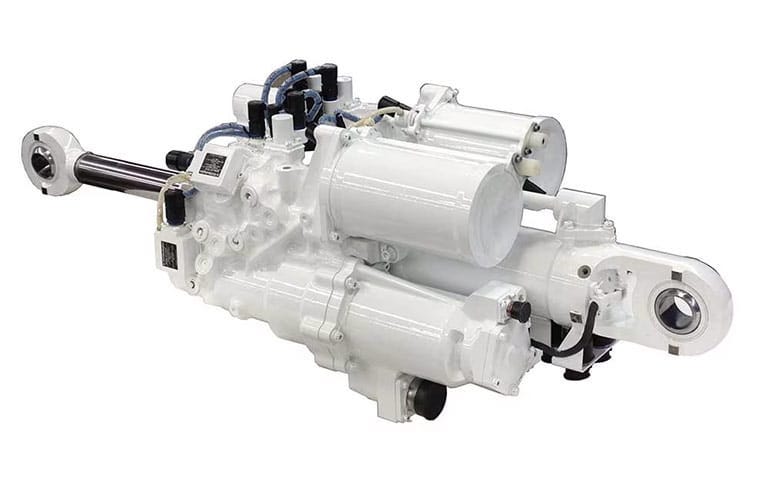
Although the long-term direction of travel is toward more-electric and all-electric architectures, hydraulic content will remain on legacy and current production airframes for the entire useful life of those aircraft. That backlog of installed base alone supports a multi-decade aftermarket stream.
Parker has also positioned itself for the more-electric aircraft transition.
The company’s research roadmap covers electromechanical actuation, electric power generation, and high-voltage distribution, all of which protect content share as airframers gradually replace hydraulic lines with electrified subsystems.
Engine Systems and Fluid Conveyance
The Fluid Systems Division addresses commercial, regional, business, military, and rotorcraft engine markets. Content includes electronic fuel controllers, engine fuel pumps, anti-icing valves, lubrication components, and gauging systems.
This positioning is meaningful because engine OEMs (Pratt & Whitney, GE Aerospace, Rolls-Royce, Safran) outsource a significant chunk of fuel and lubrication system content to qualified suppliers. Parker is one of a small handful of those qualified players and has generally retained content across engine refresh cycles.
Fluid conveyance, meaning the lines, hoses, and fittings that move every fluid on the aircraft, is another quiet but enormous content area. Parker’s Stratoflex and related divisions supply hoses and fittings to virtually every commercial and military airframe.
Engine Systems After the Meggitt Integration
Meggitt brought into Parker a deep portfolio of engine sensors, ice protection, fire detection, and high-temperature seals. These products are content-rich on every modern turbofan, both for commercial and military applications.
Parker Meggitt is now also the integrated provider of advanced engine sensors, safety systems, engine valves, and actuation. That bolts directly onto Parker’s existing fluid systems content to create a more comprehensive engine-systems offering than either standalone company could have provided.
Engine programs benefit Parker for decades after entry-into-service. Pratt & Whitney’s $2.88 billion contract for 141 new F135 engines is one example of how engine production and overhaul cycles cascade into supplier revenue, since Parker is on the engine bill of materials.
Thermal Management
Aerospace thermal management is becoming materially more important as electric loads increase and as next-generation military aircraft demand higher cooling capacity. Parker offers macrolaminate heat exchangers, cold plates, and integrated thermal management systems.
The thermal load on aircraft has grown sharply because electronics, mission systems, and electric propulsion architectures all generate heat that must be rejected reliably. This is one of the technical bottlenecks for electric and hybrid-electric aviation, and Parker is investing accordingly.
The CoolTherm thermal management materials line and the company’s inclined heat exchanger and outlet guide vane heat-exchanger concepts are aimed squarely at next-generation airframe and engine architectures. Thermal is one of the highest-leverage R&D areas for the company over the next decade.
Wheels, Brakes, and Braking Systems (Parker Meggitt)
The Meggitt acquisition added integrated wheel and brake systems on more than 50 aircraft platforms. The Parker Meggitt iPRESS long-range wireless tire pressure sensor was certified after the deal closed, illustrating ongoing innovation.
Wheels and brakes are among the most reliable aftermarket annuities in aerospace. Brake assemblies are wear items, replaced on a defined cycle, and tire-pressure sensing has steady retrofit demand. The economics of this category are why Boeing renewed a five-year master distributor agreement with Parker Aerospace’s wheel and brake division.
For an investor or operator analyzing the segment, these aftermarket-heavy product categories explain why the segment can sustain margins above 28% on an adjusted basis even as commercial OEM mix and pricing fluctuates.
Services, Support, and MRO
Parker’s Services and Support Operations is the company’s dedicated aerospace MRO arm. It handles repair and overhaul on Parker-manufactured components and is operated as an integrated network with the OEM divisions.
The MRO franchise benefits from two structural tailwinds. First, the global commercial fleet has expanded materially, increasing the installed base of components requiring overhaul. Second, the aging widebody and narrowbody fleet means more frequent shop visits per aircraft.
Parker’s aftermarket business also provides recurring revenue with significantly higher margin than original equipment shipments. Q2 FY2026 numbers showed 17% aftermarket growth on top of the 26% commercial OEM growth in the segment.
Parker Aerospace Financial Analysis
The financial profile of Parker Aerospace has shifted from a steady contributor to a primary growth engine for the consolidated company.
Aerospace Systems Revenue Trajectory
Aerospace Systems revenue scaled from a pre-Meggitt level in fiscal 2022 to $6.185 billion in fiscal 2025, reflecting both the Meggitt acquisition and underlying market recovery. The most recent quarters indicate accelerating growth.
PARKER AEROSPACE SYSTEMS NET SALES (USD millions)
---------------------------------------------------
FY2025 (Twelve Months) : $6,185
FY2026 Q1              : $1,641   (+13.3% YoY)
FY2026 Q2              : $1,706   (+14.5% YoY)
FY2026 H1 Total        : $3,347
The H1 FY2026 figure already implies the segment is on a run-rate above the prior fiscal year.
If the second-half maintains a similar trajectory, full-year aerospace revenue could comfortably exceed $7 billion, although Parker has not provided an explicit segment-level outlook number.
This is a meaningful step-up because the Aerospace Systems segment’s growth is far outpacing the company average. The full-company guidance for FY2026 sits at 5.5% to 7.5% reported sales growth, while aerospace organic growth has been running at low double-digit rates.
Aerospace Systems Margin Profile
Margins are where the Meggitt thesis really shows up. The segment’s adjusted operating margin has expanded materially since the deal closed and the synergy work began.
AEROSPACE SYSTEMS MARGIN PROGRESSION (Adjusted)
---------------------------------------------------
FY2025 Full Year       : 28.5%
FY2026 Q1              : 30.0%   (+210 bps YoY)
FY2026 Q2              : 30.2%   (+200 bps YoY)
A near-30% adjusted segment operating margin is impressive for an aerospace tier-one supplier.
It reflects favorable mix (heavy aftermarket, defense, and commercial OEM share gains), pricing realization, and the Win Strategy’s continuous improvement system applied at scale across legacy Meggitt sites.
Margin expansion of roughly 200 basis points year-over-year for two consecutive quarters indicates that Parker is still in the early innings of capturing the operational benefits from the integration. There is reasonable optionality for further margin progression as the integration matures.
Order Rates and Backlog
Order intake is the leading indicator that matters most for aerospace tier-ones. Parker’s signal here is unambiguously positive.
PARKER AEROSPACE - ORDERS & BACKLOG SNAPSHOT
---------------------------------------------------
FY2025 Year-End Aerospace Backlog : ~$7.4 billion
FY2026 Q1 Aerospace Order Growth  : +15%
FY2026 Q2 Aerospace Order Growth  : +14%
FY2026 Q2 Aerospace Backlog       : ~$8.0 billion (record)
FY2026 Q1 Total Company Backlog   : ~$11.3 billion (record)
A growing backlog at the same time the company is shipping record revenue is a healthy signal. It indicates that book-to-bill is well above 1.0, which underwrites confidence in revenue trajectory through fiscal 2027 and into fiscal 2028.
Total Company Financial Picture
The corporate-level numbers contextualize the aerospace contribution. FY2025 closed with $19.85 billion in net sales, and the company has raised FY2026 guidance.
FY2026 GUIDANCE (Updated Q2 FY2026)
---------------------------------------------------
Reported Sales Growth          : 5.5% to 7.5%
Organic Sales Growth (Mid)     : ~5%
Adjusted Segment Op Margin     : 27.0% to 27.4%
Adjusted EPS                   : $30.40 to $31.00
The adjusted EPS guide of $30.40 to $31.00 represents another year of double-digit earnings growth, supported by both segments but disproportionately driven by aerospace. The company’s Q2 FY2026 EPS was $7.65 on an adjusted basis, up from $6.53 in the year-ago quarter.
Cash Flow and Capital Allocation
Cash generation has remained strong. Q1 FY2026 operating cash flow was $782 million, up from $744 million a year earlier. That cash flow is being deployed across debt paydown, dividends, share repurchases, and the recently-announced Filtration Group acquisition.
The capital deployment philosophy is a deliberate component of the Win Strategy 3.0. Parker is balancing growth-oriented M&A in higher-margin franchises like filtration with consistent capital return to shareholders.
The company has historically run a balanced approach rather than tilting hard into one bucket.
Revenue and Growth Drivers (LTM and Forward)
To understand where Parker Aerospace is going, it helps to break the revenue base into its commercial and defense end-markets, and then into OE versus aftermarket.
Commercial OEM Demand
Commercial OEM growth was 26% in Q2 FY2026, a striking number even by current commercial aerospace standards.
This reflects Parker’s content on the major narrowbody and widebody platforms ramping into Boeing and Airbus production targets.
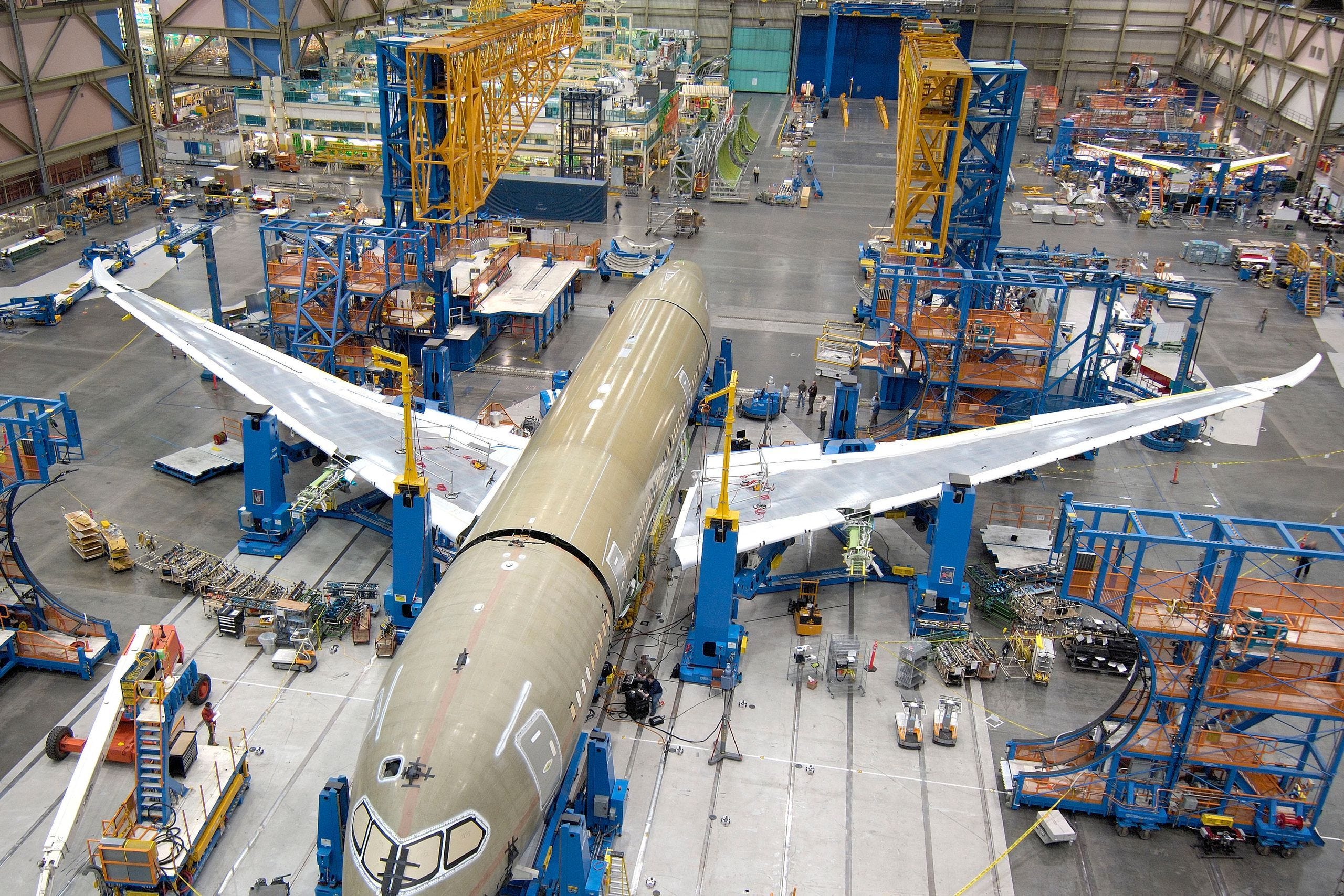
Boeing has guided to higher 737 MAX production rates in 2026 as the supply chain stabilizes, and Airbus continues to push A320 family rates higher with the longer-term goal of A320 family production of 75 per month.
Each rate increase translates to incremental revenue for Parker because the company has multiple shipset content positions on these airframes.
Widebody recovery is also kicking in. Boeing is increasing 787 production, and the 777X is approaching entry-into-service with significant Parker content embedded on the aircraft. Airbus A350 deliveries continue to grow as airlines refresh their long-haul fleets.
Commercial Aftermarket
Aftermarket grew 17% in Q2 FY2026. This is the highest-margin revenue stream Parker generates, and it benefits from a global commercial fleet that has surpassed pre-pandemic flight hour levels.
The structural drivers here are durable. Older airframes flying for longer create more shop visits per aircraft year. The introduction of electronics-heavy, sensor-rich systems (especially Meggitt content) creates more components in the shop visit work scope.
Parker’s aftermarket presence is also being reinforced by the pending Filtration Group acquisition, where 85% of the target’s revenue is aftermarket. This will increase Parker Filtration’s aftermarket sales by 500 basis points and diversify the recurring-revenue base.
Military and Defense Demand
Defense is the second leg of the aerospace stool. Q2 FY2026 commentary highlighted multi-year aerospace and defense bookings as a key driver of the broader 7% order rate growth across the international industrial businesses, but the dynamic is even more pronounced inside Aerospace Systems.
Parker has multi-decade content positions on key US defense platforms. Beyond the F-35, the company is on the UH-60 Black Hawk and AH-64 Apache rotorcraft, the V-22 Osprey, KC-46A Pegasus, F-15, F-18, and a wide range of munitions and unmanned systems.
The Pentagon has continued to push budget priorities toward force-projection platforms. Boeing’s recent $7 billion in new Apache and KC-46 contracts is a downstream tailwind for Parker, since Parker has content on both aircraft.
Helicopter, Business Aviation, and AAM
The rotorcraft market is a meaningful contributor to Parker. Beyond UH-60 and AH-64, Parker has content on the AW139 family, Airbus H160, the H225, and on civilian variants of military rotorcraft.
Business aviation continues to outperform expectations as corporate fleets expand. Parker is on Gulfstream, Bombardier, Dassault Falcon, Embraer Praetor, and Cessna airframes, with content spanning fuel, hydraulic, flight control, and now wheels and brakes after Meggitt.
Advanced Air Mobility is the long-cycle bet. Parker is engaged with major eVTOL OEMs on integrated systems. Revenue contribution is small today but the optionality is real for late-decade and 2030s platforms if the regulatory framework matures.
Space and Hypersonics
Parker has meaningful space content through the Chomerics, Stratoflex, and aerospace fluid divisions. Space and satellite work is a smaller but growing line item for the segment.
The momentum here is not trivial. Pentagon initiatives like the Space-Based Interceptor program and the Golden Dome architecture, and the broader push toward proliferated low-earth-orbit satellite constellations, are all generating supplier opportunities for Parker.
Hypersonics is an emerging revenue area. The infusion of fresh funding into hypersonic interceptor programs creates demand for high-temperature seals, fluid conveyance, and thermal management content where Parker is a qualified supplier.
Major Competitors and Head-to-Head Comparisons
Parker Aerospace operates in a competitive but consolidated industry. The peer set includes both larger diversified industrials with aerospace exposure and smaller pure-play aerospace tier-ones.
Major Aerospace Tier-One Competitors
The list of relevant competitors in aviation, aerospace, and defense for Parker’s Aerospace Systems segment includes:
Honeywell International (Aerospace Technologies segment)
RTX Corporation (Collins Aerospace and Pratt & Whitney)
Safran SA (multiple aerospace divisions)
Eaton Corporation (Aerospace segment)
Moog Inc. (Aerospace and Defense)
Triumph Group
TransDigm Group (aftermarket and proprietary parts)
Woodward, Inc. (engine fuel systems and motion control)
Liebherr-Aerospace
Parker Hannifin vs. Honeywell Aerospace
Honeywell Aerospace Technologies is the segment most directly comparable in scale and breadth to Parker Aerospace. Honeywell’s Aerospace Technologies segment generated $15.99 billion in adjusted sales for 2025, more than twice Parker Aerospace’s run-rate.
Honeywell is broader in avionics, propulsion (including auxiliary power units), and connected aircraft software. Parker is stronger in fluid power, hydraulics, fuel and inerting, and mechanical actuation. Both compete in engine sensors, environmental control sub-systems, and a few overlap areas.
Where Parker has an edge is in its integrated motion-and-control story across a broader set of fluid system technologies.
Honeywell’s traditional strength is in avionics and propulsion content. The two companies are more often complementary on the same airframe than directly head-to-head on most components.
Parker Hannifin vs. Eaton Aerospace
Eaton’s Aerospace segment is a closer head-to-head match in fluid power. Eaton reported $1.1 billion in Q4 2025 aerospace sales, making the segment significantly smaller than Parker’s Aerospace Systems on an annualized basis.
Both companies sell hydraulic pumps, valves, motors, fluid conveyance, and fuel system components.
Eaton has a strong motion control and electrical aerospace business and benefits from electrification trends.
Parker has the broader systems integration scale, more aftermarket exposure, and a deeper engine and thermal management portfolio after Meggitt.
The competitive dynamic is most direct on commercial single-aisle and widebody fluid power content. Parker’s installed base across legacy and current airframes provides a structural advantage in aftermarket pull-through.
Parker Hannifin vs. Moog Inc.
Moog is a defense-leaning specialist with $3.86 billion in fiscal 2025 sales, 75% of which is aerospace and defense. Moog is concentrated in flight controls, motion control, and space and missile content.
Parker is roughly twice the size of Moog in total aerospace exposure. Where Moog excels is in highly precise actuation, especially missile control actuation systems and certain fly-by-wire control surfaces. Parker has broader content per airframe and a much larger aftermarket and engine systems franchise.
In defense, Moog and Parker often appear on the same major platforms, including F-35, F-15, F-18, and several rotorcraft, but with different sub-system content. The two are competitive on certain new program bids but rarely fight for the same component on a legacy platform.
Parker Hannifin vs. Safran
Safran is the pan-European aerospace giant with deep propulsion content (including the LEAP engine joint venture with GE Aerospace), landing systems, electrical systems, and cabin equipment. Safran’s revenue base is multiples larger than Parker Aerospace.
Parker overlaps Safran most directly in landing systems (after the Meggitt wheel and brake addition), fluid systems, and certain engine accessories. Safran has the structural advantage in propulsion content and a unique European platform position on Airbus airframes.
Parker’s edge in this comparison is its diversified industrial parent company and the broader US defense exposure. Safran’s edge is propulsion content scale and cabin economics.
Parker Hannifin vs. RTX Collins Aerospace
Collins Aerospace, part of RTX, is the largest aerospace tier-one in revenue terms. Collins competes with Parker in actuation, environmental controls, fuel systems, and avionics adjacencies.
Collins has scale advantages on new clean-sheet programs because it can offer integrated tip-to-tail content.
Parker’s response has been to deepen its own systems integration capabilities through Meggitt and to compete on selected high-margin content positions rather than tip-to-tail packages.
Parker Hannifin vs. TransDigm
TransDigm is one of the highest-margin aerospace company in the public market, with a business model centered on proprietary, sole-source parts that are predominantly aftermarket. TransDigm’s adjusted EBITDA margin sits in the mid-50% range.
Parker is a more diversified competitor with significant OEM content.
TransDigm’s strategy is highly aftermarket-focused with selective acquisition of proprietary niches. Parker’s approach is to be a systems integrator with significant aftermarket pull-through.
The two companies overlap in certain niche aerospace categories but compete with different business models.
Parker Hannifin vs. Woodward
Woodward is a focused engine systems and motion control supplier. The company competes directly with Parker’s Fluid Systems Division in engine fuel control, fuel systems, and motion control for both commercial and military engines.
Parker’s broader platform content and aftermarket scale provide an advantage in the integration and aftermarket service economics.
Woodward’s edge is its singular focus on engine fuel and motion control technology development.
The two are recurring head-to-head competitors on engine fuel content awards.