


Dear Readers, Welcome to AviationOutlook.
Every commercial airline schedule in the world is a physical answer to a single question: where should the aircraft sleep tonight, and what will they do tomorrow?
The network model, whether hub-and-spoke or point-to-point, is the invisible operating system behind that question.
The choice dictates gate leases, crew bases, fleet mix, minimum connect times, and even how a carrier defends itself against a new low-cost competitor.
By mid-2026, the industry has quietly moved past the tired binary of “hub carrier vs. LCC.”
Southwest is adding connecting itineraries to its previously pure point-to-point network.
American is redesigning DFW banks to spread connections and cut misconnects.
Air Canada has begun Airbus A321XLR service, opening thin transatlantic point-to-point routes that would have been unthinkable a decade ago.
This in-depth analysis unpacks what each network model actually does, where the money and risk sit inside each, and how the two models are converging in ways that reshape decisions across airline strategy, operations, and commercial planning.
Let’s analyze everything in detail.
Recommended Reports


Read All Reports
Table of Contents
What a Network Model Really Is
The Hub-and-Spoke Model: How Concentration Creates Reach
The Point-to-Point Model: How Simplicity Creates Efficiency
Where the Two Models Diverge Most Sharply
The Convergence: Why Both Models Are Bending Toward Each Other
What Each Model Actually Means for Airline Executives
The Regulatory Reality: Slots, Caps, and Congestion
The Passenger Experience Difference
Case Studies: Four Carriers, Four Models
The Underappreciated Third Model
Emerging Pressures Reshaping the Model Debate
Practical Considerations for Industry Stakeholders
My Final Thoughts
What a Network Model Really Is
Before comparing them, it helps to strip the labels down to what airline planners actually mean when they use them.
A network model is a decision rule about how an airline connects supply (aircraft, crew, gates, slots) to demand (city pairs). Everything else, including brand voice, fare classes, and loyalty programs, follows from that rule.
In a hub-and-spoke system, most itineraries route through a small number of concentrated exchange points, often called hubs, where passengers, bags, and sometimes crews swap onto their next flight.
In a point-to-point system, most itineraries are nonstop city pairs sold and operated independently of one another.
Both are simplifications.
Even Southwest, historically the world’s most cited point-to-point carrier, uses focus cities where flight banks cluster. Even Delta, the archetype of hub-and-spoke, operates plenty of nonstop routes that never touch Atlanta.
The models are ends of a spectrum, not two isolated species.

Simplified network math:
Hub-and-spoke:      N spokes -> 1 hub  ->  N city pairs can be served
                    with (N + 1) flight legs (one per spoke, plus itself)
                    but yields up to N * (N - 1) marketable O&Ds through the hub.

Point-to-point:     Direct city pairs require a dedicated flight leg each.
                    To connect N cities nonstop, you need up to N * (N - 1) / 2 routes.
That combinatorial math is the entire economic case for hubs, and understanding it is the starting point for every other trade-off that follows.

The Hub-and-Spoke Model: How Concentration Creates Reach
Hub-and-spoke networks became dominant in the United States after the 1978 Airline Deregulation Act, when carriers were free to redesign networks around economics rather than route awards. The result was a small number of geographically strategic airports absorbing dominant market share for one carrier each.
Today the pattern is entrenched globally.
In the most recent industry ranking of connectivity, London Heathrow retained the top position as the world’s most internationally connected airport, with Istanbul, Frankfurt, Amsterdam, and Chicago O’Hare rounding out the top of the list.
Each of these airports functions less as a destination in its own right and more as an exchange floor where an airline (or airline alliance) can maximize the routes it sells for the flights it operates.
The Bank Structure Explained
Inside a hub, flights don’t arrive randomly. They come in and out in waves, or banks, engineered so that arriving passengers can transfer to a large set of outbound flights within a narrow window.
American Airlines describes this rhythm explicitly in its DFW redesign, where the carrier operates about 930 peak daily departures during summer 2025 and offers nonstop access to more than 230 destinations from a single airport.
Simplified DFW bank illustration (conceptual):
Bank 1:  06:00-06:45 arrivals   ->   07:15-08:00 departures
Bank 2:  08:15-09:00 arrivals   ->   09:30-10:15 departures
Bank 3:  10:45-11:30 arrivals   ->   12:00-12:45 departures
...
"Rush hour" = the compressed overlap when arriving planes empty and
outbound planes fill, sometimes within a 45-minute window.
Banks are the reason a hub can sell hundreds of city pairs from a few dozen inbound spokes.
They are also the reason hubs are so operationally fragile: a single thunderstorm cell over the field during a bank can cascade across the entire day.
Why Legacy Carriers Still Live and Die by Hubs
Hubs are expensive, but they enable revenue streams that no point-to-point layout can replicate.
Hartsfield-Jackson Atlanta, the anchor of Delta’s global network, handled 108.1 million passengers in 2024, retaining the title of world’s busiest airport by passenger traffic. Delta alone offers roughly 968 daily departures from ATL during peak summer periods.
That density unlocks three revenue mechanics that pure point-to-point carriers usually cannot access at scale:
First, thin O&D pairs. Two mid-sized cities that could never justify a nonstop of their own can each connect to the hub, then to each other through it. The hub effectively creates markets that would not exist otherwise.
Second, premium yield. Corporate travelers heavily favor networks with breadth, frequency, and lounge infrastructure at the hub. Delta’s premium-first commercial strategy is only sustainable because ATL’s density lets the airline offer multiple daily frequencies to premium-heavy markets.
Third, cargo and international interchange. Belly cargo revenue scales with widebody density, and widebodies only make economic sense when a hub can gather enough traffic to fill them across long-haul markets.

The Fortress Hub Concept
A fortress hub, sometimes called a captive hub, is one where a single carrier controls such a large share of gates, slots, and daily frequencies that competitors cannot economically enter the market at scale.
Delta at Atlanta, United at Houston Intercontinental, and American at Charlotte all fit this description.
Hub concentration matters because it is a defensive moat. A low-cost carrier can point flights at any city, but taking share from a fortress hub carrier requires gates that may not exist, slots that may not trade, and connecting itineraries the LCC cannot easily replicate.
That defensive value is why airlines invest so heavily in hub infrastructure even during years when the hub itself may lose money on a fully-allocated cost basis.
American’s $4 billion Terminal F investment at DFW, with the Use and Lease Agreement extended to 2043, is a textbook example of a carrier reinforcing its fortress before competitive dynamics shift.

The Middle East Super-Connector Variant
The Gulf carriers built a variant of the hub model that deserves its own category.
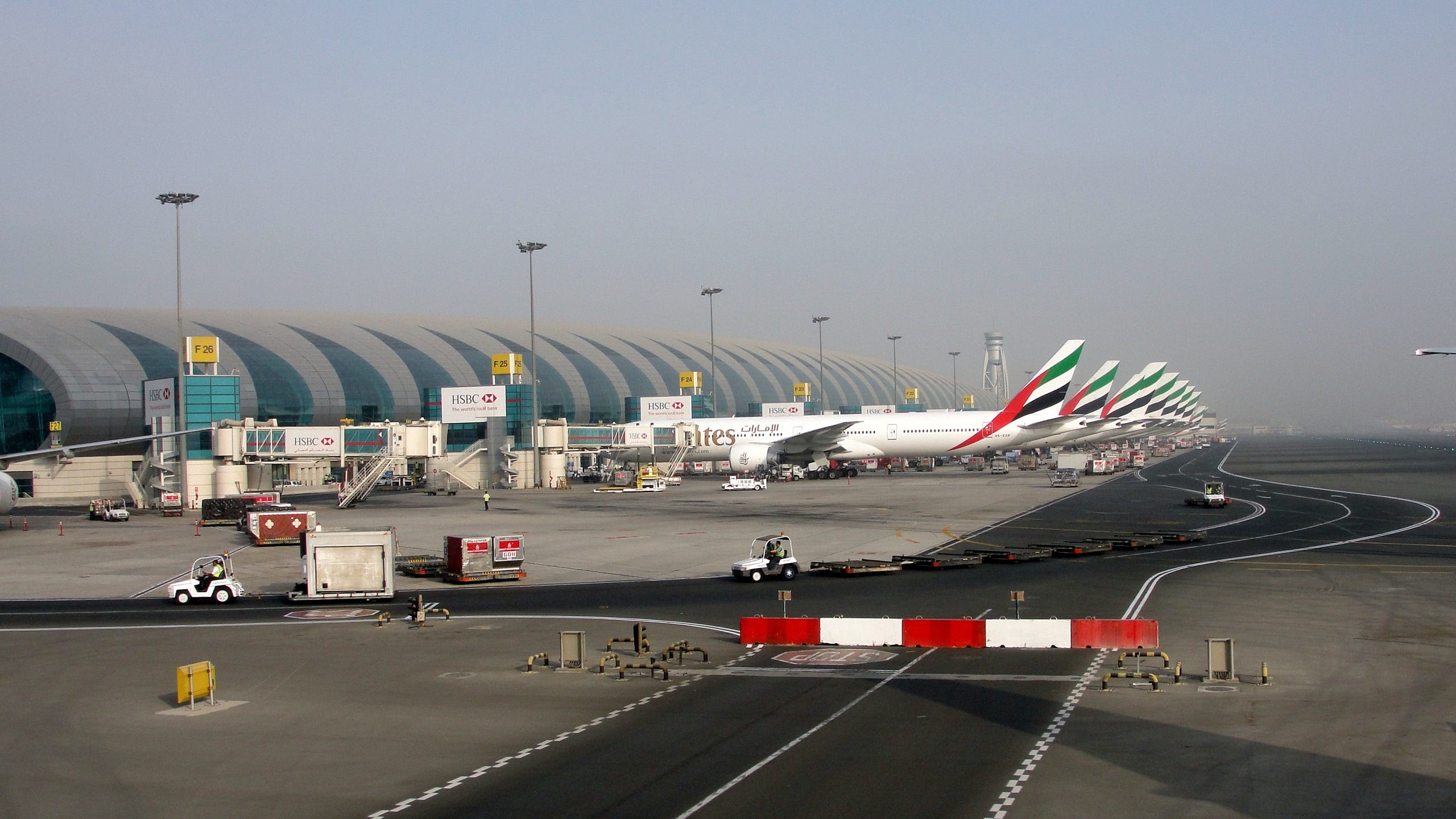
Emirates, Etihad, and Qatar Airways operate what industry commentators often call super-connector hubs.
Their geographic position lets a single stop in Dubai, Abu Dhabi, or Doha serve nearly any pair of cities in Europe, Africa, Asia, and Oceania.


Emirates’ most recent annual report confirms the model’s scale: Dubai remains the single most important international transfer point in the group’s business, with future capacity anchored around Dubai South, described in the report as the next generation of the hub.
The super-connector variant is a reminder that hub economics are not just about a domestic market. They are about geography, air rights, and the ability to interline traffic across continents inside one company.
The Point-to-Point Model: How Simplicity Creates Efficiency
Point-to-point networks emerged commercially in the deregulated U.S. market as the alternative to hubs. Southwest Airlines became the reference case, followed later by Ryanair in Europe, JetBlue in the U.S., and a broad class of Asian and Latin American low-cost carriers.
The core promise of the model is operational simplicity. Aircraft do not need to wait for connecting passengers. Gates do not need to be sequenced into banks. Crews do not need complex reserve pools to cover multi-leg misconnects.
That simplicity is what has historically allowed LCCs to fly aircraft harder, staff them leaner, and price them below legacy carriers even after accounting for ancillary revenue.
The Aircraft Utilization Argument
The most quantifiable advantage of point-to-point networks is aircraft utilization. Because a plane in a point-to-point system spends less time waiting at gates for connecting passengers, it flies more hours per day.
Reference industry data compiled by the MIT Airline Data Project shows Southwest’s total fleet block hour utilization consistently running above 11 hours per day, historically higher than most hub-based carriers of comparable size.
Illustrative daily flight counts per aircraft (industry averages):
Southwest-style point-to-point:  7-8 flights per aircraft per day
Legacy hub carrier:              4-5 flights per aircraft per day

Root cause: turn times of 25-30 minutes vs. 45-60+ minutes
at legacy hubs, plus gate-hold time waiting for connections.
More flying per plane per day means the fixed costs of ownership (lease, depreciation, insurance) get spread over more available seat miles.
That structural cost advantage is one reason Ryanair, whose core product is point-to-point air travel within Europe and adjacent markets, has been able to sustain the lowest unit costs among major European carriers for two decades.

Turn Times and Ground Ops
Point-to-point carriers turn aircraft fast because their entire ground process is engineered for it.
A single fleet type (Boeing 737 for Southwest, mostly 737 MAX and 737NG for Ryanair) eliminates variability in loading procedures, catering configurations, and pilot type ratings.

Fewer bag transfers mean simpler baggage systems. No interlining with other carriers means no lost bags waiting for a second carrier’s inbound. A predictable schedule structure means crews can be paired with aircraft in tighter, repeating patterns.
Southwest’s operational reliability is directly linked to this simplicity. Cirium’s most recent North America analysis found Southwest achieved an 82.27% on-time arrival rate, earning the top on-time performance ranking in its category.
Why Point-to-Point Networks Struggle at Scale
The blind spot of pure point-to-point is thin markets. If a city pair does not generate enough O&D demand to fill a plane profitably, a point-to-point carrier has no easy way to serve it.
Hub carriers can add that same city pair as a two-leg connection through a hub, gathering passengers from many origins to fill the same physical seats. Point-to-point carriers either skip the market or watch load factors drop below breakeven.
The math is even more brutal in premium cabins.
First and business class seats depend on very small pools of high-yield passengers, and those pools almost always require aggregation. That is one reason genuine premium products at scale rarely exist outside hub systems.
Ryanair’s response to this limitation has been to grow the network so wide that its point-to-point layout still gives it enormous market coverage. The carrier’s most recent update confirms more than 106 new routes on sale for Summer 2026 with three new bases, reinforcing the model rather than moving away from it.
Where the Two Models Diverge Most Sharply
The two models produce dramatically different profiles across four operating dimensions: cost, complexity, risk exposure, and revenue quality.
Cost Base Comparison
Legacy hub carriers carry heavier structural costs: multiple aircraft types, complex crew pairings, hub infrastructure, and premium ground services. The cost of pilot type ratings alone can be significant when a carrier operates six or seven fleet types across regional and mainline.
Point-to-point carriers concentrate on a single or dual aircraft family. Ryanair operates a single family. Southwest operates only the 737 family. WizzAir standardized on the A320 family.
This alignment across scheduling, crew training, maintenance procurement, and parts inventory compounds into a lasting cost advantage.

Structural cost sources typically higher at hub carriers:
1. Multiple fleet types (training, spares, procedures)
2. Airport gate leases at expensive hub facilities
3. Ground handling agreements requiring interline services
4. Complex GDS distribution costs across corporate channels
5. Lounge, premium catering, and priority service investments
6. Higher connection allowances baked into schedule buffers
None of these are avoidable if a carrier wants premium yield, corporate loyalty, and global reach. They are the price of the hub model’s revenue upside.
Operational Complexity
Complexity in a hub network is not additive. It is exponential. Every additional bank multiplies the number of misconnect scenarios that operations control needs to solve on a bad-weather day.
Legacy hub carriers maintain sophisticated operations centers, running probabilistic models to predict which connections will hold and which will slip. Recovery planning becomes a full-time discipline: which flight to delay, which to release, which passengers to protoactively rebook onto competitor metal.
Point-to-point carriers face weather too, but their exposure is bounded. A delayed 737 disrupts one flight and possibly the next flight the same aircraft was going to operate. It does not automatically ripple into thirty other missed connections at a hub.
Risk Concentration
Hubs concentrate operational risk into single points of failure. A serious weather event, a major runway closure, or an air traffic control staffing shortage at Atlanta, Chicago, or Newark can degrade an entire national schedule within hours.
Slot-constrained airports magnify the exposure further. At London Heathrow, the annual movement cap sits around 480,000 flights, which means airlines have essentially zero flexibility to add capacity when demand surges or to move flights out of a disrupted bank.
Point-to-point networks distribute risk. Losing a station or a route removes a limited set of flights from the schedule, not a chain of downstream itineraries. That is one reason LCCs typically recover from irregular operations faster than legacy carriers, even when their absolute passenger volume is smaller.
Revenue Quality
Hubs generate a wider range of fare classes because they aggregate high-yield business travelers with low-yield leisure travelers on the same flights. The premium cabin subsidizes marginal economy seats, and the economy cabin supports the frequencies that premium travelers demand.
Point-to-point carriers rely on a much narrower fare book, supplemented aggressively by ancillary revenue: bag fees, seat selection, on-board sales, and credit card partnerships. Ryanair, for example, derives a very substantial portion of its earnings from ancillary streams rather than base fares.
Both models produce durable profitability. The question is which fits a given carrier’s cost structure, geography, and target customer.
The Convergence: Why Both Models Are Bending Toward Each Other
The most interesting development in 2025 and 2026 is not the durability of either model. It is the way both are moving toward each other, driven by aircraft technology, cost pressure, and passenger behavior.
Southwest Adds Connections
Southwest, the world’s most prominent point-to-point carrier, has publicly stated it wants to build more connecting itineraries into its schedule. In its most recent network overhaul, the airline cut 30 routes in an explicit pivot toward more connecting flight volume across selected focus cities.
The move is not a wholesale conversion to hub-and-spoke. Southwest still describes itself as maintaining a dominant point-to-point posture. But the airline is willing to lean into connections where the incremental revenue justifies retiming the schedule.
The commercial rationale is simple. As Southwest scales, some markets can only be filled by combining O&D from multiple origins onto the same aircraft. Rejecting connections entirely leaves revenue on the table that competitors are happy to pick up.
Legacy Carriers Add Point-to-Point Routes
Meanwhile, U.S. legacy carriers are quietly seeding more point-to-point flying, especially on transcontinental and transatlantic long-haul routes where narrowbody long-haul aircraft are now viable.
United’s fleet strategy includes ongoing capacity discipline in domestic short-haul in favor of international opportunities, with the airline accelerating retirement of older aircraft to make room for longer-range narrowbody and widebody types.
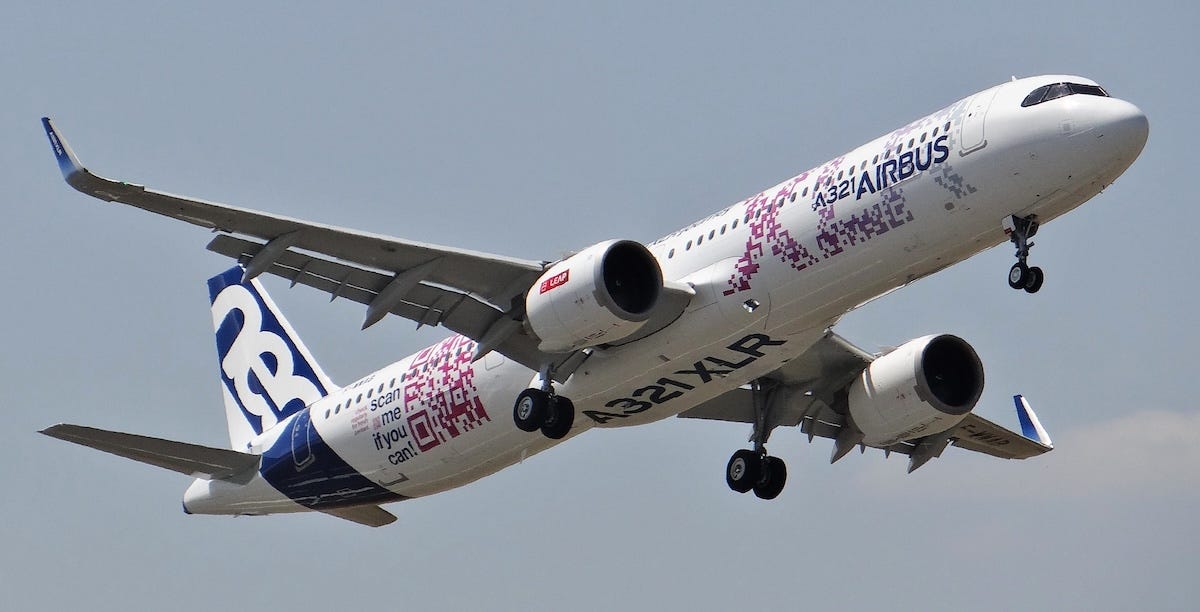
Air Canada took delivery of its first A321XLR in April 2026, marking the start of the long-haul narrowbody era for the Canadian flag carrier. American Airlines, once its A321XLR fleet is fully deployed, has confirmed New York JFK to Edinburgh among its longest confirmed A321XLR routes, operating seasonal daily service.
Thin transatlantic markets that could not fill a widebody are now viable with 180- to 220-seat narrowbodies.
That means a legacy carrier’s flag operation increasingly looks less like a hub-and-spoke funnel and more like a mixed model: hubs for connection-heavy traffic, plus a growing set of point-to-point long-haul routes.
DFW’s Balanced Bank Redesign
American’s DFW redesign is a case study in how legacy carriers are recalibrating hub complexity itself. The airline’s new bank structure reduces the concentration of very short connection times and creates more balanced connection opportunities.
The change has two effects.
First, it lowers misconnect rates, which improves customer experience and reduces IROP costs. Second, it spreads gate demand more evenly through the day, which improves aircraft and gate utilization inside the hub.
In effect, American is borrowing operational discipline from point-to-point carriers, even while keeping its fundamental hub-and-spoke architecture. The redesigned schedule keeps the strengths of the hub while blunting some of its structural weaknesses.
What Each Model Actually Means for Airline Executives
For airline executives, network model choices are not just about geography. They ripple into every function of the business.
Fleet Planning
Hub carriers need a diversified fleet: regional jets for spoke feeding, narrowbodies for medium-haul, and widebodies for long-haul international. That diversity increases capital cost but is essential to serve a connection-driven schedule.
Point-to-point carriers benefit from fleet standardization. The lower training, maintenance, and inventory costs are meaningful only if the airline is willing to sacrifice the flexibility to serve markets that a single fleet type cannot economically reach.
The A321XLR complicates the choice. Its range now overlaps with widebody operations on many transatlantic routes, which means a carrier can serve some long-haul city pairs without adding a widebody type at all.
Crew Bases and Labor
Hub carriers concentrate crews at hub airports because that is where the flying originates and ends. Bases are large, senior, and expensive.
Point-to-point carriers distribute crews across many smaller bases, sometimes even at spoke airports.
That distribution can lower housing costs, spread economic development, and shorten deadhead time, but it also increases the number of contracts, training locations, and reserve pools to manage.
Airport Relationships
Hub carriers negotiate long-term Use and Lease Agreements with a small number of airports, effectively co-investing in terminal capacity, gate layout, and technology. DFW’s $4 billion Terminal F extension is one recent example. Delta and Hartsfield-Jackson operate under a similarly deep partnership on infrastructure at ATL.
Point-to-point carriers have transactional relationships with a much larger number of airports. They can move flying between cities more easily but rarely enjoy the same level of preferential gate access or joint capital investment.
Loyalty and Distribution
Hubs support rich frequent flyer programs because breadth of network creates redemption value. Delta’s SkyMiles, United MileagePlus, and American AAdvantage all depend on hub-driven route breadth to make cobranded credit card economics work.
Point-to-point carriers typically run simpler loyalty programs. Southwest’s Rapid Rewards program, for instance, is deliberately built around fixed-value redemptions rather than complex partner award charts.
The simplicity fits the model, but it also constrains partner monetization compared with alliance-linked hub carrier programs.
The Regulatory Reality: Slots, Caps, and Congestion
Any conversation about network models eventually collides with regulation. Slots, caps, and airspace constraints shape what a carrier can actually build regardless of the model on paper.
Slot-Controlled Airports
At major slot-constrained airports like Heathrow, JFK, Newark, and Frankfurt, an airline cannot simply add a flight because a market looks attractive. It must have (or lease, or trade for) a departure slot in the desired window.
The FAA’s operating limitations at JFK illustrate how these caps translate into real network constraints. The Newark hourly cap of 72 operations, extended through October, has directly shaped United’s approach to schedule building at EWR.
For hub carriers, slot control is both a defensive asset and an operating limit. Owning a majority of slots at a hub protects against new entrants. Being unable to add more slots caps the hub’s ultimate size.
Point-to-point carriers usually avoid slot-controlled airports and instead build networks around secondary airports with lower fees and more schedule flexibility. Ryanair’s aggressive use of secondary European airports is the textbook example, though the airline has also cut service to certain airports where local costs or subsidies no longer justify the schedule.
Air Traffic Congestion
Congestion is the elephant in the schedule. U.S. airspace has struggled to keep pace with traffic recovery, and controller shortages have translated into schedule reductions at multiple airports.
United’s newsroom notes that Congress has approved $12.5 billion to modernize air traffic control and address workforce shortages, in part driven by the operational fragility that hub congestion imposes on the entire system.
Hubs are more exposed to airspace congestion because their entire operating rhythm depends on precise arrival and departure windows. Point-to-point carriers can absorb minor congestion better because a delayed flight does not usually break a chain of connections.
The Passenger Experience Difference
For airline stakeholders considering brand strategy, it helps to remember that passengers experience the two models very differently.
The Hub Experience
At a well-run hub, a passenger can travel from an origin nobody has heard of to a destination nobody flies nonstop, all on a single ticket and a single carrier. That is a remarkable product.
The trade-offs are the connection itself: minimum connect times, terminal transfers, bag mis-handling risk, and the cognitive load of a two-leg journey. Delta’s ATL and American’s DFW have both invested heavily in reducing this friction, but no hub eliminates it.
Premium travelers, in particular, tend to prefer hubs because of the lounges, priority services, and upgrade opportunities that hub density enables. Emirates’ hub product at Dubai is arguably the industry’s benchmark for connection-friendly premium infrastructure.
The Point-to-Point Experience
Point-to-point flying is closer to what a passenger might describe as commuting. Simple ticket, single leg, predictable turn around, and typically lower fares.
The trade-offs are geographical: if the airline does not fly your city pair nonstop, you either buy a separate ticket on another carrier or self-connect at your own risk. Point-to-point carriers historically refuse to protect self-connections, which places the entire misconnect risk on the passenger.
That is why LCCs have generally targeted leisure travelers, price-sensitive small business travelers, and visiting-friends-and-relatives markets.
It is also why some LCCs, including Southwest, are now considering connection products: as a market matures, refusing to serve two-leg itineraries leaves demand on the table.