


Executive Summary
Mitsubishi Heavy Industries MHI’s Aircraft, Defense & Space segment (ADS) posted Q1-3 FY2025 revenue of ¥891.2 billion, up ¥201.6 billion year on year, with business profit of ¥105.3 billion, an increase of ¥35.6 billion driven by Defense & Space backlog execution and stronger Boeing 787 and 777 deliveries.
The Australian government’s April 2026 contract for three upgraded Mogami-class frigates marks the first warship export deal in modern Japanese history, with the first hull due for handover by December 2029 from MHI’s Nagasaki Shipyard.
The trilateral Global Combat Air Programme (GCAP) reached a milestone in April 2026 when the GCAP Agency awarded its first joint international contract worth £686 million ($857 million) to the Edgewing joint venture co-owned by MHI, BAE Systems, and Leonardo.
Group-wide, MHI raised its FY2025 forecast to ¥6,700 billion in order intake and ¥410 billion in business profit, supported by a Japanese FY2026 defense budget of ¥9.04 trillion ($58 billion), the country’s twelfth consecutive record defense outlay.
Recommended - Read Full Reports


Read All Reports
Table of Contents
Executive Summary
Key Facts: Company Profile
Mitsubishi Heavy Industries Company Overview
Origins and Corporate Identity
Corporate Strategy and the 2024 Medium-Term Business Plan
Organizational Realignment for the Defense Era
Governance and Policy Linkage
Key Product Lines, Programs, and Services
Commercial Aviation: The Boeing Partnership
Civil Aero Engines: Three-Way Partnership Model
The Cancelled SpaceJet and the Lessons Learned
Defense Aircraft: F-2 Today, GCAP Tomorrow
GCAP Edgewing Joint Venture Milestones
Missiles and Standoff Systems
Type 12 Surface-to-Ship Missile and Improved Variants
Hypersonic and Block-Series Programs
Patriot PAC-3 MSE Production and Export
Naval Ships: Mogami Class and the Australian Breakthrough
Domestic Mogami and New FFM Program
Australian General Purpose Frigate Win
Space Launch Services and Satellites
Defense Vehicles and Ground Systems
MHI Financial Analysis
Group-Level Performance: Q1-3 FY2025
Updated FY2025 Group Guidance
ADS Segment Deep Dive
Backlog Quality and Multi-Year Visibility
Revenue and Growth Drivers
Driver 1: The Japanese Defense Buildup
Driver 2: Export Liberalization and the Australian Frigate Win
Driver 3: Commercial Aviation Recovery and Build-Rate Ramp
Driver 4: GCAP and Future Combat Air Workshare
Driver 5: Space Launch Cadence and Satellite Integration
MHI Major Competitors
MHI vs. Lockheed Martin
MHI vs. Boeing (Defense)
MHI vs. Northrop Grumman
MHI vs. RTX (Raytheon)
MHI vs. BAE Systems and Leonardo
MHI vs. Hyundai Heavy and Hanwha Ocean (Korean Yards)
MHI vs. SpaceX, ULA, and Arianespace (Space Launch)
MHI Competitive Analysis and Moat
1: Sole-Source Industrial Positions
2: Integrated Industrial Capability
3: Government Relationship and Policy Alignment
4: Long-Lived Backlog and Order Book
5: Workforce, Skills, and Capacity Investment
Where the Moat is Thinner
Financial and Commercial Implications
Revenue Mix Implications
Margin Implications
Cash Flow and Capital Allocation
Implications for Customers and Suppliers
Key Risks With Probabilities and Scenarios
Risk 1: Boeing 787 Production Volatility
Risk 2: Aero Engine Program Setbacks
Risk 3: GCAP Programmatic Slippage
Risk 4: Foreign Exchange Movements
Risk 5: Australian Frigate Execution Risk
Risk 6: Geopolitical Escalation
Risk 7: Capacity and Workforce Constraints
Risk 8: Space Launch Reliability
Strategic Themes for 2026 and Beyond
Theme 1: From Component Supplier to Platform Prime in Naval and Air
Theme 2: Vertical Integration in Standoff Missiles
Theme 3: Allied Capacity Bridge and the United States Pull
Theme 4: Space as a Strategic Domain
Theme 5: Workforce and Industrial Modernization
Theme 6: Sustainability and Aviation Energy Transition
Outlook for 2026 and Beyond
Near Term (FY2026 to FY2027)
Medium Term (FY2028 to FY2030)
Long Term (FY2030 to FY2035)
SWOT Analysis: Mitsubishi Heavy Industries
My Final Thoughts
Official Sources and Data
Key Facts: Company Profile
COMPANY:            Mitsubishi Heavy Industries, Ltd. (MHI)
TICKER:             7011 (Tokyo Stock Exchange)
HEADQUARTERS:       Marunouchi, Chiyoda, Tokyo, Japan
FOUNDED:            1884 (Nagasaki Shipyard origins)
PRESIDENT & CEO:    Eisaku Ito
SEGMENTS:           Energy Systems / Plants & Infrastructure /
                    Logistics, Thermal & Drive / Aircraft,
                    Defense & Space (ADS)
GROUP REVENUE FY24: ¥4,657.1 billion (full year, audited)
FY25 GUIDANCE:      ¥4,800 billion revenue / ¥410 billion profit
ADS Q1-3 FY25 REV:  ¥891.2 billion (+29.2% YoY)
DEFENSE WORKFORCE:  Targeting ~10,000 by mid-decade
KEY PROGRAMS:       GCAP / Mogami FFM / PAC-3 MSE / Type 12 SSM /
                    H3 Rocket / Boeing 787 wings / V2500
The Aircraft, Defense & Space segment (ADS) now represents one of the fastest-growing pillars of MHI Group, with order momentum, backlog quality, and pricing power that point to a multi-year expansion cycle.

Mitsubishi Heavy Industries Company Overview
Origins and Corporate Identity
Mitsubishi Heavy Industries traces its roots to the Nagasaki Shipyard founded in 1884, evolving over more than a century into one of Japan’s most diversified industrial groups.
The company sits at the intersection of energy, transport, infrastructure, aerospace, and national security, anchored by a workforce of roughly 78,000 employees worldwide.
For aviation and defense stakeholders, the most relevant identity is the ADS segment, which combines commercial aviation manufacturing, defense aircraft, missile systems, naval vessels, and space launch services under one operational umbrella.
This consolidation of capabilities is unusual on a global scale. Few companies in the world produce composite wings for widebody airliners, fighter aircraft components, frigates, missiles, tanks, and orbital launch vehicles inside one corporate structure.
ADS SEGMENT INTERNAL STRUCTURE
- Commercial Aviation: Boeing 787 wings, 777/767/737 components
- Civil Aero Engines: V2500, Trent 1000, PW1100G partnerships
- Defense Aircraft: F-2 maintenance, F-15J upgrades, GCAP/F-X
- Defense & Space: Missiles, Naval Ships, H3 Rocket, satellites
- Vehicle Programs: Type 10 MBT, Type 16 MCV, armored systems
Corporate Strategy and the 2024 Medium-Term Business Plan
The current strategic framework is the 2024 Medium-Term Business Plan covering FY2024 through FY2026. Under that plan the group set targets of revenue of ¥5.7 trillion or higher, business profit of ¥450 billion or higher, and a return on equity above 12%.
Defense and aero engines are explicitly named as growth pillars, alongside gas turbines for power generation and process compressors. The plan also emphasizes building production capacity to meet a step-change in defense demand from the Japanese state and allied governments.
This strategic posture has been validated by results. Q1-3 FY2025 group order intake of ¥5,029.1 billion suggests the company is tracking toward its full-plan order targets earlier than originally modeled.
Organizational Realignment for the Defense Era
MHI has publicly committed to scaling its aerospace, defense, and space workforce toward roughly 10,000 employees by mid-decade. That figure represents a significant increase relative to historic ADS staffing levels and reflects the depth of the production ramp underway.
The workforce push is accompanied by capital expenditure on new shop floors at Nagoya, Komaki South, and Nagasaki, each of which has long served different parts of the aerospace and defense product portfolio. Naval shipbuilding capacity at Nagasaki is being protected for both domestic and Australian frigate work concurrently.
RECENT CAPACITY MOVES
- Nagasaki Shipyard: Mogami / New FFM / Australian GPF lines
- Komaki South Plant: Defense aircraft assembly and missiles
- Nagoya Aerospace Systems Works: 787 wings, F-X structures
- Tobata Plant: H3 rocket fairings and structural components
- Nagoya Guidance & Propulsion: Type 12 SSM, hypersonic test
Governance and Policy Linkage
The aerospace and defense business operates inside a policy framework set by Japan’s National Security Strategy and the Defense Buildup Program adopted in late 2022. Those documents commit Japan to a five-year buildup totaling roughly ¥43 trillion through FY2027.
For MHI, this policy linkage is structural rather than cyclical. The buildup specifies counterstrike, integrated air and missile defense, unmanned systems, and naval modernization as priorities, and MHI is the prime industrial partner for most of those mission areas.
The November 2025 election of Prime Minister Sanae Takaichi has, if anything, reinforced the trajectory. The cabinet’s December 2025 approval of a record FY2026 defense budget, on top of broader defense-related spending estimated near ¥10.6 trillion, made clear that Japan’s spending pace is accelerating rather than pausing.
Key Product Lines, Programs, and Services
Commercial Aviation: The Boeing Partnership
MHI’s commercial aviation business is anchored by long-running participation in Boeing widebody and narrowbody programs.
The flagship contribution is the composite wing of the Boeing 787 Dreamliner, of which MHI is the sole producer, manufactured at the Nagoya Aerospace Systems Works.

The 787 wing was the first commercial-scale carbon fibre reinforced plastic primary wing structure to enter serial production, and MHI’s design and process know-how on the program remains a barrier to entry that any competitor would struggle to replicate quickly.
In addition to wings, MHI participates in fuselage and tail structures across Boeing’s product line. Q1-3 FY2025 commercial aviation results were boosted by higher 787 and 777 deliveries, partly offset by yen strengthening, but with margins moving in the right direction.
COMMERCIAL AVIATION PROGRAM HIGHLIGHTS (FY2025)
- 787 Dreamliner wing: Sole-source, Nagoya production
- 777/777X: Centre fuselage panels, tail surfaces
- 767: Airframe structures (sustained legacy program)
- 737: Inboard flap, aft fuselage components
- Recovery driver: Higher Boeing build rates pulling demandCivil Aero Engines: Three-Way Partnership Model
MHI’s civil aero engine activity is run primarily through Mitsubishi Heavy Industries Aero Engines, Ltd. (MHIAEL), a subsidiary that participates as a member of the Japanese Aero Engines Corporation (JAEC).
Through JAEC, MHIAEL holds program shares in the IAE V2500, the Pratt & Whitney PW1100G-JM geared turbofan, and is a Risk and Revenue Sharing Partner on the Rolls-Royce Trent 1000.
The company manufactures combustors, low-pressure compressor blades, and shafts for these engines. The relationship with Rolls-Royce on the Trent 1000 reached its twentieth anniversary in 2025, reflecting a partnership that has weathered the Trent 1000 durability campaign and emerged with widened workshare.
The PW1100G has been a more difficult engagement. MHI booked a substantial one-off charge during the Pratt & Whitney powder metal contamination issue, although the program has since stabilized as inspection and replacement plans were put into operation.
CIVIL ENGINE PROGRAM PARTICIPATION
- V2500 (A320ceo, KC-390): JAEC / IAE 23% workshare
- PW1100G-JM (A320neo): JAEC partner, MRO at MHIAEL
- Trent 1000 (787): RRSP partner since 2004, 20-yr milestone
- Long-term moat: Hot section know-how, cert pedigreeThe Cancelled SpaceJet and the Lessons Learned
A clean-eyed analysis of MHI’s aviation footprint cannot ignore the SpaceJet program, formerly the MRJ. The regional jet was discontinued in February 2023 after roughly 3,900 hours of flight testing and a multi-decade investment that did not produce a certified, sellable airframe.
The program left MHI with hard lessons on western certification rules, supplier management for a clean-sheet airframe, and the gap between component manufacturing and prime integrator capabilities.
Those lessons now inform how the company is staffing and managing the GCAP and F-X work, where Japanese industry once again takes a prime role.
Defense Aircraft: F-2 Today, GCAP Tomorrow
The current backbone of MHI’s defense aircraft activity is the F-2 multirole fighter, which the company developed with Lockheed Martin based on F-16 lineage. F-2 sustainment, upgrades, and life-extension work continue to flow through the Komaki South facility.
MHI also leads the heavy maintenance pipeline for the Japan Air Self-Defense Force F-15J fleet and serves as the principal Japanese industrial partner to Lockheed Martin on local F-35 final assembly and check-out work that has been gradually wound down as global pooling consolidates.
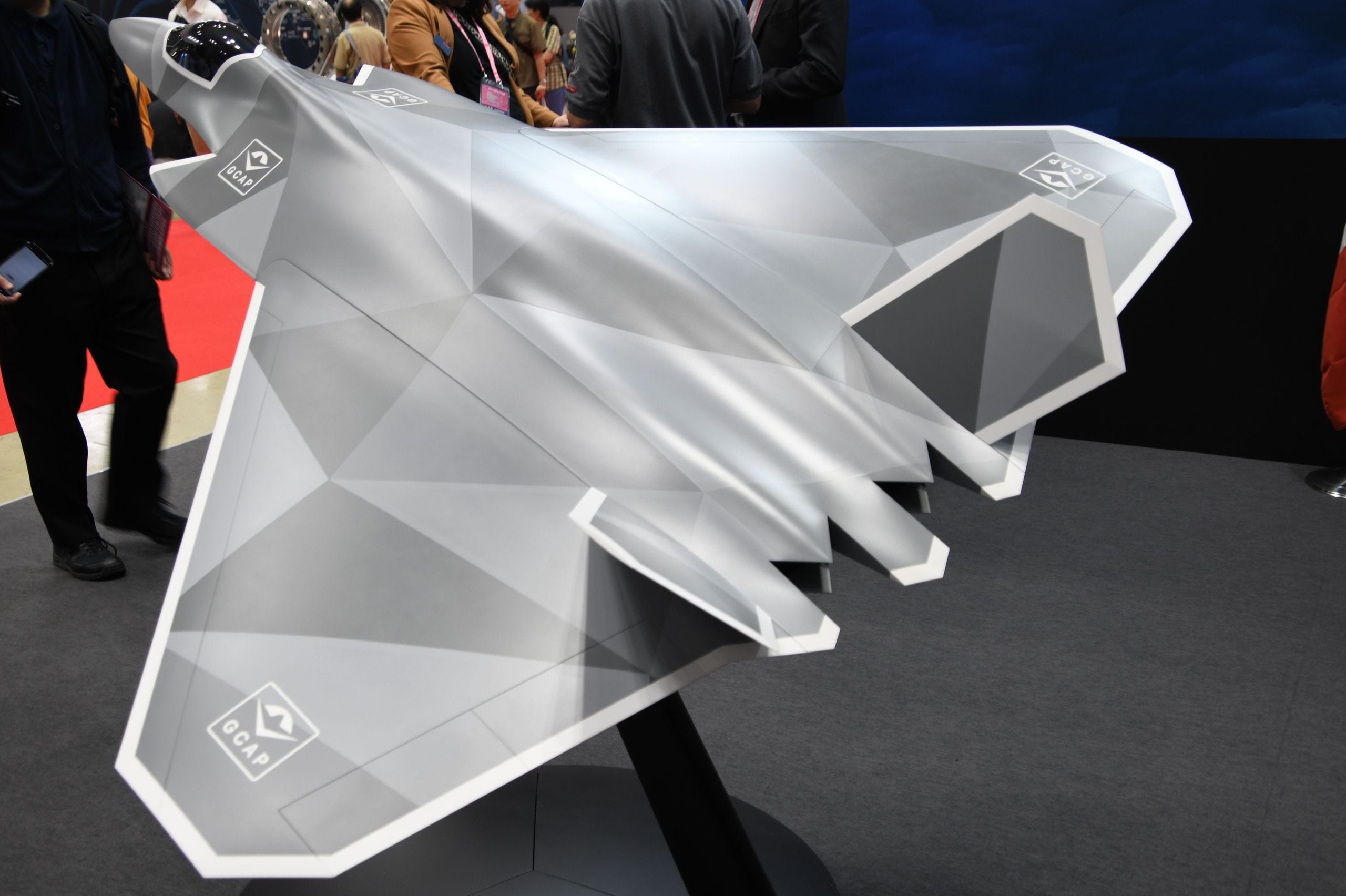
The forward story is far larger. The Global Combat Air Programme is intended to produce a sixth-generation stealth combat aircraft by 2035, and MHI is the Japanese industrial prime through the Edgewing joint venture with BAE Systems and Leonardo.
GCAP Edgewing Joint Venture Milestones
The April 2026 first joint contract of £686 million was awarded to Edgewing by the GCAP Agency to support critical design and engineering activity, putting trilateral funding flows in motion after months of contractual uncertainty.
For MHI, the GCAP role is a strategic upgrade from supporting Lockheed Martin on the F-2 to co-leading a frontier combat aircraft with peer European primes. The program is structured around shared workshare across all three partners, with Japan providing significant airframe, propulsion, and sensor work.
The platform is designed to enter service around 2035, providing a multi-decade revenue and capability runway. It also positions MHI for export campaigns once partner nations agree on transfer policy, with Saudi Arabia, Australia, and additional NATO members already discussed in public reporting.
GCAP TIMELINE SUMMARY
- 2022: Japan, UK, Italy announce joint development
- 2023: GIGO/GCAP International Government Organisation set
- 2024: Edgewing JV established (BAE / Leonardo / JAIEC)
- Q2 2026: First joint £686M design and engineering contract
- 2027-2028: Critical design milestones and demonstrator
- ~2035: Targeted in-service date for production aircraftMissiles and Standoff Systems
Missiles have moved from a niche to a flagship line within MHI’s defense business.
The Japanese Ministry of Defense’s counterstrike posture relies heavily on long-range, precision standoff weapons, and MHI is the prime industrial partner for almost every domestic missile family.
Type 12 Surface-to-Ship Missile and Improved Variants
The Type 12 Surface-to-Ship Missile is a truck-mounted anti-ship missile that has formed the backbone of Japan’s coastal defense since 2012. The improved version extends range significantly and is being adapted for ship and air launch.
Mass production of the ship-launched improved Type 12 began in fiscal year 2025 with a ¥228.4 million ($228.4 million) allocation in the FY2026 defense budget for additional units. The first ship to deploy the improved variant operationally will be the refurbished JS Teruzuki (DD-116) from FY2027.
The Japan Ministry of Defense announced in December 2025 that all development testing of the land-based variant of the Improved Type 12 had been completed, paving the way for full-rate procurement.
Hypersonic and Block-Series Programs
MHI is also leading domestic hypersonic guided missile production. The FY2026 budget contains separate appropriations for serial production and continued Block 2 development, reflecting both the operational urgency and the multi-block evolution path.
The Hyper Velocity Gliding Projectile (HVGP) and a new submarine-launched cruise missile family are also in production, with deliveries beginning in early 2026 as part of Japan’s counterstrike posture.
The aggregate scale of these programs is significant. Japan awarded MHI roughly ¥378 billion ($2.84 billion) in missile contracts in earlier tranches, with subsequent annual allocations adding to a multi-year backlog visible into the early 2030s.
MISSILE AND STANDOFF PORTFOLIO
- Type 12 SSM (land variant): In service since 2012
- Improved Type 12 (land/ship/air): Mass production started
- Hypersonic Guided Missile: FY2026 serial production
- Hyper Velocity Gliding Projectile: First deployments 2026
- Submarine-launched cruise missile: FY2025 production start
- PAC-3 MSE: ~30 units/year, license from Lockheed Martin
Patriot PAC-3 MSE Production and Export
MHI manufactures the Patriot PAC-3 MSE interceptor under license from Lockheed Martin at a current rate of roughly 30 missiles per year, with discussions on capacity expansion towards 100 per year.
The licensing relationship took on new geopolitical weight in late 2025 when Japan delivered the first domestically produced PAC-3 interceptors back to the United States. That action, the first major modern lethal weapon export from Japan, helped relieve pressure on US air defense stocks during the Ukraine and Middle East conflicts.
A subsequent $275 million PAC-3 MSE contract tied MHI further into both domestic stockpile growth and US allied supply chains.
Naval Ships: Mogami Class and the Australian Breakthrough
MHI’s naval business is centred on the Nagasaki Shipyard & Machinery Works. Its current product line includes the Mogami-class frigate (FFM), the upgraded Mogami-class (also called the New FFM or 06FFM), submarine modules, and supply ships.
Domestic Mogami and New FFM Program
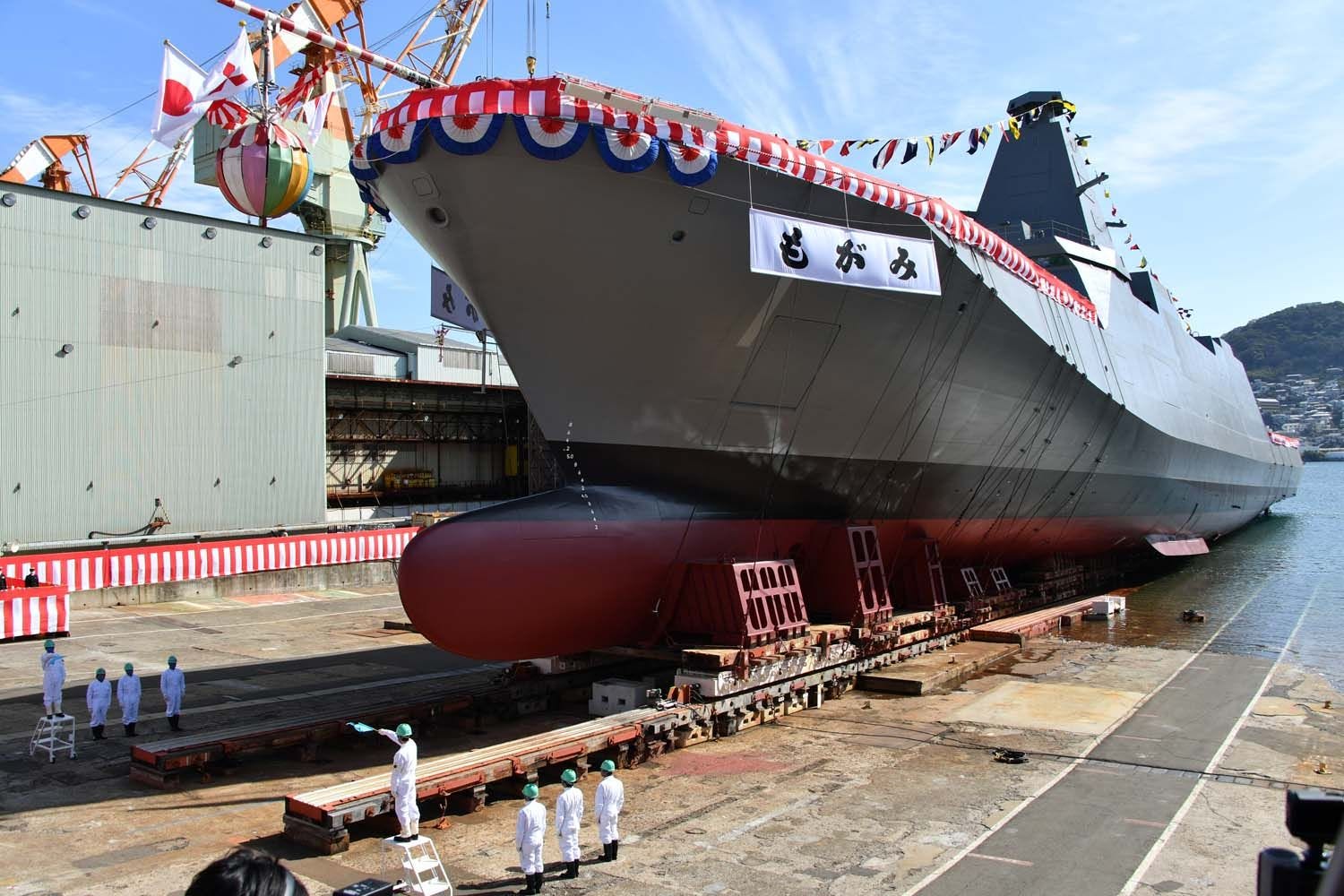
The original Mogami class is in continuing serial production. The upgraded Mogami-class (4,800-ton design, 6,200-ton full load) is funded with ¥667 million for the sixth ship in the FY2026 budget, with the lead ship to be commissioned in FY2028 and all twelve in service by FY2032 if the schedule holds.
Each frigate carries a 32-cell vertical launch system, an Aegis-style combat system, advanced ASW capability, and is designed for crew sizes that are roughly half those of legacy designs. That manning innovation alone has implications for fleet expansion across allied navies.
Australian General Purpose Frigate Win
In April 2026 the Australian government and MHI concluded the contract for three upgraded Mogami-class frigates for Australia’s General Purpose Frigate (GPF) program. The first ship is to be handed over by December 2029.
This is the first warship export deal in modern Japanese history and was reported in international press at a value of around $7 billion for the initial three ships, with up to eleven hulls anticipated across the program. The strategic importance of the deal cannot be overstated.
It validates MHI’s design competitiveness against European frigate primes, opens a route to Tier-2 navies that respect a Japanese-built reference platform, and brings a steady multi-year revenue stream into Nagasaki at a time when domestic build slots are saturating.
NAVAL SHIPBUILDING PIPELINE
- Mogami-class FFM: Original 12-ship program completed
- Upgraded Mogami / New FFM (06FFM): 12 ships by FY2032
- Australian GPF: 3 contracted (Apr 2026), up to 11 total
- Aegis System Equipped Vessels (ASEV): 2 hulls, FY27/FY28
- Submarine modules: Taigei-class continuing series
- Supply / minesweeper: Continuing programs alongside FFMSpace Launch Services and Satellites
MHI is the prime contractor for the H3 Launch Vehicle, Japan’s flagship next-generation rocket developed with the Japan Aerospace Exploration Agency (JAXA). The H3 succeeds the H-IIA workhorse and is designed to lower costs and increase flight rate.
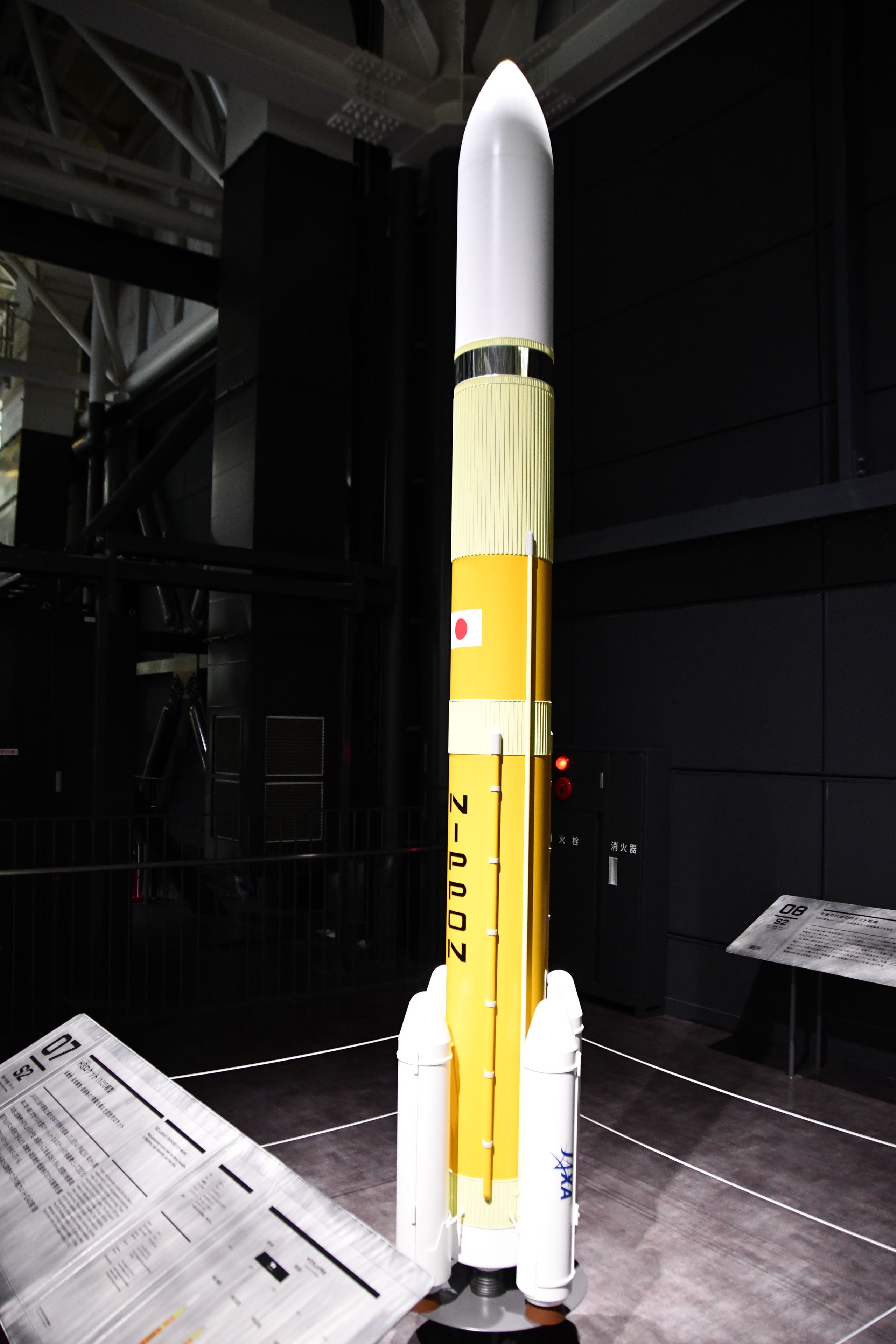
The sixth H3 launch, an H3 Type 30 test variant, is scheduled for liftoff from Tanegashima on June 10, 2026. The flight is a key step in qualifying the H3-30 configuration designed to lower launch costs further by removing the strap-on solid rocket boosters used in earlier flights.
The success of this launch family matters commercially. The H3 must compete with SpaceX Falcon 9, Vulcan Centaur, and Ariane 6 on price-per-kilogram, and Japan’s ability to capture meaningful international payload bookings will depend on consistent flight cadence over the next two years.
In addition to launch vehicles, MHI participates in payload integration and satellite bus work. The January 2026 investment in Japan LEO Shachu, a low-earth orbit space venture established by Mitsui & Co., signals that MHI is moving from launcher to broader space services.
Defense Vehicles and Ground Systems
The Type 10 Main Battle Tank and Type 16 Maneuver Combat Vehicle are produced by MHI for the Japan Ground Self-Defense Force. The Type 10 is a 44-tonne advanced tank with a real-time data link, while the Type 16 is a wheeled fire-support platform.
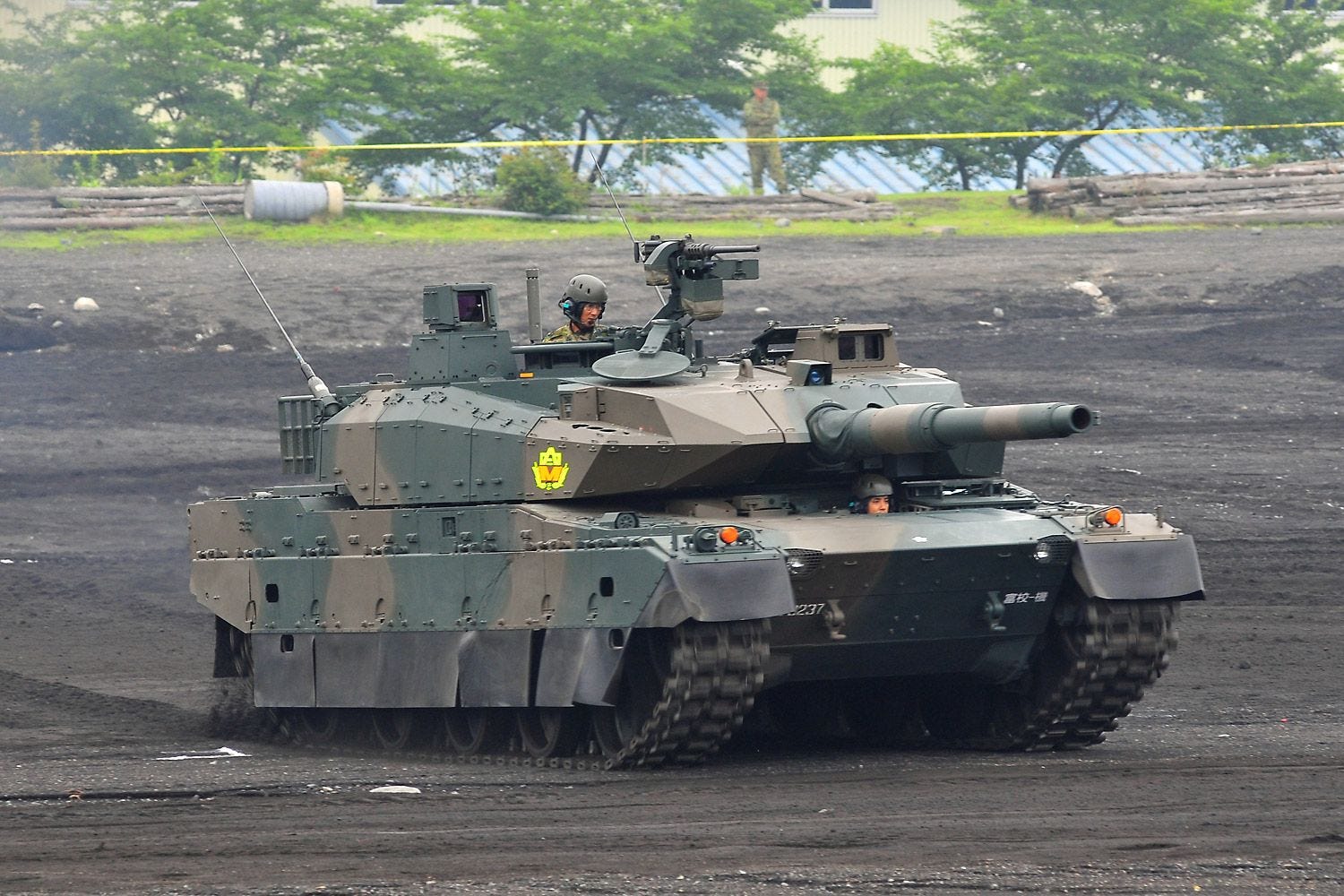
These programs are smaller revenue items than missiles or naval ships but provide steady throughput at MHI’s land systems facilities. The Type 16 has shipped well over two hundred vehicles, with continued procurement supporting the rapid-deployment formations of Japan’s ground force.
GROUND COMBAT SYSTEMS SUMMARY
- Type 10 MBT: Network-enabled, advanced firepower
- Type 16 MCV: Wheeled fire support, rapid deployment
- Sub-system integration role for Japan's ground force
- Limited export at present, watching policy evolution
- Adjacent to robotic and unmanned ground programs
MHI Financial Analysis
Group-Level Performance: Q1-3 FY2025
The most recent comprehensive disclosure is the Q1-3 FY2025 result published in February 2026. The group reported order intake of ¥5,029.1 billion, an increase of 12.6% year on year, alongside revenue of ¥3,326.9 billion, up 9.2%.
Profit metrics scaled even faster. Business profit reached ¥301.2 billion, up 25.5%, while net income hit ¥210.9 billion, up 22.6%, and EBITDA expanded to ¥393.1 billion, up 21.0%.
GROUP RESULTS Q1-3 FY2025 (¥ BILLIONS)
Order Intake:        5,029.1   (+12.6% YoY)
Revenue:             3,326.9   ( +9.2% YoY)
Business Profit:       301.2   (+25.5% YoY) - 9.1% margin
Net Income:            210.9   (+22.6% YoY) - 6.3% margin
EBITDA:                393.1   (+21.0% YoY) - 11.8% margin
Free Cash Flow: 167.6Updated FY2025 Group Guidance
Management raised FY2025 full-year guidance at the Q3 release. Order intake guidance now stands at ¥6,700 billion, revenue at ¥4,800 billion, business profit at ¥410 billion (8.5% margin), net income at ¥260 billion, EBITDA at ¥530 billion (11.0%), and FCF at ¥200 billion.
The dividend forecast was held at ¥24 per share for the full year, with capital allocation prioritizing reinvestment in defense capacity and aero engine MRO networks.
FY2025 REVISED FULL-YEAR GUIDANCE (¥ BILLIONS)
Order Intake:        6,700.0
Revenue:             4,800.0
Business Profit:       410.0   (8.5% margin)
Net Income:            260.0   (5.4% margin)
EBITDA:                530.0   (11.0% margin)
Free Cash Flow:        200.0
Dividend (per share):     24 yen
ADS Segment Deep Dive
Within the segment view, the ADS division reported Q1-3 FY2025 order intake of ¥837.0 billion. That figure was down ¥345.0 billion year on year, but only because the prior year’s number had been inflated by the booking of a very large multi-year missile contract in Defense & Space.
ADS revenue reached ¥891.2 billion in Q1-3 FY2025, up ¥201.6 billion year on year. Business profit was ¥105.3 billion, up ¥35.6 billion, with margin gains in both Defense & Space and Commercial Aviation contributing to the result.
ADS SEGMENT Q1-3 FY2025 (¥ BILLIONS)
Order Intake:          837.0   (vs. 1,182.0 prior year)
  - Defense & Space:   658.6   (vs. 1,026.4 prior year)
  - Commercial Aviation:178.4  (residual implied figure)
Revenue:               891.2   (+201.6 YoY)
Business Profit:       105.3   (+35.6 YoY)
Margin (calc):         11.8%
The 1H FY2025 segment data reinforces the trend. Order intake of ¥545.0 billion in 1H FY2025 was lower than the same period in FY2024, but revenue of ¥538.8 billion and business profit of ¥60.3 billion were both higher than the year-ago numbers.
The order moderation versus the FY2024 comparable should be read against FY2024’s record-setting baseline rather than as evidence of demand weakness. Defense backlog remains at multi-year highs, supported by Japanese national programs and emerging export wins.
Backlog Quality and Multi-Year Visibility
The structure of the backlog matters as much as the headline number. The bulk of new defense orders are multi-year, fixed-price-with-escalation contracts tied to the Defense Buildup Program, providing predictable revenue and margin recognition.
Commercial aviation backlog is anchored to Boeing’s published order book on the 787, 777X, and 737 programs, and to the announced production rate plans for each line. As Boeing scales rate, MHI revenue and absorption follow with a predictable lag.
The Australian frigate order alone adds a roughly multi-billion-dollar revenue stream over the late 2020s, with the contract structured for delivery beginning December 2029 for the first hull and continuing through the early 2030s for the additional two.
Revenue and Growth Drivers
Driver 1: The Japanese Defense Buildup
The most powerful single growth driver for the ADS segment is the multi-year Japanese defense buildup. The cabinet’s December 2025 decision to approve a ¥9.04 trillion ($58 billion) FY2026 defense budget marks the twelfth consecutive year of record defense spending and a 3.8% increase versus FY2025.
The broader defense-related budget envelope, including separate funds for capacity expansion and infrastructure, sits at roughly ¥10.6 trillion for FY2026 in the Nikkei reporting, reinforcing the trajectory toward 2% of GDP.
JAPAN DEFENSE BUDGET CONTEXT
- FY2026 MoD draft budget: ¥9.04 trillion ($58B)
- Record for 12th consecutive year
- 3.8% increase vs FY2025
- Defense-related total estimate: ~¥10.6 trillion
- Five-year plan total target: ¥43 trillion through FY2027
- Goal: 2% GDP defense by FY2027
Within that envelope, the priority programs that flow to MHI include unmanned defense systems integration on Mogami platforms, standoff missile capabilities, integrated air and missile defense, and naval expansion. Each of those mission areas places MHI at, or near, the centre of the industrial base.
Driver 2: Export Liberalization and the Australian Frigate Win
The 2024 reform of Japan’s Three Principles on Transfer of Defense Equipment has begun to generate concrete revenue. The Australian Mogami contract is the clearest example, but PAC-3 deliveries to the United States and component-level supply into allied programs are growing alongside.
The combined addressable market that opens with these policy changes is substantial. The Japanese defense budget at roughly ¥10.6 trillion is a fraction of the global market, which Nikkei reporting placed at over ¥400 trillion.
For MHI, capturing even a low single-digit percentage of incremental allied demand would represent a multi-trillion-yen long-term opportunity. The Australian deal provides a credible export reference at the platform level rather than the component level, which is the harder-to-cross threshold for any defense industrial base.
Driver 3: Commercial Aviation Recovery and Build-Rate Ramp
Boeing’s recovery and ramp on the 787 and 777X are direct revenue drivers for MHI. The company has been in dialogue with Boeing on cost optimization and sustained build rate increases for the Dreamliner since the pandemic-era softness.
Higher 787 deliveries flow directly to higher MHI wing shipments, with operating leverage benefits as the Nagoya plant’s fixed costs spread across more units. Q1-3 FY2025 commercial aviation results already showed this dynamic.
COMMERCIAL AVIATION DRIVERS
- 787: Boeing pushing toward higher monthly rates
- 777X: Production ramp post entry into service
- Engine programs: V2500 MRO, PW1100G stabilization
- Trent 1000: 20-year partnership, continuing demand
- Headwind: JPY/USD exchange rate sensitivityDriver 4: GCAP and Future Combat Air Workshare
The GCAP programme is a long-tail driver. While near-term revenue contribution is still modest, the design and engineering ramp has begun and will scale over the FY2027 to FY2030 period as detailed development moves into prototype and production phases.
Public estimates from international defense reporting place expected production at around 350 aircraft across the three nations, with potential additional export sales beyond. MHI’s workshare on a sixth-generation airframe is a multi-decade revenue annuity if the programme reaches its target service entry.
Driver 5: Space Launch Cadence and Satellite Integration
The H3 launch cadence, scaling toward six or more launches per year over time, supports growing JAXA institutional demand and a measurable commercial pipeline. The June 2026 test flight of the H3-30 variant is one element of a campaign to lower per-launch cost and broaden the customer base.
Space activity also includes earth observation satellites for the Cabinet Satellite Intelligence Center, communications satellite buses, and propulsion systems for partner programs. The defense and intelligence space spending line in the FY2026 budget complements the commercial story.
MHI Major Competitors
The ADS segment competes across a wide product spectrum, which means the relevant competitor set varies by sub-business. The list of names below identifies the most direct competitors per major product line.
KEY COMPETITORS BY PRODUCT LINE
- Combat aircraft (GCAP/F-X): Lockheed Martin, Boeing,
  Dassault, Sukhoi (regional), KAI (regional)
- Missile systems: Lockheed Martin, RTX (Raytheon),
  MBDA, Kongsberg
- Naval ships (frigates): Fincantieri, Naval Group,
  Babcock, Hyundai Heavy, Hanwha Ocean, TKMS
- Aero engine partners/competitors: Pratt & Whitney,
  GE Aerospace, Rolls-Royce, Safran (Honeywell at edges)
- Space launch: SpaceX, ULA, Arianespace, Roscosmos
- Commercial aerostructures: Spirit AeroSystems, Kawasaki,
  Subaru, GKN Aerospace, Triumph
MHI vs. Lockheed Martin
Lockheed Martin is the world’s largest defense contractor and the global benchmark in fighter aircraft, integrated missile defense, and tactical missiles.
The relationship with MHI is complex and partly cooperative: MHI builds PAC-3 MSE under license from Lockheed and was the local partner on F-2.
The competitive dimension lies in fighter aircraft and integrated air defense. GCAP positions MHI and partners against the F-35 and the future Lockheed-led NGAD, particularly in allied export campaigns where Japan, the UK, and Italy will pitch alternatives to American 5th and 6th generation aircraft.
The scale gap is large. Lockheed’s revenue base is multiples of MHI’s ADS segment, but Lockheed lacks the rounded industrial portfolio of an integrated heavy industries player and is constrained by US export and program decisions.
MHI vs. Boeing (Defense)
Boeing’s defense business competes with MHI in multiple areas: fighter platforms (F-15EX vs. potential GCAP exports), missile systems through subsidiaries, and selectively in air mobility and rotary platforms. On the commercial aviation side the relationship is dominantly cooperative.
Boeing’s defense business has been challenged in recent years on fixed-price program execution, with widely reported losses on KC-46, T-7, MQ-25, and others. That weakness has improved MHI’s relative competitive standing on quality and discipline at the component and structural level.
The 787 and 777 partnerships continue to underpin MHI’s commercial aviation revenue. As Boeing recovers production rate, MHI’s wing and structural deliveries follow on a near-linear basis.
MHI vs. Northrop Grumman
Northrop Grumman is the leading prime on stealth bombers (B-21), strategic missiles, and a growing space portfolio, including Cygnus and military satellite programs.
Direct head-to-head competition with MHI is limited in current product portfolios, with the most direct overlap in space launch and satellite integration.

In missile defense, both companies hold significant positions, but along different program lines. MHI is the licensed PAC-3 MSE producer for Japan and a key provider for Aegis system equipped vessel weapon stocks, while Northrop is on the prime contractor list for the GBI replacement and various hypersonic interceptors.
SCALE COMPARISON SNAPSHOT (FY24 PUBLIC DATA)
- Lockheed Martin: ~$71B revenue, US prime
- RTX: ~$80B revenue, US conglomerate
- Northrop Grumman: ~$41B revenue, US prime
- Boeing (defense): ~$25B revenue (BDS segment)
- BAE Systems: ~£26B revenue, UK prime
- Leonardo: ~€17B revenue, Italian prime
- MHI ADS (FY24): ¥1.03T (~$6.6B at avg FX)MHI vs. RTX (Raytheon)
RTX, parent of Raytheon and Pratt & Whitney, competes with MHI in missile systems and engine programs.

The relationship is cooperative on the Pratt & Whitney engine partnership through JAEC, and competitive in missiles where Raytheon and MHI offer parallel programs in air defense and standoff weapons.
RTX’s deep integration in US Department of Defense programs gives it scale and access that MHI cannot match in the United States, while Japan’s domestic and allied procurement increasingly favors local sources, balancing the dynamic in the Indo-Pacific.
MHI vs. BAE Systems and Leonardo
BAE Systems and Leonardo are MHI’s partners in GCAP rather than direct competitors.
The relationship via Edgewing makes the three companies effective allies, although workshare allocation remains a recurring point of negotiation in trilateral programs.
In naval ships, BAE Systems competes globally with Type 26 derivatives that have won in Australia (Hunter class), Canada, and the UK. MHI’s Mogami selection in Australia was a head-to-head loss for German TKMS and cooperative platforms but reinforced the credibility of Japanese naval design at the global level.
MHI vs. Hyundai Heavy and Hanwha Ocean (Korean Yards)
In naval shipbuilding, MHI’s Asian competitors include Hyundai Heavy Industries and Hanwha Ocean (formerly Daewoo Shipbuilding & Marine Engineering). Korean yards have aggressive pricing and have won frigate, destroyer, and submarine deals across Southeast Asia, Australia, and the Middle East.
The Australian Mogami selection over Korean alternatives is meaningful evidence that Japanese platform design and combat system integration can compete on capability rather than only price.
That perception will be tested in additional regional campaigns over the next two to three years.
MHI vs. SpaceX, ULA, and Arianespace (Space Launch)
The space launch market is dominated by SpaceX on commercial payloads, with United Launch Alliance, Arianespace, and emerging entrants competing for institutional and dual-use missions.
MHI’s H3 sits in the institutional category, with cost reduction the primary lever.

H3 must improve flight cadence and lower per-launch cost to compete commercially with Falcon 9, Vulcan Centaur, and Ariane 6. Domestic and allied institutional demand provides a secure baseline, but commercial wins require demonstrated reliability and economics.