
China has solidified its position as a global aviation powerhouse, recording substantial achievements across passenger traffic, cargo operations, and infrastructure development.
The Civil Aviation Administration of China (CAAC) reported that passenger traffic reached 770 million in 2025, representing a 5.5 percent increase from the previous year, while cargo and mail volume surged to 10.17 million tonnes, marking a 13.3 percent year-on-year growth.
With more than 500 million people having traveled by air by the end of 2024, China has emerged as the world’s largest air travel market, setting ambitious targets for continued expansion through 2026 and beyond.
Also Read:

Table of Contents
Industry Performance and Economic Impact
Transportation Turnover and Revenue Growth
The Chinese aviation sector achieved a total transportation turnover of 164.08 billion tonne-km in 2025, reflecting a 10.5 percent year-on-year increase. This performance metric demonstrates the industry’s robust recovery trajectory and its expanding capacity to meet domestic and international demand.
The industry achieved a combined profit of 6.5 billion yuan (approximately 926.28 million U.S. dollars) in 2025, marking a significant improvement in business performance despite ongoing challenges. This profitability represents a substantial recovery from the 5-billion-dollar average losses recorded by major carriers in previous years.
International Connectivity Expansion
International passenger traffic experienced remarkable growth, jumping 21.6 percent year-on-year in 2025. Regional performance varied significantly, with volumes to specific destinations showing exceptional expansion rates.
Regional International Traffic Growth (2025):
Latin America:     +108.6%
Central Asia:      +59.3%
Africa:            +39.0%
West Asia:         +33.4%
Overall International: +21.6%
These figures underscore China’s strategic efforts to strengthen cooperation along the Air Silk Road, leveraging the Belt and Road aviation platform to deepen international exchanges in products, services, technology, management, and standards.
International flight volumes have recovered to more than 90 percent of prepandemic levels, with the resumption of regular China-India flights contributing to this recovery. The expanded international route network now links 263 cities in 90 countries, demonstrating the sector’s global reach and connectivity ambitions.
Major Airlines in China
The Big Three Carriers
China’s aviation sector is dominated by three major state-owned carriers that collectively operate extensive domestic and international networks.
These airlines have demonstrated resilience throughout the recovery period while managing significant operational and financial challenges.

China Southern Airlines
China Southern Airlines holds the position as the country’s busiest carrier, maintaining a 16 percent share of the domestic market with 10.7 million seats recorded in December 2025. The airline operates a fleet exceeding 700 aircraft, making it one of the largest carriers globally by fleet size.
The carrier has established itself as a leader in both domestic and international operations, with strategic hubs positioned to serve the rapidly expanding southern and southwestern Chinese markets.
According to recent revenue data, China Southern Airlines has a market capitalization of $19.44 billion, making it one of the most valuable companies in China.

China Eastern Airlines
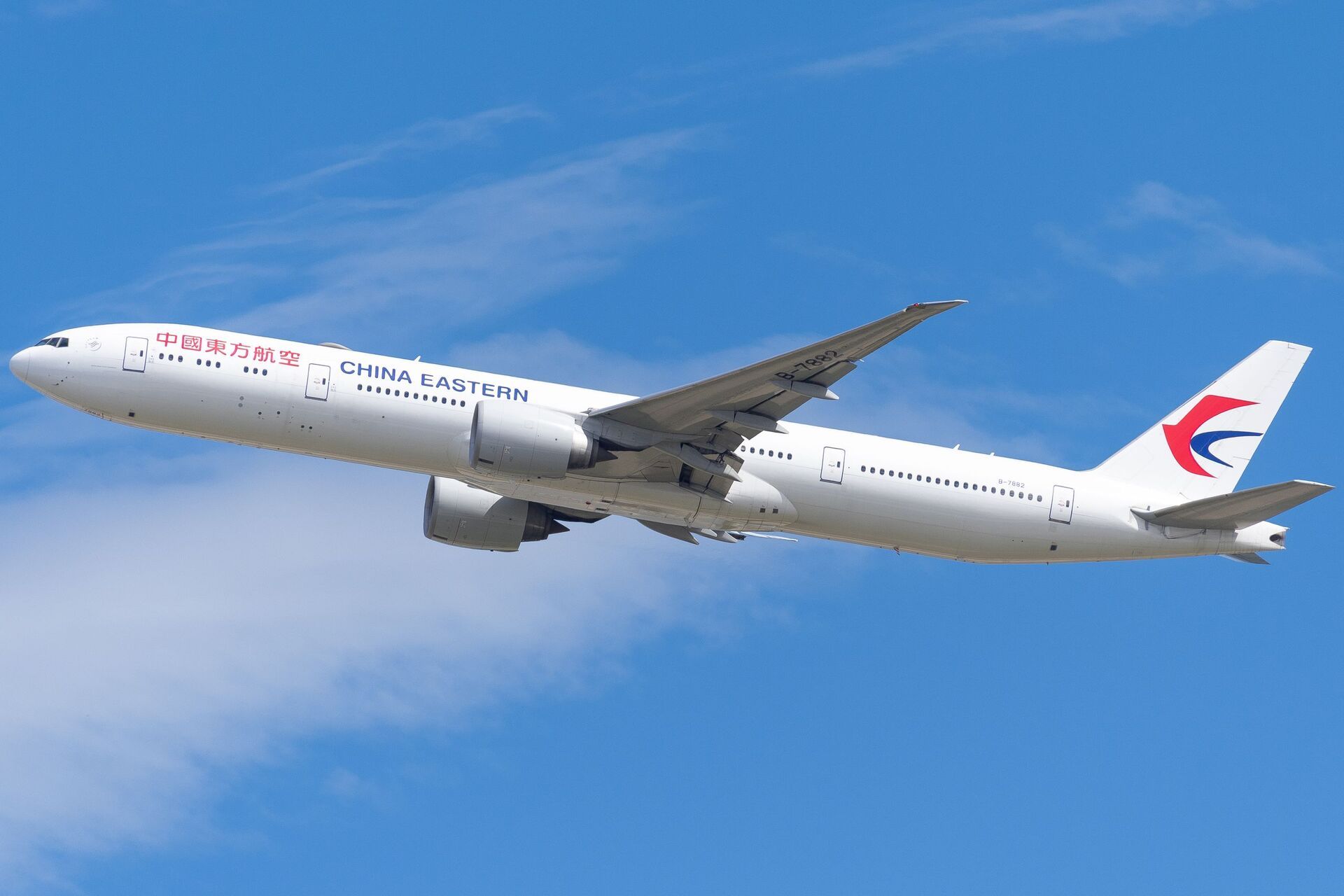
China Eastern Airlines operates a fleet of over 800 aircraft, positioning itself as the second-largest carrier in the domestic market with a 14 percent share and 9.5 million seats in December 2025. The Shanghai-based carrier has been instrumental in the commercialization of China’s domestically produced C919 aircraft.
The airline has prioritized fleet modernization and operational efficiency, boasting one of the youngest fleets globally. Its extensive network covers major business and tourism destinations, with particular strength in connecting eastern coastal regions to inland provinces.
Air China
As the flagship carrier headquartered in Beijing, Air China ranks third among the Big Three with a substantial presence in both domestic and international markets. The airline operates a diverse fleet split between narrow-body and wide-body aircraft, optimized for varied route requirements.
Air China has established strategic partnerships with international carriers and alliance members, facilitating seamless connectivity for passengers traveling between China and global destinations. The carrier maintains a strong position in the premium travel segment, serving business travelers and government officials.

Financial Performance and Challenges
Despite the sector’s overall profitability, major state-owned airlines continue to face financial pressures. All three carriers reported losses for the fifth consecutive year in 2024, with an average loss per airline of $286 million.
Several factors contribute to these ongoing challenges:
Competition with China’s extensive high-speed rail network continues to pressure domestic air travel demand, particularly on routes under 1,000 kilometers where rail offers competitive travel times.
Downward pressure on air ticket prices has intensified as airlines compete for market share in a recovering environment, compressing profit margins despite increased passenger volumes.
Subdued international demand, particularly from certain markets, has limited revenue opportunities from higher-yielding long-haul routes.
Supply chain disruptions and currency depreciation have increased operational costs, creating additional financial headwinds for carriers attempting to return to sustained profitability.
Aviation Companies in China
Commercial Aircraft Corporation of China (COMAC)
COMAC, established on May 11, 2008, represents China’s strategic initiative to develop indigenous commercial aircraft manufacturing capabilities. The state-owned aerospace manufacturer, headquartered in Pudong, Shanghai, has a registered capital of RMB 19 billion (US$2.7 billion).

The company is engaged in research, manufacture, and flight tests of civil aircraft and related products, as well as marketing, servicing, leasing, and operations.
COMAC’s flagship programs include the C919 narrow-body airliner, the ARJ21 regional jet, and the under-development C929 wide-body aircraft.
C919 Program Progress
The C919 aircraft represents China’s most significant achievement in commercial aviation manufacturing. The aircraft has safely recorded more than 4 million passenger trips, underscoring advances in the country’s domestic commercial aviation capabilities.
However, production has faced challenges. COMAC delivered only 13 C919 jets in 2025, falling significantly short of the revised target of 25 aircraft and far below the original goal of 75 deliveries. Executives initially stated in March 2025 that COMAC would deliver up to 75 planes by year-end, but this target was slashed to 25 by September.
The delivery shortfall stems primarily from engine supply constraints. The C919 currently relies on the CFM International LEAP-1C engine, jointly produced by GE Aerospace and Safran. Engine delivery reviews and production bottlenecks have limited aircraft completions.

Despite these challenges, by the end of 2025, 220 homegrown planes were in operation across China’s civil aviation fleet, demonstrating growing acceptance and operational integration of domestically produced aircraft.

Image source: en.wikipedia.org
ARJ21 Regional Jet Success
The ARJ21 regional jet has achieved more substantial commercial success. To date, 175 ARJ21 aircraft have been delivered, accounting for more than 60 percent of China’s domestic regional aviation market.
This accomplishment demonstrates COMAC’s capability to deliver operational aircraft at scale for the regional segment.
International Certification Efforts
COMAC has pursued international airworthiness certification to expand the C919’s market potential beyond China.
The company initiated aviation training programs for Southeast Asia in 2025, organized by the Civil Aviation Administration of China. The 14-day training course covers safety management, airworthiness certification, and operational standards, supporting potential future exports.
Maintenance, Repair, and Overhaul (MRO) Sector
As China’s commercial airplane fleet expands, demand for MRO services continues to grow substantially. Boeing’s 2024 Market Outlook projects China’s commercial fleet will more than double by 2043, reaching 9,740 planes, driven by the delivery of 8,830 new aircraft.
By 2042, Boeing estimates China will need $675 billion in aviation services, including maintenance, repair, training, and spare parts. Components such as wheels, brakes, auxiliary power units (APUs), and avionics systems will see the fastest growth within the MRO sector.
This expanding demand creates opportunities for both domestic and international MRO providers to establish capabilities in China, particularly for advanced component maintenance and specialized technical services.
Ground Support Equipment and Airport Technology
China is investing heavily in airport infrastructure to accommodate increasing air traffic. By the end of 2026, China plans to open multiple new airports, including Dalian Jinzhouwan International, Xiamen Xiang’an International, Foshan Gaoming International, Chongqing Jiangbei International, and Suzhou General, as well as expand Xi’an Airport.
These infrastructure projects drive demand for ground support equipment (GSE), including baggage handling systems, aircraft tugs, fueling systems, and passenger boarding bridges.
China’s emphasis on sustainability and the CAAC’s 2023 launch of a Smart Civil Aviation Construction Evaluation Index System underscore the push for low-carbon airports and energy-efficient technologies.
Airport Infrastructure Development
Expansion During the 14th Five-Year Plan Period
During the 14th Five-Year Plan period (2021-2025), the aviation industry recorded 630 billion yuan ($90.21 billion) in fixed-asset investment. This substantial investment facilitated significant infrastructure expansion across multiple dimensions.
The sector added 49 new runways and 2,232 aircraft parking positions during this period. The number of transport airports increased to 270 by the end of 2025, up from 241 at the end of 2020, representing a net addition of 29 airports.
14th Five-Year Plan Infrastructure Additions:
Fixed-Asset Investment:  630 billion yuan ($90.21B)
New Runways:            49
New Aircraft Positions: 2,232
New Airports:           29 (241 to 270)
Major Airport Projects
China aims to construct 216 new airports by 2035 to meet growing demands for air travel. The Civil Aviation Administration of China projects that the total number of civil airports will reach 450 by 2035, nearly doubling from the 234 civil airports operational at the end of October 2024.
Recent significant projects include the approval of a second airport for Guangzhou, with construction set to begin following formal approval from China’s National Development and Reform Commission.
The Guangzhou Baiyun Terminal 3 project adds a terminal complex and integrated transport links to ease congestion and lift capacity at one of the country’s busiest airports.

Image source: cntraveler.com
Beijing Daxing International Airport
Beijing Daxing International Airport, which opened in September 2019, exemplifies China’s commitment to world-class aviation infrastructure. Designed by Zaha Hadid Architects, the airport features a terminal building with a floor area of 700,000 square meters, making it one of the largest single-building airport terminals globally.
The airport was designed to ultimately handle 100 million passengers annually, with initial capacity targets of 45 million passengers per year in the first phase. The facility features advanced technology integration, including facial recognition systems for passenger processing and automated baggage handling systems.
Regional Airport Development
Beyond major hub airports, China is developing regional airports to improve connectivity for smaller cities and remote areas. This strategy supports balanced economic development and improves accessibility for populations in less-developed regions.
Regional airports serve as critical nodes for general aviation, emergency services, and tourism development, creating economic opportunities and improving quality of life for residents in these areas.
Aviation Jobs in China
Pilot Workforce Demand
China is expected to encounter increased pilot shortages as the domestic aviation market rebounds from COVID-19 disruptions. Fueled by surging air travel demand due to the country’s expanding middle class and an increasing number of general aviation and commercial aircraft fleets, China is emerging as one of the world’s largest markets for pilot training.
According to international forecasts, the aviation industry will need 2.3 to 2.4 million new aviation workers by 2044, including pilots, technicians, and cabin crew, to meet long-term increases in air travel. Asia-Pacific region accounts for a substantial portion of this demand.
Training and Certification Requirements
Pilots operating in China must obtain licenses issued by the Civil Aviation Administration of China (CAAC). The regulatory framework requires comprehensive training programs that meet international standards while incorporating specific Chinese operational requirements.
For commercial pilots, the progression typically includes:
Private Pilot License (PPL) as the foundational certification, requiring minimum flight hours and theoretical knowledge examinations.
Instrument Rating qualification, enabling pilots to operate aircraft in instrument meteorological conditions using only cockpit instruments for navigation.
Commercial Pilot License (CPL), which permits pilots to act as pilot-in-command or co-pilot of aircraft for compensation or hire.
Airline Transport Pilot License (ATPL), the highest certification level required for airline captains and senior pilots, demanding extensive flight experience and advanced theoretical knowledge.
Career Opportunities
The aviation sector offers diverse career opportunities beyond piloting. Aircraft maintenance engineers and technicians are in high demand as fleet sizes expand and aircraft become more technologically sophisticated.
Air traffic controllers play essential roles in managing the increasing volume of flights across China’s airspace. Airport operations personnel, including ground service coordinators, customer service representatives, and security specialists, are needed to support expanding airport infrastructure.
Aviation management positions in areas such as flight operations, safety management, and commercial aviation strategy offer opportunities for professionals with industry experience and specialized qualifications.
The cargo and logistics segment presents growing employment opportunities, driven by the 13.3 percent year-on-year growth in cargo and mail volume recorded in 2025.
Compensation and Working Conditions
Pilot compensation in China varies significantly based on experience, aircraft type, and employer. Entry-level first officers typically earn competitive salaries that increase substantially with experience and progression to captain positions.
Major airlines offer comprehensive benefits packages, including housing allowances, health insurance, retirement contributions, and travel privileges. International route pilots generally receive premium compensation due to the complexity and demands of long-haul operations.
Aviation Schools in China
Civil Aviation Flight University of China (CAFUC)
The Civil Aviation Flight University of China, located in Guanghan, Sichuan Province, is the largest civil aviation university in Asia and the world’s largest flight training institution. The university operates multiple flight training colleges across different locations.
CAFUC offers comprehensive aviation education programs, including flight technology, air traffic management, aviation engineering, and aviation safety. The institution maintains a substantial fleet of training aircraft and operates dedicated training airfields to support practical flight instruction.
The university’s facilities include:
CAFUC Training Infrastructure:
- Guanghan Flight College
- Luoyang Flight College
- Xinjin Flight College
- Mianyang Flight College
- Suining Flight College
- Flight Technology College
- Aviation Engineering College
- College of Air Traffic Management
International Training Programs
Chinese aviation training extends beyond domestic institutions. Many Chinese student pilots pursue training abroad, particularly in the United States, where specialized programs for Chinese students offer flight training leading to U.S. FAA certifications that can be converted to CAAC licenses.
These international programs typically provide 250 hours of fixed-wing airplane flight time over an estimated 9 to 12-month period, with costs approximating $60,650 for the complete training package.
Airline Cadet Programs
Major Chinese carriers operate cadet pilot programs to develop their future workforce. China Airlines partners with international training centers to provide high-quality ab initio flight training for their future pilot cadets, with programs approved by civil aviation authorities.
Within these programs, eligible candidates can apply through airlines to become future pilots with no prior experience required. Successful candidates receive comprehensive training covering all phases from initial licensing through advanced aircraft type ratings.
Maintenance and Engineering Training
Aviation maintenance engineering programs prepare technicians to service the expanding fleet. Training covers airframe and powerplant systems, avionics, and specialized aircraft types.
The Civil Aviation Management Institute of China (CAMIC) provides training accredited by international bodies, including dangerous goods training under competency-based training and assessment frameworks.
Aviation Courses in China
Flight Training Programs
Flight training courses in China follow structured curricula designed to meet CAAC certification requirements. Programs progress through multiple phases, each building upon previous knowledge and skills.
Initial private pilot training covers basic flight maneuvers, navigation, meteorology, and aviation regulations. Students typically complete 40 to 60 hours of flight time along with ground school instruction.
Instrument rating courses develop the skills necessary to operate aircraft solely by reference to instruments, including navigation systems, approach procedures, and emergency operations in instrument conditions.
Commercial pilot training emphasizes advanced flight operations, crew resource management, and the professional competencies required for commercial aviation careers.
Academic Aviation Programs
Universities offer degree programs in aviation-related fields beyond flight training. These programs prepare students for diverse aviation industry roles.
Aviation management programs combine business administration principles with aviation-specific knowledge, covering airline operations, airport management, aviation economics, and regulatory frameworks.
Master’s programs in Aeronautics & Space Science and Technology cost approximately 10,200 USD, while Master’s in Aerospace Engineering programs average 27,350 USD in tuition fees.
Air traffic management courses prepare students for careers controlling aircraft movements, requiring strong spatial awareness, decision-making abilities, and stress management capabilities.
Specialized Technical Training
Aircraft maintenance engineering courses provide the technical knowledge and practical skills necessary to maintain and repair aircraft systems. Training covers regulatory requirements, technical manuals, and hands-on experience with actual aircraft components.
Avionics technician programs focus specifically on aircraft electronic systems, including communication, navigation, and flight control systems, addressing the increasing technological sophistication of modern aircraft.
Cabin crew training programs prepare flight attendants for passenger service and safety responsibilities, covering emergency procedures, customer service excellence, and regulatory compliance.
Air Cargo and Freight Operations
Cargo Volume Growth
The air cargo sector demonstrated exceptional performance in 2025. Cargo and mail volume reached 10.17 million tonnes, representing a 13.3 percent increase compared to the previous year.
This growth significantly outpaced passenger traffic expansion, reflecting strong e-commerce demand, integrated logistics requirements, and the increasing importance of time-sensitive freight movements.
International cargo and mail volume increased 29.3 percent year-over-year, indicating robust demand for cross-border freight services. China’s massive surge in cross-border e-commerce, including sales of small packages to consumers in the United States and Europe, contributed significantly to this expansion.
Cargo Infrastructure Development
Dedicated cargo airports and facilities have expanded to support growing freight volumes. Airports have invested in temperature-controlled facilities for pharmaceuticals and perishables, specialized handling equipment for oversized cargo, and advanced tracking systems for supply chain visibility.
All-cargo carriers have increased fleet capacity, adding freighter aircraft specifically configured for cargo operations. These aircraft provide flexibility for peak demand periods and specialized cargo requirements that passenger aircraft belly-hold capacity cannot accommodate.
Express Delivery Integration
Integration between airlines and express delivery companies has intensified, with partnerships enabling seamless door-to-door logistics solutions. These collaborations combine aviation’s speed advantages with ground transportation networks to deliver comprehensive service offerings.
Airlines have developed specialized products for express freight, featuring guaranteed delivery times, real-time tracking, and expedited customs clearance processes.
Low-Altitude Economy and General Aviation
Emerging Sector Overview
China’s low-altitude economy represents a transformative development in the aviation sector. By 2030, China’s low-altitude economy is expected to reach $274 billion (2 trillion yuan), creating substantial opportunities for aircraft manufacturers, infrastructure developers, and service providers.
The gradual opening of low-altitude airspace as part of Beijing’s push to develop this sector has created new opportunities in general aviation, especially for remote areas with limited transportation infrastructure.
eVTOL and Urban Air Mobility
Electric vertical takeoff and landing (eVTOL) aircraft development has accelerated. China’s low-altitude economy infrastructure plans released in October 2025 integrate low-altitude operations as urban infrastructure within smart cities action plans.
The EH216-S autonomous aerial vehicle can travel at speeds up to 130 km/h over short distances, making it ideal for low-altitude urban transport applications. China’s fast-tracked regulatory environment supports commercial deployment of these technologies.
Urban air mobility services are projected to require thousands of vertiports across Chinese cities. Partnerships between international and Chinese companies aim to lead vertiport development to support this expanding sector.
According to figures from the start of 2025, approximately 2.2 million civilian drones were operating in China, representing a 455 percent increase over five years. This dramatic expansion demonstrates the rapid adoption of unmanned aviation technologies.
General Aviation Applications
General aviation applications extend beyond passenger transport to encompass diverse operational categories. Key growth areas include aerial emergency rescue operations, providing rapid response capabilities for disaster relief and medical emergencies.
Air medical services transport patients and medical personnel to remote or congested areas where ground transportation proves inadequate or too slow for critical situations.
Aerial firefighting capabilities support forest fire suppression and other emergency response requirements, deploying specialized aircraft equipped for water or retardant delivery.
Agricultural aviation services provide crop spraying, monitoring, and precision agriculture support, improving efficiency and reducing environmental impact compared to ground-based methods.
Tourism applications offer scenic flights, providing unique perspectives of natural and urban attractions while creating economic opportunities for operators and destinations.
Regulatory Framework and Policies
Civil Aviation Administration of China (CAAC)
The Civil Aviation Administration of China serves as the civil aviation authority under the Ministry of Transport, overseeing civil aviation and investigating aviation accidents and incidents.
CAAC’s responsibilities encompass airworthiness certification, pilot licensing, air traffic management, airport operations oversight, and safety regulation across all aspects of civil aviation.
Revised Civil Aviation Law
Newly revised Civil Aviation Law will take effect on July 1, 2026, bringing significant updates to the regulatory framework. The revised law strengthens civil aviation safety guarantees by explicitly prohibiting the deployment of laser devices that could endanger aircraft operations.
The regulations specify requirements for civil unmanned aircraft, establishing that micro, light, and small civil unmanned aircraft do not require airworthiness certification, while medium and large unmanned aircraft must obtain such certification.
This landmark amendment regulating drones mandates CAAC airworthiness certification, unique identification requirements, and strict operational parameters for commercial drone operations.
International Standards Compliance
China has progressively aligned its aviation regulations with international standards established by the International Civil Aviation Organization (ICAO). This alignment facilitates international operations and promotes safety harmonization across borders.
The country has implemented safety management systems (SMS) requirements for airlines, airports, and air navigation service providers, consistent with ICAO Annex 19 standards.
Airworthiness certification procedures increasingly reference European Aviation Safety Agency (EASA) and Federal Aviation Administration (FAA) standards, supporting potential international certification of Chinese-manufactured aircraft.
Business Aviation Regulations
Effective March 1, 2025, updated regulations require additional documentation for China landing permits through CAAC’s upgraded Preflight system. Business aircraft operating to China must provide comprehensive aircraft documentation, including registration certificates, insurance documentation, and operational specifications.
These requirements aim to improve oversight of business aviation operations while maintaining efficient approval processes for legitimate operators.
Technological Innovation and Digitalization
Smart Airport Development
The CAAC’s 2023 launch of a Smart Civil Aviation Construction Evaluation Index System drives technology adoption across airports. Smart airports integrate advanced technologies to enhance operational efficiency, passenger experience, and environmental sustainability.
Facial recognition systems streamline passenger processing, reducing queue times and improving security screening efficiency. Automated baggage handling systems employ robotics and artificial intelligence to route luggage accurately and quickly.
Real-time information systems provide passengers with updated flight information, gate changes, and personalized navigation assistance through mobile applications and airport displays.
Digital Air Traffic Management
Air traffic management modernization incorporates performance-based navigation (PBN) and automatic dependent surveillance-broadcast (ADS-B) technologies, improving flight efficiency and safety.
Data-link communication systems supplement voice communications between pilots and controllers, reducing miscommunication risks and enabling more precise instructions.
Collaborative decision-making platforms allow airlines, airports, and air traffic control to share real-time information, optimizing resource utilization and minimizing delays.
Maintenance Technology Advancement
Predictive maintenance systems analyze aircraft sensor data to anticipate component failures before they occur, improving safety and reducing unscheduled maintenance disruptions.
Digital twins create virtual replicas of physical aircraft, enabling simulation of maintenance procedures and optimization of component lifecycles without disrupting actual operations.
Augmented reality applications assist technicians during complex maintenance tasks, overlaying digital information onto physical components to improve accuracy and efficiency.
Environmental Sustainability Initiatives
Emissions Reduction Targets
China’s aviation sector has committed to environmental sustainability goals aligned with international carbon reduction commitments. Airlines are implementing fuel efficiency measures, including fleet renewal with modern fuel-efficient aircraft and operational procedure optimization.
Sustainable aviation fuel (SAF) development and deployment represents a priority area, with research programs exploring production pathways suitable for China’s resource conditions and regulatory framework.
Airport Sustainability
The push for low-carbon airports encompasses multiple initiatives. Electric ground support equipment replaces diesel-powered vehicles, reducing local emissions and noise pollution around airport areas.
Solar panel installations on terminal buildings and parking structures generate renewable electricity, offsetting conventional power consumption and demonstrating commitment to clean energy.
Energy management systems optimize heating, cooling, and lighting in terminal buildings, reducing overall energy consumption without compromising passenger comfort or operational requirements.
Noise Abatement
Noise management programs balance aviation growth with community concerns about aircraft noise. Preferential runway systems direct noisier operations away from residential areas during sensitive time periods.
Flight procedure modifications employ continuous descent approaches and optimized departure profiles to reduce noise exposure for communities near airports.
Fleet modernization naturally reduces noise as older, louder aircraft retire and are replaced with modern aircraft featuring advanced engine technology and improved aerodynamics.
International Cooperation and Market Access
Belt and Road Aviation Partnerships
China has leveraged the Belt and Road Initiative to expand aviation cooperation with participating countries. Joint ventures for airport development, airline partnerships, and technical cooperation agreements support infrastructure development and connectivity improvements.
Aviation training programs for Belt and Road countries provide capacity building, sharing Chinese expertise in airport management, air traffic control, and safety oversight.
Market Access Challenges
Despite China’s aviation market size and growth trajectory, market access remains complex for foreign carriers and manufacturers. Bilateral air service agreements govern international route rights, with negotiations determining frequency, capacity, and operational parameters.
Foreign investment restrictions limit direct ownership of Chinese airlines, requiring partnerships or indirect investment structures for international carriers seeking exposure to the Chinese market.
U.S.-China Aviation Relations
U.S. exports to China totaled $11.53 billion in 2024, a significant increase from $4.46 billion in 2020, driven in part by the resumption of Boeing 737 MAX deliveries in July 2024. This demonstrates the substantial commercial relationship despite broader geopolitical tensions.
American companies maintain strong positions in areas such as MRO services, ground support equipment, and advanced technologies, where U.S. technical expertise provides competitive advantages.
However, concerns about intellectual property protection, technology transfer requirements, and military-civil fusion policies create ongoing challenges for U.S. companies operating in or exporting to China’s aviation sector.
Future Outlook and Projections
2026 Targets and Beyond
CAAC head Song Zhiyong projected that the industry would achieve a transport turnover of 175 billion tonne-km, passenger traffic of 810 million, and cargo and mail volume of 10.7 million tonnes in 2026.
These targets represent continued growth from 2025 levels, with passenger traffic expected to increase by approximately 5.2 percent and cargo volumes by roughly 5.2 percent year-over-year.
The 15th Five-Year Plan period (2026-2030) will establish strategic priorities for the next development phase, addressing fleet expansion, infrastructure investment, technology adoption, and sustainability commitments.
Fleet Expansion Requirements
Boeing’s market outlook anticipates China’s commercial fleet will more than double by 2043, reaching 9,740 planes. This expansion requires delivery of 8,830 new aircraft, with 60 percent for growth and 40 percent for replacement of older models.
Single-aisle jets will dominate deliveries, supported by domestic air travel growth and expanding regional networks. However, wide-body aircraft demand will also increase as international long-haul routes expand and Chinese carriers compete for premium international traffic.
The balance between domestically produced aircraft from COMAC and imported aircraft from Boeing and Airbus will significantly influence industry dynamics, with implications for employment, technology transfer, and trade relationships.
Infrastructure Investment Needs
Achieving the goal of 450 civil airports by 2035 requires substantial continued investment in airport construction and expansion. Regional connectivity improvements will necessitate new airports in underserved areas, while major hubs will require additional capacity through terminal expansions and new runways.
Air traffic management infrastructure must scale proportionally to accommodate increasing flight volumes safely and efficiently. This includes radar systems, communication networks, and automation tools for controllers managing complex airspace.
Technology Adoption Trajectories
Artificial intelligence and machine learning applications will increasingly optimize flight operations, maintenance scheduling, and customer service delivery. These technologies promise efficiency improvements and cost reductions across multiple operational domains.
Electric and hybrid-electric propulsion systems may eventually enter service for short-haul regional aircraft, though certification and infrastructure requirements present substantial near-term barriers.
Autonomous flight technology development continues for cargo applications and potentially future passenger operations, though regulatory, technical, and public acceptance challenges remain significant.
Competitive Dynamics and Market Positioning
Domestic Competition
Competition among Chinese carriers has intensified as the market recovers. Low-cost carriers have expanded operations, pressuring traditional full-service airlines on price-sensitive routes.
High-speed rail competition continues to constrain profitability on domestic routes under 1,000 kilometers, forcing airlines to differentiate through service quality, schedule convenience, or complementary ground transportation integration.
Market consolidation pressures may emerge if financial performance does not improve substantially, with potential mergers or capacity rationalization to restore profitability across the sector.
International Competition
Chinese carriers face formidable international competition from established global carriers with strong brand recognition, extensive alliance networks, and superior product offerings on long-haul routes.
Middle Eastern carriers, particularly Emirates, Qatar Airways, and Etihad Airways, have captured significant transfer traffic between Asia and Europe/Americas, limiting market share opportunities for Chinese carriers on these lucrative routes.
International capacity additions by Chinese carriers must balance growth ambitions against profitability requirements, as expanding international operations requires substantial upfront investment in aircraft, crew training, and marketing.


COMAC’s Competitive Position
COMAC faces substantial competitive challenges against Boeing and Airbus, which possess decades of operational track records, established global customer bases, and comprehensive after-sales support networks.
The C919’s reliance on Western suppliers for critical components, particularly engines, limits its appeal as a truly independent alternative and creates potential supply chain vulnerabilities.
However, COMAC benefits from strong government support, captive domestic demand through state-owned airline procurement preferences, and potentially lower pricing compared to Western competitors.
International certification from FAA and EASA remains critical for expanding beyond the Chinese domestic market, but achieving these certifications requires substantial time and resources while meeting stringent safety and performance standards.


Investment Opportunities and Risks
Market Growth Drivers
China’s expanding middle class continues driving aviation demand, with rising incomes enabling discretionary spending on air travel for business and leisure purposes.
Urbanization trends concentrate population in major cities well-served by air transportation, while simultaneously creating demand for connectivity to smaller cities and international destinations.
Government infrastructure investment provides the physical capacity necessary to accommodate growth, reducing constraints that might otherwise limit industry expansion.
Investment Opportunities for Foreign Companies
U.S. and international companies maintain opportunities in specialized segments where Chinese capabilities remain developing. MRO services for advanced aircraft systems, ground support equipment incorporating cutting-edge technology, and aviation training services represent areas of competitive strength.
The low-altitude economy and eVTOL sector may offer partnership opportunities, combining international technology and experience with Chinese market access and scaling capabilities.
Airport infrastructure development creates demand for specialized construction services, terminal technologies, and operational systems where international expertise provides value.
Risk Factors
Geopolitical tensions between China and Western countries create uncertainty for aviation relationships, potentially affecting aircraft orders, technology transfer arrangements, and bilateral air service agreements.
Intellectual property concerns persist, with foreign companies balancing market opportunity against risks of technology theft or forced technology transfer through joint venture requirements.
Economic volatility could constrain demand growth if Chinese economic performance weakens, affecting both passenger traffic and cargo volumes.
Regulatory changes may occur unpredictably, creating compliance challenges and potentially disadvantaging foreign companies relative to domestic competitors.
My Final Thoughts
China’s aviation industry stands at a transformative juncture as it solidifies its position as the world’s largest air travel market.
The sector’s achievement of 770 million passengers and 10.17 million tonnes of cargo in 2025 reflects not just recovery from pandemic disruptions, but sustainable momentum driven by fundamental economic and demographic trends.
The successful integration of 220 domestically produced aircraft into commercial operations marks a milestone for indigenous manufacturing, though COMAC’s delivery challenges with the C919 program underscore the technical complexities of competing against established Western manufacturers.
This reality check highlights that building a competitive commercial aircraft industry requires decades of sustained investment and operational experience, not just political will and financial resources.
The Big Three airlines’ return to profitability, albeit modest, signals improved operational discipline and market rationalization.
However, the persistent challenges from high-speed rail competition and pricing pressures demand continued strategic evolution. Airlines must differentiate through service excellence, digital innovation, and network optimization rather than competing solely on price.
Infrastructure development at unprecedented scale creates the physical foundation for continued growth, but translating capacity into profitability requires matching supply with sustainable demand. The ambitious target of 450 airports by 2035 serves strategic connectivity goals but must be balanced against financial viability for individual facilities.
The emergence of the low-altitude economy represents genuine innovation with the potential to reshape urban mobility and general aviation. China’s regulatory agility and willingness to embrace new technologies position it advantageously, though safety considerations must remain paramount as these systems mature and scale.
For international industry participants, China’s market presents compelling opportunities tempered by complex risks. Success requires sophisticated understanding of regulatory requirements, patient relationship building, and realistic assessment of intellectual property vulnerabilities.
The most successful foreign companies will be those that provide irreplaceable technical capabilities while respecting the government’s strategic imperative for eventual self-sufficiency.
The next five years will determine whether China’s aviation sector can transition from recovery to sustainable profitability while advancing technological capabilities and maintaining safety standards.
The industry’s trajectory will profoundly influence global aviation dynamics, aircraft manufacturing competition, and international connectivity patterns well into the mid-century.