


Welcome to AviationOutlook: The aviation newsletter built exclusively for decision-makers.
Become an “Annual” member now & get this special discount offer.
As a paid member, you get access to:
200+ Reports - All major airlines + aerospace & defense companies (updated regularly).
Daily / Weekly - Deep-dive analysis & insights.
Monthly - Industry outlook reports.
In case you missed it, here are the latest analysis reports:
Embraer - Company Analysis and Outlook Report 2026 (Updated)
American Airlines’ Six-Route Europe Play: Yield Discipline or Widebody Overreach?
Check Out All Reports
Executive Summary
Howmet Aerospace closed 2025 with revenue of approximately $8.3 billion, up 11% year over year, with adjusted EBITDA of $2.4 billion at a 29.3% margin and full-year EPS of $3.71, all of which represent records since the 2020 separation from Arconic.
The four operating segments are weighted heavily toward propulsion and structures: Engine Products generated $4.32 billion at a 33.3% segment EBITDA margin, with Fastening Systems at $1.75 billion, Engineered Structures at $1.15 billion, and Forged Wheels at $1.04 billion.
End-market exposure leans toward aerospace and defense, with Q4 2025 revenue split roughly 53% commercial aerospace, 20% defense aerospace, 12% gas turbines, 12% commercial transportation, 3% other.
The 2026 outlook calls for revenue between $9.0 billion and $9.2 billion, adjusted EBITDA of $2.71 billion to $2.81 billion, EPS of $4.35 to $4.55, and free cash flow of $1.55 billion to $1.65 billion, supplemented by the recently completed $1.8 billion CAM acquisition.
Recommended - Read Full Reports


Read All Reports
Table of Contents
Executive Summary
Introduction
Key Facts: Company Profile
Howmet Aerospace Company Overview
From Alcoa Lineage To Pure-Play Aerospace Supplier
Footprint, Workforce And Customer Base
Corporate Strategy For 2026 And Beyond
Key Product Lines, Programs And Services
Engine Products: The Crown Jewel
Fastening Systems: The Quiet Compounder
Engineered Structures: Defense-Heavy Differentiation
Forged Wheels: A Cash Engine, Not A Growth Engine
Financial Analysis: Howmet Aerospace
Top-Line Growth And Composition
Profitability And Margin Expansion
Cash Flow And Capital Deployment
Balance Sheet And Liquidity
Revenue And Growth Drivers, LTM Performance
Commercial Aerospace Build Rates
Engine Spares: The Hidden Margin Driver
Defense Aerospace Programs
Industrial Gas Turbines: The AI Power Story
Howmet Revenue LTM And 2026 Outlook
Howmet Aerospace Major Competitors
Howmet vs. Precision Castparts (Berkshire Hathaway)
Howmet vs. GE Aerospace And Rolls-Royce (Insourced Casting)
Howmet vs. ATI And Carpenter Technology
Howmet vs. LISI Aerospace And Specialty Fastener Players
Howmet vs. TransDigm And Curtiss-Wright
Howmet Aerospace Competitive Analysis And Moat
The Casting Moat: Why Howmet Is Difficult To Displace
Customer Concentration As Moat And Risk
Pricing Power And Long-Term Agreements
The IGT Moat Built On Aerospace Technology
Industry Tailwinds Beyond 2026
The Aerospace Super-Cycle
The Industrial Power Transition
Sustainable Aviation And Engine Architecture Evolution
Capacity Expansion And Capital Investment
Financial And Commercial Implications For 2026 And Beyond
What 10% Revenue Growth Means In Practice
Commercial Implications For Customers And Suppliers
Margin Trajectory And Operating Leverage
Key Risks With Probabilities And Scenarios
Risk 1: Commercial Aerospace Build Rate Disruption
Risk 2: Tariffs And Trade Policy
Risk 3: Customer Concentration
Risk 4: GTF Powder Metal Issues And Engine Recalls
Risk 5: IGT Demand Cyclicality
Howmet Aerospace SWOT Analysis
Strengths
Weaknesses
Opportunities
Threats
Other Strategic Considerations For 2026 And Beyond
M&A Strategy: The CAM Deal As A Template
Talent And Innovation: The Engineering Capacity Question
Regulatory And ESG Considerations
The Long-Term Aerospace Demand Picture
Implications for Aerospace & Defense Industry Stakeholders
For Airline And Lessor Executives
For Aerospace OEM Executives
For Defense Contractors
For Aerospace Industry Analysts
My Final Thoughts
Official Sources & Data
Introduction
While airlines collect headlines and aircraft manufacturers absorb the public scrutiny, one of the most consequential players in the modern aerospace cycle is a comparatively quiet supplier headquartered in Pittsburgh.
Every CFM LEAP and every Pratt & Whitney GTF turning beneath an Airbus A320neo or a Boeing 737 MAX wing depends on rotating parts shaped, cast, coated and finished by Howmet Aerospace, a fact captured succinctly when the company posted record full-year 2025 revenue of $8.3 billion and guided to roughly $9.1 billion for 2026.

Key Facts: Company Profile
Company:               Howmet Aerospace Inc.
Ticker / Exchange:     HWM (NYSE)
Headquarters:          Pittsburgh, Pennsylvania, USA
CEO & Chairman:        John C. Plant
Origin:                Spun off from Arconic Inc. on April 1, 2020
Operating Segments:    Engine Products, Fastening Systems,
                       Engineered Structures, Forged Wheels
FY 2025 Revenue:       ~$8.3 billion (record)
FY 2025 Adj. EBITDA:   ~$2.4 billion (29.3% margin)
FY 2025 EPS:           $3.71
FY 2025 Free Cash:     ~$1.4 billion
2026 Revenue Guidance: $9.0B to $9.2B (baseline $9.1B)
Recent M&A:            Acquired Consolidated Aerospace
Manufacturing for ~$1.8B (Apr 6, 2026)The company traces its roots to the April 2020 separation of legacy Arconic Inc. into two publicly traded entities, with the engineered products and forgings businesses retained under the Howmet Aerospace name.
That legal split is essential context, because it explains why a company so deeply embedded in jet engines and airframes still has a heavy-truck wheel business and an industrial fasteners business attached to its airframe and propulsion portfolio.
Today the strategy is unambiguous.
Each year, more incremental capital, more capacity and more R&D move toward propulsion and aerospace structures, while the legacy commercial transportation exposure is retained for cash generation and global market leadership rather than for top-line growth.
Howmet Aerospace Company Overview
From Alcoa Lineage To Pure-Play Aerospace Supplier
Howmet Aerospace’s identity sits on a foundation stretching back more than a century through its predecessor Alcoa, but its modern character is essentially a creation of the 2020 separation.
After completing the spinoff of Arconic Corporation on April 1, 2020, the remaining business reorganized under the Howmet name with one strategic message: lean fully into aerospace propulsion, fastening, structures and complementary forged wheels, and divest or shrink everything that does not fit.
That decision proved prescient.
With commercial aviation now in an elongated post-pandemic recovery and global fleet growth of about 27% expected between 2022 and 2030, Howmet’s exposure to high-pressure turbine sections and airframe structures sits precisely where the volume and margin sit.
The company’s leadership is tightly linked to that strategic choice. Chairman and Chief Executive Officer John C. Plant brings decades of automotive and aerospace operating experience, and his capital-allocation philosophy of disciplined volume growth, debt reduction, share repurchases, and a measured dividend has shaped the post-2020 financial profile.
Footprint, Workforce And Customer Base
Howmet operates a global manufacturing footprint that spans North America, Europe, Asia and Mexico, supplying every major airframe and engine OEM.
The company’s customer roster includes Boeing, Airbus, Embraer, Bombardier, Lockheed Martin, GE Aerospace, Pratt & Whitney, Rolls-Royce, Safran and Honeywell, plus prime contractors on virtually every Western military aircraft program in production.
Howmet's Position In The Aviation Stack

Airframe OEMs   --> Airframe structures, fasteners, ingots
                    (Boeing, Airbus, Lockheed Martin, etc.)

Engine OEMs     --> Airfoils, disks, rings, structural castings
                    (CFM/GE, Pratt & Whitney, Rolls-Royce,
                     Safran, Honeywell)

Tier 1/2        --> Multi-material fastening systems
suppliers           (Spirit, Collins Aerospace, etc.)

MRO & operators --> Engine spares, repair components
                    (airline MRO, defense depots)
Within propulsion, the company holds a position that is essentially structural rather than competitive.
It’s estimated that Howmet supplies over 90% of the structural and rotating parts used in modern commercial jet engines, including the CFM LEAP family and the Pratt & Whitney GTF.
Corporate Strategy For 2026 And Beyond
Three priorities define the present strategic agenda.
The first is to ride the commercial aerospace ramp by adding casting, coating, machining and core-tooling capacity to meet OEM build rates that are still well below 2018 peaks.
The second is to capture the engine spares cycle as the global fleet ages and as both LEAP and GTF in-service hours accumulate.
The third is to expand the industrial gas turbine business as utilities scramble to meet AI-driven electricity demand.
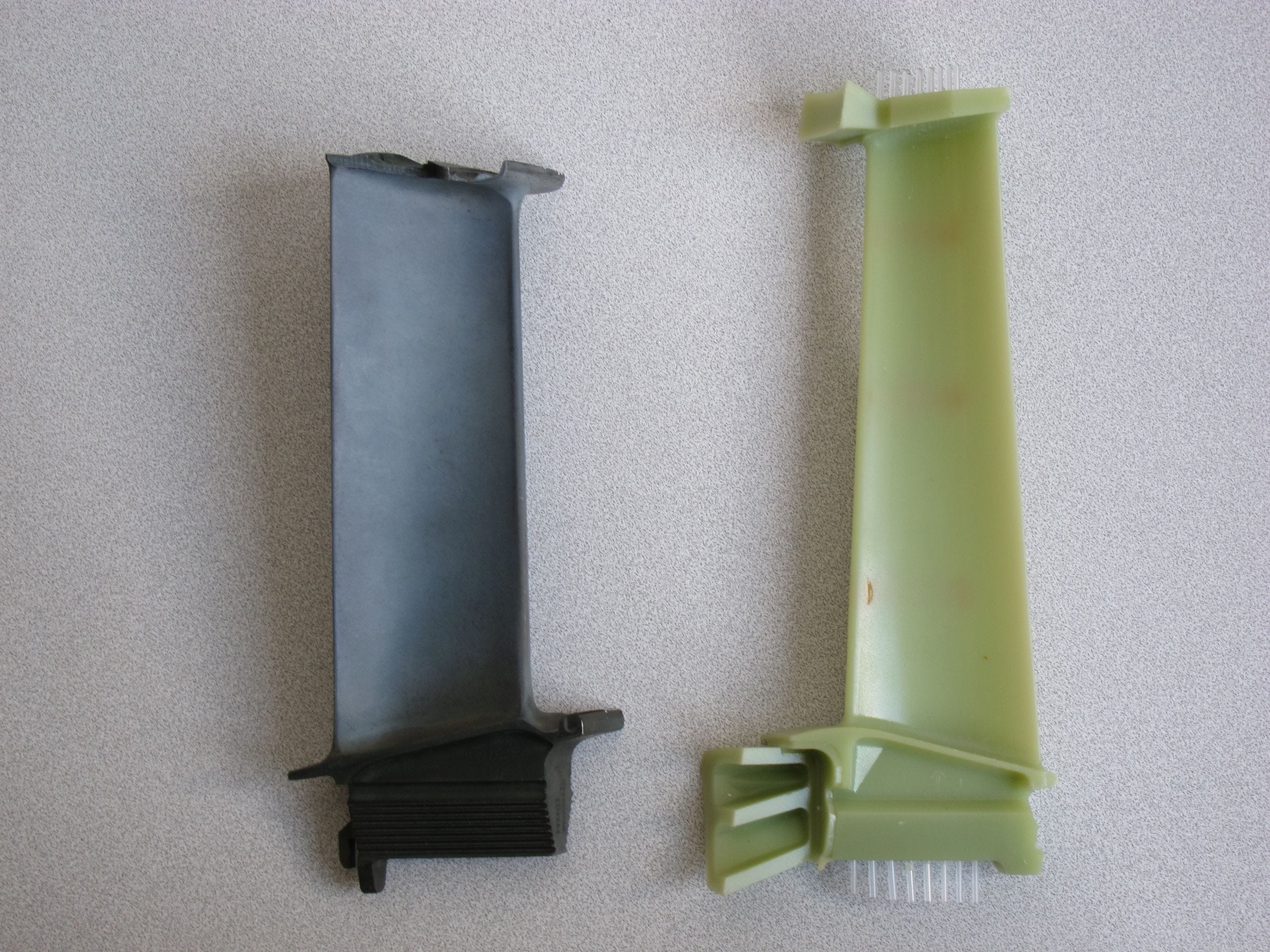
That last point is more than a side bet. Heavy-duty IGT order backlogs at the major OEMs are now more than two times recent capacity additions, and Howmet is investing in new directionally solidified casting furnaces in Exeter and Nomi to serve that demand.
Key Product Lines, Programs And Services
Howmet’s portfolio is organized into four reporting segments. Each is, in effect, a market leader in its own right. Together they define the company’s exposure to aerospace, defense and adjacent industrial markets.
Engine Products: The Crown Jewel
Engine Products is the largest, fastest-growing, and most profitable of Howmet’s segments. The unit is a world-class producer of aero engine and industrial gas turbine components, spanning airfoils, rings, disks and forgings.
Capabilities include vacuum-melted superalloys, performance coatings, precision machining and hot isostatic pressing.
The segment generated $4.32 billion of revenue in 2025 with adjusted EBITDA of $1.44 billion at a 33.3% segment margin, making it both the largest segment by sales and the most profitable in margin terms.
Its growth in 2025 was driven by all three propulsion sub-markets, with commercial aerospace, defense aerospace and industrial gas turbine demand all rising in lockstep.
Engine Products: 2025 Snapshot
- Segment Revenue:           $4.32 billion
- Segment Adj. EBITDA:       $1.44 billion
- Segment Margin:            33.3%
- Key Outputs:               High-pressure turbine
                             airfoils, structural
                             castings, disks, rings
- End Markets:               Commercial aero engines,
                             military engines, IGT,
                             oil & gas turbines
- Major Programs:            CFM LEAP, Pratt & Whitney
                             GTF, GE9X, Rolls-Royce
                             Trent, F135 (F-35)
The technology base is the differentiator.
Engine Products holds decades of intellectual property in single-crystal directionally solidified casting, including foundational single-crystal turbine blade methods captured in patents originally assigned to Howmet Research and successor entities.
That capability is what allows turbine blades to operate at temperatures above the melting point of their own alloys, made possible by intricate internal cooling channels that only a handful of suppliers worldwide can manufacture at scale.
For stakeholders, the practical takeaway is that swapping out Howmet on a hot-section blade is not a sourcing decision. It’s a multi-year qualification program with engine OEM, regulator, and end customer all involved.
That’s the moat in physical form.
Fastening Systems: The Quiet Compounder
Fastening Systems is the segment that least resembles a typical aerospace supplier and yet contributes some of the most differentiated content per aircraft.
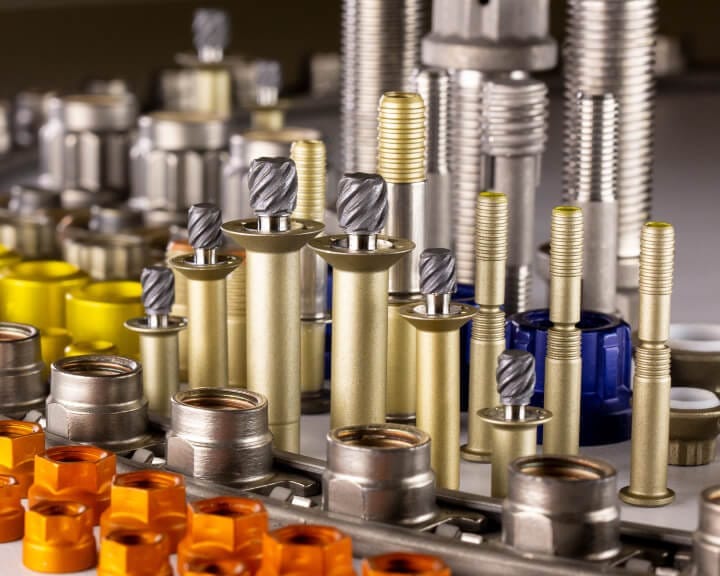
Its products are found nose to tail on commercial and military aircraft, spanning multi-material aerospace fasteners, latches, bearings, fluid fittings and installation tools, plus an industrial product family that touches automotive, commercial transportation and construction.
In 2025 the segment delivered revenue of $1.75 billion at a 30.4% adjusted EBITDA margin, benefiting from rising aircraft build rates and engine spares activity and partly offset by softer commercial transportation demand.
The strategic significance of Fastening Systems is about to grow meaningfully.
On April 6, 2026, Howmet completed its $1.8 billion acquisition of Consolidated Aerospace Manufacturing (CAM) from Stanley Black & Decker.
The deal adds bolts, pins, blind fasteners, engineered components and aerospace fluid system parts that are highly complementary to Howmet’s existing portfolio, with CAM expected to contribute $485 million to $495 million of FY 2026 revenue at an EBITDA margin in excess of 20% before synergies.
That deal expands the company’s addressable content per aircraft, deepens the position with airframe primes, and provides additional cross-selling opportunities into engine and structures programs.
Engineered Structures: Defense-Heavy Differentiation
Engineered Structures is the smallest of the four segments by revenue but the most defense-weighted. The unit is a world-class producer of titanium aero ingots, mill products and highly engineered multi-material structures, with vertically integrated capabilities including casting, forging, extruding, hot forming and machining.
In 2025 the segment generated revenue of $1.15 billion with $243 million of adjusted EBITDA at a 21.2% margin, with full-year revenue up 8% and Q4 revenue up 4%, driven primarily by defense aerospace.
Engineered Structures: Strategic Position
- Core Capability:    Titanium ingot casting, forging,
                      machining, hot forming
- Major Outputs:      Aircraft structural components,
                      bulkheads, frames, hinges, fittings
- Commercial Aero:    Wide-body and narrow-body programs,
                      including 787, A350, A320 family
- Defense:            F-35 fighter structural parts,
                      legacy fighter components, rotorcraft
                      structures, tactical aircraft frames
- Margin Trajectory:  ~22% segment EBITDA margin in Q4 2025
This is where the F-35 program shows up most visibly in the financials. The fifth-generation fighter’s titanium-intensive airframe is structurally tailored to capabilities that Howmet has built up over decades, and the ramp in defense aerospace activity in 2025 was significantly attributable to F-35 build rates and accelerating spare-parts ordersfor both new-production engines and legacy fighter sustainment.
Forged Wheels: A Cash Engine, Not A Growth Engine
Forged Wheels is the legacy that the rest of Howmet was once attached to. The business invented the first forged aluminum truck wheel in 1948 and remains the global leader in heavy-duty aluminum wheels. While not part of the aerospace narrative, it remains relevant to executive readers because it materially affects free cash flow generation and capital deployment.
In 2025 the segment generated revenue of $1.04 billion with adjusted EBITDA of $296 million at a 28.5% margin, with revenue down a low single-digit percentage as North American Class 8 truck demand softened. Margins remained strong because of continued automation, mix discipline and strategic price actions.
For aviation analysts, the simple frame is that Forged Wheels is a high-margin annuity that funds investment in Engine Products and structures. It is not where future growth lives.
Financial Analysis: Howmet Aerospace
Top-Line Growth And Composition
Howmet’s full-year 2025 revenue rose to approximately $8.3 billion, an 11% increase versus 2024, with all aerospace-related markets contributing positively. Quarterly performance accelerated through the year, and Q4 2025 revenue alone reached $2.17 billion, up 15% year over year and ahead of analyst expectations going into the print.
The composition of that growth is the more interesting story. Commercial aerospace revenue rose 12% for the year, defense aerospace rose 21%, and gas turbines rose 25%, while commercial transportation declined modestly. Each of those lines tells a different operational story.
2025 End-Market Revenue Growth (YoY)

Commercial Aerospace      +12%
Defense Aerospace         +21%
Gas Turbines (IGT, etc.)  +25%
Commercial Transportation  -5%
Other                      Mixed

Source: Howmet Q4 2025 earnings materials
The commercial aerospace number is the headline driver in absolute dollars but is the slowest growing of the three aerospace-adjacent categories. That reflects a Boeing 737 MAX rate that stabilized at 38 aircraft per month through much of 2025 before the FAA lifted production caps in March 2026, constraining narrow-body upside. As MAX rates climb toward the Boeing target of 53 per month and potentially 63 per month by 2028, Howmet should see incremental volume.
Defense aerospace growth of 21% reflects two distinct dynamics. First, F-35 production and its associated spare parts, where engine spares demand actually exceeded the original engine build rate during 2025. Second, sustainment demand for legacy fighter platforms like the F-15, F-16 and F/A-18 continues to grow as global air forces extend service lives.
The gas turbines growth of 25% is the most striking of the three. It is driven by data-center-linked power demand, and it represents an entirely new growth vector for a company whose IGT business had been stable to flat for much of the past decade.
Profitability And Margin Expansion
Howmet’s profitability profile has expanded materially since the spinoff. Full-year 2025 adjusted EBITDA reached $2.4 billion at a 29.3% margin, and Q4 2025 adjusted EBITDA margin reached 30.1%, the highest level in the company’s modern history.
That margin expansion has come from a combination of operating leverage on rising volumes, mix shift toward higher-content engine spares and defense parts, and pricing discipline associated with long-term agreements where Howmet has been selectively willing to renegotiate or even decline certain contracts that did not meet return thresholds.
Howmet Profitability Trajectory (Full Year)

                    2024A         2025A         2026G (mid)
Revenue           ~$7.4B        ~$8.3B        ~$9.1B
Adj. EBITDA       ~$1.94B       ~$2.42B       ~$2.76B
Adj. EBITDA Margin ~26.2%        ~29.3%        ~30.3%
Adj. EPS          ~$2.79        ~$3.71        ~$4.45
Free Cash Flow    ~$0.98B       ~$1.40B       ~$1.60B
The 2026 guidance contemplates revenue up roughly 10%, adjusted EBITDA up roughly 14% and adjusted EPS up roughly 18%, each suggesting further operating leverage as the propulsion ramp continues. Critically, the guidance explicitly excludes the CAM acquisition, meaning actual reported revenue could be a few hundred million dollars higher once CAM is consolidated.
Cash Flow And Capital Deployment
Free cash flow is where Howmet has differentiated itself most clearly within aerospace. Full-year 2025 free cash flow reached $1.4 billion, exceeding net income, and the company guided to $1.55 billion to $1.65 billion of free cash flow in 2026 even with elevated capital expenditures.
That cash generation feeds an active capital-return program. In 2025 Howmet deployed $700 million on common share repurchases at an average price of $160.52 per share, retiring about 4.4 million shares, paid the common dividend at $0.44 per share for the year, and reduced gross debt by approximately $265 million.
2025 Capital Allocation Recap

Free Cash Flow Generated         ~$1.4B
Share Repurchases                  $700M (avg $160.52)
Common Dividends Paid              ~$181M (~$0.44/share)
Debt Reduction                     ~$265M
Preferred Dividends & Other          ~$55M

Authorization Remaining for
Future Buybacks (start of 2026)    ~$1.35B
The board further raised the common dividend to $0.12 per share for the May 2026 payment, continuing a multi-year pattern of measured payout growth.
Balance Sheet And Liquidity
Howmet’s balance sheet is now investment grade and lightly levered relative to its EBITDA generation. The company’s ongoing debt-reduction posture reduces interest expense, gives the business optionality to fund the CAM transaction with cash and modest incremental debt, and preserves capacity for continued buybacks and dividend growth.
The combination of investment-grade rating, $1.4 billion of free cash flow, and an unused share repurchase authorization of approximately $1.35 billion gives Howmet substantial flexibility heading into 2026.
Revenue And Growth Drivers, LTM Performance
Commercial Aerospace Build Rates
The most important external driver for Howmet is global commercial aircraft build rates. Boeing finished 2025 with the 737 MAX line stabilized around 38 aircraft per month, then secured FAA approval to move beyond the cap, with internal targets of 47 per month in 2026 and 53 per month thereafter, and unofficial planning toward 63 per month by 2028.
Airbus has been ramping the A320neo family through the 60-per-month range and is targeting higher rates as supply chains stabilize. The widebody picture is similar, with the Boeing 787, the Airbus A350 and the Boeing 777X all expected to add increasingly meaningful units through the back half of the decade.
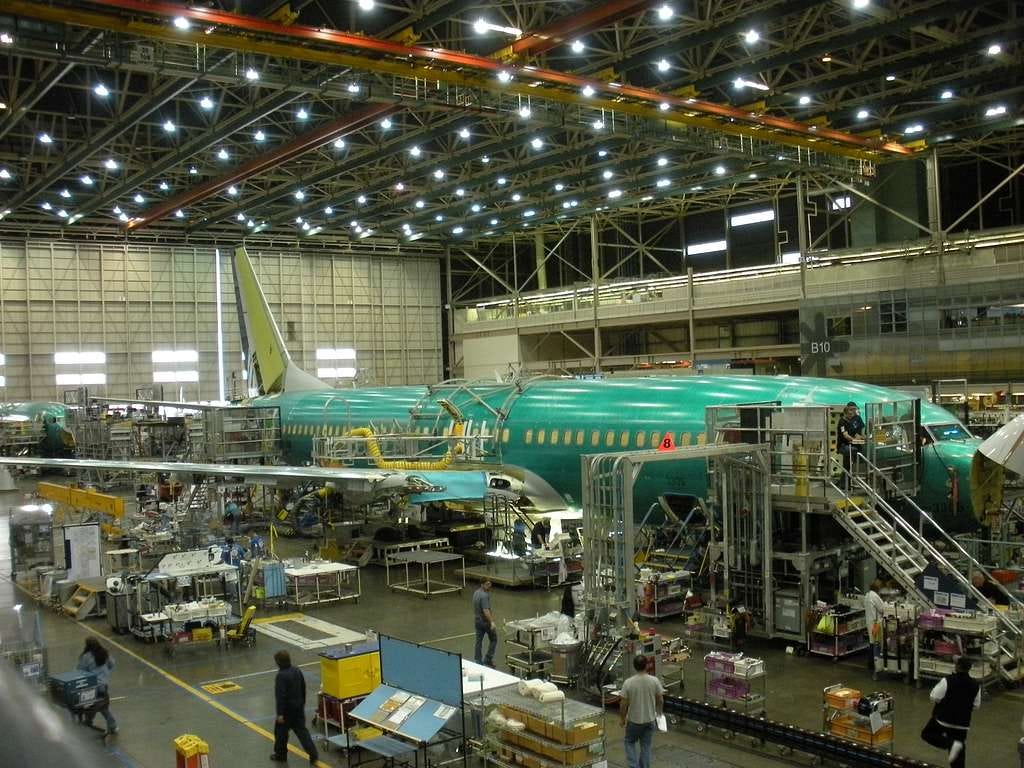
Howmet’s exposure is essentially a function of engines per aircraft, structural and fastener content per aircraft, and program mix. On the narrow-body side, Howmet content shows up on every CFM LEAP-1A and LEAP-1B engine, every Pratt & Whitney GTF on the A320neo family, and on virtually every airframe through its fastening and structures portfolio.
Engine Spares: The Hidden Margin Driver
Spares are arguably the most consequential growth lever inside Howmet’s portfolio. The Technology and Markets Day disclosure made the trend explicit: spares grew from around 11% of revenue in 2020 to over 20% of revenue in 2025, an effective doubling in mix in five years.
Two structural dynamics explain that mix shift.
The first is that the global narrow-body fleet has grown faster than airline shop visit cycles can be absorbed by available MRO capacity, generating a backlog of spare-blade and structural casting demand.
The second is that the LEAP and GTF engines have proven more maintenance-intensive in early service than the engines they replaced, accelerating spares demand through the first overhaul cycle.
Engine Spares: Structural Drivers

1. Aging Global Fleet
   - More aircraft in service than ever
   - More flight cycles per year
   - More shop visits per fleet

2. New Engine Maturity Curve
   - LEAP and GTF showing higher
     than expected hot-section
     wear in early service
   - More spare blade demand per
     shop visit than legacy engines

3. Defense Sustainment
   - F-35 spares now exceed new
     engine production volume
   - Legacy fighters extending life
For aviation industry analysts, this is the line item most worth watching. Spares carry meaningfully higher margins than original equipment shipments, and they tend to be less cyclical than new aircraft production, providing both growth and stability.
Defense Aerospace Programs
Defense aerospace was the second-fastest growing market in 2025, expanding 21%.
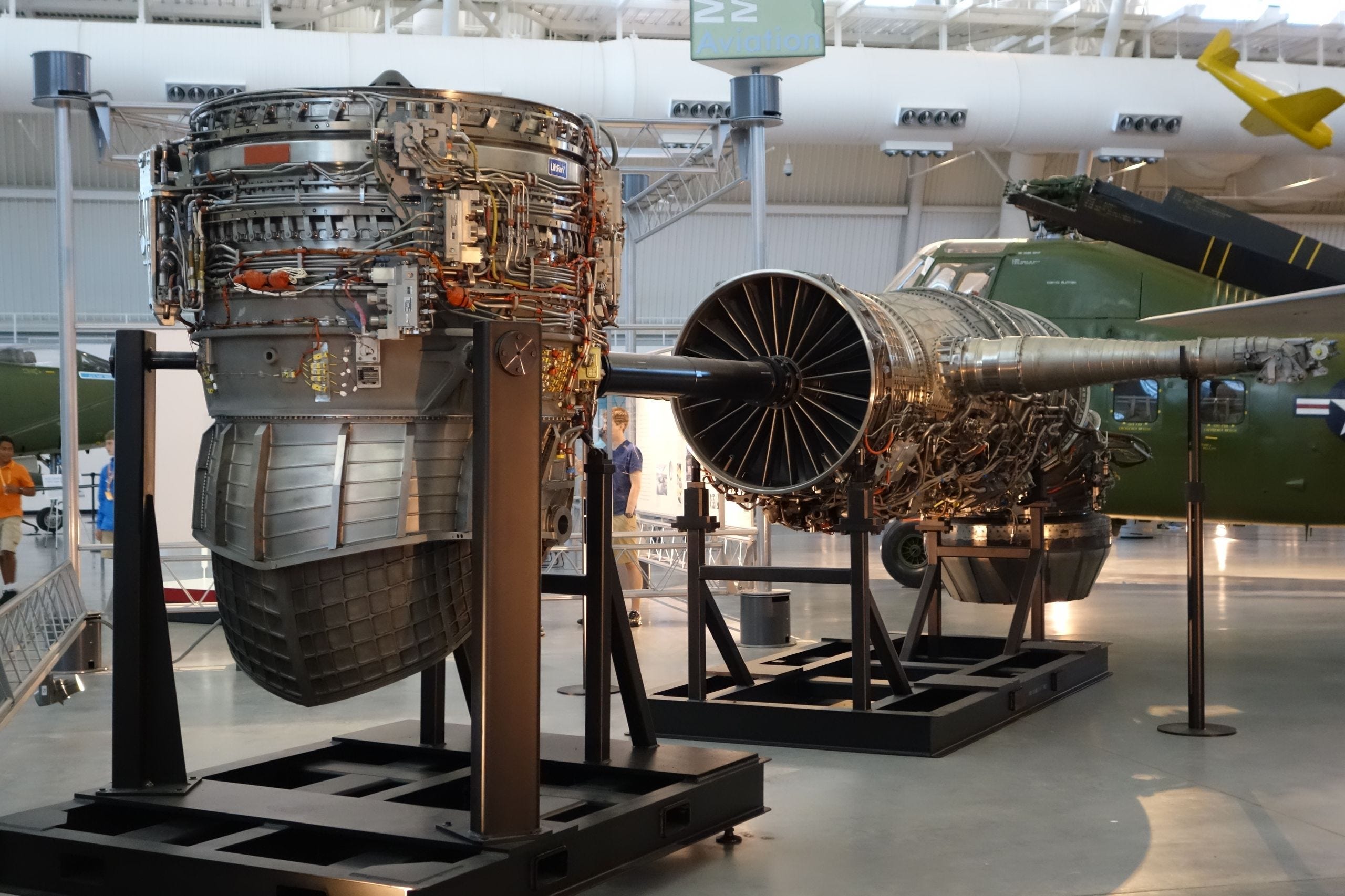
Within Howmet’s portfolio, the F-35 Lightning II is the single most important program by revenue contribution, with content spanning structural castings, titanium components in Engineered Structures, and rotating parts inside the F135 engine produced by Pratt & Whitney.
Beyond F-35, Howmet has meaningful content on legacy U.S. fighters, on rotorcraft like the V-22 and CH-53K, and on numerous European and allied defense programs. Defense growth is also uniquely insulated from the commercial cycle, providing a counter-cyclical hedge if commercial build rates ever soften.
The CEO commentary on the Q4 2025 call emphasized that defense markets remain very healthy with engine spares continuing to grow to support the expanding aircraft fleet, with no signs of demand deceleration heading into 2026.
Industrial Gas Turbines: The AI Power Story
The 25% growth in gas turbines in 2025 reflects a structural change in U.S. and global power markets. The buildout of artificial intelligence data centers is creating multi-gigawatt new electricity demand on accelerated timelines, and natural-gas-fired turbines are the only dispatchable resource that can be deployed at the necessary scale.
Howmet’s analyst day presentation captured the magnitude: U.S. data center buildout requires more than 70 gigawatts of new capacity, with an increasing share met by natural gas. That demand is now flowing through to heavy-duty IGT order books at GE Vernova, Siemens Energy and Mitsubishi Power, and from there into Howmet’s blade-casting business.
Howmet describes itself as the largest manufacturer of gas turbine blades in the world, and is investing in additional directionally solidified casting furnaces in Exeter, UK and Nomi, Japan to expand capacity.
The technology transfer story is also strategically important: aerospace cooling-scheme expertise is being applied to large land-based blades, allowing Howmet to win share in the most thermally efficient new IGT designs.
Howmet Revenue LTM And 2026 Outlook
Trailing Twelve Months (TTM) Snapshot
(as of end of 2025)

Revenue                      ~$8.3B
Adj. EBITDA                  ~$2.42B
Adj. EBITDA Margin           ~29.3%
Adj. EPS                     $3.71
Free Cash Flow               ~$1.4B

2026 Baseline Guidance
Revenue                      ~$9.1B (~+10% YoY)
Adj. EBITDA                  ~$2.76B (~+14% YoY)
Adj. EPS                     $4.45 (~+18% YoY)
Free Cash Flow               ~$1.6B
2026 Capex                   ~$470M (~5% of revenue)

Note: 2026 guidance excludes CAM acquisition,
which is expected to add ~$485-495M of revenue
at >20% adjusted EBITDA margin pre-synergies.Howmet Aerospace Major Competitors
Howmet’s competitive landscape varies sharply by segment and product line. There is no single competitor that matches Howmet’s full breadth; instead, the company faces a different set of rivals in each part of the value chain.
The most relevant competitors for the aerospace, defense, and IGT-focused parts of the portfolio include:
Precision Castparts Corporation (PCC), a wholly owned Berkshire Hathaway subsidiary
GE Aerospace (insourced casting operations)
Rolls-Royce (insourced casting operations)
Carpenter Technology Corporation
ATI Inc.
Doncasters Group (private, owned by Dubai Aerospace)
LISI Aerospace, part of LISI Group
TransDigm Group
Curtiss-Wright Corporation
Howmet vs. Precision Castparts (Berkshire Hathaway)
The most direct competitor in the most important part of the business is Precision Castparts.
In structural castings and airfoils for jet engines, the two companies have historically been near-duopolists, with each holding meaningful market share on specific platforms and engine families.
Independent industry analysis notes that Precision Castparts has historically achieved 30% or higher EBIT margins in airfoils and structurals, comparable to or slightly above Howmet’s segment-level Engine Products margins.
The differences are nonetheless significant for stakeholders. Howmet is a public, capital-disciplined company with explicit free cash flow, capex and capital return targets, while Precision Castparts operates inside Berkshire Hathaway with a different reporting and capital allocation framework.
Howmet’s continued willingness to selectively walk away from low-margin contracts has been a margin tailwind that PCC has not pursued as aggressively.
Howmet vs. GE Aerospace And Rolls-Royce (Insourced Casting)
Both GE Aerospace and Rolls-Royce maintain in-house casting capabilities for portions of their hot-section production, particularly for the most advanced single-crystal turbine blades.
However, both engine OEMs continue to rely heavily on Howmet for capacity, complexity beyond their internal capability, and surge demand.


The broader insight here is that engine OEMs do not actually want to vertically integrate further.
Casting is capital-intensive, technology-intensive, and yield-sensitive. Outsourcing to Howmet reduces capital deployed, transfers operating risk, and concentrates engineering talent on engine architecture rather than foundry operations.
Howmet vs. ATI And Carpenter Technology
ATI and Carpenter Technology operate in adjacent but overlapping spaces. Both are major suppliers of titanium and nickel-based superalloy materials, and ATI has expanded into forgings and near-net-shape components for engines and structures.
The competitive dynamic is more about complementarity than head-to-head rivalry. ATI and Carpenter often supply the alloy material that Howmet then casts, machines, and finishes.
Where the lines do cross, in titanium ingots and certain forgings, Howmet’s vertically integrated Engineered Structures segment competes directly.
Howmet vs. LISI Aerospace And Specialty Fastener Players
In Fastening Systems, Howmet competes with LISI Aerospace, Doncasters, B&B Specialties, Avantus, TriMas Aerospace and a long tail of regional and product-specialized fastener manufacturers.
With the recently completed CAM acquisition, Howmet has further consolidated its position as the largest aerospace fastener company in the world.
The competitive moat in fasteners is less about technology and more about qualifications, certifications and platform-specific tooling that take years to replicate.
Howmet vs. TransDigm And Curtiss-Wright
TransDigm and Curtiss-Wright are sometimes mentioned alongside Howmet as differentiated aerospace components companies, but they are not direct competitors in the casting and forging space.
TransDigm focuses on highly engineered proprietary aircraft components like cockpit security systems, ignition systems, sensors and actuators. Curtiss-Wright operates in defense electronics, motion control and industrial technology.
The relevance for aviation industry analysts is that all three companies share similar moats based on customer specifications and certification barriers.